Things to Do in Antwerp - Top Attractions, Hidden Gems & Must-See Sights

Discover the best things to do in Antwerp. Complete guide to must-see sights, popular attractions, hidden gems, museums, food markets and parks.

21 Attractions 5 Categories Travel Guide

Table of Contents

Antwerp Overview

Antwerp is a city that never quite became a tourist destination the way Bruges or Brussels did, and that is exactly why it rewards a visit. Belgium's second-largest city built its wealth on diamond trading, a world-class port, and centuries of artistic production. Rubens lived and worked here. The Antwerp Six reshaped global fashion here. The world's diamond industry still runs through a few blocks near Central Station. The result is a city with serious cultural weight but without the tourist-infrastructure bloat that can make other Belgian cities feel like theme parks.

The old center is compact and walkable. You can reach everything from the Cathedral to the Grote Markt to the MAS museum on foot in under 20 minutes. The architecture shifts from medieval churches to baroque squares to Art Nouveau residential streets, sometimes within a few blocks. Antwerp has strong museums (the KMSKA reopened in 2022 after an 11-year renovation, the Plantin-Moretus is a UNESCO site, the MAS has the best free rooftop in the city) and a food and bar scene that locals are genuinely proud of. It is a city for people who like cities: real neighborhoods, working docks, independent shops, and good beer.

Antwerp works best for travelers who want culture without crowds, art without queues, and a city that feels lived-in rather than preserved. Two full days covers the core. Three days lets you explore Zurenborg, Middelheim, and the Left Bank without rushing.

Must-See Attractions in Antwerp

  • Cathedral of Our Lady
  • Antwerp Central Station
  • Rubens House
  • Plantin-Moretus Museum
  • Museum aan de Stroom (MAS)
🏛️ Must-See ⭐ Sights 💎 Hidden Gems 🎨 Museums 🌳 Parks & Views

🏛️ Must-See Attractions in Antwerp

These iconic landmarks and must-see sights are essential stops for any visitor to Antwerp.

Antwerp Central Station

1. Antwerp Central Station

Most train stations are places you rush through. Antwerp Central Station is a place you walk into and stop. Locals call it the Spoorwegkathedraal, the "railway cathedral," and the name fits. Built between 1895 and 1905, the station has a massive stone facade, a 75-meter-high dome, and a grand hall that feels more like a palace than a transit hub. It regularly lands on lists of the most beautiful train stations in the world, and for once, the hype is accurate. The original station was a dead-end terminus where every train had to reverse direction. In 2007, a tunnel with two through-tracks opened underneath, adding modern platforms below the historic hall. The result is a station with three levels: the original ground floor, a modern underground concourse, and deep tunnel platforms. The contrast between the 19th-century grandeur above and the sleek engineering below is genuinely interesting. The station sits on Koningin Astridplein, right at the entrance to the Diamond District. Entry is free and the station is open around the clock. If you arrive in Antwerp by train, this is your first impression of the city, and it is a good one. The Meir shopping street starts just outside and walks you straight into the old center. As a must-see in Antwerp, it is unusual because most people will pass through it anyway, so just remember to look up.

Hours Open 24/7
Price Free
Insider TipWalk to the back of the upper hall and look down through all three levels at once. The vertical perspective through the iron-and-glass train shed is the best angle in the building.
Antwerp Diamond District

2. Antwerp Diamond District

Step outside Antwerp Central Station and you are already in the Diamond District. This compact area of a few blocks along Hoveniersstraat and Schupstraat handles roughly 25 billion dollars' worth of diamond trade each year. About 84% of the world's rough diamonds and 50% of polished diamonds pass through Antwerp at some point. Those are not tourist-board numbers; that is the actual global supply chain running through a Belgian neighborhood. The district has a strong Orthodox Jewish community, the largest in Western Europe, alongside a growing number of Indian diamond traders. Walking through on a weekday, you will see Hasidic men in traditional dress, security cameras on every corner, and small storefronts with modest window displays that represent staggering amounts of value. The world's largest polished diamond, "The Black Falcon," was cut in this district. It is a working commercial zone, not a themed attraction, so manage your expectations accordingly. The Diamond District is free to walk through and generally active Monday to Friday, 9:00 AM to 7:00 PM. If you want to understand the industry rather than just window-shop, visit the DIVA Museum on the Suikerrui, which covers diamonds, silver, and jewelry in proper depth. Among the top sights in Antwerp, this one is about atmosphere and context rather than a single landmark. Pair it with your arrival at Central Station.

Hours Mon-Fri: 9:00 AM – 7:00 PM | Sat: Closed | Sun: 9:00 AM – 7:00 PM
Price Free
Website Wikipedia
Cathedral of Our Lady

3. Cathedral of Our Lady

Antwerp's cathedral took 169 years to build, from 1352 to 1521, and you can feel every decade of ambition when you stand under its 123-meter tower. The Onze-Lieve-Vrouwekathedraal is the largest Gothic church in the Low Countries, and its tower is a UNESCO World Heritage Site. Four paintings by Peter Paul Rubens hang inside, including the massive "Descent from the Cross" and "The Raising of the Cross." The cathedral was the tallest building in Belgium until 1967. The interior is surprisingly bright for a Gothic church. Seven naves create an enormous sense of space, and afternoon light pours through the high windows. You can see the Rubens paintings without binoculars, which is a relief after squinting at ceiling frescoes in Italian churches. The cathedral sits between Handschoenmarkt (its main entrance) and Groenplaats Square (its south side), so you'll pass it repeatedly while walking through the old city center. Admission is 12 EUR. Hours are Monday to Friday 10:00 AM to 5:00 PM, Saturday until 3:00 PM, and Sunday from 1:00 to 5:00 PM. The cathedral is a short walk from the Grote Markt and an easy connection to the Plantin-Moretus Museum along Vrijdagmarkt.

Hours Mon-Fri: 10:00 AM – 5:00 PM | Sat: 10:00 AM – 3:00 PM | Sun: 1:00 – 5:00 PM
Price 12 EUR
Insider TipSaturday closing time is 3:00 PM, two hours earlier than weekdays. Plan your visit for a weekday morning if you want quieter conditions and better light for the Rubens paintings.
Great Butchers' Hall

4. Great Butchers' Hall

The Vleeshuis is one of the most striking medieval buildings in Antwerp, and most visitors walk right past it. Built between 1501 and 1504, this former meat hall sits on the waterfront near the river Scheldt, its facade made from alternating layers of red brick and white sandstone that give it a distinctive striped look. The building was where the city's butchers' guild sold and stored meat for centuries. After the guild system ended, it passed through various uses before becoming a museum. Today the Vleeshuis focuses on music and performing arts history, with a collection of historical instruments and exhibits on 600 years of music, dance, and theater in Antwerp. The building itself is as much the attraction as what is inside. The soaring interior hall, with its massive wooden roof trusses, makes you appreciate just how wealthy and organized the medieval guilds were. It is a short walk from the Grote Markt and sits close to the river, in a quieter part of the old city. Admission is free. The building is a top sight in Antwerp that rewards a detour, especially if you are already walking between the Grote Markt and the MAS museum along the waterfront. The striped facade photographs well in the late afternoon when the low sun catches the contrasting stone layers.

Hours Mon: 9:00 AM – 6:00 PM | Tue: Closed | Wed-Thu: 9:00 AM – 6:00 PM | Fri-Sat: 8:30 AM – 6:00 PM | Sun: 8:30 AM – 1:00 PM
Price Free
Rubens House

5. Rubens House

Peter Paul Rubens bought this house in 1610 and spent the next 25 years turning it into a personal statement. He designed the baroque portico in the garden himself, modeled after Italian palazzos he had studied during his years in Rome. The Rubenshuis is where he lived, painted, entertained diplomats, and ran what was essentially the most productive art studio in 17th-century Europe. Walking through the rooms, you get a real sense of how he blurred the line between artist and aristocrat. The house was heavily damaged over the centuries and carefully restored starting in 1946. Since 2024, visitors enter through a new building on Hopland 13, designed by Robbrecht en Daem architects, which adds a modern welcome pavilion to the experience. Inside, you will find period-furnished rooms, a small garden with the famous portico, and rotating selections from the museum's collection. The studio is the highlight: a tall, north-lit room where Rubens and his assistants produced hundreds of paintings. Admission is 8 EUR. Open Monday, Tuesday, Thursday, and Friday from 10:00 AM to 5:00 PM, weekends until 6:00 PM, closed Wednesday. Among things to do in Antwerp, this is the place that connects the city's identity to its golden age. The house sits on the Wapper, a 5-minute walk from the Meir shopping street.

Hours Mon-Tue: 10:00 AM – 5:00 PM | Wed: Closed | Thu-Fri: 10:00 AM – 5:00 PM | Sat-Sun: 10:00 AM – 6:00 PM
Price 8 EUR
Insider TipThe garden and portico are the most photographed part. Visit on a weekday morning; the courtyard gets congested with tour groups after 11:00 AM.
Get Your Own Private Tour with AI Guide
AI Guide
  • Personalized tour tailored to your interests
  • Your AI guide tells stories, shares facts, and cracks jokes
  • Turn-by-turn GPS navigation
  • Available in your language — no download needed
Try for Free

💎 Hidden Gems in Antwerp - Off the Beaten Path

Beyond the tourist crowds, Antwerp hides remarkable treasures waiting to be discovered.

Cogels Osylei Street

1. Cogels Osylei Street

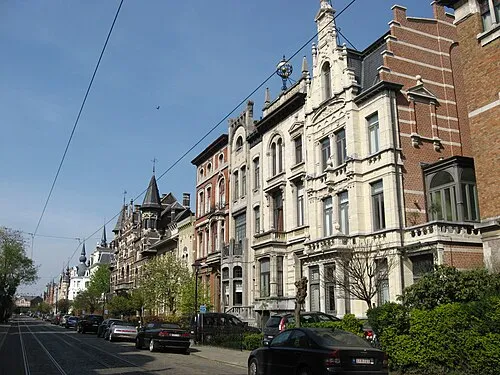
Cogels-Osylei is the single most impressive street in the Zurenborg quarter, and arguably the most beautiful residential street in Belgium. Every house is different. Art Nouveau townhouses stand next to Neo-Gothic turrets next to eclectic fantasies with ceramic tiles, wrought-iron balconies, and sgraffito decorations. The street was developed between 1894 and 1906, and the original owners were wealthy enough to hire architects who competed to outdo each other. The result is an entire block where no two facades repeat. Unlike a museum, Cogels-Osylei is a living street. People actually live behind these facades, and their parked cars and drawn curtains keep the whole thing grounded. The houses were nearly demolished in the 1960s when Antwerp's city planners wanted to redevelop the area. A preservation movement saved them, and today the street is protected. Walking it feels like flipping through an architecture textbook, except the examples are life-size and three-dimensional. Free and open 24/7. The street is in the Zurenborg quarter, about a 20-minute walk southeast from Central Station or a quick tram ride to Berchem. As one of the hidden gems in Antwerp, Cogels-Osylei rewards the small effort it takes to get there. Budget 20 minutes to walk the full length and really look at the details.

Hours Open 24/7
Price Free
Website N/A
Location 51.20373, 4.4334
Insider TipHouse numbers 5 through 15 have the most varied and elaborate facades. The corner house at the intersection with Waterloostraat is particularly striking.
Hessenhuis Art Space

2. Hessenhuis Art Space

The Hessenhuis is a 16th-century Renaissance warehouse on Hessenplein that has lived more lives than most buildings in Antwerp. Completed in 1564, it was built for German merchants from Hesse who needed stables, lodging, and storage space for their wagons and goods. You can still see the iron rings on the walls where horses were tied. After the golden age of trade faded, the building served as a Protestant chapel, a barracks, a fire station, and a city workshop before becoming an exhibition space in 1975. In 2011, most of the Hessenhuis's historical collection moved to the MAS museum nearby. Today the building hosts temporary exhibitions and events, and it also houses a popular bar and nightlife venue. The schedule varies, so check the website before visiting. The building opens Tuesday through Sunday starting at 4:00 PM, and stays open late on weekends (until 4:00 AM on Friday and Saturday). The atmosphere shifts from casual daytime drinks to a proper night-out vibe. Entry is free. The Hessenhuis sits in the Eilandje district, a 10-minute walk north of the Grote Markt and close to the MAS. It is one of the secret spots in Antwerp where history and nightlife share the same 462-year-old roof. The building is worth seeing for its architecture alone, even if nothing is exhibiting.

Hours Mon: Closed | Tue-Wed: 4:00 PM – 1:00 AM | Thu: 4:00 PM – 2:00 AM | Fri-Sat: 4:00 PM – 4:00 AM | Sun: 4:00 PM – 1:00 AM
Price Free
MoMu Fashion Museum

3. MoMu Fashion Museum

Antwerp produced the "Antwerp Six," a group of fashion designers who upended the industry in the 1980s, and MoMu is where that legacy lives. The ModeMuseum has been in the ModeNatie building on Nationalestraat since 2002, sharing space with the Flanders Fashion Institute and the Antwerp Fashion Academy, which trained those designers. The museum focuses on temporary exhibitions rather than a permanent display, so what you see depends entirely on when you visit. Past shows have covered everything from Dries Van Noten's archive to the history of lace. MoMu closed for renovation in 2018, reopened in 2021, closed again in early 2022 due to climate control problems, and finally reopened for good in October 2022. The refit was worth the wait. The exhibition spaces are now properly climate-controlled, and the layout gives each show room to breathe. It is a small museum, easy to do in 60 to 90 minutes. Admission is 12 EUR. Open Tuesday to Sunday, 10:00 AM to 6:00 PM, closed Monday. This is one of the hidden gems in Antwerp for anyone interested in fashion history or Belgian design. It sits about a 10-minute walk south of the Grote Markt, on a street full of independent fashion boutiques that are worth browsing on the way.

Hours Mon: Closed | Tue-Sun: 10:00 AM – 6:00 PM
Price 12 EUR
Website www.momu.be/
Location 51.217, 4.39957
Insider TipCheck the current exhibition on momu.be before going. The museum is entirely temporary shows, so there is nothing to see between exhibitions.
Sint-Jansvliet Park

4. Sint-Jansvliet Park

Sint-Jansvliet is a small open square on the river side of the old center, and it does something no other spot in Antwerp does quite as well: it gives you a direct connection to the Scheldt. The park sits at the entrance to the Sint-Annatunnel, a 572-meter pedestrian and cyclist tunnel built in 1933 that crosses under the river to the Left Bank (Linkeroever). The tunnel itself is worth the detour. You descend by wooden escalator or elevator, walk through a clean, white-tiled tube under the Scheldt, and emerge on the other side with a panoramic view back toward the old city skyline. Above ground, Sint-Jansvliet is a quiet, grassy area where locals walk dogs and kids run around. It lacks the architectural drama of the squares closer to the Cathedral, but the openness is a relief after the narrow medieval streets. The Plantin-Moretus Museum is a 3-minute walk east. The river promenade stretches north toward the MAS museum. Free and open at all times. As one of the hidden gems in Antwerp, Sint-Jansvliet is really about the tunnel experience. The 1930s wooden escalators alone are worth seeing: they are among the oldest working wooden escalators in Europe.

Hours Open 24/7
Price Free
Website N/A
Insider TipTake the Sint-Annatunnel under the river and walk up on the Left Bank. The view of Antwerp's skyline from across the Scheldt is the best free panorama in the city.
Get Your Own Private Tour with AI Guide
AI Guide
  • Personalized tour tailored to your interests
  • Your AI guide tells stories, shares facts, and cracks jokes
  • Turn-by-turn GPS navigation
  • Available in your language — no download needed
Try for Free

🎨 Best Museums & Galleries in Antwerp

World-class museums and galleries that make Antwerp a cultural treasure.

DIVA Museum

1. DIVA Museum

DIVA sits on the Suikerrui, a 5-minute walk from the Cathedral, and it covers Antwerp's two great luxury trades: diamonds and silverwork. The museum was created by merging the old Diamond Museum (which was near Central Station) and the Zilvermuseum Sterckshof into a single location. The name is not an acronym. It is just a word that implies glamour, which suits the collection of sparkling stones, Renaissance silverware, and contemporary jewelry. The museum walks you through the diamond trade from rough stone to polished gem, with tools, techniques, and historical context. You learn why Antwerp became the world's diamond capital and how the trade shaped the city's economy and neighborhoods. The silver collection is equally strong, with pieces from the 16th century onward. Temporary exhibitions rotate and tend to be well curated. The building itself is a converted 16th-century merchant's house, so the architecture adds to the experience. Admission is 12 EUR. Open Monday, Tuesday, Thursday through Sunday from 10:00 AM to 6:00 PM, closed Wednesday. If you only visit one museum about Antwerp's diamond heritage, make it this one rather than just walking through the Diamond District. DIVA gives the context that the streets cannot. It is one of the best museums in Antwerp for understanding what made this city wealthy.

Hours Mon-Tue: 10:00 AM – 6:00 PM | Wed: Closed | Thu-Sun: 10:00 AM – 6:00 PM
Price 12 EUR
Insider TipThe top floor has a terrace with a view toward the Cathedral. Ask at the desk if it is open during your visit.
Museum aan de Stroom (MAS)

2. Museum aan de Stroom (MAS)

The MAS opened in 2011 in the Eilandje (Little Island) district, and its tower of stacked sandstone and glass cubes is now part of Antwerp's skyline. The building is 60 meters tall with 10 floors, and the roof terrace is free. That matters, because the panoramic view from the top is the best in the city: the old center to the south, the port stretching north, and the Scheldt curving west. Even if you skip the exhibitions, go up for the view. Inside, the MAS covers Antwerp's relationship with the wider world through trade, shipping, and cultural exchange. The collection holds about 600,000 objects, though only a fraction is on display at any time. Exhibitions explore the port city's history, global connections, and ethnographic collections gathered during Belgium's colonial period. The museum handles its colonial material with more directness than many European institutions. Each floor has a glass corridor with views outward, so you get glimpses of the city between galleries. The rooftop terrace is free and accessible whenever the building is open (Tuesday to Sunday, 10:00 AM to 5:00 PM, closed Monday). Exhibition access costs 10 EUR. The MAS is one of the best museums in Antwerp, and the rooftop alone makes it one of the best free things to do in the city. It sits in the revitalized dock area, a 15-minute walk north from the Grote Markt past the Hessenhuis.

Hours Mon: Closed | Tue-Sun: 10:00 AM – 5:00 PM
Price 10 EUR
Website mas.be/
Insider TipThe rooftop is free and does not require a museum ticket. Take the escalators up through the glass corridors for city views at every level, then enjoy the full panorama from the 10th floor.
Plantin-Moretus Museum

3. Plantin-Moretus Museum

This is the only museum in the world that is an entire UNESCO World Heritage Site, and that fact alone should tell you something. The Plantin-Moretus Museum preserves the house, workshop, and printing presses of Christophe Plantin and his son-in-law Jan Moretus, who ran one of the most important printing operations in Europe from the 1550s onward. The two oldest surviving printing presses in the world are here, still in their original positions. The library holds thousands of books, manuscripts, and copper engraving plates. The building is a patrician's house arranged around a quiet courtyard, and walking through it feels like entering a time capsule. The rooms are filled with period furniture, portraits by Rubens (who was a friend of the family), and the actual tools of the printing trade. You can see how a 16th-century publishing house worked, from typesetting to binding. The courtyard garden is a calm, enclosed space that contrasts with the busy streets outside. The museum sits near Vrijdagmarkt, a short walk west of the Cathedral. Admission is 12 EUR. Open Tuesday to Sunday, 10:00 AM to 5:00 PM, closed Monday. It is the best museums in Antwerp for anyone interested in books, printing, or how ideas spread across early modern Europe.

Hours Mon: Closed | Tue-Sun: 10:00 AM – 5:00 PM
Price 12 EUR
Insider TipThe library room on the second floor is one of the most beautiful historical interiors in Belgium. Spend time here rather than rushing through the printing press rooms.
Royal Museum of Fine Arts

4. Royal Museum of Fine Arts

The KMSKA reopened in 2022 after an 11-year renovation, and the wait was worth it. The building dates from 1884 to 1890, a grand neoclassical structure on Leopold de Waelplaats, and the renovation added a striking modern white interior that creates sharp contrasts with the original 19th-century rooms. The collection spans from Flemish Primitives to James Ensor, with Jan van Eyck, Rubens, and Van Dyck well represented. It is the largest art museum in Flanders. The layout separates the collection into two clear zones: old masters upstairs in the renovated historic galleries, and modern and contemporary work in the new white-walled spaces. The Rubens room alone justifies the visit. His large-format paintings get the space they need, and you can stand close enough to see individual brushstrokes. The museum also holds seven paintings by James Ensor, Antwerp's most famous modern artist, including some of his most unsettling work. Admission is 10 EUR. Open Monday to Wednesday and Friday 10:00 AM to 5:00 PM, Thursday until 10:00 PM, weekends until 6:00 PM. Thursday evening is the best time to visit: fewer crowds and extended hours. The KMSKA is among the best museums in Antwerp and belongs on any art lover's itinerary. It sits in the south of the city, about a 15-minute walk from the Cathedral.

Hours Mon-Wed: 10:00 AM – 5:00 PM | Thu: 10:00 AM – 10:00 PM | Fri: 10:00 AM – 5:00 PM | Sat-Sun: 10:00 AM – 6:00 PM
Price 10 EUR
Website kmska.be/
Insider TipThursday evening until 10:00 PM is the least crowded time slot. The museum is half-empty after 6:00 PM while the weekend crowds are brutal.
Get Your Own Private Tour with AI Guide
AI Guide
  • Personalized tour tailored to your interests
  • Your AI guide tells stories, shares facts, and cracks jokes
  • Turn-by-turn GPS navigation
  • Available in your language — no download needed
Try for Free

🌳 Parks & Best Viewpoints in Antwerp

Beautiful parks, gardens, and panoramic viewpoints for the best views of Antwerp.

Middelheim Sculpture Park

1. Middelheim Sculpture Park

Middelheim is a 30-hectare open-air sculpture museum in the south of Antwerp, and it is completely free. Opened in 1951, it is the oldest sculpture park of its kind and drew 535,000 visitors in 2022, making it often the most visited museum in all of Flanders. The collection includes over 200 works scattered through woods, meadows, and formal gardens. You walk from Rodin's Balzac to Ai Weiwei's "The Bridge Without a Name" to Henry Moore's "King and Queen," all in open air. The park is part of the larger Nachtegalenpark, and the setting matters as much as the art. On a good weather day, it feels like a long walk in the woods that happens to have world-class sculpture along the path. There is no indoor pressure, no queues, no audio guide hustle. You just walk and look. Erwin Wurm's "Misconceivable" (known locally as "De Kromme Boot," the crooked boat) is a favorite with visitors and one of the most photographed works. Open Tuesday to Sunday, 10:00 AM to 5:00 PM (hours extend in summer), closed Monday. Admission is free. Getting there takes about 20 minutes by tram from the center. Among the best parks in Antwerp, Middelheim is the one that justifies the trip south. Budget at least 90 minutes to walk the full circuit without rushing.

Hours Mon: Closed | Tue-Sun: 10:00 AM – 5:00 PM
Price Free
Insider TipPick up the free map at the entrance. The park is large enough to miss major works if you wander without a route. The section near the old castle has the highest concentration of important pieces.
Stadspark

2. Stadspark

Stadspark is Antwerp's central city park, a green rectangle between the Diamond District and the Meir area. It is not a grand landscape park and it does not try to be. Ponds, footpaths, mature trees, and scattered benches make up the basics. The park was designed in the English landscape style in 1867 and opened in 1869, giving it over 150 years of tree growth. On a warm afternoon, it fills with office workers on lunch break, students, and families with small children. The park is useful more than it is remarkable. After walking the Meir and visiting the Rubens House, both a short walk away, Stadspark gives you a bench, some shade, and a pause. There is a small pond with ducks, a few sculptures, and a bandstand. It is the kind of place where you sit down for ten minutes and end up staying for thirty. In summer, occasional events and concerts use the park. Stadspark is open 24/7, free, and centrally located. It sits roughly halfway between Central Station and the old center, making it a natural rest stop. As one of the parks in Antwerp, it is the most convenient green space, not the most beautiful. For that, head to Middelheim Sculpture Park in the south, which is worth the extra travel time.

Get Your Own Private Tour with AI Guide
AI Guide
  • Personalized tour tailored to your interests
  • Your AI guide tells stories, shares facts, and cracks jokes
  • Turn-by-turn GPS navigation
  • Available in your language — no download needed
Try for Free

Explore with AI Guide

AI Guide App

Get personalized tours with our AI-powered guide. No download needed — works right in your browser.