Things to Do in Belgrade - Top Attractions, Hidden Gems & Must-See Sights

Discover the best things to do in Belgrade. Complete guide to must-see sights, popular attractions, hidden gems, museums, food markets and parks.

19 Attractions 5 Categories Travel Guide

Table of Contents

Belgrade Overview

Belgrade is a city that has been destroyed and rebuilt over 40 times across 7,000 years, and that cycle of destruction and renewal is written into every block. Sitting at the confluence of the Sava and Danube rivers, it served as a Roman outpost, a Byzantine stronghold, a medieval Serbian capital, an Ottoman frontier, an Austro-Hungarian border town, and the capital of Yugoslavia before becoming the capital of Serbia. The result is a place where Ottoman traces sit next to Habsburg facades, brutalist apartment towers overlook ancient fortress walls, and restaurants serve food at 2 AM because the city simply does not sleep early. Belgrade is not polished or prettified for tourists, and that is precisely what makes it worth the trip.

The traveler who loves Belgrade is someone who wants texture over tidiness. The fortress at Kalemegdan is free and draws 2 million visitors a year. The bohemian quarter of Skadarlija offers live music and heavy food on cobblestones. The Nikola Tesla Museum puts a working Tesla coil in your hands. The Museum of Yugoslav History forces you to reckon with the 20th century. And Zemun, the old Austro-Hungarian town absorbed into the city in 1934, provides an entirely different architectural mood just 20 minutes from the center. Add green markets selling homemade ajvar and rakija, parks that feel more like forests, and a nightlife scene that rivals any European capital, and you start to understand why visitors stay longer than planned.

Belgrade rewards the curious and the patient. It is not a city of single monuments, it is a city of layers, and peeling them back is what makes exploring here so absorbing.

Must-See Attractions in Belgrade

  • Kalemegdan Fortress
  • St. Sava Temple
  • Skadarlija
  • National Museum
  • Museum of Yugoslav History
  • Zemun
🏛️ Must-See ⭐ Sights 💎 Hidden Gems 🎨 Museums 🌳 Parks & Views

🏛️ Must-See Attractions in Belgrade

These iconic landmarks and must-see sights are essential stops for any visitor to Belgrade.

Kalemegdan Fortress

1. Kalemegdan Fortress

Belgrade's oldest structure sits right where the Sava meets the Danube, and it has been fought over, rebuilt, and repurposed so many times that the layers of stone read like a compressed history of Europe. Roman foundations, Byzantine walls, Ottoman gates, Austrian bastions. Over 2 million people walk through every year, making it the most visited spot in the city, and the entrance is free. The fortress grounds double as Belgrade's favorite park, so you will see families, joggers, couples on benches, and chess players at stone tables all mixed in with the ancient ruins. Inside the complex, the Ruzica Church has a chandelier made from spent bullet casings and swords, a detail that perfectly captures Belgrade's relationship with its own past. The Victor monument (Pobednik) at the edge of the cliff has become the city's symbol, standing with a sword and a falcon, staring out over the confluence. From this same viewpoint, you can spot Great War Island directly below and Zemun across the water. It is the one thing in Belgrade that everyone does, and for once, the crowds are justified.

Hours Mon: Closed | Tue-Sun: 7:30 AM – 3:30 PM
Price Free (grounds), 450 RSD (combo ticket)
Location 44.8236, 20.4503
Insider TipWalk to the Lower Fortress (Donji Grad) below the main walls. Most tourists stay on top and miss the riverside paths entirely.
Museum of Yugoslav History

2. Museum of Yugoslav History

Three buildings and a 3.2-hectare park tell the story of a country that no longer exists. The Museum of Yugoslav History is Serbia's most visited museum, drawing over 100,000 people annually, and the main draw is the House of Flowers (Kuca cveca), where Josip Broz Tito is buried. His grave sits under a simple white slab surrounded by tropical plants and flowers, quieter and more modest than you might expect for a Cold War-era strongman who hosted Hollywood stars and world leaders. The Old Museum building holds a rotating collection of gifts Tito received from foreign leaders: a jeweled sword from Ethiopia, a chess set from Cuba, a gold watch from Nixon. The photo archive alone contains 130,000 images taken across 93 countries over 33 years. Whether you feel nostalgia, curiosity, or discomfort walking through these rooms depends on your relationship with the Yugoslav experiment. The museum presents the material and largely lets you draw your own conclusions. Located south of the center on Boticeva street, it is a short bus ride from Vracar. Open Tuesday through Sunday, 10 AM to 6 PM, Mondays closed.

Hours Mon: Closed | Tue-Sun: 10:00 AM – 6:00 PM
Price Free
Insider TipAsk for the guided tour of the House of Flowers in English. The guides are well-informed and share stories about Tito's diplomatic life that the exhibits alone don't convey.
National Museum

3. National Museum

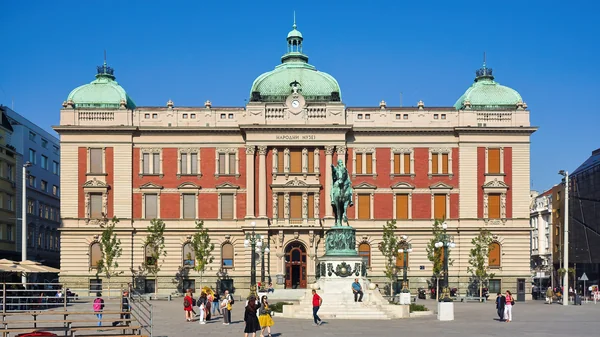
Serbia's oldest museum, founded in 1844, sits right on Republic Square (Trg Republike) in the heart of Belgrade. After a 15-year renovation that kept the doors shut until 2018, it reopened with over 400,000 objects spread across archaeology, numismatics, and art. The crown jewel is the Miroslav Gospel, a 12th-century illuminated manuscript from around 1190, protected by UNESCO as part of the Memory of the World Register. You can see it in person, and it is worth pausing at. The European art collection is surprisingly strong for a Balkan capital. Works by Bosch, Rubens, Rembrandt, Picasso, Degas, Monet, Van Gogh, and Matisse hang alongside Serbian masters. The archaeological wing covers prehistoric finds, including material from Lepenski Vir, one of Europe's most important Mesolithic sites. If you have already visited the Nikola Tesla Museum for science and the Museum of Yugoslav History for politics, this one fills in the art and deep-history gaps. Open Tuesday through Sunday with late hours on Thursdays and Saturdays until 8 PM. Among the top sights in Belgrade, the National Museum earns its place not through spectacle but through depth. Plan at least 90 minutes.

Hours Mon: Closed | Tue-Wed: 10:00 AM – 6:00 PM | Thu: 12:00 – 8:00 PM | Fri: 10:00 AM – 6:00 PM | Sat: 12:00 – 8:00 PM | Sun: 10:00 AM – 6:00 PM
Price 600 RSD
Insider TipThursday evenings (open until 8 PM) are the least crowded time to visit, and the late light coming through the upper floor windows makes the painting galleries look their best.
Skadarlija

4. Skadarlija

Belgrade's bohemian quarter runs about 500 meters of cobblestoned street, and it has been called the Serbian Montmartre since the late 19th century. The street got its current name in 1872, before which locals knew it as Ciganska Mala. Artists, writers, and musicians gathered in its kafanas (traditional restaurants) through the decades, and that tradition holds on today, though the crowd has shifted from poets to tourists. Live music still spills out of open doorways on warm evenings. The restaurants along Skadarlija serve heavy Serbian fare: cevapi, karadjordjeva snicla, pljeskavica, and strong sljivovica to wash it down. Prices here run higher than in the rest of the city, and the quality varies. Some spots coast on location alone. But the atmosphere on a summer night, with accordion players working the tables and the cobblestones lit by string lights, is hard to replicate elsewhere. The street connects Boulevard of Despot Stefan to Strahinjica Bana, making it a natural connector if you are walking between Kalemegdan Fortress and the center.

Hours Open 24/7
Price Free
Website Wikipedia
Location 44.8178, 20.4643
Insider TipEat at the kafanas on the upper part of the street, closer to Strahinjica Bana. The restaurants near the main entrance tend to be more tourist-oriented with higher markups.
St. Sava Temple

5. St. Sava Temple

This is the largest Orthodox church in the Balkans, and when you stand in front of it, the sheer size makes that claim easy to believe. The white marble exterior sits on the Vracar plateau, visible from across Belgrade. Construction began in 1935 but was interrupted by World War II, then frozen for decades under communist rule. The dome was finally raised in 1989, a 4,000-ton concrete structure lifted to 40 meters over 40 days. The interior mosaics, completed between 2016 and 2020 with Russian artistry, are still dazzling. The temple was built on the spot where Ottoman commander Sinan Pasha reportedly burned the relics of Saint Sava in 1595. That act of destruction became a rallying point for Serbian identity, and the church that eventually rose here carries that weight. Open daily from 8 AM to 8 PM, admission is free. The crypt beneath houses the Church of Saint Prince Lazar and the Patriarchs' Crypt, both worth seeing for their quieter, more intimate atmosphere compared to the vast main hall above. Among things to do in Belgrade, this is the one that gives you the clearest sense of how deeply history and faith are woven together here. Come at dusk when the floodlights turn the white marble almost blue.

Hours Daily: 8:00 AM – 8:00 PM
Price Free
Insider TipThe crypt below the main church has recently completed gold mosaics covering the walls and ceiling. It's less crowded than the upper church and arguably more impressive up close.
Zemun

6. Zemun

Zemun was a separate town on the other side of the Danube for most of its history, part of the Austro-Hungarian Empire while Belgrade proper was under Ottoman control. It became part of Belgrade in 1934, and the difference in architecture is obvious the moment you arrive. Low-rise Habsburg-era houses with terracotta roofs line narrow streets that feel more Central European than Balkan. The population today is around 166,000, making it a full-sized town absorbed into a bigger city. The waterfront promenade along the Danube is the main attraction. Restaurants and cafes line up along the embankment, and the fish restaurants here are some of the best in Belgrade. Gardos Tower (Millennium Tower) at the top of the hill gives a wide view over the Danube, the rooftops, and Great War Island sitting in the water below. From Kalemegdan Fortress in central Belgrade, you can see Zemun across the river, and getting there takes about 20 minutes by bus or taxi. As a must-see in Belgrade, Zemun is the antidote to the city center's intensity. Spend a late morning walking the quay, eat fish for lunch, climb the tower, and you will understand why locals treat it as their escape hatch.

Hours Open 24/7
Price Free
Website www.zemun.rs/
Location 44.85, 20.4
Insider TipThe fish restaurants along Kej Oslobodjenja near the Danube promenade serve river fish (catfish, carp, perch) far better and cheaper than the tourist-oriented places in central Belgrade.
Get Your Own Private Tour with AI Guide
AI Guide
  • Personalized tour tailored to your interests
  • Your AI guide tells stories, shares facts, and cracks jokes
  • Turn-by-turn GPS navigation
  • Available in your language — no download needed
Try for Free

💎 Hidden Gems in Belgrade - Off the Beaten Path

Beyond the tourist crowds, Belgrade hides remarkable treasures waiting to be discovered.

Great War Island

1. Great War Island

Sitting at the exact point where the Sava flows into the Danube, this 211-hectare island is visible from Kalemegdan Fortress but feels like a different world entirely. It has been a protected nature reserve since 2005, home to 196 bird species, marshland, and dense forest. No cars, no buildings, no permanent residents. The name comes from its strategic military importance over the centuries: armies fought over it repeatedly because whoever held the island controlled the river confluence. The northern tip has a small sandy beach called Lido, popular with locals in summer who arrive by boat or kayak. The rest of the island is restricted, legally protected as a wildlife habitat, and urban development is forbidden. The first written record of the island dates to 1699, while the oldest known illustration goes back to 1514. For a city of nearly 2 million people, having this much untouched nature right in the center is unusual. Among the hidden gems in Belgrade, Great War Island appeals to anyone who wants to swap the noise of the city for birdsong and water. You need a boat to get there, which keeps the crowds manageable. Kayak rentals are available along the Danube waterfront near Zemun.

Hours Open 24/7
Price Free
Website Wikipedia
Insider TipKayak rental operators near the Zemun quay run trips to Lido beach on the island's north end. Go on a weekday morning in summer for the beach almost to yourself.
Zemunska Pijaca

2. Zemunska Pijaca

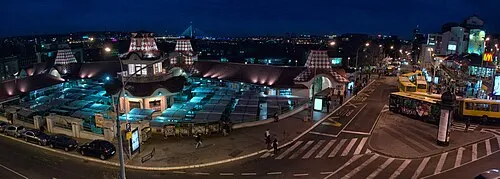
The Zemun market occupies the heart of old Zemun on Masarikov and Veliki Square, and in 2012 it became the site of Serbia's first mobile market, a modern adaptation of the traditional pijaca format on a multifunctional open plaza. The setting is what sells it: stalls spread out along the waterfront area of Zemun, surrounded by the Austro-Hungarian streetscape that gives this neighborhood its distinct character. Compared to Kalenic Market's big-city hustle, Zemunska Pijaca moves at a gentler pace. Flowers are a specialty here, and the produce stalls lean toward what is growing on farms in Srem, the agricultural region just west of Belgrade. Cafes and small restaurants sit along the market's edges, making it easy to grab a coffee and watch the morning trade. Open Monday and Tuesday until 7 PM, weekdays until 6 PM, and weekends until 2 PM. Among the hidden gems in Belgrade, this market is worth folding into a Zemun visit. Walk the Danube promenade, browse the stalls, eat lunch at one of the nearby fish restaurants, and you have a genuinely different experience from anything in the city center.

Hours Mon-Tue: 7:00 AM – 7:00 PM | Wed-Fri: 7:00 AM – 6:00 PM | Sat-Sun: 7:00 AM – 2:00 PM
Price Free
Insider TipSaturday morning is the best time to visit for both market selection and atmosphere, but arrive before noon since stalls start packing up by 2 PM on weekends.
Zvezda Cinema

3. Zvezda Cinema

Built in 1911, Zvezda (Star) is Belgrade's oldest cinema, and the story of how it still exists is as interesting as anything on screen. After years of neglect, the building was occupied in 2014 by the Movement for the Occupation of Cinemas (Pokret za okupaciju bioskopa), a group of activists who squatted the space and turned it into a functioning cultural venue. A 2018 documentary covered the whole saga. The cinema sits at Terazije 40, right on one of the busiest squares in central Belgrade. The programming tilts toward European arthouse, classic Hollywood revivals, indie productions, and occasional Serbian films. Screenings run Monday through Saturday from 6:30 PM to midnight, closed Sundays. The interior is rough around the edges, deliberately so. This is not a polished multiplex. The seats creak, the projection has character, and the bar in the lobby feels like someone's living room. As one of the secret spots in Belgrade, Zvezda is the kind of place that makes the city feel alive in ways a museum cannot. A ten-minute walk from Republic Square and the National Museum, it works as an evening plan after a day of sightseeing. Check their Facebook page for the current schedule.

Hours Mon-Sat: 6:30 PM – 12:00 AM | Sun: Closed
Price 400 RSD
Insider TipFilms are usually screened in their original language with Serbian subtitles. No dubbing, which makes it accessible for English-speaking visitors.
Get Your Own Private Tour with AI Guide
AI Guide
  • Personalized tour tailored to your interests
  • Your AI guide tells stories, shares facts, and cracks jokes
  • Turn-by-turn GPS navigation
  • Available in your language — no download needed
Try for Free

🎨 Best Museums & Galleries in Belgrade

World-class museums and galleries that make Belgrade a cultural treasure.

Bajloni Market

1. Bajloni Market

Originally called Bajlonijeva Pijaca when it opened in 1927, this market is known to everyone in Belgrade by its old name even though it was officially renamed Pijaca Skadarlija after World War II. Its location next to the Skadarlija bohemian quarter makes it easy to pair with a stroll through the cobblestoned street. Open daily from 6 AM to 7 PM, it draws a steady crowd of neighborhood regulars. The market is smaller and grittier than Kalenic, and the specialty here is meat, dairy, and homemade rakija (Serbian fruit brandy). Butchers and charcuterie vendors line the inner rows, while outer stalls sell seasonal vegetables and fruits. The rakija sellers will usually let you taste before buying. Try the sljivovica (plum brandy) or the less common dunjevaca (quince brandy) if it is available. As one of the food markets in Belgrade with real character, Bajloni is the kind of place where you see the city feeding itself. It is not curated or photogenic, just functional and honest. Combined with Skadarlija's restaurants just steps away, this corner of Belgrade gives you the full spectrum of Serbian food culture, from raw ingredients to finished plate.

Hours Daily: 6:00 AM – 7:00 PM
Price Free
Website N/A
Insider TipThe homemade rakija vendors in the back rows sell directly from their family farms. Prices are lower than any bar, and a bottle of good sljivovica makes an excellent souvenir.
Museum of Science and Technology

2. Museum of Science and Technology

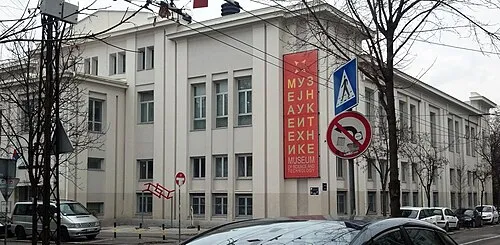
Housed in a former thermal power plant in the Dorcol neighborhood since 2005, this museum was founded in 1989 and covers scientific and technological achievements with English-language captions throughout. The industrial bones of the old power station give the exhibits a raw, unpolished character that works well for a science museum. It sits on Skender-begova Street, a walkable area near the Danube riverfront in lower Dorcol. The collections span electronics, telecommunications, printing technology, and industrial machinery, with some hands-on interactive elements. It is a smaller, quieter museum compared to the National Museum or the Nikola Tesla Museum, and it draws a local crowd rather than a tourist one. If you have already been to the Tesla Museum for the theatrical coil demonstrations, this place offers a more contemplative look at how technology developed in this part of the world. Open Tuesday through Sunday, 10 AM to 6 PM, Mondays closed. Among the best museums in Belgrade for a rainy afternoon, it fills about an hour comfortably. The Dorcol area around it has become one of Belgrade's trendiest neighborhoods for cafes and bars, so the surroundings are worth exploring too.

Hours Mon: Closed | Tue-Sun: 10:00 AM – 6:00 PM
Price 300 RSD
Website www.muzejnt.rs/
Get Your Own Private Tour with AI Guide
AI Guide
  • Personalized tour tailored to your interests
  • Your AI guide tells stories, shares facts, and cracks jokes
  • Turn-by-turn GPS navigation
  • Available in your language — no download needed
Try for Free

🌳 Parks & Best Viewpoints in Belgrade

Beautiful parks, gardens, and panoramic viewpoints for the best views of Belgrade.

Tasmajdan Park

1. Tasmajdan Park

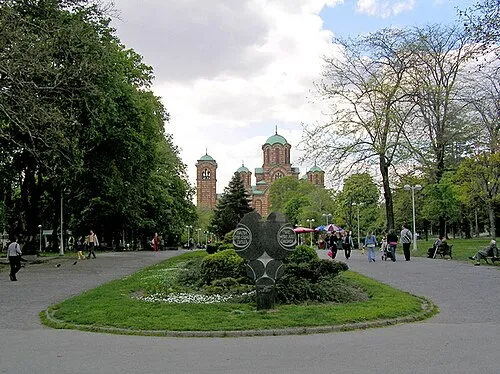
Right in the center of Belgrade between Takovska Street, Ilije Garasanina, and Bulevar Kralja Aleksandra, Tasmajdan sits on the site of a former quarry and, later, a 19th-century cemetery. That layered history gives it a subtle strangeness beneath the pleasant green surface. The Church of St. Mark, a large Serbian Orthodox church modeled after the Gracanica monastery, stands at the park's edge, adding a visual anchor that most city parks lack. The park is flat, open, and busy. Joggers, dog walkers, parents with strollers, teenagers on benches. Fountains, a children's playground, and a small outdoor cafe fill out the amenities. It is the most convenient green space in central Belgrade, within walking distance of the Nikola Tesla Museum, the Parliament building, and the pedestrian zone on Knez Mihailova. Open daily from 6 AM to 10 PM. Among the best views in Belgrade, this is not the park for panoramas. It is the park for collapsing onto a bench after a morning of walking from the fortress through Skadarlija and Republic Square. Sometimes the best thing a park can do is just be close and comfortable.

Hours Daily: 6:00 AM – 10:00 PM
Price Free
Insider TipThe Teniski Klub Tasmajdan on the park's southern side has a cafe terrace that is quieter than the benches along the main paths.
Get Your Own Private Tour with AI Guide
AI Guide
  • Personalized tour tailored to your interests
  • Your AI guide tells stories, shares facts, and cracks jokes
  • Turn-by-turn GPS navigation
  • Available in your language — no download needed
Try for Free

Explore with AI Guide

AI Guide App

Get personalized tours with our AI-powered guide. No download needed — works right in your browser.