Things to Do in Boston - Top Attractions, Hidden Gems & Must-See Sights

Discover the best things to do in Boston. Complete guide to must-see sights, popular attractions, hidden gems, museums, food markets and parks.

25 Attractions 6 Categories Travel Guide

Table of Contents

Boston Overview

Boston is a walking city built on layers of American history. It's compact enough that you can cover the Freedom Trail, grab a cannoli in the North End, stroll through Beacon Hill, and be sitting in the Public Garden by late afternoon, all on foot. The city has been around since 1630, and it wears that age well: brick sidewalks, gas lanterns, brownstone neighborhoods, and colonial-era buildings mixed in with glass towers and a world-class museum scene. It's smaller and more manageable than New York, less spread out than Washington, and more historically concentrated than any other American city.

Boston works best for people who like to walk, eat, and absorb history without being lectured at. The Freedom Trail gives you the Revolution. The North End gives you Italian food. Beacon Hill and Back Bay give you 19th-century architecture. The Fenway museum cluster gives you art. And the Charles River gives you space to breathe. If you have 3 days, you can see nearly everything that matters. If you have 5, you can do it without rushing.

The city has a reputation for being expensive, and it is. Hotel rates are high, museum tickets add up, and restaurant prices match New York in some neighborhoods. But many of the best things in Boston are free: the Freedom Trail, Boston Common, the Public Garden, the Boston Public Library, Beacon Hill, and the Harborwalk. Budget travelers who prioritize walking and free sights can have a great trip without spending much at all.

Must-See Attractions in Boston

  • Freedom Trail
  • Boston Common
  • Public Garden
  • Beacon Hill
  • Faneuil Hall
  • North End
🏛️ Must-See ⭐ Sights 💎 Hidden Gems 🎨 Museums 🍕 Food & Markets 🌳 Parks & Views

🏛️ Must-See Attractions in Boston

These iconic landmarks and must-see sights are essential stops for any visitor to Boston.

Beacon Hill

1. Beacon Hill

Brick sidewalks, gas lanterns, narrow streets, and Federal-era rowhouses with purple windowpanes. Beacon Hill is what most people picture when they think of old Boston. The neighborhood sits on a steep slope between Boston Common and the Charles River, and walking its streets feels like stepping into the 19th century. Acorn Street, a cobblestone alley barely wide enough for a car, is the most photographed street in the city. This is where Boston's political and literary elite lived. Louisa May Alcott, Oliver Wendell Holmes, and several Massachusetts governors called these blocks home. The Boston Athenaeum, one of the country's oldest independent libraries, is at 10 1/2 Beacon Street at the neighborhood's edge. Charles Street, running along the base of the hill, has antique shops, small restaurants, and cafes that feel untouched by chain culture. Beacon Hill is free to wander and open around the clock. It's directly uphill from Boston Common and a short walk from the Freedom Trail. Wear comfortable shoes. The brick sidewalks are uneven and the hills are real.

Hours Open 24/7
Price Free
Website N/A
Insider TipLouisburg Square, the tiny private park ringed by townhouses on Mount Vernon Street, is the most exclusive address in the neighborhood. Walk through quietly; residents are used to tourists but not to noise.
Boston Common

2. Boston Common

America's oldest public park, and it looks it. Not polished, not manicured like the Public Garden next door. Boston Common has 50 acres of open green space, old trees, walking paths, and a history that stretches back to 1634. Cows grazed here. British soldiers camped here before the Revolution. The Central Burying Ground along Boylston Street holds the grave of painter Gilbert Stuart, the man who painted the portrait of George Washington you see on every dollar bill. The Common is where the Freedom Trail begins (or ends, depending on your direction), and it sits at the intersection of five major streets: Tremont, Park, Beacon, Charles, and Boylston. That makes it the natural starting point for almost anything you do in downtown Boston. The city's visitor center is on the Tremont Street side. Open daily from 6 AM to 11:30 PM, it's a park that people actually use, not just visit. Joggers in the morning, office workers at lunch, families in the afternoon. Walk west across Charles Street and you're in the Public Garden. Walk uphill on Beacon Street and you're in Beacon Hill. The Common is the anchor for Boston's top sights, and it costs nothing.

Hours Daily: 6:00 AM – 11:30 PM
Price FREE
Insider TipThe Frog Pond is a wading pool in summer and an ice skating rink in winter. It's a good break if you're traveling with kids.
Boston Public Garden

3. Boston Public Garden

Hours Open 24/7
Price Free
Bunker Hill Monument

4. Bunker Hill Monument

A 221-foot granite obelisk on Breed's Hill in Charlestown, marking the site of one of the first major battles of the American Revolution on June 17, 1775. The monument took 18 years to build (1825 to 1843) because funding kept running out. There's no elevator. You climb 294 steps in a tight spiral staircase, and the view from the top on a clear day extends across the harbor and downtown skyline. The monument is the final stop on the Freedom Trail, about a 30-minute walk north from Faneuil Hall. Getting here requires crossing the Charlestown Bridge, which means most casual walkers turn around before reaching it. That's a mistake. The Charlestown neighborhood around the monument is quiet and residential, a different world from the tourist bustle of the waterfront. Admission is free. The monument is open Wednesday through Sunday, 1 PM to 4 PM, and the adjacent museum gives context on the battle. Is it a must-see in Boston? If you care about the Revolution, yes. The climb is the real draw. Standing inside a narrow stone column built almost 200 years ago, counting steps, arriving winded at the top: that's more memorable than any plaque.

Hours Mon-Tue: Closed | Wed-Sun: 1:00 – 4:00 PM
Price FREE
Insider TipGo on a Wednesday afternoon when visitor numbers are lowest. The staircase is single-file in places, and passing other climbers on a crowded day makes the ascent take twice as long.
Faneuil Hall

5. Faneuil Hall

Opened in 1742, Faneuil Hall has been a marketplace and a meeting hall for nearly 300 years. Samuel Adams and other revolutionaries gave speeches in the Great Hall upstairs, earning the building the nickname "Cradle of Liberty." The building burned down in 1761, was rebuilt, then expanded by architect Charles Bulfinch in 1806. Today it is four stories tall, made of red brick, with a copper grasshopper weathervane on the cupola that has been up there since 1742. The ground floor is a market space. The Great Hall on the second and third floors is 76 by 76 feet with high ceilings and historical paintings. The National Park Service operates a visitor center here with free Freedom Trail maps and guided tour information. Faneuil Hall is open Monday through Saturday 10 AM to 9 PM, Sunday 11 AM to 7 PM, and entry is free. It sits directly next to Quincy Market, so most visitors see both in one stop. Here's the honest take: the building itself is genuinely historic and worth walking through. But Faneuil Hall Marketplace around it is heavy on chain stores and tourist-priced food. Go inside, see the Great Hall, get your trail map, then head to the North End for better food. Among top sights in Boston, the hall is real; the surrounding marketplace is skippable.

Hours Mon-Sat: 10:00 AM – 9:00 PM | Sun: 11:00 AM – 7:00 PM
Price FREE
Insider TipThe Ancient and Honorable Artillery Company museum on the top floor is free, rarely visited, and has military artifacts going back to 1638.
Freedom Trail

6. Freedom Trail

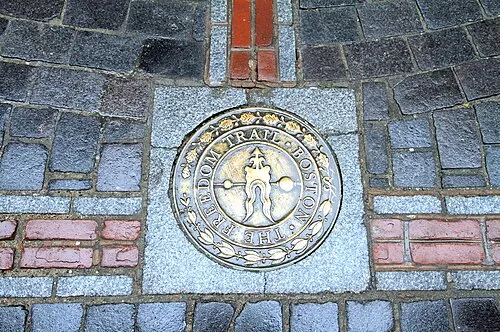
A red brick line painted on the sidewalk. That's it. Follow it for 2.5 miles and you'll walk past 16 of the most important sites in American history, from Boston Common through the North End to the Bunker Hill Monument in Charlestown. The trail was dreamed up by a journalist in 1951, and by 1953, 40,000 people a year were following the line. Today the number is vastly higher, and for good reason: no single walk in any American city packs this much history into this short a distance. Most stops along the Freedom Trail are free or ask for a small donation. The Old South Meeting House, Old State House, and Paul Revere House charge admission, but they're worth entering. The National Park Service runs a visitor center on the ground floor of Faneuil Hall with free maps. You can walk the trail on your own in about 90 minutes without stopping, but plan at least 3 hours if you actually want to read plaques, step inside buildings, and wander through the old cemeteries. Of all things to do in Boston, this is the one you do first. It gives you a mental map of the city, and you'll pass through neighborhoods you'll want to come back to later, like Beacon Hill and the North End. The trail is a must-see in Boston because it connects the dots between places that would otherwise just be isolated stops.

Hours Open 24/7
Price Free
Insider TipPick up the free NPS map at Faneuil Hall and walk north to south, ending at Boston Common. Most tour groups go the opposite direction, so you'll be walking against the crowds.
Get Your Own Private Tour with AI Guide
AI Guide
  • Personalized tour tailored to your interests
  • Your AI guide tells stories, shares facts, and cracks jokes
  • Turn-by-turn GPS navigation
  • Available in your language — no download needed
Try for Free

💎 Hidden Gems in Boston - Off the Beaten Path

Beyond the tourist crowds, Boston hides remarkable treasures waiting to be discovered.

Boston Athenæum

1. Boston Athenæum

Hours Mon-Thu: 9:00 AM – 8:00 PM | Fri-Sat: 9:00 AM – 5:00 PM | Sun: Closed
Price Free (ground floor)
Harborwalk

2. Harborwalk

Boston's Harborwalk is a 43-mile waterfront path that connects neighborhoods along the entire harbor, from East Boston through the Seaport District and down to Dorchester. You don't need to walk the whole thing. The most interesting sections run through the Seaport, past the Institute of Contemporary Art, around Fan Pier Park, and along the wharves near the North End. These stretches are flat, paved, and have benches and public art installations along the way. What makes the Harborwalk special is that it exists at all. For most of Boston's history, the waterfront was industrial, closed off, and dirty. The ongoing effort to open it up to pedestrians has been one of the city's best urban planning decisions. Walking even a short section gives you harbor views, fresh air, and a perspective on Boston that you simply don't get from the Freedom Trail or the back streets of Beacon Hill. As hidden gems in Boston go, the Harborwalk is hiding in plain sight. It's free, open around the clock, and connects several other places on this list. Use it as a walking route between the Seaport and the North End, and you'll avoid traffic and see the harbor the whole way.

Hours Open 24/7
Price Free
Website N/A
Insider TipThe section between the ICA and Fan Pier Park in the Seaport has the widest views of Boston Harbor and is almost empty on weekday mornings.
James P. Kelleher Rose Garden

3. James P. Kelleher Rose Garden

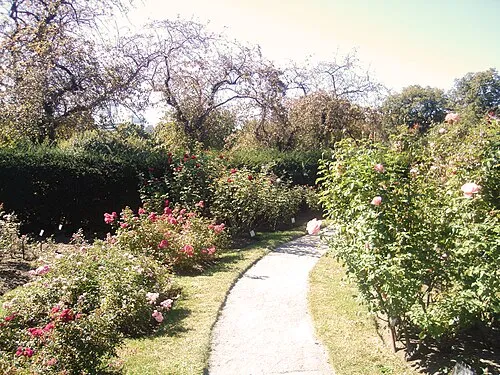
Tucked into the Back Bay Fens near the Museum of Fine Arts and the Isabella Stewart Gardner Museum, this rose garden is easy to miss if you don't know it's there. It's a small, formal garden with hundreds of rose bushes arranged around a central path, and in June and July, when the blooms peak, it's one of the prettiest spots in Boston. No crowds, no admission fee, no fanfare. The garden sits along the Muddy River section of Frederick Law Olmsted's Emerald Necklace, the chain of parks that runs from Boston Common down to Franklin Park. Open weekdays 7 AM to 5 PM and weekends from 10 AM to 5 PM, it's the kind of place where you sit on a bench and wonder why nobody else is here. If you're visiting either of the nearby museums, the rose garden is a 5-minute walk away and makes a perfect break between galleries. Among secret spots in Boston, this garden rewards visitors who time it right. Come in late June for peak bloom. Come in November and you'll find bare stems and an empty path. The window is narrow, but when the roses are out, there's nothing else like it in the city.

Hours Mon-Fri: 7:00 AM – 5:00 PM | Sat-Sun: 10:00 AM – 5:00 PM
Price Free
Insider TipVisit on a weekday morning right at 7 AM. You'll likely have the entire garden to yourself, and the light is soft and perfect for photos.
Get Your Own Private Tour with AI Guide
AI Guide
  • Personalized tour tailored to your interests
  • Your AI guide tells stories, shares facts, and cracks jokes
  • Turn-by-turn GPS navigation
  • Available in your language — no download needed
Try for Free

🎨 Best Museums & Galleries in Boston

World-class museums and galleries that make Boston a cultural treasure.

Boston Children's Museum

1. Boston Children's Museum

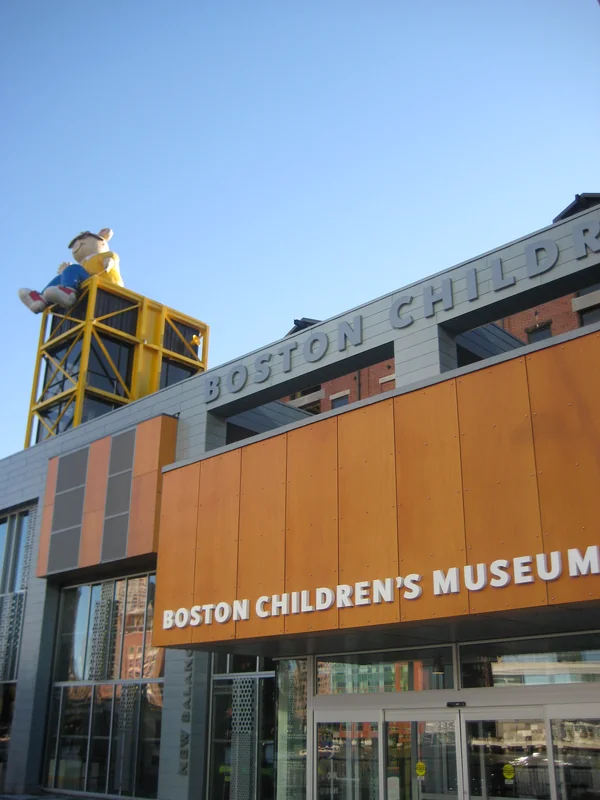
The second oldest children's museum in the United States sits on Children's Wharf along the Fort Point Channel, right at the edge of the Seaport District. If you have kids under 10, this is probably the most useful thing on this entire page. Admission is $22 per person. The museum is designed for hands-on play: climbing structures, water tables, a construction zone, a Japanese house you can explore, and rotating exhibits aimed at getting small children to learn by doing. The building is easy to spot: look for the giant Hood Milk Bottle, a 40-foot-tall roadside structure that now serves as a snack stand. Inside, the museum is three floors of organized chaos. It's open daily except Tuesdays, 9 AM to 4 PM. Weekday mornings are calmer than weekends, when it fills up fast. For adults traveling without children, skip this entirely. For families, it's one of the best museums in Boston for the under-10 crowd. The location on the Fort Point Channel also means you can walk along the Harborwalk afterward or cross into the Seaport for lunch. Plan about 2 to 3 hours inside.

Hours Mon: 9:00 AM – 4:00 PM | Tue: Closed | Wed-Sun: 9:00 AM – 4:00 PM
Price 22 USD
Insider TipFriday evenings from 5 to 8 PM used to be discount nights. Check their website for current evening pricing, as it changes seasonally.
Harvard Museum of Natural History

2. Harvard Museum of Natural History

Across the river in Cambridge, on Harvard's campus at 26 Oxford Street, this museum packs 12,000 specimens into 16 galleries. The star attraction is the Glass Flowers collection: over 4,000 botanically accurate models of plants made entirely from glass by Leopold and Rudolf Blaschka between 1887 and 1936. Nothing else like it exists anywhere in the world. They look real until you lean in and realize every petal and stamen is hand-blown glass. Your ticket also gets you into the connected Peabody Museum of Archaeology and Ethnology next door, so you're really getting two museums for one price. The mineral collection is one of the strongest in the country, with gemstones, meteorites, and a room full of specimens that glow under UV light. The zoological galleries have everything from mounted whale skeletons to preserved insects. Open daily 9 AM to 5 PM. The Harvard Museum sits a 20-minute T ride from downtown Boston on the Red Line (Harvard Square stop), making it easy to combine with a walk around the campus. Among the best museums in Boston's broader area, it's the most surprising. People come expecting a dusty university collection and leave genuinely amazed by the Glass Flowers.

Hours Daily: 9:00 AM – 5:00 PM
Price Free
Insider TipThe mineral gallery's fluorescent room is the best single room in the museum. Give your eyes a minute to adjust to the darkness, and the rocks come alive in neon colors.
Institute of Contemporary Art

3. Institute of Contemporary Art

The ICA moved to its current building in the Seaport District in 2006, and the architecture alone is worth the trip. Designed by Diller Scofidio + Renfro, the building cantilevers over the harbor, with a glass-walled gallery that hangs above the water. From the mediatheque on the lower level, you look out at the harbor through floor-to-ceiling windows while sitting in tiered seating. The building was a statement that Boston's art scene had a contemporary side, and the Seaport was its new address. The permanent collection is modest but growing, focused on 21st-century work. The rotating exhibitions are the real draw, often featuring video, installation, and multimedia pieces that you won't find at the MFA or the Gardner. The museum was founded in 1936 as the Boston Museum of Modern Art, making it one of the older contemporary art institutions in the country, though its identity has shifted many times. Open Tuesday through Sunday, with late hours until 9 PM on Thursdays and Fridays. Closed Mondays. Check the website for current admission prices. Among the best museums in Boston, the ICA is the one for people who find old masters a bit exhausting and want to see what's happening now.

Hours Mon: Closed | Tue-Wed: 10:00 AM – 5:00 PM | Thu-Fri: 10:00 AM – 9:00 PM | Sat-Sun: 10:00 AM – 5:00 PM
Price $$
Insider TipThursday evenings from 5 to 9 PM are free. The crowd skews younger, the bar is open, and it feels more like an event than a museum visit.
Isabella Stewart Gardner Museum

4. Isabella Stewart Gardner Museum

Isabella Stewart Gardner built a Venetian palazzo in the middle of Boston's Fenway neighborhood, filled it with her personal art collection, and opened it to the public in 1903. Her will required that every object remain exactly where she placed it, forever. So when you walk through the three-story courtyard with its Roman columns, seasonal flowers, and filtered light, you're seeing the museum exactly as she intended it. A new wing by Renzo Piano was added in 2012, but the original building remains untouched. The collection includes Titian, Rembrandt, Vermeer, and Sargent, but the museum is famous for what's missing. In 1990, thieves disguised as police officers stole 13 works valued at an estimated $500 million. The crime has never been solved. Empty frames still hang on the walls where the paintings were, per Gardner's instructions that nothing be moved. It's eerie and fascinating. The Gardner is one of the best museums in Boston and unlike any museum you've been to elsewhere. It's intimate, personal, and strange in the best way. Check the website for current ticket prices. Open every day except Tuesday. It's a 10-minute walk from the MFA, and together they make the strongest museum day in the city.

Hours Mon: 11:00 AM – 5:00 PM | Tue: Closed | Wed: 11:00 AM – 5:00 PM | Thu: 11:00 AM – 9:00 PM | Fri: 11:00 AM – 5:00 PM | Sat-Sun: 10:00 AM – 5:00 PM
Price $$
Insider TipAnyone named Isabella gets in free, always. The museum also has free admission days periodically. Check their calendar before buying tickets.
Museum of Fine Arts Boston

5. Museum of Fine Arts Boston

The MFA is the big one. Founded in 1870 and moved to its current Fenway location in 1909, it holds over 450,000 works of art across an enormous building that you cannot see in a single visit. The collection spans ancient Egyptian artifacts, European paintings, American decorative arts, Asian galleries, and contemporary work. Admission is $27 for adults. Plan at least 3 hours, though art lovers could spend a full day. The American art wing is the strength that sets the MFA apart from other major museums. John Singer Sargent's murals in the rotunda, Paul Revere's silver, and a deep collection of American impressionism make this the best place in the country to understand American art history. The Asian galleries are also exceptional, particularly the Japanese collection. The building itself, a neoclassical granite structure with a modern wing added by Norman Foster, is impressive without being overwhelming. Open every day except Tuesday, with extended hours until 10 PM on Thursdays and Fridays. The MFA sits near the Isabella Stewart Gardner Museum, so you can visit both in a day if you pace yourself. Among the best museums in Boston, this is the one that justifies clearing your schedule. The Gardner has more personality, but the MFA has more of everything else.

Hours Mon: 10:00 AM – 5:00 PM | Tue: Closed | Wed: 10:00 AM – 5:00 PM | Thu-Fri: 10:00 AM – 10:00 PM | Sat-Sun: 10:00 AM – 5:00 PM
Price 27 USD
Website www.mfa.org/
Insider TipWednesday evenings after 4 PM are often less crowded, and the late hours on Thursday and Friday give you a calmer experience than weekend mornings.
Museum of Science

6. Museum of Science

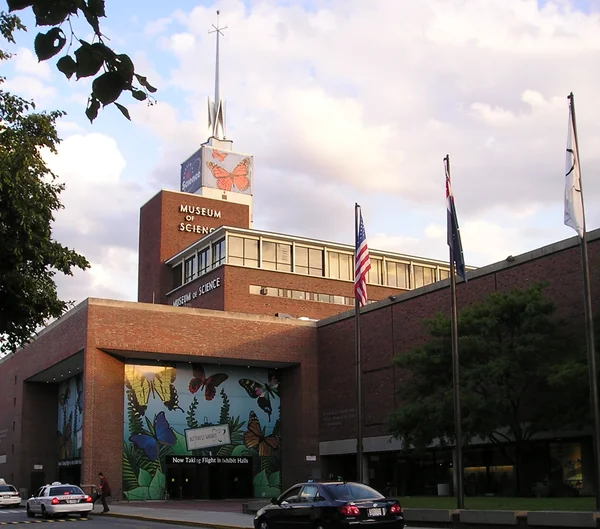
Straddling the Charles River between Boston and Cambridge, the Museum of Science has over 700 interactive exhibits spread across a sprawling campus at Science Park. It's loud, busy, and designed primarily for families and school groups. Admission is $29 for adults. The Charles Hayden Planetarium and the Mugar Omni Theater (New England's only domed IMAX screen) are ticketed separately. The permanent exhibits cover everything from dinosaurs and live animal presentations to engineering challenges and lightning demonstrations with a massive Van de Graaff generator (one of the world's largest). The museum is also an accredited zoo with over 100 animals, which surprises first-time visitors. It's open daily 9 AM to 5 PM, and you'll want at least 3 hours, more with kids. Is this one of the best museums in Boston? For families, absolutely. For adults without children, it depends on your tolerance for excited 8-year-olds. The planetarium shows are genuinely good regardless of age, and the IMAX theater is the best screen in the area. The museum sits right next to the Charles River Esplanade, so you can combine a visit with a walk along the river.

Hours Daily: 9:00 AM – 5:00 PM
Price 29 USD
Website www.mos.org/
Insider TipThe indoor lightning show with the Van de Graaff generators happens multiple times daily and is included with admission. Don't miss it. It's the single best live demonstration in any science museum in the northeast.
Get Your Own Private Tour with AI Guide
AI Guide
  • Personalized tour tailored to your interests
  • Your AI guide tells stories, shares facts, and cracks jokes
  • Turn-by-turn GPS navigation
  • Available in your language — no download needed
Try for Free

🍕 Food Markets & Culinary Spots in Boston

The best food markets, food halls, and culinary destinations in Boston.

Quincy Market

1. Quincy Market

Three granite and brick buildings from 1826, designed by Alexander Parris and named after the mayor who built them. Quincy Market sits directly next to Faneuil Hall and has been a marketplace for almost 200 years. The central building has a domed rotunda and a long colonnade of food stalls running its full length. The North and South Market buildings flank it on either side with shops and restaurants. The complex was renovated in the 1970s and reopened as one of America's first "festival marketplaces." The food hall in the central building is the main draw. You'll find New England clam chowder in bread bowls, lobster rolls, roast beef sandwiches, and quick-service meals from about 20 vendors. Prices are tourist-level, and the quality is mixed. The chowder is usually decent; the lobster rolls are overpriced compared to what you'd get at a proper seafood place. On summer days, street performers line the outdoor areas between the buildings. Is this where to eat in Boston? Not if you want the best meal of your trip. Walk 10 minutes to the North End for that. But Quincy Market is convenient, open Monday through Saturday 10 AM to 9 PM and Sunday noon to 6 PM, and it's a reasonable lunch stop if you're already at Faneuil Hall. Think of it as food-court food in a beautiful building, among the most popular food markets in Boston.

Hours Mon-Sat: 10:00 AM – 9:00 PM | Sun: 12:00 – 6:00 PM
Price Free
Location 42.36, -71.055
Insider TipThe chowder at the central rotunda is overpriced. If you want good chowder near here, walk 5 minutes to Union Oyster House on Union Street instead.
Get Your Own Private Tour with AI Guide
AI Guide
  • Personalized tour tailored to your interests
  • Your AI guide tells stories, shares facts, and cracks jokes
  • Turn-by-turn GPS navigation
  • Available in your language — no download needed
Try for Free

🌳 Parks & Best Viewpoints in Boston

Beautiful parks, gardens, and panoramic viewpoints for the best views of Boston.

Arnold Arboretum

1. Arnold Arboretum

The oldest public arboretum in North America, established in 1872 and managed jointly by Harvard University and the City of Boston. The Arnold Arboretum covers 281 acres across the Jamaica Plain and Roslindale neighborhoods, and it's free to enter every day from dawn to dusk. The landscape was designed by Charles Sprague Sargent and Frederick Law Olmsted, the same man behind Central Park. It forms the second-largest section of Boston's Emerald Necklace, the chain of parks running from Boston Common to Franklin Park. The collection focuses on temperate trees, shrubs, and vines, with particular strength in Asian species from collecting expeditions in China, Japan, and Korea. Lilac Sunday in May draws huge crowds when the lilac collection peaks. Peters Hill, a gentle climb near the south end, gives you a hilltop view over the tree canopy and out toward the Blue Hills. It's quiet, uncrowded, and genuinely beautiful in every season. This is a very different Boston experience. No bricks, no history lectures, no tourists. Just trees, paths, and space. Getting here takes about 25 minutes on the Orange Line to Forest Hills. Among the best parks in Boston, the Arboretum is the one that reminds you this city has nature beyond the Common and the river.

Hours Daily: dawn to dusk
Price FREE
Insider TipLilac Sunday is the third Sunday in May. It's the only day picnicking is allowed on the grounds, and the collection of over 400 lilac plants is in full bloom.
Piers Park

2. Piers Park

Across the harbor in East Boston, built on what used to be a condemned industrial pier, Piers Park is 6.5 acres of waterfront green space with one of the best skyline views you'll find anywhere in the city. The park was designed by Pressley Associates and reclaimed the pier's original 1870 seawalls, paving trails in brick and granite from the old structure. A 600-foot promenade runs along the water, lined with pavilions and more than 32 varieties of trees. A Phase II expansion in 2023 added more acreage, and a Phase III is planned. The park has a children's play area, an amphitheater, an exercise station, and the Piers Park Sailing Center, which runs community boating programs. The largest pavilion has 24 granite panels by artist William Reimann, honoring East Boston's immigrant history. Open weekdays 8 AM to 8 PM. Most tourists never cross the harbor to East Boston, and that's what makes Piers Park special. The skyline view from here, looking back at the downtown towers and the waterfront, is better than anything you'll get standing in the city itself. For best views in Boston, this unassuming park in a residential neighborhood beats any observation deck.

Hours Mon-Fri: 8:00 AM – 8:00 PM | Sat-Sun: Closed
Price Free
Insider TipTake the Blue Line to Maverick station. The park is a 7-minute walk south. Come at sunset for the downtown skyline lit up in gold across the water.
Get Your Own Private Tour with AI Guide
AI Guide
  • Personalized tour tailored to your interests
  • Your AI guide tells stories, shares facts, and cracks jokes
  • Turn-by-turn GPS navigation
  • Available in your language — no download needed
Try for Free

Explore with AI Guide

AI Guide App

Get personalized tours with our AI-powered guide. No download needed — works right in your browser.