Things to Do in Bucharest - Top Attractions, Hidden Gems & Must-See Sights

Discover the best things to do in Bucharest. Complete guide to must-see sights, popular attractions, hidden gems, museums, food markets and parks.

28 Attractions 6 Categories Travel Guide

Table of Contents

Bucharest Overview

Bucharest is a city that doesn't try to charm you, and that honesty is its appeal. The Romanian capital is messy, contradictory, and full of surprises that reveal themselves slowly. Communist-era apartment blocks stand next to Belle Epoque mansions. A dictator's megalomania produced the heaviest building in the world, and a few kilometers away, an abandoned reservoir turned into a nature park full of otters and herons. The city rewards curiosity more than planning.

For travelers who like their cities polished and predictable, Bucharest will feel rough. For those who prefer real texture over tourist veneer, it's one of the most interesting capitals in Europe. The food is hearty and cheap. The nightlife in Old Town is loud and democratic. The museums are surprisingly strong, particularly the Village Museum and the Museum of the Romanian Peasant, which together explain rural Romania better than any book. And the layers of history, from Ottoman-era churches to revolution-scarred facades to communist monuments repurposed as art galleries, give every walk through the center a density that more famous cities struggle to match.

Must-See Attractions in Bucharest

  • Palace of Parliament
  • Old Town
  • Romanian Athenaeum
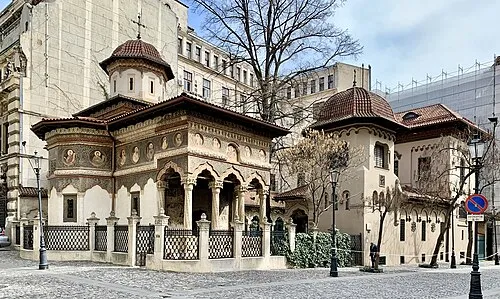
  • Stavropoleos Monastery
  • Dimitrie Gusti National Village Museum
🏛️ Must-See ⭐ Sights 💎 Hidden Gems 🎨 Museums 🍕 Food & Markets 🌳 Parks & Views

🏛️ Must-See Attractions in Bucharest

These iconic landmarks and must-see sights are essential stops for any visitor to Bucharest.

Arc de Triomphe

1. Arc de Triomphe

Bucharest's own triumphal arch stands 27 meters tall at the intersection of Kiseleff Boulevard and three other major roads in the northern part of the city. Architect Petre Antonescu designed the current granite version, completed in 1935-1936, though a wooden predecessor went up right after World War I in 1921-1922. Italian sculptors helped carve the Russchita marble reliefs that decorate the four faces. Most visitors see it from a taxi window while heading north toward Herastrau Park, which is a shame. On certain days you can climb an interior staircase to a terrace at the top. From up there, Kiseleff Boulevard stretches south in a straight line, flanked by linden trees, looking very much like a smaller version of what you'd find in Paris. To the north, Herastrau Park fills the view with green. The arch sits in a traffic roundabout, so getting close means crossing some busy roads. When the interior is open (Tuesday through Sunday, 9:00 AM to 5:00 PM), the climb is free and the view is the reward. December 1st, Romania's National Day, brings a military parade past the monument.

Hours Mon: Closed | Tue-Sun: 9:00 AM – 5:00 PM
Price Free
Insider TipThe interior staircase to the viewing terrace opens seasonally and not every day. Check with the tourist office or the Brancoveanu Palaces website before making the trip.
Old Town

2. Old Town

Centrul Vechi covers roughly half a square kilometer at the western edge of Sector 3, and it packs more life per cobblestone than anywhere else in the city. Strada Lipscani, named after the merchants who once hauled goods from Leipzig, is the main artery. Side streets branch off into a maze of bars, restaurants, and facades in every state from freshly painted to actively crumbling. Daytime belongs to walkers. Stavropoleos Monastery hides behind stone walls just off the main drag, and Pasajul Macca-Vilacrosse cuts through a block like a Parisian passage, its yellow glass panels glowing. After dark, the cobblestones fill with bar terraces and the volume goes up sharply. This is Bucharest's primary nightlife district, loud and unapologetic about it. If that's your thing, you'll be happy. If not, come in the morning instead, when the light hits the old buildings and the streets are quiet enough to notice the carved details above doorways. Free to walk anytime. The area is compact enough to cover in an hour, though the restaurants could stretch that into a full evening. From Piata Unirii metro station, walk north across the Dambovita. Old Town is a must-see in Bucharest not because every corner is beautiful, but because this is where the city's energy concentrates.

Hours Open 24/7
Price Free
Website Wikipedia
Insider TipThe side streets east of Strada Lipscani, particularly Strada Gabroveni and Strada Franceza, hold better-value restaurants than the main pedestrian strip. Locals eat there, tourists eat on Lipscani.
Palace of Parliament

3. Palace of Parliament

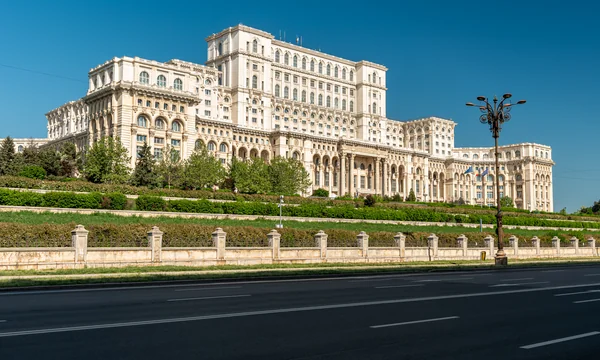
The numbers alone are absurd: 270 by 240 meters, 84 meters above ground, 92 meters below it, 9 floors up and 9 down, roughly 1,000 rooms, 480 chandeliers, a million cubic meters of Transylvanian marble. Ceausescu ordered the construction in the 1980s, demolishing entire neighborhoods, monasteries, and churches to clear Dealul Arsenalului for the site. An estimated 20,000 workers built in round-the-clock shifts. When it was finished, it was the heaviest building in the world and the second-most expensive administrative structure ever built. About 70% of it remains unused. Walking the corridors on a guided tour, you feel the weight of all that empty space. Crystal chandeliers hang over ballrooms no one dances in. Marble staircases lead to floors nobody needs. The National Museum of Contemporary Art now occupies a glass wing on the building's west side, turning part of Ceausescu's monument into something the dictator would have loathed. The irony is deliberate and well-placed. Guided tours run daily from 9:00 AM to 5:00 PM. Bring your passport for the security check.

Hours Daily: 9:00 AM – 5:00 PM
Price Free
Website cic.cdep.ro/
Location 44.4275, 26.0875
Insider TipBook the "standard + terrace" tour option. The rooftop terrace gives you the best view of Bulevardul Unirii stretching east, and most visitors don't realize it's available.
Romanian Athenaeum

4. Romanian Athenaeum

When public funding ran short during construction in 1886, Bucharest's citizens were asked to chip in under the slogan "Donati un leu pentru Ateneu" (Donate one leu for the Athenaeum). They did. The building was finished by 1888, designed by French architect Albert Galleron in neoclassical style, and it has been the city's cultural heart ever since. The circular concert hall seats about 600 under a painted dome showing scenes from Romanian history. The acoustics are considered among the best in southeastern Europe. The George Enescu Philharmonic performs here regularly, and the biennial George Enescu Festival fills the hall every odd-numbered September. Even without a concert ticket, the ground-floor lobby and frescoes are worth seeing. The building sits on Calea Victoriei just north of Revolution Square, facing the small park of Piata George Enescu. From here, the Museum of the Romanian Peasant is a ten-minute walk north along Kiseleff Boulevard. Open for visits Monday through Friday 9:00 AM to 6:00 PM, Saturday 10:00 AM to 5:00 PM. Admission without a concert is about 15 RON. As a top sight in Bucharest and a reminder that great buildings can be built through collective will, the Athenaeum earns its place on every itinerary.

Hours Mon-Fri: 9:00 AM - 6:00 PM, Sat: 10:00 AM - 5:00 PM
Price 15 RON
Website fge.org.ro/
Location 44.4413, 26.0973
Insider TipCheck the Enescu Philharmonic concert schedule online before your trip. Regular concert tickets start around 30 RON, and hearing anything performed in this hall is worth rearranging your evening for.
Stavropoleos Monastery

5. Stavropoleos Monastery

On a quiet side street just off Strada Lipscani, this small Orthodox church was built in 1724 in the Brancovenesc style, a Romanian tradition that blends Byzantine, Ottoman, and Venetian elements into something distinct. The name comes from the Greek Stauropolis, meaning "City of the Cross." Carved stone columns, a wooden porch with arched openings, and exterior frescoes make the facade one of the most carefully worked surfaces in Bucharest. In a city that lost much of its old architecture to Ceausescu's demolitions, Stavropoleos survived, and every carved detail matters more because of that. Step through the gate and Old Town's noise drops to nothing. The courtyard holds fragments of carved stone from other demolished Bucharest churches, arranged like an open-air museum of what was lost. Inside the church, Byzantine frescoes cover every wall and ceiling, and the air is thick with beeswax and incense. The monastery choir performs Byzantine chant during services, and the sound fills the small space completely. Open Monday through Saturday 8:00 AM to 7:00 PM, Sunday from noon. Free entry. The monastery sits a one-minute walk from the National Museum of Romanian History and Pasajul Macca-Vilacrosse, making it a natural stop on any walk through the must-see sights in Bucharest.

Hours Mon-Sat: 8:00 AM – 7:00 PM | Sun: 12:00 – 7:00 PM
Price Free
Insider TipAttend Saturday evening vespers (around 6:00 PM) to hear the monastery's choir perform Byzantine chant in candlelight. It lasts about 30 minutes and is one of the most moving experiences in the city.
Get Your Own Private Tour with AI Guide
AI Guide
  • Personalized tour tailored to your interests
  • Your AI guide tells stories, shares facts, and cracks jokes
  • Turn-by-turn GPS navigation
  • Available in your language — no download needed
Try for Free

💎 Hidden Gems in Bucharest - Off the Beaten Path

Beyond the tourist crowds, Bucharest hides remarkable treasures waiting to be discovered.

Cantacuzino Palace

1. Cantacuzino Palace

Among the finest Beaux-Arts buildings on Calea Victoriei, this palace was built by architect Ion D. Berindey for former prime minister Gheorghe Grigore Cantacuzino in 1901-1903. The facade alone is worth a stop: a wrought-iron canopy, carved stone lions, an entrance that drips with early 20th-century ambition. Inside, neorococo rooms with gilded moldings and parquet floors lead to the George Enescu Museum collection upstairs. Enescu married into the Cantacuzino family in 1939, and since 1958 the palace has housed the museum dedicated to Romania's greatest composer. His violins, manuscripts, and personal effects fill the upper rooms. But the building itself competes for your attention. The stained glass, the ceiling work, the proportions of the rooms. Unlike the grand scale of the Palace of Parliament, this space was designed to impress on a human level. Walking north from Revolution Square along Calea Victoriei, you reach it in about ten minutes. The palace is one of those hidden gems in Bucharest that hides in plain sight on the city's busiest boulevard. Combine it with the National Museum of Art just a few blocks south for a morning of things to do in Bucharest that won't cost much and will show you both royal and aristocratic life.

Hours Tue-Sun: 10:00 AM - 5:00 PM
Price Free
Insider TipAsk at the entrance about the small concert series held in the ground-floor salon. The acoustics in those rooms are exceptional, and tickets sell out quickly.
Pasajul Macca-Vilacrosse

2. Pasajul Macca-Vilacrosse

A fork-shaped covered passage connecting Calea Victoriei to Strada Lipscani, this 19th-century arcade has yellow-tinted glass panels that filter sunlight into a warm golden haze. Walking through it on a bright afternoon feels like stepping inside an amber lampshade. The passage splits into two wings: Macca to the south and Vilacrosse to the north. Both are lined with hookah bars, small cafes, and the occasional souvenir shop. On warm evenings the sounds of narghile bubbling and conversation drift through the arcade. The atmosphere is its own strange mix: not quite Old Town nightlife, not quite the Calea Victoriei shopping corridor, but a connecting passage between both. It is classified as a historic monument, and the iron-and-glass construction has a faded elegance that you don't find in newer buildings. Free and open 24 hours, since it's a public passageway. The entrance on Calea Victoriei is easy to miss if you're not looking for it, which is exactly what makes it one of the secret spots in Bucharest. The passage sits steps from the National Museum of Romanian History and a one-minute walk from Stavropoleos Monastery, so it takes zero effort to fold into an Old Town walk.

Hours Open 24/7
Price Free
Website Wikipedia
Insider TipEnter from the Calea Victoriei side in the late afternoon when the sun hits the yellow glass panels at the right angle. The golden light effect only lasts about an hour.
Theodor Pallady Museum

3. Theodor Pallady Museum

Tucked away on Strada Spatarului in Sector 2, this museum occupies Casa Melik, an 18th-century merchant's house with thick walls, low ceilings, and a courtyard garden. The building alone transports you to a Bucharest that predates the boulevards and apartment blocks. It is one of the few surviving domestic structures from pre-modern Bucharest, and feeling the weight of those old walls is half the reason to come. The collection belongs to the National Museum of Art but feels nothing like its parent institution on Revolution Square. Over 800 drawings and paintings by Theodor Pallady fill the rooms: nudes, landscapes, interiors, and the still lifes for which he is best known. His Paris period work hangs alongside French painters like Corot and Carolus-Duran. The eclectic Rautz donation adds Greco-Roman, Egyptian, and Khmer sculpture to the mix, making 1,270 pieces total in a space that feels more like a private collection than a state museum. The museum is a 15-minute walk east of Old Town, off the usual tourist track. Most visitors to the National Museum of Art never learn this satellite gallery exists, which makes it one of the genuine hidden gems in Bucharest. Check the website for current hours before visiting.

Hours Wed-Fri: 10:00 AM - 6:00 PM, Sat-Sun: 11:00 AM - 7:00 PM
Price 10 RON
Location 44.4395, 26.1133
Insider TipThe courtyard garden behind Casa Melik has benches under old trees. It is one of the quietest spots anywhere near the center. Bring a book.
Văcărești Nature Park

4. Văcărești Nature Park

What was supposed to be a reservoir became something far more interesting. In the 1980s, Ceausescu's regime began building a concrete-walled water retention basin in the Vacaresti neighborhood. The project was abandoned after 1989, and nature reclaimed the 189-hectare site. Reeds grew. Trees took root. Foxes, otters, herons, and over 90 species of birds moved in. In 2016 it was officially declared Romania's first urban nature park. Walking the raised paths along the old concrete walls, you look down into a wetland that shouldn't exist. Cormorants perch on dead branches. Turtles sun themselves on logs. The abandoned concrete infrastructure is still visible, slowly being swallowed by vegetation. Compared to the manicured lawns of Cismigiu Garden or the scale of Herastrau Park, Vacaresti is wild, unfinished, and alive in a completely different way. Open daily 6:00 AM to 9:00 PM, free entry. Accessible from Piata Sudului metro station. Bring binoculars if you care about birds. Bring sturdy shoes regardless, because the paths are uneven. This is one of the true hidden gems in Bucharest, the kind of place that would make headlines if it were in Berlin or London. Here it remains mostly known to locals and birdwatchers.

Hours Daily: 6:00 AM – 9:00 PM
Price Free
Location 44.3996, 26.1342
Insider TipThe observation platform on the eastern wall gives the best overview of the wetland. Early morning visits before 8:00 AM in May or June offer the highest chance of spotting herons, kingfishers, and the resident otter family.
Get Your Own Private Tour with AI Guide
AI Guide
  • Personalized tour tailored to your interests
  • Your AI guide tells stories, shares facts, and cracks jokes
  • Turn-by-turn GPS navigation
  • Available in your language — no download needed
Try for Free

🎨 Best Museums & Galleries in Bucharest

World-class museums and galleries that make Bucharest a cultural treasure.

Dimitrie Gusti National Village Museum

1. Dimitrie Gusti National Village Museum

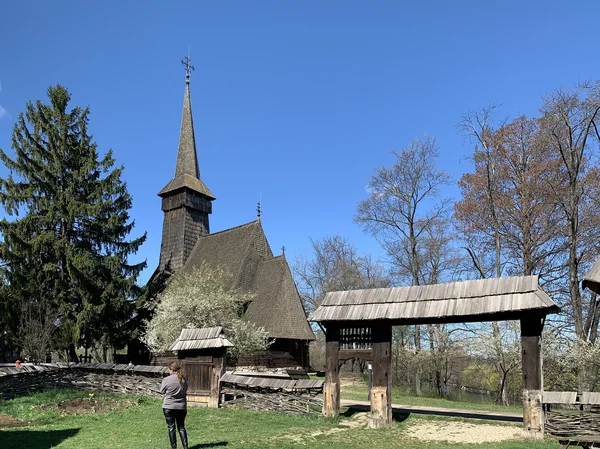
On the shore of Herastrau Lake in northern Bucharest, this open-air museum holds over 300 authentic structures brought here from villages across Romania. Founded by sociologist Dimitrie Gusti and inaugurated on May 10, 1936, in the presence of King Carol II, it was assembled by disassembling real houses, churches, and windmills piece by piece, transporting them by train, cart, or boat, and rebuilding them on site. The oldest house dates from the 17th century. Walking through the museum feels like crossing Romania in an hour. Mountain houses sit on high stone foundations designed for steep terrain. Plains dwellings crouch low to the ground. Some, from regions where invaders came frequently, are half-buried in earth. Wooden churches with tall spires stand alongside thatched farmsteads and water mills. Fires in 1997 and 2002 damaged parts of the collection, but the newest wing opened in 2016 and the overall experience remains extraordinary. Open daily 9:00 AM to 5:00 PM, admission around 30 RON. The museum shares its grounds with Herastrau Park, so a visit pairs naturally with a walk around the lake. This is one of the best museums in Bucharest and gives the clearest picture of Romanian rural life before industrialization changed everything.

Hours Daily: 9:00 AM – 5:00 PM
Price 30 RON
Insider TipVisit on a weekday morning to have the paths mostly to yourself. Weekend afternoons draw school groups and families, and the narrow lanes between houses get crowded.
George Enescu Museum

2. George Enescu Museum

Inside Cantacuzino Palace on Calea Victoriei, this museum tells the story of George Enescu, Romania's greatest composer and one of the finest violinists of the 20th century. Enescu married into the Cantacuzino family in 1939, and his personal connection to this building gives the collection a weight that a generic gallery space could never match. His violins are displayed in the very rooms where he once practiced. The collection includes original manuscripts, correspondence with contemporaries like Ravel and Bartok, concert programs, and personal photographs. Upstairs, the bedroom and study have been preserved much as Enescu left them. The building itself is part of the experience: gilded ceilings, stained glass, inlaid floors. You're simultaneously visiting a palace and a composer's private world. If the Cantacuzino Palace description above drew you in with the architecture, the museum gives you the reason someone actually lived here. Admission is about 15 RON. The museum sits on the same stretch of Calea Victoriei as the National Museum of Art and the CEC Palace, making it easy to fold into a walk down the boulevard. Among the best museums in Bucharest for those interested in classical music and the creative life of early 20th-century Romania.

Hours Tue-Sun: 10:00 AM - 5:00 PM
Price 15 RON
Museum of the Romanian Peasant

3. Museum of the Romanian Peasant

On Soseaua Kiseleff near Piata Victoriei, this museum sits in a building designed by architect N. Ghica-Budesti between 1912 and 1941. The space has lived several lives: during the communist era it held the Lenin-Stalin Museum, then the Communist Party Museum. Since February 5, 1990, it has been a peasant culture museum again, reinstating a collection first established in 1906. What separates this from a typical folk museum is how the objects are displayed. Textiles, pottery, icons, and wooden tools aren't behind glass in sterile rows. They're arranged in reconstructed room interiors that feel like walking into someone's house. A complete wooden church was reassembled inside the building. Costumes hang as if someone just took them off. The curatorial approach is warm and slightly chaotic, which suits the subject perfectly. Open Wednesday through Sunday, 10:00 AM to 6:00 PM. Admission is about 20 RON. The museum sits between the Romanian Athenaeum to the south and Herastrau Park to the north, making it a logical stop on a walk up Kiseleff Boulevard. Easily one of the best museums in Bucharest for understanding the country beyond the capital.

Hours Mon-Tue: Closed | Wed-Sun: 10:00 AM – 6:00 PM
Price 20 RON
Website www.mntr.ro/
Insider TipThe basement bar, Muzeul Taranului, sells homemade wine, tuica (plum brandy), and traditional snacks. It is one of the most atmospheric spots for a drink in Bucharest, hidden where you'd least expect it.
National Museum of Art of Romania

4. National Museum of Art of Romania

Occupying the former Royal Palace on Revolution Square, this is Romania's most significant art collection. Founded in 1948 after the monarchy was abolished, the museum spread into the palace's grand rooms, and the setting competes with the art for your attention. High ceilings, chandeliers, parquet floors that creak with every step. The 1989 bullet holes in the building's facade are still visible from the square outside. The Romanian Gallery on the upper floors traces the country's art from medieval icon painting through Impressionism to the interwar avant-garde. Theodor Aman, Nicolae Grigorescu, Stefan Luchian: these names may not be familiar, but the work rewards attention. Luchian's flower paintings are luminous. The European Gallery downstairs holds El Greco, Rembrandt, Monet, and Cezanne, though the collection is smaller than you might expect. The Romanian rooms are where the museum's real strength lies. Open Wednesday through Friday 10:00 AM to 6:00 PM, Saturday and Sunday 11:00 AM to 7:00 PM. Admission is about 15 RON. The palace overlooks Revolution Square, with the Romanian Athenaeum a short walk north and Cismigiu Garden ten minutes west. One of the best museums in Bucharest by any measure.

Hours Mon-Tue: Closed | Wed-Fri: 10:00 AM – 6:00 PM | Sat-Sun: 11:00 AM – 7:00 PM
Price 15 RON
Website mnar.ro/
Insider TipStart on the top floor with the Romanian Gallery and work your way down. Most visitors spend too long in the European rooms downstairs and rush through the Romanian collection. Reverse the order.
National Museum of Contemporary Art

5. National Museum of Contemporary Art

MNAC occupies a glass wing grafted onto the Palace of Parliament, and that juxtaposition is the whole concept. Ceausescu's marble-and-concrete monument to himself, built by demolishing a quarter of Bucharest's historic center, now houses rotating exhibitions of contemporary Romanian and international art. The museum leans into the irony. It is hard to forget where you are when marble staircases appear through glass walls next to a video installation. The collection is strong on post-1989 Romanian art, with work that directly engages the communist past, urban transformation, and identity. Temporary exhibitions rotate frequently and pull in international names. The glass-walled galleries let in natural light and frame unexpected views of the palace corridors, creating contrasts that no other gallery space in Europe can replicate. Open Wednesday through Sunday, 11:00 AM to 6:30 PM. Admission is about 32 RON. Enter through the E4 wing on the Izvor side of the building. Pair it with a Palace of Parliament tour (separate ticket) and a walk through Izvor Park afterward. Among the best museums in Bucharest, MNAC is the one that most directly confronts the city's complicated history.

Hours Mon-Tue: Closed | Wed-Sun: 11:00 AM – 6:30 PM
Price 32 RON
Website mnac.ro/home
Insider TipThe terrace on the upper floor looks out over the Dambovita River and the city skyline. It is free with your museum ticket and usually empty.
National Museum of Romanian History

6. National Museum of Romanian History

Housed in the former Post Office Palace on Calea Victoriei, directly facing the CEC Palace, this museum covers Romania's history from prehistoric Dacian gold through Roman colonization, medieval principalities, and into the modern era. The building, finished in 1900, is a neoclassical structure with grand staircases and ceiling frescoes that compete with the exhibits for your attention. The museum was founded in 1970 and moved into this space. The Dacian and Roman gold collection on the ground floor is the standout. Bracelets, helmets, and coins pulled from archaeological sites across the country fill room after room. A full-size replica of Trajan's Column relief (the original is in Rome) wraps through one of the larger halls. Upstairs, medieval church treasures and royal regalia continue the chronological sweep. Be aware that significant sections have been under renovation since 2002, so not all galleries are accessible. Open Wednesday through Sunday, 9:00 AM to 5:00 PM. Check the website for current admission prices. The building sits at the heart of the Calea Victoriei corridor, steps from Old Town, Pasajul Macca-Vilacrosse, and Stavropoleos Monastery. Among the best museums in Bucharest, the gold collection alone justifies the visit.

Hours Mon-Tue: Closed | Wed-Sun: 9:00 AM – 5:00 PM
Price Free
Website www.mnir.ro/
Get Your Own Private Tour with AI Guide
AI Guide
  • Personalized tour tailored to your interests
  • Your AI guide tells stories, shares facts, and cracks jokes
  • Turn-by-turn GPS navigation
  • Available in your language — no download needed
Try for Free

🍕 Food Markets & Culinary Spots in Bucharest

The best food markets, food halls, and culinary destinations in Bucharest.

Piața Obor

1. Piața Obor

The largest and loudest market in Bucharest fills an entire block in the eastern part of the city with produce stalls, butchers, fishmongers, pickle vendors, and sellers of everything from homemade zacusca (roasted vegetable spread) to live chickens. The covered hall is enormous, but the real action spills into surrounding streets, where vendors set up folding tables and sell directly from truck beds. This is where Bucharest feeds itself. The produce is seasonal and largely domestic: mountains of tomatoes in summer, barrels of sauerkraut in winter, bags of walnuts in autumn. Prices are lower than any supermarket. The atmosphere is hectic, with vendors calling out prices and shoppers pushing past each other with overloaded bags. After the curated quiet of the Museum of the Romanian Peasant, Obor delivers the unfiltered version of the same culture, alive and bargaining. Open Monday through Friday 7:00 AM to 7:00 PM, Saturday until 6:00 PM, Sunday until 4:00 PM. Free to enter. Take the metro to Obor station and follow the crowd. Among the food markets in Bucharest, Obor is the one that shows you where to eat in Bucharest like a local, right at the source.

Hours Mon-Fri: 7:00 AM – 7:00 PM | Sat: 7:00 AM – 6:00 PM | Sun: 7:00 AM – 4:00 PM
Price Free
Insider TipHead to the pickle section in the back of the main hall. Vendors let you taste before buying, and the variety of pickled vegetables (gogonele, castraveti, ardei) is something you won't find anywhere else.
Piața Progresul

2. Piața Progresul

South of the center in a working-class neighborhood, Piata Progresul is the kind of market tourists never see and locals rely on daily. Smaller and scrappier than Piata Obor, it deals in the same essentials: fresh produce, dairy, meat, household goods. The vendors tend to be small farmers from surrounding villages who drive in before dawn. The market opens at 6:00 AM on weekdays and feels most alive in the morning, when pensioners arrive to buy bread, eggs, and whatever fruit came in that day. By early afternoon the stalls thin out. Saturday mornings bring the week's best selection. Sundays it closes at 2:00 PM, and by noon half the vendors have already packed up. The rhythm is honest and predictable. Getting here from central Bucharest takes about 20 minutes by tram or bus. The neighborhood around the market is full of small bakeries, repair shops, and corner bars where a coffee costs a few lei. Pair it with a walk through nearby Tineretului Park for a morning that shows you where to eat in Bucharest outside the tourist zone, and a side of the city the guidebooks ignore completely.

Hours Mon-Fri: 6:00 AM – 7:00 PM | Sat: 6:00 AM – 5:00 PM | Sun: 6:00 AM – 2:00 PM
Price Free
Website N/A
Get Your Own Private Tour with AI Guide
AI Guide
  • Personalized tour tailored to your interests
  • Your AI guide tells stories, shares facts, and cracks jokes
  • Turn-by-turn GPS navigation
  • Available in your language — no download needed
Try for Free

🌳 Parks & Best Viewpoints in Bucharest

Beautiful parks, gardens, and panoramic viewpoints for the best views of Bucharest.

Cișmigiu Garden

1. Cișmigiu Garden

Bucharest's oldest public garden covers 16 hectares right in the center, bordered by Bulevardul Regina Elisabeta and Bulevardul Schitu Magureanu. Laid out in the English landscape style with winding paths, a lake, and old-growth trees, it opened in the mid-19th century and has been the default green escape for anyone working or living downtown ever since. The lake fills the northern section, and in summer you can rent rowboats by the hour. A small island in the middle holds a cafe reached by footbridge. South of the lake, gravel paths wind through rose gardens and past busts of Romanian writers lined up along the Rotonda Scriitorilor (Writers' Roundabout). Chess players colonize the stone tables near the western entrance on Stirbei Voda street. They've been doing it for decades, and watching them is its own form of entertainment. Open 24 hours, free entry, five entrances from surrounding streets. After walking the busier stretches of Calea Victoriei or exploring Old Town, Cismigiu is where the city slows down. Ten minutes on foot from Revolution Square, it is the most central of all parks in Bucharest and the ideal midday break between museums. The best views in Bucharest are elsewhere, but the best bench-sitting is right here.

Hours Open 24/7
Price Free
Website Wikipedia
Location 44.437, 26.09073
Insider TipThe stone chess tables near the Stirbei Voda entrance are used by regulars who play every afternoon. Watching (or joining, if you're brave) is one of the most genuinely local experiences in central Bucharest.
Herăstrău Park

2. Herăstrău Park

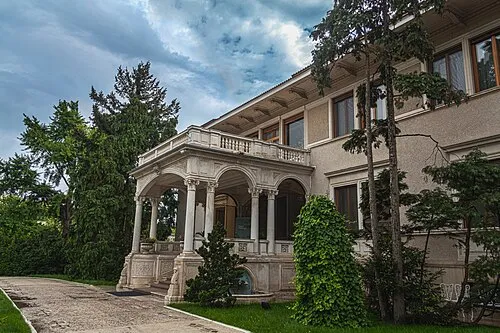
Officially renamed King Mihai I Park in 2017, everyone in Bucharest still calls it Herastrau. At 187 hectares, it is the city's largest park by reputation (though Tineretului is actually bigger), built in 1936 around a 74-hectare lake formed by the Colentina River. The lakeside path runs 5.92 km around the water, and on summer evenings half the city seems to be walking, cycling, or rollerblading along it. The northern shore is quieter, with older trees and fewer cafes. The southern edge, closer to the Arc de Triomphe and the Village Museum, gets busy with boat rentals, open-air restaurants, and weekend markets. In between, you'll find rose gardens, playgrounds, and patches of genuine forest where the noise drops away. The water is calm and wide, dotted with pedal boats and the occasional kayak. Free and open 24 hours. From the center, take the metro to Aviatorilor and walk north. The park connects to the Village Museum on its western shore and the Ceausescu Mansion a ten-minute walk east. For the best views in Bucharest from ground level, the lakeside at sunset is hard to beat. This is where Bucharestians spend long summer evenings over grilled mici and cold beer, and joining them is the right move.

Hours Open 24/7
Price Free
Insider TipRent a bike from one of the stations near the southern entrance and ride the full 5.92 km loop around the lake. Early morning on weekdays, you'll share the path with joggers and herons, not crowds.
Izvor Park

3. Izvor Park

Sitting on the right bank of the Dambovita River, directly adjacent to the Palace of Parliament, Izvor Park lives in the long shadow of Ceausescu's megaproject. The park was redesigned in the 1980s as part of the massive urban reshaping that created the Civic Centre, and something about its wide lawns and symmetrical paths still carries that formal, top-down feeling. Locals have thoroughly reclaimed the space. On warm days, students spread blankets on the grass. Runners use the flat riverside path. Dogs chase each other across the open fields. There's a playground on the eastern side and benches with views of the Dambovita. After visiting the Palace of Parliament or the National Museum of Contemporary Art (which sits inside the parliament building), Izvor is the natural place to decompress and process the scale of what you just saw. Free and open 24 hours. Metro station Izvor drops you at the park's edge. The contrast between the open green space and the looming mass of the palace behind it is something you have to see in person. Among the parks in Bucharest, Izvor is the least remarkable on its own terms but the most thought-provoking in context. The best views here look back at the parliament building and force you to reckon with its size.

Hours Open 24/7
Price Free
Website www.alpab.ro/
Tineretului Park

4. Tineretului Park

At roughly 200 hectares, Tineretului is actually the largest park in Bucharest by area, stretching south of Piata Unirii in Sector 4. Designed by architect Valentin Donose, it was built between 1965 and 1974 on a former landfill called Valea Plangerii (Valley of Tears). The basic landscaping took just eight months, done through volunteer labor. A 13-hectare lake anchors the center, and the terrain rises and falls up to 16 meters, giving the park an unexpected rolling quality for a city this flat. The southern end is wilder and less maintained, with dense tree cover and rough paths that feel more like countryside than capital. The northern edge is more manicured, with playgrounds, a rowing dock on the lake, and the National Children's Palace. During spring and autumn bird migrations, birdwatchers come for rare species that stop over on the lake, making it a shared ecosystem with the wilder Vacaresti Nature Park to the east. Free and open 24 hours. From Piata Unirii, walk south along Bulevardul Dimitrie Cantemir. After the intensity of central Bucharest, Tineretului offers a kind of quiet that the more famous parks in Bucharest rarely match. The best views here come from the higher ground on the western side, looking across the lake.

Hours Open 24/7
Price Free
Website Wikipedia
Location 44.4075, 26.1056
Insider TipThe southwest corner of the park, past the lake, has overgrown paths through dense woodland. It is the wildest urban greenspace in the city, and almost nobody walks there.
Get Your Own Private Tour with AI Guide
AI Guide
  • Personalized tour tailored to your interests
  • Your AI guide tells stories, shares facts, and cracks jokes
  • Turn-by-turn GPS navigation
  • Available in your language — no download needed
Try for Free

Explore with AI Guide

AI Guide App

Get personalized tours with our AI-powered guide. No download needed — works right in your browser.