Things to Do in Carcassonne - Top Attractions, Hidden Gems & Must-See Sights

Discover the best things to do in Carcassonne. Complete guide to must-see sights, popular attractions, hidden gems, museums, food markets and parks.

15 Attractions 5 Categories Travel Guide

Table of Contents

Carcassonne Overview

Carcassonne is defined by its split personality: a massive, double-walled medieval fortress looms over a grid-patterned lower town. Most people come for the Cité de Carcassonne, where the Château Comtal stands as a massive defensive centerpiece. It feels like a film set, but one with deep layers of history involving the Cathars and the Inquisition.

Crossing the Aude River via the pedestrian Pont Vieux leads you into La Bastide Saint-Louis. This lower district offers a more local atmosphere around Place Carnot, a contrast to the high-altitude stone ramparts. While the climb up to the fortress is steep, the entire Cité is compact enough to explore on foot once you pass the gates. For a break from the medieval walls, the Canal du Midi provides a flat, shaded path for walking or cycling along the city's northern edge.

Must-See Attractions in Carcassonne

  • Cité de Carcassonne — A massive double-walled medieval fortress with 52 towers that dominates the local skyline.
  • Château Comtal — The inner citadel where you can walk the high ramparts and learn about the city's defensive architecture.
  • Canal du Midi — A historic waterway perfect for boat trips or long walks under the shade of plane trees.
  • Basilica of Saints Nazarius and Celsus — A church known for its unusual mix of Romanesque and Gothic styles and impressive stained glass.
🏛️ Must-See ⭐ Sights 💎 Hidden Gems 🎨 Museums 🌳 Parks & Views

🏛️ Must-See Attractions in Carcassonne

These iconic landmarks and must-see sights are essential stops for any visitor to Carcassonne.

Basilica of Saints Nazarius and Celsus

1. Basilica of Saints Nazarius and Celsus

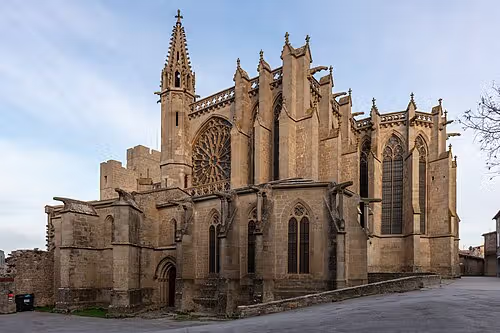
Most visitors rush straight to the ramparts, but the true weight of history sits quietly inside this church. It is a strange and fascinating hybrid, where the heavy Romanesque nave collides abruptly with a soaring Gothic choir, marking the moment the region shifted from southern tradition to northern French dominance. The stained glass here is some of the finest in the south, particularly the Tree of Life window, which glows with an intensity that electric light can't replicate. It is often cooler and darker here than in the crowded streets outside, offering a genuine pause from the tourist circuit.

While exploring Carcassonne attractions within the citadel, you will likely pass the entrance multiple times, but step inside when the sun is high to see the glass at its peak. The acoustics are exceptional; if you are lucky enough to catch a choir rehearsal or an organ practice, the sound fills the stone vaulting in a way that feels physical. Unlike the castle next door, this space is still used for worship, which preserves a sense of dignity often lost in ticketed monuments.

Be warned that the space near the entrance can bottleneck when tour groups arrive. Walk straight to the transept to find breathing room and examine the gargoyles up close. The juxtaposition of the stout, defensive Romanesque arches against the delicate, light-filled Gothic windows tells the story of the city's conquest better than any plaque.

Hours Mon-Sat: 9:00 AM – 6:30 PM | Sun: 9:00 – 10:45 AM, 12:30 – 6:30 PM
Price Free
Insider TipLook for the 'Siege Stone' near the north portal—a carving that allegedly depicts the siege of 1209, though local historians still debate its true origin.
Canal du Midi

2. Canal du Midi

This engineering marvel wraps around the northern edge of the lower city, functioning less as a trade route today and more as a slow-moving park. The water is often opaque and green, shaded by endless rows of plane trees whose roots grapple with the banks. It is a distinct change of pace from the verticality of the medieval citadel; here, everything moves horizontally and slowly. You can walk the towpaths for miles without encountering a hill, making it a favorite escape for runners and cyclists trying to shake off the stone-paved stiffness of the town center.

Boat rentals are the standard way to see it, but simply walking from the port toward the lock at Écluse d'Herminis is free and just as atmospheric. Among Carcassonne attractions, this offers the best shade during the midday heat. The canal connects the Atlantic to the Mediterranean, and watching a boat navigate the locks is a lesson in 17th-century patience. The mechanism is manual and water-driven, unchanged for centuries, contrasting sharply with the modern traffic buzzing on nearby bridges.

Do not expect crystal clear water; the canal is a working ecosystem. The appeal lies in the dappled light and the rhythm of the water passing through the oval locks. It serves as the border between the urban grid and the countryside, and crossing it feels like stepping out of the city's frantic energy into a long, green corridor.

Hours Open 24/7
Price Free
Website Wikipedia
Insider TipWalk west towards the fantastical Écluse de l'Aiguille; the lock keeper there is also an artist who displays curious wooden sculptures all around the lock basin.
Château Comtal

3. Château Comtal

This is the fortress within the fortress, the last line of defense for the Vicomtes Trencavel. It sits aggressively against the western wall of the Cité, separated from the rest of the medieval town by a dry moat and a barbican that leaves no doubt about its military purpose. Buying a ticket here is the only way to access the upper ramparts, which is the primary reason to visit. The interior rooms are stark, housing a collection of lapidary stones and Roman artifacts that can feel dry if you aren't an archaeology enthusiast.

However, the wall walk is essential for understanding the layout of Carcassonne attractions from above. You can see the patchwork of roofs in the lower town and the Black Mountain rising in the distance. The hoarding—wooden galleries reconstructed to show how archers fired downwards—gives you a terrifyingly clear perspective on medieval warfare. It is windy and exposed up there, with uneven footing that keeps you focused.

The courtyard often hosts concerts or medieval reenactments, which can be noisy, but the stone structure absorbs it all. Unlike the fairytale silhouette seen from the highway, the up-close view here is brutal and functional. You see the varying sizes of stones marking Roman, Visigoth, and French layers, a messy timeline of construction and repair that feels authentic.

Hours Daily: 9:30 AM – 5:00 PM
Price €9
Insider TipYour ticket allows you to exit and re-enter; do the northern rampart walk first for the views, grab lunch, then return for the western rampart which has fewer stairs.
Cité de Carcassonne

4. Cité de Carcassonne

The scale of this fortified city is difficult to grasp until you are standing in the dry moat looking up at the double ring of walls. It is a UNESCO World Heritage site and inevitably crowded, yet the sheer mass of stone has a way of absorbing the noise. Fifty-two towers puncture the skyline, creating a silhouette that is almost too perfect, largely due to the 19th-century restoration by Viollet-le-Duc. Purists criticize the pointy slate roofs—historically they should be flat tiles—but the visual impact is undeniable.

Navigating the Cité requires strategy. The main street, Rue Cros-Mayrevieille, is a gauntlet of soap shops and plastic swords, but turning down any side alley immediately drops the decibel level. Among Carcassonne attractions, this is the heavyweight, and it commands the horizon for miles. The space between the two walls, the 'lices', is a kilometer-long strip of gravel and grass where you can walk away from the commercial clutter and appreciate the military engineering.

At night, the character shifts completely. The day trippers leave, the walls are floodlit in amber, and the stone streets echo with your own footsteps. It becomes a different place, moody and imposing. If you can stay within the walls or visit after dinner, you will see the fortress as it was meant to be—a silent, formidable barrier against the world.

Hours Daily: 10:00 AM – 6:30 PM
Price Free
Insider TipEnter through the Porte d'Aude (on the west side) rather than the main Porte Narbonnaise; it's a steeper climb but much quieter and offers a dramatic approach.
Get Your Own Private Tour with AI Guide
AI Guide
  • Personalized tour tailored to your interests
  • Your AI guide tells stories, shares facts, and cracks jokes
  • Turn-by-turn GPS navigation
  • Available in your language — no download needed
Try for Free

💎 Hidden Gems in Carcassonne - Off the Beaten Path

Beyond the tourist crowds, Carcassonne hides remarkable treasures waiting to be discovered.

Caunes-Minervois

1. Caunes-Minervois

Twenty minutes north of the city, this village offers a completely different palette. It is built from the same pink marble that decorates the columns of the Trianon at Versailles, giving the streets a warm, ruddy glow even on cloudy days. The medieval abbey at its center is the anchor, plunging deep underground into a crypt that feels ancient and heavy, but the village itself is the real draw. It feels lived-in and agricultural, a working piece of the Minervois wine country rather than a museum set.

Visitors often add this to their list of Carcassonne attractions when they need a break from the fortress crowds. The narrow alleys twist around Renaissance mansions with surprising architectural details, proving that wealth flowed through here long before mass tourism. You can hike straight from the village center up to the marble quarries to see the raw stone still cut from the earth, a visceral connection to the polished slabs seen in palaces across Europe.

It is quiet here. Shops close for a long lunch, and the rhythm is dictated by the vine harvest rather than bus schedules. If you visit, commit to the walk up to the quarry; the view back down over the tiled roofs and vineyards provides a sense of scale that you miss from the valley floor.

Hours Open 24/7
Price Free
Insider TipPark near the abbey and walk up Rue de la Carrière to reach the 'Sentier du Marbre' trail; look for raw blocks of red marble still scattered in the forest.
Maison des Mémoires

2. Maison des Mémoires

This house on Rue de Verdun holds a peculiar and heavy atmosphere. It was the home of wandering surrealist poet Joë Bousquet, who was paralyzed in World War I and spent the rest of his life in a darkened bedroom here. The room has been preserved exactly as it was, with his bed, books, and the shuttered windows that kept the southern sun at bay. It is an intimate, almost voyeuristic space, where the silence is thick.

Unlike the loud, visual spectacle of other Carcassonne attractions, this is a mental space. Famous artists like Magritte, Dalí, and Max Ernst visited Bousquet here, turning this dark room into a hub of 20th-century thought. The rest of the building hosts temporary exhibitions and a center for ethno-archaeology, but the bedroom is the emotional core. It feels stopped in time, smelling faintly of old paper and wax.

Entry is often free, and you will likely be the only person there. It offers a jarring reminder of the intellectual life that existed in this provincial town. The contrast between the bustling shopping street outside and the stillness of this room is disorienting. It is a place for those who prefer literary history to military history.

Hours Mon: Closed | Tue-Sat: 9:45 AM – 1:00 PM, 2:00 – 6:00 PM | Sun: Closed
Price €4
Website N/A
Insider TipAsk the staff to point out the specific surrealist sketches on the walls; some were gifts from his famous visitors and are easily missed.
Pont Neuf

3. Pont Neuf

Despite its name meaning 'New Bridge', this structure dates back to the mid-19th century and serves as the primary artery for vehicle traffic crossing the Aude river. It is functional, sturdy, and paved, lacking the pedestrian romance of its older neighbor. However, its value lies not in the bridge itself, but in the vantage point it provides. From the sidewalk here, you get the panoramic, widescreen view of the Cité rising above the river that appears in travel magazines.

Many photographers list this spot among their essential Carcassonne attractions because it places the medieval fortress against the backdrop of the Pyrenees (on a clear day) or the rolling vineyards. The bridge sits high enough to clear the treeline, offering an unobstructed sightline. It is noisy with cars and buses, so it is not a place to linger for a picnic, but for a visual check of the city's layout, it is unbeatable.

Walk across it from the Bastide towards the train station or the canal. You see the contrast between the flat, tiled roofs of the lower town and the spiky slate towers of the upper city. It is the best place to understand the physical separation between the two halves of Carcassonne.

Hours Open 24/7
Price Free
Website Wikipedia
Location 48.8575, 2.34167
Insider TipGo at blue hour (just after sunset); the streetlights on the bridge turn on, and the Cité is illuminated in the background, balancing the light perfectly for photos.
Get Your Own Private Tour with AI Guide
AI Guide
  • Personalized tour tailored to your interests
  • Your AI guide tells stories, shares facts, and cracks jokes
  • Turn-by-turn GPS navigation
  • Available in your language — no download needed
Try for Free

🎨 Best Museums & Galleries in Carcassonne

World-class museums and galleries that make Carcassonne a cultural treasure.

Museum of the Inquisition

1. Museum of the Inquisition

Located right in the heart of the Cité, this museum is controversial, gruesome, and undeniably popular. It displays a large collection of torture instruments from the Middle Ages to the French Revolution. The presentation is theatrical, with mannequins and dimly lit stagings designed to unsettle you. It leans heavily into the dark legend of the Inquisition, which was indeed active in this region during the Cathar suppression, though the museum prioritizes shock value over academic nuance.

It is one of the most debated Carcassonne attractions. Some find it too sensational; others find the mechanical reality of the iron maidens, racks, and cages to be a powerful reminder of judicial cruelty. The building itself is atmospheric, adding to the chill. You walk through rooms that feel like dungeons, and the captions describe the function of each device in clinical detail.

If you are squeamish or traveling with young children, this is a hard skip. However, for those interested in the darker side of medieval history, it provides a visual reference for the violence often mentioned in history books. It is distinct from the academic history of the Château Comtal, offering a more visceral, if stylized, look at punishment.

Hours Mon-Wed: 10:00 AM – 5:30 PM | Thu: 10:00 AM – 2:00 AM | Fri: 10:00 AM – 5:30 PM | Sat: 10:00 AM – 6:00 PM | Sun: 10:00 AM – 5:30 PM
Price €5
Insider TipThe explanations are brief; read up on the Albigensian Crusade beforehand to understand *why* the Inquisition was established specifically in this region.
Musée des Beaux-Arts de Carcassonne

2. Musée des Beaux-Arts de Carcassonne

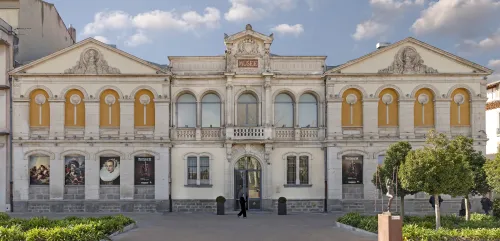
Tucked away in the Bastide, this museum punches above its weight for a small provincial gallery. The collection is surprising, featuring works by Rigaud, Chardin, and Corot that you might expect to find in Paris or Lyon. The building itself is modest, and the creaky wooden floors create a traditional, old-world museum atmosphere. It is rarely crowded, allowing you to stand in front of a 17th-century canvas without anyone jostling your elbow.

It stands apart from other Carcassonne attractions by focusing on quiet contemplation rather than medieval bombast. The section on local history offers context on the region's political shifts, but the real strength is the European painting collection. There is also a telescope that supposedly belonged to Napoleon on display, a strange artifact that sits oddly among the oil paintings.

The museum serves as a cool, quiet refuge in the afternoon. It doesn't demand hours of your time; forty minutes is enough to see the highlights. The lighting can be a bit dim in some rooms, but it suits the age of the works. It’s a reminder that Carcassonne had a wealthy bourgeois class who invested in culture long after the knights had left the castle.

Hours Mon: Closed | Tue-Sat: 9:45 AM – 12:30 PM, 1:30 – 6:00 PM | Sun: Closed
Price Free
Location 43.2125, 2.35527
Insider TipLook for the painting 'La Remise des Clés' which depicts the Cité; it’s fascinating to compare the painted skyline with the real one you see today.
Get Your Own Private Tour with AI Guide
AI Guide
  • Personalized tour tailored to your interests
  • Your AI guide tells stories, shares facts, and cracks jokes
  • Turn-by-turn GPS navigation
  • Available in your language — no download needed
Try for Free

🌳 Parks & Best Viewpoints in Carcassonne

Beautiful parks, gardens, and panoramic viewpoints for the best views of Carcassonne.

Lac de la Cavayère

1. Lac de la Cavayère

Locals call this 'Carca Plage', and on a scorching July afternoon, it is the most important place in the distinct. Located just outside the city limits, this artificial lake is surrounded by pine and oak forests, offering a cool respite when the stone walls of the city become ovens. The water is clean and calm, with designated swimming areas that fill up with families. It is not a wild, untouched lake, but a managed recreational space with floating obstacle courses and paddle boat rentals.

If you are exhausted by historical Carcassonne attractions, this is the antidote. A path circles the entire lake, taking about an hour to walk. It moves from busy beaches to quieter, wooded inlets where fishermen set up camp. The contrast between the dry, scrubby landscape of the Aude and this large body of water is striking. The air smells of pine resin and sunscreen, a distinct shift from the dust of the fortress.

There are no ancient ruins here, just a functional space for leisure. The vibe is unpretentious and loud in the summer, quiet and moody in the winter. It’s where you go to eat a sandwich on the grass and let kids burn off energy. The drive there takes you through scrubland that looks like a western movie set, adding to the feeling of escape.

Hours Open 24/7
Price Free
Website Wikipedia
Insider TipWalk to the far end of the lake (opposite the main parking) to find the 'Crique de la Plage', a smaller, grassier spot that stays quieter than the main sandy beach.
Plateau des Poètes

2. Plateau des Poètes

Technically located in Béziers, a short train ride or drive east, this vast English-style garden is often included in regional itineraries for its remarkable landscape architecture. It functions as a green lung connecting the train station to the city center, featuring winding paths, exotic trees, and a lake that feels worlds away from the urban grid. It was designed by the Bülher brothers, who also designed the Tête d'Or park in Lyon, and the pedigree shows in the fluid, organic layout.

While not one of the central Carcassonne attractions, it is a worthy excursion for garden enthusiasts. The park is dotted with busts of poets, giving it its name, and features a monumental fountain of the Titan looking fiercely down the main alley. The change in elevation is used cleverly, with paths sloping gently to reveal different perspectives of the foliage and the town above.

It offers a grandeur that the smaller parks in Carcassonne lack. The sheer variety of botanical species—from sequoias to palms—speaks to the wealth of the 19th-century wine boom in this area. It is a place to walk slowly, contrasting the military stiffness of Carcassonne's walls with lush, romantic disorder. If you are heading towards the coast, this is the perfect breaking point.

Hours Daily: 7:00 AM – 6:00 PM
Price Free
Location 43.3382, 3.22034
Insider TipEnter from the train station side and walk up towards the Allées Paul Riquet; the perspective opening up towards the theater is designed to impress.
Get Your Own Private Tour with AI Guide
AI Guide
  • Personalized tour tailored to your interests
  • Your AI guide tells stories, shares facts, and cracks jokes
  • Turn-by-turn GPS navigation
  • Available in your language — no download needed
Try for Free

Explore with AI Guide

AI Guide App

Get personalized tours with our AI-powered guide. No download needed — works right in your browser.