Things to Do in Charleston - Top Attractions, Hidden Gems & Must-See Sights

Discover the best things to do in Charleston. Complete guide to must-see sights, popular attractions, hidden gems, museums, food markets and parks.

15 Attractions 5 Categories Travel Guide

Table of Contents

Charleston Overview

Charleston is a city that wears its history on its sleeve, literally built from it. The peninsula between the Ashley and Cooper Rivers has been accumulating layers since the 1670s: colonial churches, antebellum mansions, Civil War forts, and Gullah cultural traditions that trace directly to West Africa. Walking the historic district means passing through 350 years of American history in a few compact blocks, from the pastel facades of Rainbow Row to the defensive seawall at The Battery. It is beautiful, complicated, and more self-aware about its past than most Southern cities.

The food scene gets most of the national press, and it deserves it. But Charleston also works as a place to simply walk. The historic district is small enough to cover on foot, and the combination of harbor views, garden courtyards, and architectural detail rewards slow exploration. Art lovers, history buffs, and anyone who appreciates a city that looks like nowhere else will find plenty here. The plantation sites outside downtown add another dimension, telling the stories of both the families who owned them and the enslaved people who built them.

Must-See Attractions in Charleston

  • Fort Sumter
  • Rainbow Row
  • The Battery and White Point Garden
  • Historic Charleston City Market
  • King Street
🏛️ Must-See ⭐ Sights 💎 Hidden Gems 🎨 Museums 🌳 Parks & Views

🏛️ Must-See Attractions in Charleston

These iconic landmarks and must-see sights are essential stops for any visitor to Charleston.

Fort Sumter

1. Fort Sumter

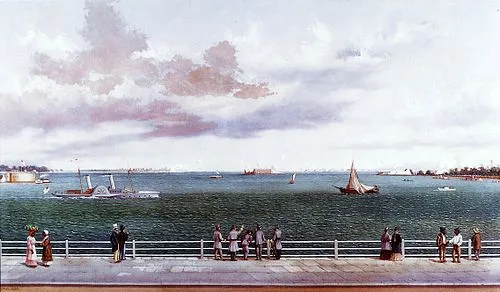
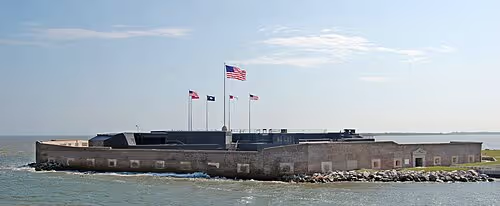
This is where the American Civil War started. On April 12, 1861, Confederate forces opened fire on this federal garrison sitting on an artificial island at the mouth of Charleston Harbor, and four years of war followed. Getting here requires a ferry from Liberty Square (about 30 minutes each way), and the $35 ticket covers both the boat and fort entry. The fort itself is smaller than you expect, a squat ruin of brick walls that never got finished to their original height. But standing inside, looking out at the same water the Union soldiers watched, the history hits differently than reading about it. The National Park Service runs the site, and rangers give short talks about the battle and the fort's later use during the war. Construction began in 1829 as part of coastal defenses after the War of 1812, but the fort was still incomplete when the first shots were fired. What remains today is a mix of original brick, wartime damage, and later additions. Allow about 2.5 hours total for the round trip including time on the island. This is the top must-see in Charleston for anyone with even a passing interest in American history. Ferries depart several times daily, with the first boat usually at 9:30 AM and the last return around 4:00 PM. Book ahead online, especially in spring and fall when things to do in Charleston tend to sell out fast. The visitor center at Liberty Square has a small museum worth seeing before you board.
Hours Daily: 8:30 AM – 4:30 PM
Price 35 USD
Insider TipThe first ferry of the day is the least crowded. Afternoon light is better for photos from the fort looking back toward the Charleston skyline.
Historic Charleston City Market

2. Historic Charleston City Market

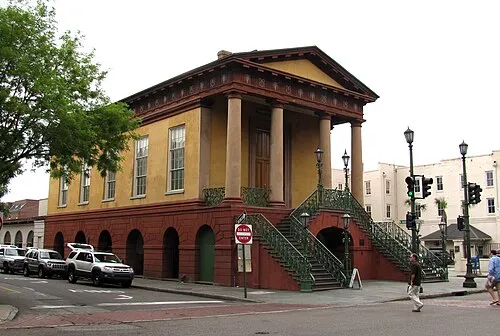
Four city blocks of open-air market sheds stretch from Meeting Street to East Bay Street, and they have been in continuous operation since the 1790s. The market starts with Market Hall, a Greek Revival building designed by architect Edward B. White in the 1840s. Walk through the sheds and you will find vendors selling sweetgrass baskets woven in the Gullah tradition, local honey, benne wafers, pralines, and the usual tourist souvenirs. The sweetgrass baskets are the real draw. They are handwoven by Gullah artisans using techniques passed down from West African ancestors, and a good one costs anywhere from $40 to several hundred dollars. A common misconception: enslaved people were never sold here. That happened at the Old Slave Mart on Chalmers Street, now a museum. The City Market was always a food and goods market, originally selling beef and produce from local farms. The entire complex is a National Historic Landmark. Hours are Monday through Sunday, 9:30 AM to 5:00 PM. On Friday and Saturday nights, a Night Market runs from 6:30 to 10:30 PM with different vendors and a livelier atmosphere. Admission is free.

Hours Mon-Thu: 9:30 AM – 5:00 PM | Fri-Sat: 9:30 AM – 5:00 PM, 6:30 – 10:30 PM | Sun: 9:30 AM – 5:00 PM
Price Free
Insider TipThe Night Market on Friday and Saturday evenings (6:30 to 10:30 PM) has better local artisan goods and fewer mass-produced souvenirs than the daytime market.
King Street

3. King Street

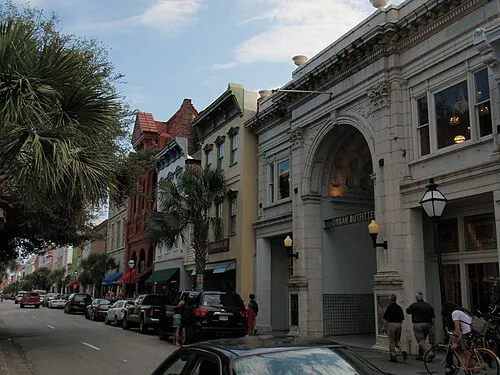
King Street is Charleston's main commercial artery, running north-south through the peninsula and changing personality every few blocks. The stretch south of Calhoun Street is where you want to be: antique shops, independent boutiques, galleries, and restaurants packed into ground floors of historic buildings. Further north past the Visitor Center, the street gets more residential and less interesting for visitors. The best section for browsing runs roughly from Broad Street to Market Street, about a half-mile walk. This is not a quaint little shopping lane. King Street has real retail energy, with national brands mixed in among local shops. What makes it worth walking is the architecture above the storefronts: 18th- and 19th-century facades, wrought-iron balconies, and the kind of detail that modern construction never bothers with. If you are staying in the historic district, you will cross King Street constantly. It connects to nearly everything, from the Historic Charleston City Market a block east to the Charleston Museum a few blocks north. King Street is free and accessible anytime, though shops generally open around 10:00 AM and close by 6:00 PM. Restaurants stay open later. Among things to do in Charleston, this is less a destination and more the spine of the city. You will end up here whether you plan to or not.

Hours Open 24/7
Price Free
Website N/A
Insider TipThe block between Broad and Queen Streets has the densest concentration of independent shops and galleries. Second Sundays often feature gallery openings with free wine.
Rainbow Row

4. Rainbow Row

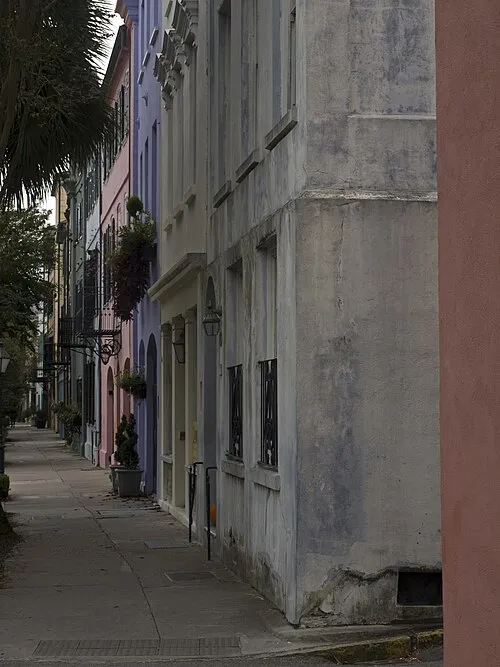
Thirteen pastel-colored Georgian row houses line East Bay Street between Tradd and Elliott Streets, and they are probably the most photographed block in South Carolina. The houses at 79 to 107 East Bay Street date to the 18th century but got their candy-colored paint jobs during restorations in the 1930s and 1940s. Someone named the stretch Rainbow Row, and it stuck. The colors shift from pinks to blues to yellows, and the whole scene is genuinely charming, not just Instagram bait. The houses are private residences, so you can only see them from the outside. That takes maybe 10 minutes. The real value is combining Rainbow Row with a walk along East Bay Street. From here, it is a short stroll south to The Battery and White Point Garden, or north toward Waterfront Park. These are some of the most walkable blocks in the city, and the surrounding streets are full of the same architectural character, just without the famous paint palette. Rainbow Row is free, accessible 24/7, and best photographed in morning light when the sun hits the facades directly. Late afternoon creates shadows from the buildings across the street. There are no facilities here, just the sidewalk and the houses.

Hours Open 24/7
Price Free
Insider TipMorning light before 10 AM gives the best color on the facades. Stand on the opposite sidewalk near the curb for a shot that captures all 13 houses in frame.
The Battery and White Point Garden

5. The Battery and White Point Garden

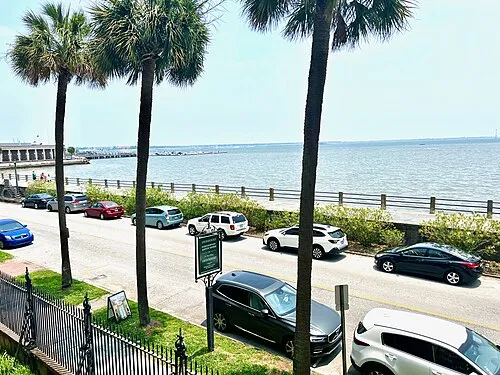
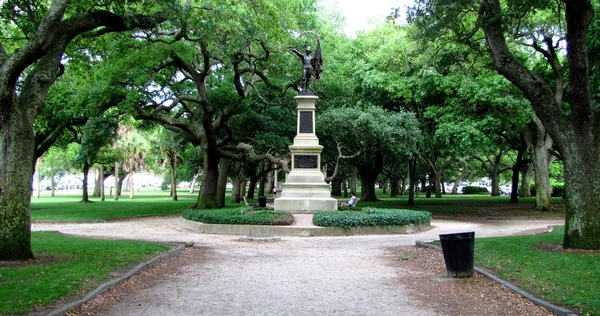
The Battery is a seawall promenade that wraps around the southern tip of the Charleston peninsula, where the Ashley and Cooper Rivers meet to form the harbor. Walk along the raised path and you get wide-open water views, massive antebellum mansions lining South Battery and East Battery Streets, and a breeze that makes even a humid July afternoon bearable. This is where Charleston shows off its grandest residential architecture, and the scale of these houses is almost absurd. White Point Garden sits right at the tip, a 5.7-acre public park shaded by live oaks draped in Spanish moss. Old cannons and Civil War-era mortars are scattered across the grounds. The park was named for the oyster shell mounds that once covered the point, and pirates were hanged here in the early 1700s. Today it is one of the more peaceful spots in the city, a welcome contrast to the busy Historic Charleston City Market a mile north. Open daily from 7:00 AM to 9:30 PM, free to enter. This is among the top things to do in Charleston because it combines history, architecture, and waterfront scenery in a single walk. From Rainbow Row, head south on East Bay Street and you will reach The Battery in about 10 minutes on foot. Sunset here is worth planning around.

Hours Daily: 7:00 AM – 9:30 PM
Price Free
Website Wikipedia
Insider TipThe benches facing Murray Boulevard on the south side have the best sunset views over the Ashley River. Bring something to sit on if the iron benches are hot.
Get Your Own Private Tour with AI Guide
AI Guide
  • Personalized tour tailored to your interests
  • Your AI guide tells stories, shares facts, and cracks jokes
  • Turn-by-turn GPS navigation
  • Available in your language — no download needed
Try for Free

💎 Hidden Gems in Charleston - Off the Beaten Path

Beyond the tourist crowds, Charleston hides remarkable treasures waiting to be discovered.

Magnolia Plantation and Gardens

1. Magnolia Plantation and Gardens

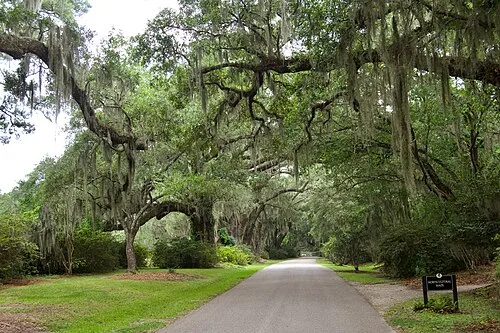
This plantation on the Ashley River has been owned by the Drayton family since 1679, making it one of the oldest continuously operated plantations in the American South. The 464-acre property is about 20 minutes northwest of downtown Charleston, and the gardens are what bring most people here. Unlike the formal geometry of Middleton Place up the road, Magnolia's gardens are romantic and sprawling, with winding paths through azaleas, camellias, and live oaks draped in Spanish moss. In spring, the azaleas bloom in waves of pink and purple that are genuinely spectacular. The plantation does not shy away from its history of slavery. The "From Slavery to Freedom" tour covers the enslaved people who built and worked Magnolia, including the Gullah community whose traditions trace directly to West African rice-growing cultures. The Draytons brought enslaved people from Barbados in the 1670s. This is one of the hidden gems in Charleston for visitors who want more than pretty gardens. The property also has a nature train, a petting zoo, and boat tours through the swamp. Open daily from 9:00 AM to 5:00 PM. Admission is charged, with add-on fees for the house tour, nature train, and boat ride. The gardens alone are worth the trip, especially during March and April peak bloom. Plan at least 2 hours.

Hours Daily: 9:00 AM – 5:00 PM
Price $
Insider TipVisit in mid-March to early April for peak azalea season. The "From Slavery to Freedom" tour is excellent and costs extra but is the most meaningful experience on the property.
Middleton Place Historic Gardens

2. Middleton Place Historic Gardens

About 15 miles northwest of downtown Charleston on the Ashley River, Middleton Place has the oldest landscaped gardens in the United States. Henry Middleton, who became President of the First Continental Congress, began shaping these grounds in the 1740s. His son Arthur signed the Declaration of Independence. The gardens are formal and geometric: terraced lawns, butterfly lakes, and allees of live oaks that frame views of the river. The symmetry is deliberate and almost mathematical compared to the wilder feel of nearby Magnolia Plantation. The original main house was burned by Union soldiers in 1865, and the 1886 Charleston earthquake finished off whatever walls remained. Only the south flanker survived and is open for tours today. The Middleton Place Foundation now runs the 110-acre historic district, which includes a functioning stableyards where blacksmiths, potters, and carpenters demonstrate 18th-century plantation trades. It is one of the better hidden gems in Charleston for history and landscape lovers, though calling a National Historic Landmark a "hidden gem" feels like a stretch. Open daily from 9:00 AM to 5:00 PM. The drive from downtown takes about 25 minutes. Budget at least 3 hours to walk the gardens, tour the house, and watch the craft demonstrations. Spring is the best season, but the gardens hold up well year-round.

Hours Daily: 9:00 AM – 5:00 PM
Price Free
Insider TipThe stableyards demonstrations run on a fixed schedule posted at the entrance. Time your visit to catch the blacksmith, who is genuinely skilled and happy to answer questions.
Get Your Own Private Tour with AI Guide
AI Guide
  • Personalized tour tailored to your interests
  • Your AI guide tells stories, shares facts, and cracks jokes
  • Turn-by-turn GPS navigation
  • Available in your language — no download needed
Try for Free

🎨 Best Museums & Galleries in Charleston

World-class museums and galleries that make Charleston a cultural treasure.

Charleston Museum

1. Charleston Museum

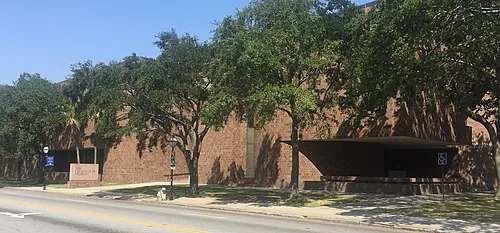
Founded in 1773, the Charleston Museum holds the title of oldest museum in the United States. The current building on Meeting Street near Calhoun is modern and functional, not architecturally special, but what is inside spans the full sweep of Charleston history: colonial artifacts, Civil War relics, natural history specimens, and decorative arts from the Lowcountry's wealthier households. The collection is broad rather than deep, covering a lot of ground without going too far into any single topic. Two historic houses, the Heyward-Washington House and the Joseph Manigault House, are operated by the museum and located within walking distance. Your $14 admission to the museum does not include those houses, but combo tickets are available. For the museum alone, plan about 60 to 90 minutes. It is the kind of place that works well on a rainy afternoon or when you want some air conditioning after walking Meeting Street and King Street in the summer heat. Open Monday through Saturday from 9:00 AM to 5:00 PM, and Sunday from noon to 5:00 PM. Among the best museums in Charleston, it is more useful as an introduction to the city's history than as a destination in its own right. See it early in your trip and the rest of the city makes more sense.

Hours Mon-Sat: 9:00 AM – 5:00 PM | Sun: 12:00 – 5:00 PM
Price 14 USD
Insider TipThe combo ticket covering the museum plus both historic houses (Heyward-Washington and Joseph Manigault) is significantly cheaper than buying each separately.
Fort Sumter National Monument

2. Fort Sumter National Monument

The National Park Service operates Fort Sumter as a National Monument, and the visitor experience has two parts: the museum at Liberty Square on the mainland and the fort itself out in the harbor. The Liberty Square museum is free and covers the political tensions that led to the first shots of the Civil War on April 12, 1861. Displays include artillery, uniforms, and a detailed timeline of the 34-hour bombardment. It is small but well put together and worth seeing even if you do not take the ferry. The ferry to the fort costs $35 per adult and runs several times daily. The ride takes about 30 minutes each way, and you get roughly an hour on the island with a ranger-led talk. The fort sits on an artificial island built starting in 1829, and what you see today is a fraction of the original plan. Construction was never completed because the war intervened. If you have already read the Fort Sumter description above, you know the drill. This entry covers the museum side of the experience, which is among the best museums in Charleston for Civil War history. The monument is open daily from 8:30 AM to 4:30 PM. The Liberty Square visitor center is at 340 Concord Street, right near the South Carolina Aquarium. Both can be done in the same morning if you plan the ferry times right.

Hours Daily: 8:30 AM – 4:30 PM
Price 35 USD
Insider TipSee the Liberty Square museum before you board the ferry. The context makes the fort visit much more meaningful, and it fills the wait time before departure.
Gibbes Museum of Art

3. Gibbes Museum of Art

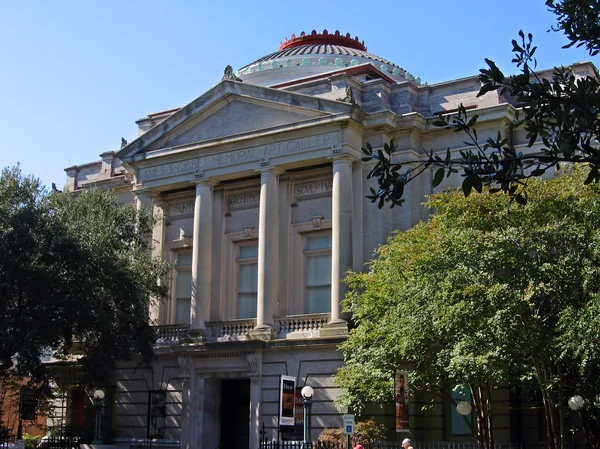
At 135 Meeting Street, the Gibbes holds over 10,000 works of American art, with a strong focus on artists connected to Charleston and the South. The building itself is worth seeing: a 1905 Beaux Arts structure with Doric columns, a Tiffany-style stained glass dome, and the kind of proportions that make you slow down. James Shoolbred Gibbes donated $100,000 to build it, and the Carolina Art Association, established in 1858, has filled it with paintings, miniatures, and photographs ever since. A $13.5 million renovation completed in 2016 brought the building back to its original layout using blueprints discovered in city archives. The ground floor, including the museum shop and garden access, is free to enter. Upstairs galleries cost $15 for adults. The collection covers colonial-era portraits, Civil War photography by George LaGrange Cook, and rotating contemporary exhibitions. It is one of the best museums in Charleston, smaller than big-city institutions but carefully curated. You can see everything in about 90 minutes. Open Monday and Thursday through Saturday from 10:00 AM to 5:00 PM, Wednesday until 8:00 PM, and Sunday from 1:00 to 5:00 PM. Closed Tuesdays. The rear garden connects to Charleston's historic Gateway Walk, a path through several churchyards and gardens that most tourists never find.

Hours Mon: 10:00 AM – 5:00 PM | Tue: Closed | Wed: 10:00 AM – 8:00 PM | Thu-Sat: 10:00 AM – 5:00 PM | Sun: 1:00 – 5:00 PM
Price 15 USD
Insider TipWednesday evenings are open until 8:00 PM, usually with fewer visitors. The rear garden connects to the Gateway Walk, a hidden pedestrian route through churchyards worth exploring.
Get Your Own Private Tour with AI Guide
AI Guide
  • Personalized tour tailored to your interests
  • Your AI guide tells stories, shares facts, and cracks jokes
  • Turn-by-turn GPS navigation
  • Available in your language — no download needed
Try for Free

🌳 Parks & Best Viewpoints in Charleston

Beautiful parks, gardens, and panoramic viewpoints for the best views of Charleston.

White Point Garden

1. White Point Garden

This 5.7-acre park at the very tip of the Charleston peninsula is where the Ashley and Cooper Rivers meet, and the views extend across the harbor to Fort Sumter and beyond. Old live oaks provide shade over walkways lined with Civil War cannons and a collection of monuments. The name comes from the white oyster shell mounds that once covered this point. Pirates were executed here in the early 1700s. Today it is one of the quieter spots in the city, populated more by joggers and dog walkers than tour groups. White Point Garden is the southern anchor of The Battery promenade. Walk north along East Bay Street from here and you pass the grand antebellum mansions, reach Rainbow Row in about 10 minutes, and eventually connect to Waterfront Park and the market area. The park itself is good for about 20 to 30 minutes: read the monument inscriptions, sit under an oak, and watch the harbor traffic. Among the best views in Charleston, sunset from the western benches looking over the Ashley River is hard to beat. Free and open daily from 7:00 AM to 9:30 PM. There are no food vendors or restrooms inside the park. The nearest coffee and restaurants are on King Street, a few blocks west, or along East Bay Street heading north toward the historic district center.

Hours Daily: 7:00 AM – 9:30 PM
Price Free
Website Wikipedia
Insider TipThe western benches along Murray Boulevard face the Ashley River and get unobstructed sunset views. Bring something to drink, as there are no vendors inside the park.
Get Your Own Private Tour with AI Guide
AI Guide
  • Personalized tour tailored to your interests
  • Your AI guide tells stories, shares facts, and cracks jokes
  • Turn-by-turn GPS navigation
  • Available in your language — no download needed
Try for Free

Explore with AI Guide

AI Guide App

Get personalized tours with our AI-powered guide. No download needed — works right in your browser.