Things to Do in Cusco - Top Attractions, Hidden Gems & Must-See Sights

Discover the best things to do in Cusco. Complete guide to must-see sights, popular attractions, hidden gems, museums, food markets and parks.

8 Attractions 3 Categories Travel Guide

Table of Contents

Cusco Overview

Cusco is a city built in layers. Inca walls form the foundations of colonial churches. Spanish plazas sit where Inca ceremonies once took place. At 3,400 meters in the Peruvian Andes, it was the capital of the Inca Empire before the Spanish conquest in the 1530s, and the entire historic center has been a UNESCO World Heritage Site since 1983. Today it is the gateway to Machu Picchu and the Sacred Valley, but the city itself has enough to fill several days before you ever board a train.

The altitude hits hard on arrival. Most people feel it: headaches, shortness of breath, fatigue. Give yourself at least a full day to acclimatize before doing anything strenuous. Drink coca tea, walk slowly, and save Sacsayhuaman's uphill climb for day two or three. Cusco rewards travelers who take their time. The San Blas neighborhood, the Qorikancha temple, the Cathedral, the market stalls, the narrow streets with Inca stonework walls: these are not things you rush through.

This is a city for people who want to understand a civilization, not just photograph it. The Incas built things here that modern engineers still cannot fully explain. The Spanish layered their own world on top. And the Quechua-speaking communities in the surrounding valleys continue traditions that predate both. Whether you are here for the archaeology, the trekking, the food, or the history, Cusco delivers something deeper than most travel destinations manage.

Must-See Attractions in Cusco

  • Machu Picchu
  • Plaza de Armas
  • Cusco Cathedral
  • Sacsayhuaman
  • Qorikancha
  • Sacred Valley
🏛️ Must-See ⭐ Sights 🎨 Museums

🏛️ Must-See Attractions in Cusco

These iconic landmarks and must-see sights are essential stops for any visitor to Cusco.

Cathedral of Cusco

1. Cathedral of Cusco

Hours Daily: 6:00 – 7:00 AM, 8:00 – 9:00 AM
Price 40 PEN
Website Wikipedia
Plaza de Armas

2. Plaza de Armas

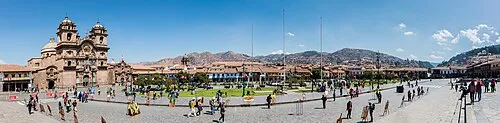
Every visit to Cusco starts and ends here. The Plaza de Armas has been the center of this city since before the Spanish arrived in 1534. During the Inca Empire, this was Huacaypata, the ceremonial heart of the capital where military victories were celebrated and religious rituals held. The Incas drained a swamp and built their administrative center on it. The Spanish then tore down the palaces and raised Catholic churches and colonial mansions on top. That layering, Inca foundations under colonial architecture under modern tourism, is what makes Cusco what it is, and you feel it most clearly in this square. The plaza is free and open 24 hours. Two of the city's most important buildings face it directly: the Cusco Cathedral to the northeast and the Iglesia de la Compania de Jesus on the southeast corner. The arcaded walkways are lined with restaurants (overpriced, but some have balcony seating worth paying for) and travel agencies. This is a top sight in Cusco and the natural starting point for exploring the historic center on foot. At night the cathedral and surrounding buildings are lit up, and the square takes on a different energy. Street vendors sell hot drinks, and locals gather on the benches. It is also where political demonstrations happen, so do not be surprised by occasional crowds with megaphones.

Hours Open 24/7
Price Free
Insider TipThe second-floor balcony restaurants on the western arcade charge tourist prices, but the view over the entire plaza and cathedral is worth one evening meal. Ask for a window table at sunset.
Qorikancha Temple

3. Qorikancha Temple

Hours Mon-Sat: 8:30 AM – 5:30 PM | Sun: 2:00 – 5:00 PM
Price 15 PEN
Sacred Valley

4. Sacred Valley

The Sacred Valley of the Incas stretches northwest of Cusco along the Urubamba River, and it contains more than 350 archaeological sites scattered across a landscape of terraced hillsides, colonial villages, and agricultural land still farmed using ancient methods. The Incas valued this valley for its mild climate and fertile soil, growing their prized giant maize here at elevations between 2,600 and 3,050 meters. The valley was declared a Cultural Heritage site in 2006 and recognized by the FAO as part of the world's important agricultural heritage. Most visitors see the valley as a day trip from Cusco, stopping at Pisac, Ollantaytambo, and Chinchero. The main archaeological sites are covered by the Boleto Turistico (130 PEN), the same ticket that gets you into Sacsayhuaman above Cusco. Sites generally open at 7:00 AM and close around 6:00 PM. The drive from Cusco to Pisac takes about an hour, and from there to Ollantaytambo is another hour. You can hire a private driver for the day or join a group tour. The real appeal is the variety. In one day you go from Pisac's mountaintop terraces to Ollantaytambo's massive fortress to Chinchero's textile market. If you have two days, add the Moray terraces and Salineras salt ponds, which are off the main route but absolutely worth the detour. The valley also sits lower than Cusco, so it is a good early stop if you are still acclimatizing to altitude.

Hours Daily: 7:00 AM - 6:00 PM
Price 130 PEN (Boleto Turístico)
Website Wikipedia
Insider TipDo the valley before Machu Picchu, not after. It sits at a lower altitude than Cusco, which helps with acclimatization, and Ollantaytambo is the departure point for the Machu Picchu train anyway.
Sacsayhuaman

5. Sacsayhuaman

Two kilometers uphill from the Plaza de Armas, Sacsayhuaman is the Inca fortress that makes you question everything you thought you knew about ancient construction. The walls are made of limestone blocks, some weighing over 100 tons, fitted together without mortar so precisely that you cannot slide a sheet of paper between them. Construction began under the Inca ruler Pachacutec in the 15th century and was finished by Huayna Capac in the early 16th century. When Pizarro's men first saw it, they could not believe what they were looking at. The site is included in the Boleto Turistico (130 PEN), which also covers Sacred Valley sites like Ollantaytambo and Pisac. It is open daily from 7:00 AM to 5:30 PM. You can walk up from the city center in about 30 minutes, but the climb is steep and you are already at 3,400 meters altitude. Take it slow. A taxi costs around 10 PEN. Among things to do in Cusco, this is the one that shows you just how advanced Inca engineering really was. From the top of the walls, you get a panoramic view of the entire city spread out below. The site is also where Cusco's Inti Raymi festival takes place every June 24th, a massive reenactment of the Inca sun ceremony. On regular days, though, it is surprisingly peaceful once you move past the main entrance area.

Hours Daily: 7:00 AM – 5:30 PM
Price 130 PEN (Boleto Turístico)
Website Wikipedia
Insider TipGo in the late afternoon around 3:30 PM. Most tour buses leave by then, and the golden light on the massive stone walls is worth the wait.
Get Your Own Private Tour with AI Guide
AI Guide
  • Personalized tour tailored to your interests
  • Your AI guide tells stories, shares facts, and cracks jokes
  • Turn-by-turn GPS navigation
  • Available in your language — no download needed
Try for Free

🎨 Best Museums & Galleries in Cusco

World-class museums and galleries that make Cusco a cultural treasure.

Museum of Pre-Columbian Art

1. Museum of Pre-Columbian Art

Housed in the Casa Cabrera, a colonial mansion just one block from the Plaza de Armas, this museum (known locally as MAP Cusco) is the best place in the city to understand the artistic traditions that existed in Peru long before the Incas. The collection belongs to the Museo Larco in Lima, and the 450 pieces on display were selected to show 3,000 years of artistic evolution. Ten exhibition rooms cover the Formative period through the Nazca, Mochica, Huari, Chimu, and Inca cultures, with gold jewelry, ceramics, textiles, and carved wood. The building itself is worth seeing: the colonial courtyard with its stone arches is a pleasant contrast to the pre-Columbian art inside. Give yourself about an hour for a thorough visit. Among the best museums in Cusco, this one stands out because it puts the Inca civilization in context. Most visitors arrive thinking the Incas were the beginning and end of Peruvian history, but the Mochica ceramics and Nazca gold here are older, and in some cases more technically accomplished, than anything the Incas produced. It reframes your entire trip.

Hours Daily: 9:00 AM - 10:00 PM
Price 20 PEN
Website mapcusco.pe/
Insider TipVisit in the evening after 7:00 PM when the museum is nearly empty. The gold room with Inca and Chimu jewelry is the highlight. Allow time for the courtyard cafe afterward.
Get Your Own Private Tour with AI Guide
AI Guide
  • Personalized tour tailored to your interests
  • Your AI guide tells stories, shares facts, and cracks jokes
  • Turn-by-turn GPS navigation
  • Available in your language — no download needed
Try for Free

Explore with AI Guide

AI Guide App

Get personalized tours with our AI-powered guide. No download needed — works right in your browser.