Things to Do in Delhi - Top Attractions, Hidden Gems & Must-See Sights

Discover the best things to do in Delhi. Complete guide to must-see sights, popular attractions, hidden gems, museums, food markets and parks.

25 Attractions 6 Categories Travel Guide

Table of Contents

Delhi Overview

Delhi is not one city. It is at least seven, layered on top of each other over a thousand years. The Mughal forts and tombs of Old Delhi sit a few kilometers from the colonial boulevards of Lutyens' New Delhi, which in turn border ancient Sultanate ruins, Sikh gurdwaras, modern Hindu temple complexes, and Sufi shrines where devotional music has been performed nightly for 700 years. The density of history here is unmatched in South Asia. Three UNESCO World Heritage Sites (Red Fort, Humayun's Tomb, Qutub Minar) are just the most famous layer.

Delhi rewards curiosity and punishes rigidity. The city is loud, hot for much of the year, and can feel overwhelming on day one. But if you let it set the pace, things open up. The quiet geometry of Agrasen ki Baoli, the free community meals at Gurdwara Bangla Sahib, the Thursday night qawwali at Nizamuddin Dargah, the 15th-century tombs in Lodhi Garden where joggers run past medieval architecture without a second glance: these are the moments that make Delhi worth the effort. The traveler who thrives here is someone who can handle sensory overload in the morning and sit in silence at the Lotus Temple by afternoon.

Must-See Attractions in Delhi

  • Red Fort
  • Humayun's Tomb
  • Qutub Minar
  • Jama Masjid
  • Lotus Temple
  • Chandni Chowk
🏛️ Must-See ⭐ Sights 💎 Hidden Gems 🎨 Museums 🍕 Food & Markets 🌳 Parks & Views

🏛️ Must-See Attractions in Delhi

These iconic landmarks and must-see sights are essential stops for any visitor to Delhi.

Akshardham Temple

1. Akshardham Temple

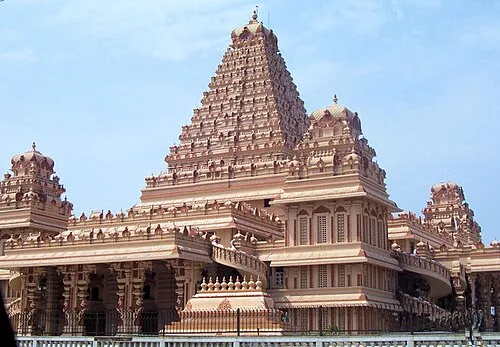
Completed in 2005, this Hindu temple complex covers 100 acres on the east bank of the Yamuna River. The main temple, carved from pink sandstone and Italian Carrara marble, took 11,000 artisans five years to build. The Guinness Book of World Records recognized it in 2007 as the world's largest comprehensive Hindu temple complex. Everything about Akshardham is oversized: 234 carved pillars, 20,000 figures of saints and deities, and a musical fountain show at dusk. The complex is part temple, part cultural exhibition. A boat ride takes you through 10,000 years of Indian history in animatronic dioramas. A film screened on an IMAX-sized screen tells the story of Swaminarayan. Then there is the temple itself, which you approach through colonnades and courtyards designed to slow you down and put you in a contemplative mood. Security is very tight: no phones, no cameras, no bags are allowed inside. You check everything at lockers near the entrance. This is a top sight in Delhi that requires real commitment. Entry to the temple is free. Exhibition tickets cost extra (check the website for current prices). Open Tuesday through Sunday, 10 AM to 6:30 PM. Closed Mondays. Budget at least 3 hours. The nearest metro is Akshardham station on the Blue Line.

Hours Mon: Closed | Tue-Sun: 10:00 AM – 6:30 PM
Price Free
Website akshardham.com/
Location 28.6125, 77.2773
Insider TipArrive by 10 AM to minimize wait times. The locker queue alone can take 30 minutes on weekends. The fountain show starts at sunset and is free, but seats fill up 45 minutes early.
Humayun's Tomb

2. Humayun's Tomb

Built in 1562 by Emperor Humayun's widow Hamida Bano Begum, this was the first garden tomb on the Indian subcontinent, and the direct architectural ancestor of the Taj Mahal. The resemblance is obvious: the symmetrical gardens, the central dome, the red sandstone with white marble inlay. But where the Taj draws millions and requires crowd management, Humayun's Tomb in Delhi gives you space to actually absorb the place. It was designated a UNESCO World Heritage Site in 1993. The architects, Mirak Mirza Ghiyas and his son, were brought from Herat in Afghanistan specifically for this project. The tomb took 8 years to complete. Inside the main chamber, Humayun's cenotaph sits in the center, surrounded by those of later Mughal royals including Dara Shikoh, Shah Jahan's eldest son. The Charbagh-style gardens are divided into four quadrants by water channels, a Persian design that became the template for Mughal architecture across India. As a top sight in Delhi, this tomb delivers on every level. Admission is 600 INR for foreign visitors. The complex opens at sunrise and closes at sunset. Late afternoon light turns the sandstone golden and makes for the best photos. Nizamuddin Dargah is a short walk east, making them an easy pair.

Hours Daily: sunrise to sunset
Price 600 INR
Insider TipEnter through the Arab Serai gate on the south side for a quieter approach. The Isa Khan tomb near the entrance, built 20 years before the main tomb, is often overlooked but equally beautiful.
Jama Masjid

3. Jama Masjid

Shah Jahan built this mosque between 1644 and 1656, and it remains one of the largest in India. The courtyard alone holds 25,000 worshippers. Three massive gates, four towers, and two 40-meter minarets frame a space that feels as much like a public square as a place of worship. It sits on a small hill in Old Delhi, so you climb broad steps from the surrounding streets to reach it, emerging into the courtyard with a sudden sense of openness after the narrow lanes below. The Jama Masjid was the imperial mosque of the Mughal capital Shahjahanabad, and its scale was meant to project power. It still does. Walking across the red sandstone courtyard to the main prayer hall, the proportions dwarf everything around you. The mosque is a functioning place of worship, so it closes during prayer times (roughly 12-1:30 PM). The area around Jama Masjid is the starting point for Chandni Chowk and the food lanes of Old Delhi, including Paranthe Wali Gali, making this a natural anchor for a half-day in the old city. Entry is free. The mosque is open from 7 AM to noon and 1:30 to 6:30 PM daily. This is a must-see in Delhi whether you are interested in architecture, history, or just the experience of being in one of the world's great public spaces.

Hours Daily: 7:00 AM – 12:00 PM, 1:30 – 6:30 PM
Price Free
Insider TipClimb the southern minaret for 300 INR. The views over Old Delhi's rooftops toward Red Fort are the best in the old city, and the narrow spiral staircase keeps crowds small.
Lotus Temple

4. Lotus Temple

From a distance, the 27 freestanding white marble petals look like a lotus flower about to open. Up close, the geometry is even more impressive. This is a Baha'i House of Worship, opened to the public on January 1, 1987, and it welcomes people of all faiths or none. There are no statues, no icons, no sermons. You sit in silence. On an average day, 8,000 to 10,000 visitors come through, making it one of the most visited buildings in the world. The interior is a single soaring hall with natural light filtering through the gaps between the petals. Every hour, a five-minute prayer session is held, during which sacred texts from different religions are read aloud. The rest of the time, the hall is simply quiet. After the sensory overload of Old Delhi's Red Fort and Jama Masjid, the stillness here feels almost radical. Surrounded by landscaped gardens and reflecting pools, the temple sits in south Delhi near Nehru Place. Entry is free. It is open Tuesday through Sunday from 8:30 AM to 5 PM (extended to 7 PM in summer), closed Mondays. The nearest metro is Kalkaji Mandir. Among things to do in Delhi, this is the place that surprises people most. It is a must-see in Delhi for the architecture alone.

Hours Mon: Closed | Tue-Sun: 8:30 AM – 5:00 PM
Price Free
Insider TipGo on a weekday morning right at 8:30 AM. By 11 AM, the queue stretches through the gardens. Shoes must be removed, and the marble floor gets scorching hot in summer, so bring socks.
Qutub Minar

5. Qutub Minar

At 73 meters, this is the tallest brick minaret in the world. Construction began in 1199 under Qutb-ud-din Aibak, and three successive rulers added to it before it was finished. The tower tapers from a 14.3-meter base to just 2.75 meters at the top, and there are 379 steps inside, though visitors have not been allowed to climb since 1981 (a stampede killed 45 people). You cannot go up, but standing at the base and looking straight up at the carved sandstone bands is dizzying enough. The surrounding Qutub complex is just as interesting as the tower itself. The Iron Pillar, dating to the 4th century, has barely rusted in over 1,600 years, and metallurgists still study why. The ruined Quwwat-ul-Islam Mosque, the first mosque built in Delhi after the Islamic conquest, reuses columns from destroyed Hindu and Jain temples. The carvings mix Sanskrit and Arabic motifs in a way you will not see anywhere else. This UNESCO World Heritage Site sits in south Delhi's Mehrauli area, right next to Mehrauli Archaeological Park. Admission is 600 INR for foreign visitors. The complex is open daily from 7 AM to 5 PM. It is much less crowded than the Red Fort and easier to enjoy at your own pace.

Hours Daily: 7:00 AM - 5:00 PM
Price 600 INR
Insider TipVisit right at 7 AM opening. By 10 AM, tour buses start arriving. The complex is compact enough to cover in 60-90 minutes, leaving time to walk next door to Mehrauli Archaeological Park.
Red Fort

6. Red Fort

Shah Jahan started building this massive red sandstone fortress in 1638, and it took 10 years to finish. For the next 200 years, every Mughal emperor called it home. Today the Red Fort sprawls across 250 acres of Old Delhi, and walking through the Lahore Gate into the covered bazaar of Chhatta Chowk, you start to grasp just how enormous this place is. The walls alone rise 33 meters. It is a must-see in Delhi, and there is no way around it. Inside, the layout moves from public halls to increasingly private quarters. The Diwan-i-Am (Hall of Public Audience) is where the emperor heard petitions. Behind it, the Diwan-i-Khas once held the Peacock Throne before it was looted by the Persians in 1739. The marble pavilions along the eastern edge looked out over the Yamuna River, though today the view is mostly urban sprawl. A UNESCO World Heritage Site since 2007, the fort carries deep national significance: every August 15, India's Prime Minister raises the flag here on Independence Day. Admission is 600 INR for foreign visitors. The fort is closed on Mondays. Budget about 2 hours for a thorough visit, and come right at opening (9:30 AM) to beat the school groups. Afternoons get hot and crowded. Among things to do in Delhi, this is where you start.

Hours Tue-Sun: 9:30 AM - 4:30 PM
Price 600 INR
Insider TipThe evening light-and-sound show (available in English and Hindi) is worth staying for if you want the fort mostly to yourself. The crowd thins dramatically after 3 PM.
Get Your Own Private Tour with AI Guide
AI Guide
  • Personalized tour tailored to your interests
  • Your AI guide tells stories, shares facts, and cracks jokes
  • Turn-by-turn GPS navigation
  • Available in your language — no download needed
Try for Free

💎 Hidden Gems in Delhi - Off the Beaten Path

Beyond the tourist crowds, Delhi hides remarkable treasures waiting to be discovered.

Agrasen ki Baoli

1. Agrasen ki Baoli

A 60-meter-long stepwell hiding in plain sight near Connaught Place, surrounded by modern office buildings. The 105 steps descend into the earth in symmetrical tiers, getting narrower and darker as you go down. The architectural style dates to the Tughlaq and Lodi periods (13th-16th century), built from red sandstone blocks, though legend traces it back to the Mahabharata era. It gained fame after appearing in the Bollywood film PK, and now draws a steady stream of visitors, but it still feels like a secret. What makes Agrasen ki Baoli special is the contrast. You step off busy Hailey Road, past a small gate, and suddenly you are in this deep, silent, geometric canyon. The repeating arches create an almost hypnotic visual rhythm. The well has been dry for centuries, but the structure is in remarkably good shape for something this old. It is protected by the Archaeological Survey of India and there is a small mosque at the western end. Of the hidden gems in Delhi, this one is the most accessible. Entry is free. Open daily from 9 AM to 5:30 PM. It is a 15-minute walk from Connaught Place and an easy stop between India Gate and the shopping district. Budget 20-30 minutes. Among things to do in Delhi, this delivers the biggest surprise-per-minute ratio.

Hours Daily: 9:00 AM – 5:30 PM
Price Free
Website Wikipedia
Insider TipGo between 9 and 10 AM on a weekday when the morning light reaches the lower steps. The shadows from the arches are at their most dramatic, and you will likely have the place to yourself.
Mehrauli Archaeological Park

2. Mehrauli Archaeological Park

Right next to Qutub Minar but almost entirely ignored by tourists. This 200-acre park contains over 100 historically significant monuments spanning 1,000 years. The ruins of Lal Kot, built by the Tomar Rajputs in 1060 AD, make it the site of Delhi's oldest known fort. Layer upon layer of history followed: Khilji dynasty structures, Tughlaq-era tombs, Lodi-period mosques, Mughal pavilions, and British-era buildings. All of it sits in an open, park-like setting with walking paths and scattered trees. The park is the kind of place where you can wander for an hour and keep discovering things: a crumbling tomb behind a hedge, a forgotten mosque overtaken by roots, a Mughal-era gateway leading nowhere. It is not curated or labeled the way the Qutub complex next door is, and that is precisely the appeal. You explore on your own terms. For anyone who has already seen the polished, well-known sites of Delhi, this park shows you the raw, unpackaged version of the city's past. It is one of the genuine hidden gems in Delhi. Open daily from 6:30 AM to 6 PM. Entry is free. The park borders the Qutub Minar complex, so combine them in a single visit. The Saket metro station is the closest on the Yellow Line.

Hours Daily: 6:30 AM – 6:00 PM
Price Free
Insider TipDownload a heritage walk guide (several free PDFs exist online) before visiting, as signage inside the park is minimal. The Balban tomb near the northern end is the oldest surviving Sultanate-era tomb in India.
Get Your Own Private Tour with AI Guide
AI Guide
  • Personalized tour tailored to your interests
  • Your AI guide tells stories, shares facts, and cracks jokes
  • Turn-by-turn GPS navigation
  • Available in your language — no download needed
Try for Free

🎨 Best Museums & Galleries in Delhi

World-class museums and galleries that make Delhi a cultural treasure.

National Museum

2. National Museum

India's largest museum sits on Janpath Road, a short walk south of India Gate. The collection spans 5,000 years and contains roughly 200,000 objects: Harappan-era pottery, Gandhara Buddhist sculptures, Mughal miniature paintings, Chola bronzes, medieval arms, and a full-scale wooden temple chariot. If you want to understand the full arc of Indian civilization in one building, this is where you go. It is the best museum in Delhi by a wide margin. The building is large enough that trying to see everything is a mistake. The prehistoric galleries and the Buddhist sculpture wing are the strongest sections. The Harappan gallery has artifacts from Mohenjo-daro dating to 2500 BC, including the famous "Dancing Girl" bronze. Upstairs, the textile gallery and the miniature painting rooms are worth seeking out. The museum was founded in 1949, and while the displays can feel dated compared to European national museums, the quality of the objects themselves is extraordinary. Admission is 650 INR for foreign visitors. Open Tuesday through Sunday, 10 AM to 6 PM. Closed Mondays. Budget at least 2 hours, more if you are interested in history. It pairs naturally with the National Gallery of Modern Art, which is a short walk east.

Hours Mon: Closed | Tue-Sun: 10:00 AM – 6:00 PM
Price 650 INR
Insider TipThe audio guide is worth the extra cost. The Mughal miniature painting section on the upper floor is often empty even when the ground floor is crowded.
Sanskriti Museum

3. Sanskriti Museum

Three small museums on one peaceful, 8-acre campus at the southern edge of Delhi, near Aya Nagar on the Mehrauli-Gurgaon Road. Founded in 1990 by O.P. Jain, the complex houses the Museum of Everyday Art, the Museum of Indian Terracotta, and the Textile Museum. Together they celebrate the objects ordinary Indians have used for centuries: cooking vessels, oil lamps, combs, toys, and hand-woven fabrics. Nothing here is monumental. Everything is human-scaled. The terracotta collection is the standout. Tribal and folk clay figures from across India fill the galleries, showing a sculptural tradition that has nothing to do with the grand stone carvings you see at the National Museum. The textile museum has handloom fabrics from dozens of weaving communities. The campus itself, called Anandagram (Village of Joy), is an artist residency with studios and gardens. If you have been visiting Delhi's Mughal monuments all week and want something totally different, this is where to go. Admission is 150 INR. Open Tuesday through Sunday, 10 AM to 5 PM. Closed Mondays. The nearest metro is Arjan Garh on the Yellow Line. Among the best museums in Delhi for folk and craft art, it is far from the center but worth the trip for anyone interested in India beyond the empires.

Hours Mon: Closed | Tue-Sun: 10:00 AM – 5:00 PM
Price 150 INR
Insider TipCall ahead to confirm opening, as the museum occasionally closes for private events. The campus cafe serves simple meals in the garden and is a good place to rest.
Sulabh International Museum

4. Sulabh International Museum

A museum dedicated entirely to the history of toilets and sanitation. Time Magazine named it one of the world's most unusual museums, and they were right. The collection traces sanitation from 2500 BC to the present, with replicas of ancient toilets, medieval commodes, and even a throne-style toilet that belonged to a French king. It sounds like a joke, but the museum treats its subject seriously, tying sanitation to public health, urban planning, and social equality. The museum is run by Sulabh International, the organization founded by Dr. Bindeshwar Pathak that brought pay-per-use public toilets to India and campaigned to end manual scavenging. The exhibits make the case that toilets are a civil rights issue. It is genuinely interesting, even if you walk in expecting kitsch. The museum sits in west Delhi, near Palam, which makes it a detour from the main tourist zone. Most visitors spend 30-45 minutes here. Admission is 650 INR. Open Monday through Saturday, 10 AM to 6 PM, and Sundays until 5 PM. Among the best museums in Delhi for originality, this one is hard to categorize but worth the trip if you enjoy offbeat collections.

Hours Mon-Sat: 10:00 AM – 6:00 PM | Sun: 10:00 AM – 5:00 PM
Price 650 INR
Location 28.5966, 77.0808
Insider TipCombine this with a visit to the Sulabh campus next door, where you can see biogas technology demonstrations and learn about the organization's sanitation work across India.
Get Your Own Private Tour with AI Guide
AI Guide
  • Personalized tour tailored to your interests
  • Your AI guide tells stories, shares facts, and cracks jokes
  • Turn-by-turn GPS navigation
  • Available in your language — no download needed
Try for Free

🍕 Food Markets & Culinary Spots in Delhi

The best food markets, food halls, and culinary destinations in Delhi.

Delhi Haat

1. Delhi Haat

An open-air market near INA Colony in south Delhi where artisans from every Indian state sell handicrafts directly to customers, cutting out middlemen entirely. The stalls rotate regularly, so the selection changes every few weeks. You might find Rajasthani block-printed textiles next to Manipuri bamboo baskets next to Kashmiri papier-mache boxes. Prices are reasonable and bargaining is expected. The real draw is the food. Delhi Haat has food stalls representing different regions of India, and the variety is hard to match anywhere else in the city. South Indian dosa next to Nagaland smoked pork next to Lucknowi kebabs next to Bengali sweets. It is like eating your way across the country in one sitting. The stalls are simple, the portions are generous, and most dishes cost between 100 and 300 INR. Cultural performances and dance shows happen on the central stage, especially on weekends and holidays. Among food markets in Delhi, this is the cleanest and most organized. Open daily from 11 AM to 9 PM. Entry is free. INA metro station on the Yellow Line is the closest stop. Budget at least an hour for shopping and another for eating.

Hours Daily: 11:00 AM – 9:00 PM
Price Free
Website Wikipedia
Insider TipThe food stalls in the back corners, away from the main entrance, are less crowded and often have the best regional specialties. The Rajasthani and northeastern Indian stalls are consistently strong.
Get Your Own Private Tour with AI Guide
AI Guide
  • Personalized tour tailored to your interests
  • Your AI guide tells stories, shares facts, and cracks jokes
  • Turn-by-turn GPS navigation
  • Available in your language — no download needed
Try for Free

🌳 Parks & Best Viewpoints in Delhi

Beautiful parks, gardens, and panoramic viewpoints for the best views of Delhi.

Garden of Five Senses

1. Garden of Five Senses

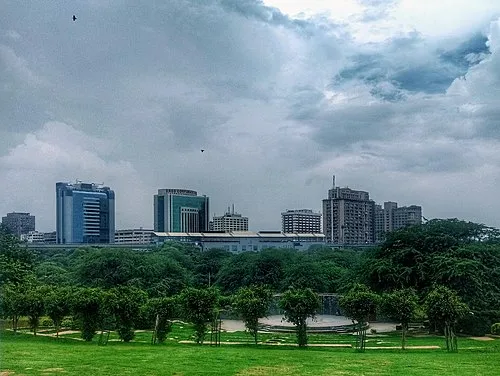
Twenty acres of landscaped gardens in south Delhi, designed to engage all five senses. Opened in 2003 between Mehrauli and Saket, the park has themed sections: a fragrant garden with over 200 aromatic plant species, a bamboo court, rock sculptures, water cascades, and amphitheater spaces. More than 25 stone and clay sculptures are placed throughout the grounds. It is not a botanical garden in the scientific sense. It is more of an art park that happens to be green. The gardens sit near Mehrauli Archaeological Park and are a short drive from Qutub Minar, so you can combine all three in a south Delhi afternoon. The landscaping is more imaginative than most Delhi parks. Instead of flat lawns, there are terraced levels, narrow pathways through bamboo thickets, and stone-paved clearings. On weekends and during festivals, the amphitheater hosts concerts and cultural events. During the rest of the week, it is mostly local couples and families. Open daily from 9 AM to 6 PM. Entry is free. The park sits between Saket and Mehrauli. Saket metro station (Yellow Line) is the closest. As one of the best parks in Delhi for a different kind of green space, this is a good break from monuments and museums.

Hours Daily: 9:00 AM – 6:00 PM
Price Free
Insider TipThe spiral walkway in the western section gives the closest thing to an elevated view in the garden. In February and March, the flowering sections peak and the fragrance paths are at their strongest.
Nehru Park

2. Nehru Park

Eighty acres of green space in the diplomatic quarter of Chanakyapuri, named after India's first Prime Minister. The park was established in 1969 and is divided into three sections: the main garden with its rose beds (which bloom heavily in December and January), a middle section with an ancient Shiva temple said to date to the Pandava era, and a rear section with a swimming pool reserved for government club members. Nehru Park is where Delhi's diplomats, joggers, and morning walkers come before work. The running track circles the entire perimeter, and early mornings have an almost meditative quiet despite being in the middle of a busy city. A notable curiosity is the bronze statue of Vladimir Lenin near the pond, unveiled in 1987 by Soviet PM Nikolai Ryzhkov and Indian PM Rajiv Gandhi. The park occasionally hosts music festivals, Sufi concerts, and cultural events on its central lawns. Open daily from 5 AM to 9 PM. Free entry. It is a quieter, less touristed alternative to Lodhi Garden, though it lacks the historical monuments. Among the parks in Delhi, this one is best for a morning jog or a leisurely walk through rose gardens. It is near the Ashoka Hotel, making it easy to reach from central Delhi hotels.

Hours Daily: 5:00 AM – 9:00 PM
Price Free
Insider TipThe rose garden in the center section peaks in December-January. Early morning (before 7 AM) is the best time: the air is cool, the park is quiet, and runners have the track mostly to themselves.
Talkatora Garden

3. Talkatora Garden

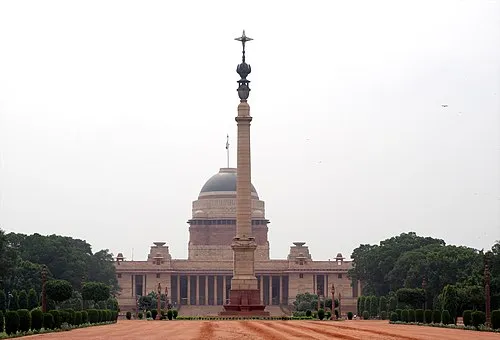
This garden near Rashtrapati Bhavan sits on historically significant ground: in 1738, the Marathas defeated the Mughals here. The name comes from the old water tanks and pools that once occupied the site. Today it is a well-maintained public garden popular with families and local residents, especially during spring when the tulip and flower displays draw weekend crowds. Talkatora Garden is smaller and more manicured than Lodhi Garden or Nehru Park. It has an indoor stadium (used for sports events and exhibitions) and a children's activity area. The flower beds are well tended, with seasonal plantings that change throughout the year. It is not a destination in itself for most visitors to Delhi, but if you are walking from Rashtrapati Bhavan or Connaught Place and want a green break, it is convenient and pleasant. Open daily from 5 AM to 8 PM. Free entry. Located near the President's Estate, it is a short walk from Gurdwara Bangla Sahib and the Laxminarayan Temple area. Among the parks in Delhi, this is the most centrally located after India Gate's lawns, though it draws mostly local visitors rather than tourists.

Hours Daily: 5:00 AM - 8:00 PM
Price Free
Website Wikipedia
Insider TipVisit during the annual tulip festival (usually late February to early March) when the garden is at its most colorful and the city government adds temporary art installations.
Get Your Own Private Tour with AI Guide
AI Guide
  • Personalized tour tailored to your interests
  • Your AI guide tells stories, shares facts, and cracks jokes
  • Turn-by-turn GPS navigation
  • Available in your language — no download needed
Try for Free

Explore with AI Guide

AI Guide App

Get personalized tours with our AI-powered guide. No download needed — works right in your browser.