Things to Do in Dijon - Top Attractions, Hidden Gems & Must-See Sights

Discover the best things to do in Dijon. Complete guide to must-see sights, popular attractions, hidden gems, museums, food markets and parks.

19 Attractions 5 Categories Travel Guide

Table of Contents

Dijon Overview

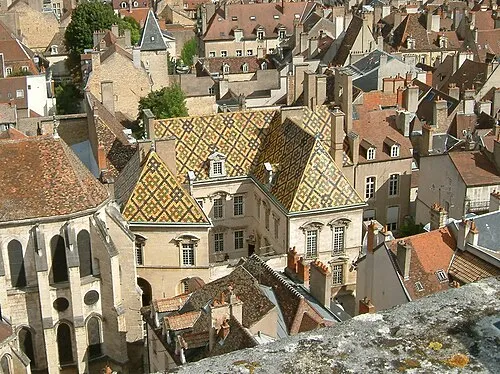
Dijon is defined by the legacy of the Dukes of Burgundy, whose immense wealth left a city center filled with glazed polychrome tile roofs and grand stone facades. The compact historic core is exceptionally walkable, designed around a pedestrianized loop where you can follow the brass Owl Trail to reach the most significant landmarks.

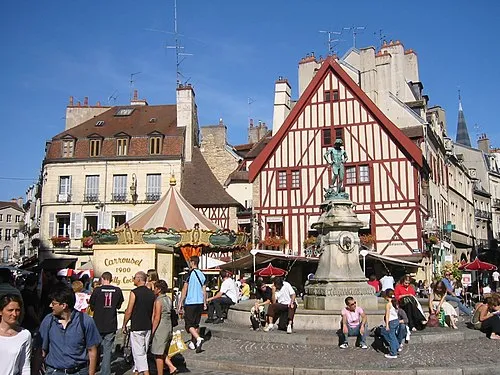
Along the Rue des Forges, you will find well-preserved medieval and Renaissance architecture leading directly to the massive Palace of the Dukes of Burgundy. While the city has a deep culinary history, the real draw is the quality of its museums. The Musée des Beaux-Arts and Musée de la Vie Bourguignonne offer a serious look into regional identity, while the rows of stone gargoyles on Notre-Dame de Dijon provide a peculiar contrast to the formal elegance of the public squares.

Must-See Attractions in Dijon

  • Palace of the Dukes of Burgundy — Massive limestone complex housing the city’s fine arts museum and the former seat of the powerful Burgundian dukes.
  • Notre-Dame de Dijon — 13th-century Gothic church featuring a facade covered in rows of gargoyles and a legendary stone owl on its north side.
  • Cathédrale Saint-Bénigne — Religious site known for its patterned tile roof and a Romanesque crypt containing the remains of Saint Benignus.
  • Owl Trail — Series of brass plaques set into the sidewalk that guide visitors through the medieval center's quiet courtyards and major sites.
🏛️ Must-See ⭐ Sights 💎 Hidden Gems 🎨 Museums 🌳 Parks & Views

🏛️ Must-See Attractions in Dijon

These iconic landmarks and must-see sights are essential stops for any visitor to Dijon.

Cathédrale Saint-Bénigne

1. Cathédrale Saint-Bénigne

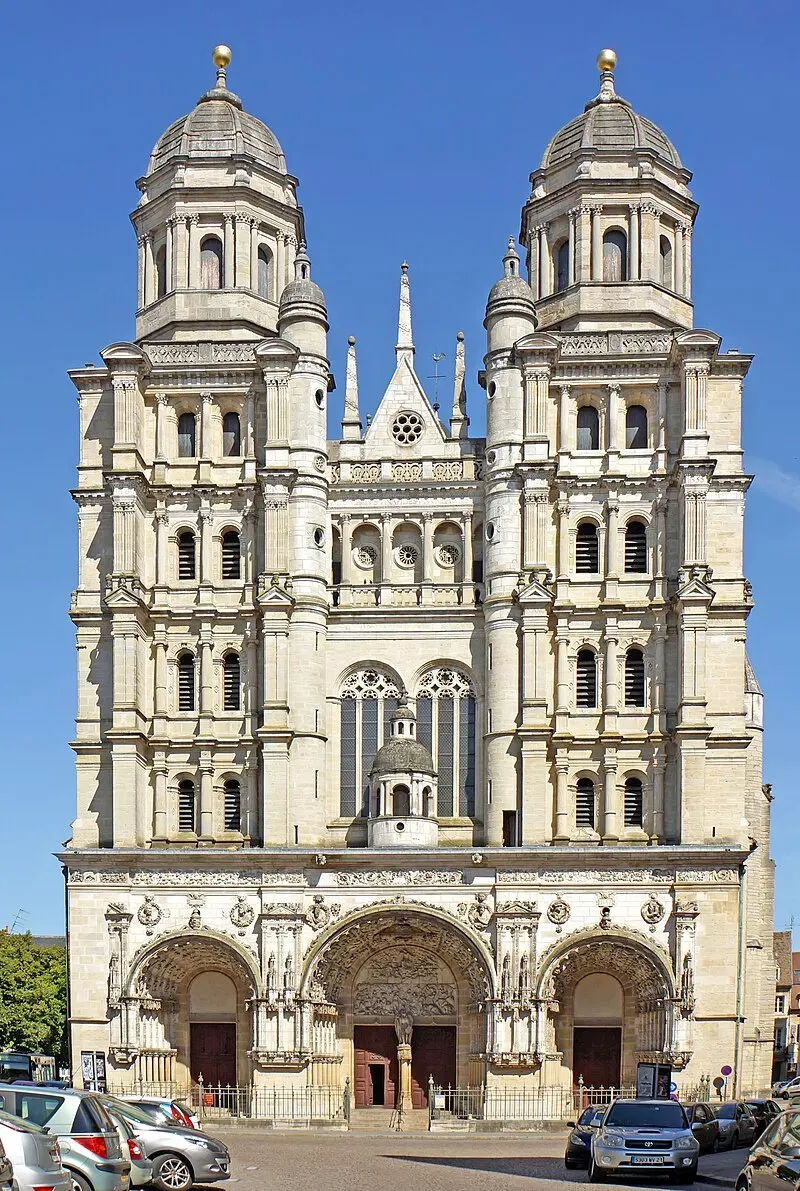
While Notre-Dame often steals the spotlight with its gargoyles, this massive Gothic structure anchors the western side of the city center with a heavier, more solemn presence. The roof features the polychrome tiles typical of the region, but the real draw lies beneath the floor. A small fee grants you access to the rotunda and crypt, remnants of a much older Romanesque basilica that feel completely detached from the 13th-century nave above. It is dark, ancient, and filled with a thick silence that makes the busy streets outside feel miles away.

Inside the main sanctuary, the atmosphere is starker and less ornamented than you might expect from the exterior grandeur. The sheer verticality of the pillars pulls your eyes upward, but the stone remains largely bare, allowing the colored light from the stained glass to dominate the space. It serves as a working church first and a tourist site second, so you are less likely to be fighting crowds here than at other major religious sites nearby.

Exploring this cathedral offers a deeper look into the city's spiritual roots beyond the standard postcard views. Among the various Dijon attractions focused on medieval architecture, the crypt here stands out for its age and architectural rarity. It requires walking down a steep set of stairs, so bring sensible shoes and prepare for cooler temperatures underground even in the height of summer.

Hours Mon-Fri: 9:00 AM – 12:00 PM, 2:00 – 6:30 PM | Sat-Sun: 9:00 AM – 12:00 PM, 2:00 – 6:00 PM
Price Free
Insider TipPay the small entry fee for the crypt; it is the only part of the original year 1000 structure left and includes a fascinating circular layout you won't see elsewhere.
Notre-Dame de Dijon

2. Notre-Dame de Dijon

This church is the gothic heart of the city, famous not just for its architecture but for its strange, unique details. The facade is a flat wall of stone, decorated with rows of false gargoyles that jut out like spikes. Unlike traditional gargoyles that drain water, these are purely decorative and surprisingly varied—musicians, monsters, and wild beasts looking down at the market street below. Inside, the space is compact and soaring, home to one of the oldest wooden statues of the Virgin Mary in France.

On the north side of the church, in a small street, you will find the Magic Owl. It is a small carving worn smooth by centuries of hands rubbing it for good luck. You have to touch it with your left hand while passing your right hand over your heart (or so the local legend goes) to make a wish. It is a simple tradition that connects you physically to the history of the town.

While exploring religious Dijon attractions, this building stands out for its eccentricity. The Jacquemart clock on top, with its mechanical family striking the bells, adds another layer of mechanical whimsy. It is less a solemn monument and more a living part of the city's folklore. Avoid the aisles during mass, but otherwise, the church is welcoming to respectful wanderers.

Hours Mon-Sat: 8:00 AM – 6:00 PM | Sun: 9:00 AM – 6:00 PM
Price Free
Insider TipDon't just touch the owl; look for the small stone dragon carved on the wall nearby—legend says he is the owl's guardian/enemy.
Palace of the Dukes of Burgundy

3. Palace of the Dukes of Burgundy

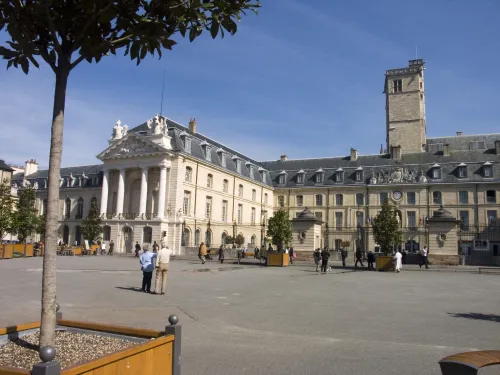
This sprawling complex is the definitive symbol of the city's golden age. It is a mash-up of styles, with the medieval ducal kitchens and towers on one side and the polished classical facade of the Estates of Burgundy on the other. It dominates the semi-circular Place de la Libération, acting as the stage backdrop for the entire city. The building now houses the City Hall and the Fine Arts Museum, meaning it is still the seat of power and culture.

You can walk through the Cour d'Honneur freely, admiring the scale of the architecture. The stone is a warm, creamy limestone that glows pink at sunset. Climbing the Philippe le Bon tower (booking required) gives you the only true aerial view of the city, where you can trace the pattern of the colored roofs spreading out below. It is a steep climb, but necessary to understand the layout of the streets.

No list of Dijon attractions is complete without this palace. It is the center of gravity for the town. In summer, the square in front fills with cafe tables and children playing in the splash fountains, creating a lively contrast to the austere stone walls. It is best appreciated from a cafe chair across the square, watching the light change on the facade.

Hours Mon: 9:00 AM – 6:00 PM | Tue: Closed | Wed-Sun: 9:00 AM – 6:00 PM
Price Free
Insider TipWalk around to the back (Rue des Forges side) to see the older, gothic face of the palace, which feels like a completely different building.
Get Your Own Private Tour with AI Guide
AI Guide
  • Personalized tour tailored to your interests
  • Your AI guide tells stories, shares facts, and cracks jokes
  • Turn-by-turn GPS navigation
  • Available in your language — no download needed
Try for Free

💎 Hidden Gems in Dijon - Off the Beaten Path

Beyond the tourist crowds, Dijon hides remarkable treasures waiting to be discovered.

Rue Verrerie

1. Rue Verrerie

This narrow, cobblestone lane is arguably the most picturesque street in the city. Lined with timber-framed houses that lean slightly over the street, it feels like a movie set for the Middle Ages. Historically the glassblowers' and glaziers' district, it is now home to antique dealers, art galleries, and chic clothing stores. The wood beams are often painted in soft greys or blues, contrasting with the warm plaster.

It is pedestrian-only, which preserves the quiet, suspended atmosphere. The light here is softer, filtered by the narrowness of the street. It is the best place to see the 'encorbellement' style of building, where each floor juts out further than the one below to maximize space. The shops here are unique, selling items you won't find in the chain stores on the main drag.

For travelers seeking atmospheric Dijon attractions, this street delivers the quintessential old-town vibe without the commercial gloss of Rue de la Liberté. It is perfect for a slow evening stroll when the shop windows are lit up and the street is empty. It connects the area behind Notre-Dame to the theater district, serving as a charming shortcut.

Hours Open 24/7
Price Free
Website N/A
Location 47.3231, 5.04298
Insider TipLook for the pig carved into the wood on one of the facades—a remnant of medieval signage when literacy was low.
Tour de Bar

2. Tour de Bar

This tower is the oldest surviving part of the Ducal Palace, a rugged medieval counterpoint to the classical elegance that surrounds it. Built in the 14th century, it stands above the Cour de Bar, adjacent to the old ducal kitchens. Its silhouette is defensive and austere, reminding you that before this was a palace of pleasure and administration, it was a fortress for powerful warlords.

It is visually distinct from the taller, square Tour Philippe le Bon. The Tour de Bar is often integrated into the museum visits or seen from the courtyard, grounding the site in its feudal origins. It looms over the medieval kitchen complex, where the huge fireplaces were capable of roasting entire oxen for the ducal feasts. The stone is darker, weathered by centuries of history.

While many Dijon attractions focus on the 17th and 18th centuries, this tower pulls you back to the era of the Valois Dukes. It represents the raw military power that allowed Burgundy to rival the Kingdom of France. Viewing it from the courtyard gives you a sense of the sheer scale of the operation that once ran this independent state.

Hours Open daily
Price Free
Location Maps
Insider TipYou can't usually climb this one like the Philippe le Bon tower, but the view of it from the 'Cour de Bar' allows you to see the original defensive windows.
Get Your Own Private Tour with AI Guide
AI Guide
  • Personalized tour tailored to your interests
  • Your AI guide tells stories, shares facts, and cracks jokes
  • Turn-by-turn GPS navigation
  • Available in your language — no download needed
Try for Free

🎨 Best Museums & Galleries in Dijon

World-class museums and galleries that make Dijon a cultural treasure.

Musée Archéologique de Dijon

1. Musée Archéologique de Dijon

Housed in the dormitory of the former Benedictine abbey of Saint-Bénigne, this museum pairs Roman history with medieval architecture. The basement level is a dark, vaulted forest of stone pillars that is worth the visit alone, regardless of the artifacts it holds. Here, you find a collection of Gallo-Roman ex-votos—wooden and stone carvings thrown into the source of the Seine river by pilgrims asking for healing two thousand years ago.

The upper floors display regional finds that trace the area's history from prehistory through the Middle Ages. The collection is dense, with cabinets full of tools, jewelry, and weapons that require some patience to sift through. It is less polished than the Fine Arts museum, retaining a slightly old-school academic feel, but the narratives it reveals about ordinary life in Roman Gaul are fascinating.

For those interested in the deep history behind Dijon attractions, this museum provides the foundational context that the grand palaces overlook. It is often quiet, allowing for a contemplative pace. The contrast between the simple wooden pilgrims' offerings and the heavy stone architecture of the abbey creates a powerful atmosphere of time standing still.

Hours Mon-Tue: Closed | Wed: 9:30 AM – 12:30 PM, 1:30 – 6:00 PM | Thu-Fri: Closed | Sat-Sun: 9:30 AM – 12:30 PM, 1:30 – 6:00 PM
Price Free
Location 47.32167, 5.035
Insider TipDon't miss the 'Christ of Saint-Bénigne' on the ground floor; its stylized, almost modern face dates back to the 11th century and is hauntingly expressive.
Musée Magnin

2. Musée Magnin

This museum feels less like a public institution and more like crashing the home of a wealthy, eccentric art collector. Housed in the Hôtel Lantin, a 17th-century mansion, the collection was assembled by Maurice Magnin and his sister Jeanne. Paintings cover the walls from waist height to the ceiling in the traditional salon style, requiring you to crane your neck to spot treasures among the hundreds of frames.

The atmosphere is domestic and hushed. Creaky wooden floors, velvet curtains, and period furniture create a time-capsule effect. The collection focuses on French and Italian art that the siblings personally enjoyed, meaning it skips the famous blockbusters in favor of interesting, sometimes obscure, lesser masters. It is an intimate experience where you can get incredibly close to the canvas.

Among the louder and busier Dijon attractions, this is a retreat for serious art lovers who enjoy the hunt. There are no interactive screens or aggressive audio guides here, just room after room of oil paintings and drawings. It offers a rare glimpse into the taste and lifestyle of the Parisian bourgeoisie who kept a foothold in Burgundy.

Hours Mon: Closed | Tue-Sun: 10:00 AM – 12:30 PM, 1:30 – 6:00 PM
Price €3.00
Insider TipAsk the staff to point out the few paintings by Jeanne Magnin herself; she was a talented artist whose work is quietly mixed in with the collection.
Musée Rude

3. Musée Rude

Hidden in the transept of the deconsecrated Saint-Étienne church, this small museum is dedicated to François Rude, the sculptor behind the 'Marseillaise' relief on the Arc de Triomphe in Paris. The space is dominated by a life-size plaster cast of that very monument, which allows you to see the expressions of the screaming warriors at eye level—something impossible to do in Paris. The scale is overwhelming in such a confined stone space.

The rest of the museum displays casts and studies that show Rude's process, from rough clay sketches to polished final forms. It also exposes the archaeological layers of the church itself, with parts of the old Roman wall visible in the structure. It is a quick visit, often overlooked by tourists rushing to the larger Fine Arts museum nearby.

If you are checking off cultural Dijon attractions, this spot punches above its weight for visual impact. It takes only twenty minutes to see, but the sight of the massive plaster monuments squeezed into the church architecture is unforgettable. It celebrates local talent without demanding half your day, making it a perfect filler between lunch and a larger tour.

Hours Mon: 9:30 AM – 6:00 PM | Tue: Closed | Wed-Sun: 9:30 AM – 6:00 PM
Price €2.50
Location 47.3209, 5.04409
Insider TipLook down at the floor near the entrance to see the visible foundations of the Roman castrum wall that protected the city in the 3rd century.
Musée d'Art Sacré

4. Musée d'Art Sacré

Located in the church of Sainte-Anne, this museum is currently undergoing significant works, so you should verify its status before walking over. When open, it presents a specific slice of history: the objects, vestments, and statues used in Catholic worship across Burgundy. The setting is unique, as the artifacts are displayed within a consecrated circular church, blurring the line between gallery and sanctuary.

The collection includes silver chalices, embroidered silk chasubles, and polychrome statues that were once central to community life. It focuses heavily on the 17th to 19th centuries, a period often skipped by medieval-focused tours. Even from the outside, the copper dome of the church is a distinctive landmark in the skyline, marking a district that feels more residential and quiet.

Checking if this spot is accessible is a good idea when planning your tour of Dijon attractions, particularly if you have an interest in textiles or silverware. It sits right next to the Museum of Burgundian Life, so the two are easily combined. The exhibits explain the function of the objects, stripping away the mystery of religious rituals to show the craftsmanship behind them.

Hours Tue-Sun 10:00-13:00, 14:00-18:00
Price €3.00
Insider TipIf the museum is closed, peek through the gates of the adjacent Jardin des Apothicaires for a look at a traditional medicinal garden.
Musée de la Vie Bourguignonne

5. Musée de la Vie Bourguignonne

Set inside a 17th-century Bernardine monastery, this museum captures the everyday reality of the region from the late 1800s to World War II. Instead of kings and dukes, you meet grocers, blacksmiths, and farmers. The ground floor is filled with recreated shop fronts saved from the city streets—a pharmacy, a hat shop, a grocery—complete with original stock and counters. It feels like walking through a ghost town frozen in 1900.

The upper levels display costumes, furniture, and household tools that define the local identity. There is a strong focus on mustard production, gingerbread making, and wine culture, but from the perspective of the worker rather than the consumer. The cloister itself is a beautiful, airy space that lets you breathe between exhibits, often used for reading or quiet conversation.

This is one of the most accessible Dijon attractions for families, as the visual recreations need little translation. It grounds the city's grand reputation in the reality of its people. The flow is easy to follow, and you can spend an hour here getting a tangible sense of how the ancestors of today's locals lived, worked, and celebrated.

Hours Mon: 9:30 AM – 12:30 PM, 1:30 – 6:00 PM | Tue: Closed | Wed-Sun: 9:30 AM – 12:30 PM, 1:30 – 6:00 PM
Price €3.00
Location 47.3177, 5.03792
Insider TipThe collection of mustard pots on the first floor is unexpectedly vast; look for the satirical labels that poke fun at political figures of the time.
Musée des Beaux-Arts de Dijon

6. Musée des Beaux-Arts de Dijon

Occupying the Palace of the Dukes, this museum has recently emerged from a decade-long renovation that transformed it into a world-class institution. The navigation is now chronological and seamless, taking you from Egyptian artifacts to modern art. However, the absolute core of the visit remains the Guard Room, a cavernous hall housing the monumental tombs of the Dukes of Burgundy. The mourners—small alabaster figures weeping around the base of the tombs—are masterpieces of emotional expression carved in stone.

The updated layout integrates the building's history with the art; you walk through medieval kitchens and look out over the square from Renaissance windows. The collection is vast, so attempting to see every single piece will result in fatigue. It is better to pick a few eras, like the Burgundian Middle Ages and the 19th-century local painters, to give your visit focus.

As the heavyweight champion of Dijon attractions, it draws the biggest crowds, yet the building is large enough to absorb them. Admission to the permanent collection is free, which allows you to visit multiple times for shorter stints rather than one marathon session. The juxtaposition of contemporary glass structures with ancient stone walls makes the architecture as compelling as the paintings.

Hours Mon: 9:30 AM – 6:00 PM | Tue: Closed | Wed-Sun: 9:30 AM – 6:00 PM
Price Free
Location 47.3216, 5.04267
Insider TipGo to the third floor for the impressionists, but also for the best window view looking directly onto the Place de la Libération below.
Get Your Own Private Tour with AI Guide
AI Guide
  • Personalized tour tailored to your interests
  • Your AI guide tells stories, shares facts, and cracks jokes
  • Turn-by-turn GPS navigation
  • Available in your language — no download needed
Try for Free

🌳 Parks & Best Viewpoints in Dijon

Beautiful parks, gardens, and panoramic viewpoints for the best views of Dijon.

Jardin Darcy

1. Jardin Darcy

This park is the first thing you see when walking from the train station toward the old center, acting as a green doormat to the historic district. It sits atop a reservoir built by the engineer Henry Darcy, which explains the terraces and water features that structure the layout. Locals use it as a transit lounge, a place to eat a sandwich, or a spot to let kids burn off energy before dragging them into a museum.

At the entrance, a large polar bear statue commands attention. It is a reproduction of a work by François Pompon, a local sculptor, and has become an unofficial mascot for the city. The park itself is dense with trees and flower beds, offering plenty of shade during the humid continental summers. It is not a wild forest but a manicured 19th-century city garden, designed for strolling in Sunday best rather than hiking.

Comparing it to other green spaces among Dijon attractions, this garden is more about convenience and first impressions than sprawling nature. It can get noisy due to the traffic on the adjacent square, but the fountain noise helps dampen the city sounds. It is the ideal place to get your bearings and map out your day before diving into the pedestrian zone.

Hours Daily: 7:30 AM – 7:00 PM
Price Free
Website N/A
Location 47.3245, 5.03184
Insider TipThe copy of the Pompon bear at the entrance is the photo spot, but the real original marble version is safe inside the Musée des Beaux-Arts.
Lac Kir

2. Lac Kir

West of the city proper, this artificial lake was created in the 1960s by the canon Félix Kir, the same mayor who gave his name to the famous white wine and cassis aperitif. It is a purely recreational space where the city goes to exhale on weekends. You will find joggers on the perimeter path, families claiming patches of grass for barbecues, and a designated beach area that becomes packed during heatwaves.

The water is not tropical blue, but it provides a necessary break from the stone and pavement of the town center. Paddleboards and kayaks are common sights, and the surrounding hills offer a green backdrop that makes you feel like you have left the urban area completely. It is not a place for high culture, but rather for observing how modern Burgundians spend their downtime.

While most tourists stick to the historic core, adding this lake to your list of Dijon attractions is smart if you are traveling with children or visiting during a hot spell. It is accessible by bus or a long walk along the canal. Don't expect solitude on a sunny Saturday; it functions as the city's collective backyard and gets used accordingly.

Hours Open 24/7
Price Free
Website Wikipedia
Location 47.3275, 4.9975
Insider TipIn summer, 'Dijon Plage' takes over with deckchairs and sand; go early in the morning if you want to run or walk the loop without dodging crowds.
Parc de la Colombière

3. Parc de la Colombière

Located south of the center, this park is a classic French formal garden laid out in the 17th century. It is connected to the town by the long, tree-lined Allée du Parc, which is a pleasant bike ride or walk in itself. The design is geometric, with long straight paths cutting through dense woodland, radiating from a central clearing. It feels aristocratic and orderly, a direct legacy of the Great Condé who commissioned it.

It is much larger than the central gardens and serves as the primary green lung for locals. You will find ancient trees, animal enclosures with goats and deer, and plenty of space to escape the urban heat. It lacks the flower-heavy ornamentation of botanical gardens, relying instead on the majesty of tall timber and perspective lines. The atmosphere is quiet and local, filled with joggers and families on weekends.

If you have exhausted the stone-heavy Dijon attractions in the center, this park offers a changing of gears. It is particularly beautiful in autumn when the leaves turn, creating long tunnels of gold and red. It is a bit of a trek on foot from the palace, so consider taking a bus or renting a bike to get there comfortably.

Hours Daily: 7:30 AM – 9:00 PM
Price Free
Location 47.3, 5.04673
Insider TipLook for the remnants of the Via Agrippa—part of the ancient Roman road is still visible within the park boundaries.
Get Your Own Private Tour with AI Guide
AI Guide
  • Personalized tour tailored to your interests
  • Your AI guide tells stories, shares facts, and cracks jokes
  • Turn-by-turn GPS navigation
  • Available in your language — no download needed
Try for Free

Explore with AI Guide

AI Guide App

Get personalized tours with our AI-powered guide. No download needed — works right in your browser.