Things to Do in Innsbruck - Top Attractions, Hidden Gems & Must-See Sights

Discover the best things to do in Innsbruck. Complete guide to must-see sights, popular attractions, hidden gems, museums, food markets and parks.

24 Attractions 6 Categories Travel Guide

Table of Contents

Innsbruck Overview

Innsbruck, the capital of Tyrol in western Austria, is a captivating alpine city where imperial grandeur meets mountain adventure. Nestled in the Inn Valley and surrounded by the dramatic peaks of the Nordkette range, Innsbruck offers a unique blend of Habsburg heritage, world-class winter sports facilities, and authentic Tyrolean culture. The city's compact Old Town showcases architectural treasures like the iconic Golden Roof, the Imperial Palace, and the Court Church with its remarkable bronze statues. Beyond the historic center, visitors can ascend to alpine heights via the Nordkette Cable Car, explore Renaissance splendor at Ambras Castle, or discover Swarovski's crystal wonderland. With 26 carefully curated points of interest spanning must-see landmarks, hidden gems, world-class museums, and scenic parks, Innsbruck delivers an unforgettable experience whether you're seeking cultural immersion, outdoor adventure, or simply the charm of an authentic alpine city.

Must-See Attractions in Innsbruck

  • {'category': 'must_see', 'places': ['Golden Roof', 'Nordkette Cable Car', 'Bergisel Ski Jump', 'Imperial Palace']}
  • {'category': 'popular_sights', 'places': ['City Tower', 'Ambras Castle', 'Wiltener Basilica', 'Court Church', 'Alpine Zoo', 'Swarovski Crystal Worlds', 'Maria-Theresien-Straße', 'Triumphal Arch']}
  • {'category': 'hidden_gems', 'places': ['Grassmayr Bell Foundry', 'Mühlau Waterfall', 'Baggersee Rossau', 'Umbrüggler Alm', 'Wilten Platzl Market']}
  • {'category': 'museums_galleries', 'places': ['Tyrolean Folk Art Museum', 'Ferdinandeum', 'Tirol Panorama', 'AUDIOVERSUM']}
  • {'category': 'food_markets', 'places': ['Markthalle Innsbruck']}
🏛️ Must-See ⭐ Sights 💎 Hidden Gems 🎨 Museums 🍕 Food & Markets 🌳 Parks & Views

🏛️ Must-See Attractions in Innsbruck

These iconic landmarks and must-see sights are essential stops for any visitor to Innsbruck.

Golden Roof

1. Golden Roof

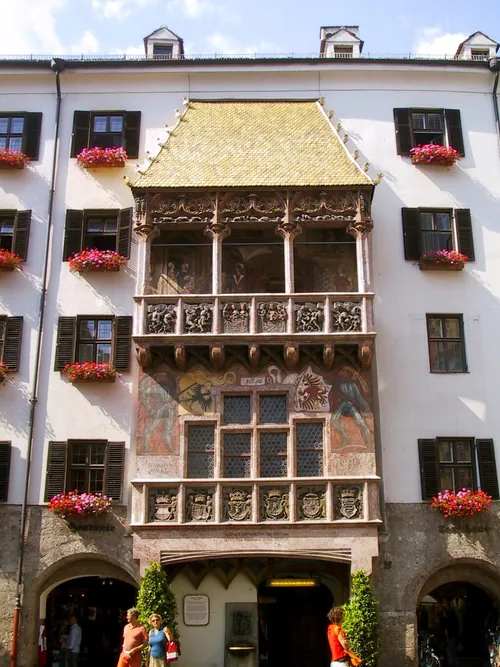
The Golden Roof sits at the end of Herzog-Friedrich-Strasse in the middle of the old town. It was built around 1500 for Emperor Maximilian I, who wanted a special place to watch festivities in the square. It is one of the most photographed places to visit in Innsbruck and is the city's main symbol. The building has a large balcony with a roof made of 2,657 gilded copper tiles. These tiles still shine in the sun after over 500 years.

Inside the building, there is a small museum that tells the history of the Emperor and his era. You will learn about Maximilian's life and the construction of the golden roof through interactive displays. One section is dedicated to the court life and the social life of the town at that time. There are many original artifacts and a good view from the balcony where the Emperor once sat. It is an interesting way to understand the history of the Habsburg dynasty in Tyrol.

The museum is closed on Mondays, but the exterior can be seen at any time. Admission is reasonably priced, and the tour through the museum takes about 45 minutes. The square around the building is always full of people and street performers. You can find many cafes nearby where you can sit and look at the roof. It is a good starting point for any walking tour of the historic center.
Hours Mon: Closed | Tue-Sun: 10:00 AM – 5:00 PM
Price €5 (museum)
Location 47.2686, 11.3933
Insider TipLook at the reliefs on the balcony; they are replicas, but the originals are kept safely in the museum inside.
Imperial Palace

2. Imperial Palace

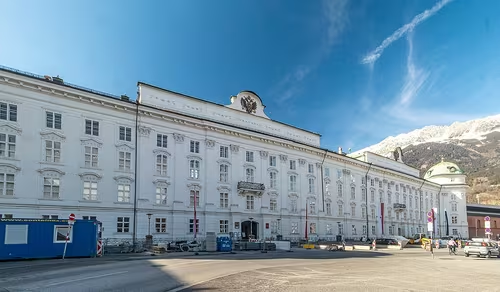
The Imperial Palace is a large historic residence of the Habsburg dynasty in the old town. It was originally built as a late medieval castle and was expanded into a palace in the 15th century. Today, it is one of the most historical places to visit in Innsbruck and is part of the Hofburg complex. The facade is painted in the classic white and yellow colors that represent the Austrian Empire. It is the third most important historic building in Austria after the Hofburg in Vienna and Schoenbrunn Palace.

Inside the palace, there are 25 state rooms that are open to the public. The highlights are the Giant's Hall, with its painted ceiling and portraits of the Empress's children, and the guard room. Each room is decorated in the late Baroque and Rococo styles and features original furniture and tapestries. You can also see the residence rooms of the Empress Elisabeth and the Chapel of the Silver Altar. The rooms are well-maintained and show the wealth of the royal family.

The museum is open daily from 9:00 to 17:00, and tickets are reasonably priced. Most of the state rooms can be visited on a self-guided tour with an audio guide. You can also see the palace gardens, which are just across the street. Most visitors spend about an hour and a half here to see all the rooms. It is a good place to visit when you want to see the luxury of the Austrian court.

Hours Daily: 9:00 AM – 5:00 PM
Price Free
Location 47.2689, 11.3944
Insider TipVisit the Giant's Hall first thing in the morning when the light comes through the large windows and highlights the painted ceiling.
Nordkette Cable Car

3. Nordkette Cable Car

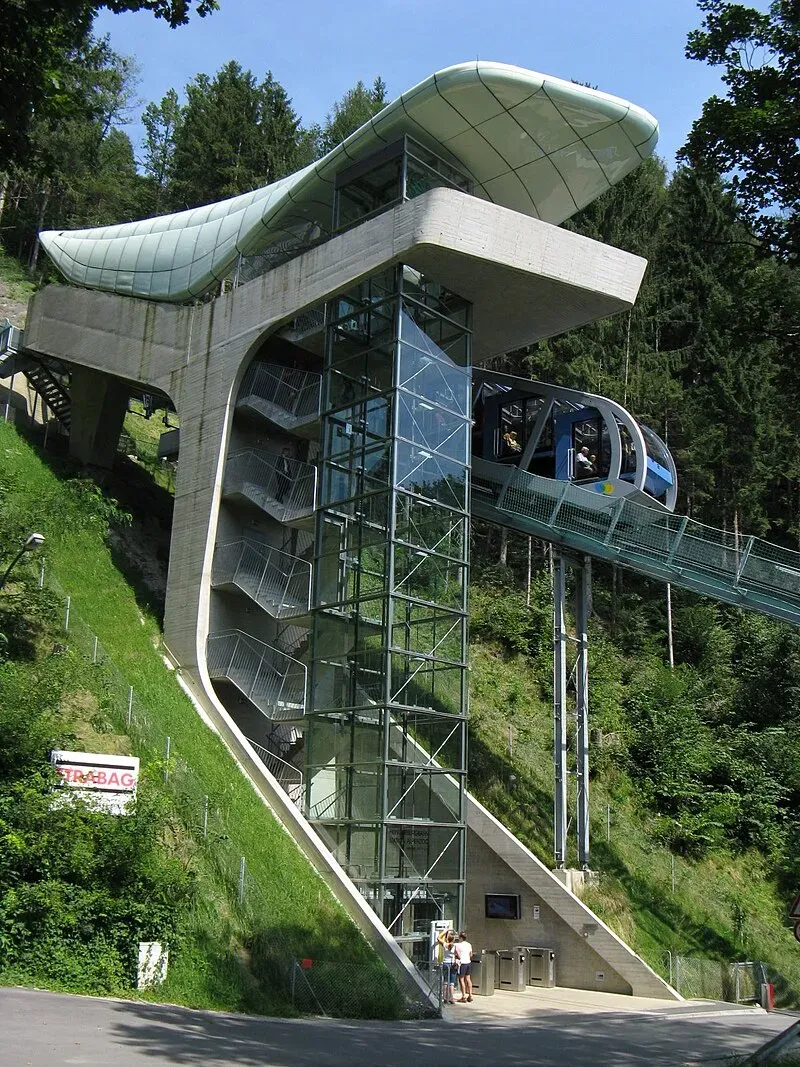
The Nordkette Cable Car connects the city center with the high mountain peaks in less than twenty minutes. The journey starts at the Congress station with the Hungerburgbahn, a modern funicular designed by the architect Zaha Hadid. It is one of the most famous places to visit in Innsbruck for travelers who want to see the Alps without a long hike. The funicular stops at the Alpine Zoo before reaching the Hungerburg plateau.

From Hungerburg, you take a large cable car to Seegrube, which sits at 1,905 meters. This middle station has a large restaurant and a terrace with views of the valley. In the summer, you can watch paragliders take off from the grassy slopes. In the winter, the area becomes a steep ski resort with one of the most difficult runs in Europe. The final leg of the trip takes you to the Hafelekar station at 2,269 meters.

Tickets for the full trip are expensive, but they are included in some city sightseeing passes. The cable cars run frequently throughout the day, usually every fifteen minutes. The ride is smooth, and the cabins are large enough for many people. It is a good idea to check the weather forecast before you go, as the peaks can be covered in fog. Most visitors spend about two or three hours on the mountain exploring the different levels.

Hours Mon-Fri: 7:15 AM – 7:15 PM | Sat-Sun: 8:15 AM – 7:15 PM
Price €41 (round trip to Hafelekar)
Location 47.2862, 11.399
Insider TipGet off at the Hungerburg station and walk over the bridge for a great photo of the modern station architecture with the mountains in the background.
Get Your Own Private Tour with AI Guide
AI Guide
  • Personalized tour tailored to your interests
  • Your AI guide tells stories, shares facts, and cracks jokes
  • Turn-by-turn GPS navigation
  • Available in your language — no download needed
Try for Free

💎 Hidden Gems in Innsbruck - Off the Beaten Path

Beyond the tourist crowds, Innsbruck hides remarkable treasures waiting to be discovered.

Baggersee Rossau

1. Baggersee Rossau

Baggersee Rossau is the largest lake in the city and covers about 3.6 hectares. It is located in the eastern part of the town near the Inn river. The lake is a popular spot for swimming and sunbathing during the hot summer months. It is one of the more local Innsbruck attractions, as many residents come here after work or on the weekends. You can reach the park easily by taking the tram or riding a bike along the river.

The water is clean and deep in many areas, but there are shallow zones for children to play. Around the lake, there are large grassy lawns for picnicking and sunbathing. There are also volleyball courts and a playground for families. The mountains are visible from every part of the park, and the water reflects the peaks on calm days. It is a quiet escape from the busy streets of the old town.

The park charges a small entry fee during the summer season, which covers the use of showers and changing rooms. There are several small kiosks and a restaurant where you can buy ice cream or snacks. In the winter, the lake is cold, but the paths around it are still nice for a walk. Most visitors spend half a day here to relax and enjoy the fresh mountain air. It is a good place to see how the locals spend their free time.

Hours Always open
Price Free
Website Wikipedia
Insider TipGo late in the afternoon on a weekday to avoid the biggest crowds and get a better spot on the grass.
Grassmayr Bell Foundry

2. Grassmayr Bell Foundry

Grassmayr Bell Foundry has been a family business for over 400 years and 14 generations. It is located on Leopoldstrasse, a short walk from the Triumphal Arch. The foundry makes bells for churches and towns all over the world. It is one of the more unusual Innsbruck attractions for those who like to see how things are made. The building is a workshop and a museum at the same time.

Inside the museum, you can see the tools used for casting bronze bells. One section is dedicated to the history of the Grassmayr family and the different styles of bell making. There is also a sound room where you can hear the different tones and resonances of various bells. The foundry still produces thousands of bells every year using traditional methods. Visitors can see the furnaces and the large molds used for the casting process.

The museum is open Monday through Saturday, but it is closed on Sundays. It is a good place to visit if you have an hour or two to spare. The foundry is a short walk from the main train station and the Maria-Theresien-Strasse. Most visitors enjoy the interactive parts of the sound room. It is a unique business that has stayed in the same family for centuries.

Hours Mon-Sat: 10:00 AM – 4:00 PM | Sun: Closed
Price €8
Location Maps
Insider TipCheck the foundry's schedule to see if a bell casting is happening, as it is a rare and exciting event to witness.
Umbrüggler Alm

3. Umbrüggler Alm

Umbrüggler Alm is an Alpine pasture sitting at about 1,123 meters on the Nordkette mountain range. It is owned by the city of Innsbruck and was rebuilt with modern architecture in 2015. The walk from the Hungerburg station to the mountain hut takes about 45 to 60 minutes on a well-maintained path.

The building is very different from traditional mountain huts because it uses a lot of wood and glass in a contemporary design. From the large terrace, you can see the entire Inn valley and the peaks on the other side. The menu features regional Tyrolean dishes such as Dumplings and Goulash, often made with local ingredients. It is a busy place on weekends when many families and hikers come up for lunch. The atmosphere is friendly and informal, even though the food is high quality.

The mountain hut is open throughout the year, but it usually closes on Tuesdays. It is a good idea to check the website for seasonal hours, especially in winter when the path can be covered in snow. Most visitors spend two or three hours here including the hike up and down. You can reach the starting point by taking the Hungerburgbahn from the city center. It is a great place to experience the mountain culture of the Tyrol region.

Hours 10:00–18:00 (seasonal)
Price $$
Insider TipTry the Kaspressknödel soup on the terrace for a classic Tyrolean mountain lunch with a great view.
Wilten Platzl Market

4. Wilten Platzl Market

Wilten Platzl is a small square in the neighborhood of Wilten, just south of the Triumphal Arch. It has a village-like atmosphere with several small shops and cafes on every corner. It is one of the more local Innsbruck attractions for those who want to see how the residents live. The square is a meeting point for people who like to shop for artisanal products and local food. It is a quiet area with very little car traffic.

On Saturday mornings, the square becomes a small farmers' market where you can buy fresh produce and cheese. There are several specialty stores, such as a traditional bakery and a shop selling local wines and spirits. You can find many benches where you can sit and watch the neighborhood activities. The square is surrounded by historic buildings from the 19th and early 20th centuries. It is a good place to have a coffee and enjoy the slow pace of life.

The square is free to visit at any time, but most shops are closed on Sundays. It is a ten-minute walk from the main train station and the Maria-Theresien-Strasse shopping area. Most visitors spend about thirty minutes here if they are just walking through. It is also the best place to start a walk to the nearby Wiltener Basilica or the Stift Wilten monastery. The atmosphere is friendly and less commercial than the city center.

Hours Mon-Fri: 10:00 AM – 6:00 PM | Sat-Sun: Closed
Price Free
Insider TipVisit on a Saturday morning to experience the small market and buy some local Tyrolean cheese or honey.
Get Your Own Private Tour with AI Guide
AI Guide
  • Personalized tour tailored to your interests
  • Your AI guide tells stories, shares facts, and cracks jokes
  • Turn-by-turn GPS navigation
  • Available in your language — no download needed
Try for Free

🎨 Best Museums & Galleries in Innsbruck

World-class museums and galleries that make Innsbruck a cultural treasure.

AUDIOVERSUM

1. AUDIOVERSUM

AUDIOVERSUM is an interactive science center that focuses on the sense of hearing. The building is located in the city center, making it easy to reach on foot. The museum was founded by MED-EL, a company that makes ear implants, and it aims to educate people about how the human brain processes sound. The exhibits are modern and very clean.

Inside the main hall, visitors can try various games that challenge their ears. One exhibit allows you to scream as loud as you can in a soundproof box to see how many decibels you can reach. Another game lets you navigate through a virtual city using only sounds. The staff is helpful and can explain the science behind the machines in simple terms. Most of the text is available in both German and English.

Ticket prices are reasonable, and children get a discount. The museum is closed on Mondays, but it stays open until 18:00 from Tuesday to Sunday. It is a short walk from the Triumphal Arch and the main shopping street. Many visitors spend about two hours here before heading to a nearby cafe. It is not as famous as the Golden Roof, but it offers a unique break from historical sightseeing.

Hours Mon: Closed | Tue-Sun: 10:00 AM – 6:00 PM
Price €12
Insider TipCheck the website for current temporary exhibitions, as they often change and offer new interactive elements.
Ferdinandeum

2. Ferdinandeum

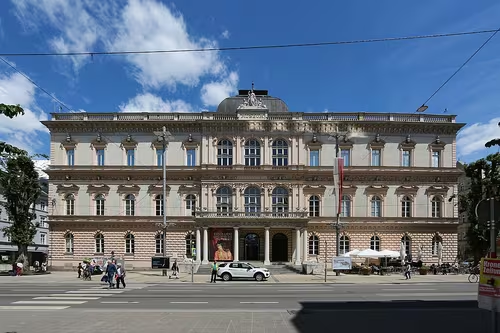
Ferdinandeum is the main building of the Tyrolean State Museum. It was founded in 1823 and sits in the center of the city on Museumstrasse. The collection covers the history of Tyrol from the Stone Age to the present. It is one of the most important Innsbruck attractions for people who want to learn about the region's art and culture. The building itself is large and easy to find.

Inside the museum, you will find a wide range of exhibits, including Romanesque and Gothic art. One section is dedicated to the famous painters and sculptors of Tyrol, such as Albin Egger-Lienz and Franz Defregger. There is also a natural history collection and a music archive. The museum has many artifacts from the prehistoric era, showing how people lived in the Alps thousands of years ago. It is a well-organized space that is spread over several floors.

The museum is open daily, but check the website for specific holiday closures. Ticket prices are fair, and there are often temporary exhibitions that change throughout the year. Most visitors spend about two or three hours here exploring the galleries. The museum is a short walk from the central train station and the Maria-Theresien-Strasse. It is a good place to visit when you want to dive into the art and history of the Alpine region.

Hours 10:00–18:00 Tue–Sun
Price €12
Insider TipThe section on modern Tyrolean art on the top floor is often very quiet and features some of the best paintings in the building.
Tirol Panorama

3. Tirol Panorama

Tirol Panorama is a museum on Bergisel Hill that focuses on the Tyrolean struggle for freedom in the 19th century. It was built between 2010 and 2011 and is connected to the Tyrolean Kaiserjägermuseum. It is one of the most important Innsbruck attractions for those who like to see how the locals fought for their rights. The building is modern and has large glass windows with a view of the city.

Inside the museum, the main attraction is a giant circular painting that covers 1,000 square meters. It shows the battle of Bergisel in 1809, where Tyrolean farmers fought against the French and Bavarian troops. The painting is so large that you have to walk around it for several minutes to see all the details. There is also a small exhibition that tells the story of the Tyrolean freedom fighter Andreas Hofer. The museum is well-organized with many historical objects from that era.

The museum is open daily except for Tuesdays, and admission is reasonable. You can reach the site by taking the tram or by walking up from the south of the city. Most visitors spend about an hour and a half here, especially history buffs who like the detailed paintings. The museum is a short walk from the Bergisel Ski Jump, so you can visit both in one trip. It is a good place to learn about the history of the Tyrol region.

Hours Mon: 9:00 AM – 5:00 PM | Tue: Closed | Wed-Sun: 9:00 AM – 5:00 PM
Price €8
Location 47.2503, 11.4017
Insider TipGo to the museum shop at the end to find many books about the local history and the battle of 1809.
Tyrolean Folk Art Museum

4. Tyrolean Folk Art Museum

The Tyrolean Folk Art Museum is located in a former Franciscan monastery right next to the Court Church. It was founded in 1888 and is one of the most interesting Innsbruck attractions for those who like to see how people lived in the past. The museum has a large collection of objects from the Tyrolean region, including traditional costumes and farmhouse furniture. It is part of the Tyrolean State Museums and is spread over several floors.

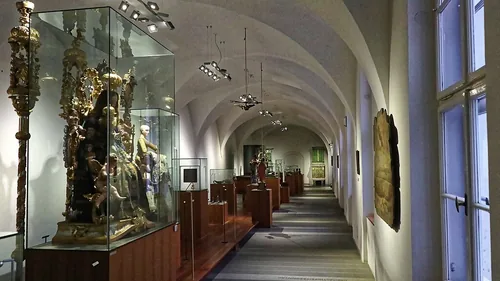
Inside the museum, you can see real wood-paneled rooms that were moved here from old farmhouses in the mountains. There is also a large collection of religious art and carnival masks that are typical for the Tyrol region. One section is dedicated to the traditional crafts of the area, such as weaving and wood carving. The exhibits are well-labeled and show the daily life of the farmers and workers from the last few centuries. It is a quiet and well-maintained space that is easy to navigate.

The museum is open every day from 9:00 until 17:00, and you can buy a combined ticket for the nearby church. Most visitors spend about an hour and a half here looking at the different rooms and displays. It is a short walk from the Golden Roof and the main shopping streets in the old town. The museum is especially popular during the Christmas season because of its large collection of nativity scenes. It is a good place to learn about the deep-rooted traditions of the Alpine people.

Hours Daily: 9:00 AM – 5:00 PM
Price €12
Insider TipLook for the room with the collection of Perchten masks; they are used in local winter festivals and are both scary and fascinating.
Get Your Own Private Tour with AI Guide
AI Guide
  • Personalized tour tailored to your interests
  • Your AI guide tells stories, shares facts, and cracks jokes
  • Turn-by-turn GPS navigation
  • Available in your language — no download needed
Try for Free

🍕 Food Markets & Culinary Spots in Innsbruck

The best food markets, food halls, and culinary destinations in Innsbruck.

Markthalle Innsbruck

1. Markthalle Innsbruck

Markthalle Innsbruck is a large indoor market in the city center, right next to the River Inn. It was built in the early 20th century and has many different sections. Inside, you can find a wide range of Tyrolean produce, including mountain cheese, smoked ham, and fresh bread. There are also many international stalls selling fruits and vegetables.

In the morning, the farmers' market is the main attraction, with local farmers bringing their goods from the surrounding mountains. There are several small food stalls where you can get a quick lunch, such as a sandwich or a bowl of soup. The atmosphere is busy and loud, especially on Saturday mornings. You can also find fresh flowers and artisanal products made in Tyrol. The building is clean and easy to navigate with several entrances.

The market is open Monday through Friday until 18:30 and on Saturdays until 13:00. It is closed on Sundays and most public holidays. It is a short walk from the Golden Roof and the main train station. Most visitors spend about an hour here to see all the different stalls. It is a good place to buy edible souvenirs like Tyrolean speck or mountain honey. The building is a quiet place when the market is not in session.

Hours Mon-Fri: 7:00 AM – 6:00 PM | Sat: 7:00 AM – 1:00 PM | Sun: Closed
Price Free
Insider TipGo to the farmers' section on a Saturday morning to get the freshest produce and see the most local activity.
Get Your Own Private Tour with AI Guide
AI Guide
  • Personalized tour tailored to your interests
  • Your AI guide tells stories, shares facts, and cracks jokes
  • Turn-by-turn GPS navigation
  • Available in your language — no download needed
Try for Free

🌳 Parks & Best Viewpoints in Innsbruck

Beautiful parks, gardens, and panoramic viewpoints for the best views of Innsbruck.

Botanical Garden

1. Botanical Garden

The Botanical Garden is located on the north side of the city near the University of Innsbruck. It was founded in 1911 and has thousands of different plants. The garden is divided into several sections, including alpine plants and medicinal herbs. It is one of the most peaceful places to visit in Innsbruck when you need a break from the crowds. You can walk through the paths for free during the day.

Inside the garden, there are several large greenhouses that house tropical and subtropical species. One house is dedicated to cacti and succulents, while another features orchids and ferns. The alpine section is particularly interesting because it includes rare plants from the local mountain peaks. There is also a small rock garden where you can see how different flowers grow in rocky soil. The garden is well-maintained and has clear labels for most species.

The greenhouses are usually open until 17:00, but they may close earlier in winter. The garden is a short walk from the Hötting neighborhood and is well-served by local buses. There is a small pond in the center of the park where you can watch the dragonflies and birds. Many visitors come here to take photos of the flowers or to read a book on one of the benches. It is a quiet place that changes its colors with every season.

Hours Mon-Fri: 7:30 AM – 5:00 PM | Sat-Sun: 8:00 AM – 5:00 PM
Price Free
Location Maps
Insider TipVisit the alpine section in late spring to see the mountain flowers in full bloom.
Hafelekar

2. Hafelekar

Hafelekar is the highest point of the Nordkette mountain range that towers over the city. You can reach the summit, which stands at 2,334 meters, by taking the cable car from the city center. The final walk from the cable car station to the very top takes only about ten to fifteen minutes on a well-marked path.

From the peak, you can look down at the Inn Valley on one side and into the Karwendel Nature Park on the other. The terrain is rocky and alpine, with very little vegetation at this altitude. Even in the middle of summer, it can be quite cold and windy at the top, so bringing a jacket is a good idea. Many people use this spot as a starting point for long hikes along the mountain ridges. You might also spot some local mountain goats if you are quiet and look closely at the rocks.

The cable car ride to the top is divided into three sections and takes about twenty minutes in total. Tickets are expensive, but the view is unique because you go from the city streets to high-alpine terrain so quickly. There is a small restaurant at the Hafelekar station where you can get a warm meal. The station itself was designed by the architect Zaha Hadid and has a very modern look. Most visitors spend an hour or two at the top taking photos and enjoying the fresh air.

Hours Same as Nordkette Cable Car
Price Free
Website Wikipedia
Insider TipCheck the live webcam at the valley station before you buy your ticket to make sure the peak is not covered in clouds.
Hofgarten

3. Hofgarten

The Hofgarten is a large park in the center of the city, right next to the Imperial Palace and the Tyrolean State Theater. It has been a garden for over 600 years and has changed its style many times. Now, it follows the English landscape style and covers about ten hectares. It is one of the most quiet Innsbruck attractions where you can escape the noise of the shopping streets. The park is surrounded by a large wall and has several main gates.

Inside the park, there are many old trees, some of which were planted by Empress Maria Theresa herself. There is a small pond with ducks and a pavilion that dates back to 1733. You can find large outdoor chessboards where locals often play during the day. The park is a popular place for students and families to have a picnic or read a book. There is also a small greenhouse that houses a collection of tropical plants and palms.

The park is open every day from 6:00 until 22:00, and admission is free. There is a modern playground for children and a small garden restaurant where you can get drinks and snacks. Most of the paths are flat and easy to walk on, making it a good place for everyone. The park is particularly beautiful in autumn when the leaves change color. It is a well-maintained space that feels like a green island in the middle of the town.

Hours Daily: 6:00 AM – 10:00 PM
Price Free
Insider TipLook for the old trees near the pavilion, as they are the oldest in the park and provide the best shade on hot days.
Rapoldipark

4. Rapoldipark

Rapoldipark is a city park in the Pradl neighborhood, right next to the Sillpark shopping mall. It was named after the local politician and journalist Martin Rapoldi, who lived in the early 20th century. The park is one of the more local Innsbruck attractions where people come to relax and walk along the Sill river. It is a large green area with many paths for walking and biking.

In the center of the park, there is a small pond called the Rapoldi-Weiher, which attracts ducks and other birds. There is also a large sculpture by Hans Plangger that has been in the park since 1954. Many trees provide shade in the summer, making it a popular place for picnics and reading. The park is spread over several hectares and connects the city center with the eastern residential districts. It is a quiet escape from the busy streets near the main train station.

The park is open 24 hours a day and is free to enter for everyone. Recent improvements have added more security cameras and better lighting to the paths. Families often visit the modern playground, which has many climbing frames and slides. It is a good place to spend an hour after shopping at the nearby mall. Most visitors enjoy the peaceful atmosphere and the sound of the river flowing nearby.

Hours Open 24/7
Price Free
Location 47.2657, 11.4064
Insider TipLook for the small paths along the Sill riverbank for a quieter walk away from the main grassy areas.
Get Your Own Private Tour with AI Guide
AI Guide
  • Personalized tour tailored to your interests
  • Your AI guide tells stories, shares facts, and cracks jokes
  • Turn-by-turn GPS navigation
  • Available in your language — no download needed
Try for Free

Explore with AI Guide

AI Guide App

Get personalized tours with our AI-powered guide. No download needed — works right in your browser.