Things to Do in Interlaken - Top Attractions, Hidden Gems & Must-See Sights

Discover the best things to do in Interlaken. Complete guide to must-see sights, popular attractions, hidden gems, museums, food markets and parks.

19 Attractions 6 Categories Travel Guide

Table of Contents

Interlaken Overview

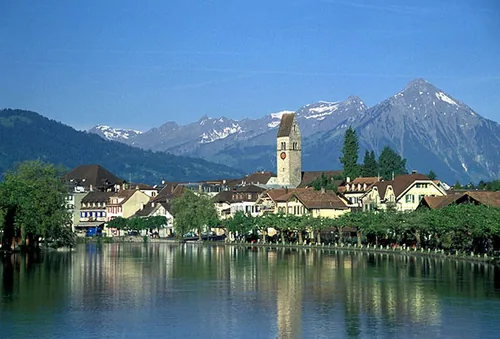
Interlaken is the gateway to Switzerland's most spectacular alpine landscapes, nestled between the crystal-clear waters of Lake Thun and Lake Brienz in the heart of the Bernese Oberland. This world-renowned resort town offers unparalleled access to the iconic Eiger, Mönch, and Jungfrau peaks, making it a paradise for outdoor enthusiasts, adventure seekers, and nature lovers alike. From the dizzying heights of Jungfraujoch—Europe's highest railway station—to the thundering waterfalls of Lauterbrunnen Valley, Interlaken serves as the perfect base for exploring the Swiss Alps. Visitors can ascend to panoramic viewpoints like Harder Kulm and Schynige Platte via historic mountain railways, cruise across turquoise lakes on paddle steamers, or discover hidden gems like the Rosenlaui Glacier Gorge and the peaceful village of Merligen. Beyond the natural wonders, Interlaken offers charming old towns, world-class museums including the expansive Ballenberg Open-Air Museum, and a rich cultural heritage rooted in alpine traditions. Whether you're paragliding over the Höhematte, swimming in pristine mountain lakes, or savoring local specialties at the organic farmers market, Interlaken delivers an authentic Swiss experience that combines breathtaking scenery with warm hospitality and timeless charm.

Must-See Attractions in Interlaken

  • Harder Kulm
  • Jungfraujoch
  • Lake Brienz
  • Lake Thun
  • Schynige Platte
🏛️ Must-See ⭐ Sights 💎 Hidden Gems 🎨 Museums

🏛️ Must-See Attractions in Interlaken

These iconic landmarks and must-see sights are essential stops for any visitor to Interlaken.

Harder Kulm

1. Harder Kulm

Every town needs a hill you can see from everywhere, and for Interlaken that hill is the Harder Kulm. At 1,321 meters, it sits directly north of town and looks straight down at the two lakes on either side. The funicular from Interlaken Ost takes about eight minutes. The view at the top is the one they put on every postcard: Lake Thun to the west, Lake Brienz to the east, and the Eiger, Mönch, and Jungfrau lined up in a row behind them.

The restaurant terrace at the summit has the best Interlaken attractions view you'll find without spending a full day hiking. There's a suspension bridge over a wooded ravine that most visitors skip once they see the main panorama platform. Don't. It puts you out over the forest canopy and changes the whole perspective. Morning is quieter than afternoon, and the light on the mountains before 10 AM is better than anything you'll see later.

The Harder Kulm technically belongs to the Emmental Alps rather than the high Bernese Oberland, which means it gets less snow and stays open from April through November.

Hours 9:10–21:00 (Apr–Nov)
Price CHF 34 (return)
Website Wikipedia
Insider TipThe last funicular up leaves around 8:30 PM in summer - take it for the sunset, then ride the final car down around 9 PM when the day-trippers are gone and the terrace is nearly empty.
Jungfraujoch

2. Jungfraujoch

The Jungfraujoch is Europe's highest railway station at 3,454 meters, and getting there from Interlaken takes just over two hours by train. The route goes up through Grindelwald or Lauterbrunnen, switches to a rack railway at Kleine Scheidegg, then tunnels directly through the Eiger to emerge at the saddle between the Mönch and Jungfrau. Around one million people make this trip each year. On a clear day, the Aletsch Glacier stretches away below you for 23 kilometers.

The price is steep - CHF 234 return from Interlaken - and crowds can be punishing in July and August. But nothing else in the Bernese Oberland puts you at altitude this easily, and the high-alpine environment at the summit is genuinely different from anything lower down. The air is thin enough that some people feel it. There are tunnels to walk through, an ice palace carved inside the glacier, and an outdoor platform where the wind cuts off the snowfield cold regardless of the month.

As one of the defining Interlaken attractions, the Jungfraujoch rewards careful planning above all else. Weather matters enormously up here. A cloudy day means visibility of about ten meters and a very expensive train ride. Check the live webcam on the Jungfrau website before you commit to the fare.

Hours First train 6:35, last down 17:35
Price CHF 234 (return from Interlaken)
Website www.ifjungo.ch/
Insider TipTake the first train of the day (departing Interlaken around 6:35 AM) to reach the top before the main crowd. Morning clouds often burn off by mid-morning, leaving clearer views than the midday rush gets.
Lake Brienz

3. Lake Brienz

Lake Brienz is the eastern of Interlaken's two lakes and the one that looks, from the right angle, almost artificially blue. The color comes from glacial meltwater carrying fine rock particles that scatter light at a specific wavelength - the same turquoise you see in alpine rivers when the glacier is active. The lake is about 14 kilometers long and almost 260 meters deep, with walls that drop steeply from the shoreline without any real shallows.

The town of Brienz at the far end is worth the trip. It has been a center of woodcarving for centuries and the surrounding hillsides are covered in forests that feed the craft. The steam paddle steamer still runs on the lake in summer, connecting Interlaken with Brienz and stopping at small villages along the southern shore. It's slower than the train but gives you the lake from water level, which is a different experience entirely.

For places to visit in Interlaken that don't require a cable car ticket or a mountain train, the lake shore is the obvious answer. The path from Interlaken Ost along the northern bank is mostly flat and uncrowded on weekday mornings. The Giessbach waterfall, which cascades directly into the lake near the midpoint, has one of the more dramatic settings of any waterfall in the region.

Hours Always open
Price Free
Location 46.71667, 7.95
Insider TipCatch the vintage steam paddle steamer BDS rather than the regular boat - it runs select days in summer and takes the full scenic route. Check the BLS timetable for steam departure dates.
Lake Thun

4. Lake Thun

Lake Thun sits west of Interlaken and stretches for about 18 kilometers toward the city of Thun. It's wider and warmer than Lake Brienz, with a friendlier shoreline - actual swimming beaches, shallow coves, and small harbors where the local boats come in. The Bernese Oberland hills on both sides drop more gently here than on the Brienz side, giving the lake a softer, more pastoral look. On clear days the Niesen pyramid and the snow-capped peaks of the Blümlisalp reflect off the water.

Boats run the full length of the lake from Interlaken West, stopping at Spiez, Oberhofen, and eventually Thun. Oberhofen Castle, right on the waterfront with its distinctive tower, is the most photogenic stop along the route. The town of Spiez has a medieval castle of its own and a harbor that's genuinely pleasant for an afternoon.

Swimming is free anywhere along the public shore. The water temperature in summer reaches around 22 degrees Celsius near the surface - cold by Mediterranean standards, perfectly fine by Swiss standards. Locals use the lake heavily from June through August.

Hours Always open
Price Free
Website Wikipedia
Location Maps
Insider TipThe public beach at Neuhaus, a 20-minute walk west of Interlaken West station along the lake shore, is far less crowded than the beaches closer to town and has a good view straight back toward the Jungfrau massif.
Schynige Platte

5. Schynige Platte

The Schynige Platte sits at 1,967 meters on a ridge that runs roughly parallel to the south shore of Lake Brienz, and from the top you get one of the few places in the region where you can see both lakes simultaneously. To the left, Lake Brienz. To the right, the Grindelwald valley with the Eiger, Mönch, and Jungfrau arranged behind it. The name means 'shining plate' in old German, a reference to the slate rock face below the ridge that reflects light intensely when wet.

The rack railway from Wilderswil, just south of Interlaken, opened in 1893 and the wooden train cars still creak and groan their way up the mountain in the same deliberate fashion. The journey takes about 52 minutes. It runs only from mid-June to late October when the weather permits. At the summit there's a small botanical alpine garden with several hundred plant species arranged in their natural communities - the kind of thing that sounds dry but is actually charming once you're up there with the flowers at eye level and a clear view in every direction.

For sightseeing in Interlaken that feels less commercial than Jungfraujoch, the Schynige Platte is a good alternative. The crowds are thinner and the hiking trails from the summit are genuinely excellent.

Hours Mid-Jun to late Oct
Price CHF 68 (return)
Website Wikipedia
Insider TipThe Panoramaweg from Schynige Platte to First above Grindelwald takes about 6 hours and is one of the classic high-level walks in the region - you need to arrange transport back from Grindelwald but it's worth it for the ridge walking.
Get Your Own Private Tour with AI Guide
AI Guide
  • Personalized tour tailored to your interests
  • Your AI guide tells stories, shares facts, and cracks jokes
  • Turn-by-turn GPS navigation
  • Available in your language — no download needed
Try for Free

💎 Hidden Gems in Interlaken - Off the Beaten Path

Beyond the tourist crowds, Interlaken hides remarkable treasures waiting to be discovered.

Aare River Banks

1. Aare River Banks

The Aare River flows through the heart of the town, connecting Lake Brienz with Lake Thun. Its water has a distinct turquoise color that is especially bright on sunny days. Walking along the riverbanks is one of the most relaxing places to visit in Interlaken for both locals and travelers. The paths are flat and well-paved, making them perfect for a morning stroll or a bike ride.

As you walk along the river, you will pass by several historic bridges and traditional wooden houses. The banks are lined with many trees and benches where you can sit and watch the local boats go by. In the summer, the water is cool and refreshing, and some areas are popular for swimming or river rafting. The river is a quiet part of the town, away from the busy main shopping streets and the large hotels. It is a good place to see the natural landscape of the region.

The paths along the river are free to use at any time of the day or night. You can start your walk at the Interlaken West train station and follow the water all the way to the lake. Most of the route is shaded by old trees, which is very pleasant during the hot summer months. It takes about forty minutes to walk from one end of the town to the other along the water. It is a simple way to enjoy the scenery of the Bernese Oberland.

Hours Mon: 9:00 AM – 12:00 PM, 2:00 – 5:00 PM | Tue: Closed | Wed-Fri: 9:00 AM – 12:00 PM, 2:00 – 5:00 PM | Sat-Sun: Closed
Price Free
Location Maps
Insider TipFollow the path towards the Unterseen side of the river for the best views of the traditional Swiss houses and flower gardens.
Merligen

2. Merligen

Merligen is a small village on the right (north) shore of Lake Thun, sitting at 568 meters on an alluvial fan deposited by the Grönbach stream at the mouth of the Justis Valley. About 500 people live here. It's 20 minutes by boat from Interlaken West and a different world from the busy tourist infrastructure of the main town. The lakefront has a small harbor, a beach area for swimming, and views straight across the water to the Niesen pyramid and the Stockhorn range.

The Justis Valley that opens up behind the village is a hidden gem among the hidden gems near Interlaken. It's a high alpine valley with no vehicle access - you walk or come by horse-drawn carriage in summer - used seasonally for cattle grazing. The alp farmers who take cattle up in June and bring them back in September are continuing a practice centuries old. The valley has no overnight accommodation to speak of and no official tourist infrastructure.

Merligen itself is useful as a quiet base or a half-day escape. The boat ride from Interlaken is relaxing rather than merely functional, and the village gives you a sense of what Lake Thun life looks like when it's not organized around alpine tourism.

Hours Always open
Price Free
Website N/A
Insider TipFrom Merligen a trail climbs into the Justis Valley in about 45 minutes - walk up in the morning, watch the cattle graze on the high pasture, and come back for the afternoon boat to Interlaken.
Rosenlaui Glacier Gorge

3. Rosenlaui Glacier Gorge

The Rosenlaui Glacier Gorge is a narrow canyon cut through limestone below the Rosenlaui Glacier in the Hasli Valley, about an hour's drive from Interlaken toward Meiringen. A secured path of 573 meters, blasted into the rock face with several tunnels and a height difference of 155 meters, takes you through the gorge from bottom to top. It's part of the UNESCO Swiss Alps Jungfrau-Aletsch World Heritage Area. The gorge closes between October and May.

What makes it different from the more famous gorges in the region is how raw it feels. The rock walls are close together, polished by glacial meltwater, and the path hugs the cliff in places where there's genuinely not much space. The water comes from the glacier above and runs ice-cold even in summer. You hear it before you see it, and the sound builds as you climb. There's no funicular or elevator - you use your legs and the path the workers blasted into the cliff in the early 20th century.

For off-the-beaten-path Interlaken area experiences, Rosenlaui is as good as it gets. It receives a fraction of the visitors that Trümmelbachfälle does, partly because it requires a bit more effort to reach. The drive up the Hasli Valley from Meiringen is itself worth doing for the landscape.

Hours 9:00–17:00 (Jun–Oct)
Price Free
Location 46.6796, 8.15479
Insider TipCombine the gorge visit with the historic Hotel Rosenlaui nearby - it's been hosting hikers since the 19th century and serves simple lunches on a terrace overlooking the glacier. Book ahead in July and August.
Get Your Own Private Tour with AI Guide
AI Guide
  • Personalized tour tailored to your interests
  • Your AI guide tells stories, shares facts, and cracks jokes
  • Turn-by-turn GPS navigation
  • Available in your language — no download needed
Try for Free

🎨 Best Museums & Galleries in Interlaken

World-class museums and galleries that make Interlaken a cultural treasure.

Ballenberg Open-Air Museum

1. Ballenberg Open-Air Museum

Ballenberg Open-Air Museum is a large historic park in Hofstetten, just a short drive from the city. It was founded in 1978 and covers 66 hectares of land. It is one of the most interesting Interlaken attractions for those who like to see how the Swiss lived in the past. The museum features over 100 original historic buildings that were moved here from all parts of Switzerland. Each building is a real piece of history that shows different architectural styles.

Inside the park, you will find farmhouses, barns, and workshops from several centuries. You can see how people made cheese, baked bread, and did woodcarving in the traditional way. There are also many farm animals, such as cows and goats, living in the museum's pastures. The staff often gives demonstrations of old crafts like lace making and blacksmithing. It is a large and well-maintained site that is easy to navigate on foot or by horse-drawn carriage.

The museum is open daily from April until the end of October, usually until 17:00. Tickets are relatively expensive, but they cover the entire day of exploring the park. Most visitors spend at least four or five hours here because there is so much to see. There are several restaurants and picnic areas located throughout the grounds. It is a good place to learn about the rural history and the culture of the Swiss Alps.

Hours 10:00–17:00 (mid-Apr to Oct)
Price Free
Insider TipLook for the house from the Brienz region, which is one of the oldest and has very detailed woodcarvings on the facade.
Kunsthaus Interlaken

2. Kunsthaus Interlaken

The Kunsthaus Interlaken is a small contemporary art space in a historic building in the center of Interlaken, near the Interlaken Ost station. It runs a rotating program of exhibitions focused on artists connected to the eastern Bernese Oberland and the broader Alpine region. The building has a particular history - it's an 18th-century structure that has served various functions over the centuries and now operates as an exhibition space and cultural center.

The programming tends toward regional contemporary work rather than blockbuster shows, which keeps it from competing directly with Bern or Zurich but also makes it relevant to what's actually happening in the visual arts in this part of Switzerland. The entrance is free, which lowers the risk of visiting considerably. Hours are limited: closed Monday and Tuesday, open afternoons Wednesday through Saturday and Sunday mornings through 5 PM.

For visitors spending more than a day or two in Interlaken and looking for something indoors that isn't a mountain experience, the Kunsthaus is worth an hour. It's one of the few Interlaken attractions that engages with contemporary Swiss culture rather than natural landscape, and for that reason it feels distinct from almost everything else on offer in the region.

Hours Mon-Tue: Closed | Wed-Sat: 2:00 – 5:00 PM | Sun: 11:00 AM – 5:00 PM
Price Free
Insider TipCheck the Kunsthaus website before visiting - they occasionally host evening events, vernissages, and performances that are open to the public and give you a chance to meet local artists.
Swiss Woodcarving Museum Brienz

3. Swiss Woodcarving Museum Brienz

Brienz has been producing carved wood objects for export since the 18th century, and at one point in the 19th century it was the main supplier of carved Swiss souvenirs to the entire European tourist industry. The Swiss Woodcarving Museum in Brienz collects and displays the history of this craft - tools, finished objects spanning several hundred years, and documentation of how the industry grew from cottage production to a more organized commercial trade.

The museum is small and modest by major institution standards, but the collection is specific and well-curated. You'll see the full range of what Brienz carvers made: bears, chamois, human figures, decorative panels, furniture elements, and the nativity scenes that became a specialty. The craftsmanship in the older pieces is remarkable - this was skilled work, not mass production, even at the height of the tourist trade. CHF 8 entry is reasonable for what it covers.

Brienz itself, a 20-minute train ride from Interlaken on the eastern shore of Lake Brienz, is still home to a school of woodcarving where students come from across Switzerland and internationally to train. The town's main street has workshops where you can watch carvers at work. For visitors interested in Swiss craft traditions, Brienz plus this museum makes one of the more satisfying half-day excursions from Interlaken.

Hours 10:00–17:00 (Apr–Oct)
Price CHF 8
Insider TipThe Brienz Woodcarving School (Schule für Holzbildhauerei) is a short walk from the museum and occasionally has open workshop days where visitors can watch students working - check their website for dates.
Get Your Own Private Tour with AI Guide
AI Guide
  • Personalized tour tailored to your interests
  • Your AI guide tells stories, shares facts, and cracks jokes
  • Turn-by-turn GPS navigation
  • Available in your language — no download needed
Try for Free

Explore with AI Guide

AI Guide App

Get personalized tours with our AI-powered guide. No download needed — works right in your browser.