Things to Do in Jaipur - Top Attractions, Hidden Gems & Must-See Sights

Discover the best things to do in Jaipur. Complete guide to must-see sights, popular attractions, hidden gems, museums, food markets and parks.

12 Attractions 4 Categories Travel Guide

Table of Contents

Jaipur Overview

Jaipur is a city built to a plan. In 1727, Maharaja Sawai Jai Singh II laid out a grid of wide avenues and markets, then filled it with palaces, observatories, and temples. In 1876, the whole city center was painted pink. That deliberate design is still visible today: the walled old city feels ordered even when it is chaotic, and the major sights cluster close enough together that you can walk between them. Forts line the surrounding Aravalli hills, the bazaars sell the same crafts they have sold for centuries, and the royal family still lives in City Palace.

Jaipur works for almost any traveler. History and architecture people get Amer Fort and Jantar Mantar. Shoppers get the bazaars. Food people get dal baati churma and pyaaz ki kachori at street stalls. Photography people get Hawa Mahal and Nahargarh's sunset views. The city is loud, hot, and direct. It does not ease you in. But it rewards you fast. Two full days cover the essentials; three days let you breathe and reach the places outside the city walls like Galtaji Temple and Sisodia Rani Garden. As the eastern point of Rajasthan's Golden Triangle (with Delhi and Agra), Jaipur is also the most common entry point into the desert state, and it sets the bar high for everything that follows.

Must-See Attractions in Jaipur

  • Amer Fort
  • Hawa Mahal
  • City Palace
  • Jantar Mantar
  • Nahargarh Fort
🏛️ Must-See ⭐ Sights 💎 Hidden Gems 🌳 Parks & Views

🏛️ Must-See Attractions in Jaipur

These iconic landmarks and must-see sights are essential stops for any visitor to Jaipur.

Amer Fort

1. Amer Fort

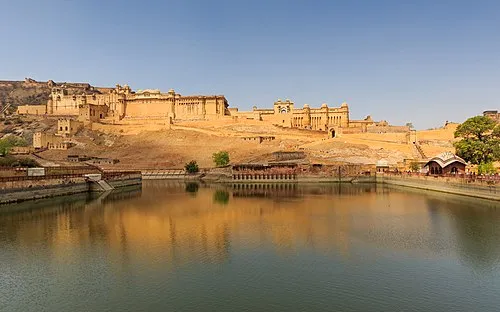
Amer Fort is the single most impressive structure in Jaipur, and it is not even in Jaipur proper. Perched on a hillside about 11 km north of the city center, this massive fort-palace complex was built from red sandstone and marble across four levels, each with its own courtyard. The Sheesh Mahal (Mirror Palace) alone is worth the drive: thousands of tiny mirror fragments embedded in the walls and ceiling catch any light source and scatter it everywhere. UNESCO added Amer to its World Heritage list in 2013 as part of the Rajasthan Hill Forts group. The fort opens at 7:00 AM and stays open until 9:00 PM, which means you can visit in the early morning before tour buses arrive or come for the evening light show. The walk up from Maota Lake at the base takes about 15 minutes on a paved ramp. Elephant rides up the hill are still offered but have drawn significant animal welfare criticism. Walking is faster, free, and gives you better views of the lake below. Among the top sights in Jaipur, Amer Fort demands the most time. Budget at least 2 hours. The complex connects to Jaigarh Fort above via a hillside tunnel, and you can combine both in a single visit if your legs are up for it.

Hours Daily: 7:00 AM – 9:00 PM
Price Free
Location 26.9859, 75.8507
Insider TipArrive right at 7 AM opening. By 10 AM the courtyards are packed with organized tours. The Sheesh Mahal is best experienced with fewer people, when you can actually see the mirror work catch the light.
City Palace

2. City Palace

Right in the middle of the old walled city, City Palace is where the Jaipur royal family still lives. Part of the complex is their private residence; the rest is open to visitors. The architecture blends Rajasthani and Mughal styles, with carved marble arches, painted gateways, and two enormous silver urns in the Diwan-i-Khas that are listed in the Guinness Book of Records as the world's largest silver objects. Maharaja Sawai Madho Singh II had them made in 1896 to carry Ganges water on his trip to London. The palace grounds hold multiple courtyards, the Mubarak Mahal (now a textile gallery), and the Sileh Khana armory with jewel-encrusted swords and daggers. It is open daily from 9:30 AM to 7:30 PM. You can easily spend 90 minutes here, longer if you add the Maharaja Sawai Man Singh II Museum inside the same complex. The Govind Dev Ji Temple is also within the palace gardens, so plan to see them together. Hawa Mahal is a short walk east, and Jantar Mantar is literally next door, making this the anchor point for a day in the Pink City.

Hours Daily: 9:30 AM – 7:30 PM
Price Free
Website royaljaipur.in/
Location 26.9255, 75.8236
Insider TipThe Pitam Niwas Chowk courtyard has four ornate seasonal gates (Peacock, Lotus, Rose, Leheriya). It is the most photogenic corner of the palace and often overlooked by visitors who rush to the main halls.
Hawa Mahal (Palace of the Winds)

3. Hawa Mahal (Palace of the Winds)

That honeycomb facade with 953 tiny screened windows is Jaipur's most photographed building, and for good reason. Built in 1799 by Maharaja Sawai Pratap Singh, the five-story pink sandstone structure was designed so royal women could watch street processions without being seen. The whole thing is barely half a meter deep at its thinnest point, which makes you realize it was never meant to be a building at all. It is a wall, dressed up as a palace. The best view of Hawa Mahal is actually from across the street, not from inside. A couple of rooftop cafes on the opposite side give you a straight-on look at the full facade, especially good in morning light when the pink sandstone glows. Going inside is still worth it for the latticed corridors and the way the breeze moves through every room (the name literally means "Wind Palace"). It is open daily from 9:00 AM to 7:00 PM. It sits right on the main road of the walled city, minutes from the City Palace and Jantar Mantar, so you will walk past it regardless. The crowd is constant, but the building earns every bit of attention it gets.

Hours Daily: 9:00 AM – 7:00 PM
Price Free
Location 26.924, 75.82672
Insider TipHead to the Wind View Cafe directly across the street for an unobstructed eye-level photo of the full facade. Go before 9 AM when the morning sun hits the front and the street is still manageable.
Jal Mahal

4. Jal Mahal

Jal Mahal sits in the middle of Man Sagar Lake with the Aravalli hills rising behind it. Four of its five stories are submerged, so what you see floating on the water is just the top floor. Maharaja Sawai Jai Singh II had it built as a hunting lodge, and the setting is undeniably photogenic, especially around sunset when the water reflects the hills and the sandstone catches the last light. Here is what you need to know: you cannot go inside. The palace has been closed to visitors for years and there is no boat service to reach it. You view it from the lakeside promenade on the eastern shore, which has been developed with walkways, food stalls, and camel ride operators. The promenade area is open from roughly 8:00 AM to 6:00 PM. It is a 10-minute stop, maybe 20 if you linger for photos. The lake itself has become a bird sanctuary, attracting migratory species in winter months. Jal Mahal is on the road between the city center and Amer Fort, about 5 km north of the Pink City. Most people stop here on the way to or from Amer. As one of the things to do in Jaipur, it is a quick visual payoff rather than a long visit.

Hours Daily: 8:00 AM – 6:00 PM
Price Free (exterior)
Insider TipStop here on your way back from Amer Fort in the late afternoon. The light is better for photos and the lakeside vendors sell decent kulfi (Indian ice cream) to cool down after a long day of fort climbing.
Jantar Mantar

5. Jantar Mantar

Jantar Mantar looks like nothing else you have ever seen. Built between 1724 and 1734 by Maharaja Sawai Jai Singh II, this UNESCO World Heritage Site is a collection of 19 massive stone astronomical instruments, each designed to track celestial bodies, predict eclipses, or measure planetary positions. The largest instrument, the Samrat Yantra, is a sundial 27 meters tall that can tell the time to within 2 seconds. These were cutting-edge science for the 18th century, and they still work. The site is right next to City Palace, so you will likely visit both in sequence. It is open daily from 9:00 AM to 6:30 PM. Without a guide, the instruments look like abstract sculptures and you will understand almost nothing. Hiring one of the local guides at the entrance for a 30-40 minute walkthrough makes an enormous difference. They demonstrate how each device actually functions, which turns a confusing stone yard into something genuinely fascinating. Jai Singh II built five observatories across India, but the Jaipur one is the largest and best preserved.

Hours Daily: 9:00 AM – 6:30 PM
Price 200 INR
Location 26.92472, 75.825
Insider TipHire a guide at the entrance. Without explanation, the instruments are meaningless shapes. A good guide will show you how the Samrat Yantra reads time and how the Jai Prakash Yantra maps star positions. About 30 minutes is enough.
Nahargarh Fort

6. Nahargarh Fort

Nahargarh Fort is where Jaipur goes for sunsets. Built in 1734 by Sawai Jai Singh II along the Aravalli ridge northwest of the city, the fort was designed as a defensive retreat but never actually saw battle. What it does offer is the best panoramic view of Jaipur: the entire Pink City spreads out below you, with the grid pattern of streets, the dots of palace rooftops, and the surrounding desert hills all visible in one sweep. The main attraction inside is the Madhavendra Bhawan, a palace added in the 19th century with nine identical apartments built for King Sawai Ram Singh's nine queens. Each suite connects through corridors but has its own separate entrance, so no queen would cross another's path. The architecture is surprisingly well preserved, with painted walls and original bathroom fittings. There is a restaurant called "Padao" inside the fort walls where you can eat with the city view in front of you. As a must-see in Jaipur, Nahargarh rewards you most in the late afternoon. The drive up takes about 20 minutes from the old city, or you can walk the steep path from Jaigarh Fort if you have been visiting Amer Fort earlier. After dark, the lit-up city below is worth staying for.

Hours Daily: 10:00 AM - 5:30 PM
Price 200 INR
Website Wikipedia
Insider TipDrive up about 90 minutes before sunset, explore Madhavendra Bhawan first, then grab a table at Padao restaurant on the fort wall for sunset over the city. It fills up fast on weekends.
Get Your Own Private Tour with AI Guide
AI Guide
  • Personalized tour tailored to your interests
  • Your AI guide tells stories, shares facts, and cracks jokes
  • Turn-by-turn GPS navigation
  • Available in your language — no download needed
Try for Free

💎 Hidden Gems in Jaipur - Off the Beaten Path

Beyond the tourist crowds, Jaipur hides remarkable treasures waiting to be discovered.

Govind Dev Ji Temple

1. Govind Dev Ji Temple

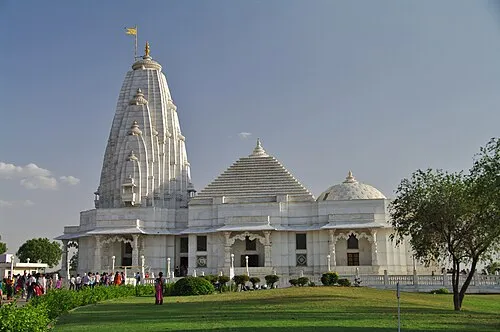
Tucked inside the City Palace gardens, Govind Dev Ji Temple is one of the most actively worshipped Krishna temples in North India, and most tourists walk right past it. The temple has no tower (shikhara), which is unusual for a Hindu temple, because legend says Maharaja Sawai Jai Singh II had the top removed so it would not be taller than his palace. What it lacks in exterior drama it makes up for in devotional intensity. Thousands of worshippers pack the courtyard during darshan times, and the singing during evening aarti fills the whole garden. The temple opens early at 4:00 AM and runs on a darshan schedule with breaks throughout the day. The main morning darshan is 4:00 AM to 12:00 PM; evening darshan runs from 4:00 to 8:30 PM. Entry is free. The idol of Krishna here is believed to have been brought from Vrindavan in the 18th century, and the temple remains under the patronage of the Jaipur royal family to this day. This is one of the hidden gems in Jaipur that rewards you with something the forts and palaces cannot: a window into living religious practice. After walking through the museum-like halls of City Palace next door, stepping into Govind Dev Ji's crowded courtyard is a sharp and welcome contrast.

Hours Daily: 4:00 AM – 12:00 PM, 4:00 – 8:30 PM
Price Free
Insider TipThe Mangla Aarti at the earliest morning opening is the most powerful ceremony, but 6:30 PM Sandhya Aarti is more accessible for visitors. Stand near the front for the best view of the idol being revealed behind the curtain.
Get Your Own Private Tour with AI Guide
AI Guide
  • Personalized tour tailored to your interests
  • Your AI guide tells stories, shares facts, and cracks jokes
  • Turn-by-turn GPS navigation
  • Available in your language — no download needed
Try for Free

🌳 Parks & Best Viewpoints in Jaipur

Beautiful parks, gardens, and panoramic viewpoints for the best views of Jaipur.

Ram Niwas Garden

1. Ram Niwas Garden

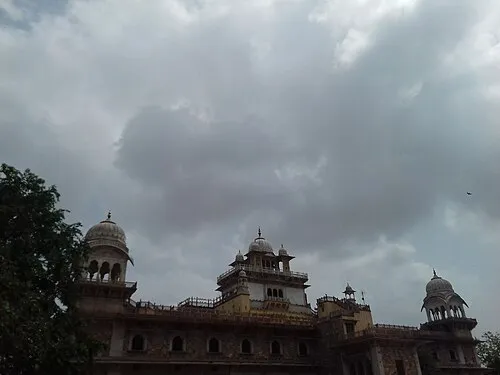
Ram Niwas Garden was built in 1868 by Maharaja Sawai Ram Singh as a public park and famine relief project. Today it is a large green space just south of the old city walls that holds Albert Hall Museum at its center, a zoo, a modern art gallery (Ravindra Manch), an open-air theater, and a greenhouse. The garden is where Jaipur residents come to walk, jog, and sit on benches under old trees, and it feels noticeably quieter than anything inside the walled city. The park is free to enter (the zoo and museum have separate tickets) and open throughout the day. Morning visits are best, when the air is cooler and joggers lap the pathways. The zoo is modest but popular with local families. The real draw is the contrast: after hours of sandstone forts and crowded bazaars, this patch of grass and shade is exactly what you need. As a park in Jaipur, Ram Niwas Garden works best as a transition between sights rather than a destination in itself. Walk through it on your way to Albert Hall Museum. Sit down with chai from a garden vendor. Let the noise of the Pink City fade for a few minutes. Then head back in. The Masala Chowk food court is nearby, making this corner of Jaipur the natural place for a lunch break between morning and afternoon sightseeing.

Hours Daily: 8:30 AM - 5:30 PM
Price Free
Website Wikipedia
Location 26.9153, 75.8187
Get Your Own Private Tour with AI Guide
AI Guide
  • Personalized tour tailored to your interests
  • Your AI guide tells stories, shares facts, and cracks jokes
  • Turn-by-turn GPS navigation
  • Available in your language — no download needed
Try for Free

Explore with AI Guide

AI Guide App

Get personalized tours with our AI-powered guide. No download needed — works right in your browser.