Things to Do in Jerusalem - Top Attractions, Hidden Gems & Must-See Sights

Discover the best things to do in Jerusalem. Complete guide to must-see sights, popular attractions, hidden gems, museums, food markets and parks.

28 Attractions 5 Categories Travel Guide

Table of Contents

Jerusalem Overview

Jerusalem is a city where three religions, 4,000 years of history, and modern daily life all collide on the same square kilometer. The Old City, enclosed by 16th-century Ottoman walls, is divided into four quarters (Jewish, Christian, Muslim, Armenian), and most of the major sights are within walking distance of each other inside those walls. The Western Wall, the Church of the Holy Sepulchre, the Dome of the Rock, and Temple Mount are all here, and the emotional weight of these places is hard to prepare for. Outside the walls, West Jerusalem has the Israel Museum, Yad Vashem, and Mahane Yehuda Market, each worth a half-day on its own.

Jerusalem rewards travelers who are curious, respectful, and willing to move slowly. It is not a beach city or a nightlife city. It's a city that asks you to pay attention. The food is excellent, from shawarma in the Muslim Quarter to kubbeh soup at Mahane Yehuda. The light, especially at golden hour when the limestone walls turn warm yellow, is unlike anywhere else. Three full days is the minimum to see the major sites without rushing, and a week wouldn't feel too long.

The city works best for travelers who want depth over breadth. If you care about history, religion, archaeology, or simply understanding a place that the rest of the world can't stop arguing about, Jerusalem will give you more than you expected.

Must-See Attractions in Jerusalem

  • Western Wall
  • Church of the Holy Sepulchre
  • Temple Mount & Dome of the Rock
  • Israel Museum & Shrine of the Book
  • Tower of David Museum
  • Yad Vashem
🏛️ Must-See ⭐ Sights 💎 Hidden Gems 🎨 Museums 🌳 Parks & Views

🏛️ Must-See Attractions in Jerusalem

These iconic landmarks and must-see sights are essential stops for any visitor to Jerusalem.

Church of the Holy Sepulchre

1. Church of the Holy Sepulchre

Six different Christian denominations share custody of this church, and they've been arguing about who controls which corner for centuries. That tension is part of what makes it fascinating. The Church of the Holy Sepulchre marks the spot where most Christian traditions say Jesus was crucified, buried, and resurrected. The current structure dates to a major Crusader renovation completed in 1149, though parts go back to the 4th century. It's free to enter and open daily from 5 AM to 8 PM. Inside, you'll find Golgotha (Calvary) on the upper level, where a glass-enclosed section of bedrock marks the crucifixion site. Downstairs, the Edicule shelters what tradition holds as Jesus's empty tomb. The Stone of Anointing, a slab of reddish stone near the entrance, is where pilgrims kneel and press their faces. The church is compact, dark, and crowded, and it hits harder than any cathedral you've been in. Unlike the open grandeur of the Western Wall plaza just a 10-minute walk away, everything here is compressed and layered. This is the most important Christian pilgrimage site in the world. It is a must-see in Jerusalem. Just be ready for tight spaces, incense smoke, and the sound of six liturgies happening at once.
Hours Daily: 5:00 AM - 8:00 PM
Price Free
Website Wikipedia
Insider TipArrive right at 5 AM when the doors open. The Franciscan friars process through the empty church at dawn, and for about 30 minutes you'll have the Edicule nearly to yourself.
Dome of the Rock

2. Dome of the Rock

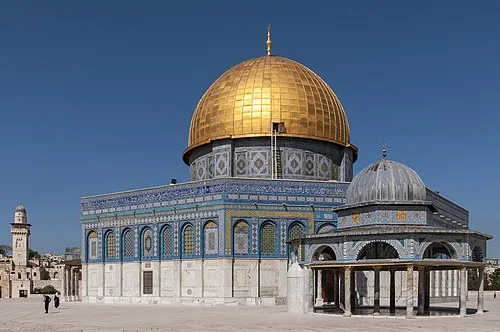
Built in 691 CE, the Dome of the Rock is the oldest monumental Islamic structure still standing in its original form. Its gold-plated dome and blue-tiled octagonal walls dominate the Jerusalem skyline from almost every angle. The building sits over the Foundation Stone, which Jewish and Muslim traditions both consider sacred: Jews believe it's where creation began, and Muslims hold it as the spot from which Muhammad ascended to heaven. You can see it up close by entering Temple Mount through the Mughrabi Gate (Sunday to Thursday, roughly 7:30 to 10:30 AM), but non-Muslim visitors cannot go inside the building itself. That's frustrating, but even from the outside the tile work and proportions are extraordinary. The dome was originally lead-covered, then gilded with real gold leaf in 1994 using funds from Jordan's King Hussein. Walking around it on the wide stone platform, with the Mount of Olives rising to the east, is one of those moments where Jerusalem's layers hit you all at once. If you only see one building in Jerusalem, this is the image that will stay with you. Free to access from the compound. No ticket needed.

Hours Sun-Thu: 7:30 AM - 10:30 AM
Price Free
Website Wikipedia
Insider TipThe best photo angle is from the Mount of Olives lookout, especially in the early morning when the gold dome catches the first light against the Old City walls.
Israel Museum

3. Israel Museum

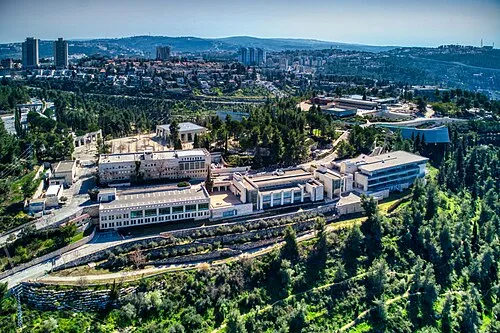
The Israel Museum holds about 500,000 objects, making it the largest museum in the Middle East. It opened in 1965 on Givat Ram, about 3 kilometers west of the Old City, and covers archaeology, fine arts, Jewish ethnography, and more. The Dead Sea Scrolls are here, housed in the Shrine of the Book wing, but the rest of the collection deserves just as much time. Admission is 50 ILS, which includes the Shrine of the Book. The archaeology wing alone could take half a day. You'll see artifacts spanning 5,000 years of human civilization in this region. The outdoor sculpture garden, designed by Isamu Noguchi, is a welcome break between gallery rooms. There's also a 1:50 scale model of Jerusalem as it looked in 66 CE, right before the Roman destruction. It's absurdly detailed and gives you context for everything you'll see in the Old City. Hours are limited: Monday and Thursday 10 AM to 4 PM, Tuesday 4 to 8 PM only, Friday 10 AM to 2 PM, Saturday 10 AM to 4 PM. Closed Wednesday and Sunday. Plan around those hours carefully. This is one of the top sights in Jerusalem for anyone interested in the ancient world.

Hours Mon: 10:00 AM – 4:00 PM | Tue: 4:00 – 8:00 PM | Wed: Closed | Thu: 10:00 AM – 4:00 PM | Fri: 10:00 AM – 2:00 PM | Sat: 10:00 AM – 4:00 PM | Sun: Closed
Price 50 ILS
Website www.imj.org.il/
Insider TipTuesday evening (4-8 PM) is the least crowded slot. The museum is half-empty while the Shrine of the Book stays fully accessible.
Temple Mount

4. Temple Mount

Temple Mount is the most politically and religiously contested piece of ground on Earth. The platform covers about 144 dunams (roughly 35 acres) in the southeastern corner of Jerusalem's Old City, rising 743 meters above sea level. For Jews, this is where the First and Second Temples stood. For Muslims, it's al-Haram ash-Sharif, the third holiest site in Islam, from where Muhammad ascended to heaven. The site is managed by the Jordanian Waqf, but Israeli security controls access. Non-Muslim visitors can enter through the Mughrabi Gate, near the Western Wall, only on Sunday through Thursday from about 7:30 to 10:30 AM. These hours change without warning, and the gate closes for any Jewish or Muslim holiday, so check before you walk over. Entry is free. You cannot enter the Dome of the Rock or Al-Aqsa Mosque as a non-Muslim visitor, but you can walk the open compound and take in the scale of it. The Dome of the Rock, sitting at the center, is the single most recognizable image of Jerusalem. Leave large bags at your hotel. Bring your passport. No religious items, no Israeli flags, and dress conservatively. The access rules are strict and enforced. This is one of the top sights in Jerusalem that requires real planning.

Hours Open 24/7
Price Free
Website Wikipedia
Insider TipLine up at the Mughrabi Gate by 7:00 AM. The window is short, and on busy days they cap the number of visitors. If you're turned away, try again the next morning.
Tower of David Museum

5. Tower of David Museum

The Tower of David is not actually a tower, and it has nothing to do with King David. It's a citadel next to Jaffa Gate, built and rebuilt by everyone from Herod the Great to the Crusaders to the Ottomans. The fortress sits at one of the highest points in the Old City, and the museum inside walks you through 4,000 years of Jerusalem's history using archaeological remains that are literally part of the building you're standing in. Admission is 30 ILS. The recent renovation turned the museum into a modern, multimedia experience. You move through rooms where Herodian-era stones sit next to Crusader arches and Ottoman walls, each layer of construction telling its own story. The rooftop offers a panoramic view of both the Old City and West Jerusalem. On a clear day you can see all the way to the Mount of Olives. It's a good counterpoint to the sensory overload of the Church of the Holy Sepulchre, which is a short walk down David Street. Open Sunday through Thursday, 9 AM to 5 PM. Closed Friday and Saturday. Among the must-see sights in Jerusalem, this one gives you the broadest historical context in a single visit. Budget about 90 minutes.

Hours Mon-Thu: 9:00 AM – 5:00 PM | Fri-Sat: Closed | Sun: 9:00 AM – 5:00 PM
Price 30 ILS
Website www.tod.org.il/
Insider TipThe night light show projected onto the citadel walls runs on select evenings and costs extra, but it's genuinely impressive. Book tickets online in advance as it sells out.
Western Wall

6. Western Wall

The Western Wall is a 2,000-year-old limestone retaining wall from the Second Temple period, and it is the holiest site where Jews can pray. About 10 million people visit every year. The plaza in front of it is divided into men's and women's sections, and you'll see people of all backgrounds pressing their foreheads against the ancient stones, tucking folded prayers into the cracks. It's open 24 hours a day, every day, and there's no admission fee. What catches you off guard is how quiet it gets late at night. During the day, the plaza buzzes with bar mitzvah ceremonies on Mondays and Thursdays, soldiers being sworn in, and tour groups filing through security. But after midnight, you might share the wall with only a handful of people. That contrast is worth experiencing. The Wall sits at the base of Temple Mount, so you're standing below the Dome of the Rock, which adds another layer to the weight of the place. Dress modestly: shoulders and knees covered for everyone. Men need a head covering, but free paper kippot are available at the entrance. Security screening is quick but mandatory.

Hours Open 24/7
Price Free
Insider TipVisit between midnight and 5 AM for an almost empty plaza. The atmosphere shifts completely, and you can spend as long as you want at the stones without crowds.
Get Your Own Private Tour with AI Guide
AI Guide
  • Personalized tour tailored to your interests
  • Your AI guide tells stories, shares facts, and cracks jokes
  • Turn-by-turn GPS navigation
  • Available in your language — no download needed
Try for Free

💎 Hidden Gems in Jerusalem - Off the Beaten Path

Beyond the tourist crowds, Jerusalem hides remarkable treasures waiting to be discovered.

Greek Orthodox Church of St. John the Baptist

1. Greek Orthodox Church of St. John the Baptist

Hidden behind a small gate on Christian Quarter Road, between the souvenir shops, this Greek Orthodox church is easy to walk right past. That would be a mistake. Parts of the building date to the Byzantine period (4th to 6th century), making it one of the oldest churches in Jerusalem's Old City. During the Crusader era, the Knights Hospitaller adopted John the Baptist as their patron saint and used this church as their base. It was destroyed in 1244 and rebuilt in 1842. The real draw is the crypt beneath the main floor. You descend a narrow side staircase into remains that some scholars date to the Roman period. Upstairs, the newer church holds an impressive iconostasis (one of the longest in the country) and a relic believed to be part of John the Baptist's skull. In the courtyard, a citrus tree and an ancient water cistern with a Greek inscription sit quietly, unbothered by tourists. Open Monday to Saturday, 8 AM to noon and 2:30 to 5 PM. Free admission. This is one of the real secret spots in Jerusalem, just steps from the Church of the Holy Sepulchre but almost never crowded. The church belongs to the Greek Orthodox Patriarchate.

Hours Mon-Sat: 8:00 AM - 12:00 PM, 2:30 PM - 5:00 PM
Price Free
Insider TipAsk the caretaker to let you into the crypt. It's not always open by default, but they're usually happy to unlock it if you show genuine interest.
Little Western Wall

2. Little Western Wall

Most visitors to Jerusalem never find this place. The Little Western Wall (HaKotel HaKatan) is a small exposed section of the same retaining wall as the famous Western Wall, located 175 meters north of the main plaza, deep in the Muslim Quarter. Technically, it's closer to the presumed location of the Holy of Holies than the main Western Wall, making it the second closest accessible prayer spot to Judaism's holiest point. To get there, walk north from the Western Wall plaza through the Muslim Quarter's alleys. Look for the Iron Gate (Bab al-Hadid). The wall section is tucked into a narrow passageway between residential buildings. It's tiny, maybe 10 meters wide, and usually empty. No security checkpoint, no crowds, no tour groups. Just ancient Herodian stones and silence. The contrast with the busy main Western Wall plaza could not be sharper. Free, open 24 hours. This is one of the genuine hidden gems in Jerusalem, the kind of spot a local might show you if you ask what most tourists miss. It's not signposted in any obvious way, so you'll need to look for it deliberately. Worth the 10-minute detour from the main Kotel.

Hours Open 24/7
Price Free
Website Wikipedia
Insider TipFrom the Western Wall plaza, exit north through the Muslim Quarter. Follow signs toward Bab al-Hadid (Iron Gate). The wall is in the narrow alley just before the gate. If you reach Via Dolorosa, you've gone too far.
Mea Shearim

3. Mea Shearim

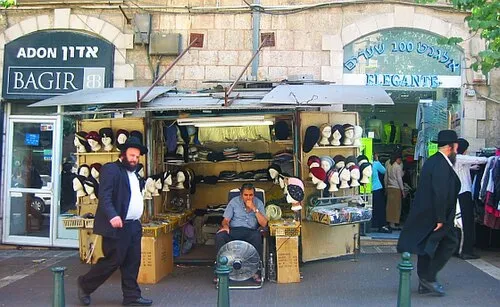
Mea Shearim is one of the oldest Jewish neighborhoods outside the Old City walls, built in 1874. It's home to ultra-Orthodox (Haredi) communities, and walking through it feels like stepping into 19th-century Eastern Europe. Men wear long black coats and fur hats (shtreimels), women dress in modest clothing with head coverings, and Yiddish is spoken as commonly as Hebrew. Signs at the entrances ask visitors to dress modestly and respect the community's way of life. Take those signs seriously. The neighborhood is a 10-minute walk north of Damascus Gate and sits just above the modern city center, near Mahane Yehuda Market. The architecture is old Jerusalem stone with iron balconies, narrow courtyards, and small synagogues on almost every block. Bookshops sell religious texts, and there are no restaurants catering to tourists. This is not a place that wants visitors, and that honesty is part of what makes it worth seeing. Free to walk through, open 24 hours, but avoid Shabbat (Friday evening to Saturday evening) and Jewish holidays entirely. Do not take photographs of people without permission. This is one of the most unusual hidden gems in Jerusalem: a community that has deliberately preserved a way of life that the rest of the modern world has moved past.

Hours Open 24/7
Price Free
Website Wikipedia
Insider TipVisit on a weekday morning when shops are open and the streets are active. Never visit during Shabbat or holidays. Dress conservatively: long sleeves, long pants or skirts, no shorts.
Nachlaot

4. Nachlaot

Nachlaot is a cluster of old neighborhoods built between the late 1800s and mid-1900s, sandwiched between Agrippas Street and Bezalel Street in central Jerusalem. About 12,000 people live here in what was originally a collection of courtyard communities, each built by a different Jewish ethnic group. Sephardic, Kurdish, Yemenite, and Ashkenazi families all established their own tiny enclaves, and you can still see the different architectural styles as you wander. The narrow alleys are barely wide enough for two people to pass. Bougainvillea spills over stone walls, cats sleep on window ledges, and small synagogues appear on random corners. There's no museum, no ticket, and no attraction in the conventional sense. The whole neighborhood is the attraction. It's a 5-minute walk from Mahane Yehuda Market, and the two pair naturally: hit the Shuk for food, then disappear into Nachlaot's maze of streets to walk it off. Free to wander, open 24 hours. This is one of Jerusalem's hidden gems because it shows you what daily life in the city looked like before the high-rises and highways took over. The neighborhood is gentrifying, with boutique cafes and small galleries appearing alongside the old courtyards, but it still feels lived-in and unpolished.

Hours Open 24/7
Price Free
Website Wikipedia
Insider TipEnter from the Agrippas Street side, near the market, and just walk. There's no map that captures the alleys accurately. Getting slightly lost is the point.
Get Your Own Private Tour with AI Guide
AI Guide
  • Personalized tour tailored to your interests
  • Your AI guide tells stories, shares facts, and cracks jokes
  • Turn-by-turn GPS navigation
  • Available in your language — no download needed
Try for Free

🎨 Best Museums & Galleries in Jerusalem

World-class museums and galleries that make Jerusalem a cultural treasure.

Bible Lands Museum

1. Bible Lands Museum

The Bible Lands Museum is right next to the Israel Museum on the Givat Ram campus, and it focuses on the civilizations of the ancient Near East: Egypt, Mesopotamia, Persia, Canaan, and the surrounding cultures that shaped the biblical world. The collection was assembled by Elie Borowski, a scholar and collector who spent decades acquiring pieces. It opened in 1992. The exhibits walk you chronologically through 6,000 years of regional history using pottery, seals, jewelry, sculptures, and cuneiform tablets. If you've been to the Old City and walked the Jerusalem Archaeological Park, this museum provides the broader civilizational backdrop. It answers the question: what was happening in Egypt, Babylon, and Persia while the events described in the Bible were taking place? The collection is smaller and quieter than the Israel Museum, which works in its favor. You can see everything in about 90 minutes without rushing. Open Monday and Tuesday 10 AM to 5 PM, Wednesday until 9 PM, Thursday 10 AM to 5 PM, Friday and Saturday 10 AM to 2 PM, Sunday 10 AM to 5 PM. Admission is 44 ILS. Among the best museums in Jerusalem, this is the one for people who want the ancient context without the crowds.

Hours Mon-Tue: 10:00 AM – 5:00 PM | Wed: 10:00 AM – 9:00 PM | Thu: 10:00 AM – 5:00 PM | Fri-Sat: 10:00 AM – 2:00 PM | Sun: 10:00 AM – 5:00 PM
Price 44 ILS
Website www.blmj.org/
Insider TipWednesday evenings (open until 9 PM) are the quietest time. The museum often runs special lectures and events on Wednesday nights.
Bloomfield Science Museum

2. Bloomfield Science Museum

The Bloomfield Science Museum sits on the Givat Ram museum campus, near the Israel Museum and the Bible Lands Museum. It's primarily aimed at families and school groups, with interactive exhibits on physics, biology, and technology that encourage touching and experimenting. Everything is hands-on, which makes it a solid option if you're traveling with children who've had enough of archaeological ruins and religious sites. The exhibits rotate regularly, so what's on display changes throughout the year. Past exhibitions have covered topics from optical illusions to renewable energy. The permanent collection focuses on connecting science to everyday life, with experiments you can run yourself. It's not the Natural History Museum in London, but for a mid-sized science museum it's well designed and keeps kids engaged for a couple of hours. Open Monday through Thursday 10 AM to 6 PM, Saturday 10 AM to 4 PM. Closed Friday and Sunday. Admission is 45 ILS. If you're already visiting the Israel Museum next door, adding this for kids makes sense. Among the best museums in Jerusalem for families, this is the most interactive option. It's about a 20-minute bus ride from the Old City.

Hours Mon-Thu: 10:00 AM – 6:00 PM | Fri: Closed | Sat: 10:00 AM – 4:00 PM | Sun: Closed
Price 45 ILS
Website mada.org.il/
Jerusalem Archaeological Park

3. Jerusalem Archaeological Park

The Jerusalem Archaeological Park (also called the Davidson Center) sits at the southern foot of Temple Mount, right where the Jewish Quarter meets the Old City walls. The site covers findings from the Bronze Age, roughly 5,000 years ago, through the Ottoman period. But the star attraction is the Second Temple era material: the massive staircase pilgrims climbed to reach the Temple, fallen stones from the Roman destruction in 70 CE, and a section of the original Herodian street. Standing on those ancient steps, looking up at Temple Mount, is one of the most grounding moments in Jerusalem. You're walking where people walked two millennia ago, on the actual stones they used. The Davidson Center museum, built into the archaeological site, includes virtual reality reconstructions of the Second Temple and a collection of artifacts found during excavations. It gives you the physical context for what the Western Wall, just around the corner, actually was part of. Open Sunday through Thursday 8 AM to 5 PM, Friday 8 AM to 2 PM. Free admission. This is one of the best museums in Jerusalem for understanding the scale of the ancient city, and most tourists skip it entirely because they don't know it's there.

Hours Sun-Thu: 8:00 AM - 5:00 PM, Fri: 8:00 AM - 2:00 PM
Price Free
Location 31.7753, 35.235
Insider TipEnter from the Dung Gate side rather than from the Jewish Quarter. The southern staircase is the first thing you see, and the impact is immediate.
Shrine of the Book

4. Shrine of the Book

The Shrine of the Book is the wing of the Israel Museum that houses the Dead Sea Scrolls, the oldest known biblical manuscripts. The building itself is a statement: a white dome shaped like the lid of the jars the scrolls were found in, set against a black basalt wall. Inside, a circular room displays a reproduction of the Great Isaiah Scroll, with original scroll fragments in climate-controlled cases. These texts are over 2,000 years old. The Aleppo Codex (Keter Aram Tsova), the oldest near-complete manuscript of the Hebrew Bible, is also kept here. The exhibit is compact. You can see everything in 30 to 45 minutes, but the significance of what's behind the glass makes it feel longer. The underground corridor leading to the main display room walks you through the story of the scrolls' discovery in Qumran caves in 1947. Admission is included with the Israel Museum ticket (50 ILS total). Same hours: Monday and Thursday 10 AM to 4 PM, Tuesday 4 to 8 PM, Friday 10 AM to 2 PM, Saturday 10 AM to 4 PM. Closed Wednesday and Sunday. Among the best museums in Jerusalem, this is the one that puts something almost impossibly old within arm's reach.

Hours Mon: 10:00 AM – 4:00 PM | Tue: 4:00 – 8:00 PM | Wed: Closed | Thu: 10:00 AM – 4:00 PM | Fri: 10:00 AM – 2:00 PM | Sat: 10:00 AM – 4:00 PM | Sun: Closed
Price 50 ILS (incl. Israel Museum)
Website www.imj.org.il/
Insider TipVisit the Shrine first when you arrive at the Israel Museum. Tour groups tend to head to the archaeology wing first, leaving the Shrine relatively empty in the first hour.
Get Your Own Private Tour with AI Guide
AI Guide
  • Personalized tour tailored to your interests
  • Your AI guide tells stories, shares facts, and cracks jokes
  • Turn-by-turn GPS navigation
  • Available in your language — no download needed
Try for Free

🌳 Parks & Best Viewpoints in Jerusalem

Beautiful parks, gardens, and panoramic viewpoints for the best views of Jerusalem.

Gazelle Valley

1. Gazelle Valley

Gazelle Valley is an urban nature park covering 250 dunams (about 62 acres) in southern Jerusalem, between the neighborhoods of Givat Mordechai and Katamon. It opened in 2015 after a long public campaign saved the land from development. About 83 mountain gazelles live here as of 2023, along with a variety of birds, reptiles, and small mammals. A small lake, walking trails, and a visitor center fill out the park. Free admission, open daily from 6 AM to 8 PM. The gazelles are wild but accustomed to people, and you'll usually spot them grazing in the open fields, especially in the early morning or late afternoon. It feels surreal: wild animals in the middle of a city of nearly a million people, surrounded by apartment buildings and busy roads. Birdwatchers come for the variety of species attracted by the lake and wetland areas. This is the largest urban nature park in Israel, and it won the 2019 Karavan Prize for landscape architecture. Among the parks in Jerusalem, it's the most unusual. You won't find ancient ruins or religious sites here, just a herd of gazelles, some quiet trails, and a complete break from the intensity of the rest of the city.

Hours Daily: 6:00 AM - 8:00 PM
Price Free
Location 31.75944, 35.195
Insider TipVisit between 6 and 8 AM for the best gazelle sightings. The animals are most active at dawn, and the park is nearly empty. Bring binoculars if you have them.
Jerusalem Botanical Gardens

2. Jerusalem Botanical Gardens

The Jerusalem Botanical Gardens, run by the Hebrew University, cover 150 dunams (about 37 acres) on the Givat Ram campus. It's the largest botanical garden in Israel, holding the biggest plant collection in the Middle East. The grounds are divided by continent, so you walk from a Mediterranean section into a North American zone, then African plants, and so on. Free admission. The gardens sit next to the Israel Museum and the Bloomfield Science Museum, making the whole Givat Ram campus a full day's outing if you want it. The landscape is hilly and the paths wind through planted valleys and terraces. It's quiet, well maintained, and almost entirely free of tourist crowds. Most visitors are university students, joggers, and local families. If you've just spent hours in the Israel Museum, walking through the gardens afterward is a good way to decompress. Open Monday through Thursday and weekends 9 AM to 5 PM, Friday until 3 PM. The best views in Jerusalem are from the Old City and Mount of Olives, but this garden gives you something different: a chance to sit under a tree and not think about 4,000 years of history for an hour.

Hours Mon-Thu: 9:00 AM – 5:00 PM | Fri: 9:00 AM – 3:00 PM | Sat-Sun: 9:00 AM – 5:00 PM
Price Free
Insider TipThe tropical greenhouse is worth a stop if it's open. It's easy to miss near the south entrance and holds plants you won't see anywhere else in the region.
Liberty Bell Park

3. Liberty Bell Park

Liberty Bell Park is Jerusalem's largest urban park, sitting between the neighborhoods of Talbieh, the German Colony, and Yemin Moshe, close to the city center. It takes its name from a replica of Philadelphia's Liberty Bell that stands near the entrance. The park has wide lawns, playgrounds, a roller-skating rink, and shaded paths under old pine and cypress trees. It's open 24 hours and free. The park's eastern edge borders the neighborhood of Yemin Moshe, with its famous windmill and views toward the Old City walls. On Fridays before Shabbat, families spread out on the grass and kids run between the play areas. After dark, particularly in summer, the park fills with people walking, jogging, or just sitting on benches. It's one of the few large green spaces within walking distance of both the Old City and the modern center. After days of navigating the crowded Old City quarters and heavy sites like Yad Vashem, this park is a simple, welcome pause. No history lesson, no entrance fee, no dress code. Just grass and shade. Among the parks in Jerusalem, this is the most central and convenient option for a quiet hour.

Hours Open 24/7
Price Free
Insider TipWalk from the park's eastern edge into Yemin Moshe for one of the best casual views of the Old City walls and the Dome of the Rock. No crowds, no tickets.
Monastery of the Cross

4. Monastery of the Cross

The Monastery of the Cross looks like a small fortress dropped into a valley between apartment blocks. Built in the 11th century on the foundations of a 6th-century Byzantine structure, it stands at 750 meters above sea level in the Valley of the Cross, between the neighborhoods of Givat Ram and Rehavia. Christian tradition says this is where the tree grew that was used to make the cross for Jesus's crucifixion. The monastery is one of the few medieval buildings in Jerusalem that has survived largely intact. The interior holds frescoes from several centuries, a small church with stone columns, and a quiet courtyard surrounded by thick walls. The Georgian Orthodox Church originally built it, and the Greek Orthodox Patriarchate now owns it. On a typical day you might be the only visitor. The contrast with the crowded Old City, just 2 kilometers east, is total. Open Monday, Tuesday, Thursday, and Saturday from 10 AM to 4 PM. Closed Wednesday, Friday, and Sunday. Free admission. Among the parks in Jerusalem (the monastery sits in a park-like valley with old olive trees), this is the spot that feels most out of time. A 10-minute walk from the Israel Museum.

Hours Mon-Tue: 10:00 AM – 4:00 PM | Wed: Closed | Thu: 10:00 AM – 4:00 PM | Fri: Closed | Sat: 10:00 AM – 4:00 PM | Sun: Closed
Price Free
Website Wikipedia
Location 31.7721, 35.208
Insider TipCombine it with the Israel Museum and Botanical Gardens for a half-day loop. The monastery is the least-visited of the three and makes a peaceful middle stop.
Sataf

5. Sataf

Sataf is an ancient agricultural site about 10 kilometers west of Jerusalem's center, in the Judean Hills above the Sorek Valley. The terraced hillside preserves traditional mountain farming methods that go back thousands of years, with restored stone terraces, two natural springs (Ein Sataf and Ein Bikura), and reconstructed irrigation channels. Five hiking trails of varying difficulty wind through the site, from short 30-minute loops to longer 2-hour routes. This is where Jerusalemites go on Saturdays to escape the city. The trails pass through pine forests, orchards, and wild herb patches. In spring, the wildflowers are thick on the ground. The springs still flow, and the lower one has a small pool where families cool off. It feels nothing like the Jerusalem of temples and holy sites. Here, it's just quiet hills, birdsong, and the smell of wild thyme. Free admission, open 24 hours. Managed by the Jewish National Fund (KKL). Bring water and sun protection, because shade is limited on some trails. Among all the things to do in Jerusalem, this is the one for people who need a day away from stone walls and ancient arguments. Drive or take a cab, as public transport options are limited.

Hours Open 24/7
Price Free
Location 31.7691, 35.1273
Insider TipTrail 1 (the short loop past Ein Sataf spring) is the easiest and gives you the best taste of the site in about 40 minutes. Park at the upper lot.
Get Your Own Private Tour with AI Guide
AI Guide
  • Personalized tour tailored to your interests
  • Your AI guide tells stories, shares facts, and cracks jokes
  • Turn-by-turn GPS navigation
  • Available in your language — no download needed
Try for Free

Explore with AI Guide

AI Guide App

Get personalized tours with our AI-powered guide. No download needed — works right in your browser.