Things to Do in Mumbai - Top Attractions, Hidden Gems & Must-See Sights

Discover the best things to do in Mumbai. Complete guide to must-see sights, popular attractions, hidden gems, museums, food markets and parks.

21 Attractions 6 Categories Travel Guide

Table of Contents

Mumbai Overview

Mumbai is India's largest city, a coastal metropolis of over 20 million people crammed onto a narrow peninsula jutting into the Arabian Sea. It runs on contradictions: Victorian Gothic train stations next to open-air laundries, Sufi shrines accessible only at low tide, wild flamingos feeding in industrial harbors. The city was shaped by its colonial past as Bombay, its role as India's financial capital, and its status as home to Bollywood. The result is a place that feels simultaneously ancient, colonial, modern, and futuristic.

Most major sights concentrate in South Mumbai, from the Gateway of India and the Kala Ghoda art district to Marine Drive and Malabar Hill. The western suburbs (Bandra, Juhu) add a more contemporary layer. Getting around takes time: distances are short on the map but long in traffic. The local trains are the city's lifeline and worth riding at least once, though not during rush hour unless you enjoy being pressed against strangers. Mumbai rewards the visitor who adjusts to its rhythm rather than fighting it: eat when the stalls open, walk when the crowds thin, and accept that every plan will take longer than expected.

Must-See Attractions in Mumbai

  • Gateway of India
  • Chhatrapati Shivaji Terminus
  • Elephanta Caves
  • Marine Drive
  • Haji Ali Dargah
🏛️ Must-See ⭐ Sights 💎 Hidden Gems 🎨 Museums 🍕 Food & Markets 🌳 Parks & Views

🏛️ Must-See Attractions in Mumbai

These iconic landmarks and must-see sights are essential stops for any visitor to Mumbai.

Chhatrapati Shivaji Terminus

1. Chhatrapati Shivaji Terminus

Still called VT by most locals, this railway station took 10 years to build and was completed in 1888. It's a UNESCO World Heritage Site, and it's also a working station that handles millions of commuters daily. The Victorian Gothic facade, designed by Frederick William Stevens, is packed with turrets, pointed arches, stained glass, and stone carvings made by students of the Bombay School of Art. After the Taj Mahal, it's reportedly the most photographed building in India. You don't need a train ticket to appreciate the exterior, which is honestly the best part. The front facade is absurdly detailed for a train station. Stand across the road at the junction near Crawford Market for the full view. Inside, the station is functional chaos: commuters moving fast, announcements echoing, the organized disorder that defines Mumbai's daily rhythm. It's located right at the southern tip of the city, a short walk from Crawford Market and not far from the Kala Ghoda art district. Come at dusk when the building is lit up.

Hours Open 24/7 (exterior)
Price Free
Location 18.9398, 72.8355
Insider TipThe best exterior photographs come from the traffic island directly across the main road. Dusk lighting, around 6:30 PM, makes the stone glow.
Elephanta Caves

2. Elephanta Caves

These rock-cut cave temples sit on Gharapuri Island, about 12 kilometres from the Gateway of India by ferry. Carved between the 5th and 8th centuries, the main cave has 26 columns and a series of massive Shiva sculptures. The centerpiece is a 17-foot-tall triple-headed Shiva (Trimurti), showing the god as creator, preserver, and destroyer in a single stone face. UNESCO made this a World Heritage Site in 1987. The ferry ride takes about an hour each way, and boats run Tuesday through Sunday from 9 AM, with the last return around 5 PM. The caves are closed on Mondays. Once you land, there's a short toy-train ride followed by about 120 steps up the hillside. Monkeys line the path, and the vendors sell everything from coconut water to miniature Shiva statues. The scale of the carvings is hard to process until you're standing next to them. It eats a full half-day, so don't try to squeeze it in with a packed schedule.

Hours Mon: Closed | Tue-Sun: 9:00 AM – 5:00 PM
Price 600 INR
Insider TipTake the 9 AM ferry to arrive before the midday heat and the tour groups. Bring water; there's limited shade on the climb up.
Gateway of India

3. Gateway of India

This 26-metre basalt arch was built in 1924 to commemorate King George V's visit to Bombay, and it was also the spot where the last British troops left India in 1948. Today it works as Mumbai's front door. Ferries to Elephanta Caves leave from the jetty right beside it, and the Taj Mahal Palace Hotel stands directly across the plaza. The area is always busy with photographers, balloon sellers, and families, especially after dark. The architecture blends Indo-Islamic and Gujarati styles, designed by George Wittet, and the result looks better in person than in photographs. Walk around to the waterfront side facing the Arabian Sea for a less crowded angle. The plaza itself is a must-see in Mumbai, the kind of place where the city's energy is concentrated into a single square. As far as things to do in Mumbai go, the Gateway is where most people start. It's free, open all hours, and central to everything in Colaba. From here you can walk to CSMVS museum in about 10 minutes, or take a boat to Elephanta. Don't linger too long buying trinkets from the hawkers; the prices are tourist-inflated and the same items cost a fraction at Crawford Market.

Hours Open 24/7
Price Free
Insider TipVisit after 9 PM when the floodlights hit the arch and the crowds thin out. The best photo angle is from the sea-facing side, not the plaza.
Haji Ali Dargah

4. Haji Ali Dargah

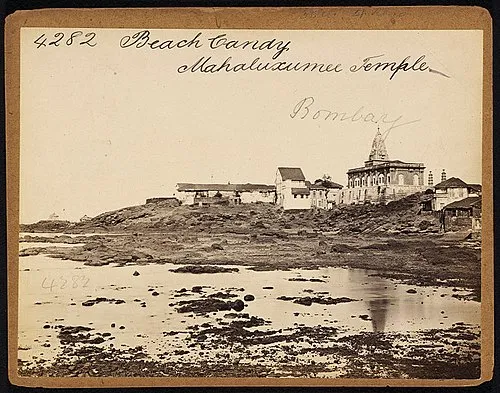
Built in 1431 in memory of the Sufi saint Syed Peer Haji Ali Shah Bukhari, this mosque and tomb sit on a tiny island about 500 metres off the Worli coast. You reach it by walking a narrow causeway that floods at high tide, cutting the dargah off from the mainland entirely. That walk, with the Arabian Sea on both sides and the Mumbai skyline behind you, is half the experience. The dargah is open daily from 6 AM to 9:45 PM, though you should check tide timings before going. If the causeway is submerged, you simply cannot get there. The white marble structure looks almost weightless against the water, and inside, the tomb is decorated with mirror work and colored glass. Regardless of your faith, the atmosphere is calm and reverent, a sharp contrast to the traffic noise on Mahalaxmi's streets nearby. No other city sight requires you to time your visit around the ocean. After visiting, walk south along the coast toward Mahalaxmi Temple, which is about a 15-minute walk and shares the same waterfront stretch. The top sights in Mumbai cluster in south Mumbai, but Haji Ali's setting is unlike any of them.

Hours Daily: 6:00 AM – 9:45 PM
Price Free
Location 18.9825, 72.8088
Insider TipCheck the tide schedule online before going. The causeway is walkable roughly 2-3 hours on either side of low tide. Avoid Fridays if you dislike large crowds.
Marine Drive

5. Marine Drive

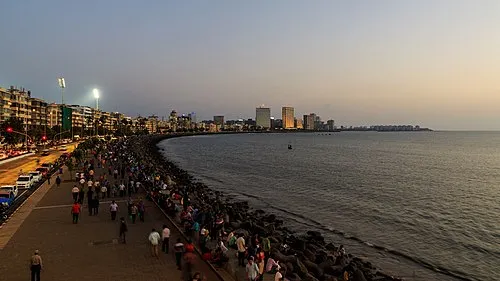
This 3.6-kilometre seafront promenade curves along the Arabian Sea from Nariman Point to the foot of Malabar Hill, where Chowpatty Beach begins. Built in the 1920s, the road is lined with Art Deco apartment buildings and coconut palms. At night, the streetlights trace the entire arc, earning it the nickname Queen's Necklace. The view from the upper floors of Malabar Hill, looking down at that lit curve, is one of the great Mumbai images. Marine Drive is free, always open, and best experienced on foot. The wide promenade on the sea side fills up at sunset with joggers, couples, families, and chai vendors. The concrete tetrapods along the waterfront make for decent sitting spots, and waves crash against them during monsoon season with impressive force. This is where Mumbai comes to decompress. Walk the full stretch from Nariman Point heading north, and you'll end up at Chowpatty Beach, where the street food stalls start. From there, Kamala Nehru Park and the Hanging Gardens are a short uphill walk on Malabar Hill. It connects naturally to several other sights, making it the spine of any South Mumbai walking route.

Hours Open 24/7
Price Free
Website Wikipedia
Location 18.944, 72.823
Insider TipSunset from the Nariman Point end gives you the full curve with golden light. The stretch is also spectacular during monsoon months (June to September) when waves crash over the sea wall.
Taj Mahal Palace Hotel

6. Taj Mahal Palace Hotel

Opened in 1903, the Taj stands directly across from the Gateway of India and has become almost as much a symbol of Mumbai as the arch itself. The building has 560 rooms and 44 suites, and its mix of Moorish, Oriental, and Florentine styles makes it look like a palace rather than a hotel. Even if you're not staying here, you can walk into the lobby, have tea at the Sea Lounge, or eat at one of the restaurants. The Taj took on a darker significance during the November 2008 terrorist attacks, when it was besieged for roughly 60 hours. The hotel was restored and reopened, and that resilience became part of Mumbai's identity. Today the building feels both grand and lived-in, a working luxury hotel rather than a museum piece. Among the top sights in Mumbai, the Taj is unique because it's a hotel you visit as a landmark. You don't need a reservation to walk through the ground floor. Afternoon tea at the Sea Lounge, with its view of the Gateway, is a proper Mumbai experience and costs far less than a room. Combine it with the Gateway of India and CSMVS museum for a full morning in Colaba.

Hours Open 24/7
Price Free
Insider TipAfternoon tea at the Sea Lounge costs around 2,000 INR per person and includes a window seat overlooking the Gateway of India. No hotel reservation needed.
Get Your Own Private Tour with AI Guide
AI Guide
  • Personalized tour tailored to your interests
  • Your AI guide tells stories, shares facts, and cracks jokes
  • Turn-by-turn GPS navigation
  • Available in your language — no download needed
Try for Free

💎 Hidden Gems in Mumbai - Off the Beaten Path

Beyond the tourist crowds, Mumbai hides remarkable treasures waiting to be discovered.

Banganga Tank

1. Banganga Tank

On the slopes of Malabar Hill, surrounded by old temples and crumbling tenements, this ancient spring-fed tank feels like it belongs in a small Indian town rather than in the middle of Mumbai. The Walkeshwar Temple complex around it dates back over a thousand years, and the tank itself is flanked by stone steps leading down to the water, where locals still perform rituals and wash clothes. The neighborhood around Banganga has barely changed in decades. Narrow lanes wind between old houses, temple bells ring in the background, and the water reflects the sky. It's a 15-minute walk from Kamala Nehru Park and the Hanging Gardens on top of Malabar Hill, but the atmosphere couldn't be more different: those are manicured parks for families, while Banganga is raw and unpolished. This is one of the true hidden gems in Mumbai, the kind of place most tourists never hear about. The Banganga Music Festival, held here annually in January, brings classical musicians to perform by the water's edge. Even without the festival, the tank is worth a detour for the quiet alone. Free to visit, and almost always empty of tourists.

Hours Open 24/7
Price Free
Website Wikipedia
Insider TipThe Banganga Music Festival in January features classical performances right at the tank's edge. Check dates with the MCGM website.
Gilbert Hill

2. Gilbert Hill

A 200-foot column of black basalt rising straight up from a residential neighborhood in Andheri. This rock formation is about 66 million years old, created when molten lava squeezed through cracks in the earth during the same volcanic events that formed much of the Deccan Plateau. It's geologically similar to Devils Tower in Wyoming, except this one has apartment buildings on three sides. The hill was declared a Grade II heritage structure in 2007 to stop quarrying. Two small Hindu temples, Gaodevi and Durgamata, sit on top, reached by a steep staircase carved into the rock. The climb takes about 10 minutes and rewards you with a panoramic view of suburban Mumbai. On clear days, you can see far into the northern suburbs. Gilbert Hill is one of the strangest hidden gems in Mumbai. A geological monument that should be in a national park is instead wedged between residential towers in a crowded suburb. Most Mumbaikars don't know it exists. Getting there requires a rickshaw from Andheri station, and there's nothing else nearby for tourists. But if you're interested in geology, or just want to see something truly odd, the 10-minute climb is worth it.

Hours Open 24/7
Price Free
Website Wikipedia
Insider TipThe staircase is steep and uneven. Wear proper shoes. The temples at the top are tiny but the 360-degree view of suburban Mumbai is the real reason to climb.
Get Your Own Private Tour with AI Guide
AI Guide
  • Personalized tour tailored to your interests
  • Your AI guide tells stories, shares facts, and cracks jokes
  • Turn-by-turn GPS navigation
  • Available in your language — no download needed
Try for Free

🎨 Best Museums & Galleries in Mumbai

World-class museums and galleries that make Mumbai a cultural treasure.

Chhatrapati Shivaji Maharaj Vastu Sangrahalaya

1. Chhatrapati Shivaji Maharaj Vastu Sangrahalaya

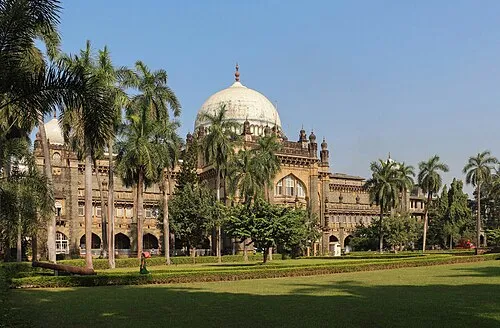
Formerly called the Prince of Wales Museum, CSMVS is Mumbai's principal museum, housed in a Indo-Saracenic building surrounded by palm gardens in the Kala Ghoda district. The collection spans Indian miniature paintings, Gandhara sculptures, decorative arts, natural history specimens, and a well-curated arms and armor section. Open daily from 10:15 AM to 6 PM. The building itself, designed by George Wittet (who also designed the Gateway of India), is worth seeing for the architecture alone: a central dome, arched verandas, and Minton tile floors. Inside, the galleries are spread across three floors. The Indian miniature painting collection is the strongest section, with pieces from Mughal, Rajasthani, and Pahari schools. The natural history wing feels dated, but the art sections hold up. Among the best museums in Mumbai, CSMVS is the one to prioritize if you only visit one. It's a 10-minute walk from the Gateway of India, right behind the Jehangir Art Gallery, and shares the Kala Ghoda neighborhood with the National Gallery of Modern Art. You could easily spend 2 hours here. Check the website for current ticket prices, as they vary for Indian and foreign visitors.

Hours Daily: 10:15 AM – 6:00 PM
Price 500 INR
Website csmvs.in/
Insider TipThe museum garden cafe is a peaceful spot for a break. Combined with Jehangir Art Gallery next door, this area fills a full morning.
Get Your Own Private Tour with AI Guide
AI Guide
  • Personalized tour tailored to your interests
  • Your AI guide tells stories, shares facts, and cracks jokes
  • Turn-by-turn GPS navigation
  • Available in your language — no download needed
Try for Free

🍕 Food Markets & Culinary Spots in Mumbai

The best food markets, food halls, and culinary destinations in Mumbai.

Crawford Market

1. Crawford Market

Officially renamed Mahatma Jyotiba Phule Mandai, this market has been operating since 1869 and was, remarkably, the first building in India to have electric lighting (in 1882). The Norman Gothic structure faces Mumbai Police Headquarters and sits just north of Chhatrapati Shivaji Terminus. Inside, the market is organized by section: fruit, vegetables, spices, flowers, dried goods, and household items. The building's exterior, with its stone reliefs and high arched windows, is far more ornate than you'd expect for a food market. The wholesale fruit section was relocated to Navi Mumbai in 1996, but the retail market remains lively and fragrant. Walking through the spice section is a full sensory experience: turmeric, cardamom, dried chilies, and saffron piled in open sacks. As a food market in Mumbai, Crawford Market is the most historically significant. It's not a street-food destination like Chowpatty or Mohammed Ali Road; this is where people come to buy ingredients. But for travelers, the atmosphere and the building alone justify a visit. It's a 5-minute walk from CST station and makes a natural pairing with Chor Bazaar, which is about 20 minutes north on foot.

Hours Mon-Sat: 11:30 AM - 8:00 PM
Price Free
Insider TipThe spice vendors near the rear of the market sell whole spices at wholesale prices. A kilo of cardamom here costs a fraction of airport shops.
Get Your Own Private Tour with AI Guide
AI Guide
  • Personalized tour tailored to your interests
  • Your AI guide tells stories, shares facts, and cracks jokes
  • Turn-by-turn GPS navigation
  • Available in your language — no download needed
Try for Free

🌳 Parks & Best Viewpoints in Mumbai

Beautiful parks, gardens, and panoramic viewpoints for the best views of Mumbai.

Aarey Milk Colony

1. Aarey Milk Colony

Spread across 2,000 acres in Goregaon East, Aarey is the last large green space in Mumbai, a buffer of forest between the Sanjay Gandhi National Park and the suburban sprawl. Established in 1949 as a dairy processing center, the colony still has cattle sheds and small farms alongside patches of deciduous forest. About 600 acres were declared reserved forest in 2020. The appeal is simple: trees, open air, and silence. In a city this dense, finding a place where you can hear birds instead of car horns is remarkable. Walking trails wind through the forested sections, and the dairy farm area has fresh milk and flavored milkshakes from roadside stalls. Chhota Kashmir, a small lake with boating facilities (20 INR per person), is inside the colony and makes for a peaceful hour. Among parks in Mumbai, Aarey is the most remote from tourist areas. It's in the northern suburbs, at least 90 minutes by taxi from Colaba. This is not a casual detour. But if you're spending more than a few days in the city and want a break from concrete, it's where Mumbaikars themselves go to breathe. Best on weekday mornings when the trails are empty.

Hours Open 24/7
Price Free
Website Wikipedia
Insider TipThe milkshake stalls near the dairy farm serve fresh buffalo milk shakes for under 50 INR. The strawberry flavor is the local favorite.
Kamala Nehru Park

2. Kamala Nehru Park

Perched on top of Malabar Hill, this 4-acre park gives you what might be the best views in Mumbai. Looking south, the entire curve of Marine Drive unfolds below, with the Arabian Sea on one side and the South Mumbai skyline on the other. At night, the Queen's Necklace effect is visible from here. The park is open daily from 9 AM to 6 PM. The park itself is modest: terraced lawns, a few flower beds, and the famous Old Woman's Shoe structure (based on the nursery rhyme) that children climb on. It's a family-oriented space, quiet on weekday mornings and busy with kids on weekends. The gardens are well-maintained and the shade trees make it a pleasant escape from the heat below. Among the best views in Mumbai, Kamala Nehru Park is the most accessible. It's right next to the Hanging Gardens, so you can visit both in 30 minutes, and Banganga Tank is a 15-minute walk downhill. The park sits directly above Marine Drive, meaning you can walk down the hill to the promenade afterward. A practical addition to any South Mumbai itinerary, especially around sunset.

Hours Daily: 9:00 AM – 6:00 PM
Price Free
Website Wikipedia
Insider TipCome at sunset for the Queen's Necklace view. The bench closest to the southern railing has the widest sightline over Marine Drive.
Get Your Own Private Tour with AI Guide
AI Guide
  • Personalized tour tailored to your interests
  • Your AI guide tells stories, shares facts, and cracks jokes
  • Turn-by-turn GPS navigation
  • Available in your language — no download needed
Try for Free

Explore with AI Guide

AI Guide App

Get personalized tours with our AI-powered guide. No download needed — works right in your browser.