Things to Do in Nara - Top Attractions, Hidden Gems & Must-See Sights

Discover the best things to do in Nara. Complete guide to must-see sights, popular attractions, hidden gems, museums, food markets and parks.

12 Attractions 4 Categories Travel Guide

Table of Contents

Nara Overview

Nara was Japan's first permanent capital, from 710 to 784, and it has been quietly holding onto its treasures ever since. While Kyoto gets the crowds and Tokyo gets the attention, Nara has the oldest wooden buildings, some of the finest Buddhist sculpture on earth, and over 1,200 deer wandering freely through a park that connects it all. The city is compact enough to cover its main sights in a single day, but spending a full day or even staying overnight lets you experience it without rushing.

Most visitors come as a day trip from Kyoto or Osaka, both under an hour away by train. That works, but it means the major sites get crowded between 10 AM and 3 PM and then empty out dramatically. If you stay later, or arrive early, you get a completely different experience. Nara rewards the kind of traveler who wants to slow down, look closely at 1,300-year-old details, and walk through ancient forests instead of shopping streets. The city is small, unpretentious, and deeply historical in a way that feels lived-in rather than preserved for tourists.

Must-See Attractions in Nara

  • Todaiji Temple
  • Kasuga Grand Shrine
  • Kofukuji Temple
  • Nara Park
🏛️ Must-See ⭐ Sights 💎 Hidden Gems 🎨 Museums

🏛️ Must-See Attractions in Nara

These iconic landmarks and must-see sights are essential stops for any visitor to Nara.

Kasuga Grand Shrine

1. Kasuga Grand Shrine

Founded in 768 to protect the newly built capital of Nara, Kasuga Grand Shrine sits at the eastern edge of Nara Park inside a dense forest of towering cryptomeria trees. It is the head shrine of roughly 3,000 Kasuga shrines across Japan and a UNESCO World Heritage Site. The approach is half the experience: a long path lined with around 2,000 stone lanterns, many of them moss-covered and centuries old, leads through the woods to the vermilion-lacquered main buildings. According to Shinto tradition, the deity Takemikazuchi arrived riding a white deer, which is why deer are considered sacred messengers in Nara. The shrine grounds are free to enter. If you want to see the inner sanctuary with its famous hanging lanterns, that costs 500 JPY and is worth it for the atmosphere alone. Hours are 7:00 AM to 5:00 PM daily. The walk from Kofukuji Temple takes about 20 minutes at a relaxed pace, and you will pass through prime deer territory along the way. This top sight in Nara feels completely different from the temple complexes nearby. Kasuga is rebuilt every 20 years as part of a Shinto renewal tradition. The current structures look immaculate because they are meant to. Twice a year, during the Mantoro lantern festivals in February and August, all 3,000 lanterns are lit at once. If your dates line up, that alone is worth the trip.

Hours Daily: 7:00 AM – 5:00 PM
Price Free (inner: 500 JPY)
Insider TipVisit during the Mantoro lantern festival (early February or mid-August) when all 3,000 stone and bronze lanterns are lit at dusk. Arrive by 5:30 PM to get a spot along the approach path.
Kofukuji Temple

2. Kofukuji Temple

Kofukuji is likely the first major sight you will see in Nara. It sits right next to Kintetsu Nara Station, so most visitors walk past its grounds within five minutes of arriving. The temple was the family temple of the powerful Fujiwara clan and dates back to the Nara period, when it was one of the most influential institutions in Japan. It is a UNESCO World Heritage Site, and its grounds are free to walk through. The recently rebuilt Central Golden Hall (Chu-Kondo), completed in 2018 after an 18-year reconstruction project, is the latest addition. The temple's Five-Story Pagoda, at 50.1 meters, is the second tallest in Japan and has become Nara's most recognizable landmark. You will see it reflected in Sarusawa Pond just south of the grounds, which makes for one of the best photo spots in the city. The pagoda and temple grounds are free to explore any time, though the National Treasure Hall next door charges 700 JPY for its collection of Buddhist statuary. Because Kofukuji is so accessible, many visitors give it only a quick glance before heading to Todaiji. That is reasonable. The grounds are open and park-like, with deer wandering through. But the National Treasure Hall is among the best museums in Nara, so if Buddhist art interests you, do not skip it. The Ashura statue alone, a three-faced six-armed figure from the 8th century, is one of Japan's most famous sculptures.

Hours Daily: 9:00 AM – 5:00 PM
Price Free
Insider TipWalk to Sarusawa Pond at the south edge of the temple grounds just before sunset. The Five-Story Pagoda reflected in the water with the sky turning orange is the most photographed scene in Nara.
Nara National Museum

3. Nara National Museum

The Nara National Museum sits on the main path through Nara Park, between Kofukuji and Todaiji. It opened in 1895 and its original Western-style building (now used for special exhibitions) is a handsome piece of Meiji-era architecture. The permanent collection, housed in a connected modern wing, focuses specifically on Buddhist art, and this is where the museum earns its reputation. With 13 National Treasures and 114 Important Cultural Properties among its roughly 1,900 pieces, the collection is dense with quality. Admission to the permanent galleries is 700 JPY. The museum is open Tuesday through Sunday, 9:30 AM to 5:00 PM, closed Mondays. Every autumn, the Shoso-in Exhibition (usually late October through mid-November) displays items from the imperial treasure repository, some dating back 1,300 years. This event draws serious crowds and is worth planning a trip around if ancient craft and textiles interest you. The annual exhibition is one of the best museums in Nara experiences, period. The museum works well as a complement to the temples. After seeing the Great Buddha at Todaiji and the guardian statues at Shin-Yakushiji, coming here puts those sculptures in historical context. The Buddhist sculpture gallery, organized chronologically from the Asuka period through Kamakura, shows how styles evolved over centuries. Budget about 90 minutes. If time is short, the sculpture gallery alone justifies the ticket.

Hours Mon: Closed | Tue-Sun: 9:30 AM – 5:00 PM
Price 700 JPY
Insider TipThe annual Shoso-in Exhibition (late October to mid-November) displays imperial treasures from the 8th century that are otherwise locked away. Lines can stretch for hours on weekends, but weekday mornings right at 9:30 AM are manageable.
Nara Park

4. Nara Park

Nara Park is not a traditional fenced park. It is a massive, open green space of about 660 hectares that connects all of Nara's major temples and shrines. Todaiji, Kofukuji, Kasuga Grand Shrine, and the Nara National Museum all sit within or along its edges. And then there are the deer. Roughly 1,200 sika deer roam the park freely, and they have been doing so for over a thousand years. They are officially designated as national natural treasures and are surprisingly bold. You can buy deer crackers (shika senbei) from vendors throughout the park for about 200 JPY per bundle. The park is open 24/7, free, and walkable year-round. Cherry blossom season in early April and the autumn leaf season in November are the most popular times, and the park gets crowded accordingly. In summer, mornings are best because the heat and humidity can be brutal by midday. The main path from Kofukuji through to Kasuga Grand Shrine takes about 30 minutes at walking pace, with plenty of shade from the old trees. A word about the deer: they bow when they see you holding crackers. It looks cute, but it is a trained behavior driven by hunger, not politeness. They can nip, headbutt, and crowd you if you tease them with food. Feed them quickly, show empty hands when done, and keep your map and paper tickets in a closed bag. They eat paper.

Hours Open 24/7
Price Free
Insider TipBuy deer crackers (shika senbei) for 200 JPY and break them into small pieces before approaching the deer. Feed quickly, then show both empty palms. The deer near Todaiji are the most aggressive; the ones near Kasuga Grand Shrine tend to be calmer.
Todai-ji

5. Todai-ji

Hours Daily: 7:30 AM – 5:30 PM
Price 600 JPY
Get Your Own Private Tour with AI Guide
AI Guide
  • Personalized tour tailored to your interests
  • Your AI guide tells stories, shares facts, and cracks jokes
  • Turn-by-turn GPS navigation
  • Available in your language — no download needed
Try for Free

💎 Hidden Gems in Nara - Off the Beaten Path

Beyond the tourist crowds, Nara hides remarkable treasures waiting to be discovered.

Mount Wakakusayama

1. Mount Wakakusayama

At the eastern edge of Nara Park, Mount Wakakusayama rises to 342 meters. It is not a forested mountain but a grassy hillside, open and bare, which gives it a completely different character from the wooded shrine paths below. The climb takes about 30 to 40 minutes at a comfortable pace, and the view from the top covers the entire Nara basin: the temple roofs of Todaiji and Kofukuji below, the city spreading west, and on clear days, the mountains beyond. Deer graze on the hillside, unbothered by the humans walking past. The mountain is free to enter and accessible year-round, though the gate at the base is typically open from mid-March through mid-December. In January, the annual Yamayaki (mountain burning) festival sets the entire hillside on fire, a tradition that dates back centuries. The origins are disputed, but the spectacle is not. The grass is torched at night, and the orange glow against the dark sky, with fireworks and the silhouettes of temples below, is unforgettable. For the best views in Nara, come here in the late afternoon when the light turns golden. The climb is not difficult but there is no shade, so bring water in summer. From the Kasuga Grand Shrine area, the trailhead is about a 10-minute walk east. Most day-trippers from Kyoto or Osaka never make it here because they run out of time, which is exactly why it stays peaceful.

Hours Open 24/7
Price Free
Insider TipLate afternoon light, about an hour before sunset, turns the grassy hillside golden and gives the clearest views. The Yamayaki grass-burning festival on the fourth Saturday of January is spectacular but draws huge crowds.
Omiwa Shrine

2. Omiwa Shrine

Omiwa Shrine is not in central Nara. It is in Sakurai, about 30 minutes south by train, and it is one of the oldest Shinto sites in Japan. What sets it apart from every other shrine you will see: it has no main hall. The entire mountain behind it, Mount Miwa (467 meters), is the object of worship. Instead of a building housing a deity, there is a worship hall facing the forested mountain directly. A triple torii gate marks the boundary between the human world and the sacred mountain, and visitors are not allowed past it without special permission and a purification ritual. The shrine grounds are open 24/7 and free to enter. The area is heavily forested, quiet, and feels genuinely ancient in a way that the more touristed Nara sites sometimes do not. Omiwa is considered the oldest shrine in Japan by many scholars, predating the formal Shinto shrine system. If you are interested in Japanese spirituality beyond the greatest-hits circuit, this is where you go. Getting here requires a short JR train ride from Nara Station to Miwa Station (about 30 minutes, covered by JR Pass), then a 10-minute walk. The surroundings are rural and peaceful, a total contrast to the busy park district. Combine it with a visit to the Yamanobe no Michi, Japan's oldest recorded road, which passes through the area. Among hidden gems in Nara Prefecture, Omiwa is the one that stays with you longest.

Hours Open 24/7
Price Free
Website oomiwa.or.jp/
Insider TipTake the JR Sakurai Line from Nara to Miwa Station (about 30 minutes). From there it is a 10-minute walk. Covered by JR Pass. Go on a weekday and you may have the forest approach entirely to yourself.
Shin-Yakushiji Temple

3. Shin-Yakushiji Temple

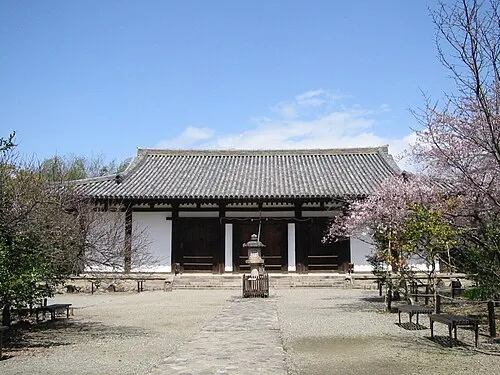
Walk 15 minutes south from Kasuga Grand Shrine and the tourist crowds thin to almost nothing. Shin-Yakushiji Temple sits in the quiet Takabatake residential neighborhood, surrounded by old walls and shade trees. Founded in 747 by Empress Komyo to pray for her husband Emperor Shomu's recovery from illness, this small temple has a main hall that is an original Nara-period structure, making it one of the oldest wooden buildings in the city. That alone makes it significant, but what is inside is even better. The main hall contains a large seated Yakushi Nyorai (Medicine Buddha) surrounded by a ring of twelve divine generals (Juni Shinsho), all from the 8th century. Eleven of the twelve are original clay figures, which is almost unheard of for sculptures this old. They are expressive, fierce, and full of personality. Each one represents a different direction and time of day, and they stand in a protective circle around the Buddha. Entry is free and the temple is open daily from 9:00 AM to 5:00 PM. Compared to the overwhelming scale of Todaiji, Shin-Yakushiji is small, personal, and intimate. You can stand close to sculptures that are 1,300 years old in a room that smells like old wood and incense. Very few visitors make the walk here, which means you can take your time. This is one of the secret spots in Nara that rewards the effort.

Hours Daily: 9:00 AM – 5:00 PM
Price Free
Insider TipThe twelve guardian statues (Juni Shinsho) are displayed in a circle you can walk around. Take your time with each one. The expressions and poses are all different, and the detail in 1,300-year-old clay is remarkable.
Get Your Own Private Tour with AI Guide
AI Guide
  • Personalized tour tailored to your interests
  • Your AI guide tells stories, shares facts, and cracks jokes
  • Turn-by-turn GPS navigation
  • Available in your language — no download needed
Try for Free

🎨 Best Museums & Galleries in Nara

World-class museums and galleries that make Nara a cultural treasure.

Kofukuji National Treasure Hall

1. Kofukuji National Treasure Hall

Right on the Kofukuji Temple grounds, steps from the Five-Story Pagoda, the National Treasure Hall holds one of Japan's most important collections of Buddhist sculpture. The star is the Ashura statue, an 8th-century dry-lacquer figure with three faces and six arms that has become a pop-culture phenomenon in Japan. It is surprisingly small (about 153 cm tall) and impossibly delicate for something made over 1,200 years ago. The hall also displays the standing Buddha head from Kofukuji's original Western Golden Hall and a set of the Eight Legions, each with distinct expressions. Admission is 700 JPY and hours are 9:00 AM to 5:00 PM daily. The hall is compact, one floor, and you can see everything in 30 to 45 minutes. For Buddhist art, the density here rivals the Nara National Museum down the road, but in a much smaller and more focused space. If you only have time for one museum in Nara, this is the one I would pick, purely because the Ashura statue is that good. The hall sits at the base of the temple complex, easy to overlook since the pagoda and Central Golden Hall draw the eye first. Many visitors walk the grounds, take photos of the pagoda, and move on toward Todaiji without stepping inside. Their loss. Among the best museums in Nara, this is the most concentrated hit of masterpiece sculpture you will find anywhere in Japan.

Hours Daily: 9:00 AM – 5:00 PM
Price 700 JPY
Insider TipThe Ashura statue is displayed in a case you can walk around fully. Circle it slowly. Each of its three faces shows a different expression, and the detail in 8th-century dry lacquer is something you will not see anywhere else.
Get Your Own Private Tour with AI Guide
AI Guide
  • Personalized tour tailored to your interests
  • Your AI guide tells stories, shares facts, and cracks jokes
  • Turn-by-turn GPS navigation
  • Available in your language — no download needed
Try for Free

Explore with AI Guide

AI Guide App

Get personalized tours with our AI-powered guide. No download needed — works right in your browser.