Things to Do in Quebec-City - Top Attractions, Hidden Gems & Must-See Sights

Discover the best things to do in Quebec-City. Complete guide to must-see sights, popular attractions, hidden gems, museums, food markets and parks.

18 Attractions 5 Categories Travel Guide

Table of Contents

Quebec-City Overview

Quebec City is the closest thing to Europe you will find in North America, and it earns the comparison honestly. Founded in 1608, it is one of the oldest cities on the continent, and the only one north of Mexico that still has its complete fortification walls. The old town, Vieux-Québec, is a UNESCO World Heritage Site split into an Upper Town on the clifftop and a Lower Town at river level. The architecture is 17th and 18th century stone, the street language is French, and the food leans heavily on the terroir tradition: local cheese, cider from Île d'Orléans, tourtière, poutine done properly.

The city works best for travelers who like history with substance, not theme-park history. The Plains of Abraham, the Citadelle, and Notre-Dame de Québec are genuinely important sites, not just old buildings. But Quebec City also rewards aimless wandering: the cobblestone streets of Quartier Petit-Champlain, the cliff-edge views from Governors' Park, the contrast between the grand Upper Town and the quieter Lower Town. Winter turns the city into something else entirely, with the Carnival de Québec, ice sculptures, and Montmorency Falls frozen into a towering ice cone. Summer brings outdoor festivals, river terraces, and 16 hours of daylight.

This is a city that suits couples, history travelers, and food-focused visitors more than families with small children. The terrain is hilly and the attractions are more cultural than action-oriented. A long weekend (3-4 days) is the right length to see the old town, visit Montmorency Falls, and drive out to Île d'Orléans without rushing.

Must-See Attractions in Quebec-City

  • Old Quebec City
  • Montmorency Falls
  • Notre-Dame de Québec Basilica-Cathedral
  • Citadelle of Quebec
  • Quartier Petit-Champlain
🏛️ Must-See ⭐ Sights 💎 Hidden Gems 🎨 Museums 🌳 Parks & Views

🏛️ Must-See Attractions in Quebec-City

These iconic landmarks and must-see sights are essential stops for any visitor to Quebec-City.

Citadelle of Quebec

1. Citadelle of Quebec

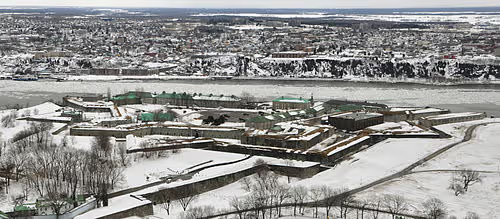
Perched on Cap Diamant, the Citadelle is the largest British-built fortress in North America and still an active military garrison. Construction began in 1820, though the site has been fortified in various ways since the 1600s. It became a National Historic Site of Canada in 1946. Today it doubles as the official residence of the Canadian monarch and the Governor General. Quebec City and Campeche, Mexico, are the only two cities in North America that kept their complete fortification walls, and the Citadelle is the crown of Quebec's defensive system. Guided tours run daily and take about an hour. Admission is 22 CAD. The tour includes the changing of the guard ceremony (summer only, usually at 10 AM), the Royal 22nd Regiment Museum, and views across the Plains of Abraham, which stretch out directly below the western walls. The Citadelle sits right next to Governors' Park, and from there you look down at the St. Lawrence and across to Lévis. Of all the things to do in Quebec City, this gives you the clearest sense of why the city mattered. The strategic position is obvious the moment you stand on the ramparts. Every army that wanted to control the St. Lawrence had to take this hill first.

Hours Daily: 10:00 AM – 5:30 PM
Price 22 CAD
Insider TipThe changing of the guard runs daily at 10 AM from late June through the first Monday of September. Arrive by 9:40 AM to get a spot along the parade ground.
Montmorency Falls

2. Montmorency Falls

At 83 meters, Montmorency Falls is 30 meters taller than Niagara Falls. Let that sink in. The Montmorency River drops off a cliff straight into the St. Lawrence, and you can feel the mist from the base lookout. The falls sit about 12 kilometers east of Vieux-Québec, making them an easy half-day trip from the old town. A cable car runs between the base and the summit, and 487 stairs let you climb the escarpment if you prefer to earn the view. The park surrounding the falls is managed by SÉPAQ and is open daily from 9 AM to 6 PM. A suspension bridge spans the top of the falls, giving you a straight-down view into the cascade. In winter, the spray freezes into a massive ice cone called the "pain de sucre" (sugar loaf) at the base, which draws ice climbers from across Canada. Parking costs around 7 CAD for the day. The falls themselves are free to walk to once you are inside the park, though the cable car and zipline are extra. If you are also planning to visit Île d'Orléans, you can see the falls from a completely different angle at the Sainte-Pétronille lookout on the island.

Hours Daily: 9:00 AM – 6:00 PM
Price 7 CAD (parking)
Insider TipArrive before 10 AM to get parking close to the base. The suspension bridge at the top is included with park access and gives a better vantage point than the cable car.
Notre-Dame de Québec Cathedral

3. Notre-Dame de Québec Cathedral

Hours Mon-Wed: 9:00 AM – 3:00 PM | Thu-Sun: Closed
Price Free
Old Quebec City

4. Old Quebec City

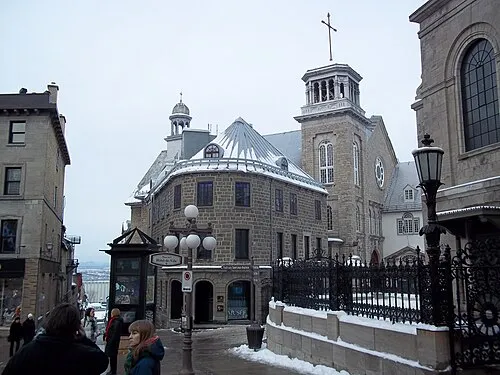
Vieux-Québec is the only walled city north of Mexico, and walking through its gates feels like crossing into a different century. Founded by Samuel de Champlain in 1608, the old town splits into two distinct zones: the Haute-Ville perched on Cap Diamant above, and the Basse-Ville hugging the St. Lawrence River below. UNESCO designated it a World Heritage Site, and for once, that label is fully earned. The cobblestone streets, fortified walls, and 17th-century stone buildings create something you simply will not find elsewhere in North America. Start at Place d'Armes near Château Frontenac, walk down to Quartier Petit-Champlain via the Breakneck Stairs, and loop back up through the fortification gates. The entire circuit takes about two hours at a relaxed pace. The Haute-Ville has the grand landmarks like Notre-Dame de Québec and the Citadelle, while the Basse-Ville holds the Musée de la Civilisation and the waterfront. The old town is compact enough to cover on foot, and that's the only good way to see it. Cap Diamant rises about 105 meters above the river, so expect hills and stairs.

Hours Open 24/7
Price Free
Website Wikipedia
Insider TipThe Breakneck Stairs (Escalier Casse-Cou) connecting Upper Town to Lower Town are less crowded before 9 AM. For the return trip, take the funicular for 4 CAD to save your knees.
Petit Champlain

5. Petit Champlain

Hours Open 24/7
Price Free
Get Your Own Private Tour with AI Guide
AI Guide
  • Personalized tour tailored to your interests
  • Your AI guide tells stories, shares facts, and cracks jokes
  • Turn-by-turn GPS navigation
  • Available in your language — no download needed
Try for Free

💎 Hidden Gems in Quebec-City - Off the Beaten Path

Beyond the tourist crowds, Quebec-City hides remarkable treasures waiting to be discovered.

Montmorency Falls Suspension Bridge

1. Montmorency Falls Suspension Bridge

Most visitors to Montmorency Falls ride the cable car or climb the 487 stairs and call it a day. But the suspension bridge that spans the top of the gorge, directly above the 83-meter drop, is the single best vantage point in the entire park. You are standing directly over the point where the river tips over the edge. The mist hits your face. The sound is enormous. It is free to cross once you are inside the park, and yet a surprising number of visitors miss it. The bridge is 300 meters from the upper parking lot and cable car station. It connects the two sides of the Montmorency River gorge, and you can cross it as part of a loop trail that takes you down one side and back up the other. Unlike the observation platforms, which give you a profile view of the falls, the bridge puts you directly above the cascade. This is one of the genuine hidden gems in Quebec City for anyone willing to walk an extra 10 minutes. In winter, the bridge stays open (conditions permitting) and the frozen falls below are surreal. The ice cone at the base, called the "pain de sucre," can reach several stories high. Combine the bridge with the zipline if you want more adrenaline, or just stand in the middle and look straight down.

Hours Open 24/7
Price Free
Website N/A
Insider TipWalk the bridge from the east side for the most dramatic approach. You come around a bend and the full drop appears directly below you.
Île d'Orléans

2. Île d'Orléans

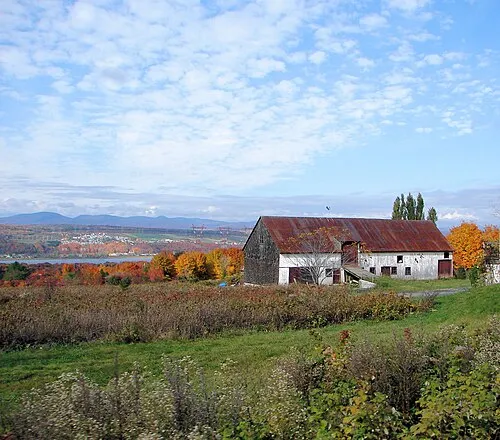
About 5 kilometers downstream from Old Quebec, this island in the St. Lawrence was one of the very first places colonized in New France. A huge percentage of Québécois can trace their ancestry to the families who settled here in the 1600s. Today, around 7,000 people live in 6 villages along Route 368, which loops 67 kilometers around the island's perimeter. The pace is rural. Farm stands sell strawberries, apples, and cider depending on the season. Old stone churches and manor houses dot the landscape. Île d'Orléans has been called the "birthplace of French-speaking North America," and driving the loop gives you a sense of what Quebec looked like before the cities grew. From the village of Sainte-Pétronille at the western tip, a lookout offers a panoramic view of Montmorency Falls, the St. Lawrence, and the Quebec City skyline. It is one of the hidden gems in Quebec City's orbit: close enough for a half-day visit, but far enough that the tourist crowds thin out. You need a car to get here. The bridge from Beauport connects the island to the mainland. There is no public transit. Budget at least 3 hours to drive the loop with stops at a cidery, a chocolate shop, and one of the village churches. It is twinned with Île de Ré in France, and the comparison is apt.

Hours Open 24/7
Price Free
Website Wikipedia
Insider TipStop at Cassis Monna & Filles in Saint-Pierre-de-l'Île-d'Orléans for black currant wines and liqueurs. The tasting is free and the products are genuinely unique to this island.
Get Your Own Private Tour with AI Guide
AI Guide
  • Personalized tour tailored to your interests
  • Your AI guide tells stories, shares facts, and cracks jokes
  • Turn-by-turn GPS navigation
  • Available in your language — no download needed
Try for Free

🎨 Best Museums & Galleries in Quebec-City

World-class museums and galleries that make Quebec-City a cultural treasure.

Morrin Centre

1. Morrin Centre

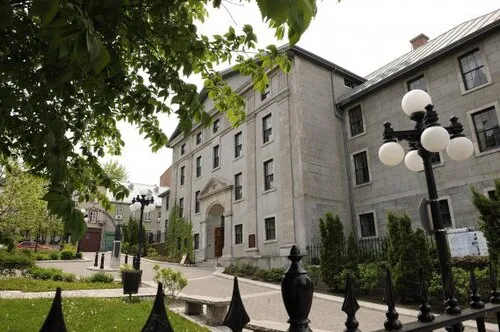
This is one of the most surprising buildings in Old Quebec. It started as a prison in 1812, became a college in 1862, and now operates as a cultural center dedicated to Quebec City's English-speaking heritage. The prison cells in the basement are still intact, and the Victorian-era library upstairs, with its dark wood shelves and leather-bound books, looks like it belongs in a British university. The contrast between the two floors is jarring in the best way. Admission is 12 CAD. Open Wednesday from noon to 4 PM, Thursday to Sunday from 10 AM to 4 PM. Closed Monday and Tuesday. The guided tour is the way to go here, as it takes you through the old cells and explains how a prison became a center of anglophone intellectual life in a predominantly French-speaking city. The building sits on Rue Chaussée des Écossais (Scots Hill Road), a name that hints at the story. Among the best museums in Quebec City, the Morrin Centre is the most off-the-beaten-path. Tourists flood Notre-Dame and the Citadelle, but very few find their way here. That is their loss. The building tells a side of Quebec's history that the major sites tend to skip: the English-speaking community that coexisted, sometimes uneasily, with the French majority.

Hours Mon-Tue: Closed | Wed: 12:00 – 4:00 PM | Thu-Sun: 10:00 AM – 4:00 PM
Price 12 CAD
Website www.morrin.org/
Insider TipAsk the guide to show you the original prison graffiti scratched into the cell walls. Some of it dates to the 1830s.
Musée de l'Amérique Francophone

2. Musée de l'Amérique Francophone

Housed inside the historic Séminaire de Québec complex, right next to Notre-Dame de Québec, this is the oldest museum in Canada. It was founded in the 1800s from collections that the seminary priests had gathered since the 1660s. The focus is the spread of French language and culture across North America, from Quebec to Louisiana to the Métis communities of the prairies. The museum has been undergoing a transformation into the "Cité du Séminaire," so check the website before visiting. Admission is 14 CAD. Open Tuesday to Sunday, 10 AM to 5 PM. The seminary buildings themselves are worth the visit: stone corridors, a beautiful inner courtyard, and a chapel that most tourists in the Upper Town walk right past. The museum is managed by the same organization that runs the Musée de la Civilisation down in the Lower Town, and the two share a focus on Québécois identity from different angles. Among the best museums in Quebec City, this one is smaller and more specialized than the Musée de la Civilisation. If you have time for only one, go to the Civilisation. But if the story of how French culture survived and spread across a continent interests you, this museum tells it better than anywhere else.

Hours Tue-Sun: 10:00 AM - 5:00 PM
Price 14 CAD
Insider TipThe seminary chapel, accessible through the museum, has a painted ceiling and gold-leaf work that rivals Notre-Dame next door. Most visitors skip it.
Musée de la Civilisation

3. Musée de la Civilisation

Opened in 1988, this museum sits in the Lower Town on the waterfront, and it is the best museum in Quebec City by a wide margin. The building itself, designed by Moshe Safdie, blends modern architecture with the old port warehouses around it. Inside, the permanent collection covers Quebec's cultural history from Indigenous peoples through French colonization to the present. The rotating exhibitions are ambitious and well-curated, often tackling topics like language, migration, and identity. Admission is 20 CAD. Open Tuesday to Sunday, 10 AM to 5 PM. Closed Mondays. Plan at least 2 hours. The museum is part of the same network as the Musée de l'Amérique Francophone up in the Upper Town, and the two complement each other well. Start here for the broad view, then go there for the specifically French-American angle. Among the best museums in Quebec City, this one earns its reputation because it treats visitors like intelligent adults. The exhibits have depth without being academic, and the multimedia installations are done with care rather than gimmicks. It is a 5-minute walk from Quartier Petit-Champlain and right in the middle of the Lower Town, so it fits easily into any day spent in the old city.

Hours Mon: Closed | Tue-Sun: 10:00 AM – 5:00 PM
Price 20 CAD
Website mcq.org/
Insider TipTuesday evenings from 5 PM to 8 PM offer reduced admission. The museum is also much quieter during those hours.
Get Your Own Private Tour with AI Guide
AI Guide
  • Personalized tour tailored to your interests
  • Your AI guide tells stories, shares facts, and cracks jokes
  • Turn-by-turn GPS navigation
  • Available in your language — no download needed
Try for Free

🌳 Parks & Best Viewpoints in Quebec-City

Beautiful parks, gardens, and panoramic viewpoints for the best views of Quebec-City.

Plains of Abraham Park

1. Plains of Abraham Park

The Parc des Champs-de-Bataille (Battlefields Park) is the formal name for the green space that includes the Plains of Abraham and the nearby Parc des Braves. Created in 1908 to mark Quebec's tricentennial, it stretches 98 hectares along the cliff south of Grande Allée. The Jardin Jeanne-d'Arc, with its formal flower beds and statues, sits at the eastern end near the Citadelle. To the west, the park opens into wide grassy fields where locals run, picnic, and cross-country ski. The park is open 24 hours, free to enter, and reachable on foot from anywhere in Old Quebec in under 15 minutes. The cliff-edge paths on the south side give you views over the St. Lawrence that are among the best views in Quebec City. In July, the Festival d'Été de Québec sets up its main stage here, drawing hundreds of thousands of music fans. Compared to the history-heavy feel of the Plains of Abraham site itself, the park experience is more about daily life. This is where Quebec City relaxes. Bring a book, sit under a tree, watch the river traffic. After a morning of climbing between Upper and Lower Town, the flat open space is a welcome change of pace.

Hours Open 24/7
Price Free
Insider TipThe cliff-edge path on the south side of the park, near the Martello towers, is the quietest section and has unobstructed river views. Most visitors stay in the central fields.
Get Your Own Private Tour with AI Guide
AI Guide
  • Personalized tour tailored to your interests
  • Your AI guide tells stories, shares facts, and cracks jokes
  • Turn-by-turn GPS navigation
  • Available in your language — no download needed
Try for Free

Explore with AI Guide

AI Guide App

Get personalized tours with our AI-powered guide. No download needed — works right in your browser.