Things to Do in Rome - Top Attractions, Hidden Gems & Must-See Sights

Discover the best things to do in Rome. Complete guide to must-see sights, popular attractions, hidden gems, museums, food markets and parks.

38 Attractions 6 Categories Travel Guide

Table of Contents

Rome Overview

Rome, the Eternal City, is one of the world's most historically significant and culturally rich destinations. As the capital of Italy and the heart of the ancient Roman Empire, the city is a living museum where millennia of history unfold at every turn. From the iconic Colosseum and the awe-inspiring Pantheon to the spiritual grandeur of St. Peter's Basilica and Vatican City, Rome offers an unparalleled journey through Western civilization. Beyond its ancient ruins and Renaissance masterpieces, Rome captivates visitors with its vibrant piazzas, charming neighborhoods like Trastevere, world-class museums, and a culinary tradition that has shaped global gastronomy. Whether tossing a coin into the Trevi Fountain, exploring the atmospheric streets of the Jewish Ghetto, or savoring authentic carbonara in a local trattoria, Rome promises an unforgettable experience that blends the grandeur of the past with the vitality of modern Italian life.

Must-See Attractions in Rome

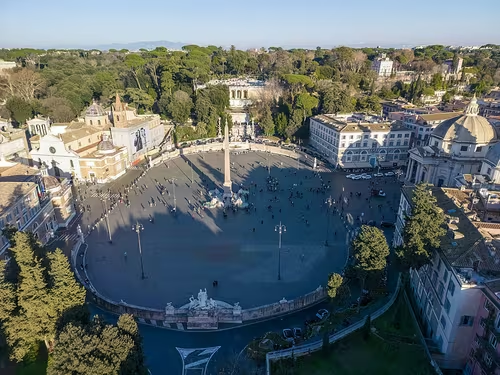
  • ancient_rome
  • vatican_city
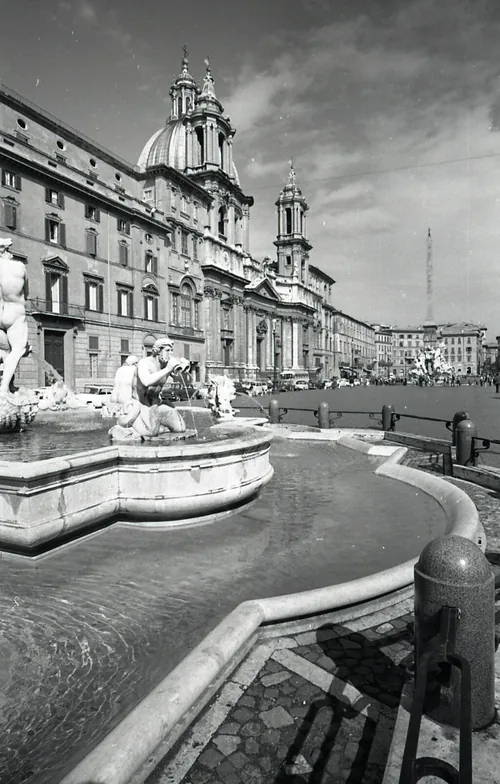
  • baroque_rome
  • art_museums
🏛️ Must-See ⭐ Sights 💎 Hidden Gems 🎨 Museums 🌳 Parks & Views

🏛️ Must-See Attractions in Rome

These iconic landmarks and must-see sights are essential stops for any visitor to Rome.

Colosseum

1. Colosseum

The Colosseum, originally known as the Flavian Amphitheatre, is the largest Roman amphitheater in the world, capable of holding an estimated 50,000 to 87,000 spectators. Located in the heart of Rome, it is the most important Roman amphitheater and the most imposing monument of ancient Rome that has survived to this day. Inscribed in 1980 on the UNESCO World Heritage List, and in 2007, the only European monument, it was also included among the New Seven Wonders of the World. Built during the Flavian era on the eastern edge of the Roman Forum, construction began under Vespasian in 70 AD and was completed by Titus in 80 AD. The amphitheater was used for gladiator shows and other public events such as hunting spectacles, naval battles, famous battle reenactments, and dramas based on classical mythology.
Hours Daily: 8:30 AM – 4:30 PM
Price €18
Website colosseo.it/
Pantheon

2. Pantheon

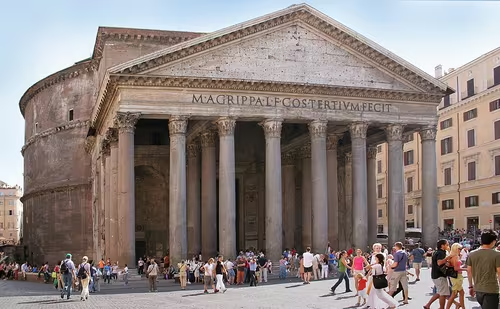
The Pantheon is a building of ancient Rome located in the Pigna district in the historic center, built as a temple dedicated to all the gods past, present, and future. It was founded in 27 BC by Marcus Vipsanius Agrippa, son-in-law of Augustus. It was rebuilt by Emperor Hadrian presumably from 112 to 128 AD, after fires in 80 and 110 AD had destroyed the previous Augustan construction. It consists of a circular structure joined to a pronaos with Corinthian columns that support a pediment. The large circular cell, called the rotunda, is surrounded by thick masonry walls and eight large pillars on which the weight of the characteristic hemispherical concrete dome is distributed, which houses at its apex a circular opening called the oculus, which allows the illumination of the interior environment. At almost two millennia since its construction, the Pantheon's coffered dome is still one of the largest domes in the world, specifically the largest built in Roman concrete, as well as the most imposing and best-preserved building that has ever come down to us.

Hours Daily: 9:00 AM – 7:00 PM
Price 0
Roman Forum

3. Roman Forum

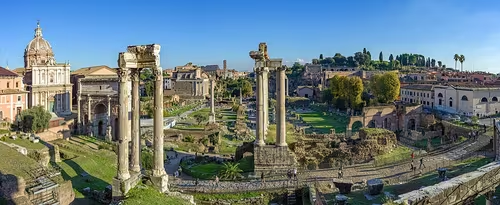
The Roman Forum is an archaeological area in Rome enclosed between the Palatine Hill, the Capitoline Hill, Via dei Fori Imperiali, and the Colosseum. It consists of the stratified remains of buildings and monuments from various eras that for much of ancient Rome's history represented the political, legal, religious, and economic center of the city, as well as the nerve center of the entire Roman civilization. From the regal period until the advent of the Middle Ages, the Forum valley was the scene of events and the seat of institutions of such importance that they repeatedly determined the historical course of Western civilization. After a period of decline beginning in late antiquity, the Forum was subject to frequent spoliations and changes of use until it became, by the 16th century, almost completely buried and permanently used as pasture for cattle, hence the name Campo Vaccino.

Hours Daily: 9:00 AM – 4:30 PM
Price €18 (combo with Colosseum)
Location 41.8922, 12.4852
St. Peter's Basilica

4. St. Peter's Basilica

St. Peter's Basilica is one of the most renowned works of Renaissance architecture and the largest church in the world by interior measure. Located in Vatican City, the papal enclave within the city of Rome, it is regarded as one of the holiest Catholic shrines. The basilica is the burial site of its namesake Saint Peter, one of the twelve apostles of Jesus and first Bishop of Rome. Construction of the present basilica began on 18 April 1506 and was completed on 18 November 1626. Designed principally by Donato Bramante, Michelangelo, Carlo Maderno, and Gian Lorenzo Bernini, St. Peter's is the most renowned work of Renaissance architecture and the largest church in the world. It has been described as 'holding a unique position in the Christian world' and as 'the greatest of all churches of Christendom.'

Hours Daily: 7:00 AM – 7:10 PM
Price Free (dome €8-10)
Trevi Fountain

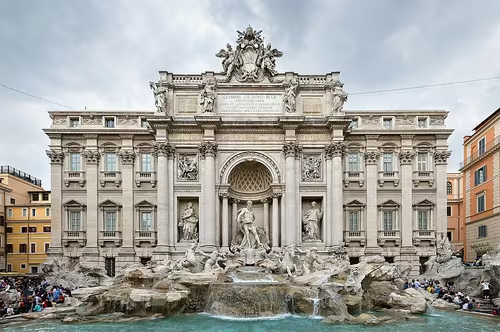
5. Trevi Fountain

The Trevi Fountain is the largest of the famous fountains of Rome. Built on the facade of Palazzo Poli by Nicola Salvi, the competition announced by Pope Clement XII in 1731 was initially won by French sculptor Lambert-Sigisbert Adam but subsequently the commission passed to Salvi. Begun in 1732, it was finally entrusted in 1759 to Pietro Bracci assisted by his son Virginio. The two completed the work, which was inaugurated in 1762. The fountain depicts Oceanus (Neptune), god of the sea, emerging from the water in a shell-shaped chariot drawn by two sea horses guided by tritons. The tradition of throwing coins into the fountain to ensure a return trip to Rome has made it one of the most iconic symbols of the Eternal City.

Hours Mon: 11:30 AM – 10:00 PM | Tue-Thu: 9:00 AM – 10:00 PM | Fri: 11:30 AM – 10:00 PM | Sat-Sun: 9:00 AM – 10:00 PM
Price Free
Vatican Museums

6. Vatican Museums

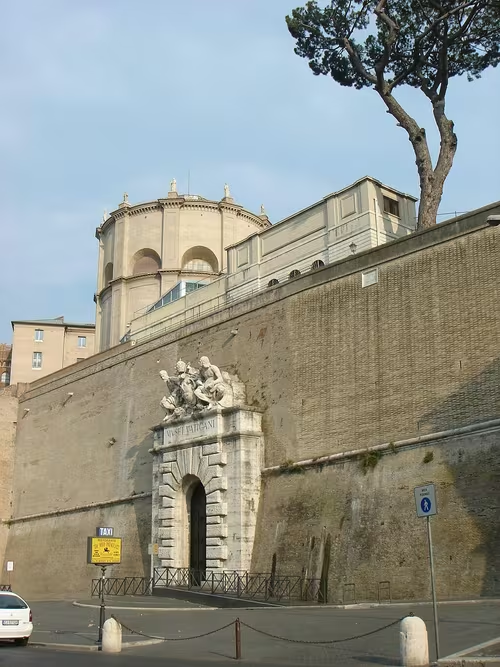
The Vatican Museums are the national museum of Vatican City, in Rome. Founded by Pope Julius II in the 16th century, they occupy much of the vast Belvedere courtyard and are one of the largest art collections in the world, displaying the enormous collection of works of art accumulated over the centuries by the popes: the Sistine Chapel and the papal apartments frescoed by Michelangelo and Raphael are part of the works that visitors can admire along their route. The museum has an average annual attendance of about six and a half million visitors from all over the world. The museums contain some of the most important masterpieces of Renaissance art in the world, including the Sistine Chapel ceiling by Michelangelo, the Raphael Rooms, and the Gallery of Maps.

Hours Mon-Sat: 8:00 AM – 8:00 PM | Sun: Closed
Price €17-20
Get Your Own Private Tour with AI Guide
AI Guide
  • Personalized tour tailored to your interests
  • Your AI guide tells stories, shares facts, and cracks jokes
  • Turn-by-turn GPS navigation
  • Available in your language — no download needed
Try for Free

💎 Hidden Gems in Rome - Off the Beaten Path

Beyond the tourist crowds, Rome hides remarkable treasures waiting to be discovered.

Aventine Keyhole

1. Aventine Keyhole

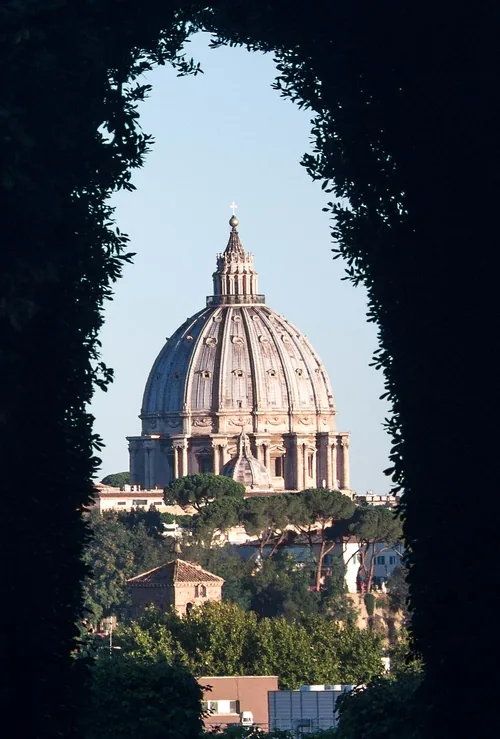
The Aventine Keyhole is a famous peephole located in the door of the Priory of the Knights of Malta on the Aventine Hill in Rome. Looking through this keyhole, visitors are treated to a perfectly framed view of St. Peter's Basilica, aligned at the end of a tree-lined avenue. This optical illusion creates one of the most unique and photographed views in Rome. The Knights of Malta, a sovereign military order, own the property, and the keyhole has become a popular attraction for tourists seeking this secret perspective of the Vatican. The best time to visit is during daylight hours when the view through the keyhole is most visible.

Hours Always open
Price Free
Website N/A
Basilica of San Clemente

2. Basilica of San Clemente

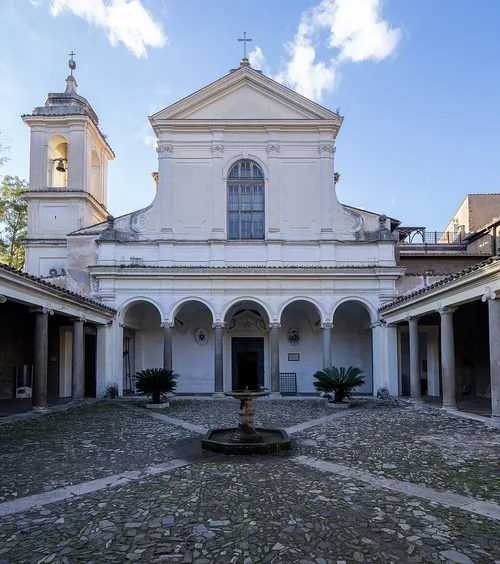
The Basilica of San Clemente in Rome, dedicated to Pope Clement I, is located in the valley between the Esquiline and Caelian hills, on the line connecting the Colosseum to the Lateran, in the Monti district. The basilica we see today was built in the 12th century and is connected to the Dominican convent. The complex is of great importance because it sits above ancient buildings buried two levels deep, the oldest of which dates back to the 1st century AD. The two levels below the current basilica were rediscovered and brought to light from 1857 thanks to Father Joseph Mullooly O.P., then prior of the convent. The three levels are, from top to bottom: the current medieval basilica, the ancient basilica in a building that was already a Roman patrician's home, and a set of Roman buildings from the post-Neronian era. These superimpositions, which occur in other Roman buildings, happened in a particularly evident way due to the notable sedimentation caused by the location and particular historical events.

Hours Mon-Sat: 9:00 AM – 12:30 PM, 2:00 – 6:00 PM | Sun: 12:00 – 6:00 PM
Price €10 (excavations)
Basilica of Santo Stefano Rotondo

3. Basilica of Santo Stefano Rotondo

The Basilica of Santo Stefano Rotondo al Celio is a 5th-century Catholic place of worship located in Rome on the Caelian Hill. It was also known as Santo Stefano in Girimonte, Santo Stefano in Querquetulano (due to its proximity to an oak forest), and Santo Stefano in capite Africae. Since its construction, the church has been the seat of the homonymous cardinal title. Managed from 1580 by the German-Hungarian Pontifical College, it was erected as a minor basilica and is the national church of Hungary. It is one of the station churches of Rome. The basilica is famous for its unique circular design, one of the oldest and best-preserved examples of early Christian architecture in Rome. The interior features 34 frescoes depicting the martyrdom of saints, commissioned by Pope Gregory XIII in the 16th century.

Hours Mon: Closed | Tue-Sun: 10:00 AM – 1:00 PM, 2:00 – 5:00 PM
Price Free
Jewish Ghetto

4. Jewish Ghetto

The Jewish Ghetto of Rome is one of the oldest Jewish communities in Europe, with a history dating back over 2,000 years. Established in 1555 by Pope Paul IV, the ghetto was a walled area where Jews were forced to live until its abolition in 1870. Today, it is a vibrant neighborhood filled with kosher restaurants, bakeries, and Jewish cultural sites. The Great Synagogue of Rome, with its distinctive square dome, is the centerpiece of the area. Visitors can explore the Jewish Museum of Rome, which documents the history of the Jewish community in the city. The neighborhood is also famous for its unique Roman-Jewish cuisine, including carciofi alla giudia (Jewish-style artichokes) and fried zucchini flowers. The Portico of Octavia, an ancient Roman ruin, stands as a reminder of the area's layered history.

Hours Mon-Thu: 10:00 AM – 4:15 PM | Fri: 9:00 AM – 1:15 PM | Sat: Closed | Sun: 10:00 AM – 4:15 PM
Price Free
Quartiere Coppede

5. Quartiere Coppede

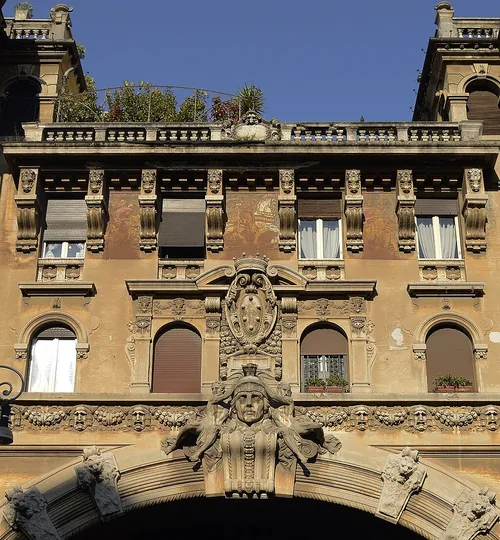
The Quartiere Coppede is a complex of buildings located in Rome in the Trieste district. It includes Via Tagliamento, Via Arno, Via Ombrone, Via Serchio, Via Reno, Via Clitunno, and Via Adige up to Piazza Trasimeno. Although not properly a district, it was named after the architect who designed it, Gino Coppede. It develops around eighteen palaces and twenty-seven buildings designed by Coppede or his students, who influenced the style of many adjacent constructions, arranged around the central nucleus of Piazza Mincio. The architecture is an eclectic mix of Art Nouveau, medieval, Baroque, and ancient Greek styles, featuring ornate decorations, arches, towers, and elaborate facades. The entrance arch on Via Dora is particularly striking, adorned with a wrought-iron chandelier and flanked by two grand palaces.

Hours Open 24/7
Price Free
Website N/A
Testaccio

6. Testaccio

Testaccio is the 20th rione (district) of Rome, located on the left bank of the Tiber River. It takes its name from Monte Testaccio, an artificial hill created from the fragments of broken amphorae (ancient Roman storage vessels) that were discarded from the nearby river port. Historically a working-class neighborhood, Testaccio has become one of Rome's most vibrant culinary destinations. The district is home to the famous Testaccio Market, where locals shop for fresh produce, meats, and cheeses. It is also known as the birthplace of Roman cuisine classics like cacio e pepe and carbonara. The area is filled with traditional trattorias, trendy restaurants, and a lively nightlife scene. The Pyramid of Cestius, an ancient Roman pyramid, is also located in this neighborhood.

Hours Mon-Sat: 7:00 AM – 3:30 PM | Sun: Closed
Price Free
Location 41.87611, 12.475
Via Margutta

7. Via Margutta

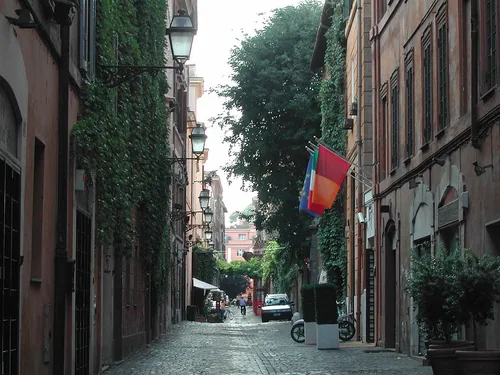
Via Margutta is a small street in the center of Rome, in the Campo Marzio district, in an area known as the 'foreigners' quarter,' on the slopes of Monte Pincio. It is a place of art galleries and fashionable restaurants, which formerly housed artisan workshops and stables. It is a parallel to Via del Babuino, the street that goes from Piazza del Popolo to Piazza di Spagna. The place is known because for centuries it was the residence of famous artists, from the 17th century when Peter Paul Rubens, Nicolas Poussin, Jusepe de Ribera, and Pieter van Laer lived there; between the 17th and 18th centuries it hosted Gaspar van Wittel, Pier Leone Ghezzi, and the two van Bloemen brothers; between the 18th and 19th centuries Antonio Canova worked there; in the 20th century it was home to Augusto Mussini and Gregorio Maltzeff and then to Pablo Picasso and Alcide Ticò. In the 1950s, after some scenes of the film 'Roman Holiday' were shot on this street, at number 33, it became an exclusive street, residence of famous people including director Federico Fellini.

Hours Open 24/7
Price Free
Website Wikipedia
Location 41.9089, 12.4792
Get Your Own Private Tour with AI Guide
AI Guide
  • Personalized tour tailored to your interests
  • Your AI guide tells stories, shares facts, and cracks jokes
  • Turn-by-turn GPS navigation
  • Available in your language — no download needed
Try for Free

🎨 Best Museums & Galleries in Rome

World-class museums and galleries that make Rome a cultural treasure.

Capitoline Museums

1. Capitoline Museums

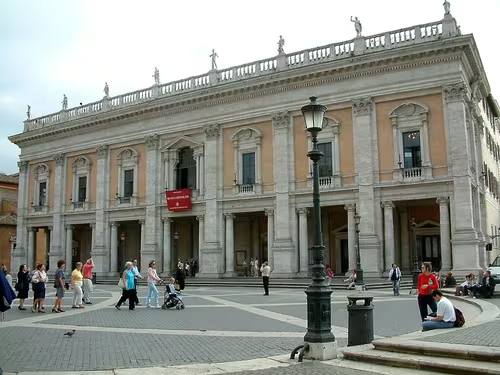
The Capitoline Museums constitute the main municipal civic museum structure of Rome, part of the System of Museums of Rome. Opened to the public in 1734 under Pope Clement XII, they are considered the first public museum in the world, intended as a place where art could be enjoyed by all and not only by owners. The museums are called 'museums' in the plural because in the 18th century the original collection of ancient sculptures was added to by Pope Benedict XIV with the Capitoline Picture Gallery, consisting of works illustrating predominantly Roman subjects. The museums are housed in three buildings surrounding the Piazza del Campidoglio: Palazzo Senatorio, Palazzo dei Conservatori, and Palazzo Nuovo. The collection includes famous works such as the Capitoline Wolf, the Dying Gaul, and the equestrian statue of Marcus Aurelius.

Hours Daily: 9:30 AM – 7:30 PM
Price €11.5
MAXXI Museum

2. MAXXI Museum

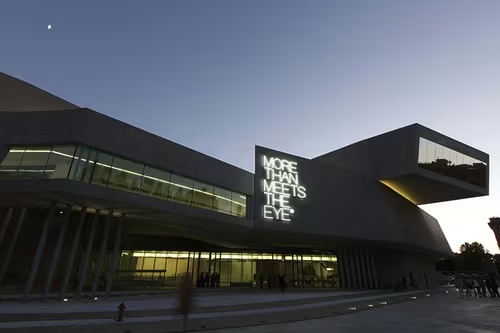
The MAXXI - National Museum of 21st Century Arts is a museum based in Rome. Designed by architect Zaha Hadid and managed by the foundation of the same name of the Ministry of Cultural Heritage and Activities, it is divided into two sections: MAXXI art and MAXXI architecture. The museum is dedicated to contemporary art and architecture, featuring innovative exhibitions and installations by both Italian and international artists. The building itself is a striking example of contemporary architecture, with flowing lines, dramatic curves, and expansive exhibition spaces. MAXXI has become one of the most important contemporary art museums in Italy, showcasing cutting-edge works that challenge traditional artistic boundaries.

Hours Mon: Closed | Tue-Sun: 11:00 AM – 7:00 PM
Price $$$
Website www.maxxi.art/
National Etruscan Museum

3. National Etruscan Museum

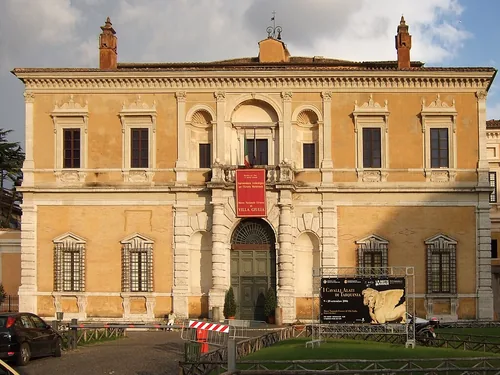
The National Etruscan Museum of Villa Giulia, also known as ETRU, is an Italian state museum dedicated to Etruscan and Faliscan civilizations housed in the premises of Villa Giulia and Villa Poniatowski in Rome. Owned by the Ministry of Culture, it has been listed since 2016 among the institutes with special autonomy. The museum is housed in a magnificent Renaissance villa built for Pope Julius III in the 16th century. The collection includes some of the most important Etruscan artifacts in the world, including the famous Sarcophagus of the Spouses, the Apollo of Veii, and numerous other sculptures, jewelry, and everyday objects that offer a comprehensive view of Etruscan culture and art.

Hours Mon: Closed | Tue-Sun: 8:30 AM – 7:30 PM
Price €10
Palazzo Barberini

5. Palazzo Barberini

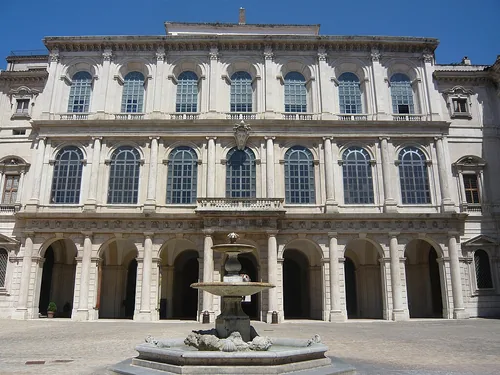
The National Galleries of Ancient Art are a museum institution in Rome divided into two distinct exhibition sites, one at Palazzo Barberini and the other at Palazzo Corsini. Palazzo Barberini was designed for Pope Urban VIII by Carlo Maderno on the previous site of Villa Sforza. The ceiling of the central hall was decorated by Pietro da Cortona with the panegyric Allegory of Divine Providence and the Power of the Barberini to glorify the Barberini family. The collection includes works by Bernini, Caravaggio, van Dyck, Holbein, Beato Angelico, Lippi, Lotto, Preti, Poussin, El Greco, Raphael, Tiepolo, Tintoretto, Rubens, Murillo, Ribera, and Titian. The palace is a masterpiece of Baroque architecture and offers visitors a magnificent setting for viewing these important works of art.

Hours Mon: Closed | Tue-Sun: 10:00 AM – 7:00 PM
Price €12
Palazzo Doria Pamphilj

6. Palazzo Doria Pamphilj

The Galleria Doria Pamphilj is a large private collection displayed in Rome in the Palazzo Doria Pamphilj. The palace that houses it is located between Via del Corso and Piazza del Collegio Romano. The gallery contains works by famous artists including Velázquez, Caravaggio, Raphael, Titian, Bernini, and Brueghel. The most famous work is Velázquez's portrait of Pope Innocent X, considered one of the finest portraits ever painted. The palace itself is a magnificent example of a noble Roman residence, with opulent halls, private chapels, and a beautiful courtyard. The gallery has remained in the hands of the Doria Pamphilj family for centuries and offers visitors a unique glimpse into the private art collection of one of Rome's most aristocratic families.

Hours Mon-Tue: 9:00 AM – 7:00 PM | Wed: Closed | Thu: 9:00 AM – 7:00 PM | Fri-Sun: 10:00 AM – 8:00 PM
Price €16
Palazzo Massimo

7. Palazzo Massimo

Palazzo Massimo alle Terme is a palace in Rome, in the Castro Pretorio district, in Piazza dei Cinquecento, near the Termini station. It houses one of the four seats of the National Roman Museum. The museum contains one of the world's most important collections of classical art, including frescoes, mosaics, sculptures, and coins. Highlights include the frescoes from the Villa of Livia (wife of Emperor Augustus), the Boxer at Rest, the Discus Thrower, and the Sleeping Hermaphrodite. The building itself is a beautiful example of a turn-of-the-century palace, and the museum's collections offer an unparalleled look at ancient Roman art and culture.

Hours Mon: Closed | Tue-Sun: 9:30 AM – 7:00 PM
Price €12
Get Your Own Private Tour with AI Guide
AI Guide
  • Personalized tour tailored to your interests
  • Your AI guide tells stories, shares facts, and cracks jokes
  • Turn-by-turn GPS navigation
  • Available in your language — no download needed
Try for Free

🌳 Parks & Best Viewpoints in Rome

Beautiful parks, gardens, and panoramic viewpoints for the best views of Rome.

Colle Oppio Park

1. Colle Oppio Park

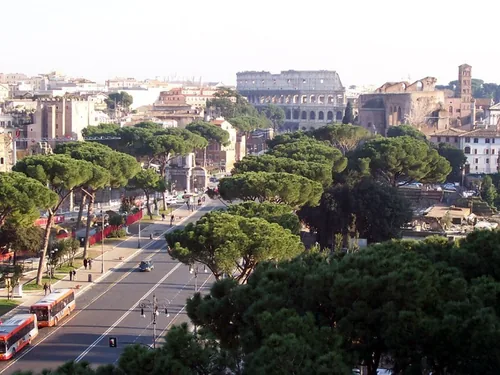
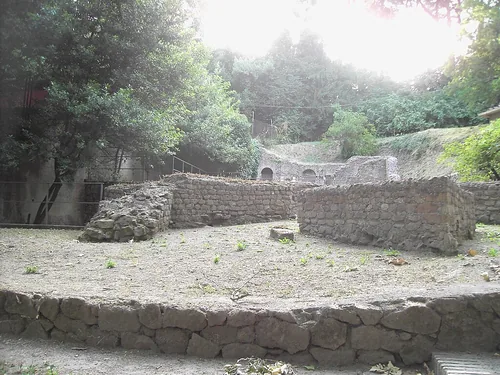
Colle Oppio Park is a public park in Rome located on the Oppian Hill, one of the heights of the Esquiline Hill. The park offers a pleasant green space with walking paths, playgrounds, and archaeological remains. It provides excellent views of the Colosseum and is a popular spot for both locals and tourists looking to relax away from the crowds. The park contains remains of the Baths of Trajan and other ancient structures. It is a great place for a picnic or a leisurely stroll while enjoying views of one of Rome's most famous monuments.

Hours Daily: 7:00 AM – 7:00 PM
Price Free
Galleria Borghese

2. Galleria Borghese

Villa Borghese is a landscape garden in Rome, containing a number of buildings, museums, and attractions. It is the third-largest public park in Rome, covering approximately 80 hectares. The gardens were developed for the Villa Borghese Pinciana, built by the architect Flaminio Ponzio, developing sketches by Scipione Borghese, who used it as a villa suburbana, a party villa, at the edge of Rome. The Pincio Terrace offers one of the most beautiful panoramic views of Rome, overlooking Piazza del Popolo and the historic center. The terrace is particularly popular at sunset when visitors gather to watch the sun set over the city's rooftops. The park also contains the Galleria Borghese, the National Gallery of Modern Art, the National Etruscan Museum, and the Bioparco di Roma zoo.

Hours Mon: Closed | Tue-Sun: 9:00 AM – 7:00 PM
Price €16
Janiculum Hill

3. Janiculum Hill

The Janiculum Hill is a Roman hill, facing the right bank of the Tiber River, whose maximum height is 88 meters, not included among the traditional seven hills. The eastern slope descends towards the river and at its base is the historic district of Trastevere, while the western slope, less steep, constitutes the oldest part of the modern Monteverde district. Together with Monte Mario and the Pincio, it is one of the most panoramic places in the city with views to the east of the neighboring districts and the historic center with the major architectural monuments of the city up to the Alban Hills, the Tiburtine and Prenestine Mountains, and the major peaks of the central western Apennines. The hill is famous for its noon cannon, fired daily since 1847, and its monument to Giuseppe Garibaldi.

Orange Garden

4. Orange Garden

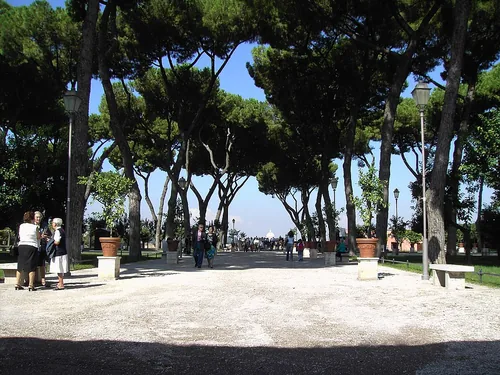
The Orange Garden, or Parco Savello, is a park in Rome of about 7,800 square meters, located on the Aventine Hill, in the Ripa district, from which there is an excellent view of the city. The garden is famous for its bitter orange trees, which fill the air with their sweet fragrance when in bloom. From the terrace at the end of the garden, visitors can enjoy a spectacular view of St. Peter's Dome perfectly framed by an avenue of trees. The garden is a peaceful oasis in the heart of the city, offering a quiet escape from the bustling streets below. It is also near the famous Aventine Keyhole, making it a perfect stop on a visit to this elegant residential neighborhood.

Hours Daily: 7:00 AM – 6:00 PM
Price Free
Location 41.8851, 12.4804
Villa Doria Pamphilj

5. Villa Doria Pamphilj

Villa Doria Pamphilj is a historic residence that includes the third-largest public park in Rome (180 hectares) after the Appian Way Regional Park and the Pineto Regional Park, located just outside the walls in the Gianicolense district, on the western slopes of the Janiculum Hill, between Via Aurelia Antica, Via della Nocetta, and Via Vitellia. Inside is the Casino del Bel Respiro or Algardi, which is the official reception seat of the Italian government. It originated from the country estate of the homonymous noble Roman family, designed by Alessandro Algardi and Giovanni Francesco Grimaldi in the 17th century, from the merger of several pre-existing vineyards. It was expropriated during the 20th century, divided in two in 1960 for the opening of Via Leone XIII, and opened to the public in 1972. The park is a favorite among locals for jogging, picnicking, and enjoying nature within the city.

Hours Daily: 7:00 AM – 6:00 PM
Price Free
Get Your Own Private Tour with AI Guide
AI Guide
  • Personalized tour tailored to your interests
  • Your AI guide tells stories, shares facts, and cracks jokes
  • Turn-by-turn GPS navigation
  • Available in your language — no download needed
Try for Free

Explore with AI Guide

AI Guide App

Get personalized tours with our AI-powered guide. No download needed — works right in your browser.