Things to Do in Savannah - Top Attractions, Hidden Gems & Must-See Sights

Discover the best things to do in Savannah. Complete guide to must-see sights, popular attractions, hidden gems, museums, food markets and parks.

15 Attractions 6 Categories Travel Guide

Table of Contents

Savannah Overview

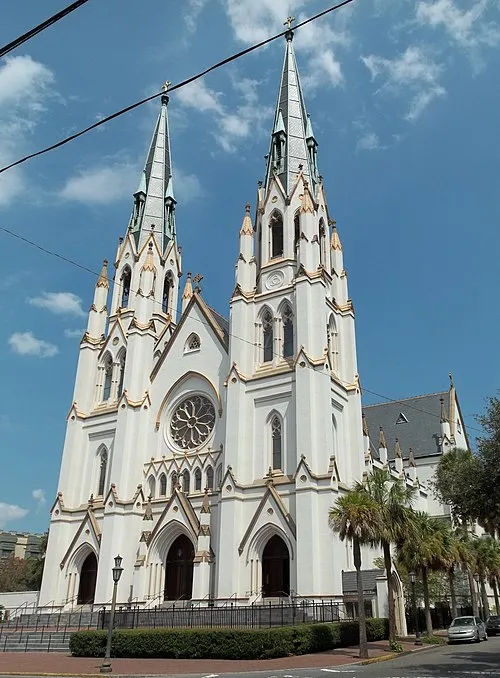
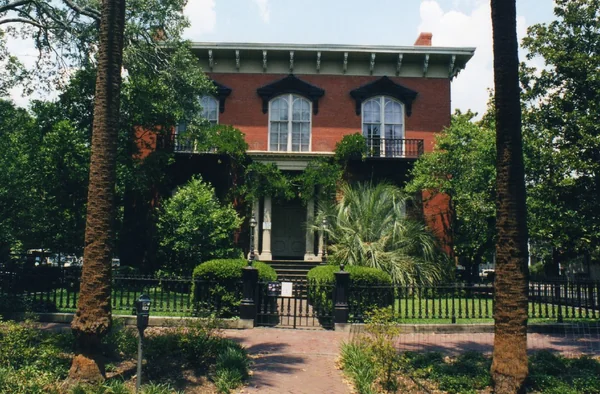
Savannah is a city built on a grid of tree-shaded squares, designed in 1733 by James Oglethorpe and largely unchanged since. Twenty-two of those original squares survive, each functioning as a small park ringed by antebellum townhouses, churches, and monuments. Spanish moss hangs from live oaks that arch over every street. The pace is slow, the architecture is extraordinarily preserved, and there's a persistent Gothic undertone to the place that writers like John Berendt captured in Midnight in the Garden of Good and Evil. This is a walking city. You can cover the Historic District in a day, but Savannah rewards people who slow down.

The city appeals most to travelers who care about history, architecture, and atmosphere over theme-park attractions. There are no blockbuster museums or mega-monuments. Instead, Savannah's appeal is cumulative: it's the squares, the cemeteries, the wrought-iron balconies, the restaurants serving Lowcountry food, and the sense that the whole downtown exists in a slightly different era. Budget travelers will find that most of Savannah's best sights, from Forsyth Park to the squares to the cemeteries, are free.

Savannah also has one of the most active food and drink scenes in the Southeast, anchored by Lowcountry cooking: shrimp and grits, she-crab soup, fried green tomatoes, pralines. Open-container laws in the Historic District mean you can walk the squares with a drink, which sets the tone for the whole visit.

Must-See Attractions in Savannah

  • Forsyth Park
  • River Street
  • Bonaventure Cemetery
🏛️ Must-See ⭐ Sights 💎 Hidden Gems 🎨 Museums 🍕 Food & Markets 🌳 Parks & Views

🏛️ Must-See Attractions in Savannah

These iconic landmarks and must-see sights are essential stops for any visitor to Savannah.

Bonaventure Cemetery

1. Bonaventure Cemetery

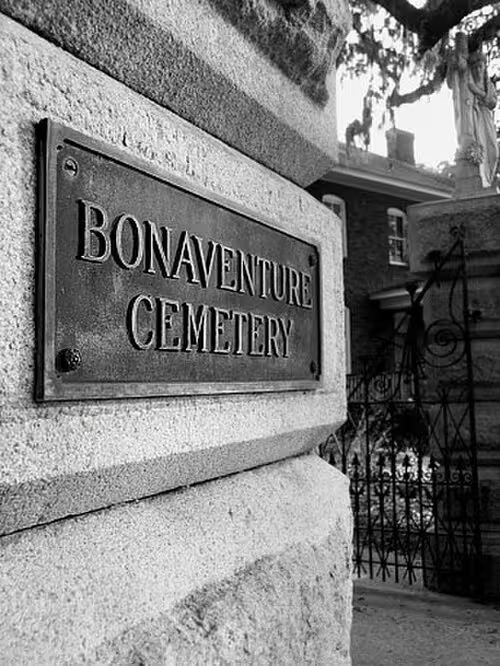
Bonaventure Cemetery sits on a bluff above the Wilmington River, about 15 minutes southeast of downtown Savannah by car. It covers nearly 160 acres and became famous after John Berendt's 1994 book Midnight in the Garden of Good and Evil put it on the map. The Bird Girl statue from the book's cover was here until the crowds got too large; it's now at the Telfair Academy downtown. But even without that statue, Bonaventure is extraordinary. Massive live oaks draped in Spanish moss arch over paths lined with Victorian-era monuments, crumbling angels, and ornate family tombs. Unlike Colonial Park Cemetery in the Historic District, which feels like a city park with gravestones, Bonaventure is a world apart. It's quiet, sprawling, and genuinely moving. The graves along the river bluff are the most atmospheric, where the moss hangs so thick the light turns green. Notable burials include songwriter Johnny Mercer and poet Conrad Aiken. This is a must-see in Savannah for anyone who appreciates the Southern Gothic mood the city is known for. The cemetery is open daily from 8 AM to 5 PM. Admission is free. You'll want a car or rideshare to get here, as it's too far from the Historic District to walk comfortably.

Hours Daily: 8:00 AM – 5:00 PM
Price Free
Insider TipDrive or walk to Section H along the river bluff. The Aiken family plot, facing the water, is one of the most peaceful spots in all of Savannah. Bring bug spray in summer.
Forsyth Park

2. Forsyth Park

Thirty acres of green space in the middle of Savannah's Historic District, and the place where locals actually spend their time. Forsyth Park runs from Gaston Street down to Park Avenue, shaded by live oaks dripping with Spanish moss. The famous fountain at the northern end, installed in 1858, is probably the most photographed thing in the city. On any given morning you'll see joggers, dog walkers, and people reading on benches. Weekends bring a farmers' market to the south end of the park. The park feels different depending on when you go. Early morning is quiet and slightly misty. By midday, SCAD students are everywhere, working on laptops or sketching. Late afternoon brings pick-up soccer games and frisbee on the south lawn. Unlike the crowded sidewalks along River Street, Forsyth always has room to spread out. There's a fragrant garden designed for visitors who are blind, a basketball court, and tennis courts on the south side. Walk the full loop, grab a coffee from the cafe near the fountain, and sit. The park is open 24 hours, free, and captures the slow pace that makes this city different from anywhere else in Georgia.

Hours Open 24/7
Price Free
Insider TipThe Saturday farmers' market (9 AM to 1 PM, south end) has better food stalls than most Savannah restaurants. Arrive by 9:30 before the good baked goods sell out.
River Street

3. River Street

River Street runs 2 miles along the Savannah River, sitting about 40 feet below Bay Street on the bluff above. The buildings lining the south side are former cotton warehouses from the 1800s, converted into restaurants, bars, candy shops, and galleries. The cobblestones underfoot are original ballast stones from ships that once loaded cotton here. The half-mile pedestrian promenade, named the John P. Rousakis Riverfront Plaza after the city's longest-serving mayor (1970 to 1992), is the main gathering spot. This is a must-see in Savannah, though you should know what you're getting into. During the day, it's pleasant enough: you can watch container ships glide past, browse souvenir shops, and grab shrimp and grits at one of the waterfront restaurants. At night, especially on weekends, it gets loud and very tourist-heavy. If you're after the quieter Savannah, head to Forsyth Park or the squares along Bull Street instead. But for a first evening in the city, walking the riverfront with a drink in hand works. The steep stone staircases connecting River Street to Bay Street are worth knowing about. Factors Walk, the series of iron walkways built along the bluff, is where cotton brokers once negotiated prices. Today it's an interesting shortcut between levels, and most visitors miss it entirely.

Hours Open 24/7
Price Free
Insider TipTake the steep stairs up to Factors Walk instead of the main ramps. The iron catwalks between Bay Street and River Street are eerie and largely empty, with a direct line to City Hall.
Get Your Own Private Tour with AI Guide
AI Guide
  • Personalized tour tailored to your interests
  • Your AI guide tells stories, shares facts, and cracks jokes
  • Turn-by-turn GPS navigation
  • Available in your language — no download needed
Try for Free

💎 Hidden Gems in Savannah - Off the Beaten Path

Beyond the tourist crowds, Savannah hides remarkable treasures waiting to be discovered.

Laurel Grove Cemetery

1. Laurel Grove Cemetery

While most visitors head to Bonaventure Cemetery for the Midnight in the Garden of Good and Evil connection, locals know that Laurel Grove is equally beautiful and far less crowded. Dedicated in 1852, the cemetery is split into two sections: Laurel Grove North, originally for white burials, and Laurel Grove South, reserved for enslaved people and free people of color. Both sections were added to the National Register of Historic Places (North in 1983, South in 1978), and both are worth walking. The southern section tells a story you won't hear on most Savannah tours. It holds the graves of enslaved people, Black Union soldiers, and community leaders from Reconstruction onward. The carved headstones and elaborate Victorian monuments rival anything at Père Lachaise in Paris or Green-Wood in Brooklyn. Laurel Grove North contains many Confederate veterans and prominent Savannah families. Together, the two sections capture the full complexity of the city's history in a way that few other sites manage. Laurel Grove is one of the real hidden gems in Savannah. It's free, open daily from 8 AM to 5 PM, and located in midtown, a short drive or long walk west of Forsyth Park. You'll likely have the paths to yourself.

Hours Daily: 8:00 AM – 5:00 PM
Price Free
Insider TipVisit Laurel Grove South specifically. The section for enslaved and free Black Savannahians is the more historically significant half, and almost no tourists go there.
Wormsloe Historic Site

2. Wormsloe Historic Site

The entrance to Wormsloe is the most photographed road in Georgia, and for good reason. A mile-and-a-half-long avenue lined with roughly 400 live oaks forms a canopy so dense it blocks out the sky. Spanish moss hangs from every branch, and the effect is pure Southern Gothic. The site is about 20 minutes south of downtown Savannah on the Isle of Hope, and it preserves the remains of the oldest standing structure in the state: tabby ruins from Noble Jones's 1740s colonial estate. Beyond the famous oak avenue, a nature trail winds through marshland and forest to the tabby ruins, where you can see the foundations Jones built from a mixture of oyster shells, sand, and water. The whole property covers 822 acres. A small museum near the entrance explains the colonial history of the site and Jones's role as one of Georgia's original colonists, arriving with Oglethorpe in 1733. This is one of the true hidden gems in Savannah, and most tourists who only stay in the Historic District miss it entirely. Wormsloe is open daily from 9 AM to 4:45 PM. Admission is free. You'll need a car or rideshare, as there's no practical public transit. Budget about 90 minutes for the oak avenue, trail, and museum.

Hours Daily: 9:00 AM – 4:45 PM
Price Free
Insider TipGo in the first hour after opening. By midday, wedding photographers and engagement shoots claim the oak avenue, and you'll spend more time dodging tripods than enjoying the trees.
Get Your Own Private Tour with AI Guide
AI Guide
  • Personalized tour tailored to your interests
  • Your AI guide tells stories, shares facts, and cracks jokes
  • Turn-by-turn GPS navigation
  • Available in your language — no download needed
Try for Free

🎨 Best Museums & Galleries in Savannah

World-class museums and galleries that make Savannah a cultural treasure.

SCAD Museum of Art

1. SCAD Museum of Art

The Savannah College of Art and Design turned a 19th-century railroad headquarters into a contemporary art museum, and the result is the most forward-looking cultural space in the city. The SCAD Museum of Art reopened after a major renovation in 2011 with new galleries, a 250-seat theater, and an 86-foot-tall steel and glass lantern tower that's visible from several blocks away. The permanent collection holds more than 4,500 pieces, including haute couture, photography, painting, and sculpture. This museum is a sharp contrast to the Telfair Academy's traditional galleries a couple of blocks east. Where the Telfair feels 19th century, the SCAD Museum feels right now. Rotating exhibitions change regularly and often feature emerging artists. The Walter O. Evans Center for African American Studies and the Andre Leon Talley Gallery (named for the late Vogue editor who sat on the SCAD board) add depth beyond the expected art school output. As one of the best museums in Savannah, it draws people who might not otherwise spend time in galleries. Admission is $15. Hours are 10 AM to 5 PM Monday and Wednesday through Saturday, noon to 5 PM Sunday, closed Tuesday. The museum cafe is a reasonable lunch spot if you're visiting City Market nearby.

Hours Mon: 10:00 AM – 5:00 PM | Tue: Closed | Wed-Sat: 10:00 AM – 5:00 PM | Sun: 12:00 – 5:00 PM
Price 15 USD
Insider TipSCAD students get in free and often give impromptu context on the work if you ask. Check the museum calendar for Thursday evening openings, which sometimes include artist talks.
Savannah History Museum

2. Savannah History Museum

Housed in a restored 1860s railroad shed near the visitors' center on Martin Luther King Jr. Boulevard, the Savannah History Museum covers the city's story from its 1733 founding through the Civil War and beyond. The building itself sits on the site of the 1779 Siege of Savannah, one of the bloodiest battles of the American Revolution. The museum's most popular artifact is the actual bench used in the filming of Forrest Gump on Chippewa Square, two blocks east. The museum is small. You can see everything in about 45 minutes. Exhibits walk through Oglethorpe's colonial plan, the cotton trade, Savannah's role in the Civil War (Sherman ended his March to the Sea here in 1864), and the city's 20th-century preservation movement. A restored locomotive and cotton gin sit in the main hall. It's a decent introduction to the city's history, especially if you visit before walking the squares and cemeteries. Among the best museums in Savannah for understanding context, though not essential for repeat visitors. Admission is free. Open daily from 9 AM to 4 PM.

Hours Daily: 9:00 AM – 4:00 PM
Price Free
Insider TipSee the Forrest Gump bench here instead of searching for it on Chippewa Square. The original prop bench was moved from the square to the museum to protect it.
Telfair Academy

3. Telfair Academy

The Telfair Academy at 121 Barnard Street is the oldest public art museum in the American South. The building itself was designed by English architect William Jay and completed in 1818 as a family mansion for the Telfairs, one of Savannah's wealthiest families. Mary Telfair bequeathed it as an art museum upon her death, and it opened to the public in 1886, making it one of the first 10 art museums in the country. The building was declared a National Historic Landmark in 1976. The collection focuses on 19th and 20th-century American and European art. The period rooms on the ground floor, furnished to look as they did in the Telfair era, are as interesting as the paintings. The Octagon Room and Dining Room give you a feel for how Savannah's elite lived before the Civil War. If you're already planning to visit the SCAD Museum of Art a few blocks away, the Telfair is a good counterpoint: traditional collection in a historic house versus contemporary work in a converted railroad building. Tickets cost $20, and the museum is open Tuesday through Sunday from 10 AM to 5 PM. It's one of the best museums in Savannah, though you can see everything in about an hour.

Hours Mon: Closed | Tue-Sun: 10:00 AM – 5:00 PM
Price 20 USD
Insider TipThe Telfair operates three sites. If you're interested, a combo ticket covers this building, Jepson Center next door, and Owens-Thomas House. Check the website for current bundle pricing.
Get Your Own Private Tour with AI Guide
AI Guide
  • Personalized tour tailored to your interests
  • Your AI guide tells stories, shares facts, and cracks jokes
  • Turn-by-turn GPS navigation
  • Available in your language — no download needed
Try for Free

🍕 Food Markets & Culinary Spots in Savannah

The best food markets, food halls, and culinary destinations in Savannah.

City Market

1. City Market

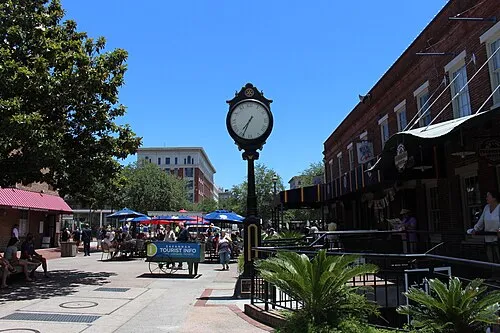
City Market has occupied this stretch between Ellis Square and Franklin Square since the 1730s, making it one of the longest-running market sites in the American South. The original wooden building burned in the Great Savannah Fire of 1820. The current structures, built in the 1870s in Romanesque style with arched doorways and circular windows, now hold restaurants, bars, art galleries, and shops. The old 33,000-square-foot interior has been carved up over the centuries, but the bones of the original market architecture are still visible. This is not a food market in the European sense. You won't find produce stalls or fishmongers. It's more of a dining and nightlife district with some artist studios and boutiques mixed in. For lunch, the restaurants around the market serve solid Lowcountry food: shrimp and grits, fried green tomatoes, she-crab soup. On weekend nights the area fills up with live music from the bars. If you're looking for where to eat in Savannah in a concentrated area, City Market is the easy choice, though locals tend to eat at specific restaurants here rather than coming for the market atmosphere itself. Open daily 10 AM to 10 PM. Free to walk through. It's two blocks west of Bull Street and a short walk south from River Street.

Hours Daily: 10:00 AM – 10:00 PM
Price Free
Insider TipThe artist studios on the upper floors of the western buildings are open during the day. You can watch painters and craftspeople working and buy directly from them, often at lower prices than the ground-floor galleries.
Get Your Own Private Tour with AI Guide
AI Guide
  • Personalized tour tailored to your interests
  • Your AI guide tells stories, shares facts, and cracks jokes
  • Turn-by-turn GPS navigation
  • Available in your language — no download needed
Try for Free

🌳 Parks & Best Viewpoints in Savannah

Beautiful parks, gardens, and panoramic viewpoints for the best views of Savannah.

Forsyth Park Fountain

1. Forsyth Park Fountain

The white cast-iron fountain at the northern entrance to Forsyth Park is the single most recognizable landmark in Savannah. Installed in 1858, its design was inspired by fountains in Paris's Place de la Concorde and Cusco's Plaza de Armas. The two-tiered structure sprays water in wide arcs, surrounded by a low stone basin where children cool off in summer. It was restored in 1988 and again in the 2000s, and on St. Patrick's Day the water is dyed green. For best views in Savannah, walk to the fountain from the Gaston Street entrance. The approach through the oak-lined path, with the fountain slowly revealing itself through the moss and branches, is the classic Savannah postcard shot. Morning light (before 9 AM) gives the sharpest contrast, and you'll avoid the tour groups that cluster around midday. The benches circling the fountain are popular with everyone from joggers taking a break to couples reading together. The cafe attached to the nearby park building sells decent coffee and sandwiches. The fountain area is part of Forsyth Park, so it's free and open daily. The whole park is open 24 hours, but the fountain itself is lit in the evening and worth seeing after dark as well. It sits about a 15-minute walk south from Chippewa Square along Bull Street.

Hours Daily: 9:00 AM – 5:00 PM
Price Free
Insider TipOn St. Patrick's Day the fountain water turns green. Savannah has the second-largest St. Patrick's Day celebration in the country, and the fountain becomes the backdrop for hundreds of photos. If you're here in March, it's a genuine spectacle.
Get Your Own Private Tour with AI Guide
AI Guide
  • Personalized tour tailored to your interests
  • Your AI guide tells stories, shares facts, and cracks jokes
  • Turn-by-turn GPS navigation
  • Available in your language — no download needed
Try for Free

Explore with AI Guide

AI Guide App

Get personalized tours with our AI-powered guide. No download needed — works right in your browser.