Things to Do in Seoul - Top Attractions, Hidden Gems & Must-See Sights

Discover the best things to do in Seoul. Complete guide to must-see sights, popular attractions, hidden gems, museums, food markets and parks.

32 Attractions 6 Categories Travel Guide

Table of Contents

Seoul Overview

Seoul is a city that rebuilds itself every few decades and somehow keeps the old layers visible underneath. Joseon-era palaces from the 1300s sit next to glass skyscrapers from the 2020s, traditional markets from 1905 share neighborhoods with K-pop flagship stores, and a 600-year-old city wall runs across mountains overlooking a metro system that moves 7 million people a day. The contrast is constant and genuine. You'll walk from a wooden throne hall to a Zaha Hadid building in 20 minutes. A 10-million-person megacity that still feels like a collection of distinct neighborhoods.

Seoul rewards curious walkers and serious eaters. The palace district in the north (Gyeongbokgung, Changdeokgung, Bukchon) gives you the historical foundation. The markets (Gwangjang, Namdaemun, Tongin) give you the food. The Han River parks and rooftop viewpoints give you the modern city in full scope. And the neighborhoods (Hongdae for nightlife, Insadong for crafts, Gangnam for money) each show a different face. The city's museums are largely free and world-class, the street food is exceptional and cheap, and the metro gets you everywhere for about 1,250 KRW per ride.

Seoul is best for travelers who like cities with layers: history and modernity, quiet temples and neon streets, $3 market lunches and $30 craft cocktails. If you want a polished, predictable experience, go to Singapore. If you want a city that keeps surprising you, Seoul is it.

Must-See Attractions in Seoul

  • Gyeongbokgung Palace
  • Changdeokgung Palace
  • Bukchon Hanok Village
  • Gwangjang Market
  • N Seoul Tower
🏛️ Must-See ⭐ Sights 💎 Hidden Gems 🎨 Museums 🍕 Food & Markets 🌳 Parks & Views

🏛️ Must-See Attractions in Seoul

These iconic landmarks and must-see sights are essential stops for any visitor to Seoul.

Bukchon Hanok Village

1. Bukchon Hanok Village

Tucked on the hillside between Gyeongbokgung and Changdeokgung palaces, Bukchon is a cluster of traditional Korean houses (hanok) with curved tile roofs that have survived Seoul's relentless modernization. The name means "north village," and this neighborhood has been home to Seoul's aristocratic and upper-class families since the Joseon era. A 1906 census showed that 43.6% of household heads here were yangban nobility. Today the narrow alleyways of Gahoe-dong, especially around house numbers 11, 31, and 33, hold the densest concentration of well-preserved hanok. This is a living neighborhood, not an open-air museum, and that creates tension. Residents have put up signs asking visitors to keep noise down and stay off private property. Respect these. The best time to walk through is on weekday mornings before 11 AM, when the tourist groups haven't arrived yet. The village is accessible daily from 10:00 AM to 5:00 PM for guided tourism, but you can walk the public streets anytime. Free admission. From Bukchon, you can walk down the hill to Insadong in about 10 minutes, or continue east to Changdeokgung's entrance. The Samcheong-dong street on the western edge has cafes and galleries worth browsing. Among things to do in Seoul, this walk between the palaces through old-town streets is one of the most satisfying.

Hours Daily: 10:00 AM – 5:00 PM
Price Free
Insider TipGahoe-dong 31 has the most photogenic row of rooftops with the city skyline behind them. Go before 10 AM on a Tuesday (when Gyeongbokgung is closed) for the quietest experience.
Changdeokgung Palace

2. Changdeokgung Palace

Where Gyeongbokgung impresses with raw size, Changdeokgung wins on atmosphere. This UNESCO World Heritage Site, designated in 1997, was the preferred residence of Joseon kings for most of the dynasty. Located east of Gyeongbokgung (about a 20-minute walk), it was called the "Eastern Palace" and kept its original layout far better than its larger neighbor. The buildings feel more human-scaled, more lived-in. The real draw is the Secret Garden (Huwon), a 78-acre wooded retreat behind the palace with pavilions, lotus ponds, and ancient trees. Access requires a separate guided tour, limited to small groups. Tours run several times daily in Korean and English. Book ahead on the palace website or show up early and hope for spots. The garden tour takes about 90 minutes and is worth every step. The palace is closed on Mondays, open 9:00 AM to 6:00 PM Tuesday through Sunday. Admission is free. If you only have time for one palace in Seoul, this is the one. Bukchon Hanok Village sits right between this palace and Gyeongbokgung, so walking between the two through the old hanok streets is the natural route.

Hours Mon: Closed | Tue-Sun: 9:00 AM – 6:00 PM
Price Free
Insider TipThe English-language Secret Garden tour fills up fast on weekends. Book online at least 2-3 days ahead or arrive 30 minutes before the first morning tour for walk-up tickets.
Gwangjang Market

3. Gwangjang Market

Korea's first permanent market, established in 1905, and still the best place in Seoul to eat like a local on a budget. Gwangjang is not polished. The food stalls are crammed together, steam rises from bubbling pots, and you sit on plastic stools at shared counters. This is exactly the point. The bindaetteok (mung bean pancakes) are crispy and filling for around 5,000 KRW. The mayak gimbap ("addictive" mini rice rolls) earned their name honestly. And the raw beef yukhoe is some of the freshest you'll find anywhere. The market is open daily from 9:00 AM to 10:30 PM, though the food stalls peak between noon and 8:00 PM. The upper floor has fabric and vintage clothing vendors, a different world from the food action below. Gwangjang got a burst of international fame after appearing on Netflix's Street Food Asia, which made the lunch rush even more crowded. Go before 11:30 AM or after 7:00 PM to avoid the worst of it. Free to enter. The market is near Jongno 5-ga station, about a 15-minute walk east from Insadong and Cheonggyecheon Stream. If Namdaemun is Seoul's wholesale giant, Gwangjang is the must-see in Seoul for street food. Come hungry, order everything, and don't worry about the lack of English menus. Point at what looks good.

Hours Daily: 9:00 AM – 10:30 PM
Price Free
Location 37.57, 126.999
Insider TipThe stall run by the elderly woman featured on Netflix's Street Food Asia (look for the longest line in row 2) still serves the same bindaetteok. Cash only at most stalls.
Gyeongbokgung Palace

4. Gyeongbokgung Palace

Built in 1395 as the main royal palace of the Joseon dynasty, Gyeongbokgung is where Seoul begins to make sense. The scale is enormous. You walk through Gwanghwamun gate, cross courtyards that once held thousands of officials, and reach the throne hall of Geunjeongjeon with its double-tiered stone platform. The palace was burned during the Japanese invasions of 1592, left in ruins for nearly 300 years, then rebuilt in 1865. It took another hit during the colonial period when many halls were demolished to make room for the Japanese Government-General building, which was finally torn down in 1995. Restoration work continues today, with a target of 2045 for full completion. The changing of the guard ceremony happens daily (except Tuesdays) at 10:00 AM and 2:00 PM at the Gwanghwamun gate. It lasts about 20 minutes and draws big crowds. The palace is closed on Tuesdays, open 9:00 AM to 5:00 PM otherwise. Admission is free. The National Folk Museum sits inside the palace grounds, so you can combine both in one visit without extra cost. If you're looking for top sights in Seoul, this is the first stop. Renting a hanbok (traditional Korean dress) gets you free admission and makes for great photos against the wooden halls and painted eaves. Dozens of rental shops line the streets near Anguk station. Budget about 2 hours for the palace alone, more if you add the folk museum. From here, Bukchon Hanok Village is a 10-minute walk uphill to the east.

Hours Mon: 9:00 AM – 5:00 PM | Tue: Closed | Wed-Sun: 9:00 AM – 5:00 PM
Price Free
Insider TipWear a rented hanbok and you skip the admission line entirely. The quietest time is weekday mornings right at opening, before the tour buses arrive around 10:30 AM.
Myeongdong Shopping District

5. Myeongdong Shopping District

Myeongdong is Seoul's most concentrated shopping zone, covering about 0.91 square kilometers of pedestrian-friendly streets packed with Korean beauty brands, fashion shops, and street food stalls. If K-beauty is on your list, this is ground zero. Nearly every major Korean skincare and cosmetics brand has a flagship here, and the competition means you'll find samples, deals, and testers everywhere. The energy is intense, especially on weekend evenings when the streets fill to capacity. The area never technically closes, though individual shops generally operate from 10:00 AM to 10:00 PM. The street food vendors fire up around 3:00 PM and run late. Myeongdong is a short walk from Namdaemun Market (about 10 minutes south), so you can combine both. Myeongdong Cathedral, a Gothic church from 1898, sits on the eastern edge and is worth a quick look as a contrast to the commercial frenzy around it. Honesty check: if you're not interested in shopping, Myeongdong will feel like sensory overload for no reason. But if you want Korean cosmetics at competitive prices with staff who speak multiple languages, or if you just want to experience must-see in Seoul commercial culture at full volume, this is it. The night food stalls along the main drag sell tteokbokki, egg bread, and lobster tails for 3,000 to 15,000 KRW.

Hours Open 24/7
Price Free
Location 37.5637, 126.984
Insider TipThe best cosmetics deals happen at closing time when staff are more generous with free samples. Ask for sample sets at Innisfree or Etude House after 8 PM.
N Seoul Tower

6. N Seoul Tower

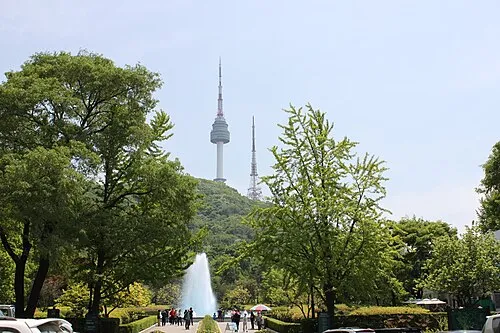
Standing 236.7 meters tall on top of Namsan mountain, N Seoul Tower reaches a total elevation of nearly 480 meters above sea level. Completed in 1975 as a broadcast tower, it opened to the public in 1980 and has been Seoul's most recognizable landmark ever since. On a clear day, the 360-degree view from the observation deck covers the entire city sprawl, from the Han River and Gangnam's towers to the mountains ringing the northern edge. The tower is open Monday to Friday 10:30 AM to 10:30 PM, weekends from 10:00 AM to 11:00 PM. Observatory admission is 16,000 KRW for adults. You can reach the base by Namsan cable car, by bus, or on foot through Namsan Park. The walk up from the park entrance takes about 30 minutes and passes through nice forest trails. The cable car is faster but there's usually a line. The observation deck has thousands of "love locks" attached to the railings, a tradition that took off after Korean TV dramas featured the spot. It looks kitschy, but the view at sunset is genuinely spectacular. For an alternative high-up vantage point with more modern engineering, Seoul Sky at Lotte World Tower is the other option, though it costs more and lacks the mountain setting.

Hours Mon-Fri: 10:30 AM – 10:30 PM | Sat-Sun: 10:00 AM – 11:00 PM
Price 16,000 KRW
Insider TipWalk up through Namsan Park from the Namsangol Hanok Village side. The trail is shaded and peaceful, and you skip the cable car queue entirely. Budget 30 minutes for the climb.
Namdaemun Market

7. Namdaemun Market

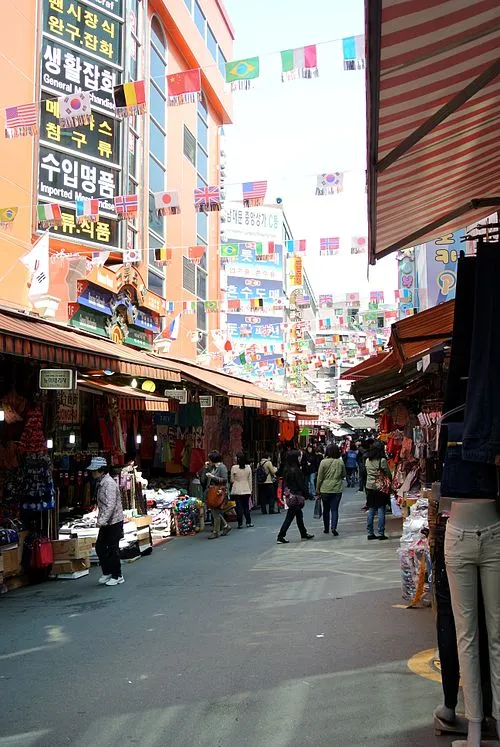
Seoul's largest traditional market has been doing business near the city's south gate since the early Joseon period, with market records dating back to the 1400s during King Taejong's reign. The modern market took shape after 1608 and now contains over 10,000 shops spread across a maze of alleys and multi-story buildings. This is where Seoulites buy everything: kitchenware, ginseng, dried fish, children's clothes, camera gear, and military surplus. It is not designed for tourists, which is exactly why it's interesting. Namdaemun is open Monday through Saturday, 9:00 AM to 5:00 PM, closed Sundays. Some wholesale sections open as early as midnight and close by dawn, catering to restaurant owners stocking up. The Kalguksu Alley (knife-cut noodle alley) is the food highlight, with bowls of handmade noodles in rich broth for 7,000 to 8,000 KRW. Free to enter. Hoehyeon station on Line 4 drops you right at the entrance. Compared to the more tourist-oriented Gwangjang Market, Namdaemun feels more utilitarian and sprawling. It sits a 10-minute walk south of Myeongdong, so you can pair the two easily. If you want to understand how Seoul feeds and supplies itself, this market tells that story better than any museum. Among the top sights in Seoul, it's the grittiest and most real.

Hours Mon-Sat: 9:00 AM – 5:00 PM | Sun: Closed
Price Free
Insider TipThe galchi jorim (braised hairtail fish) restaurants on the 2nd floor of Building C are a local lunch institution. Portions are enormous and cost about 10,000 KRW per person.
Get Your Own Private Tour with AI Guide
AI Guide
  • Personalized tour tailored to your interests
  • Your AI guide tells stories, shares facts, and cracks jokes
  • Turn-by-turn GPS navigation
  • Available in your language — no download needed
Try for Free

💎 Hidden Gems in Seoul - Off the Beaten Path

Beyond the tourist crowds, Seoul hides remarkable treasures waiting to be discovered.

Ihwa Mural Village

1. Ihwa Mural Village

Perched on the hillside below Naksan Park in the Ihwa-dong neighborhood, this small residential area became an accidental art gallery when the government commissioned murals and installations in 2006 to brighten up a declining neighborhood. The result is a winding maze of steep alleyways where every wall, staircase, and doorway has been painted with colorful scenes. Some are whimsical (giant fish, flying birds), others are more thought-provoking. The art changes as old murals fade and new ones replace them. Open 24/7, free. This is a residential neighborhood, and locals live here. Some of the most famous murals were actually destroyed by frustrated residents who were tired of tourist noise. Be respectful: keep your voice down, don't block doorways, and don't peek into homes. The village is a short walk east from Hyehwa station (Line 4), and you can combine it with Naksan Park directly above for city wall views and panoramic lookouts over Seoul's eastern skyline. This is one of the genuine hidden gems in Seoul. It doesn't appear on most package tours, and the steep hillside keeps casual visitors away. The walk up is a workout, but the combination of street art, traditional houses, and views over the Daehangno theater district below makes it worth the climb. Go on a weekday morning when the light hits the east-facing walls best.

Hours Open 24/7
Price Free
Insider TipStart from the top (enter via Naksan Park) and walk downhill through the village. Much easier on the knees and you get better photo angles with the city behind the murals.
Oil Tank Culture Park

2. Oil Tank Culture Park

Five petroleum storage tanks built between 1976 and 1978 sat hidden on a hillside in Mapo-gu for decades, storing fuel for Seoul's emergency reserves. They were shut down in 2000 for safety reasons when the nearby World Cup Stadium was being built, then sat abandoned until a 2013 citizen competition chose to convert them into a cultural space. The park reopened in 2017 with each tank transformed into something different: performance halls, exhibition spaces, a community room, and a cafe. Open Tuesday to Sunday, 10:00 AM to 6:00 PM. Closed Mondays. Free admission. The tanks retain their industrial character, with rusted steel walls and raw concrete, which gives the exhibitions a different feel than any traditional gallery in Seoul. Tank T6 is a new structure built from glass and recycled materials, with a cafe inside. The park sits next to Haneul Park and the World Cup Stadium area, so you can combine all three. Almost no international tourists come here, which makes it one of the real hidden gems in Seoul. The contrast between the industrial tanks and the green hillside is striking, and the programming tends toward experimental art, community workshops, and environmental exhibits. If you've done the palaces and markets and want to see how Seoul reinvents its industrial past, this is the place.

Hours Mon: Closed | Tue-Sun: 10:00 AM – 6:00 PM
Price Free
Insider TipCheck the exhibition schedule on the park website before visiting. Some tanks host rotating shows that close between installations, and arriving on a changeover day means empty spaces.
Get Your Own Private Tour with AI Guide
AI Guide
  • Personalized tour tailored to your interests
  • Your AI guide tells stories, shares facts, and cracks jokes
  • Turn-by-turn GPS navigation
  • Available in your language — no download needed
Try for Free

🎨 Best Museums & Galleries in Seoul

World-class museums and galleries that make Seoul a cultural treasure.

Leeum Museum of Art

1. Leeum Museum of Art

Leeum is Samsung's private art museum in the Hannam-dong neighborhood, and the architecture alone is worth the trip. Three world-class architects each designed one building: Mario Botta created the terracotta-clad Museum 1 for traditional Korean art, Jean Nouvel designed the glass-and-steel Museum 2 for contemporary works, and Rem Koolhaas built the Samsung Child Education & Culture Center. The museum opened in 2004 and houses the collection started by Samsung founder Lee Byung-chul. Open Tuesday to Sunday, 10:00 AM to 6:00 PM. Closed Mondays. Admission is 18,000 KRW for adults. The traditional collection includes Goryeo celadon, Joseon white porcelain, and Buddhist paintings, while the contemporary wing rotates international works alongside Korean artists. The quality is high and the spaces are beautifully lit. At 18,000 KRW, this is one of the few paid museums in Seoul where the ticket price feels justified. The building design makes you aware of every transition between old and new art, which mirrors Seoul's own constant tension between tradition and modernity. Among the best museums in Seoul, Leeum is the one for people who care about architecture as much as the art inside. Hannam-dong itself is a good neighborhood for lunch, with restaurants and cafes within a short walk.

Hours Mon: Closed | Tue-Sun: 10:00 AM – 6:00 PM
Price 18,000 KRW
Website www.leeum.org/
Insider TipThe garden between the three buildings has a collection of outdoor sculptures and offers an interesting view of how the three architectural styles sit next to each other. Most visitors rush inside and miss it.
National Folk Museum of Korea

2. National Folk Museum of Korea

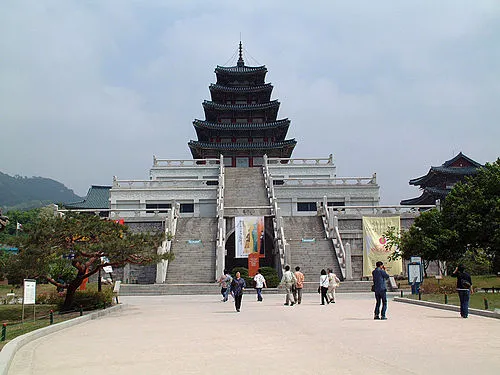
Located inside the Gyeongbokgung Palace grounds, the National Folk Museum focuses on the everyday life of Korean people through the centuries: what they ate, how they dressed, how they celebrated births and mourned deaths. The building's exterior is modeled after traditional Korean architecture (inspired by structures like the Palsangjeon pagoda at Beopjusa temple), and the permanent exhibition is split into three halls covering pre-modern daily life, the farming calendar, and the Korean life cycle from birth to death. Open daily 9:00 AM to 6:00 PM. Free admission. Because it sits within the palace grounds, you can visit both Gyeongbokgung and this museum in one trip without paying extra or walking far. The outdoor exhibition area has reconstructed village buildings and traditional games for kids, which makes this a good family stop. Compared to the massive National Museum of Korea in Yongsan, this museum is more focused and easier to digest in about 60 to 90 minutes. It won't give you the grand sweep of Korean history, but it tells you more about how people actually lived. Among the best museums in Seoul, it earns its place by being specific, free, and conveniently located. The gift shop has well-made Korean craft souvenirs at reasonable prices.

Hours Daily: 9:00 AM – 6:00 PM
Price Free
Insider TipThe outdoor folk village section behind the main building is often empty even when the indoor exhibits are busy. Good for photos of traditional Korean farmhouse architecture.
National Museum of Korea

3. National Museum of Korea

This is the big one. The National Museum of Korea in Yongsan holds over 420,000 artifacts spanning Korean history from the Paleolithic era to the Joseon dynasty, making it one of the largest museums in Asia. The building itself is enormous and modern, opened at its current location in 2005. The permanent collection alone takes 2 to 3 hours if you move quickly. The ground floor covers archaeology (Bronze Age daggers, Silla-era gold crowns), while the upper floors handle fine arts, calligraphy, and Buddhist sculpture. Open Monday to Friday 9:30 AM to 5:30 PM, with extended hours until 8:30 PM on Wednesdays and Saturdays. Closed on January 1 and Chuseok/Lunar New Year. Admission is free for the permanent collection. Special exhibitions sometimes charge a fee. The museum is a 10-minute walk from Ichon station on Line 4. For a city with this much history, having a free museum of this quality is remarkable. The Silla gold crown collection and the Goryeo celadon ceramics are the standout pieces. If you're comparing to other best museums in Seoul, the National Folk Museum (inside Gyeongbokgung) covers daily life and traditions, while this one covers the full sweep of Korean civilization. You don't need both in one trip, but if you choose one museum, choose this.

Hours Mon-Tue: 9:30 AM – 5:30 PM | Wed: 9:30 AM – 8:30 PM | Thu-Fri: 9:30 AM – 5:30 PM | Sat: 9:30 AM – 8:30 PM | Sun: 9:30 AM – 5:30 PM
Price Free
Insider TipWednesday and Saturday evening hours (until 8:30 PM) are the quietest times to visit. The outdoor reflecting pool behind the museum is a peaceful spot most visitors walk right past.
Seodaemun Prison History Museum

4. Seodaemun Prison History Museum

Built by the Japanese colonial government in 1907 and opened in 1908, Seodaemun Prison held Korean independence activists who resisted occupation. Many were tortured and executed here. The prison operated until 1987, also holding political prisoners during South Korea's authoritarian decades. After closing, several buildings were preserved and designated a national historic site in 1988. The history museum opened in 1998. You can walk through the original cell blocks, see the basement torture rooms (with disturbing wax figure recreations), and visit the execution building where independence fighters were killed. It is not a comfortable visit. The museum is deliberately unflinching in showing what happened here, and some displays are graphic. Open Tuesday to Sunday, 9:30 AM to 6:00 PM. Closed Mondays. Free admission. The prison sits within Independence Park in Seodaemun-gu, about a 10-minute walk from Dongnimmun station on Line 3. This is the most emotionally heavy museum in Seoul. It gives essential context for understanding Korea's 20th-century history and why independence and sovereignty carry such weight here. Among the best museums in Seoul for understanding the country beyond its palaces and pop culture, Seodaemun Prison is difficult but important. Visit before the lighter things on your list, not after.

Hours Mon: Closed | Tue-Sun: 9:30 AM – 6:00 PM
Price Free
Insider TipThe English audio guide is well done and provides context that the exhibit labels alone don't fully convey. Pick it up at the entrance desk.
Seoul Museum of Craft Art

5. Seoul Museum of Craft Art

Opened in July 2021 on the site of a former girls' high school near Anguk station, the Seoul Museum of Craft Art is one of the newest additions to Seoul's museum scene. It covers Korean craft traditions from ceramics and textiles to metalwork and woodworking, displayed across multiple buildings connected by outdoor courtyards. The exhibitions balance historical pieces with work by living artisans, which keeps it from feeling like a dusty display case. Open Tuesday to Thursday 10:00 AM to 6:00 PM, Fridays until 9:00 PM, weekends until 6:00 PM. Closed Mondays. Free admission. The museum sits between Bukchon Hanok Village and Insadong, so it slots naturally into a walking route through the old town. The children's craft museum on the grounds is surprisingly well done, with hands-on stations that keep younger visitors engaged. This museum is still relatively new, which means it hasn't landed on most tourist itineraries yet. That works in your favor. The spaces are calm, the courtyards are pleasant for sitting, and the craft focus gives you a different lens on Korean culture than the big history and art museums. Among the best museums in Seoul, this one rewards you with quality over size. If you're interested in the handiwork behind Korean culture, from celadon glazes to bojagi wrapping cloth, this is your stop.

Hours Mon: Closed | Tue-Thu: 10:00 AM – 6:00 PM | Fri: 10:00 AM – 9:00 PM | Sat-Sun: 10:00 AM – 6:00 PM
Price Free
Insider TipThe Friday evening hours (until 9 PM) are nearly empty and the courtyard lighting creates a nice atmosphere. Combine with a walk through Bukchon afterward when the village is quietest.
Seoul Museum of History

6. Seoul Museum of History

Opened in 2002 near Gwanghwamun, this museum tells the story of Seoul itself from the Joseon dynasty capital to the megacity of today. The permanent exhibition covers urban development, colonial-era changes, the Korean War's destruction, and the explosive growth of the 1960s-80s. Models and photographs show how completely the city has been rebuilt multiple times. Outside the entrance, the old concrete Gwanghwamun gate from the Park Chung-hee era sits on display, a reminder of how even the palace gates have been demolished and rebuilt. Open Tuesday to Thursday 9:00 AM to 6:00 PM, Fridays until 9:00 PM, weekends until 6:00 PM. Closed Mondays. Free admission. The museum is a short walk from Gyeongbokgung station and sits near Deoksugung Palace and Cheonggyecheon Stream, making it easy to fold into a walking day. This is a quieter, more reflective museum than the big national institutions. It gives you context for everything else you see in Seoul: why the palaces were destroyed and rebuilt, why the old neighborhoods look the way they do, and how a city can reinvent itself every few decades. Among the best museums in Seoul, it's the one that explains the city you're actually standing in. Budget about an hour.

Hours Mon: Closed | Tue-Thu: 9:00 AM – 6:00 PM | Fri: 9:00 AM – 9:00 PM | Sat-Sun: 9:00 AM – 6:00 PM
Price Free
Insider TipThe Friday evening hours (until 9 PM) are practically empty. The museum's location next to Gyeonghuigung Palace (one of Seoul's five palaces that almost nobody visits) makes for a quiet combined stop.
War Memorial of Korea

7. War Memorial of Korea

Built on the former site of the Korean Army headquarters in Yongsan, the War Memorial opened in 1994 and covers the full span of Korea's military history, with the Korean War (1950-1953) as its centerpiece. The outdoor exhibition area has fighter jets, tanks, a naval destroyer, and a submarine that you can walk through. Inside, the exhibitions trace conflicts from ancient kingdoms through the Japanese colonial period to the Korean War, with detailed recreations, maps, and personal artifacts. Open Tuesday to Sunday, 9:30 AM to 6:00 PM. Closed Mondays. Free admission. The memorial is large enough to spend 2 to 3 hours, especially if you go through the Korean War rooms carefully. The Brothers Statue at the entrance, showing a South Korean soldier embracing his North Korean brother, is a powerful piece. The memorial is near Samgakji station on Lines 4 and 6. This is not really a museum that glorifies war. It's more of a documentation center with a clear message about the costs of conflict and the importance of peace. The Korean War rooms are where most visitors spend the most time, and the level of detail is impressive. Among the best museums in Seoul, this one pairs well with a visit to the DMZ if you're doing a border tour during your trip.

Hours Mon: Closed | Tue-Sun: 9:30 AM – 6:00 PM
Price Free
Insider TipThe outdoor exhibits are free to access even outside museum hours, so you can see the tanks and aircraft in the early morning or evening light. The indoor 4D theater shows a short Korean War film several times daily.
Get Your Own Private Tour with AI Guide
AI Guide
  • Personalized tour tailored to your interests
  • Your AI guide tells stories, shares facts, and cracks jokes
  • Turn-by-turn GPS navigation
  • Available in your language — no download needed
Try for Free

🍕 Food Markets & Culinary Spots in Seoul

The best food markets, food halls, and culinary destinations in Seoul.

Tongin Market

1. Tongin Market

Tongin Market has been around since 1941, when it started as a public market during the Japanese colonial period, but its modern draw is the Dosirak (lunchbox) Cafe system introduced in 2012. Here's how it works: you buy a set of old-fashioned brass coins (yeopjeon) for 5,000 KRW at the market entrance, then walk from stall to stall, choosing small portions of whatever looks good. Tteokbokki here, a piece of japchae there, maybe some fried vegetables. You pile everything into a metal tray, sit down in the communal eating area, and eat your custom-built Korean lunch. The market is open daily from 7:00 AM to 9:00 PM, though the lunchbox system operates roughly 11:00 AM to 5:00 PM. The market is small, maybe 75 stalls total, which makes it more manageable than the sprawling chaos of Gwangjang or Namdaemun. It sits right next to Gyeongbokgung's western wall, less than a 5-minute walk from the palace's Yeongchumun gate. This is one of the most enjoyable food markets in Seoul for visitors who feel overwhelmed by the bigger markets. The coin system removes the language barrier entirely: just point, pay with coins, and move on. The portions are small, so you can sample widely without overeating. After lunch, you're steps from the palace or a short walk to Tongin-dong's quiet residential streets.

Hours Daily: 7:00 AM – 9:00 PM
Price Free
Insider TipGo right when the lunchbox system opens at 11 AM. By noon, the most popular stalls run out of their best items. The fried tofu and sweet potato tempura go first.
Get Your Own Private Tour with AI Guide
AI Guide
  • Personalized tour tailored to your interests
  • Your AI guide tells stories, shares facts, and cracks jokes
  • Turn-by-turn GPS navigation
  • Available in your language — no download needed
Try for Free

🌳 Parks & Best Viewpoints in Seoul

Beautiful parks, gardens, and panoramic viewpoints for the best views of Seoul.

Cheonggyecheon Stream

1. Cheonggyecheon Stream

Cheonggyecheon is an 8.12-kilometer restored urban stream running through the center of Seoul, from Cheonggye Plaza near City Hall eastward to where it joins the Jungnang Stream near Hanyang University. For most of the 20th century, the stream was buried under concrete and an elevated highway. In 2003, the city tore all of it out and spent two years restoring the waterway, reopening it in 2005. Now 40,000 cubic meters of water are pumped through it daily, creating a sunken walking path about 5 meters below street level. Open 24/7, free. The stream runs right through the commercial heart of Seoul, passing near Gwanghwamun, Insadong, Dongdaemun, and the market districts. Walking the full length takes about 2 hours, but most visitors just do the first kilometer or two near Cheonggye Plaza, where the Spring sculpture by Claes Oldenburg and Coosje van Bruggen marks the starting point. At night, the stream and its bridges are lit up. As a walking route connecting things to do in Seoul, Cheonggyecheon works brilliantly. You drop down to stream level and the noise of traffic above fades away. Stepping stones cross the shallow water, small waterfalls mark transitions between sections, and benches line the path. Among parks in Seoul, this one is unique because it's linear, urban, and tells a story about a city choosing nature over highways.

Hours Open 24/7
Price Free
Insider TipStart at Cheonggye Plaza and walk east for about 20 minutes until the crowds thin. The section between Gwanggyo Bridge and Supyo Bridge has the nicest stonework and the most shade.
Haneul Park

2. Haneul Park

Haneul means "sky" in Korean, and this park earns the name. Built on top of a former landfill near the 2002 World Cup Stadium in Mapo-gu, it sits on a hill that requires climbing 291 wooden steps to reach the top. The reward is a wide-open meadow of tall silver grass (eulalia) with panoramic views of Seoul's western skyline, the Han River, and on clear days, the mountains beyond. In October, when the grass turns golden and waves in the wind, this is one of the most photographed spots in the entire city. The park is open daily, roughly 5:00 AM to 8:30 PM (hours shift seasonally). Free admission. The Seoul Eulalia Festival in mid-October fills the park with visitors, photographers, and food stalls. Outside of October, the hilltop is surprisingly quiet, especially on weekday mornings. Oil Tank Culture Park is at the base of the hill, and the World Cup Park complex connects to Noeul Park and Pyeonghwa Park nearby. Among the best views in Seoul, Haneul Park is the most natural-feeling. Where N Seoul Tower and Seoul Sky give you urban panoramas from man-made structures, Haneul gives you open sky, grass, and wind. The climb is moderate and takes about 15 minutes. Bring water and, in summer, sunscreen. There's almost no shade at the top.

Hours Daily: 5:00 AM - 8:30 PM (seasonal)
Price Free
Website N/A
Insider TipThe sunset view facing west over the Han River is the best reason to time your visit for late afternoon. In October, arrive by 4 PM to secure a good spot for the golden-hour grass photos.
Mangwon Hangang Park

3. Mangwon Hangang Park

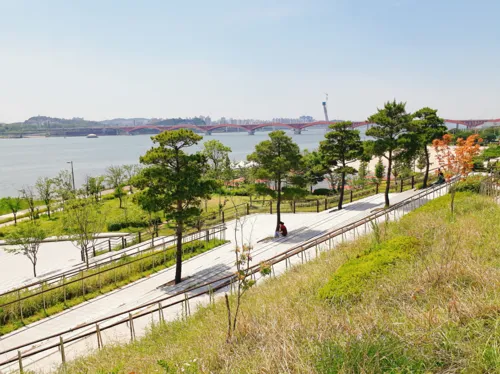
Mangwon Hangang Park is a long, flat stretch of riverside green space along the Han River in Mapo-gu, popular with locals for picnics, cycling, and evening runs. The park opened in 1993 and connects to the broader Hangang riverside path system that runs for over 40 kilometers along both banks of the river. On warm evenings, especially Fridays and weekends, the grass fills with groups of friends sitting on mats, eating fried chicken, and drinking beer from nearby convenience stores. Open 24/7, free. You can rent bicycles from the nearby Yeouido or Mangwon rental stations and ride along the river path in either direction. The Mangwon neighborhood above the park (a 10-minute walk inland) has one of Seoul's trendiest cafe and restaurant scenes, drawing a younger, more local crowd than the tourist-heavy areas of Myeongdong or Insadong. This is not a sight in the traditional sense. There's nothing to check off a list. But if you want to understand how Seoulites actually spend their free time, especially in spring and autumn, come here on a weekend evening with takeout chicken and a blanket. Among parks in Seoul, Mangwon Hangang Park is the best place to experience the city's riverside culture the way locals do.

Hours Open 24/7
Price Free
Insider TipOrder fried chicken from BHC or BBQ Chicken in the Mangwon neighborhood for delivery to the park. Koreans use delivery apps that pinpoint your location on the riverbank.
Naksan Park

4. Naksan Park

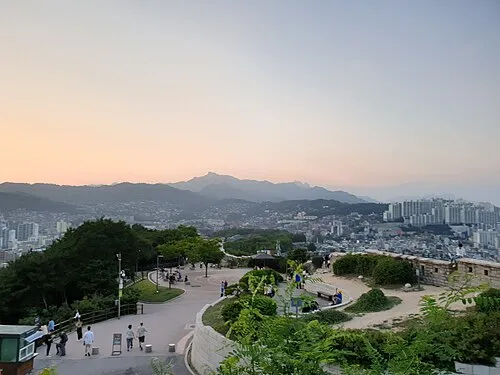
Naksan is one of Seoul's four inner mountains, and the park on its slopes follows a restored section of the Seoul City Wall originally built in the 1390s under the Joseon dynasty. The wall trail is an easy walk with views in two directions: east toward the Dongdaemun and university districts, and west over the traditional neighborhoods of Jongno. At night, the city lights spread out in both directions and the illuminated wall adds a historical layer to the modern skyline. Open 24/7, free. The park is directly above Ihwa Mural Village, so you can combine both in a single visit, walking down through the murals after enjoying the wall and viewpoints from above. Hyehwa station on Line 4 is the closest metro stop, about a 15-minute uphill walk to the park entrance. The climb is gentle compared to Namsan. Naksan is less famous than Namsan and far less crowded, which makes it a better choice if you want a quiet city-wall walk without competing for space. The stone wall sections are photogenic and well-preserved, and benches along the route let you sit and take in the view. Among the best views in Seoul, Naksan gives you something the big observation decks can't: a connection between the old city walls and the modern skyline, all at ground level.

Hours Open 24/7
Price Free
Insider TipThe stretch of wall near the Ihwa-dong entrance has the best nighttime view. Bring a drink and sit on the wall bench around 8 PM for city lights without the observation deck prices.
Seokchon Lake

5. Seokchon Lake

Seokchon Lake is actually two lakes (East and West) in the Jamsil area of southeastern Seoul, with a walking path looping around both that totals about 2.7 kilometers. The West Lake sits directly at the base of Lotte World Tower, so the 555-meter skyscraper dominates the backdrop of every photo. In spring, the cherry blossom trees lining the path bloom in early April and draw enormous crowds for about two weeks. The rest of the year, it's a pleasant neighborhood loop. Open 24/7, free. Lotte World theme park, Seoul Sky observatory, and the COEX area are all nearby, making Seokchon Lake a natural add-on to any trip to Seoul's southeast. Jamsil station on Lines 2 and 8 is a 5-minute walk from the lake. The West Lake hosts seasonal events, including a cherry blossom festival and holiday light installations. During cherry blossom season, this is one of the most popular spots in all of Seoul, rivaling Yeouido Park for crowds and camera density. Outside of April, it's calm and mostly used by joggers and families. Among parks in Seoul, Seokchon Lake is the one with the most dramatic skyline backdrop. If you're visiting Lotte World Tower or Seoul Sky, the 30-minute lake loop is a good way to see the tower from below after seeing the city from above.

Hours Open 24/7
Price Free
Location 37.51, 127.103
Insider TipThe cherry blossoms on the East Lake side are less crowded than the West Lake path. Walk counterclockwise from Jamsil station for the best tower-reflection angles in the morning.
Get Your Own Private Tour with AI Guide
AI Guide
  • Personalized tour tailored to your interests
  • Your AI guide tells stories, shares facts, and cracks jokes
  • Turn-by-turn GPS navigation
  • Available in your language — no download needed
Try for Free

Explore with AI Guide

AI Guide App

Get personalized tours with our AI-powered guide. No download needed — works right in your browser.