Things to Do in Singapore - Top Attractions, Hidden Gems & Must-See Sights

Discover the best things to do in Singapore. Complete guide to must-see sights, popular attractions, hidden gems, museums, food markets and parks.

32 Attractions 6 Categories Travel Guide

Table of Contents

Singapore Overview

Singapore is a city-state that runs on contrasts. Ultra-modern skyscrapers sit next to 19th-century temples. Michelin-starred hawker stalls serve S$3 plates in open-air food courts. A UNESCO-listed botanical garden from 1859 shares the island with a futuristic park of 50-meter Supertrees. The country is smaller than most cities on this site, about 733 square kilometers, but it packs in an absurd density of things to see, eat, and do.

What makes Singapore work for travelers is how easy it is. The MRT reaches almost everywhere, English is spoken universally, the streets are clean to the point of being surreal, and the food scene is one of the best on earth at every price point. You can eat extraordinarily well for S$5 at a hawker center, then spend S$500 at a three-Michelin-star restaurant in the same day. The city rewards curiosity: behind the Marina Bay postcard shots, there are Peranakan shophouse neighborhoods, rural offshore islands, and rainforest trails with wild monkeys.

Singapore is best for travelers who appreciate order, food, architecture, and cultural layering. If you want Southeast Asian chaos, go to Bangkok or Hanoi. If you want a city where four cultures (Chinese, Malay, Indian, and Peranakan) coexist in a manicured, functional, intensely food-obsessed setting, Singapore has no equal.

Must-See Attractions in Singapore

  • Gardens by the Bay
  • Marina Bay Sands
  • Singapore Botanic Gardens
  • National Gallery Singapore
  • Maxwell Food Centre
🏛️ Must-See ⭐ Sights 💎 Hidden Gems 🎨 Museums 🍕 Food & Markets 🌳 Parks & Views

🏛️ Must-See Attractions in Singapore

These iconic landmarks and must-see sights are essential stops for any visitor to Singapore.

Gardens by the Bay

1. Gardens by the Bay

This 105-hectare park behind Marina Bay Sands is the single best reason to visit Singapore. The outdoor gardens are free, open from 5 AM to 2 AM, and worth seeing twice: once in daylight to appreciate the scale of the 18 Supertree structures (the tallest reaches 50 meters), and again after dark for the Garden Rhapsody light show at 7:45 PM and 8:45 PM. The show is free. Stand directly beneath the Supertrees and look straight up. The paid conservatories are where things get serious. The Flower Dome is the world's largest glass greenhouse, kept at a dry Mediterranean climate. The Cloud Forest has a 35-meter indoor waterfall surrounded by tropical mountain vegetation. Both are air-conditioned, which on a Singapore afternoon feels like a gift. If you only pay for one, choose Cloud Forest. As a must-see in Singapore and the top-ranked attraction in Asia on TripAdvisor, Gardens by the Bay gets crowded, especially on weekends. But unlike Merlion Park across the water, the space is so vast that you can always find a quiet corner. Among all the things to do in Singapore, this is where the city's "City in a Garden" ambition actually comes to life.

Hours Daily: 5:00 AM – 2:00 AM
Price 0
Insider TipThe OCBC Skyway, an elevated walkway between two Supertrees, costs S$14 and closes at 9 PM. Go at 7:30 PM to walk it first, then watch the light show from below.
Marina Bay Sands

2. Marina Bay Sands

Three 56-storey towers connected by a 340-meter rooftop platform. When it opened in 2010, Marina Bay Sands cost S$8 billion, making it the most expensive standalone casino property ever built. Even if you never gamble or stay here, you will see it constantly: it is the defining shape of Singapore's skyline, visible from Merlion Park, Gardens by the Bay, and most of the waterfront. For visitors, the main draw is the SkyPark Observation Deck on the 57th floor. The 150-meter infinity pool up there is hotel guests only, but the observation deck is open to the public. The complex also holds a 74,000-square-meter luxury shopping mall, the ArtScience Museum (covered separately), celebrity chef restaurants, and a 2,183-seat theatre. The nightly Wonder Full light and water show at the waterfront is free to watch from the promenade. Among the top sights in Singapore, Marina Bay Sands is impossible to miss in every sense. The building is a thing to see rather than a place to linger unless you are shopping or eating. Take the observation deck for the view, walk through the mall if you want, and spend your real time at Gardens by the Bay next door.

Hours Daily: 11:00 AM - 9:00 PM
Price 32 SGD
Location 1.2825, 103.86
Insider TipSkip the SkyPark observation deck fee by having a drink at CE LA VI SkyBar on level 57 instead. The drink costs about the same as admission, and you get to sit down.
Merlion Park

3. Merlion Park

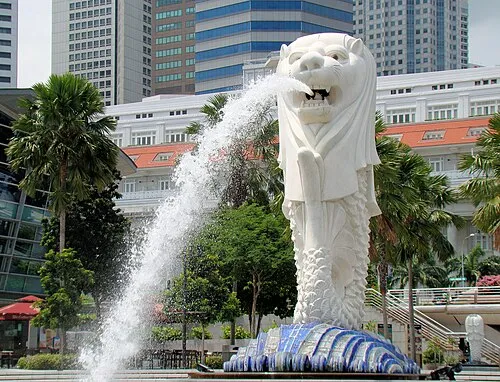
The Merlion is Singapore's mascot, and this small park at One Fullerton is where everyone goes to photograph it. The original statue stands 8.6 meters tall, a half-lion, half-fish creature spouting water into Marina Bay. A smaller 2-meter cub sits nearby. The park is open 24 hours and completely free. You walk in, take your photo pretending to drink from the water spout, and move on. That is the entire experience. What makes the stop worthwhile is not the statue itself but the location. From here you get a head-on view of Marina Bay Sands across the water, the Esplanade's durian-shaped domes to your left, and the CBD skyline behind you. At night, when the buildings light up, the view is genuinely good. It is a 5-minute walk from the Raffles Place MRT station. It is the geographic center of the Marina Bay waterfront loop, and passing through it connects you to the ArtScience Museum, the Esplanade, and Gardens by the Bay. Think of it as a waypoint, not a destination.

Hours Open 24/7
Price Free
Location 1.28683, 103.855
Insider TipCome after 9 PM on a weekday. The tour groups are gone, the skyline is lit, and you can get a clean photo in under a minute.
National Museum of Singapore

5. National Museum of Singapore

Singapore's oldest museum, dating back to 1849, sits in a Neo-Palladian building on Stamford Road. The permanent Singapore History Gallery walks you through the island's story from the 14th century Temasek settlement through colonial rule, Japanese occupation, independence, and modern nationhood. If you want to understand how this city went from fishing village to global financial center in a few generations, this is where to start. The Singapore Living Galleries on the upper floors take a different approach, focusing on food, fashion, film, and photography. These are more personal and often more interesting than the chronological history below. The building itself was designated a national monument in 1992, and the glass rotunda addition gives the old structure an unexpectedly modern feel. Open daily from 10 AM to 7 PM. Admission is free for citizens and permanent residents. Walking distance from both the National Gallery Singapore and the Peranakan Museum, this is the natural starting point if you are doing the Civic District museum cluster. The scale is manageable: 2 hours covers everything comfortably.

Hours Daily: 10:00 AM – 7:00 PM
Price 15 SGD
Insider TipThe free guided tours run at 2 PM daily and are led by knowledgeable volunteer docents. They cover ground you would miss on your own.
Singapore Botanic Gardens

6. Singapore Botanic Gardens

Founded in 1859, this is one of only three botanic gardens in the world with UNESCO World Heritage status, and the only tropical one. It spans 82 hectares along the edge of the Orchard Road shopping district, open daily from 5 AM to midnight. Entry is free. Over 10,000 plant species grow here, and the garden receives about 4.5 million visitors a year. Unlike the futuristic spectacle of Gardens by the Bay, this place feels deeply rooted, old, and calm. The National Orchid Garden inside the grounds is the star. It holds the world's largest orchid collection: 1,200 species and 2,000 hybrids. The VIP Orchid section displays varieties named after visiting heads of state and celebrities, a tradition Singapore calls "orchid diplomacy." The orchid garden is the only part that charges admission. Everything else, from the rainforest trail to the swan lake, is free. The gardens are 2.5 km from end to end, so give yourself at least 90 minutes. It played a real role in history too: this is where scientists perfected rubber tapping techniques that powered the Malayan rubber boom of the 1920s.

Hours Daily: 5:00 AM – 12:00 AM
Price Free
Location 1.3151, 103.8162
Insider TipEnter from the Botanic Gardens MRT (Circle Line) for the shortest walk to the National Orchid Garden. Morning before 9 AM is empty and cool enough to walk comfortably.
Universal Studios Singapore

7. Universal Studios Singapore

Southeast Asia's only Universal Studios theme park sits on Sentosa Island, inside the Resorts World complex. It has 24 rides, shows, and attractions spread across 7 themed zones. The park opened in 2011 and draws about 4 million visitors a year. It is smaller than the Orlando or Osaka parks, which actually works in its favor: you can cover the whole thing in a single day without running yourself into the ground. The Battlestar Galactica dueling roller coasters and the Transformers 3D ride are the headline attractions. For families, there is plenty in the Madagascar and Far Far Away zones. Unlike the cultural sights around Marina Bay, this is pure entertainment, and it does not pretend otherwise. Lines on weekends and school holidays can stretch past an hour for popular rides. As a must-see in Singapore for theme park fans, Universal Studios is worth the trip to Sentosa. For everyone else, it depends on how much you like rides. The park opens daily from 10 AM to 8 PM. Getting there takes about 15 minutes from the city center via the Sentosa Express monorail from VivoCity. If you are choosing between this and a day at Gardens by the Bay plus the hawker centers, the gardens and food win for most adults.

Hours Daily: 10:00 AM – 8:00 PM
Price 83 SGD
Location 1.255, 103.82167
Insider TipBuy Express passes online in advance on weekdays, not at the gate. Weekday crowds are roughly half of Saturday levels.
Get Your Own Private Tour with AI Guide
AI Guide
  • Personalized tour tailored to your interests
  • Your AI guide tells stories, shares facts, and cracks jokes
  • Turn-by-turn GPS navigation
  • Available in your language — no download needed
Try for Free

💎 Hidden Gems in Singapore - Off the Beaten Path

Beyond the tourist crowds, Singapore hides remarkable treasures waiting to be discovered.

Lazarus Island

1. Lazarus Island

Singapore has a beach problem: most of its coastline is port, reclaimed land, or development. Lazarus Island, one of the Southern Islands accessible by ferry from Marina South Pier, has the closest thing to a proper tropical beach you will find near the city. The C-shaped lagoon with clean white sand is quiet on weekdays and manageable even on weekends. There are no hotels, no hawker stalls, no shops. Bring your own water and food. The ferry goes to St. John's Island, which is connected to Lazarus by a causeway. From the St. John's jetty, it is about a 15-minute walk to the beach. The whole island is small enough to explore in a couple of hours. There are no rental facilities, so everything you need comes with you. The ferry schedule is limited, so check departure times before heading out. Among the hidden gems in Singapore, Lazarus Island is the escape valve. After days of air-conditioned malls, hawker centers, and Marina Bay crowds, a morning on this empty beach resets you. It is not the Maldives, but it is real sand, real water, and real quiet, only 30 minutes by boat from the city center. Among things to do in Singapore that surprise people, this one always gets the reaction: "Wait, Singapore has an island like this?"

Hours Open 24/7
Price Free
Website Wikipedia
Insider TipThe last ferry back to Marina South Pier leaves around 5 PM on weekdays and 6 PM on weekends. Miss it and you are stuck. Bring sunscreen; there is almost no shade on the beach.
Mun San Fook Tuck Chee Temple

2. Mun San Fook Tuck Chee Temple

Tucked away near Kallang Basin, this is one of the oldest Cantonese temples in Singapore and the only one that still performs the traditional fire dragon ritual. While most visitors head to Thian Hock Keng in Chinatown for historic temples, Mun San Fook Tuck Chee is older in spirit and far more off the grid. The temple faced demolition threats in the 1960s but was eventually preserved for heritage purposes. The temple is small, colorful, and very much a working place of worship, not a tourist site. Incense burns constantly, and the atmosphere is contemplative rather than performative. Open daily from 7 AM to 6 PM, free to visit. It is the kind of place you walk into, sit quietly for a few minutes, and leave with a sense of something older than the glass towers around it. Among the secret spots in Singapore, this temple is known almost exclusively to heritage enthusiasts and the Cantonese community that still tends it. No gift shop, no audio guide, no tour buses. If you are collecting genuine hidden gems in Singapore and want to see a side of the city that predates independence, this modest temple on a residential street delivers.

Hours Daily: 7:00 AM – 6:00 PM
Price Free
Location 1.3183, 103.8754
Thian Hock Keng Temple

3. Thian Hock Keng Temple

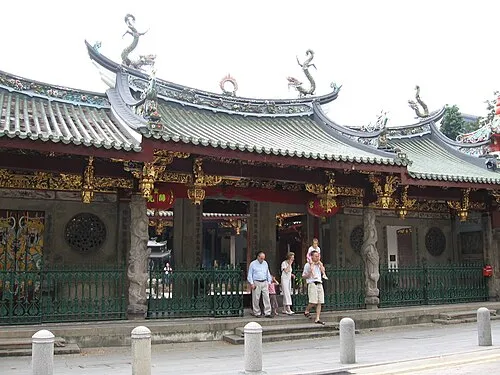
Built between 1839 and 1842, Thian Hock Keng is the oldest Chinese temple in Singapore and was designated a national monument in 1973. It was built by Hokkien immigrants to honor Mazu, the sea goddess, and its location on Telok Ayer Street marks the original shoreline before land reclamation pushed the coast hundreds of meters south. Sailors who survived the journey from Fujian came here first to give thanks. The craftsmanship is extraordinary. The temple was constructed without nails, using materials shipped from southern China: granite from Xiamen, tiles from Guangdong. The main hall is dedicated to Mazu, with a Mahayana Buddhist shrine to Guanyin at the back. The roof dragons, stone carvings, and painted door panels are among the finest in Southeast Asia. Open daily from 7:30 AM to 5 PM, free entry. Among the hidden gems in Singapore, Thian Hock Keng sits quietly on a street of bars and restaurants in the Chinatown area, easy to walk past if you are not looking for it. But this is where Singapore's immigrant story begins, and the building itself is worth more attention than the Merlion gets. Among things to do in Singapore for free, spending 20 minutes here connects you to 180 years of history.

Hours Daily: 7:30 AM – 5:00 PM
Price Free
Insider TipThe back courtyard leads to an annex with a modern mural by Yip Yew Chong depicting early Hokkien immigrant life. Most visitors miss it.
Tiong Bahru

4. Tiong Bahru

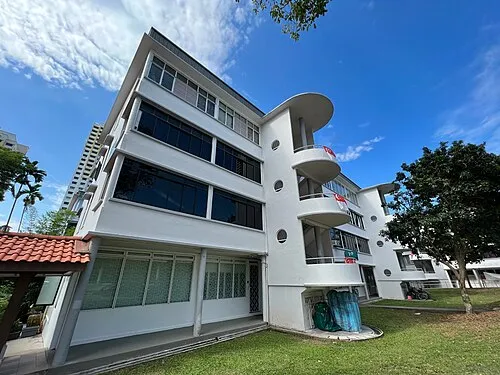
Singapore's oldest public housing estate, built in the 1920s by the colonial Singapore Improvement Trust, has become the city's most interesting neighborhood for walking. The art deco apartment blocks, with their curved balconies and pastel facades, look nothing like the HDB towers that define most of Singapore. Since the mid-2000s, the area has gentrified into a mix of old-school provision shops and hip cafes, vintage bookstores, and indie boutiques. The street art is worth tracking down: large murals on building walls depict scenes from the neighborhood's past. Tiong Bahru Bakery, the area's most famous cafe, draws a steady crowd for croissants and coffee. But the real pleasure is wandering the quiet residential streets between Seng Poh Road and Yong Siak Street, where the 54 original walk-up apartment buildings still stand. It is a 3-minute walk from Tiong Bahru MRT station. Among the hidden gems in Singapore, Tiong Bahru is the neighborhood that locals will send you to when you ask what to see beyond Marina Bay. The Tiong Bahru Market next door has two floors of hawker stalls for cheap local food. It is a different Singapore: low-rise, slow, and full of texture.

Hours Open 24/7
Price Free
Website Wikipedia
Location 1.2861, 103.8294
Insider TipLoo's Hainanese Curry Rice at the Tiong Bahru Market has been serving since the 1950s. Go before noon or it sells out.
Get Your Own Private Tour with AI Guide
AI Guide
  • Personalized tour tailored to your interests
  • Your AI guide tells stories, shares facts, and cracks jokes
  • Turn-by-turn GPS navigation
  • Available in your language — no download needed
Try for Free

🎨 Best Museums & Galleries in Singapore

World-class museums and galleries that make Singapore a cultural treasure.

Indian Heritage Centre

1. Indian Heritage Centre

Right in the middle of Little India on Campbell Lane, the Indian Heritage Centre is a modern four-storey building that traces the history of Indian communities in Singapore from ancient maritime trade to the present day. The collection covers Hindu, Muslim, Sikh, and Tamil cultures, with artifacts, photographs, and oral histories drawn from Singapore's diverse Indian population. Open Tuesday to Sunday, 10 AM to 6 PM. Closed Mondays. The building's contemporary architecture, with its grid of terracotta-colored panels, stands out against the traditional shophouses and temples of the surrounding neighborhood. Inside, the galleries move chronologically from early Indian traders who arrived via the Straits of Malacca through colonial-era labor migration to the cultural contributions of Indian Singaporeans today. It is well-organized and takes about an hour. Among the best museums in Singapore, the Indian Heritage Centre works best when combined with a walk through Little India itself: the Sri Veeramakaliamman Temple, the spice shops on Serangoon Road, and the Tekka Centre food market around the corner. The museum gives context to everything you see and smell on the streets outside.

Hours Mon: Closed | Tue-Sun: 10:00 AM – 6:00 PM
Price 6 SGD
Insider TipVisit on a Sunday when Little India is at its liveliest. The neighborhood transforms with weekend markets and crowds that give the streets real energy.
Malay Heritage Centre

2. Malay Heritage Centre

Set inside the Istana Kampong Glam, a gazetted national monument on Sultan Gate in the Kampong Glam neighborhood, the Malay Heritage Centre tells the story of Singapore's Malay community. The building itself was once a royal residence for the Malay sultans of Singapore, which gives the exhibitions a sense of place that most museums cannot match. The surrounding area, with the golden-domed Sultan Mosque a minute's walk away, is the cultural heart of Malay Singapore. The exhibitions cover Malay-Muslim identity, trade networks, arts, and contemporary community life. It is a small museum, manageable in about 45 minutes, and pairs well with a walk through the Haji Lane and Arab Street shopping area right outside. The neighborhood is full of textile shops, perfume sellers, and Middle Eastern restaurants. Among the best museums in Singapore for understanding the country's multicultural fabric, the Malay Heritage Centre is the Kampong Glam counterpart to the Indian Heritage Centre in Little India and the Peranakan Museum near the Civic District. Together, the three tell the complete story of Singapore's communities.

Hours Tue-Sun: 10:00 AM - 6:00 PM
Price 6 SGD
Insider TipCombine the museum visit with lunch at Kampong Glam Cafe on Beach Road for traditional Malay dishes, then walk Haji Lane for independent boutiques and street art.
Peranakan Museum

3. Peranakan Museum

The only museum in the world dedicated to Peranakan culture, housed in the Old Tao Nan School building on Armenian Street. The Peranakans, also called Straits Chinese, are descendants of Chinese immigrants who married local Malay women, creating a distinct culture with its own language, cuisine, dress, and customs. Admission is S$18. The museum is a sister institution to the Asian Civilisations Museum on the waterfront. The collection includes elaborate beadwork, wedding furniture, porcelain, and jewelry that reflect the blend of Chinese and Southeast Asian influences. The 12-day Peranakan wedding ceremony, recreated in one of the galleries, is a highlight. If you have eaten at National Kitchen by Violet Oon in the National Gallery Singapore or tried laksa in Katong, this museum shows you where that food tradition comes from. Among the best museums in Singapore, the Peranakan Museum fills a niche that no other institution anywhere covers. It is small enough to see in an hour and sits on a quiet street between the National Museum and the Singapore Art Museum. If you visit only one specialty museum in the city, make it this one. Among things to do in Singapore for cultural depth, understanding the Peranakan story unlocks a layer of the country that most tourists never reach.

Hours Mon-Thu: 10:00 AM – 7:00 PM | Fri: 10:00 AM – 9:00 PM | Sat-Sun: 10:00 AM – 7:00 PM
Price 18
Location 1.29422, 103.849
Insider TipOpen Friday evenings until 9 PM with fewer crowds than weekends. The gift shop has genuine Peranakan-style ceramics and textiles worth browsing.
Singapore Philatelic Museum

4. Singapore Philatelic Museum

The former Singapore Philatelic Museum on Coleman Street has been reinvented as a children's museum, now part of the National Heritage Board's network. The building is a charming colonial-era structure near the Armenian Church, and the current exhibitions are designed for kids ages 12 and under, with interactive displays spread across timed sessions. Open Tuesday to Sunday; closed Mondays. Visits are organized into 1-hour 45-minute time slots starting from 9 AM. If you have children, this is a practical option in the Civic District, walking distance from the National Museum and Peranakan Museum. The exhibitions rotate and have included themes around nature, cultures, and storytelling. It is small, climate-controlled, and designed to keep young kids engaged without overwhelming them. For adults without children, there is no particular reason to visit. Among the best museums in Singapore for families, this fills a gap. The National Gallery and Asian Civilisations Museum are better for older kids and adults. This one is purpose-built for the under-12 crowd.

Hours Mon: Closed | Tue-Sun: 9:00 – 10:45 AM, 11:00 AM – 12:45 PM, 2:00 – 3:45 PM, 4:00 – 5:45 PM
Price 8 SGD
Location Maps
Insider TipBook time slots online in advance. The morning sessions are less crowded than afternoon ones, especially during school holidays.
Get Your Own Private Tour with AI Guide
AI Guide
  • Personalized tour tailored to your interests
  • Your AI guide tells stories, shares facts, and cracks jokes
  • Turn-by-turn GPS navigation
  • Available in your language — no download needed
Try for Free

🍕 Food Markets & Culinary Spots in Singapore

The best food markets, food halls, and culinary destinations in Singapore.

Chinatown Complex Market & Food Centre

1. Chinatown Complex Market & Food Centre

The largest hawker center in Singapore, with over 700 stalls spread across multiple floors. The ground floor is a wet market selling produce, meat, and seafood. The upper floors are the food center, a maze of stalls serving everything from char kway teow to carrot cake to fish head curry. Built in 1983 and refreshed in 2019, it is the kind of place where you can eat a different dish every day for a month and never repeat. Liao Fan Hawker Chan, the stall that became the world's first Michelin-starred hawker, is here (stall #02-126). The soya sauce chicken rice costs about S$3-5 per plate. But the real pleasure of this place is exploring beyond the famous names. Walk the aisles, look for the stalls with the longest local queues, and order whatever they are eating. The complex is open daily from 7 AM to 10 PM. Among the food markets in Singapore, Chinatown Complex is the most overwhelming and the most rewarding. Maxwell Food Centre nearby is smaller and more curated. This is the deep end. It is a 3-minute walk from Chinatown MRT. Among things to do in Singapore for food, spending a meal here is how you earn the right to say you have eaten in Singapore.

Hours Daily: 7:00 AM – 10:00 PM
Price $$
Website N/A
Insider TipThe wet market on the ground floor is best visited before 10 AM. For food, the second floor has less tourist traffic than the main food court level.
Lau Pa Sat

2. Lau Pa Sat

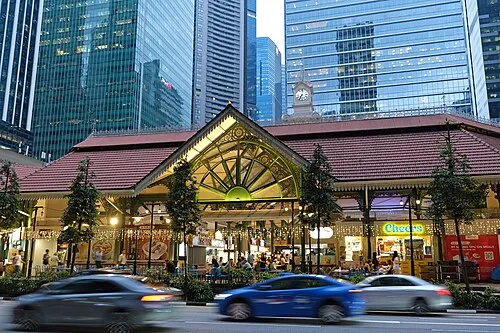
Originally built as a fish market in 1824 and rebuilt in its current form in 1894, Lau Pa Sat is the most atmospheric hawker center in Singapore. The Victorian cast-iron structure, with its octagonal design and wrought-iron pillars, is one of the oldest prefabricated iron buildings in Asia. It is also the only surviving market from early colonial Singapore. The name means "Old Market" in Hokkien. It operates as a 24-hour food court today. The headline event happens after 7 PM when Boon Tat Street alongside the market closes to traffic and the satay sellers set up their charcoal grills. The smoke, the sizzle, the rows of bamboo skewers, this is Singapore's most theatrical street food scene. Order satay (chicken, mutton, or beef), grilled stingray with sambal, and a cold Tiger beer. Prices are slightly higher than at Maxwell Food Centre or Chinatown Complex, but the setting justifies it. Among the food markets in Singapore, Lau Pa Sat is where architecture and food culture collide. It sits in the CBD near Raffles Place MRT, surrounded by office towers, which makes the contrast between the iron market and the glass buildings even more striking.

Hours Open 24/7
Price Free
Website laupasat.sg/
Location 1.28061, 103.85
Insider TipThe satay stalls on Boon Tat Street only fire up after 7 PM. Stall 7 and Stall 8 consistently have the best chicken satay. Order at least 10 sticks per person.
Maxwell Food Centre

3. Maxwell Food Centre

A hawker center in Chinatown with 103 stalls, and the single most famous place to eat cheap in Singapore. Tian Tian Hainanese Chicken Rice at stall 10 is the one that put this place on the map, endorsed by Anthony Bourdain and consistently packed with a line that moves faster than it looks. The chicken rice costs about S$5-6 per plate. Beyond that stall, the center has excellent ngo hiang (five-spice meat rolls), ham chim peng (fried dough), and herbal broths. Maxwell sits at the junction of Maxwell Road and South Bridge Road, a short walk from Thian Hock Keng Temple and the Chinatown MRT. Open daily from 8 AM to 10 PM, though individual stalls keep their own hours and many close by mid-afternoon. The busiest time is 11:30 AM to 1:30 PM on weekdays when the CBD office crowd arrives. Arrive at 11 or wait until 2. Among the food markets in Singapore, Maxwell is the one that delivers exactly what tourists hope for: real hawker food at hawker prices in a setting that has not been polished for Instagram. It is louder, hotter, and more chaotic than Lau Pa Sat down the road, and the food is better for it. Among things to do in Singapore on a budget, eating your way through 3-4 stalls here is the definition of value.

Hours Daily: 8:00 AM – 10:00 PM
Price $
Insider TipTian Tian closes on Mondays and runs out of chicken by 2:30 PM on busy days. If the line is too long, Ah Tai Hainanese Chicken Rice two stalls down is nearly as good with half the wait.
Tekka Centre

4. Tekka Centre

Right at the corner of Bukit Timah Road and Serangoon Road, next to Little India MRT, Tekka Centre is the hawker center that best represents Singapore's Indian food culture. The ground floor has a wet market with spices, garlands, and produce you will not find in the Chinese-dominated markets. Upstairs, the food stalls serve biryani, roti prata, tandoori naan, murtabak, fish head curry, and thick dhal with rice. Unlike Maxwell or Lau Pa Sat, Tekka Centre does not draw big tourist crowds, which keeps the food honest and the prices low. A plate of biryani with mutton costs around S$5-7. The Malay-Muslim stalls here are excellent, and the Indian vegetarian options are among the best in the city. The center also has a row of shops selling textiles, saris, and gold jewelry at the edges. Among the food markets in Singapore, Tekka Centre is the spiciest. If you have been eating chicken rice and char kway teow all week, this is where you reset your palate. It sits at the gateway to Little India, a minute from the Indian Heritage Centre.

Hours Daily: 6:30 AM - 9:00 PM
Price Free
Website Wikipedia
Location 1.3062, 103.851
Insider TipAllauddin's Briyani on the second floor is the stall locals swear by. The mutton biryani sells out by early afternoon. Go before noon.
Get Your Own Private Tour with AI Guide
AI Guide
  • Personalized tour tailored to your interests
  • Your AI guide tells stories, shares facts, and cracks jokes
  • Turn-by-turn GPS navigation
  • Available in your language — no download needed
Try for Free

🌳 Parks & Best Viewpoints in Singapore

Beautiful parks, gardens, and panoramic viewpoints for the best views of Singapore.

East Coast Park

1. East Coast Park

Singapore's largest park stretches 15 km along the southeastern coast, all of it built on reclaimed land. At 185 hectares, it is bigger than Gardens by the Bay and Singapore Botanic Gardens combined. The man-made beach is swimmable, protected by breakwaters, and the cycling path runs the full length of the park. Bike rental shops are clustered near the main entrances. Open 24 hours, free. This is where Singaporeans go on weekends: families set up at barbecue pits, joggers run the coastal track, kids rollerblade, and groups book the seafood restaurants along the East Coast Lagoon Food Village. It is not a tourist attraction in the traditional sense. Nobody comes to Singapore specifically for this beach. But as a place to spend a late afternoon after days of museum-hopping and hawker-crawling, it works. Among the parks in Singapore, East Coast Park is the most lived-in. The views are of container ships heading to and from the port, which has its own beauty. The cycling connector links all the way to Changi Beach Park, 12 km further east. Best views in Singapore are debatable, but the openness here is real.

Hours Open 24/7
Price Free
Insider TipThe East Coast Lagoon Food Village (hawker center by the beach) does excellent satay and BBQ seafood. Arrive by 6 PM on weekends to get a seat.
Mount Faber

2. Mount Faber

At 94 meters, Mount Faber is not much of a mountain, but in flat Singapore, it is one of the highest points on the main island. The summit gives you a wide view south toward the port, Sentosa Island, and the container ships queuing in the Strait. On clear days you can see the Indonesian islands across the water. The hill is accessible from HarbourFront MRT via the Marang Trail footpath, or you can ride the Singapore Cable Car from HarbourFront to the summit. The cable car is the more popular approach and continues onward to Sentosa, making Mount Faber a natural stop if you are heading to Universal Studios or Fort Siloso. The hilltop itself has a lookout point, a few restaurants, and the Jewel Box cable car station. Walking up takes about 20 minutes from HarbourFront MRT. The park is open 24 hours and free. Among the best views in Singapore, Mount Faber gives you the south-facing perspective that the Marina Bay waterfront does not. At sunset, the light catches the shipping lanes and the towers of Keppel Bay. It connects to the Southern Ridges trail network, so you can extend the walk if you want more. Among things to do in Singapore that involve actual elevation, this is where you find it.

Hours Open 24/7
Price Free
Insider TipWalk up via the Marang Trail (entrance near HarbourFront MRT Exit D) for a forest trail experience. It takes 20 minutes and is far more scenic than the road approach.
Southern Ridges

3. Southern Ridges

A 10 km trail connecting three parks along the southern ridge of the island, from Kent Ridge Park to Mount Faber and HarbourFront. The project cost S$25.5 million and took 2 years to build. The highlight is Henderson Waves, a sculptural pedestrian bridge 36 meters above the road, shaped like a wooden wave. The Forest Walk section is an elevated steel walkway through secondary forest canopy, and the Canopy Walk at Kent Ridge offers views over the southern coastline. You can walk the full 10 km in about 3 to 4 hours at a comfortable pace, or pick a section. The Henderson Waves to Mount Faber stretch is the most scenic and takes about an hour. The trails are paved, well-maintained, and mostly shaded by tree cover, which matters in Singapore's heat. Free to walk, open daily. The best time is early morning or late afternoon when temperatures drop below 30 degrees. Among the best views in Singapore, the Southern Ridges offer something you cannot get from any observation deck: the feeling of being above the city, in actual forest, with the port and sea visible through gaps in the canopy. It is the longest connected green corridor in the city. Among things to do in Singapore for active travelers, this is the walk that justifies packing proper shoes.

Hours Open 24/7
Price Free
Website Wikipedia
Location 1.2753, 103.8165
Insider TipStart at Kent Ridge MRT and walk south toward Mount Faber. This direction keeps the sun behind you in the morning. End at HarbourFront MRT for easy access back to the city.
Get Your Own Private Tour with AI Guide
AI Guide
  • Personalized tour tailored to your interests
  • Your AI guide tells stories, shares facts, and cracks jokes
  • Turn-by-turn GPS navigation
  • Available in your language — no download needed
Try for Free

Explore with AI Guide

AI Guide App

Get personalized tours with our AI-powered guide. No download needed — works right in your browser.