Things to Do in Tbilisi - Top Attractions, Hidden Gems & Must-See Sights

Discover the best things to do in Tbilisi. Complete guide to must-see sights, popular attractions, hidden gems, museums, food markets and parks.

17 Attractions 4 Categories Travel Guide

Table of Contents

Tbilisi Overview

Tbilisi is a city that wears its contradictions openly. A 4th-century fortress shares a skyline with a glass pedestrian bridge from 2010. Soviet apartment blocks sit behind ornate Art Nouveau balconies. Sulfur baths that gave the city its name ("tbili" means warm) still pump naturally heated mineral water in the same district where they did centuries ago. The Mtkvari River cuts through the middle, with the tangled old town climbing the hills on one side and the more orderly Avlabari district rising on the other.

This is a city for people who like their travel unpolished. Tbilisi is not pristine or manicured. The old town streets are cracked, the renovation is uneven, and that is part of its honesty. Georgian hospitality is not a marketing slogan here; strangers will invite you for wine, the food is heavy and extraordinary, and the city runs on a rhythm that does not rush. A long supra (feast) is considered time well spent, not time wasted.

First-time visitors should focus on the old town and the Narikala ridge. Everything from the sulfur baths to Metekhi Church to the Bridge of Peace sits within walking distance in a compact area. Add Rustaveli Avenue for the cultural institutions and Dezerter Bazaar for the food, and you have a full 3 to 4 days without stretching. Travelers who like ancient history, religious architecture, exceptional food, and a city that has not yet been smoothed over for tourists will find Tbilisi hard to leave.

Must-See Attractions in Tbilisi

  • Narikala Fortress
  • Sulfur Baths
  • Metekhi Church
  • Holy Trinity Cathedral
  • Rustaveli Avenue
  • Bridge of Peace
🏛️ Must-See ⭐ Sights 💎 Hidden Gems 🎨 Museums

🏛️ Must-See Attractions in Tbilisi

These iconic landmarks and must-see sights are essential stops for any visitor to Tbilisi.

Bridge of Peace

1. Bridge of Peace

Opened in May 2010, the Bridge of Peace is Tbilisi's most divisive piece of architecture. This 150-meter pedestrian bridge crosses the Mtkvari River between the old town and Rike Park, designed by Italian architect Michele De Lucchi with a curving glass-and-steel canopy that looks like a giant sleeping caterpillar. Locals either love it or hate it. The construction cost 12.5 million Georgian lari from the city budget, and putting something this modern in the middle of the historic center sparked real debate. Whatever your opinion on the design, walking across it is free, it is open 24 hours, and the views in both directions are excellent. Looking upstream you see Metekhi Church on its cliff. Downstream, the old town cascades up toward Narikala Fortress. At night, thousands of LED lights embedded in the canopy put on a slow-shifting color display that is genuinely impressive from either bank. Rike Park and the cable car station sit on one side; Shardeni Street and the old town cafes on the other. It is a 2-minute crossing that ties together much of what you will do in the city.

Hours Open 24/7
Price Free
Website Wikipedia
Insider TipCross at night for the LED light show, then double back in the morning for photos when the sun lights up Narikala behind you.
Metekhi Church

2. Metekhi Church

Perched on a cliff above the Mtkvari River, Metekhi Church is probably the most photographed building in Tbilisi, and for good reason. The current structure was rebuilt by King Demetre II between 1278 and 1289, though a church and fortress have occupied this rock since the 5th century. The equestrian statue of King Vakhtang Gorgasali out front, erected in 1967 by sculptor Elguja Amashukeli, has become the city's unofficial emblem. This place has survived almost everything. Mongol invasions destroyed the original buildings in 1235. Under Russian rule after 1801, the church was converted into military barracks and later a prison until 1938. Stalin's secret police chief Beria tried to demolish it entirely, but Georgian intellectuals resisted so fiercely that it was saved. The church only returned to active worship in 1988. Standing inside knowing all that, the space feels earned rather than given. From the cliff edge you look directly across to Narikala Fortress and down to the sulfur baths district. The viewpoint is free and open daily from 9 AM to 8 PM.

Hours Mon-Sat: 9:00 AM – 8:00 PM | Sun: 8:30 AM – 8:00 PM
Price Free
Website Wikipedia
Location 41.69, 44.81111
Insider TipCome at dusk when the fortress and church are lit up. The cliff edge behind the statue gives you the classic Tbilisi panorama shot with the river below.
Mother of Georgia Monument

3. Mother of Georgia Monument

Kartlis Deda, the Mother of Georgia, stands 20 meters tall on Sololaki Ridge, holding a bowl of wine in one hand for friends and a sword in the other for enemies. The aluminum statue was erected in 1958 to mark Tbilisi's 1,500th anniversary, sculpted by Elguja Amashukeli (the same artist who created the Vakhtang Gorgasali equestrian statue at Metekhi Church). The original was wooden, later covered in aluminum in 1963, and replaced entirely with a new version in 1997. The monument sits on the ridge between Narikala Fortress and the cable car upper station, so most visitors pass it while walking between the two. The statue itself is large but simple. What makes the stop worthwhile is the viewpoint at its base: you look straight down into the Botanic Garden on one side and across the old town rooftops on the other. It is open 24 hours and free. As one of the best views in Tbilisi, the Mother of Georgia platform works best in combination with Narikala. Take the cable car up, walk to the statue, then continue along the ridge to the fortress walls.

Hours Open 24/7
Price Free
Website Wikipedia
Narikala Fortress

4. Narikala Fortress

Narikala is the skeleton of Tbilisi's entire history, sitting on a ridge between the sulfur baths district and the Botanic Garden. A fortress has stood here since the 4th century, expanded significantly under David the Builder in the early 12th century, and named "Narin Qala" (little fortress) by the Mongols. What you see today mostly dates from the 16th and 17th centuries, with large sections collapsed after an earthquake in 1827. The ruins are open and free to explore, with crumbling walls you can walk along and peer through. The climb up from Abanotubani takes about 15 minutes on foot, or you can ride the cable car from Rike Park and walk down instead. Inside the lower courtyard sits the rebuilt Church of St. Nicholas, small and plain, reconstructed in 1996. Go late afternoon when the light is warm and the crowds thin out. The walls face west, so sunset turns the stone golden. Just watch your footing on the upper sections where the paths get narrow and unguarded.

Hours Daily: 8:00 AM – 8:00 PM
Price Free
Website Wikipedia
Insider TipTake the cable car up from Rike Park (about 2 GEL), then walk down through the fortress to the Botanic Garden entrance on the south side. You cover three attractions in one downhill route.
Rustaveli Avenue

5. Rustaveli Avenue

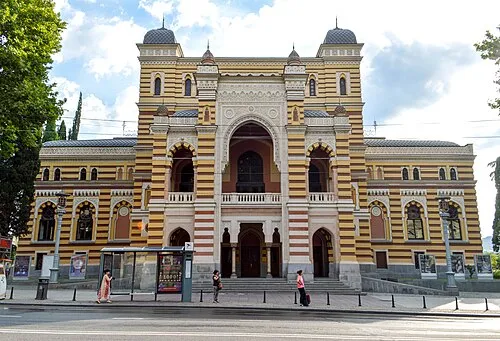
Rustaveli Avenue is the main artery of Tbilisi, stretching 1.5 kilometers from Freedom Square to Kostava Street. Named after the medieval Georgian poet Shota Rustaveli, it is where the city conducts its official business, stages its protests, and puts on its best face. Parliament, the Supreme Court, the National Museum, the Opera House, the Rustaveli Theatre, and the Academy of Sciences all line this one boulevard. Metro stations sit at both ends. The avenue has a European grandeur to it: wide sidewalks, plane trees, 19th-century facades mixed with Soviet-era buildings and newer glass additions. It feels very different from the winding old town streets around Narikala and Metekhi. This is modern Tbilisi, or at least the version the city wants you to see. The tragic events of April 9, 1989, when Soviet troops attacked peaceful demonstrators here, give the street a solemn undercurrent that locals never forget. Start at Freedom Square, stroll the full length, duck into the Georgian National Museum or catch a performance at the Opera.

Hours Open 24/7
Price Free
Website Wikipedia
Insider TipThe stretch between the Opera House and Parliament has the best cafe terraces. Sit outside at one of the second-floor balcony cafes for prime people-watching.
Sulfur Baths

6. Sulfur Baths

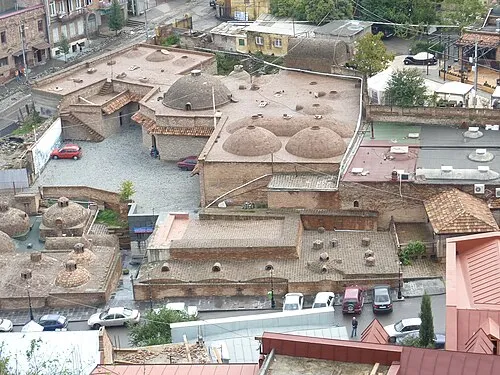
Tbilisi literally means "warm place," and the reason is right here. Abanotubani, the sulfur baths district at the foot of Narikala Fortress, is where naturally heated mineral water has been bubbling up for centuries. The squat brick buildings with their rounded domes look like something out of a Persian miniature painting. Inside, the water runs between 35 and 40 degrees Celsius, heavy with hydrogen sulfide. The smell hits you, but you get used to it within minutes. Several bathhouses operate daily from 9 AM to 11 PM, and the experience ranges from cheap communal pools to private rooms with massage. The most photographed is the Orbeliani Bathhouse (Chreli Abano) with its blue-tiled facade, but the private rooms at Bathhouse No. 5 are often quieter and cheaper. A private room for two typically starts around 50-80 GEL depending on the season and bathhouse. The baths sit directly below Narikala and a short walk from Metekhi Church. After soaking, wander the narrow streets of the surrounding old town.

Hours Daily: 9:00 AM – 11:00 PM
Price 5-50 GEL
Insider TipGo on a weekday morning right at 9 AM for the quietest experience. Book a private room rather than the communal pool if you want to actually relax.
Get Your Own Private Tour with AI Guide
AI Guide
  • Personalized tour tailored to your interests
  • Your AI guide tells stories, shares facts, and cracks jokes
  • Turn-by-turn GPS navigation
  • Available in your language — no download needed
Try for Free

💎 Hidden Gems in Tbilisi - Off the Beaten Path

Beyond the tourist crowds, Tbilisi hides remarkable treasures waiting to be discovered.

Anchiskhati Basilica

1. Anchiskhati Basilica

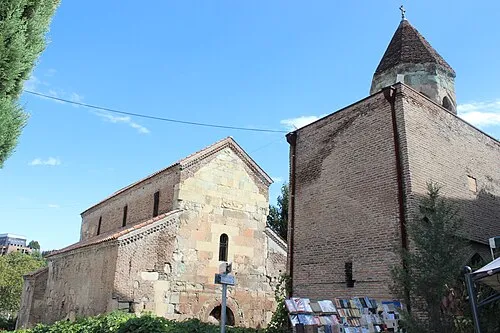
Anchiskhati is the oldest surviving church in Tbilisi. While Metekhi and Narikala draw the crowds, this small basilica on Shavteli Street has been standing since the 6th century, making it roughly 1,500 years old. The name comes from the Anchi icon of Christ, a precious relic that was kept here for centuries. The building is modest, built of pale stone, with a three-nave layout that feels intimate rather than grand. The church sits in a quiet courtyard just north of the Bridge of Peace, about a 3-minute walk from the busy cafes of Shardeni Street. Most tourists walk right past it, which is exactly why it is worth stopping. Inside, the lighting is dim, the walls are bare stone, and the atmosphere is contemplative. Services are held regularly and attended by locals, not tour groups. It is a functioning parish church, not a museum piece. As one of the hidden gems in Tbilisi, Anchiskhati gives you a sense of the city's deep history without any lines or entrance fees. Open Monday through Friday from 9 AM to 6 PM, and weekends until 7 PM. Among things to do in Tbilisi, it is the kind of place you stumble on and then remember more clearly than buildings ten times its size.

Hours Mon-Fri: 9:00 AM – 6:00 PM | Sat-Sun: 9:00 AM – 7:00 PM
Price Free
Insider TipIf you hear polyphonic singing coming from inside, go in. The church occasionally hosts rehearsals of traditional Georgian choral music, and the acoustics in this small space are extraordinary.
Avlabari Neighborhood

2. Avlabari Neighborhood

Avlabari is the district on the left bank of the Mtkvari, east of the old town, dominated by the massive Holy Trinity Cathedral on its hill. This used to be an Armenian quarter with its own distinct character, and traces of that remain in a few old churches and the layout of the narrow streets. The metro station here, opened in 1967, was renovated in 2006 with a modern interior that contrasts with the old neighborhood above. The area around the cathedral has changed rapidly. New restaurants, wine bars, and boutique guesthouses have opened along the streets leading up to Sameba. But walk a few blocks in any direction and you are in residential Tbilisi: laundry lines between balconies, grandmothers on benches, kids playing in courtyards. It is a 10-minute walk from Metekhi Church, and the route between the two gives you the best sense of how Tbilisi shifts from historic to lived-in within a few steps. As one of the hidden gems in Tbilisi, Avlabari rewards wandering without a fixed destination. The streets south of the cathedral drop steeply toward the river, and the views from these residential blocks are better than many official viewpoints.

Hours Open 24/7
Price Free
Website Wikipedia
Insider TipEat at one of the small family-run restaurants on the streets below the cathedral. The khinkali here are made fresh for locals, not tourists, and the prices reflect that.
Botanic Garden

3. Botanic Garden

Tbilisi's National Botanic Garden covers 97 hectares in the valley behind Narikala Fortress, following the course of the Tsavkisistsqali River. That makes it far larger than most visitors expect. The garden has existed since the mid-1800s, when it was designated a botanical garden in 1845 under Russian rule, though the royal gardens on this site are much older. Inside you will find walking paths winding through subtropical vegetation, a waterfall with an arched bridge built in 1914, rare plant collections, and a tropical greenhouse. The main entrance is at the bottom of Botanikuri Street, right at the foot of Narikala. A second entrance, connected by a tunnel through the Sololaki ridge, opens from Asatiani Street. The garden is open daily from 9 AM to 5:30 PM. It is the kind of place where you can lose an hour without trying. The paths are shaded, the river runs through the middle, and apart from a few joggers and families, it stays remarkably quiet for a spot this close to the city center. As one of the hidden gems in Tbilisi, the Botanic Garden is the perfect escape after climbing Narikala. Walk down through the fortress to the garden entrance, spend an hour among the trees, and exit onto the streets of the old town. Among things to do in Tbilisi, this is where the city pauses and breathes.

Hours Daily: 9:00 AM – 5:30 PM
Price Free
Website nbgg.ge/
Insider TipEnter from the Narikala side (south gate) after visiting the fortress. The waterfall and 1914 bridge are about a 10-minute walk from that entrance.
Get Your Own Private Tour with AI Guide
AI Guide
  • Personalized tour tailored to your interests
  • Your AI guide tells stories, shares facts, and cracks jokes
  • Turn-by-turn GPS navigation
  • Available in your language — no download needed
Try for Free

🎨 Best Museums & Galleries in Tbilisi

World-class museums and galleries that make Tbilisi a cultural treasure.

Georgian Museum of Fine Arts

1. Georgian Museum of Fine Arts

The Shalva Amiranashvili Museum of Fine Arts, also on Rustaveli Avenue just doors from the National Museum, holds Georgia's most important art collection. It is part of the National Museum system but has its own building and its own character. The collection spans medieval church art, including gold and silver crosses, illuminated manuscripts, and enamelwork that Georgia is famous for, alongside Georgian painting from the 19th and 20th centuries. The museum is smaller and quieter than the National Museum, which is part of its appeal. Where the National Museum can feel overwhelming with its scale, the Fine Arts Museum lets you stand in front of a 12th-century cloisonne enamel triptych and actually absorb it. Closed Mondays, open Tuesday through Sunday from 10 AM to 7 PM. Ticket prices are modest. As one of the best museums in Tbilisi, this one is for people who care about craftsmanship and religious art. The medieval metalwork and enamel collection alone justifies the visit. It pairs naturally with the Georgian National Museum down the street for a full morning of Rustaveli Avenue culture.

Hours Mon: Closed | Tue-Sun: 10:00 AM – 7:00 PM
Price 10 GEL
Website finearts.ge/
Insider TipAsk at the ticket desk about combined tickets with the National Museum. When available, they save you money on both entries.
Georgian National Museum

2. Georgian National Museum

The Georgian National Museum on Rustaveli Avenue is the country's largest museum complex, formed in 2004 by merging several institutions. The main building, the Simon Janashia Museum of Georgia, was founded in 1852 and holds over 1.5 million objects spanning archaeology, ethnography, and natural history. The ground floor has prehistoric gold from Colchis-era burials that is genuinely jaw-dropping: tiny, detailed goldwork from the 2nd millennium BCE that rivals anything in the British Museum. The Museum of Soviet Occupation, housed in the same building, is small but blunt. Photographs, documents, and personal items tell the story of Georgia under Soviet rule from 1921 to 1991. It is sobering and necessary, and it takes about 30 minutes. The museum is closed on Mondays and open Tuesday through Sunday from 10 AM to 6 PM. Entry is affordable, usually around 15 GEL for adults. As one of the best museums in Tbilisi, the National Museum is worth at least 2 hours, more if you are interested in Caucasian archaeology. It sits right on Rustaveli Avenue between the Opera House and Freedom Square, so it fits naturally into a walk down the boulevard. Among things to do in Tbilisi, this is where you get the context for everything else you will see in the city.

Hours Mon: Closed | Tue-Sun: 10:00 AM – 6:00 PM
Price 15 GEL
Website museum.ge/
Insider TipHead straight to the Treasury room on the ground floor for the Colchian gold. Most visitors wander the upper floors first and miss the best collection.
Tbilisi History Museum

3. Tbilisi History Museum

The Tbilisi History Museum, named after historian Ioseb Grishashvili, occupies a former caravanserai on Sioni Street in the old town. Founded in 1910 as a municipal museum, it has been collecting objects related to Tbilisi's daily life for over a century. The collection of around 50,000 items includes Bronze Age tools, medieval ceramics, weapons, household objects, old maps, and paintings of the city by Georgian artists like Lado Gudiashvili and Elene Akhvlediani. The building itself is part of the experience. The caravanserai structure, with its courtyard and thick walls, gives you a feel for what old Tbilisi's commercial buildings looked like. The museum is closed on Mondays, open Tuesday through Sunday from 10 AM to 6 PM, and sees far fewer visitors than the National Museum on Rustaveli. If you want to understand how ordinary people lived in Tbilisi across the centuries, this is where to come. As one of the best museums in Tbilisi, the History Museum is for those who have already walked the old town streets and want the backstory. It sits steps from Sioni Cathedral and a short walk from Shardeni Street. Among things to do in Tbilisi, this small museum delivers a surprisingly personal view of the city that the bigger institutions tend to gloss over.

Hours Mon: Closed | Tue-Sun: 10:00 AM – 6:00 PM
Price Free
Website museum.ge/
Insider TipThe 19th-century paintings of Tbilisi on the upper floor show streets and buildings you can still recognize today. Compare them with what you see outside.
Get Your Own Private Tour with AI Guide
AI Guide
  • Personalized tour tailored to your interests
  • Your AI guide tells stories, shares facts, and cracks jokes
  • Turn-by-turn GPS navigation
  • Available in your language — no download needed
Try for Free

Explore with AI Guide

AI Guide App

Get personalized tours with our AI-powered guide. No download needed — works right in your browser.