Things to Do in Tel-Aviv - Top Attractions, Hidden Gems & Must-See Sights

Discover the best things to do in Tel-Aviv. Complete guide to must-see sights, popular attractions, hidden gems, museums, food markets and parks.

20 Attractions 5 Categories Travel Guide

Table of Contents

Tel-Aviv Overview

Tel Aviv is a city that lives outdoors. Built on sand dunes starting in 1909, it grew fast, absorbed ancient Jaffa to its south, and became a Mediterranean metropolis where the beach is never more than a 20-minute walk away. The architecture tells the story: over 4,000 Bauhaus and International Style buildings from the 1930s earned the center a UNESCO World Heritage designation as the White City, while Jaffa's stone alleyways date back thousands of years. The food scene pulls from Mizrahi, Yemeni, Moroccan, Iraqi, and Ashkenazi traditions, and the markets are where it all comes together.

Tel Aviv works for travelers who want city energy without the heaviness of a purely historical destination. The beaches are real and used daily by locals, not just tourists. The nightlife runs late, the restaurants are genuinely good, and the walkability between neighborhoods means you can cover Old Jaffa, Neve Tzedek, the Carmel Market, Rothschild Boulevard, and the beach promenade in a single day on foot. The pace is relaxed on weekdays and almost pauses on Shabbat, when the city goes quiet and the waterfront becomes the center of everything.

The city rewards curious eaters, architecture fans, beach lovers, and anyone who likes walking through neighborhoods with distinct personalities. It is compact enough to explore without a car and varied enough to hold your attention for 3 to 5 days.

Must-See Attractions in Tel-Aviv

  • Old City of Jaffa
  • Carmel Market
  • Rothschild Boulevard
  • Tel Aviv Beach Promenade
  • Sarona Market
🏛️ Must-See ⭐ Sights 🎨 Museums 🍕 Food & Markets 🌳 Parks & Views

🏛️ Must-See Attractions in Tel-Aviv

These iconic landmarks and must-see sights are essential stops for any visitor to Tel-Aviv.

Carmel Market

1. Carmel Market

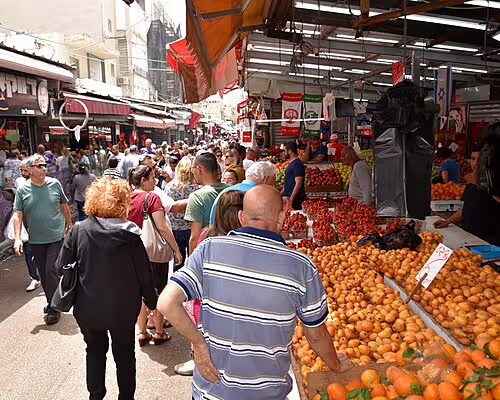
Shuk HaCarmel is the largest and oldest open-air market in Tel Aviv, and it hits you with noise and color the moment you step in. The market runs along HaCarmel Street from Magen David Square southward, spilling into side streets in the Yemenite Quarter and Nahalat Binyamin. Produce stalls are piled with pomegranates, dates, and halva in every flavor. Clothing vendors, spice shops, and fresh juice stands compete for your attention. It is open Sunday through Thursday from 7 AM to 9 PM, and Friday until 4 PM. Closed on Shabbat. This is where Tel Aviv locals actually shop, not just tourists. The prices drop as you head deeper in, away from the main entrance near Magen David Square. Freshly squeezed pomegranate juice costs about 15 ILS, and the bakeries along the edges sell burekas (flaky pastries filled with cheese or potato) for a few shekels each. The market has expanded over the decades and now connects directly to Nahalat Binyamin Street, where artisan craft fairs run on Tuesdays and Fridays. As a must-see in Tel Aviv, Carmel Market gives you the street-level energy that the polished Sarona Market does not. Things to do in Tel Aviv often start and end here. Come hungry, bring small bills, and expect crowds.

Hours Mon-Thu: 7:00 AM – 9:00 PM | Fri: 7:00 AM – 4:00 PM | Sat: Closed | Sun: 7:00 AM – 9:00 PM
Price Free
Insider TipThe best falafel and shawarma stands are on the side streets off the main market lane, particularly along HaShomer Street. Prices are lower and lines shorter than the well-known spots at the market entrance.
Old City of Jaffa

2. Old City of Jaffa

Jaffa is older than Tel Aviv by about 4,000 years. This ancient port city, now merged with its younger neighbor, sits on a sandstone hill overlooking the Mediterranean, and walking its narrow alleyways feels like stepping into a different country entirely. The Old City covers roughly 300 dunams (about 75 acres), and its stone streets are named after zodiac signs. Artists' galleries, workshops, and small cafes fill the restored Ottoman-era buildings, and from the hilltop you get a panoramic sweep of Tel Aviv's entire coastline. This is a must-see in Tel Aviv, and for good reason. Jaffa was one of the oldest functioning ports in the world, the place where, according to legend, Jonah set sail and Perseus rescued Andromeda. Today the port area has been converted into a mix of restaurants and fishing boats, and the contrast between ancient stone walls and Tel Aviv's glass towers across the water is something you won't forget. The Jaffa Flea Market and Kikar Kdumim Square are both here, so you can easily spend half a day exploring. Come in the late afternoon. The light over the Mediterranean turns golden, the day-trippers thin out, and the rooftop restaurants start filling with locals. From Neve Tzedek, it is a 15-minute walk south along the coast. Among things to do in Tel Aviv, Jaffa gives the city its historical weight.

Hours Open 24/7
Price Free
Website Wikipedia
Insider TipEnter through the Jaffa Clock Tower side and walk uphill toward the hilltop garden. The path through the artists' quarter is quieter than the main road through the flea market area, and the sea views from the top are unobstructed.
Rothschild Boulevard

3. Rothschild Boulevard

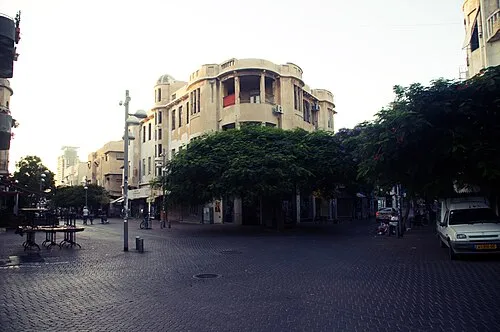
Rothschild Boulevard is where Tel Aviv happened. The State of Israel was declared here in 1948, at what was then the home of the city's first mayor, Meir Dizengoff. Today the tree-lined boulevard stretches through the center of the city, with a wide pedestrian and bike path running down the middle, flanked by some of the best-preserved Bauhaus and Eclectic-style buildings in the country. It is a must-see in Tel Aviv, and it costs nothing to walk. The boulevard has a double personality. During the day, it is a calm, shaded corridor where people jog, walk dogs, and grab coffee from sidewalk kiosks. The original kiosk of Tel Aviv still stands here, restored and functioning. At night, the southern end comes alive with bars and restaurants. The architecture alone is worth the stroll: white modernist cubes with rounded balconies, ribbon windows, and pilotis sit alongside ornate 1920s Eclectic mansions. This is the densest concentration of International Style buildings in the world, which earned the area its UNESCO White City designation in 2003. Start at Habima Square, where you can peek into the Tel Aviv Museum of Art, and walk southwest toward Neve Tzedek. The whole length is about 1.5 kilometers. Among things to do in Tel Aviv, this walk gives you the city's history, architecture, and street life in one shot.

Hours Open 24/7
Price Free
Website Wikipedia
Insider TipThe small side streets between Rothschild and Allenby, especially around Shenkin Street, have the best independent cafes. Friday mornings before Shabbat are particularly lively.
Sarona Market

4. Sarona Market

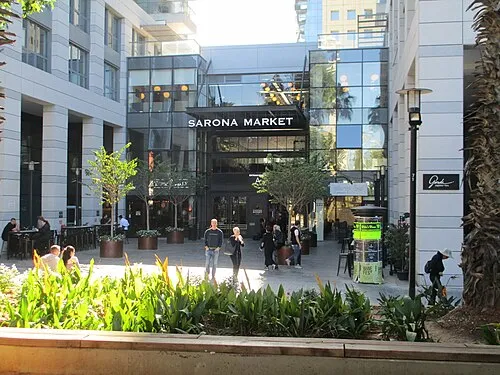
Sarona Market opened in 2015 inside the restored grounds of a former German Templer colony from the 19th century. It is the largest indoor culinary market in Israel, spread over 8,700 square meters with about 90 vendors, restaurants, and food stalls. The air-conditioned interior makes it a comfortable retreat on hot days, which is most days in Tel Aviv. Open Sunday through Wednesday until 10 PM, Thursday until 11 PM, Friday until 4 PM, and Saturday from 10 AM. The market leans upscale compared to the Carmel Market. You will find craft beer bars, sushi counters, artisanal chocolate shops, specialty coffee roasters, and gourmet butchers. Prices are higher than a street market, but the quality matches. This is where you go when you want to eat well in a curated setting rather than navigate the chaos of an open-air shuk. The surrounding Sarona complex has restored Templer stone houses from the 1870s, and the contrast between those old German colony buildings and the Azrieli Towers looming overhead is very Tel Aviv. It sits near the business district, a short walk east of Rothschild Boulevard.

Hours Mon-Wed: 10:00 AM – 10:00 PM | Thu: 10:00 AM – 11:00 PM | Fri: 9:00 AM – 4:00 PM | Sat-Sun: 10:00 AM – 10:00 PM
Price Free
Insider TipThe lower level has a large supermarket with an impressive international wine and cheese selection, useful if you are stocking up for a beach picnic or apartment rental.
Tel Aviv Beach Promenade

5. Tel Aviv Beach Promenade

Tel Aviv's coastline stretches about 14 kilometers along the Mediterranean, and the promenade connecting the beaches is one of the longest continuous seaside walkways in any city this size. The central section, from the Yarkon River mouth down to Jaffa, is where most of the action happens: lifeguard stations, beach bars, volleyball courts, and an endless parade of runners, cyclists, and people on electric scooters. The beaches have been in use since the 1920s, making them some of the first organized public beaches in the region. Each beach along the strip has its own character. Gordon Beach is popular with tourists and has a saltwater pool. Frishman Beach is family-friendly and central. Alma Beach and Banana Beach to the south draw a younger, more local crowd. The promenade itself is flat, well-maintained, and perfect for a long walk or run. On Shabbat, when much of the city shuts down, the waterfront becomes Tel Aviv's living room. This is a must-see in Tel Aviv because the beach is the city's identity. Sunset from anywhere along the promenade is free, daily, and genuinely beautiful. You can walk the entire central stretch from the Tel Aviv Port down to Charles Clore Park in about an hour. Among things to do in Tel Aviv, this one requires nothing but comfortable shoes.

Hours Open 24/7
Price Free
Website Wikipedia
Location 32.0768, 34.766
Insider TipThe stretch south of the Hilton Hotel is the quietest section on weekday mornings. Rent a bike from a Tel-O-Fun station near Gordon Beach and ride the full promenade length. It takes about 25 minutes one way.
Tel Aviv Port

6. Tel Aviv Port

Tel Aviv Port operated as a working commercial harbor from 1938 to 1965, and it was called the first Hebrew port during the British Mandate period. After decades of neglect, the entire waterfront complex was redeveloped into an entertainment and leisure district at the mouth of the Yarkon River. Today it is a sprawling boardwalk lined with restaurants, bars, boutique shops, and a popular farmers' market on Fridays. Open around the clock, free to walk. The wooden boardwalk has an unusual wavy design that makes it look like rolling sand dunes, and on warm evenings the whole area fills with families, couples, and groups heading to dinner or drinks. The Friday morning organic market is the best of its kind in Tel Aviv, with local cheeses, fresh bread, olives, and seasonal produce. It is a different vibe from the Carmel Market: calmer, more curated, more expensive. If you have walked the Beach Promenade from the south, the port is where the boardwalk ends at the northern tip. As a must-see in Tel Aviv, the port works best in the evening or on Friday mornings. It sits at the very northern edge of the beach strip, so combine it with a sunset walk along the promenade. Among things to do in Tel Aviv, this is where locals go for a relaxed Friday brunch.

Hours Open 24/7
Price Free
Insider TipThe Friday farmers' market (Namal Market) runs from roughly 9 AM to 3 PM. Arrive before 10 AM for the best selection and fewer crowds. Parking nearby is expensive; walk or bike from the city center.
Get Your Own Private Tour with AI Guide
AI Guide
  • Personalized tour tailored to your interests
  • Your AI guide tells stories, shares facts, and cracks jokes
  • Turn-by-turn GPS navigation
  • Available in your language — no download needed
Try for Free

🎨 Best Museums & Galleries in Tel-Aviv

World-class museums and galleries that make Tel-Aviv a cultural treasure.

Bauhaus Museum

1. Bauhaus Museum

The Bauhaus Museum is a small, private museum on the ground floor of a 1934 International Style building at 21 Bialik Street in Tel Aviv. The exhibition space covers just 120 square meters, but what it lacks in size it makes up for in focus. Original Bauhaus furniture and objects from the 1920s and 1930s are displayed alongside rotating exhibitions about the International Style movement. The building itself, restored by Ron Lauder, is a museum piece in its own right. Admission is free. Tel Aviv has the largest concentration of Bauhaus and International Style buildings in the world, over 4,000 of them, which earned the White City its UNESCO World Heritage status in 2003. This museum explains why: Jewish architects who trained at the Bauhaus school in Germany and fled to Palestine in the 1930s brought the style with them, adapting it to the local climate with wider balconies, smaller windows, and white-painted walls. The museum opened in 2007 and is open Sunday through Thursday until 8 PM, Friday until 3 PM. Among the best museums in Tel Aviv for architecture lovers, the Bauhaus Museum gives context to the buildings you see everywhere along Rothschild Boulevard and Bialik Street. Things to do in Tel Aviv often skip the White City story. This museum tells it properly, in under 30 minutes.

Hours Mon-Thu: 10:00 AM – 8:00 PM | Fri: 10:00 AM – 3:00 PM | Sat: Closed | Sun: 10:00 AM – 8:00 PM
Price Free
Insider TipThe Bauhaus Center also runs guided walking tours of the White City. Check the website for the weekly schedule. The Friday morning tour is the most popular and fills up fast.
Eretz Israel Museum

2. Eretz Israel Museum

The Eretz Israel Museum sits in the Ramat Aviv neighborhood in northern Tel Aviv, built around the actual archaeological site of Tel Qasile, where excavations uncovered a Philistine port city from the 12th century BCE. The museum campus is spread across multiple pavilions, each dedicated to a different subject: glass, ceramics, coins, copper, postal history, and ethnography. Admission is 52 ILS. Open Monday through Wednesday until 4 PM, Thursday until 6 PM, Friday until 2 PM, Saturday until 4 PM. Closed Sunday. This is not a quick museum visit. The pavilion layout means you walk between small buildings set in gardens, and the scope covers thousands of years of regional history. The glass collection is particularly strong, with pieces from Roman and Byzantine periods. The planetarium on the grounds hosts shows for families. If you have already seen the Tel Aviv Museum of Art in the city center, the Eretz Israel Museum offers a completely different experience: less about art, more about archaeology and material culture. Among the best museums in Tel Aviv, this one is worth the trip north if you have a genuine interest in regional history. It takes about 2 hours to see properly.

Hours Mon-Wed: 10:00 AM – 4:00 PM | Thu: 10:00 AM – 6:00 PM | Fri: 10:00 AM – 2:00 PM | Sat: 10:00 AM – 4:00 PM | Sun: Closed
Price 52 ILS
Insider TipThe outdoor archaeology path around the Tel Qasile mound is free and open even when the museum buildings are closed. Walk it for a quick look at the excavation layers.
Ilana Goor Museum

3. Ilana Goor Museum

This museum occupies a restored 18th-century building in the heart of Old Jaffa, and it doubles as the artist's actual home. Ilana Goor founded it in 1995, filling it with over 500 works: her own sculptures alongside pieces by international and Israeli artists. The rooms flow through the old stone building like a private apartment that happens to be full of art. Bronze sculptures, found-object assemblages, and design furniture mix with sea views from the rooftop terrace. Admission is 35 ILS. The building itself is part of the experience. Thick stone walls, low doorways, and uneven floors remind you that this structure predates modern Tel Aviv by centuries. From the upper floors, you look out over Jaffa's port and the Mediterranean. The collection is eclectic and personal, which makes it feel less like a traditional museum and more like visiting a very interesting person's house. Open Monday through Thursday until 4 PM, Friday until 2 PM, weekends until 4 PM. Among the best museums in Tel Aviv, the Ilana Goor Museum is small enough to see in under an hour, and it pairs perfectly with a walk through Old Jaffa and a stop at nearby Kikar Kdumim.

Hours Mon-Thu: 10:00 AM – 4:00 PM | Fri: 10:00 AM – 2:00 PM | Sat-Sun: 10:00 AM – 4:00 PM
Price 35 ILS
Location 32.0533, 34.7513
Insider TipThe rooftop terrace is the highlight. Ask to go up even if it seems closed. The view of Jaffa port from above, with sculptures in the foreground, makes for memorable photos.
Nahum Gutman Museum

4. Nahum Gutman Museum

The Nahum Gutman Museum occupies Beit HaSoferim (The Writers' House), one of the original buildings from 1887 when Neve Tzedek was founded. The building is among the oldest in Tel Aviv. Inside, the permanent collection holds paintings, illustrations, and sculptures by Nahum Gutman, an artist who documented the early decades of Tel Aviv and Jaffa with warm colors and a storytelling style. Admission is 25 ILS. Gutman's work captures a Tel Aviv that no longer exists: sand dunes, newly planted trees, fishermen in Jaffa, children in the first neighborhoods. If you have walked through Neve Tzedek and noticed how much of the area has been polished and renovated, Gutman's paintings show you what it looked like before. The museum is tiny, with just a few rooms, and a visit takes 30 to 45 minutes. Open Monday and Thursday until 7 PM, Tuesday and Wednesday until 3 PM, Friday until 2 PM, Saturday until 3 PM. Closed Sunday. Among the best museums in Tel Aviv for understanding the city's origins, the Nahum Gutman Museum is the most personal. It sits right in Neve Tzedek, so pair it with a walk through the neighborhood. For things to do in Tel Aviv that connect you to the city's founding story, this small museum is worth the stop.

Hours Mon: 10:00 AM – 7:00 PM | Tue-Wed: 10:00 AM – 3:00 PM | Thu: 10:00 AM – 7:00 PM | Fri: 10:00 AM – 2:00 PM | Sat: 10:00 AM – 3:00 PM | Sun: Closed
Price 25 ILS
Location 32.0608, 34.7667
Insider TipThe mosaic fountain by Gutman outside the museum, on the corner of Rokach Boulevard, tells the story of Jaffa and Tel Aviv in tile. Most people walk past it. Take 5 minutes to look.
Get Your Own Private Tour with AI Guide
AI Guide
  • Personalized tour tailored to your interests
  • Your AI guide tells stories, shares facts, and cracks jokes
  • Turn-by-turn GPS navigation
  • Available in your language — no download needed
Try for Free

🍕 Food Markets & Culinary Spots in Tel-Aviv

The best food markets, food halls, and culinary destinations in Tel-Aviv.

Hatikva Market

1. Hatikva Market

Hatikva Market is the market that most tourists never find, and that is exactly why it is worth the trip. Located in the Hatikva neighborhood in southeastern Tel Aviv, this is where locals from Mizrahi (Middle Eastern) and North African backgrounds have shopped for decades. The stalls sell spices by the scoop, dried fruits, fresh-baked Iraqi pita (lahm bi-ajin), Yemeni jachnun, Moroccan msemen, and cuts of meat you will not find at the Carmel Market. Open Sunday through Thursday from 6 AM to 7:30 PM, Friday until 4 PM. Closed Saturday. The prices are noticeably lower than at the Carmel Market or Sarona Market, and the food is more traditional. Grilled kebab stands fire up in the late morning, and the smell of cumin and turmeric carries through the narrow lanes. This is not a curated food hall; it is a working neighborhood market where vendors call out prices and the atmosphere is loud and real. The crowd is local families, restaurant owners buying wholesale, and a handful of food-obsessed tourists. As a food market in Tel Aviv, Hatikva is the most authentic eating experience in the city. Come hungry, bring cash, and eat your way from one end to the other.

Hours Mon-Thu: 6:00 AM – 7:30 PM | Fri: 6:00 AM – 4:00 PM | Sat: Closed | Sun: 6:00 AM – 7:30 PM
Price Free
Insider TipThe Iraqi kubbeh soup stall near the center of the market is a local institution. A bowl costs about 25 ILS and is large enough for a full meal. Thursday mornings are the busiest and have the best selection.
Get Your Own Private Tour with AI Guide
AI Guide
  • Personalized tour tailored to your interests
  • Your AI guide tells stories, shares facts, and cracks jokes
  • Turn-by-turn GPS navigation
  • Available in your language — no download needed
Try for Free

🌳 Parks & Best Viewpoints in Tel-Aviv

Beautiful parks, gardens, and panoramic viewpoints for the best views of Tel-Aviv.

Charles Clore Park

1. Charles Clore Park

Charles Clore Park runs along 1.5 kilometers of Tel Aviv's southwestern coastline, covering about 120 dunams (30 acres) of reclaimed land between the city center and Jaffa. The park was planted in the early 1970s and renovated in the 2000s. It connects to the beach promenade and sits at the exact point where modern Tel Aviv meets ancient Jaffa, making it a natural rest stop when walking between the two. Free and open around the clock. The park's position gives it two views: north toward Tel Aviv's highrises and beach strip, south toward the Old City of Jaffa rising on its hill. On Friday evenings, especially in summer, the grassy lawns fill with families having pre-Shabbat picnics. The Eurovision Village was set up here during the 2019 contest, and the annual Pride events use the park as a gathering point. There is a playground, a skate park, and the Etzel Museum (about the pre-state Irgun militia) at the northern end. Among the best views in Tel Aviv, Charles Clore Park gives you the city skyline and the Jaffa silhouette from one spot. Parks in Tel Aviv tend to be small and urban, but this one has enough space to feel open. Walk here from Neve Tzedek in about 10 minutes, or continue south along the promenade to Jaffa.

Hours Open 24/7
Price Free
Website Wikipedia
Insider TipThe sunset from the park's southern end, looking back at Tel Aviv's skyline with the last light on the buildings, is among the best free views in the city. Bring a blanket.
Frishman Beach

2. Frishman Beach

Frishman Beach sits at the foot of Frishman Street in central Tel Aviv, right where the city grid meets the sand. It is one of the most accessible beaches along the promenade because several major hotels, restaurants, and bus lines converge here. The beach is wide, the sand is clean, and lifeguards are on duty during swimming season (roughly April through October). Free entry, no ticket needed. Just walk in. Compared to Gordon Beach one block north, which draws more tourists and has the famous saltwater pool, Frishman is slightly calmer and more local. Families spread out during the day, and the beach bars serve cold Goldstar and Maccabee on tap. The water is shallow for the first 20 meters or so, making it comfortable for kids. After dark, the promenade above the beach stays lively with people walking, running, and eating at the seafront restaurants. Among the best views in Tel Aviv, the sunset from Frishman Beach is hard to beat on a clear evening: the sun drops straight into the Mediterranean with nothing in the way. Parks in Tel Aviv get the green space, but the beaches are where the city truly lives. A 10-minute walk south along the promenade brings you to the start of the beach strip heading toward Charles Clore Park and Jaffa.

Hours Open 24/7
Price Free
Website N/A
Insider TipThe beach gets direct afternoon sun until sunset with no building shadows. If you want shade, arrive before 10 AM and grab a spot near the promenade wall.
Get Your Own Private Tour with AI Guide
AI Guide
  • Personalized tour tailored to your interests
  • Your AI guide tells stories, shares facts, and cracks jokes
  • Turn-by-turn GPS navigation
  • Available in your language — no download needed
Try for Free

Explore with AI Guide

AI Guide App

Get personalized tours with our AI-powered guide. No download needed — works right in your browser.