Things to Do in Warsaw - Top Attractions, Hidden Gems & Must-See Sights

Discover the best things to do in Warsaw. Complete guide to must-see sights, popular attractions, hidden gems, museums, food markets and parks.

34 Attractions 6 Categories Travel Guide

Table of Contents

Warsaw Overview

Warsaw is a city that was destroyed and rebuilt from nothing. In 1944, the Nazis systematically leveled 85% of the city as punishment for the Warsaw Uprising. What you see today, the Old Town, the Royal Castle, the churches, was reconstructed over decades with extraordinary determination. Understanding this fact changes how you experience everything here. Warsaw is not old. It is a city that chose to look old again because its people refused to let their history disappear.

That history is everywhere, but Warsaw is not stuck in it. The Vistula Boulevards buzz with food trucks and summer bars. Praga, the gritty east-bank district, has become a hub for street art and independent culture. Sleek food halls like Hala Koszyki and Elektrownia Powisle have turned old industrial buildings into social hubs. Warsaw moves fast, builds constantly, and has an energy that feels closer to Berlin than to Krakow. It is not the prettiest city in Poland. It is the most interesting one.

The city works best for travelers who care about history, architecture, and food, and who do not need everything to be photogenic. The Warsaw Uprising Museum and POLIN Museum are two of the most important museums in Europe. The food scene is excellent and affordable. If you give Warsaw 3 days, it will surprise you.

Must-See Attractions in Warsaw

  • Warsaw Old Town
  • Royal Castle
  • Warsaw Uprising Museum
  • POLIN Museum
  • Royal Łazienki Park
  • Wilanów Palace
🏛️ Must-See ⭐ Sights 💎 Hidden Gems 🎨 Museums 🍕 Food & Markets 🌳 Parks & Views

🏛️ Must-See Attractions in Warsaw

These iconic landmarks and must-see sights are essential stops for any visitor to Warsaw.

POLIN Museum

1. POLIN Museum

POLIN tells the 1,000-year history of Jewish life in Poland, from the earliest traders who arrived around 960 AD through to the present day. The name comes from the Hebrew word for Poland. Unlike Holocaust museums in Jerusalem or Washington, POLIN does not center on destruction alone. It traces centuries of Jewish culture, scholarship, daily life, and political participation. The Holocaust section is devastating, but it sits within a much larger story. That framing makes this museum genuinely different from anything else you have visited. The building, designed by Finnish architect Rainer Mahlamaki, opened in 2013, with the permanent exhibition following in 2014. It stands on the site of the former Warsaw Ghetto, beside the Monument to the Ghetto Heroes. The architecture itself is striking: a glass exterior with an interior that cracks open like a parted sea. Allow at least 2 to 3 hours for the permanent exhibition. It is dense and rewards slow reading. Open Monday and Wednesday through Friday from 10:00 AM to 6:00 PM, Saturdays until 8:00 PM, closed Tuesdays. Among things to do in Warsaw, this museum ranks with the Uprising Museum as essential. Together, those two institutions explain what happened to this city and why it looks the way it does today.

Hours Mon: 10:00 AM – 6:00 PM | Tue: Closed | Wed-Fri: 10:00 AM – 6:00 PM | Sat: 10:00 AM – 8:00 PM | Sun: 10:00 AM – 6:00 PM
Price 45 PLN (free Thu)
Website www.polin.pl/
Insider TipThursday after 5:00 PM, the permanent exhibition is often free. Audio guides are available and genuinely help with the denser historical sections.
Royal Castle

2. Royal Castle

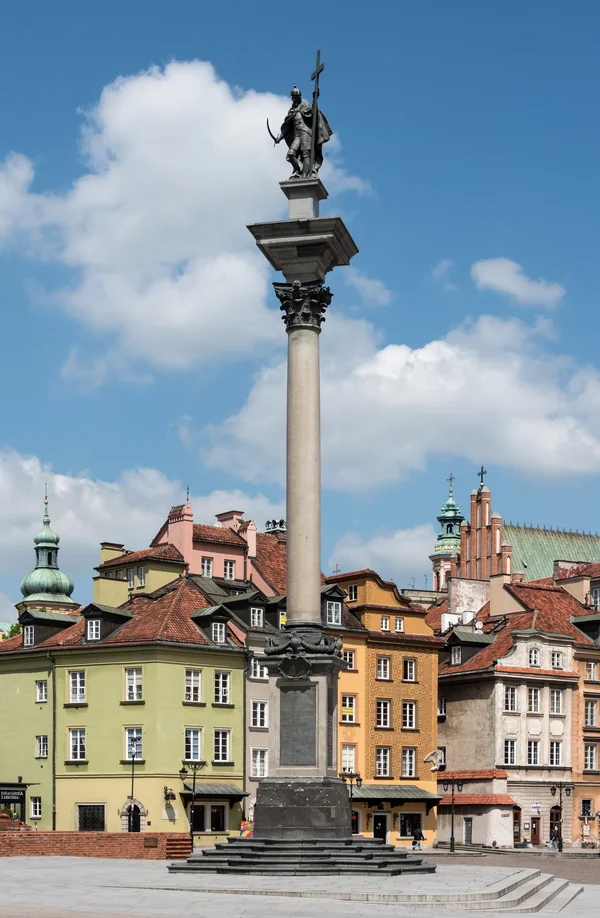
The Royal Castle sits at the southern edge of the Old Town, overlooking Castle Square and Sigismund's Column below. Like most of Warsaw's historic buildings, the Nazis destroyed it in 1944. Reconstruction took from 1971 to 1984, using salvaged fragments and old photographs. The result is a building that functions both as a museum and a national symbol. Inside, the interiors are genuinely impressive: the Marble Room, the Canaletto Room with its original 18th-century city views, and the Great Assembly Hall. The castle was originally a 14th-century residence of the Dukes of Mazovia, later expanded into the seat of Polish kings and the parliament. It hosted the signing of the Polish Constitution of 1791, one of the earliest modern constitutions in the world. The permanent exhibition walks you through these layers of history without dragging. Plan about 90 minutes for the main rooms. It is one of the top sights in Warsaw and earns every minute. The castle is closed on Mondays. Tuesday through Sunday, it opens at 10:00 AM and closes at 5:00 PM. Check the website for current ticket prices. From here, you walk straight into the Old Town northward or down toward the Royal Route and Nowy Swiat Street.

Hours Mon: Closed | Tue-Sun: 10:00 AM – 5:00 PM
Price 60 PLN (free Wed)
Insider TipOn Wednesdays, the permanent exhibition is often free. Arrive right at opening to beat the school groups that tend to show up by 11:00 AM.
Royal Łazienki Park

3. Royal Łazienki Park

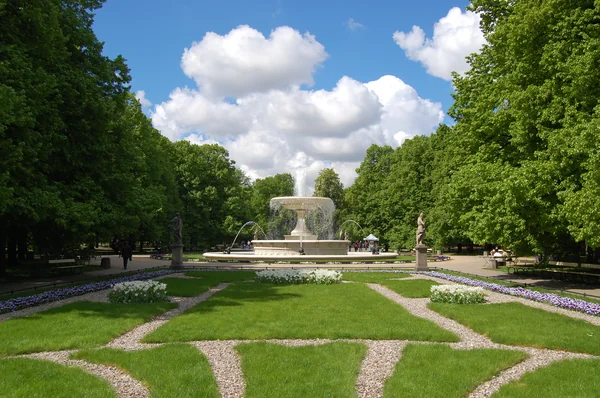
Royal Lazienki is the largest park in central Warsaw, covering 76 hectares along the Royal Route south of the city center. King Stanislaw August Poniatowski built it as his summer residence in the 18th century, and the centerpiece is the Palace on the Isle, a Neoclassical building reflected in an artificial lake. Peacocks roam the paths. Red squirrels are everywhere. On Sundays from May to September, free Chopin concerts take place at the composer's monument, and locals spread blankets on the grass around it. The park has four distinct gardens: the Royal Garden closest to the palace, a Romantic garden, a Modernist section, and a Chinese garden. The Orangery and the Old Orangery house a small theatre and exhibition space. You could spend an hour or half a day here depending on your pace. The Palace on the Isle has its own admission and limited hours, so check the website. The park itself opens daily at 6:00 AM. As a top sight in Warsaw, Lazienki works best as a break from the intense history elsewhere. After the Uprising Museum or POLIN, the quiet here feels necessary. The park connects to Ujazdow Park to the north, making it easy to walk between the two along Aleje Ujazdowskie.

Hours Daily: 6:00 AM – 9:00 PM
Price Free
Insider TipThe Sunday Chopin concerts at noon and 4:00 PM draw big crowds. Arrive 30 minutes early to get a spot near the monument. The 4:00 PM session is slightly less packed.
Warsaw Old Town

4. Warsaw Old Town

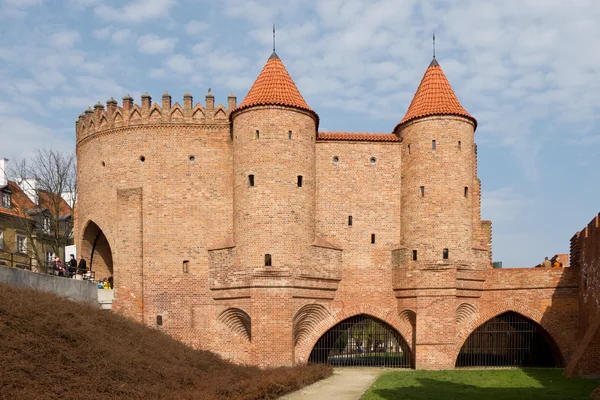
Almost everything you see here was rebuilt from rubble. The Nazis leveled Warsaw's Old Town in 1944, reducing centuries of architecture to dust. What stands now is a painstaking reconstruction completed in the 1950s and 1960s, so faithful that UNESCO granted it World Heritage status in 1980. That makes it one of the few reconstructed sites on the list anywhere in the world. Knowing this changes how you experience the square, the narrow lanes, the painted facades. It all looks old. None of it is. The Rynek Starego Miasta, the main market square, is the anchor. Cafes ring the perimeter, and the Mermaid statue (Syrenka) stands at the center. From here, streets fan out toward the Barbican to the north and the Royal Castle to the south. The whole area is compact enough to walk in 30 minutes, but you will linger longer. The Old Town connects directly to Nowy Swiat Street and the entire Royal Route heading south. The square fills with tourists by midday, especially in summer. Come in the morning for quieter streets and better light on the facades. Winter evenings have their own appeal, with far fewer crowds and warm light from the restaurants.

Hours Open 24/7
Price Free
Website N/A
Insider TipWalk through Dawna Street, the narrowest lane in the Old Town, to reach the Vistula viewpoint terrace behind the city walls. Almost everyone misses it.
Warsaw Uprising Museum

5. Warsaw Uprising Museum

This museum covers the 63 days of the Warsaw Uprising in 1944, when the Polish Home Army fought to liberate the city from German occupation. The uprising failed. The Nazis retaliated by systematically destroying 85% of Warsaw. The museum, housed in a former tram power station on Grzybowska Street, opened on July 31, 2004, the 60th anniversary of the uprising's start. Over 30,000 objects fill the collection, and the exhibition uses film, sound, and full-scale recreations to put you in the middle of events. This is not a casual museum visit. The experience is immersive and emotionally heavy. A replica sewer tunnel lets you crouch through the same passages insurgents used. The hall of names. The timeline of destruction. Plan at least 2 hours, and expect to leave shaken. It is the single most important museum in Warsaw, and among the most powerful war museums in Europe. Open Monday and Wednesday through Friday from 8:00 AM to 6:00 PM, weekends from 10:00 AM to 6:00 PM, closed Tuesdays. The museum is west of the city center, about a 15-minute walk from the Palace of Culture. This is a must-see in Warsaw. No matter what else you skip, do not skip this.

Hours Mon: 8:00 AM – 6:00 PM | Tue: Closed | Wed-Fri: 8:00 AM – 6:00 PM | Sat-Sun: 10:00 AM – 6:00 PM
Price 20 PLN (free Thu & Sun)
Website 1944.pl/
Insider TipThe observation tower in the courtyard gives a panoramic view over the Wola district where the heaviest fighting took place. It is easy to miss because the entrance is outside the main exhibition.
Wilanów Palace

6. Wilanów Palace

Wilanow Palace is Warsaw's answer to Versailles, though on a more human scale. Built in the late 17th century as a summer residence for King Jan III Sobieski, it is one of the few major Warsaw buildings that survived World War II largely intact. That alone makes it unusual here. The Baroque facade, the formal gardens, the interiors filled with original furnishings and portraits: this is what the Royal Castle would look like if history had been kinder to it. The palace sits about 10 kilometers south of the Old Town, so getting here takes effort. Bus 116 or 180 from the center gets you there in roughly 40 minutes. The grounds include both a French-style garden and an English-style landscape park, and the gardens alone are worth a visit on a warm day. Inside, the palace museum covers rooms decorated across centuries, from Baroque through Neoclassical. The Crimson Room and the White Hall stand out. Open Monday and Wednesday through Sunday from 10:00 AM to 4:00 PM, closed Tuesdays. If you only have 2 days in the city, prioritize the Old Town and the Uprising Museum first.

Hours Mon: 10:00 AM – 4:00 PM | Tue: Closed | Wed-Sun: 10:00 AM – 4:00 PM
Price Free
Insider TipThe garden entry is separate and cheaper than the palace ticket. On summer evenings, the palace hosts a light show in the gardens that draws far fewer tourists than the daytime museum crowds.
Get Your Own Private Tour with AI Guide
AI Guide
  • Personalized tour tailored to your interests
  • Your AI guide tells stories, shares facts, and cracks jokes
  • Turn-by-turn GPS navigation
  • Available in your language — no download needed
Try for Free

💎 Hidden Gems in Warsaw - Off the Beaten Path

Beyond the tourist crowds, Warsaw hides remarkable treasures waiting to be discovered.

Fotoplastikon

1. Fotoplastikon

The Fotoplastikon is a 19th-century stereoscopic viewing device, a large rotating drum with viewing stations where you peer through lenses at 3D photographs. Warsaw's Fotoplastikon has been showing images since 1905 and is one of only a handful still operating worldwide. It sits in a building on Aleje Jerozolimskie 51, now run as a branch of the Warsaw Uprising Museum. The experience is deliberately analog. You sit at one of the viewing stations, the drum rotates, and a series of stereoscopic slides clicks past: prewar Warsaw, historical events, landscapes. Each show lasts about 15 minutes. The device itself is the main exhibit, a mechanical curiosity from an era before cinema replaced everything. The room is small and quiet, a complete contrast to the crowds and scale of something like the Palace of Culture just up the road. Open Monday and Wednesday through Sunday from 10:00 AM to 6:00 PM, closed Tuesdays. Among hidden gems in Warsaw, this is the strangest and most charming. It takes 20 minutes of your day and gives you something no other city can offer.

Hours Mon: 10:00 AM – 6:00 PM | Tue: Closed | Wed-Sun: 10:00 AM – 6:00 PM
Price 10 PLN (free Thu)
Location 52.2288, 21.0085
Insider TipThe rotating slide shows change periodically. Ask at the desk which set is currently loaded, as the prewar Warsaw images are the most interesting by far.
Keret House

2. Keret House

Keret House is the world's narrowest house, squeezed into a 152-centimeter gap between two buildings on the border of the Wola and Srodmiescie districts. Architect Jakub Szczesny built it in 2012 as an art installation and writers' residence, named after Israeli author Etgar Keret. It has three levels inside, with a tiny kitchen, sleeping area, and bathroom. The whole thing is translucent and semi-transparent, glowing softly at night. The house sits in the crack between a prewar tenement at Zelazna 74 and a postwar apartment block at Chlodna 22. That location is deliberate: Chlodna Street was once crossed by a footbridge connecting two parts of the Warsaw Ghetto, and the house occupies the space between two different eras of Warsaw's painful history. Most people walk right past it without noticing. That is part of the point. You cannot enter without a reservation through the Foundation of Polish Modern Art, and visits are limited. But even from the outside, it is worth a short detour from the nearby Warsaw Uprising Museum to see it. Among hidden gems in Warsaw, Keret House is the most conceptually interesting: a building that turns absence into architecture.

Hours Selected days only, 10:00 AM - 5:00 PM (online booking required)
Price 25 PLN
Insider TipThe house is at Zelazna 74 / Chlodna 22, near the Chlodna-Zelazna intersection. Look up between the buildings. It is very easy to miss from street level.
Neon Museum

3. Neon Museum

During the Cold War, Poland's communist government commissioned thousands of neon signs for shops, cinemas, and public buildings. They were functional, but they were also art: bold, geometric, oddly beautiful. When communism fell, the signs came down. Two photographers, Ilona Karwinska and David Hill, started collecting them in 2005, and the Neon Museum opened in 2012 to display over 200 rescued signs, all restored and glowing. The museum moved from its original Praga location and now sits in the Palace of Culture and Science. The signs are mounted on walls and displayed in darkened rooms, creating a walk-through gallery that feels somewhere between a design exhibition and a time capsule. The effect is surprisingly atmospheric. Expect to spend about 45 minutes. It is one of Warsaw's more unusual museums and a genuine hidden gem in Warsaw that most guidebooks still underplay. Open Monday through Thursday from 11:00 AM to 6:00 PM, Fridays and Saturdays until 7:00 PM, Sundays until 6:00 PM. Check the website for current ticket prices. If you are interested in Cold War history or graphic design, this is a must. If neither of those interests you, the photographs alone are worth a look.

Hours Mon-Thu: 11:00 AM – 6:00 PM | Fri-Sat: 11:00 AM – 7:00 PM | Sun: 11:00 AM – 6:00 PM
Price 25 PLN
Insider TipThe museum shop sells postcards and prints of individual neon designs. They make better souvenirs than anything in the Old Town tourist shops.
Praga District

4. Praga District

Cross the Vistula and Warsaw changes completely. Praga, on the eastern bank, was the only part of the city that survived World War II relatively intact, because the Red Army halted on this side of the river while the Nazis destroyed everything to the west. The result is a neighborhood with prewar buildings, peeling facades, bullet-scarred walls, and an energy that the reconstructed left bank does not have. Over the past decade, Praga has become Warsaw's creative hub. Galleries, street art, independent bars, and studios have moved into old factories and courtyards. The Bazaar Rozyckiego, once Warsaw's most famous flea market, still operates. Zabkowska Street is the main nightlife strip. The atmosphere is raw compared to the polished Old Town. That is the draw. This is where you see what prewar Warsaw actually looked like, not the careful reconstruction but the real thing, with all its rough edges. Take the tram or walk across the Slasko-Dabrowski Bridge. Among hidden gems in Warsaw, Praga is an entire neighborhood that most tourists skip because they assume everything worth seeing is on the other side of the river. They are wrong.

Hours Open 24/7
Price Free
Website Wikipedia
Insider TipWalk through the courtyards along Stalowa and Targowa Streets to see prewar architecture that has barely been touched since the 1930s. Some courtyards have murals, some have workshops, all feel like stepping back 80 years.
Warsaw University Library Rooftop Garden

5. Warsaw University Library Rooftop Garden

On top of the Warsaw University Library building, there is a rooftop garden covering over 2,000 square meters, one of the largest in Europe. It opened in 2002 and sits on two levels connected by a stream that flows between the upper and lower gardens. The planting is lush, with climbing vines that cover the building's exterior and birch trees on the roof. From the upper terrace, you look out over the Vistula and across to Praga. The garden is free. No ticket, no reservation. You walk up from the back of the library building, and suddenly you are in a green space floating above the city. It is a 5-minute walk from the Copernicus Science Centre and a short walk from the Vistula Boulevards, making it easy to combine with a riverside stroll. Almost no tourists come here, which is precisely what makes it special. Open daily from 8:00 AM to 3:00 PM. This is one of the best-kept secret spots in Warsaw. The building itself, designed by Marek Budzynski, won architectural awards for its copper-and-green exterior. On a warm afternoon, the garden is one of the quietest, most pleasant places in central Warsaw.

Hours Daily: 8:00 AM – 3:00 PM
Price Free
Insider TipThe garden closes at 3:00 PM, which catches people off guard. Go in the morning. The early light on the Vistula from the upper terrace is the best free view in the city.
Get Your Own Private Tour with AI Guide
AI Guide
  • Personalized tour tailored to your interests
  • Your AI guide tells stories, shares facts, and cracks jokes
  • Turn-by-turn GPS navigation
  • Available in your language — no download needed
Try for Free

🎨 Best Museums & Galleries in Warsaw

World-class museums and galleries that make Warsaw a cultural treasure.

Centre for Contemporary Art

1. Centre for Contemporary Art

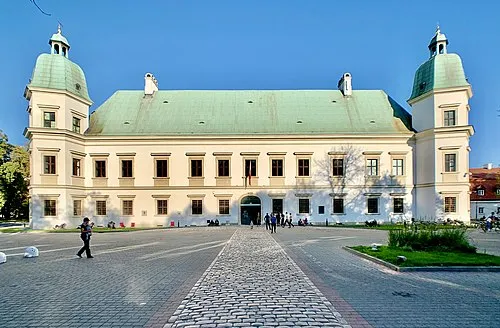
The Centre for Contemporary Art occupies Ujazdow Castle, a reconstructed royal castle at the edge of Ujazdow Park. The castle dates back to the 17th century, rebuilt multiple times, and was given over to contemporary art in 1985. The combination of historical architecture and experimental art creates an odd tension that works in the center's favor. Exhibitions lean toward installation, video art, and politically engaged work. The castle sits between Ujazdow Park and the northern edge of Royal Lazienki Park, so you can combine a visit with time in either green space. Aleje Ujazdowskie, Warsaw's embassy row, runs just to the east. The area feels calmer and more residential than the busy city center around Nowy Swiat Street. Open Tuesday and Wednesday from 11:00 AM to 7:00 PM, Thursdays until 8:00 PM, Friday through Sunday until 7:00 PM, closed Mondays. Among the best museums in Warsaw for anyone interested in experimental art, this center is less polished than Zacheta and more willing to take risks. The cafe in the castle courtyard is pleasant in summer.

Hours Mon: Closed | Tue-Wed: 11:00 AM – 7:00 PM | Thu: 11:00 AM – 8:00 PM | Fri-Sun: 11:00 AM – 7:00 PM
Price 30 PLN (free Thu)
Website u-jazdowski.pl/
Insider TipThe open-air cinema in the castle courtyard runs screenings on summer evenings. Check the U-Jazdowski website for the current schedule.
Fryderyk Chopin Museum

2. Fryderyk Chopin Museum

Warsaw claims Chopin more fiercely than almost any city claims any composer. He was born nearby, studied here, gave his last Warsaw concert here, and never returned after leaving in 1830. The Chopin Museum, housed in the Baroque Ostrogski Palace on Okolnik Street, is the largest biographical museum dedicated to a single composer anywhere. The collection includes his last piano, letters, manuscripts, and personal objects. The museum uses a timed-entry system, limiting the number of visitors per slot. This keeps the rooms calm enough that you can actually listen to the music playing at each exhibit station. The presentation is modern and well-paced, with interactive touchscreens letting you explore Chopin's compositions piece by piece. Plan about 90 minutes. If you visited Holy Cross Church earlier to see where Chopin's heart rests, this completes the picture. Check the website for current hours and ticket prices. Among the best museums in Warsaw, this one works even if you are not a classical music devotee. The story of Chopin's life, his exile, his homesickness, his early death at 39, is compelling on its own.

Hours Tue-Sun: 10:00 AM - 6:00 PM
Price 35 PLN (free Wed)
Website muzeum.nifc.pl/
Insider TipBook online at least a day ahead. Walk-in tickets sell out by midday, especially on weekends. The ground floor has a listening room where you can sit with headphones and just listen to full recordings.
Museum of Modern Art

3. Museum of Modern Art

Warsaw's Museum of Modern Art spent nearly two decades without a permanent home, operating from temporary spaces since its founding in 2005. In October 2024, it finally opened its new building on Plac Defilad, right next to the Palace of Culture and Science. The Thomas Phifer-designed structure is angular and white, a deliberate contrast to the Soviet tower looming beside it. The juxtaposition alone tells you something about modern Warsaw. The collection focuses on 20th and 21st-century Polish and international art. Exhibitions rotate frequently, and the curatorial approach leans toward the conceptual and political. The building has a bookshop and cafe on the ground floor that are worth visiting even without going into the galleries. The rooftop terrace, when open, looks out directly at the Palace of Culture from eye level. Open Tuesday, Wednesday, and weekends from noon to 8:00 PM, Fridays from 2:00 PM to 8:00 PM, closed Mondays and Thursdays. Among the best museums in Warsaw for contemporary art, MSN is the most architecturally interesting. Whether the exhibitions connect with you depends on the current program, so check before visiting.

Hours Mon: Closed | Tue-Wed: 12:00 – 8:00 PM | Thu: Closed | Fri: 2:00 – 8:00 PM | Sat-Sun: 12:00 – 8:00 PM
Price 35 PLN
Website artmuseum.pl/
Insider TipThe cafe on the ground floor is open to non-museum visitors and has some of the best coffee in the Plac Defilad area.
National Museum

4. National Museum

The National Museum in Warsaw is the country's largest art museum, founded in 1862 and housed in a Modernist building from the 1930s. The permanent collection covers ancient Egyptian, Greek, and Roman artifacts, medieval religious art, and European painting from the 14th century onward. The Polish painting galleries are the strongest section: look for works by Matejko, Malczewski, and the Mloda Polska (Young Poland) movement. The museum lost a staggering portion of its collection during World War II, including 99% of its coin collection and 80% of its silverwork. The building sits on Aleje Jerozolimskie, about a 10-minute walk south from Nowy Swiat Street. It is large enough that you could spend 3 hours here easily, but 90 minutes hits the highlights. The Faras Gallery, with Nubian wall paintings rescued from Sudan before the Aswan Dam flooded the site, is unlike anything in any other European museum. Open Tuesday through Thursday from 10:00 AM to 6:00 PM, Fridays until 8:00 PM, weekends until 6:00 PM, closed Mondays. Among the best museums in Warsaw, the National Museum has the broadest range but is less emotionally intense than POLIN or the Uprising Museum.

Hours Mon: Closed | Tue-Thu: 10:00 AM – 6:00 PM | Fri: 10:00 AM – 8:00 PM | Sat-Sun: 10:00 AM – 6:00 PM
Price 30 PLN (free Tue)
Website www.mnw.art.pl/
Insider TipTuesday is free admission for the permanent collection. The Faras Gallery on the lower level is the most unique thing here and is often nearly empty.
Polish Army Museum

5. Polish Army Museum

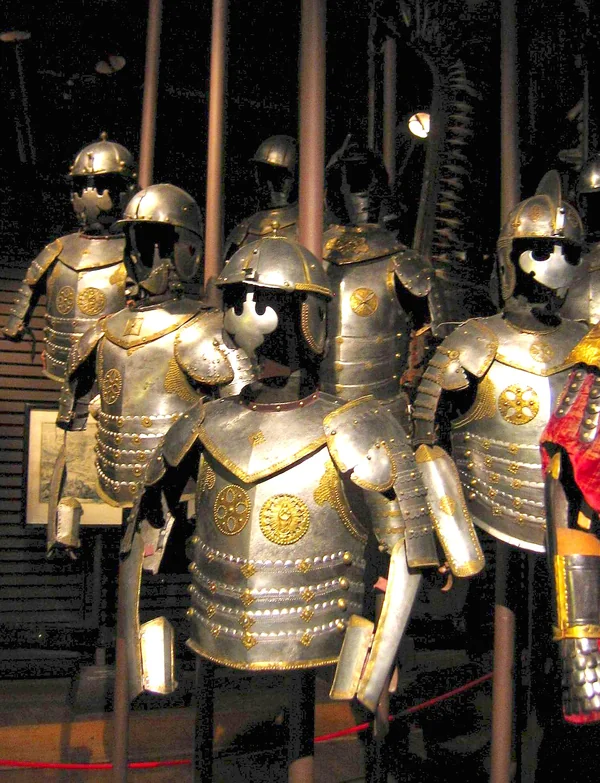
The Polish Army Museum moved to the Warsaw Citadel in 2023 after decades of sharing the National Museum building on Aleje Jerozolimskie. The new location is a major upgrade. The 19th-century Citadel, built by the Russians after the 1830 November Uprising to control Warsaw, is now a museum complex with expansive indoor and outdoor exhibition spaces. The collection covers Polish military history from the medieval period through the 20th century: armor, weapons, uniforms, vehicles, and aircraft. The Citadel itself is as interesting as the exhibits inside. The massive brick fortifications, moats, and gates give you a sense of the scale the Russian Empire used to keep Warsaw subdued. The complex sits in the Zoliborz district, north of the Old Town, reachable by tram or a 25-minute walk along the Vistula. Open Tuesday through Sunday from 10:00 AM to 6:00 PM, closed Mondays. Among the best museums in Warsaw for military history, the new Citadel location turns what was a standard army museum into something much more immersive. The outdoor exhibits with tanks and aircraft will keep children (and adults) occupied for a while.

Hours Mon: Closed | Tue-Sun: 10:00 AM – 6:00 PM
Price 20 PLN (free Thu)
Insider TipThe Citadel grounds are free to walk around even without a museum ticket. The views from the ramparts over the Vistula are worth the trip on their own.
Get Your Own Private Tour with AI Guide
AI Guide
  • Personalized tour tailored to your interests
  • Your AI guide tells stories, shares facts, and cracks jokes
  • Turn-by-turn GPS navigation
  • Available in your language — no download needed
Try for Free

🍕 Food Markets & Culinary Spots in Warsaw

The best food markets, food halls, and culinary destinations in Warsaw.

Elektrownia Powiśle

1. Elektrownia Powiśle

Elektrownia Powisle is a former power station from 1904, converted into a shopping and dining complex that opened in 2020. The industrial brick buildings on the Vistula riverbank now hold restaurants, cafes, boutique shops, and a cinema. The architectural conversion kept the original brick walls, steel trusses, and industrial scale, giving the space a raw character that most new developments lack. The food options skew upscale compared to Hala Koszyki. You will find brunch spots, wine bars, Japanese restaurants, and specialty coffee roasters. The outdoor terrace facing the river is one of the better spots in Warsaw for a warm-weather meal. The complex sits close to the Copernicus Science Centre and the Warsaw University Library rooftop garden, so it fits naturally into a riverside afternoon. Open Monday through Thursday from 11:00 AM to 9:00 PM, Fridays and Saturdays until 11:00 PM. Individual restaurants keep their own hours. Among food markets in Warsaw, Elektrownia is the most polished and the most expensive, but the setting in those old power station buildings justifies the premium.

Hours Mon-Thu: 11:00 AM – 9:00 PM | Fri-Sat: 11:00 AM – 11:00 PM | Sun: 11:00 AM – 9:00 PM
Price Free (food hall)
Location 52.2397, 21.0286
Insider TipThe courtyard between the main buildings catches afternoon sun and is sheltered from wind. It is the best outdoor seating spot when the Vistula Boulevards are too exposed.
Fabryka Norblina

2. Fabryka Norblina

Fabryka Norblina was a metalworks factory founded in the 19th century on Zelazna Street, producing silverware and household goods until the 1980s. The factory complex has been transformed into a mixed-use development with restaurants, a food hall, a cinema, a museum, co-working spaces, and retail. It opened in 2021, and the conversion preserved much of the factory infrastructure: old machinery, brick walls, iron catwalks, and production halls. The food hall occupies the old factory floor, with a dozen or so stalls offering everything from Polish comfort food to Asian fusion. The atmosphere is industrial-hip but not aggressively trendy. It sits in the Wola district, a 10-minute walk from the Warsaw Uprising Museum, making the two easy to combine in an afternoon. The complex opens daily at 9:00 AM and stays open until midnight. Among where to eat in Warsaw, Fabryka Norblina offers the most interesting physical space. The preserved factory equipment scattered throughout the restaurants and corridors makes it feel less like a food court and more like eating inside a museum. Whether the food justifies the trip depends on which stall you pick, but the setting alone is worth seeing.

Hours Daily: 9:00 AM – 12:00 AM
Price Free (food hall)
Insider TipThe Time Travel cinema on site shows films in a 270-degree immersive format. It is a tourist attraction disguised as a cinema, but kids love it.
Hala Koszyki

3. Hala Koszyki

Hala Koszyki is a beautifully restored market hall from 1909, now operating as Warsaw's most popular food hall. The iron-framed structure on Koszykowa Street was left to decay for years before a full renovation brought it back in 2016. The interior is airy and well-lit, with over 20 food stalls and bars arranged around a central seating area. You will find ramen, pizza, Georgian khachapuri, sushi, craft beer, pierogis, and Vietnamese pho all under one roof. The atmosphere is social and loud, especially on Friday and Saturday evenings when the after-work crowd fills every table. Prices are moderate by European standards, with most dishes running 25-45 PLN. The quality is consistently good across stalls, which is not always the case in food halls elsewhere. Unlike Hala Mirowska, this is not a traditional market. It is a modern dining destination that happens to be in a historic building. Open Monday through Saturday from 8:00 AM to 1:00 AM, Sundays from 9:00 AM. Among the best places to eat in Warsaw, Koszyki is the safe bet: good food, central location on the edge of the Srodmiescie district, and enough variety that everyone in a group finds something they want.

Hours Mon-Sat: 8:00 AM – 1:00 AM | Sun: 9:00 AM – 1:00 AM
Price $$
Location 52.2222, 21.0108
Insider TipThe craft beer bar at the back has 12 rotating taps of Polish microbrews. Try anything from Browar Stu Mostow or Funky Fluid.
Hala Mirowska

4. Hala Mirowska

Hala Mirowska is Warsaw's oldest surviving market hall, and it still functions the way it always has: as a place where locals buy groceries. The 19th-century iron-and-brick structure sits on Plac Mirowski, a short walk west from the Old Town. Inside, vendors sell fresh produce, meat, cheese, bread, pickles, and flowers. The surrounding outdoor stalls add clothing and household goods. On Saturday mornings, it fills up with Varsovians doing their weekly shopping. This is not a curated food hall like Hala Koszyki or Elektrownia Powisle. There are no cocktail bars or Instagram-ready stalls. Hala Mirowska is the real thing: a working market where you can buy a kilo of strawberries, a block of oscypek cheese, and a bunch of dill for a few zloty. The prices reflect that this is a local market, not a tourist attraction. Open Monday through Friday from 7:00 AM to 8:00 PM, Saturdays until 6:00 PM, closed Sundays. Among food markets in Warsaw, Mirowska is the most authentic. If you want to understand what everyday Warsaw eats and shops for, this is where you come instead of the polished alternatives across town.

Hours Mon-Fri: 7:00 AM – 8:00 PM | Sat: 7:00 AM – 6:00 PM | Sun: Closed
Price Free (market hall)
Insider TipThe outdoor stalls on the south side of the hall sell smoked oscypek cheese for 8-12 PLN a piece. Look for the vendors grilling slices to order.
Get Your Own Private Tour with AI Guide
AI Guide
  • Personalized tour tailored to your interests
  • Your AI guide tells stories, shares facts, and cracks jokes
  • Turn-by-turn GPS navigation
  • Available in your language — no download needed
Try for Free

🌳 Parks & Best Viewpoints in Warsaw

Beautiful parks, gardens, and panoramic viewpoints for the best views of Warsaw.

Pole Mokotowskie

1. Pole Mokotowskie

Pole Mokotowskie is Warsaw's version of a big urban common: 70 hectares of flat, open grassland split across three districts. It was a military training ground in the 19th century, then an airfield, and now it is a park where half the city comes on sunny weekends. Families, dog walkers, frisbee players, joggers, and groups of friends spreading blankets on the grass. The vibe is casual and unpretentious. The park has a large pond, bike paths, playgrounds, an outdoor gym, and seasonal food trucks along the main paths. It is split by Aleja Niepodleglosci (Independence Avenue) into two sections. The western half near Ochota tends to be quieter. The eastern half closer to Mokotow is where most of the activity concentrates. A Saturday afternoon here gives you a good sense of how Varsovians actually spend their free time. Free and open 24/7. Among the best views in Warsaw of ordinary city life, Pole Mokotowskie is the antidote to museum fatigue. No monuments, no historical weight, just open space and fresh air. It is about a 20-minute walk south from Hala Koszyki.

Hours Open 24/7
Price Free
Website Wikipedia
Location 52.21083, 21.0
Insider TipThe food trucks along the central path near the pond serve decent Thai food, pizza, and coffee from May through September. Quality fluctuates year to year, but the pad thai truck has been reliable.
Skaryszewski Park

2. Skaryszewski Park

Skaryszewski Park covers 58 hectares on the east side of the Vistula in the Praga-Poludnie district. Designed by Franciszek Szanior and opened in 1905, it won the title of Poland's Most Beautiful Park in 2009 and placed third in the European competition that same year. The landscape style features large ponds, footbridges, old-growth trees, and wild sections that feel more like countryside than city. Herons nest near the water. Joggers loop the paths early morning. Getting here from the center takes about 15 minutes by tram. The park sits southeast of Praga, away from the main tourist circuit, which is exactly why locals love it. There is a sports complex on the southern edge, playgrounds, and an open-air theatre that hosts events in summer. The ponds reflect the trees and sky in a way that photographs well but feels even better in person. Free and open around the clock. Among the best parks in Warsaw, Skaryszewski is the one you visit when Royal Lazienki feels too crowded or too formal. It is bigger, wilder, and almost entirely free of tourists. If you are spending more than 2 days in Warsaw and want a morning away from history, come here.

Hours Open 24/7
Price Free
Insider TipThe eastern section of the park near the ponds is the quietest. Bring coffee from the Praga side and walk to the footbridge over the main pond for the best morning light.
Ujazdów Park

3. Ujazdów Park

Ujazdow Park is a small, elegant green space along Aleje Ujazdowskie, Warsaw's embassy row. It connects the northern end of Royal Lazienki Park to the southern stretch of the city center, making it a natural pass-through if you are walking between sights. The park is formal in style, with clipped hedges, wide paths, and old trees shading the walkways. Ujazdow Castle sits at the park's northern edge, housing the Centre for Contemporary Art. If you visit the gallery, you are already in the park. The southern end borders the Botanical Garden and leads directly into Lazienki. On warm afternoons, the benches fill with office workers and students from nearby universities. It is a quiet, low-key space without the programmed activities of Lazienki. Free, open daily from 6:00 AM to 10:00 PM. Among the best parks in Warsaw, Ujazdow works as a transition rather than a destination. Walk through it on your way between the city center and Lazienki, or sit for 15 minutes after visiting the contemporary art center in the castle. It is pleasant, well-kept, and rarely crowded.

Hours Daily: 6:00 AM – 10:00 PM
Price Free
Website zzw.waw.pl/
Location 52.2219, 21.0256
Get Your Own Private Tour with AI Guide
AI Guide
  • Personalized tour tailored to your interests
  • Your AI guide tells stories, shares facts, and cracks jokes
  • Turn-by-turn GPS navigation
  • Available in your language — no download needed
Try for Free

Explore with AI Guide

AI Guide App

Get personalized tours with our AI-powered guide. No download needed — works right in your browser.