Self-Guided Walking Tour in Havana

12 Stops 5.9 km ~3.0 hours
Start This Tour Free
Walking tour route map of Havana
Start This Tour Free

Why Walk Havana? A Self-Guided Tour

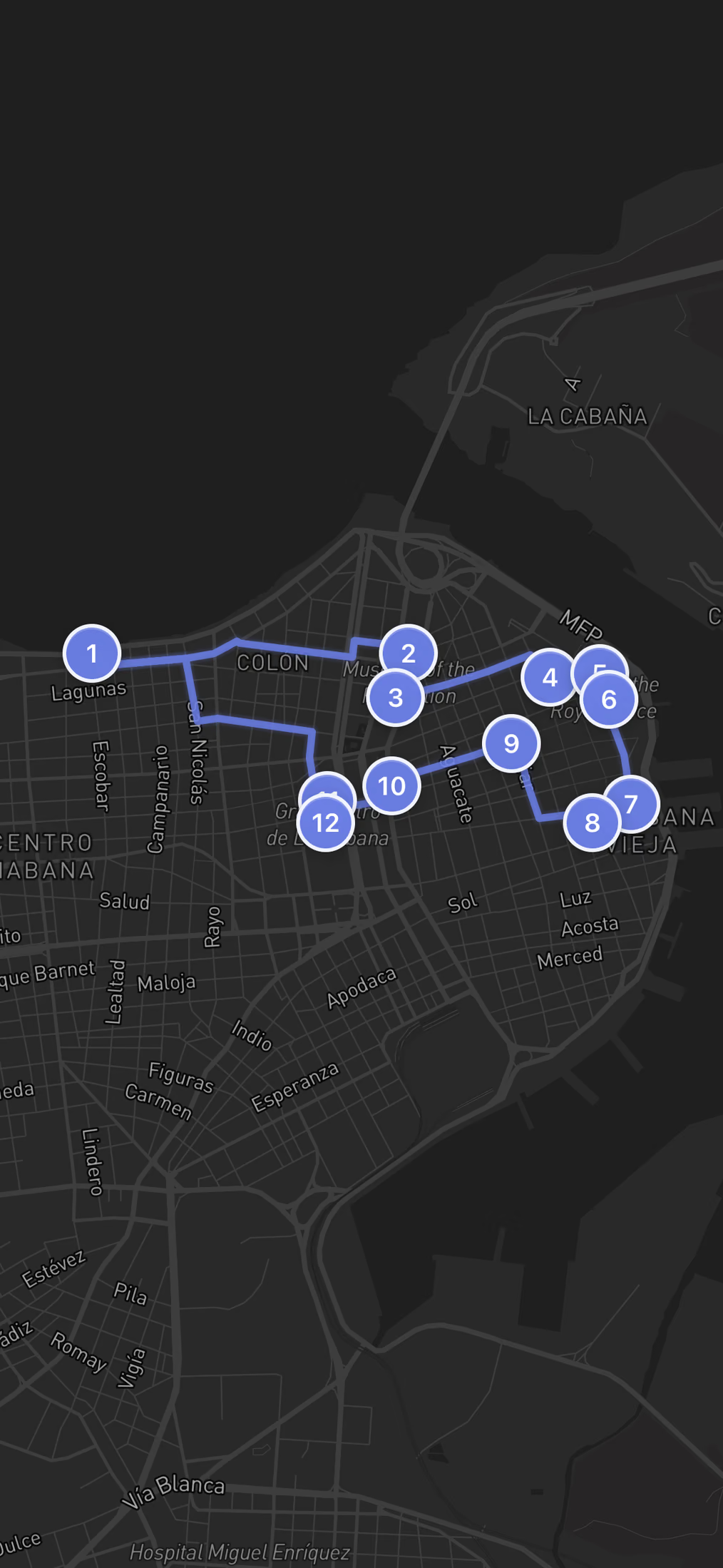
This self-guided walking tour covers 12 stops across 5.9 km through the heart of Old Havana and along the waterfront, taking roughly 3 hours at a comfortable pace. You will walk the full sweep of colonial Havana: from the salt-sprayed Malecon seawall through four historic plazas, down the city's most famous pedestrian street, into Hemingway's favorite bar, and past the monumental Capitolio. The route threads through UNESCO-listed Habana Vieja, where crumbling pastel facades sit next to freshly restored palaces. Bring plenty of water (bottled water is sold at most tourist stops for 1-2 USD), wear a hat, and carry small-denomination USD bills. Cuba's currency situation is genuinely confusing: tourists pay almost everything in USD cash, but you may encounter prices quoted in CUP (Cuban pesos) or MLC (a digital currency locals use). When in doubt, ask "dolares?" before paying. Public Wi-Fi exists only at designated ETECSA hotspots, so download offline maps before you start.

The Route: 12 Stops

Swipe through images or scroll names below

Scroll to explore →
1. El Malecón
2. Museo de la Revolución
3. Museo Nacional de Bellas Artes
4. Plaza de la Catedral
5. Castillo de la Real Fuerza
6. Plaza de Armas
7. Plaza de San Francisco de Asís
8. Plaza Vieja
9. Calle Obispo
10. El Floridita Bar
11. Gran Teatro de la Habana Alicia Alonso
12. Capitolio Nacional

Route Map

Tap to load interactive map
AI Tourguide
Walk this exact route with a private AI guide.
Full GPS navigation, interactive stories, and a guide that answers all your questions. A private guide experience for just €5/hour.
Start This Tour

Your Havana Walking Tour, Stop by Stop

  1. 1

    El Malecón

    El Malecón

    Havana's iconic 8-kilometer seawall stretches from the harbor entrance all the way west to Vedado, and locals call it "the world's longest sofa" for good reason. By late afternoon, hundreds of habaneros gather here to fish, flirt, play music, and watch the sunset. In the morning, when you arrive, it is quieter and the light is perfect for photos of the crumbling waterfront buildings. The seawall was built in 1901 to protect the city from storm surges, and during winter northers, waves still crash dramatically over the top, soaking pedestrians and cars alike. Walk east along the seawall toward Old Havana. The stretch near Calle Galiano offers the best views of the colonial skyline. Street vendors sell coconut water and peanut cones for a few pesos. There is no entrance fee and no set hours. The Malecon is simply always there, always open.

    Learn more about El Malecón →
    Hours
    Free
    Price
    Free

    8 min walk

  2. 2

    Museo de la Revolución

    Museo de la Revolución

    The Museum of the Revolution occupies the former Presidential Palace, a lavish neoclassical building where Cuban presidents governed until 1959. Inside, the Hall of Mirrors was designed as a deliberate replica of the one at Versailles, and its Tiffany-decorated interiors still gleam despite decades of tropical humidity. The exhibits trace Cuba's revolutionary history with uniforms, weapons, photographs, and propaganda posters. Behind the building, a glass-enclosed pavilion shelters the 13-meter yacht Granma, which carried Fidel Castro and 81 fighters from Mexico to Cuba in 1956. The exhibition is unapologetically one-sided, which makes it fascinating as a cultural artifact in itself. Check current prices at the entrance, as admission fees for foreigners have changed multiple times in recent years. Allow 45 minutes to an hour inside. The air conditioning is unreliable, so the ground floor courtyard offers a welcome breeze between gallery rooms.

    Learn more about Museo de la Revolución →
    Hours
    USD 8
    Price
    USD 8

    2 min walk

  3. 3

    Museo Nacional de Bellas Artes

    Museo Nacional de Bellas Artes

    Havana's fine arts museum is split across two separate buildings. The Cuban Art collection, housed in a 1954 rationalist building, is the highlight: five floors covering 500 years of Cuban painting and sculpture, including a dedicated gallery of 1970s revolutionary art that you will not find reproduced anywhere else. The international collection occupies the ornate Palacio del Centro Asturiano across the street, with Roman mosaics dating to 500 BC, Spanish old masters, and a surprisingly strong Latin American modernism section. Open Wednesday through Saturday from 9:00 AM to 5:00 PM and Sunday from 10:00 AM to 2:00 PM, closed Monday and Tuesday. Check current prices at the entrance. A combined ticket for both buildings is usually available. The Cuban building alone is worth at least an hour. If you are short on time, skip the international wing and head straight to the third-floor Cuban galleries.

    Learn more about Museo Nacional de Bellas Artes →
    Hours
    Mon-Tue: Closed | Wed-Sat: 9:00 AM – 5:00 PM | Sun: 10:00 AM – 2:00 PM
    Price
    USD 5 (per building)

    5 min walk

  4. 4

    Plaza de la Catedral

    Plaza de la Catedral

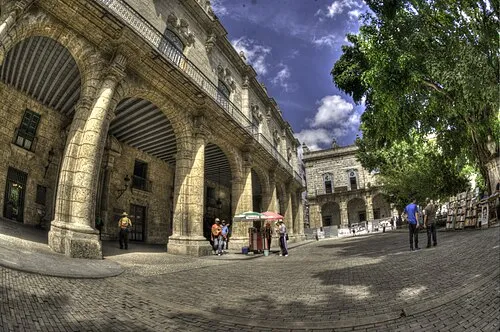
    The most photogenic square in Havana is anchored by the Cathedral of San Cristobal, completed in 1777 from blocks of coral rock with visible fossilized shells embedded in the facade. Look closely at the two bell towers: they are intentionally asymmetrical, with the narrower one built that way so rainwater could drain down the adjacent street. The square fills with art vendors and musicians during the day, but arrive before 10 AM and you might have it nearly to yourself. The surrounding colonial mansions now house restaurants, galleries, and the Museo de Arte Colonial. Grab a coffee at the cafe on the northwest corner for a table with a direct cathedral view. The plaza is open 24 hours and free to enter. The cathedral itself is free, though a small donation is appreciated. This is one of the most heavily photographed spots in Cuba, so if you want a clean shot without crowds, come early.

    Learn more about Plaza de la Catedral →
    Hours
    Open 24/7
    Price
    Free

    3 min walk

  5. 5

    Castillo de la Real Fuerza

    Castillo de la Real Fuerza

    Completed in 1577, this is the oldest stone fortress still standing in the Americas. Its squat, moated walls were designed to repel pirate attacks, though it was actually too far inside the harbor to be militarily useful, a fact the Spanish realized too late. The tower is topped by La Giraldilla, a small bronze weathervane depicting a woman scanning the horizon. Cast in 1632, she has become the official symbol of Havana and appears on every bottle of Havana Club rum. Inside, the fortress houses a maritime museum with model ships, navigational instruments, and ceramics recovered from shipwrecks. Open Tuesday through Sunday, 9:30 AM to 5:00 PM, closed Mondays. Check current prices at the entrance. The rooftop terrace offers one of the best elevated views of the harbor and the Plaza de Armas below. Budget 30 minutes for the museum and rooftop combined.

    Learn more about Castillo de la Real Fuerza →
    Hours
    Mon: Closed | Tue-Sun: 9:30 AM – 5:00 PM
    Price
    USD 5

    1 min walk

  6. 6

    Plaza de Armas

    Plaza de Armas

    Havana's oldest square marks the exact spot where the city was founded in 1519, and it still feels like the gravitational center of Old Havana. The Palacio de los Capitanes Generales dominates the western side, and the street in front of it is paved with wooden blocks instead of stone, installed centuries ago to muffle the sound of horse carriages so they would not disturb the governor. On most days, secondhand booksellers set up stalls under the ceiba trees, selling old copies of Granma newspaper, Che Guevara biographies, and vintage Cuban postcards. Bargain gently: prices start at 1-5 USD for most items. The square is open 24 hours and free to walk through. The Palacio houses the City Museum, which is worth a quick look for its ornate colonial rooms. Across the square, the neoclassical El Templete marks the precise founding site with a small chapel and a ceiba tree.

    Learn more about Plaza de Armas →
    Hours
    Open 24/7
    Price
    Free

    4 min walk

  7. 7

    Plaza de San Francisco de Asís

    Plaza de San Francisco de Asís

    This cobblestoned 16th-century square sits directly beside the old harbor, and its role as Havana's commercial heart is still visible in the grand merchant buildings lining its edges. The Basilica Menor de San Francisco de Asis, completed in 1738, dominates the south side with its 42-meter bell tower. The church was deconsecrated in the 1800s and now serves as a concert hall with excellent acoustics; check the posted schedule near the entrance for chamber music performances, which are often held on weekend mornings. The Fuente de los Leones, a marble fountain from 1836, anchors the center of the square. The cruise terminal is just steps away, so this plaza can fill up suddenly when ships dock. If you see a crowd forming, it usually clears within an hour. On the east side, the Lonja del Comercio building has been restored with a rooftop dome worth admiring from below.

    Learn more about Plaza de San Francisco de Asís →
    Hours
    Open 24/7
    Price
    Free

    2 min walk

  8. 8

    Plaza Vieja

    Plaza Vieja

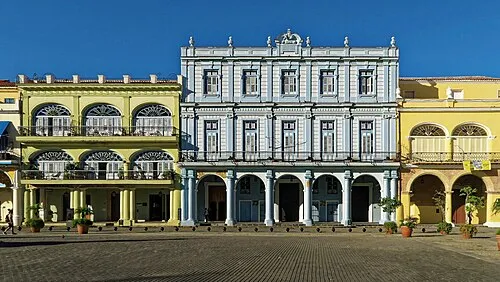
    Established in 1559, Plaza Vieja is the only main square in Old Havana built without a church, because it was designed purely for commerce and daily life. Today it is the most successfully restored of the four plazas, with candy-colored colonial buildings housing cafes, galleries, and a microbrewery. The Edificio Gomez Vila on the southeast corner has a 35-meter tower with a camera obscura at the top that projects a live panoramic image of the city onto a concave screen. The plaza is open 24 hours and free to enter. Check current prices at the camera obscura entrance. The Cerveceria Plaza Vieja, in the southwest corner, brews its own lager and dark beer and is the best spot on the square for a cold drink (2-4 USD per beer). Sit on the upper terrace for a full view of the plaza. The restored fountain in the center is a 2000s replica of the 18th-century original.

    Learn more about Plaza Vieja →
    Hours
    Open 24/7
    Price
    Free

    3 min walk

  9. 9

    Calle Obispo

    Calle Obispo

    Havana's most famous pedestrian street runs roughly 1.5 km from Plaza de Armas to the Parque Central area, and it functions as the main artery of daily life in Old Havana. The street was deliberately designed with tall buildings on both sides to keep it shaded throughout the day, a colonial-era form of passive cooling that still works. You will pass bookshops, pharmacies with original tile interiors, currency exchange offices, souvenir stalls, and some of the best paladares in Old Havana. The street has officially held 47 different names since its founding. Live music spills out of doorways, especially in the afternoon. Look for the Farmacia Taquechel at Obispo 155, a beautifully preserved 19th-century pharmacy with original porcelain jars on wooden shelves. Obispo is free to walk, open always, and best experienced slowly. Watch your belongings in the densest stretches near the midpoint.

    Learn more about Calle Obispo →
    Hours
    Free
    Price
    Free

    4 min walk

  10. 10

    El Floridita Bar

    El Floridita Bar

    Open since 1817, El Floridita is where head bartender Constantino Ribalaigua invented the frozen daiquiri in the early 20th century, and it has traded on that legacy ever since. A life-sized bronze statue of Ernest Hemingway leans against his favorite spot at the far end of the bar, and tourists line up to photograph themselves beside it. The frozen daiquiri here costs around 7-10 USD, which is expensive by Cuban standards but reasonable by international cocktail bar standards. The interior is red velvet, dark wood, and low lighting, a glamorous contrast to the bright street outside. Open daily from 12:00 PM to 1:00 AM. Come early afternoon to avoid the densest crowds. A live band usually plays from mid-afternoon onward. You do not need to eat here; one daiquiri at the bar is enough to soak up the atmosphere. Hemingway reportedly drank 12-16 of these per sitting. One will suffice.

    Learn more about El Floridita Bar →
    Hours
    Daily: 12:00 PM – 1:00 AM
    Price
    $$

    3 min walk

  11. 11

    Gran Teatro de la Habana Alicia Alonso

    Gran Teatro de la Habana Alicia Alonso

    Opened in 1838 as the Teatro Tacon, this neo-baroque theater is the oldest continuously active theater in the Western Hemisphere and home to the Cuban National Ballet. The exterior is dramatic: four white marble sculptures by Giuseppe Moretti representing allegories of charity, education, music, and theater crown the corner towers. The facade is best photographed from the Parque Central across the street in the late afternoon, when the light hits the stonework. Inside, the main auditorium seats over 1,500 and features ornate balconies and a painted ceiling. Check current prices at the entrance for guided tours, which run on most days when there are no rehearsals. If you can catch an evening ballet or opera performance, tickets for foreigners typically range from 10-30 USD, a fraction of what you would pay for comparable quality in any European capital. Check the schedule posted at the box office.

    Learn more about Gran Teatro de la Habana Alicia Alonso →
    Hours
    Mon: 8:30 – 10:00 PM | Tue-Sat: 10:00 AM – 4:00 PM | Sun: Open 24 hours
    Price
    USD 5 (tour)

    1 min walk

  12. 12

    Capitolio Nacional

    Capitolio Nacional

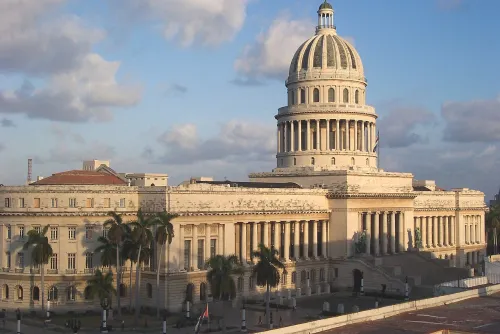
    Havana's Capitolio was completed in 1929 at a cost of 17 million dollars and modeled after the Pantheon in Paris and the U.S. Capitol in Washington, though Cubans will point out that their dome, at 91.73 meters, is actually slightly taller than its American counterpart. The building served as Cuba's seat of government until 1959 and, after decades of restoration, now houses the Cuban Academy of Sciences and the National Library of Science and Technology. The central hall contains a 24-karat gold replica of a diamond that marks kilometer zero for all road distances in Cuba. The exterior staircase and colonnade are monumental in scale and make for a powerful final image of the walk. Check current prices at the entrance for interior visits. The steps out front are a popular gathering spot for locals and offer a straight-line view down the Prado promenade. From here, you are steps from the Parque Central and within easy reach of taxis, bicitaxis, and classic car rides back to your accommodation.

    Learn more about Capitolio Nacional →
    Hours
    Daily: 9:00 AM – 4:00 PM
    Price
    USD 10
AI Tourguide
Walk this exact route with a private AI guide.
Full GPS navigation, interactive stories, and a guide that answers all your questions. A private guide experience for just €5/hour.
Start This Tour

Self-Guided Tour vs. Group Tour in Havana

Guided walking tours of Old Havana typically cost 20-50 USD per person, and they follow a very similar route to this one. This self-guided tour gives you the same ground at your own pace, with the freedom to linger at the plazas, duck into a paladar when you are hungry, or spend an extra hour in the Bellas Artes galleries. The money you save covers a couple of daiquiris at El Floridita, a camera obscura visit in Plaza Vieja, and a cold beer at the microbrewery. You also avoid being herded through stops on a group schedule, which matters in Havana's heat: you want to be able to sit in the shade when you need to, not march on because the group is moving.

Group Tour AI Self-Guided
Price €25–€50 per person €5/hour or €20 all-inclusive
Flexibility Fixed schedule Start anytime, skip stops
Languages 1–2 languages 11 languages
Pace Group pace Your own pace

How Long Does This Havana Tour Take?

Our route covers 5.9 km with 12 stops and takes approximately 3.0 hours at a relaxed pace.

Plan 3 hours for the walk itself, but a full morning or afternoon is realistic once you factor in museum stops, a daiquiri break at El Floridita, and time spent browsing the book stalls at Plaza de Armas. If you enter both buildings of the Bellas Artes museum, add another hour. Starting by 9:00 AM is ideal: the plazas are emptier, the temperature is more bearable, and you finish before the worst midday heat. By early afternoon, the shade on Calle Obispo and the air conditioning at El Floridita will feel earned.

Tips for Walking in Havana

AI Tourguide
Walk this exact route with a private AI guide.
Full GPS navigation, interactive stories, and a guide that answers all your questions. A private guide experience for just €5/hour.
Start This Tour

AI Audio Guide for This Tour

Follow this 12-stop route through Havana with turn-by-turn navigation, offline maps, and automatic stop detection. The app works without internet, which matters in Cuba more than almost anywhere else on the planet.

AI Audio Guide Stories, history and fun facts narrated as you walk. No earpiece rental needed.
GPS Navigation Turn-by-turn directions so you never get lost between stops.
Ask Anything Curious about a building you pass? Ask your AI guide on the spot.
11 Languages Switch language anytime. No separate tour needed.
Start This Tour Free

Common Questions

Yes. Old Havana is one of the safest historic centers in Latin America for tourists. Petty theft (phone snatching, pickpocketing) can happen on crowded stretches of Calle Obispo and around the plazas, so keep valuables in a front pocket or crossbody bag. Violent crime against tourists is extremely rare. Walking this route during daylight hours, you will see police at nearly every major intersection.
Bring USD cash in small denominations. Cuba's currency situation is complicated: the local peso (CUP) exists, and a digital currency called MLC is used by locals at certain shops, but tourists pay for nearly everything in USD. ATMs are unreliable and rarely dispense foreign currency. Credit cards from U.S. banks are blocked entirely. European Visa and Mastercard sometimes work at upscale hotels, but do not count on it. Cash is king.
November through March offers the most comfortable temperatures (24-28 C) and the lowest humidity. June through October is hurricane season, with frequent afternoon downpours and oppressive heat above 35 C. If you visit in summer, start this walk by 8 AM and plan to be indoors by noon. The route works year-round, but the heat makes a real difference in how much you enjoy it.
No booking needed. This self-guided tour is available anytime. Open the route on your phone and start walking. The AI audio guide works instantly, no reservation required.
The AI audio guide is available in 11 languages: English, German, French, Spanish, Italian, Japanese, Chinese, Portuguese, Danish, Norwegian, and Swedish.
Yes. Skip any stop, spend extra time at places you like, or start the route from any point. You can also ask the AI to suggest a shorter route.
AI Tourguide
Curated by AI Tourguide GPS-verified routes, reviewed and updated regularly.
Last verified March 2026