Things to Do in Athens - Top Attractions, Hidden Gems & Must-See Sights

Discover the best things to do in Athens. Complete guide to must-see sights, popular attractions, hidden gems, museums, food markets and parks.

34 Attractions 6 Categories Travel Guide

Table of Contents

Athens Overview

Athens is a city where ancient marble meets modern concrete, where you can breakfast on strong coffee and sesame bread rings, then climb a 2,500-year-old citadel before noon. The Acropolis dominates everything—visible from restaurant windows, hilltop bars, and hotel balconies. But the real Athens unfolds in the neighborhoods that surround it: Plaka's neoclassical alleys climbing toward the rock, Psyrri's tavernas filling with live music after dark, Exarcheia's political bookstores and anarchist cafes. The city rewards walkers. Start at Syntagma Square, watch the Evzones guards in their pom-pom shoes, then follow the pedestrian streets west through Monastiraki's flea market. Cross into the Ancient Agora where Socrates taught, then climb the Acropolis for the Parthenon up close. Descend to the Acropolis Museum, have lunch in a Plaka taverna, and spend the afternoon in the National Archaeological Museum's treasure rooms. Evening brings the open-air cinemas—watch a film with the illuminated Parthenon visible above the screen. Athens is hot, crowded, and occasionally chaotic. The metro works well when you need it. Greeks eat late—restaurants fill after 9 PM. Tipping is modest, service is included. The city has excellent museums beyond the obvious ones: the Cycladic Art Museum's abstract figurines, the Benaki's folk costumes, the Byzantine Museum's gold icons. For views, climb Lycabettus Hill or Filopappou Hill—both free, both offering perspectives on the Acropolis from different angles. The central market on Athinas Street starts at dawn, the spice shops on Evripidou Street sell saffron at wholesale prices. Athens is not a polished museum piece. It is a working city that happens to contain the foundations of Western civilization. The contrast is the point.

Must-See Attractions in Athens

  • Acropolis
  • Acropolis Museum
  • Ancient Agora
  • Plaka
  • National Archaeological Museum
🏛️ Must-See ⭐ Sights 💎 Hidden Gems 🎨 Museums 🍕 Food & Markets 🌳 Parks & Views

🏛️ Must-See Attractions in Athens

These iconic landmarks and must-see sights are essential stops for any visitor to Athens.

Acropolis Museum

1. Acropolis Museum

This museum opened in 2009 after decades of planning and sits on the slope of the Acropolis itself. The building floats on concrete pillars above an active archaeological site—glass floors let you see the excavations below. The collection spans from the Mycenaean period through Roman and early Christian Athens. The top floor aligns with the Parthenon temple, displaying the surviving marble sculptures in their original arrangement. Natural light floods through windows oriented to the actual monument visible outside. The Caryatids stand in the gallery below, removed from the Erechtheion for preservation. The museum cost 130 million euros to build and covers 14,000 square meters. Friday evenings extend hours until 10 PM. The restaurant on the second floor serves meals with views of the Acropolis lit at night. Photography is permitted throughout except in one gallery.
Hours Mon-Thu: 9:00 AM – 5:00 PM | Fri: 9:00 AM – 10:00 PM | Sat-Sun: 9:00 AM – 8:00 PM
Price €5
Insider TipVisit on Friday evening when the museum stays open until 10 PM. The second-floor café has outdoor seating with direct views of the illuminated Parthenon.
Acropolis

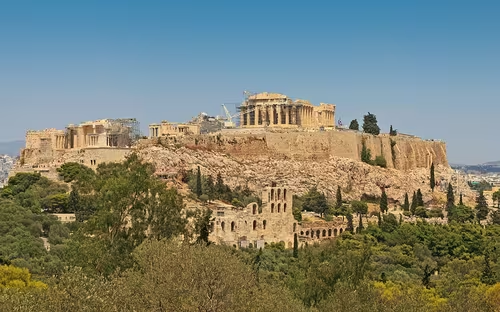
2. Acropolis

The Acropolis is a rocky hill that stands 157 meters above sea level and dominates the skyline of the city. Most of the monuments date back to the 5th century BC, a golden age for Athens. Pericles oversaw the construction of buildings like the Parthenon and the Erechtheion during this period. The rock is steep on three sides, and you can only enter from the western gate. It is the most famous of all Athens attractions.

The Parthenon is the main building and was built as a temple for the goddess Athena. Its columns are not perfectly straight; they lean slightly inward to make the temple look straight to the human eye. Nearby is the Erechtheion, where the famous Caryatids statues support the porch roof with their heads. These structures are made from Pentelic marble that glows white in the sun. The site is a major destination for people who love history and architecture.

Visit early in the morning or just before sunset to avoid the heat and the largest tour groups. The climb is a bit steep and the stones are slippery, so wear shoes with good grip. Tickets for the hill are often sold as part of a package for multiple places to visit in Athens. The view from the top lets you see the entire city from the mountains to the sea. It stays busy year-round because it is the most important historical site in Greece.

Hours Daily: 8:00 AM – 8:00 PM
Price €30
Insider TipEnter through the side gate near the Acropolis metro station instead of the main entrance to avoid the longest queues.
Ancient Agora

3. Ancient Agora

The Ancient Agora served as Athens' commercial, political, and social heart for centuries. This open space northwest of the Acropolis hosted markets, trials, and philosophical debates. The Panathenaic Way cut through the center, the route of the great procession to the Acropolis during festivals. The Stoa of Attalos, reconstructed in the 1950s, now houses the museum and offers shade from the sun. The Temple of Hephaestus stands largely intact at the western edge, built in 449 BC. Socrates walked these paths and was later tried here in 399 BC. The Odeon of Agrippa and the Tholos round building are visible ruins. The site opens at 8 AM daily and closes earlier in winter. Combined tickets with other archaeological sites save money. The area gets hot in summer with limited shade—bring water and a hat. The Theseion metro station sits at the southwest corner.

Hours Daily: 8:00 AM – 4:30 PM
Price €20
Location 37.975, 23.7225
Insider TipEnter from the Apostolou Pavlou pedestrian street entrance for a gradual downhill walk through the site. The Temple of Hephaestus offers the best-preserved interior of any ancient temple in Greece.
Panathenaic Stadium

4. Panathenaic Stadium

This marble stadium hosted the first modern Olympic Games in 1896. The original structure dates to 330 BC when Lycurgus built it for the Panathenaic Games. Herodes Atticus rebuilt it entirely in marble around 144 AD. The seats held 50,000 spectators. After centuries of neglect, Evangelos Zappas funded partial restoration for the 1870 and 1875 Olympics. George Averoff paid for the complete marble reconstruction for the 1896 Games. The track measures 204 meters long and 33 meters wide. The royal boxes sit at the center of the curved north end. The tunnel beneath the seats, used by athletes, is open to visitors. You can run a lap on the track for photos. The Olympic flame handover ceremony happens here before each Summer Games. The stadium sits in the Pangrati neighborhood, a 15-minute walk from Syntagma Square. The small museum displays Olympic torches from every Games since 1936.

Hours Daily: 8:00 AM – 5:00 PM
Price €10
Insider TipRun a lap on the track for photos—the marble surface is smooth but can be slippery. Visit the upper tiers for panoramic views of the stadium and Mount Lycabettus behind it.
Plaka

5. Plaka

Plaka sits beneath the Acropolis, a neighborhood where people have lived continuously since antiquity. Narrow streets wind between neoclassical houses built in the 19th century, many now housing tavernas and shops selling leather sandals and olive wood crafts. The area escaped the concrete apartment blocks that cover most of Athens because buildings here were declared protected in the 1960s. Lysicrates Monument, a circular marble structure from 334 BC, stands near the eastern edge. The Museum of Greek Folk Art occupies a restored mansion on Kydathineon Street. Cats sleep in doorways and bougainvillea spills over walls. Restaurants fill the evenings with live bouzouki music. The neighborhood gets crowded with tour groups mid-morning. Early mornings reveal empty streets and locals buying bread from corner bakeries. Anafiotika, a Cycladic-style village within Plaka, climbs the hillside toward the Acropolis.

Hours Always open
Price Free
Insider TipWalk the upper streets toward Anafiotika early morning before tour groups arrive. The taverna on Adrianou Street with tables under the wisteria serves reliable grilled fish without inflated tourist prices.
Temple of Olympian Zeus

6. Temple of Olympian Zeus

Fifteen columns remain standing from what was once the largest temple in Greece. Construction began in the 6th century BC under the tyrant Peisistratus but halted for centuries. Roman Emperor Hadrian completed the project in 131 AD, dedicating it to Zeus. The original design called for 104 Corinthian columns; each stood 17 meters high with a base diameter of 1.7 meters. A colossal statue of Zeus once occupied the cella. Hadrian built a matching statue of himself beside it. One column fell in 1852 during a storm and lies in pieces on the ground. The site sits on Vasilissis Olgas Avenue, a short walk from the Acropolis. The entrance fee is modest and combined tickets with other sites are available. The columns photograph well at sunset when the marble glows golden. The site has little shade and gets extremely hot in summer afternoons.

Hours 8:00–20:00 (summer), 8:00–15:00 (winter)
Price €8
Insider TipVisit at sunset when the marble columns turn golden and the Acropolis is visible in the background. The view from inside the site frames Hadrian's Arch perfectly with the columns.
Get Your Own Private Tour with AI Guide
AI Guide
  • Personalized tour tailored to your interests
  • Your AI guide tells stories, shares facts, and cracks jokes
  • Turn-by-turn GPS navigation
  • Available in your language — no download needed
Try for Free

💎 Hidden Gems in Athens - Off the Beaten Path

Beyond the tourist crowds, Athens hides remarkable treasures waiting to be discovered.

Ano Petralona

1. Ano Petralona

Ano Petralona sits on the slopes of Filopappou Hill, a residential neighborhood that has become a dining destination for Athenians seeking traditional tavernas away from tourist areas. The name means “upper stone threshing floors,“ referring to the agricultural history of the area. Narrow streets climb the hillside between small houses with gardens. Tavernas here serve grilled meats, meze, and retsina to locals who have been coming for decades. The neighborhood maintains a village atmosphere within the city. Street cats patrol the alleys. Elderly residents sit on stools outside their homes in evenings. The area is quiet during the day, coming alive after 9 PM when Greeks eat dinner. The walk from Thiseio metro takes 15 minutes uphill. The tavernas are unpretentious—checkered tablecloths, paper placemats, carafes of house wine. Prices are lower than central Athens. The neighborhood offers a glimpse of how Athens looked before the apartment blocks took over.

Hours Always open
Price Free
Website Wikipedia
Location 37.9709, 23.713
Insider TipMake reservations for weekend dinners—locals fill the best tavernas by 9 PM. The taverna on Troon Street with the wood-fired grill serves the best paidakia (lamb chops) in Athens.
Brettos

2. Brettos

Brettos is the oldest distillery in Athens and has been operating in the heart of Plaka since 1909. When you walk in, the first thing you see is the back wall covered in hundreds of colorful glass bottles lit from behind. The original wood barrels still sit along the side walls, filled with ouzo, brandy, and liqueurs. It is a popular stop among Athens attractions for those looking for a traditional drink. The atmosphere is warm and has not changed much in over a century.

They produce more than 30 different flavors of liqueur, including mastiha, peppermint, and cherry. You can order a tasting flight to try several varieties or stick to their famous ouzo recipes. The recipes used here are the same ones that Michael Brettos used when he first opened the shop. It is a great place to buy a unique souvenir bottle to take home. Many people consider it one of the most photogenic places to visit in Athens.

The bar is quite small and often has people standing in the street with their drinks during the summer. It stays open late, usually until 2 AM, making it a good spot for a nightcap. Prices are reasonable for the area, with glasses of wine and liqueur starting around 5 Euros. It is located on Kydathineon Street, which is one of the main pedestrian roads in Plaka. Even though it is famous, it still feels like a local secret.

Hours Daily: 10:00 AM – 2:00 AM
Price $$
Location Maps
Insider TipTry the 'Mastiha' liqueur on ice; it is a traditional Greek spirit made from the resin of mastic trees on the island of Chios.
First Cemetery of Athens

3. First Cemetery of Athens

This cemetery opened in 1837 on 170 acres south of the Panathenaic Stadium, making it Athens' oldest and most prestigious burial ground. The grounds are planted with pine and cypress trees, creating a park-like atmosphere. The tombs and mausoleums function as an open-air sculpture museum—many of Greece's most famous artists and politicians are buried here, with elaborate monuments created by noted sculptors. The tomb of Heinrich Schliemann, the archaeologist who discovered Troy, features reliefs depicting scenes from the Iliad. Prime ministers, poets, and actors occupy family plots marked by marble angels and weeping figures. The cemetery is still active, with new burials in designated sections. The main gate is on Anapauseos Street. Entry is free. The grounds are peaceful and shaded, offering a quiet walk through 180 years of Greek history. Photography is permitted. The cemetery closes at 5:30 PM.

Hours Daily: 8:00 AM – 5:30 PM
Price Free
Insider TipEnter from the main gate on Anapauseos Street and follow the paths to the Schliemann tomb with its Iliad reliefs. The cemetery is peaceful for a morning walk when the light filters through the pine trees.
Kerameikos

4. Kerameikos

Kerameikos was the potters' quarter of the ancient city and also served as its main cemetery. The name comes from the word 'keramos,' which means ceramic or pottery. It is located at the northwestern edge of the ancient city walls. This area is one of the more underrated Athens attractions, even though it was the site of the Dipylon Gate and the Sacred Gate. These were the main entrances to the city for visitors and religious processions.

The archaeological site covers about 40 acres and was discovered in the 19th century during the construction of Piraeus Street. You can walk along the Street of Tombs to see the elaborate monuments and stelae that marked the graves of wealthy citizens. Many of the original statues are now in the small on-site museum to protect them from the elements. It is one of the most evocative places to visit in Athens because of its quiet and reflective atmosphere.

The site is open every day from 8 AM to 8 PM in the summer, closing earlier at 3:30 PM in the winter. Admission is around 8 Euros, and it is also included in the multi-site ticket. The on-site museum is small but has an excellent collection of pottery and sculpture found during the excavations. It is a short walk from the Thiseio or Kerameikos metro stations. Since there is little shade, visit in the early morning or late afternoon.

Hours 8am-7pm (summer), 8am-3pm (winter)
Price €10
Website Wikipedia
Insider TipLook for the stone tortoise that lives in the grassy areas near the ancient gates; it is a long-time resident of the site.
Pnyx

5. Pnyx

The Pnyx is a rocky hill west of the Acropolis where Athenian citizens gathered to vote on laws and policies from the 6th century BC onward. This was the birthplace of democracy—ordinary citizens, not just aristocrats, stood on this hillside to speak and decide the city's fate. The speaker's platform, carved into the bedrock, remains visible. Themistocles, Pericles, Demosthenes, and Aeschines addressed crowds here. The hill faces the Acropolis, so speakers stood with the Parthenon visible behind them. The assembly could hold 6,000 citizens. The Pnyx is part of the same hill complex as Filopappou Hill and the Hill of the Nymphs, connected by paths. Entry is free. The site has no shade and little signage—bring water and read up beforehand. Sunset brings locals for the views. The rocky terrain requires sturdy shoes. The Pnyx offers the best free viewpoint of the Acropolis, especially at night when the monument is illuminated.

Hours Always open
Price Free
Website Wikipedia
Insider TipVisit at sunset for the best free views of the illuminated Acropolis. The speaker's platform is on the north side of the hill—stand there and imagine addressing 6,000 Athenian citizens.
Get Your Own Private Tour with AI Guide
AI Guide
  • Personalized tour tailored to your interests
  • Your AI guide tells stories, shares facts, and cracks jokes
  • Turn-by-turn GPS navigation
  • Available in your language — no download needed
Try for Free

🎨 Best Museums & Galleries in Athens

World-class museums and galleries that make Athens a cultural treasure.

Benaki Museum

1. Benaki Museum

Antonis Benakis founded this museum in 1930, donating his family's collection to the Greek state in memory of his father Emmanuel. The original building on Koumbari Street in Kolonaki was the Benakis family home, a neoclassical mansion. The collection spans Greek history from prehistory to the 20th century, including Byzantine icons, Ottoman textiles, and folk costumes. Since 2000, the Benaki has expanded into a network of museums with specialized locations throughout Athens. The Islamic Art collection occupies a restored neoclassical house near the Kerameikos cemetery. The Ghika Gallery shows modern Greek art. The main building stays open until 11:30 PM on Thursdays, making it an evening destination. The roof terrace café offers views of the Acropolis and Lycabettus Hill. The museum shop sells design objects and books. The café serves meals and drinks throughout the day. The museum hosts temporary exhibitions that often draw international attention.

Hours Mon: 10:00 AM – 6:00 PM | Tue: Closed | Wed: 10:00 AM – 6:00 PM | Thu: 10:00 AM – 11:30 PM | Fri-Sat: 10:00 AM – 6:00 PM | Sun: 10:00 AM – 4:00 PM
Price €12
Website www.benaki.org/
Insider TipThe roof terrace café offers Acropolis views without the crowds of more famous spots. Thursday evenings the main building stays open until 11:30 PM—perfect for a post-dinner visit.
Byzantine and Christian Museum

2. Byzantine and Christian Museum

This museum occupies Villa Ilissia on Vasilissis Sofias Avenue, a mansion built in 1848 for the Duchess of Plaisance. Founded in 1914, it holds over 25,000 artifacts from the 3rd century AD through modern times. The collection includes icons, frescoes, mosaics, manuscripts, textiles, and metalwork from Greece and the Balkans. The villa's rooms maintain their 19th-century character, creating an intimate atmosphere for viewing the religious art. A modern underground extension added exhibition space without altering the historic building. The museum covers Byzantine, post-Byzantine, and early Christian periods. The icon collection is particularly strong, showing the evolution from early Coptic influences through the Cretan School. The museum is less visited than the archaeological museums, offering quiet contemplation of the artworks. The garden café serves refreshments surrounded by greenery. The museum closes at 3:30 PM most days, closed Tuesdays. The shop sells reproduction icons and religious art books.

Hours Mon: 8:30 AM – 3:30 PM | Tue: Closed | Wed-Sun: 8:30 AM – 3:30 PM
Price €8
Insider TipThe underground extension connects to the original villa through a modern atrium—look for the architectural contrast. The garden café is a peaceful spot even without visiting the galleries.
Museum of Cycladic Art

3. Museum of Cycladic Art

This museum houses the world's most significant collection of Cycladic art, the abstract marble figurines created in the Aegean islands between 3200 and 2000 BC. The Goulandris family founded the museum in 1986 in a neoclassical mansion on Neofytou Douka Street. The permanent collection includes over 3,000 objects from the Cyclades, ancient Greece, and Cyprus. The figurines influenced 20th-century artists—the abstract forms resemble modern sculpture but predate it by 5,000 years. The museum also hosts temporary exhibitions of contemporary art that dialogue with the ancient collection. The building connects to a modern wing with a café and shop. The neighborhood of Kolonaki surrounds the museum with boutiques and cafes. The museum is smaller and more manageable than the National Archaeological Museum. Thursday evenings extend hours until 8 PM. The shop sells reproductions of the figurines and jewelry inspired by ancient designs. The café has outdoor seating on a quiet side street.

Hours Mon: 10:00 AM – 5:00 PM | Tue: Closed | Wed: 10:00 AM – 5:00 PM | Thu: 10:00 AM – 8:00 PM | Fri-Sat: 10:00 AM – 5:00 PM | Sun: 11:00 AM – 5:00 PM
Price €12
Insider TipThe museum shop sells high-quality reproductions of the abstract figurines—better souvenirs than the tourist shops. Thursday evening openings are less crowded and the café stays open late.
Museum of Greek Folk Art

4. Museum of Greek Folk Art

This museum began in 1918 as the Museum of Greek Handicrafts in the Tzistarakis Mosque in Monastiraki Square. The collection moved to its current location on Kydathineon Street in Plaka in 1973, occupying a restored neoclassical mansion. The museum displays embroidery, weaving, shadow theater puppets, traditional costumes, and folk paintings from the 17th through 20th centuries. The shadow theater collection includes original Karagiozis puppets and sets. The building itself is worth seeing—a typical Athenian townhouse with an interior courtyard. The museum has annexes at the old Public Baths on Kyrristou Street and another on Thespidos Street, both in Plaka. The main building focuses on textiles and costumes. The annexes show different aspects of traditional life. The museum is small and manageable, taking about an hour to see. The shop sells reproduction textiles and folk art. The neighborhood of Plaka surrounds the museum with restaurants and shops.

Hours Mon: Closed | Tue-Fri: 11:00 AM – 4:00 PM | Sat-Sun: 10:00 AM – 3:00 PM
Price €6
Insider TipThe Tzistarakis Mosque annex in Monastiraki Square displays pottery and ceramics—combine it with a visit to the main building in Plaka. The shadow puppet collection shows the characters from traditional Karagiozis theater.
National Archaeological Museum

5. National Archaeological Museum

This is the largest archaeological museum in Greece and one of the most important in the world. The neoclassical building opened in 1889 on Patission Street, housing over 11,000 exhibits from prehistory to late antiquity. The Mycenaean collection includes the gold Mask of Agamemnon and the Vaphio cups. The bronze statues of Zeus and the Youth of Antikythera were recovered from ancient shipwrecks. The Cycladic figurines influenced modern artists like Picasso and Henry Moore. The museum underwent renovation after a 1999 earthquake and reopened with improved lighting and layout. The Egyptian collection occupies the east wing. Allow at least three hours for a proper visit. The museum shop sells high-quality reproductions. The café in the garden serves meals surrounded by ancient sculptures. The neighborhood around the museum has seen better days—take a taxi or metro rather than walking from the center. The museum closes at 3:30 PM most days, open until 8 PM on Tuesdays.

Hours Mon: 8:30 AM – 3:30 PM | Tue: 1:00 – 8:00 PM | Wed-Sun: 8:30 AM – 3:30 PM
Price €20
Insider TipVisit on Tuesday evening when the museum stays open until 8 PM and crowds thin out. The garden café is worth a stop even without visiting the galleries—ancient sculptures surround the tables.
Stavros Niarchos Foundation Cultural Center

6. Stavros Niarchos Foundation Cultural Center

Renzo Piano designed this cultural complex on the Faliro waterfront, completed in 2016 with a 630 million euro donation from the Stavros Niarchos Foundation. The site houses the National Library of Greece and the Greek National Opera in buildings connected by a raised public park. The opera building features two theaters—a 1,400-seat auditorium and a 400-seat alternative space. The library holds over 2 million volumes and includes a digital reading room. The park rises to a 32-meter height, offering views of the sea and the Acropolis. A glass-walled reading room sits at the highest point. The complex includes a canal with boats, gardens, and sports facilities. Free shuttles run from Syntagma Square. The architecture uses sustainable design—solar panels and natural ventilation reduce energy use. Concerts, exhibitions, and free events fill the calendar. The park is open daily from 6 AM to midnight. The building has won multiple international architecture awards.

Hours Daily: 6:00 AM – 12:00 AM
Price Free
Website www.snfcc.org/
Location 37.9397, 23.6917
Insider TipTake the free shuttle from Syntagma Square to avoid the complicated public transport connections. The reading room at the top of the park offers the best views—bring ID to enter.
Get Your Own Private Tour with AI Guide
AI Guide
  • Personalized tour tailored to your interests
  • Your AI guide tells stories, shares facts, and cracks jokes
  • Turn-by-turn GPS navigation
  • Available in your language — no download needed
Try for Free

🍕 Food Markets & Culinary Spots in Athens

The best food markets, food halls, and culinary destinations in Athens.

Laiki Agora

1. Laiki Agora

Laiki agora means “people's market“—weekly street markets that appear in neighborhoods across Athens, then disappear by afternoon. Each neighborhood has its assigned day. Vendors set up portable stalls at dawn, selling produce directly from farms and gardens. The markets operate from about 8 AM to 2 PM, then vanish as if they never existed. Prices are lower than supermarkets and quality is higher—farmers sell what they grew. The atmosphere is social—neighbors gossip, sample fruit, and argue over prices. Each stall specializes: one sells only tomatoes, another only greens, a third only cheese. The markets rotate through the week—Kolonaki on Friday, Pangrati on Saturday, Exarcheia on Sunday. Ask locals when your neighborhood market happens. The experience offers a glimpse of traditional Greek life unchanged for generations. Bring cash and reusable bags. The markets get crowded and noisy. Vendors shout their prices and deals. By 1 PM, prices drop as vendors try to sell the last of their stock.

Hours Mon-Tue: Closed | Wed: 7:00 AM – 3:00 PM | Thu-Sun: Closed
Price Free entry
Location Maps
Insider TipAsk your hotel concierge which laiki operates on which day in your neighborhood. Visit after 1 PM when vendors slash prices to clear their stock before packing up.
Varvakeios Agora

2. Varvakeios Agora

This central market on Athinas Street has operated continuously since 1886, named after the benefactor Ioannis Varvakis who funded its construction. Fire delayed completion—the building burned in 1884 and had to be rebuilt. The iron and glass structure covers a city block, housing vendors of meat, fish, poultry, and produce. The meat hall occupies the central section, with whole carcasses hanging from hooks and butchers sharpening knives. The fish market sits at the eastern end, with seafood arriving daily from the islands. Spice shops line the surrounding streets, selling oregano, saffron, and mountain tea. The market opens early—vendors set up by 7 AM and close by mid-afternoon. The atmosphere is chaotic and authentic, unchanged for generations. Greeks shop here for special occasions, trusting the quality over supermarkets. The surrounding streets of Evripidou and Sofokleous sell restaurant supplies and specialty ingredients. The market is closed Sundays. The area gets busy and slippery—watch your step on the wet floors.

Hours Mon-Sat: 7:00 AM – 6:00 PM | Sun: Closed
Price Free
Website N/A
Insider TipArrive before 9 AM to see the market at its busiest and freshest. The spice shops on Evripidou Street sell saffron from Kozani at prices much lower than tourist shops.
Get Your Own Private Tour with AI Guide
AI Guide
  • Personalized tour tailored to your interests
  • Your AI guide tells stories, shares facts, and cracks jokes
  • Turn-by-turn GPS navigation
  • Available in your language — no download needed
Try for Free

🌳 Parks & Best Viewpoints in Athens

Beautiful parks, gardens, and panoramic viewpoints for the best views of Athens.

Filopappou Hill

1. Filopappou Hill

Filopappou Hill rises southwest of the Acropolis, connected to the Pnyx and the Hill of the Nymphs in a chain of heights that form the western boundary of ancient Athens. The hill takes its name from the monument at its summit, erected between 114 and 119 AD in honor of Gaius Julius Antiochus Epiphanes Philopappos, a Roman consul and benefactor of Athens. The monument's facade survives, showing Philopappos in his chariot. The hill offers the best views of the Acropolis, looking across to the Parthenon from the same height. Paths crisscross the pine-covered slopes, popular with joggers and dog walkers. The Dora Stratou Theater on the southern slope presents traditional Greek dance performances in summer. The hill is free and open 24 hours. The rocky terrain requires sturdy shoes. The Pnyx, where Athenian citizens once gathered to vote, sits on the northern slope. The hill was the site of a signal station during the Frankish period, giving it the older name “Seggio“ from the Italian for “sign.“

Hours Open 24/7
Price Free
Insider TipThe path from the Pnyx to the summit offers the best Acropolis views without climbing the hill itself. The Dora Stratou Theater presents traditional Greek dance performances on summer evenings.
Lycabettus Hill

2. Lycabettus Hill

Lycabettus rises 277 meters above sea level, the second-highest point in Athens after the Tourkovounia hills. The hill is visible from almost everywhere in the city, crowned by the small Chapel of St. George. A funicular railway climbs from Kolonaki to the summit, or you can walk the path from Aristippou Street. The walk takes about 30 minutes and gets steep near the top. The summit offers 360-degree views of Athens, the Acropolis, and on clear days, the Saronic Gulf islands. The chapel holds services and is open to visitors. A restaurant and café operate at the summit, overpriced but convenient. Sunset draws crowds—arrive early for a good spot. The hill is limestone and was once covered in forest; now pines and cypress cling to the slopes. Athenians call it “Lykavittos“ in everyday speech. The name may come from “lycos“ (wolf) and “baino“ (to walk), from ancient times when wolves roamed here. The hill is free to visit.

Hours Open 24/7
Price Free
Insider TipWalk up from Aristippou Street rather than taking the funicular—the path winds through pine trees and offers better views. Arrive 45 minutes before sunset to claim a spot at the summit before crowds gather.
National Garden

3. National Garden

Queen Amalia commissioned this garden in 1838, importing 15,000 plants from around the world to create a royal park behind the palace. The 38-acre garden opened to the public in 1923. Pathways wind through dense plantings of native and exotic species—palm trees, cypress, eucalyptus, and orange trees. A small zoo houses goats, ducks, and peacocks. A children's library and playground occupy one corner. The garden contains ancient ruins and a Roman mosaic discovered during planting. The Zappeion exhibition hall sits within the grounds. The garden provides shade and cool air in summer when Athens swelters. Locals use it as a shortcut between Syntagma and the Panathenaic Stadium. The café near the Zappeion serves refreshments. The garden closes at sunset. Turtles inhabit the ponds. Cats patrol the undergrowth. The main entrance is on Leoforos Amalias across from the parliament. Side gates open onto Irodou Attikou and Vasilissis Olgas.

Hours 7:00–21:00 (summer), 7:00–17:00 (winter)
Price Free
Insider TipUse the garden as a shaded shortcut between Syntagma and the Panathenaic Stadium on hot days. The small zoo near the Vasilissis Olgas entrance has peacocks that roam freely through the grounds.
Pedion tou Areos

4. Pedion tou Areos

Pedion tou Areos is Athens' largest public park, covering 227 acres northeast of Omonia Square. The name means “Field of Ares,“ referring to military exercises held here during the reign of King Otto in the 19th century. The park was designed in 1934, replacing earlier uses as a military training ground and refugee settlement after the Asia Minor Catastrophe. Statues of heroes from the Greek War of Independence line the main avenue. The park contains playgrounds, sports fields, a small church, and the Athens Courts of Appeal at its eastern edge. The area around the park has seen decline in recent decades, and visitors should stay aware of their surroundings. The park is free and open during daylight hours. It offers green space and shade rare in central Athens. Joggers use the paths in early mornings. The main entrance is on Mavrommateon Street near the Victoria metro station. The park hosts occasional concerts and events in summer.

Hours Always open
Price Free
Insider TipThe statue-lined avenue makes for a shaded jogging route in early morning. The Victoria metro station provides the safest access point—avoid the park after dark.
Strefi Hill

5. Strefi Hill

Strefi Hill sits between the neighborhoods of Exarcheia and Neapoli, a local park unknown to most tourists. The hill once had another name—Anchesmos—and belonged to the Strefis family. A quarry operated here from the 19th century into the 1920s, altering the hill's shape before it became public land. The city planted trees in the 1930s, creating the park that exists today. An open-air theater hosts summer concerts and events. A basketball court and playground serve the neighborhood. A small café operates near the top. The summit offers views of Lycabettus Hill and the Acropolis in the distance, though trees block some angles. The hill is free and open 24 hours. The surrounding streets of Exarcheia are Athens' most alternative neighborhood, filled with political bookstores and anarchist cafes. The hill provides a green escape for locals who live in apartments without gardens. The paths are paved but steep in places.

Hours Open 24/7
Price Free
Insider TipThe open-air theater hosts free summer concerts—check local listings for the schedule. The summit views are best in winter when the trees lose their leaves and the Acropolis is visible between branches.
Get Your Own Private Tour with AI Guide
AI Guide
  • Personalized tour tailored to your interests
  • Your AI guide tells stories, shares facts, and cracks jokes
  • Turn-by-turn GPS navigation
  • Available in your language — no download needed
Try for Free

Explore with AI Guide

AI Guide App

Get personalized tours with our AI-powered guide. No download needed — works right in your browser.