Things to Do in Dubrovnik - Top Attractions, Hidden Gems & Must-See Sights

Discover the best things to do in Dubrovnik. Complete guide to must-see sights, popular attractions, hidden gems, museums, food markets and parks.

15 Attractions 6 Categories Travel Guide

Table of Contents

Dubrovnik Overview

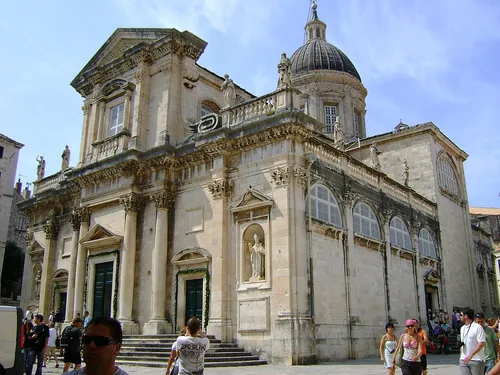
Dubrovnik, the 'Pearl of the Adriatic,' is a stunning walled city on Croatia's southern coast that captivates visitors with its remarkable blend of medieval architecture, crystal-clear waters, and rich cultural heritage. The UNESCO World Heritage-listed Old Town is encircled by magnificent 13th-17th century stone walls that offer breathtaking views of terracotta rooftops and the azure Adriatic Sea. At the heart of the city lies Stradun, the polished limestone main street that serves as the stage for daily life and festive celebrations. Beyond the iconic walls, visitors can explore historic palaces like the Rector's Palace and Sponza Palace, marvel at Baroque churches including the Cathedral and St. Blaise Church, and discover hidden gems like the hole-in-the-wall Buža Bar perched above the sea. The city's recent history is poignantly documented at the Homeland War Museum atop Mount Srđ, which also offers panoramic views accessible by cable car. For nature lovers, Lokrum Island provides a peaceful escape with botanical gardens and swimming spots just minutes from the harbor. Whether walking the ancient walls at sunset, sipping coffee on Stradun, or discovering quiet beaches with views of the Old Town, Dubrovnik offers an unforgettable journey through centuries of Mediterranean history and beauty.

Must-See Attractions in Dubrovnik

  • UNESCO World Heritage Old Town
  • 1,940-meter walkable medieval city walls
  • Game of Thrones filming locations
  • Crystal-clear Adriatic beaches
  • Rich maritime history and museums
🏛️ Must-See ⭐ Sights 💎 Hidden Gems 🎨 Museums 🌳 Parks & Views

🏛️ Must-See Attractions in Dubrovnik

These iconic landmarks and must-see sights are essential stops for any visitor to Dubrovnik.

Dubrovnik City Walls

1. Dubrovnik City Walls

Dubrovnik's city walls are among the best-preserved medieval fortifications in Europe. Built in stages between the 13th and 17th centuries, the circuit runs 1,940 meters around the entire Old Town, rising up to 25 meters high on the landward side and around 1.5 to 3 meters on the seaward side. When Constantinople fell in 1453, the city rushed to add the Minčeta Tower as extra protection. The walls were never breached.

Walking the full loop takes about an hour and a half at a leisurely pace — longer in summer when you're dodging crowds at every tight bend. From up here you look straight down into private courtyards, washing lines, and gardens that tourists on the streets below never see. The views out over the Adriatic and back over the terracotta rooftops are the real payoff. On a clear day you can see Lokrum Island floating just offshore.

Buy your ticket in the morning when the walls open — by 10am the narrow walkway gets congested in both directions, and there's no overtaking on the single-track sections. A single ticket also covers entry to Fort Bokar.

Hours Daily: 9:00 AM – 3:00 PM
Price Free
Location 42.64, 18.108
Insider TipEnter from the Pile Gate side first thing in the morning and walk clockwise — you get the steepest and shadiest stretch done early, and reach the best sea views on the south side when the sun is at a better angle for photos.
Lokrum Island

2. Lokrum Island

Lokrum is a small forested island about 600 meters off the Old Town harbor, reachable by boat in 15 minutes. The island has been a protected nature reserve since the 19th century and is almost entirely free of cars. Richard the Lionheart was supposedly shipwrecked here in 1192 on his return from the Third Crusade, and in gratitude funded a church on the island — though historians debate the specifics. Benedictine monks arrived in the 11th century and stayed until Napoleon dissolved the monastery in 1798.

The monastery ruins are now partly occupied by a botanical garden, and peacocks roam freely around the grounds, wandering through the cloisters and occasionally sitting on the old stone walls. The so-called Dead Sea — a saltwater lake connected to the Adriatic — is the most popular swimming spot. It's sheltered, calm, and warmer than the open sea. Rocky ledges around the island's perimeter offer cliff jumping at various heights if you're that way inclined.

Located just offshore from the best sights in Dubrovnik, Lokrum offers something the Old Town can't: shade, quiet, and the chance to swim without a crowd pressing in from all sides. Go on a weekday if possible. The last ferry back in summer is around 7pm — missing it means paying for a water taxi.

Hours 9:00–18:00 (summer), ferry schedule varies
Price Free
Website Wikipedia
Insider TipWalk to the far south end of the island past the Dead Sea lake to find the rocky swimming spots that most day-trippers never reach. The water is clearer there and the views back toward the mainland are excellent.
Rector's Palace

3. Rector's Palace

The Rector's Palace was the seat of government for the Dubrovnik Republic and one of the most carefully designed political spaces in medieval Europe. The man elected Rector — the highest office in the republic — was chosen monthly, lived in the palace separated from his family for the entire term, and was not allowed to leave except for state business. Each morning he ceremonially returned the city keys to the people. It was a deliberate system to prevent anyone from accumulating power. Above the entrance to the Grand Council Hall, carved in Latin: "Forget the private and care for the public."

The building combines Gothic and Renaissance styles in ways that feel slightly unresolved — because it was rebuilt multiple times after gunpowder explosions and the 1667 earthquake. The courtyard is the most elegant part, used today for concerts during the Dubrovnik Summer Festival. Inside, the rooms contain period furniture, portraits of rectors, and coins from the Republic's mint that operated here. The prison cells are still accessible in the basement.

This is one of the more rewarding places to visit in Dubrovnik if you're interested in the city's extraordinary political history. The Republic maintained independence for nearly five centuries surrounded by far more powerful neighbours by being relentlessly diplomatic and commercially clever. The palace is where that balancing act was managed.

Hours Mon: Closed | Tue-Sun: 9:00 AM – 4:00 PM
Price Free
Website Wikipedia
Insider TipCome in the evening during the Summer Festival (July-August) when chamber concerts are held in the atrium courtyard — you can often hear the music from outside for free, but tickets for the full experience are worth getting in advance.
Stradun

4. Stradun

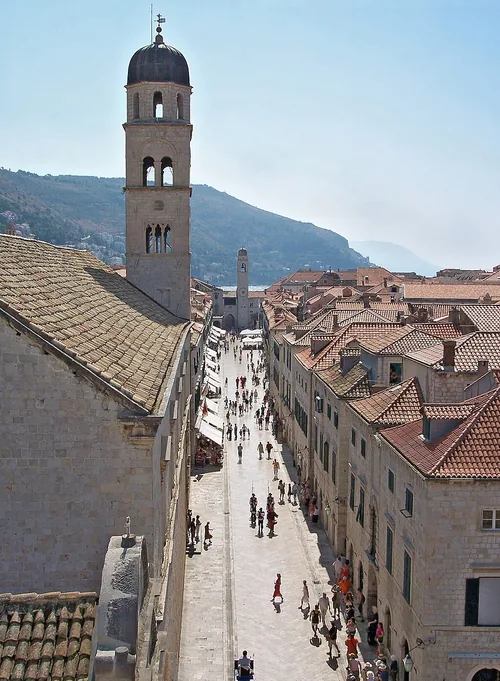
Stradun — also called Placa — is the main street of Dubrovnik's Old Town, running east-west between Pile Gate and Ploče Gate for about 300 meters. The uniformity of the buildings on either side is the direct result of the catastrophic 1667 earthquake, which levelled most of the city. The republic rebuilt quickly and strictly: ground floors for shops, first floor for living quarters, kitchens pushed to the attic to reduce fire risk. The result is an unusually harmonious streetscape for a medieval city.

The limestone paving has been polished by millions of feet into something that catches the light like wood parquet. On a summer night with the stones reflecting lantern light, it's genuinely beautiful — though at peak season the crowd density makes it hard to appreciate. Each year on 3 February the Feast of St. Blaise procession fills the whole length of the street. The New Year's Eve celebration here regularly appears on international lists of the best places in the world to ring in the new year.

Stradun is where you orient yourself when exploring the best sights in Dubrovnik — everything else in the Old Town is a short walk from this central axis. The small side streets running north and south are worth exploring: they're quieter, filled with tiny restaurants and bars, and give a better sense of how the city actually lives.

Hours Always open
Price Free
Website Wikipedia
Location 42.6414, 18.1081
Insider TipThe side streets running uphill to the north of Stradun have far fewer tourists and some of the city's best small restaurants. Walk up any of the stepped alleys off the main street and explore — the area around Prijeko Street is lively in the evenings.
Get Your Own Private Tour with AI Guide
AI Guide
  • Personalized tour tailored to your interests
  • Your AI guide tells stories, shares facts, and cracks jokes
  • Turn-by-turn GPS navigation
  • Available in your language — no download needed
Try for Free

💎 Hidden Gems in Dubrovnik - Off the Beaten Path

Beyond the tourist crowds, Dubrovnik hides remarkable treasures waiting to be discovered.

War Photo Limited

1. War Photo Limited

War Photo Limited is a small photography gallery on Antuninska Street in the Old Town, founded by New Zealand-born photojournalist Wade Goddard. The permanent collection focuses on warfare and its human consequences, with a strong emphasis on the conflicts in the former Yugoslavia during the 1990s. The context is local and pointed: Dubrovnik was shelled during the 1991-1992 siege, and the gallery sits less than a kilometer from buildings that still show patched shell damage.

The exhibitions rotate, but the standard is consistently high — these are images by working war photographers, not sanitized documentary work. The gallery makes no attempt to be comfortable. The photographs of people in crisis, of destroyed cities, of the specific aftermath of the Balkan wars, are presented straightforwardly in a small, properly curated space with good lighting. It's not a large gallery — a thorough visit takes 45 minutes to an hour.

For visitors trying to understand what Dubrovnik went through in the early 1990s, this gallery provides context that the polished Old Town stones don't. It's one of the more unusual attractions in Dubrovnik and easy to miss if you're not specifically looking for it. Open May through September daily, and October through April except Tuesdays — check the website before going in the off-season.

Hours 10:00–22:00 (May–Sep), 10:00–16:00 (Oct–Apr), closed Tue
Price €8
Insider TipThe gallery often has a themed temporary exhibition alongside the permanent collection. Check their website before visiting to see what's currently showing — sometimes the temporary work is stronger than the permanent display.
Get Your Own Private Tour with AI Guide
AI Guide
  • Personalized tour tailored to your interests
  • Your AI guide tells stories, shares facts, and cracks jokes
  • Turn-by-turn GPS navigation
  • Available in your language — no download needed
Try for Free

🎨 Best Museums & Galleries in Dubrovnik

World-class museums and galleries that make Dubrovnik a cultural treasure.

Homeland War Museum

1. Homeland War Museum

The Homeland War Museum occupies the ground floor of Fort Imperial on the summit of Mount Srđ, 412 meters above Dubrovnik. The fort was a critical defensive position during the 1991-1992 siege: Serbian and Montenegrin forces held the ridge above and repeatedly attacked the summit. A small Croatian garrison held it. The views from up here make immediately clear why both sides wanted it — you see the entire Old Town, the harbor, the islands, and a wide arc of the Croatian coast.

The permanent exhibition, titled "Dubrovnik in the Homeland War," documents the eight-month siege with photographs, maps, captured weapons, personal documents, and testimony from defenders. It's not a polished international-standard museum — it has the feel of something assembled with limited resources by people who lived through the events documented. That directness is part of why it works. The exhibits cover both the military situation and the experience of civilians trapped in the Old Town during the shelling.

Combining a visit here with a cable car ride makes practical sense — the cable car station is at the base of Srđ, and the ride up is part of the experience. The museum is free or included with some combination tickets.

Hours Daily: 9:00 AM – 5:00 PM
Price Included in city walls ticket
Website www.mdrd.hr/
Insider TipAfter the museum, walk around to the southern side of the fort where a large Croatian flag marks the position. From here you can see the exact line of the conflict — the ridge above where attacking forces positioned themselves, and straight down to the Old Town below.
Maritime Museum

2. Maritime Museum

Dubrovnik's Maritime Museum is housed in St. John's Fortress on the south side of the Old Town harbor — the same walls you walk past when boarding boats to Lokrum. The Dubrovnik Republic was, at its height in the 15th and 16th centuries, one of the major maritime powers of the Mediterranean. It maintained a merchant fleet that traded across Europe and the Levant, its ships known as "argosy" — a word that entered English from the Italian "ragusea" (from Ragusa, the Latin name for Dubrovnik).

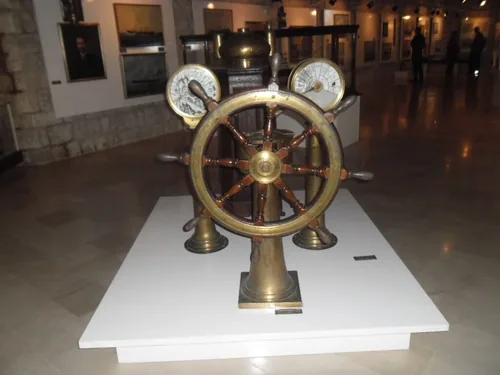
The collection covers that period in detail: ship models, navigational instruments, charts, compasses, log books, and objects recovered from historic wrecks. There are also exhibits on the specific design of Ragusan trading vessels, the routes they sailed, and the commercial relationships the republic maintained with everyone from Ottoman sultans to Spanish kings. Upstairs, an aquarium with Adriatic marine life shares the fortress building.

For those interested in the actual history behind Dubrovnik's wealth — and the political independence that wealth enabled — the Maritime Museum is better than most of the other museums in the city. It's open most days except Wednesday, with admission around €7. It's quieter than the main sights, and the harbor views from the fortress windows are good.

Hours Mon-Tue: 9:00 AM – 4:00 PM | Wed: Closed | Thu-Sun: 9:00 AM – 4:00 PM
Price €7
Location 42.6398, 18.1122
Insider TipThe aquarium entrance is on the ground floor of the same building with a separate ticket — worth combining if you have children, but the maritime collection is on the upper floors and easily missed if you're not paying attention to the building layout.
Museum of Modern Art Dubrovnik

3. Museum of Modern Art Dubrovnik

The Museum of Modern Art Dubrovnik is in Villa Banac, a 1930s modernist building on the Ploče road east of the Old Town, overlooking the sea. The villa itself is the reason to come as much as the art — it's one of the better pieces of interwar architecture in the region, with clean lines and sea-facing terraces that the city's mostly medieval and Baroque building stock makes rare. The museum collection covers Croatian art from the 19th century through to contemporary work.

The permanent holdings are strongest in Croatian modernism from the early 20th century — painters working in post-Impressionist and expressionist styles who are less well-known internationally but genuinely interesting. There are also pieces by international artists, and the temporary exhibition program brings in shows from around Europe several times a year. The building has been expanded and renovated over the decades and the galleries are well-lit and properly maintained.

At €8, it's not cheap by Croatian museum standards, but it's one of the few attractions in Dubrovnik that functions as a serious art museum rather than a heritage display. It's open until 8pm Tuesday through Sunday, which makes it a good option on evenings when the summer heat has made the Old Town uncomfortable. The walk from Ploče Gate is about ten minutes along the road above the sea.

Hours Mon: Closed | Tue-Sun: 9:00 AM – 8:00 PM
Price €8
Website www.momad.hr/
Location Maps
Insider TipThe terrace of the museum has views back toward the Old Town that most visitors never see — the Ploče Gate side of the city walls, the harbor, and Lokrum all together. It's a better angle than most of the standard viewpoints.
Get Your Own Private Tour with AI Guide
AI Guide
  • Personalized tour tailored to your interests
  • Your AI guide tells stories, shares facts, and cracks jokes
  • Turn-by-turn GPS navigation
  • Available in your language — no download needed
Try for Free

🌳 Parks & Best Viewpoints in Dubrovnik

Beautiful parks, gardens, and panoramic viewpoints for the best views of Dubrovnik.

Gradac Park

1. Gradac Park

Gradac is Dubrovnik's largest park, opened in 1898 above the Danče cove on the western edge of the city. It covers 1.7 hectares of pine and Mediterranean scrub, with the trees providing shade that's genuinely valuable in July and August when the rest of the Old Town is an oven. The park was once elaborate enough to have a bird garden and animal enclosures that attracted 15,000 visitors in its first fifteen years; today it's simpler, with benches, paths, and the sound of the sea below.

The views from the park entrance look directly at Fort Lovrijenac on its cliff, with the western walls stretching behind it and the Old Town visible further along. From other points in the park you can see the Danče bay below, a small beach popular with locals, and open water toward the Elaphiti Islands. Several scenes from Game of Thrones were filmed here when the production used Dubrovnik as a stand-in for King's Landing.

Gradac is free, always open, and consistently less crowded than almost everything else around it. It's a five-minute walk from Pile Gate, which makes it an easy escape when Stradun gets overwhelming. The parking area next to the park sits on a site called Vješala — in the time of the Republic, this is where executions were carried out.

Hours Always open
Price Free
Website N/A
Insider TipWalk through the park down to the Danče cove at the bottom. There's a small rocky beach there that's a local swimming spot rather than a tourist beach — bring something to sit on and you have a proper sea swim without the crowds.
Get Your Own Private Tour with AI Guide
AI Guide
  • Personalized tour tailored to your interests
  • Your AI guide tells stories, shares facts, and cracks jokes
  • Turn-by-turn GPS navigation
  • Available in your language — no download needed
Try for Free

Explore with AI Guide

AI Guide App

Get personalized tours with our AI-powered guide. No download needed — works right in your browser.