Things to Do in Copenhagen - Top Attractions, Hidden Gems & Must-See Sights

Discover the best things to do in Copenhagen. Complete guide to must-see sights, popular attractions, hidden gems, museums, food markets and parks.

36 Attractions 6 Categories Travel Guide

Table of Contents

Copenhagen Overview

Copenhagen, Denmark's capital, is a city where fairy tale charm meets cutting-edge design and sustainable living. Founded by Bishop Absalon in the 12th century, this harbor city has evolved into one of the world's most livable cities, consistently ranking among the happiest places on Earth.

The city seamlessly blends historic grandeur with modern innovation. From the colorful 17th-century townhouses of Nyhavn—where Hans Christian Andersen once lived—to the sleek contemporary architecture of the Opera House and BLOX, Copenhagen showcases architectural excellence across centuries. Royal palaces like Amalienborg and Christiansborg stand as testaments to Denmark's rich monarchical heritage, while Tivoli Gardens, the world's second-oldest amusement park, continues to enchant visitors with its magical atmosphere.

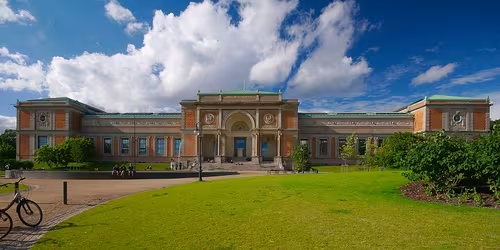
Copenhagen's cultural scene is world-class, with institutions like the National Gallery of Denmark, the Louisiana Museum of Modern Art, and the Designmuseum Danmark highlighting everything from Danish Golden Age paintings to contemporary Nordic design. The city's commitment to sustainability is evident everywhere—from its extensive cycling infrastructure to its innovative urban spaces like Superkilen.

Food lovers will find paradise in Copenhagen's culinary landscape, from traditional smørrebrød at Torvehallerne market to New Nordic cuisine at world-renowned restaurants. The city's green spaces, including King's Garden and Frederiksberg Gardens, offer peaceful retreats, while neighborhoods like Christiania provide glimpses into alternative lifestyles.

Whether climbing the spiral spire of the Church of Our Saviour, cycling along the harbor, or simply enjoying the Danish concept of 'hygge' in a cozy café, Copenhagen offers an unforgettable blend of history, culture, and quality of life that continues to captivate visitors from around the globe.

Must-See Attractions in Copenhagen

  • Tivoli Gardens - World's second-oldest amusement park
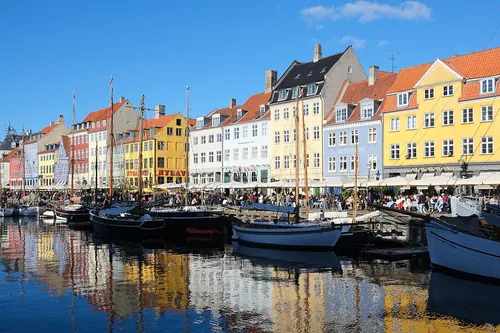
  • Nyhavn - Iconic 17th-century waterfront
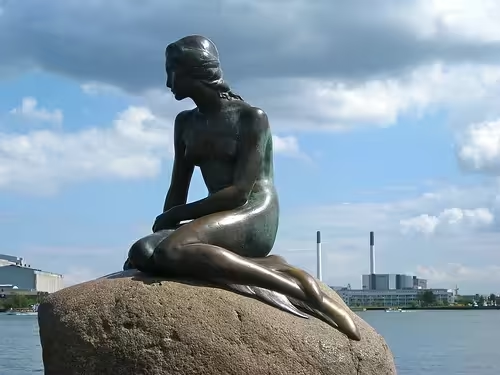
  • The Little Mermaid - Denmark's most famous statue
  • Christiansborg Palace - Seat of Danish government
  • Amalienborg Palace - Royal residence and Rococo masterpiece
🏛️ Must-See ⭐ Sights 💎 Hidden Gems 🎨 Museums 🍕 Food & Markets 🌳 Parks & Views

🏛️ Must-See Attractions in Copenhagen

These iconic landmarks and must-see sights are essential stops for any visitor to Copenhagen.

Amalienborg Palace

1. Amalienborg Palace

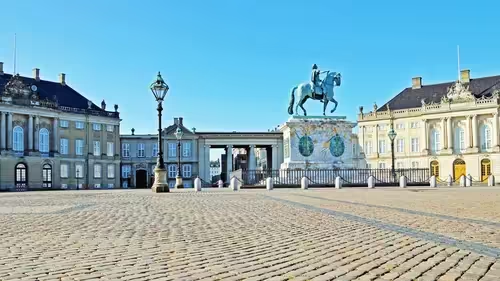
Amalienborg is four nearly identical Rococo palaces arranged around an octagonal courtyard in the Frederiksstaden district — and the Danish Royal Family has lived here since 1794, when Christiansborg burned down and the royals needed somewhere quickly. Architectural historians consider it the finest Rococo complex in Denmark, possibly in all of northern Europe, and it is on Denmark's tentative list for UNESCO World Heritage status.

Two of the four palaces house the royal apartments of King Frederik X and Queen Mary; a third is the official guest wing; and the fourth has been a museum since 1994. The museum preserves royal apartments from the 19th and early 20th centuries — less grand than you might expect, and genuinely interesting for what they reveal about how the monarchy actually lived day to day. The equestrian statue of Frederik V at the centre of the courtyard was made by French sculptor Jacques Saly and took twenty years to complete.

The Changing of the Guard happens daily at noon and is worth timing your visit around. What many visitors miss is that the guards march from Rosenborg Castle through the city streets to reach Amalienborg — the march through town is often more interesting than the ceremony itself. As places to visit in Copenhagen go, the courtyard is free and the museum is reasonably priced; both are worth it.
Hours 10am-4pm/5pm (seasonal)
Price Free
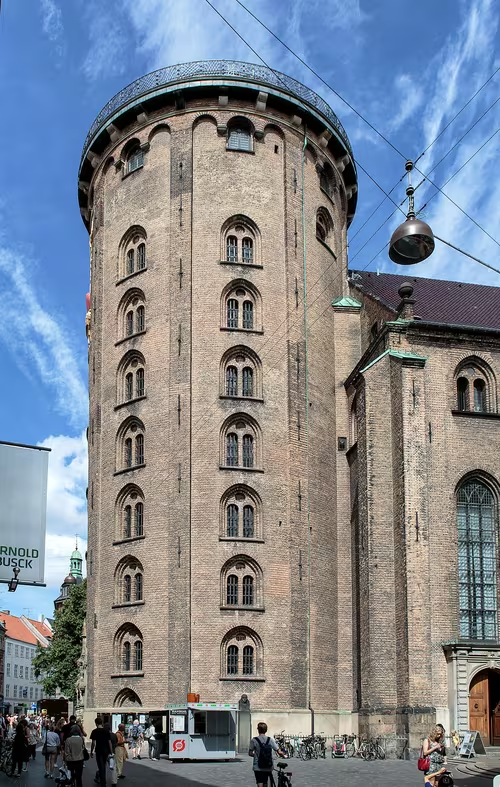
Insider TipThe guards march from Rosenborg Castle at around 11:30am, walking through the city to reach Amalienborg by noon. Follow them through the streets — the route through Gothersgade and Store Kongensgade is more interesting than waiting at the palace.
Christiansborg Palace

2. Christiansborg Palace

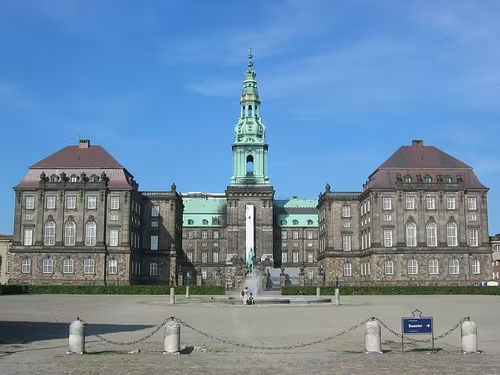
Christiansborg is the only building in the world that houses three branches of national government simultaneously — the Danish Parliament (Folketinget), the Supreme Court, and the Prime Minister's Office all operate here, while the Royal Family uses separate wings for state receptions and the palace chapel. It sits on Slotsholmen, a small island in central Copenhagen, and has been the centre of Danish power since the 15th century.

The current building is the third on this site. The first Christiansborg burned in 1794; the second burned in 1884; this one was completed in 1928. Elements from all three versions survive: the old stables and riding hall, the Palace Chapel from the second Christiansborg, and the current granite tower — at 106 metres, the tallest tower in Copenhagen. Beneath the palace you can visit the ruins of the medieval Bishop Absalon's castle from the 12th century, which is a remarkable layer of history to find under a functioning parliament.

Visiting is cheaper than most people expect — the ruins, the Great Hall with its tapestries, and the royal reception rooms can all be visited, and parts of the complex are free. The tower is free and gives the best elevated view of Copenhagen. For the range and depth of what to see in Copenhagen, Christiansborg covers a lot of ground in one building.

Hours Mon: Closed | Tue-Sun: 10:00 AM – 5:00 PM
Price Free
Insider TipThe palace tower is free to climb and gives better 360-degree views than the Round Tower or Church of Our Saviour because it is taller and central. It is also usually far less crowded. Open most days — check hours in advance.
Church of Our Saviour

3. Church of Our Saviour

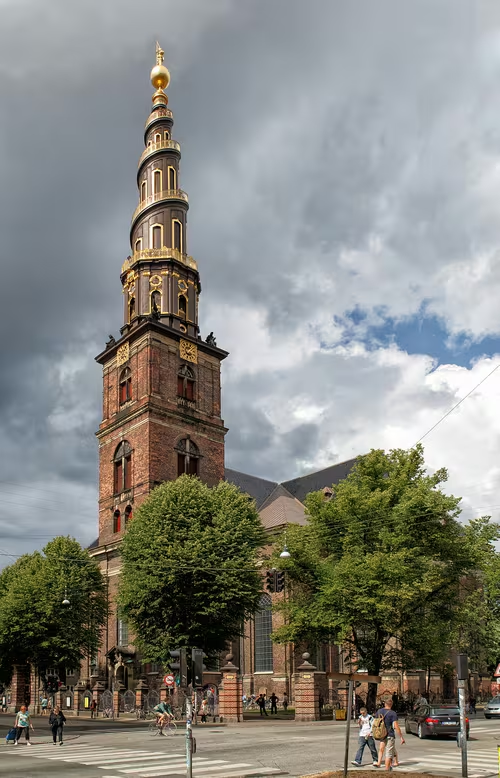
Vor Frelsers Kirke in Christianshavn was built between 1682 and 1696, but the feature that defines it came later. The spiral spire — a helical staircase that wraps around the outside of the tower four times, narrowing toward a golden globe at the top — was added between 1749 and 1752. It is 90 metres tall, and climbing it means walking 400 steps, the final 150 of which are on the outside of the building, exposed to the wind and open to the harbour.

Inside the church itself, two things stand out: the carved organ facade from 1698, supported by two elephants, is one of the finest pieces of Baroque woodworking in Denmark. The altarpiece behind the high altar was designed by Swedish architect Nicodemus Tessin the Younger and is considered a masterpiece of its kind. The church is still an active congregation, which means you are visiting a working church rather than a museum.

The climb is worth it on a clear day — the views from the top take in the whole of Copenhagen, the harbour, and on good days Malmö across the water. This is genuinely one of the best sights in Copenhagen for a reason: it is both beautiful and useful. The entrance to the tower is 70 DKK; the church itself is free.

Hours Daily: 11:00 AM – 3:30 PM
Price Free (tower 70 DKK)
Insider TipThe outer staircase narrows as you approach the top and the steps become quite steep. Go on a weekday morning when it is less crowded — the final exposed section requires some space to pass other climbers. Avoid it on windy days.
Nyhavn

4. Nyhavn

Nyhavn was dug out between 1671 and 1673 — the labour came from Danish soldiers and Swedish prisoners of war captured during the Second Karl Gustav War. The purpose was to connect the city centre to the sea, giving merchants direct access to the inner harbour. King Christian V inaugurated it in the 1670s. The colourful townhouses lining the northern quay are mostly from the late 17th and 18th centuries; the oldest surviving building, Nyhavn 9, dates to 1681. For most of its history the area was rough — a sailors' district of taverns, lodging houses, and tattoo parlours. Hans Christian Andersen lived here three times: at number 20 in 1834, at 67 from 1848 to 1865, and at 18 from 1871 until his death in 1875.

The renovation of the 1980s cleared out much of the sailors' quarter character and replaced it with the restaurant-and-café strip it is today. The southern quay is shadier and quieter; the northern side (the sunny side — solsiden in Danish) is where the terraces are. Historic wooden ships are moored in the inner harbour section, between the canal and Nyhavnsbroen. A memorial anchor at the far end of the canal commemorates Danish sailors lost in World War II.

Nyhavn is one of the most photographed sights in Copenhagen and also one of the most expensive places to eat. The photos are worth taking; the restaurant bill is not. Grab a beer from a kiosk and sit on the quay with the locals.

Hours Open 24/7
Price Free
Website Wikipedia
Insider TipBuy a beer from one of the small kiosks at the mouth of the canal and sit on the stone quayside rather than paying restaurant terrace prices. Locals do this routinely. The view is identical and a beer costs a third as much.
The Little Mermaid

5. The Little Mermaid

The Little Mermaid was placed on her rock at Langelinie on 23 August 1913. Sculptor Edvard Eriksen made her, using his wife Eline as the model for the body and a ballet dancer as the model for the face. The commission came from brewer Carl Jacobsen, who had seen the Royal Danish Ballet perform Hans Christian Andersen's story in 1909 and wanted to give the city a permanent version of the character. She is bronze, 1.25 metres tall, and has been vandalised so many times — decapitated twice, an arm removed, painted, and attacked with various tools — that significant sections have been recast.

She has also been sent abroad. The statue travelled to the 2010 World Expo in Shanghai as part of Denmark's exhibit, and a replica currently sits in Copenhagen's harbour district of Sydhavn. The original rock-sitting figure at Langelinie is flanked by crowds at almost any hour of the day tourists visit Copenhagen — photographs frequently show more people than statue.

She is genuinely smaller than expected. Most visitors report some version of this. Whether that is a disappointment or the point is a matter of interpretation — Andersen's original mermaid was also small and often overlooked. She is worth seeing as part of a walk along Langelinie from Kastellet, with the Gefion Fountain being considerably more impressive en route.

Hours Open 24/7
Price Free
Insider TipVisit before 8am to see her without crowds — she is accessible 24 hours and looks best in morning light reflecting off the harbour. Walk from Kastellet rather than taking a taxi; the Gefion Fountain and Langelinie promenade are worth the 15-minute walk.
Tivoli Gardens

6. Tivoli Gardens

Tivoli opened on 15 August 1843, founded by Georg Carstensen on a piece of land just outside Copenhagen's western gate. Only one amusement park in the world is older (Dyrehavsbakken, also in the Copenhagen area), and when Tivoli opened it was literally outside the city — urban development has since surrounded it completely, so it now occupies a 10-hectare island in the middle of central Copenhagen, bordered by Central Station on one side and the Town Hall on another.

The park draws 2.3 million visitors per year, making it Denmark's most visited attraction and Europe's fourth most visited amusement park after Disneyland Paris, Efteling, and Europa-Park. None of Carstensen's original wooden buildings survived — the park has been rebuilt repeatedly — but the atmosphere he intended, a mix of garden, theatre, food, and rides that Disneyland later borrowed as a model, is still legible in the layout. The gardens are genuinely well maintained and the mix of high-quality restaurants alongside traditional fairground food is distinctive.

Tivoli is seasonal: open spring through autumn and again in December for Christmas markets. Entry to the grounds is relatively cheap; rides cost extra or can be covered with an all-inclusive ticket. The fireworks on Friday and Saturday nights in summer are free with the standard entry ticket.

Hours 11am-11pm (seasonal)
Price Free
Insider TipThe Friday and Saturday evening fireworks (10pm in summer) are included in the standard entry ticket — no upgrade needed. Go on a weekday evening for the same atmosphere with noticeably smaller crowds than weekends.
Get Your Own Private Tour with AI Guide
AI Guide
  • Personalized tour tailored to your interests
  • Your AI guide tells stories, shares facts, and cracks jokes
  • Turn-by-turn GPS navigation
  • Available in your language — no download needed
Try for Free

💎 Hidden Gems in Copenhagen - Off the Beaten Path

Beyond the tourist crowds, Copenhagen hides remarkable treasures waiting to be discovered.

Absalon

1. Absalon

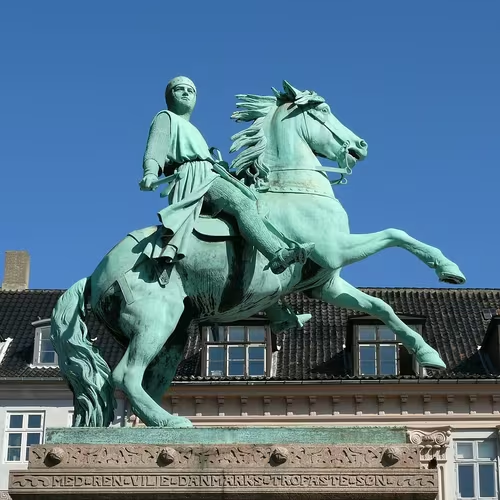
Absalon is a former church in the Vesterbro district that was converted in 2016 into something Copenhagen rarely pulls off: a genuinely community-owned social space. The building takes its name from Bishop Absalon, the city's 12th-century founder — his equestrian statue stands nearby on Højbro Plads, cast by sculptor Vilhelm Bissen and unveiled in 1902. Inside, long wooden communal tables fill the nave where pews once stood, and the place runs on the idea that strangers should eat together.

The programming is broad in a way that works. Mornings bring yoga classes, evenings see community dinners where you pay what you can, concerts happen between the columns, and workshops run on everything from cooking to civic life. It is full on weeknights, which is entirely the point — this is where the neighbourhood gathers, not where tourists look for it.

For anyone wanting things to do in Copenhagen beyond the standard attractions, Absalon is one of the more honest options. The food is cheap, the beer is good, and the atmosphere is warm without being manufactured. The Danes call it hygge, but Absalon earns that word rather than trading on it.

Hours Mon-Thu: 7:30 AM – 12:00 AM | Fri-Sat: 7:30 AM – 2:00 AM | Sun: 7:30 AM – 12:00 AM
Price $
Website absaloncph.dk/
Insider TipShow up at 6pm on a weekday for the community dinner (Fællesspisning) — you pay what you can, food is served buffet-style, and locals far outnumber tourists. No reservation needed, just grab a table.
Assistens Cemetery

2. Assistens Cemetery

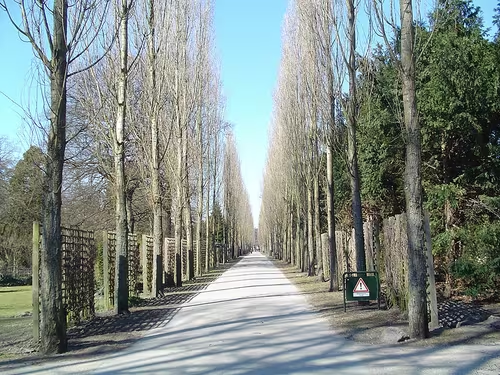
Assistens Cemetery opened on 6 November 1760, created because Copenhagen's churchyards inside the city walls had run out of space. The Latin name means 'assisting' — this one assisted the older, full cemeteries. It was built in what was then Nørrebro, well outside the city, and that distance from the centre was part of the point: the more prestigious burial spots inside the walls were reserved for those who could afford them.

Today Hans Christian Andersen is buried here, along with philosopher Søren Kierkegaard, physicist Niels Bohr, and painter Christen Købke, among many others. Finding their graves takes either a map from the entrance or a willingness to wander — most people find the wandering is better. The cemetery is large, green, and maintained to feel more like a park than a formal burial ground. Locals use it for lunch breaks, dog walks, and sunbathing in summer.

The Danes are relaxed about death in a way that makes the cemetery feel warm rather than heavy. Children play near graves. People read on benches. It works, and it is entirely free.

Hours Daily: 7:00 AM – 7:00 PM
Price Free
Insider TipPick up the free grave map at the main entrance on Kapelvej before you go in — Kierkegaard is in section A, Hans Christian Andersen in section D, and they're not close to each other. Without the map it becomes a long walk through 54 sections.
Dragør

3. Dragør

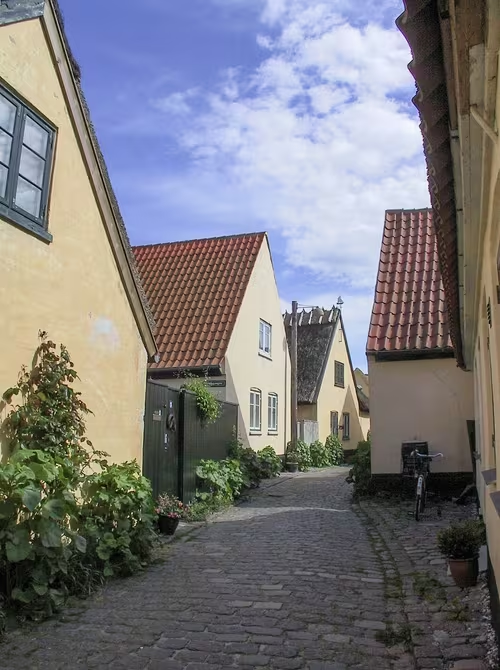
Dragør is a town on Amager island, about 12 kilometres from central Copenhagen and close enough to the international airport that you can watch planes pass low overhead from the harbour. The name comes from the old Danish word for 'to pull' — the ør ending refers to a sandy or gravelled shoreline, which is what the original harbour was built on. For a long time this was one of the main fishing ports serving Copenhagen, and the town grew wealthy enough in the 18th and 19th centuries to build the well-preserved houses that still line its cobblestone streets today.

Almost everything in the old town is painted yellow-ochre with red roof tiles. The streets are narrow and connected in ways that make it easy to get pleasantly lost. The harbour still functions — small fishing boats, pleasure craft, and the pilot boats that guide ships through the Øresund share the water. At the nearby village of Store Magleby, which has merged with Dragør into one continuous settlement, there is a Dutch Reformed church from the 1100s that predates the town itself.

Dragør is one of those day trips from Copenhagen that rewards not rushing. Take bus 350S from central Copenhagen, allow two to three hours, and have lunch at the harbour before coming back.

Hours Always open
Price Free
Website www.dragoer.dk/
Insider TipBus 350S from Copenhagen Central Station or Nørreport takes about 40 minutes and drops you in the centre of Dragør. The Dragør Museum by the harbour is small but genuinely interesting — it covers the Dutch settlement history that shaped the town in the 16th century.
Superkilen

4. Superkilen

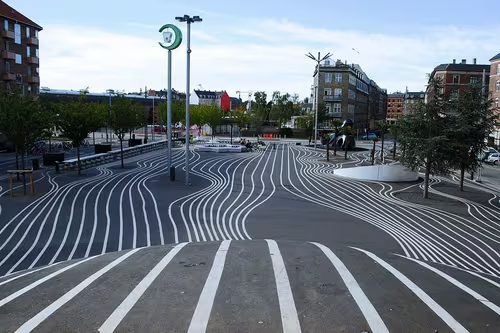
Superkilen opened on 22 June 2012 in Outer Nørrebro — one of Copenhagen's most ethnically diverse neighbourhoods — and it was a deliberate response to that diversity. The design team (artist collective Superflex, architects Bjarke Ingels Group, and German landscape firm Topotek1) surveyed local residents from over 60 countries and asked what public objects, furniture, and design elements they associated with their home countries. The result is a park full of sourced originals: benches from Brazil, a fountain from Morocco, exercise equipment from Japan, neon signs from various countries, a Thai boxing ring.

The park runs as a 750-metre strip divided into three colour-coded zones. The Red Square at the southern end is the most urban — market area, cultural events, a skate bump. The Black Market in the middle is the main gathering space, with the most objects and the most activity. The Green Park at the northern end is grass, hills, and play equipment. The division is clear from a map but fluid on the ground.

For a city that sometimes feels homogeneous to visitors, Superkilen is a more accurate picture of what Copenhagen actually contains. It is also just a good park — the objects are interesting, the design is not precious about itself, and local kids use the Red Square as a genuine skate and bike space.

Hours Open 24/7
Price Free
Insider TipThe Nørrebro Bryghus (Nørrebro Brewery) is a five-minute walk from Superkilen and serves its own-brewed beers in a lively taproom. Combine an afternoon in the park with a stop there — it is one of the best craft beer spots in the city.
Sydhavnstippen

5. Sydhavnstippen

Sydhavnstippen — locals just call it Tippen — is a nature area at the southern end of Kalvebodløbet, the water channel separating Copenhagen from Amager island. It sits east of Valby Park, connected to it via a footpath and bridge. The area was a landfill site in the 20th century; what grew on top of it was left to do as it wanted, and the result is a wild, scrubby peninsula of long grass, thorny shrubs, and water views that feels genuinely removed from the city even though it is inside Copenhagen's boundaries.

The ecological management here involves animals rather than machinery: sheep, llamas, and alpacas graze the area and control invasive plants, particularly giant hogweed (bjørneklo). The animals are managed by volunteers under the organisation Tippen Syder, and they are a genuine draw — not a theme, but a practical conservation approach that happens to be charming. Feeding the animals is not permitted; the signs are clear about this.

For visitors who have done the standard attractions in Copenhagen and want to see something genuinely off-map, this is worth the 30-minute journey from the centre. No facilities, no entrance fee, no services — just water, wind, and animals.

Hours Open 24/7
Price Free
Location 55.6358, 12.5347
Insider TipTake the S-train to Sydhavn station and walk south for about 15 minutes. The path is signposted. Go early morning for the best chance of seeing the alpacas and llamas active and uncrowded by the small number of locals who know the spot.
The Cisterns

6. The Cisterns

The Cisterns are under Søndermarken, a park adjacent to Frederiksberg Gardens, accessed through two glass pyramids that sit in the grass like architectural punctuation. Below ground, three vaulted chambers built of granite and concrete cover 4,320 square metres, supported by rows of columns and lit by whatever light the curators choose to use. From the 1850s until 1957 these chambers stored Copenhagen's fresh water — the system held up to 16 million litres and supplied the entire city. After the water authority no longer needed them, they sat unused until gallerist Max Seidenfaden created the current museum space in 2001.

The conditions underground are extreme. Humidity runs at nearly 100 percent year-round; temperature averages 8.8°C but swings between 4°C in February and 16°C in August. The walls and columns sweat. Sounds echo oddly. Artists have been working with these conditions for over two decades, and the exhibitions tend toward immersive installation and site-specific work that would be impossible anywhere else. The ceiling and floors drip. This is not a comfortable gallery experience, and it is all the better for it.

The Cisterns are part of the Frederiksberg Museums group and open Tuesday to Sunday. Admission runs 70–120 DKK depending on the current exhibition.

Hours 11am-6pm Tue-Sun
Price 70-120 DKK
Location 55.6695, 12.5245
Insider TipWear shoes you do not mind getting damp and bring a layer — 8°C underground feels cold even in summer. The humidity makes standing water common on the floor. The exhibitions change entirely every few months; check the website for what is currently showing.
Get Your Own Private Tour with AI Guide
AI Guide
  • Personalized tour tailored to your interests
  • Your AI guide tells stories, shares facts, and cracks jokes
  • Turn-by-turn GPS navigation
  • Available in your language — no download needed
Try for Free

🎨 Best Museums & Galleries in Copenhagen

World-class museums and galleries that make Copenhagen a cultural treasure.

Danish Architecture Center

1. Danish Architecture Center

The Danish Architecture Center moved into BLOX in 2018, a building by OMA (Rem Koolhaas's firm) that sits on Frederiksholms Kanal directly across from Christiansborg Palace. The building itself is worth looking at before you go in: it is a stacked block structure that cantilevers over the canal, mixing offices, apartments, a gym, and the architecture centre in a single form. Copenhagen has strong opinions about whether it works. That debate is part of the visit.

DAC presents changing exhibitions on architecture, urban design, and the built environment. The shows tend to be accessible rather than academic — they are aimed at people who live in cities and care about how those cities are shaped, not just specialists. Rooftop terraces give views over the canals and Slotsholmen. The bookshop is one of the better architecture bookshops in Scandinavia.

For a city with Copenhagen's international reputation for design, this is the place that actually explains where that reputation comes from and where it is going. It is one of the less obvious attractions in Copenhagen, which means it is rarely crowded and the staff have time to talk. Worth an afternoon, especially in combination with a walk along the canals.

Hours Mon: 10:00 AM – 9:00 PM | Tue-Wed: 10:00 AM – 6:00 PM | Thu-Fri: 10:00 AM – 9:00 PM | Sat-Sun: 10:00 AM – 6:00 PM
Price 115 DKK
Website dac.dk/
Insider TipDAC stays open until 9pm on Mondays, Thursdays, and Fridays — useful for avoiding weekend crowds and fitting it in before or after dinner in the neighbourhood. The canal-level café has good coffee and the view of Christiansborg from the terrace is free.
Designmuseum Danmark

2. Designmuseum Danmark

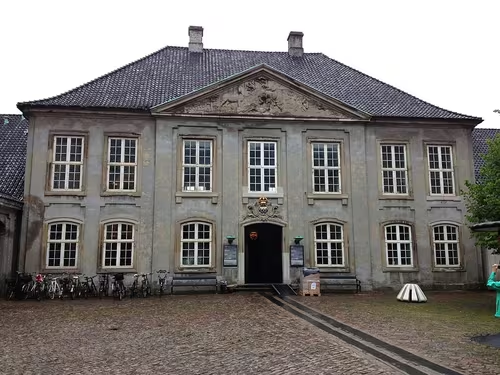
Designmuseum Danmark has been in the same building on Bredgade since 1926 — an 18th-century hospital designed by architect Niels Eigtved, who also designed the Amalienborg Palace palaces. The museum was founded in 1890 with a specific purpose: to raise the standard of Danish industrial design by showing craftspeople and manufacturers what good work looked like. It opened to the public in 1893 under the name Kunstindustrimuseet, and the design philosophy it embodied went on to shape much of what the world now calls Danish Design.

The collection covers Danish and international applied arts and industrial design from the 20th century. The chairs room alone — a floor-to-ceiling display of Danish chair design from the early 20th century through the 1970s — is one of the most satisfying things in any Danish museum. Arne Jacobsen, Hans Wegner, Kaare Klint: the names behind the chairs that furnish half the world's design-conscious offices and homes are all here, along with the prototypes and context that explain how they came to be.

The building's courtyard garden is a calm place to stop. The museum is one of the best places to visit in Copenhagen for understanding why Danish design is not just an aesthetic preference but a particular way of thinking about everyday objects.

Hours Mon: Closed | Tue-Wed: 10:00 AM – 6:00 PM | Thu: 10:00 AM – 8:00 PM | Fri-Sun: 10:00 AM – 6:00 PM
Price 140 DKK
Insider TipThe museum stays open until 8pm on Thursdays, making it a good option for an evening visit. The permanent collection on Danish design history is included in the ticket; temporary exhibitions sometimes require a separate charge.
Louisiana Museum of Modern Art

3. Louisiana Museum of Modern Art

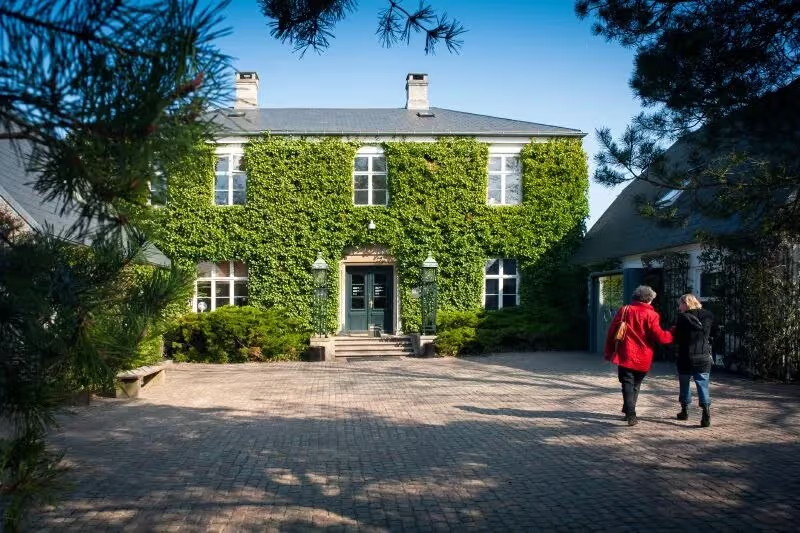
Louisiana is in Humlebæk, 35 kilometres north of Copenhagen, a 40-minute train ride on the Helsingør line. It has drawn over 700,000 visitors a year and is Scandinavia's most visited museum for modern and contemporary art. What makes it worth the journey — and it is absolutely worth the journey — is not just the collection but the architecture. The museum buildings were designed to cascade down a wooded hillside toward the Øresund Strait, connecting interior gallery spaces with outdoor sculpture terraces through a series of glass corridors.

The permanent collection includes major works by Alexander Calder, Alberto Giacometti, Henry Moore, and Asger Jorn, among others. Temporary exhibitions are internationally significant — Louisiana attracts major touring shows that often skip the rest of Scandinavia. The children's house has three floors of daily workshops and is genuinely good; parents often find they need to drag their children away. The restaurant has a sea view of Øresund and Malmö visible on clear days, and the bookshop carries one of the best selections of art and design publications in Denmark.

Patricia Schultz included Louisiana in '1000 Places to See Before You Die.' That kind of endorsement usually signals a tourist trap; here it is actually correct.

Hours Mon: Closed | Tue-Fri: 11:00 AM – 10:00 PM | Sat-Sun: 11:00 AM – 6:00 PM
Price 145 DKK
Website louisiana.dk/
Insider TipBuy the combination train-and-museum ticket (Louisiana Billetten) at Copenhagen Central Station or any DSB ticket machine — it costs only marginally more than the train alone and includes the full museum admission. Much cheaper than buying separately.
National Museum of Denmark

5. National Museum of Denmark

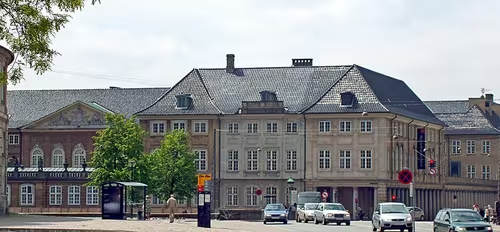
Denmark's national museum of cultural history is in the Prince's Palace on Frederiksholms Kanal, a building commissioned in the 1740s for the crown prince who later became Frederik V. The museum has occupied it since 1892, and the scale is considerable: collections spanning from the Danish Stone Age through to the 20th century, plus extensive holdings of world culture from Africa, Asia, the Americas, and the Arctic. The 1994 European Museum of the Year award acknowledged not just the collections but the quality of presentation.

The prehistoric Denmark section is the centrepiece. The Sun Chariot from around 1400 BC — a small bronze horse pulling a gold-plated disc — is one of the most extraordinary objects in any European museum, and the Viking collections are genuinely comprehensive in a way that dedicated Viking museums often are not. The Egyptian mummies, Greek and Roman antiquities, and the ethnographic collections from Greenland and the Arctic round out a scope that no other museum in Denmark comes close to matching.

Entry is free, which means it draws a broad crowd and is busy on weekends. The layout is not always intuitive — pick up a floor map at the entrance and decide in advance which sections to focus on, or you can easily spend three hours and feel like you barely scratched the surface.

Hours Mon: Closed | Tue-Sun: 10:00 AM – 5:00 PM
Price Free
Insider TipThe Sun Chariot is in the prehistoric Denmark galleries on the ground floor — it is small and easy to walk past if you are moving quickly. Give it at least ten minutes. Also free: the museum's excellent toy and children's culture collection on the upper floors, which is worth an hour in its own right.
Nikolaj Kunsthal

6. Nikolaj Kunsthal

Nikolaj Kunsthal occupies the former St. Nicholas Church on Nikolaj Plads in central Copenhagen — a medieval church that burned in the great fire of 1795 and was rebuilt in neo-Baroque style in the 1910s. The spire is 90 metres tall, the third highest in Copenhagen, and for a long time the church was more notable architecturally than functionally: it has not held regular services since the 1980s and was repurposed as an art centre in 1981.

The programming here is genuinely contemporary — this is not a gallery that plays it safe. Around 80,000 people visit each year to see exhibitions that tend toward installation, video art, and experimental work. The contrast between the neo-Baroque interior — arched windows, vaulted ceilings — and the kind of work being shown inside it creates a friction that the curators seem to enjoy exploiting. Some shows are very good; others are challenging in the way that only contemporary art can be challenging.

The location on Nikolaj Plads puts it right in the middle of Copenhagen's historic core, which means it is easy to include as part of any central Copenhagen walk. For people seeking attractions in Copenhagen that reflect the city's current cultural thinking rather than its historical weight, Nikolaj Kunsthal is the right stop.

Hours Mon: Closed | Tue-Fri: 11:00 AM – 6:00 PM | Sat-Sun: 11:00 AM – 5:00 PM
Price 110 DKK
Insider TipCheck the Nikolaj Kunsthal website before visiting — the exhibitions change completely every few months and the quality varies significantly. If the current show looks interesting to you, it is worth the 110 DKK; if not, the courtyard outside the church is free and worth a look.
NY Carlsberg Glyptotek

7. NY Carlsberg Glyptotek

The Glyptotek was built to house the private collection of Carl Jacobsen (1842–1914), the brewer who inherited and expanded the Carlsberg empire. Jacobsen was a genuinely obsessive collector — ancient Mediterranean art, 19th-century French sculpture, Danish paintings — and when his home in Valby could no longer hold everything, he gave the collection to the Danish state on the condition that they build a proper museum for it in Copenhagen. The first building on Dantes Plads opened in 1897; the museum has expanded three times since.

The ancient collection is the backbone: Egyptian sculpture, Etruscan bronzes, Greek vases, and one of the largest collections of Roman portrait busts outside Italy. The French collection includes over 35 Rodin sculptures and important works by Degas and Gauguin — Gauguin painted in Copenhagen in 1885 and left work here. The Danish Golden Age paintings round out a collection that is remarkable for the depth of Jacobsen's personal taste.

The Winter Garden — a glass-roofed tropical courtyard with palms, a fountain, and a café — sits at the centre of the building and is one of the most pleasant indoor spaces in any European museum. On Tuesdays the museum is free all day. On Sundays there is live music in the Winter Garden in the late morning.

Hours Mon: Closed | Tue-Wed: 10:00 AM – 5:00 PM | Thu: 10:00 AM – 9:00 PM | Fri-Sun: 10:00 AM – 5:00 PM
Price Free
Website glyptoteket.dk/
Insider TipTuesday is free entry day at the Glyptotek — no caveats, the entire museum. It gets moderately busy but nothing like a weekend. The Winter Garden café serves decent food and you can linger in the courtyard without buying anything.
Get Your Own Private Tour with AI Guide
AI Guide
  • Personalized tour tailored to your interests
  • Your AI guide tells stories, shares facts, and cracks jokes
  • Turn-by-turn GPS navigation
  • Available in your language — no download needed
Try for Free

🍕 Food Markets & Culinary Spots in Copenhagen

The best food markets, food halls, and culinary destinations in Copenhagen.

Reffen

1. Reffen

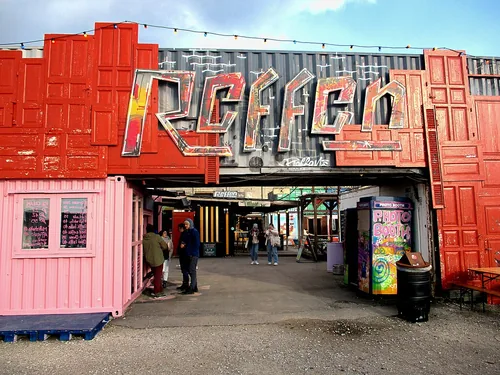
Reffen is on Refshaleøen, a former industrial island in Copenhagen's outer harbour that has been slowly redeveloping since the shipyards closed in the 1990s. The street food market opened in 2017 as a seasonal operation — it runs from late spring through October, open from Friday to Sunday, closing for winter. The setting is deliberately raw: repurposed shipping containers, gravel underfoot, the harbour on three sides, and a general atmosphere of something being built rather than finished.

Around 50 to 60 food vendors operate at a time, with the mix changing between seasons. The emphasis is on independent operators rather than chains, with a declared focus on sustainability and local sourcing. The food quality is higher than most street food markets because the entry barrier for vendors includes standards around sourcing and food handling. Expect queues at the most popular stalls on summer evenings; the Korean and West African stalls consistently draw the longest lines.

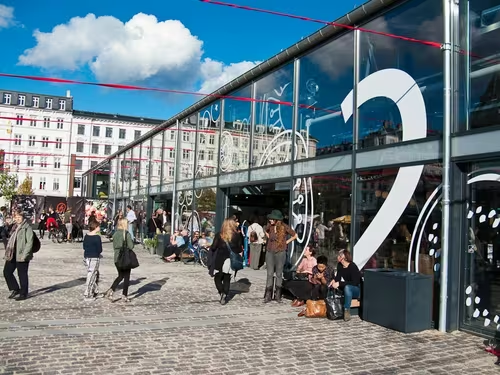
Reffen is good for an afternoon rather than a quick stop. There are bars scattered through the site, occasional live music, and in good weather the harbour-facing seating fills up with people who have bought food from several different vendors and settled in. This is how Copenhagen actually spends its summer weekends.

Hours Mon-Thu: Closed | Fri-Sun: 11:00 AM – 10:30 PM
Price $$
Website reffen.dk/
Insider TipArrive before 1pm on Saturdays to avoid the longest queues. The market is a 20-minute bike ride from the city centre — hire a city bike (Bycyklen) rather than taking a taxi or Uber, which gets expensive when the bridge is busy on summer weekends.
Torvehallerne

2. Torvehallerne

Torvehallerne opened in 2011 on Israels Plads, on the site of Copenhagen's former wholesale vegetable market that had operated there since the 1880s. Architect Hans Peter Hagens designed two glass halls separated by an open square, and the brief was clear: quality food, independent operators, emphasis on fresh produce and specialist products. The result is one of the better urban food markets in northern Europe, with over 55 permanent stalls across the halls and the square.

Hall 1 runs savory and fresh: fishmongers, butchers, cheese counters, cured meats. Hall 2 covers the sweet and hot end: bakeries, chocolatiers, coffee roasters (including a branch of The Coffee Collective from Jægersborggade), and a tea shop. The open square between them has a greengrocers and a florist who sets up daily. The market hosts a DM i gløgg (Danish mulled wine championship) in December and various food festivals through the year.

Torvehallerne is one of the best food markets in Copenhagen for a practical lunch — cheaper than a restaurant, higher quality than most cafés, and central enough that it fits into most itineraries without detour. Get there before noon on Saturday to avoid the peak crowds.

Hours Mon-Fri: 10:00 AM – 7:00 PM | Sat-Sun: 10:00 AM – 6:00 PM
Price Free
Insider TipThe Coffee Collective stall in Hall 2 is one of the best places in Copenhagen to have a filter coffee. If you are spending more than two days in the city, it is worth timing a morning visit here before the market fills up — the produce quality is excellent and the atmosphere is calm before 11am.
Get Your Own Private Tour with AI Guide
AI Guide
  • Personalized tour tailored to your interests
  • Your AI guide tells stories, shares facts, and cracks jokes
  • Turn-by-turn GPS navigation
  • Available in your language — no download needed
Try for Free

🌳 Parks & Best Viewpoints in Copenhagen

Beautiful parks, gardens, and panoramic viewpoints for the best views of Copenhagen.

Amaliehaven

1. Amaliehaven

Amaliehaven opened on 10 May 1983, making it one of Denmark's youngest public parks. When it did, Copenhageners were not pleased. Belgian architect Jean Delogne's design was called austere and cold, at odds with the surrounding Frederiksstaden district's classical architecture. The garden was a gift from the A.P. Møller and Chastine Mc-Kinney Møller Foundation to the Danish people, positioned precisely on the axis connecting Amalienborg Palace to the harbour.

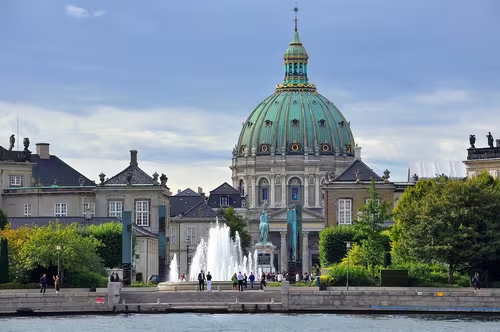
Look closer and the details reward it. Four bronze columns by Italian sculptor Arnaldo Pomodoro line the central fountain, which aligns exactly with Amalienborg's octagonal courtyard. Waterfalls anchor each end of the garden, and a black sun sculpture rises from one of them. In mid-April, Japanese cherry trees bloom along the paths. The ground you stand on was once Larsen's Place, the departure point for thousands of Danes who emigrated to America in the 19th century.

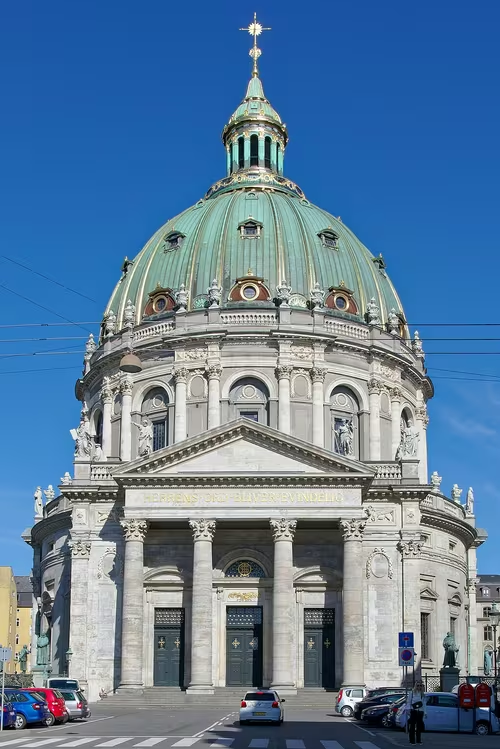
The garden is small and crowded on summer afternoons, but it has one of the best free views of the best sights in Copenhagen: Amalienborg's copper-green domes framed by Pomodoro's columns, with the Marble Church dome floating behind. Worth five minutes of anyone's time.

Hours Open 24/7
Price Free
Website Wikipedia
Location 55.68333, 12.595
Insider TipStand at the harbour end of the garden, exactly on the central axis, and you get a perfectly framed view of all four Amalienborg palaces lined up behind the fountain. This is the best free photo spot in the whole Frederiksstaden neighbourhood.
Botanical Garden

2. Botanical Garden

Copenhagen's Botanical Garden has been at its current location since 1874, when it moved from a site near Rosenborg Castle to its present grounds between Østre Anlæg park and the Nørreport neighbourhood. It is part of the Natural History Museum of Denmark, organised under the University of Copenhagen, and its three stated purposes — research, education, and public access — are all genuinely in evidence. This is not a tourist attraction dressed as a scientific institution; it is an actual scientific institution that happens to be open to visitors.

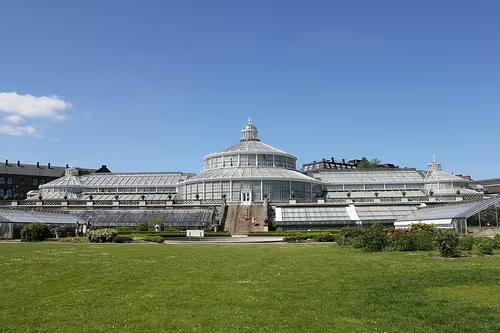
The Victorian Palm House, a glass and iron structure from 1874, is the main draw. Inside, tropical plants grow to the ceiling and the humidity hits immediately. Beside it, the Victoria House holds giant water lilies. Outside, rock gardens, a Japanese garden, and themed sections organised by plant family and geography wind through the grounds. Most outdoor areas are free; the glasshouses have a small charge.

The Botanical Garden shows up near the bottom of most Copenhagen to-do lists, which is a shame. In May it is spectacular. In winter, the tropical glasshouses are one of the few genuinely warm indoor spaces in the city. Locals use it to study and read, which means the atmosphere is calm and the benches are actually occupied.

Hours Daily: 8:30 AM – 4:00 PM
Price Free
Website snm.ku.dk/
Insider TipThe glasshouses have seasonal hours that differ from the outdoor areas — check the website before visiting. On weekday mornings the Palm House is nearly empty, which is the only time you can photograph the interior without other visitors in every shot.
Frederiksberg Gardens

3. Frederiksberg Gardens

Frederiksberg Gardens surrounds Frederiksberg Palace on a hill west of central Copenhagen and has been open to the public since 1852. King Frederik IV laid out the original Baroque garden in the early 18th century to accompany his summer palace; the Romantic landscape redesign came later, in the early 19th century. The result is 31.7 hectares that blend both styles — formal avenues and canal geometry sitting alongside more naturalistic lakes, wooded slopes, and meandering paths.

There are 24 independent buildings and 19 other structures scattered through the park. The Chinese pavilion on a small island at the centre of the garden is open to visitors on Sunday afternoons in summer months. From the western edge of the park, through a gap in the fence, you can watch the Copenhagen Zoo's elephants in their outdoor enclosure — an unexpected encounter that delights children and adults equally. The park draws around three million visitors a year, with the Midsummer Eve bonfire celebration in June being particularly popular with locals.

Ducks, swans, herons, and Canada geese use the lakes. Bring something to read.

Hours Daily: 6:00 AM – 5:00 PM
Price Free
Website Wikipedia
Location 55.6743, 12.5253
Insider TipOn the western side of the park, look through the fence toward Copenhagen Zoo — the elephant enclosure was redesigned in recent years and the animals are often visible from the park path at no cost to you. Better than queuing at the zoo entrance.
King's Garden

4. King's Garden

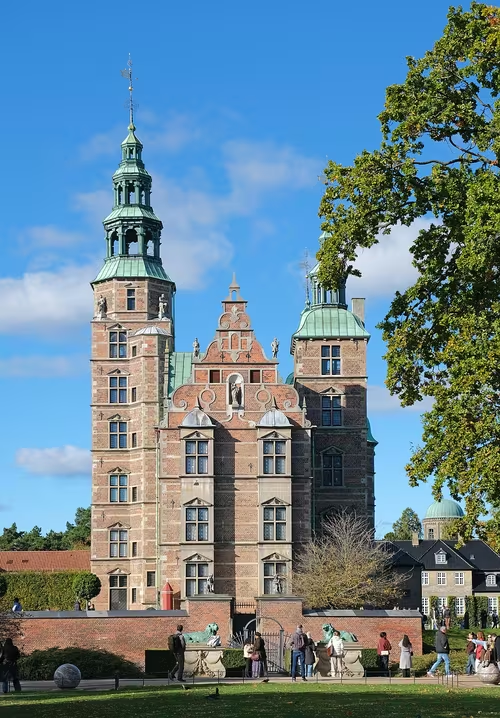
King's Garden is the oldest and most used park in Copenhagen, established in 1606 by Christian IV alongside Rosenborg Castle. The original purpose was functional: the king wanted a garden to supply his court with flowers, fruit, and vegetables. The Baroque layout — symmetrical avenues of linden trees, geometric beds, enclosed hedgerows — was the height of fashionable garden design in 17th-century Denmark, and enough of that structure survives to still be readable today.

The park has two named avenues from the Baroque period: Damegangen (Ladies' Walk) and Kavalergangen (Cavaliers' Walk), which run parallel the length of the park. Sculptures appear throughout, ranging from Baroque originals to contemporary commissions. In summer the park is packed — it is the most popular green space in the city, with locals sunbathing, students eating lunch, and children running through the rose garden. Puppet shows run in the small outdoor theatre on weekend afternoons in summer, which has been a tradition for over 150 years.

The park is free, always open, and directly beside Rosenborg Castle. It is hard to have a bad time here on a warm day, and even in winter the structure of the lime tree avenues is worth a look.

Hours Daily: 7:00 AM – 7:00 PM
Price Free
Website Wikipedia
Location 55.685, 12.579
Insider TipThe puppet theatre in the park has run free shows on weekend and holiday afternoons in summer since 1883. Check the Marionetteater i Kongens Have schedule online — the shows run twice a day on Saturdays, Sundays, and public holidays from June through August.
Østre Anlæg

5. Østre Anlæg

Østre Anlæg is a public park that occupies former rampart land in central Copenhagen, part of the old bastioned fortifications that were demolished in the 19th century. Landscape gardener H.A. Flindt designed it, as he designed both Ørstedsparken and the Botanical Garden — the three parks form a connected green strip through the city's inner districts. The park was designated a heritage site in 1969, preserving its 19th-century layout.

In April 1885, Paul Gauguin moved into an apartment on Nørregade and spent several months in Copenhagen. He painted in Østre Anlæg during this period, producing Impressionist canvases of the park's atmosphere and trees. Two of those paintings survive: Østervold Park, Copenhagen is now in the Kelvingrove Art Gallery in Glasgow; Dronningens Mølle, Østervold is in the Ny Carlsberg Glyptotek. The southern end of the park holds the National Gallery of Denmark (SMK) and the Hirschsprung Collection; the northern end opens onto Oslo Plads and Østerport Station.

For the range of things to do in Copenhagen in a single afternoon, this park is a useful anchor: you can walk through it from Østerport, stop at the Hirschsprung Collection or SMK, continue through to Rosenborg Castle, and reach the Botanical Garden in under an hour of walking.

Hours Open 24/7
Price Free
Insider TipThe Hirschsprung Collection at the southern end of the park is consistently undervisited compared to SMK next door. It holds one of the best collections of Danish 19th-century painting outside SMK, in a smaller, quieter building. Combined admission with SMK is available.
Get Your Own Private Tour with AI Guide
AI Guide
  • Personalized tour tailored to your interests
  • Your AI guide tells stories, shares facts, and cracks jokes
  • Turn-by-turn GPS navigation
  • Available in your language — no download needed
Try for Free

Explore with AI Guide

AI Guide App

Get personalized tours with our AI-powered guide. No download needed — works right in your browser.