Things to Do in Amsterdam - Top Attractions, Hidden Gems & Must-See Sights

Discover the best things to do in Amsterdam. Complete guide to must-see sights, popular attractions, hidden gems, museums, food markets and parks.

38 Attractions 6 Categories Travel Guide

Table of Contents

Amsterdam Overview

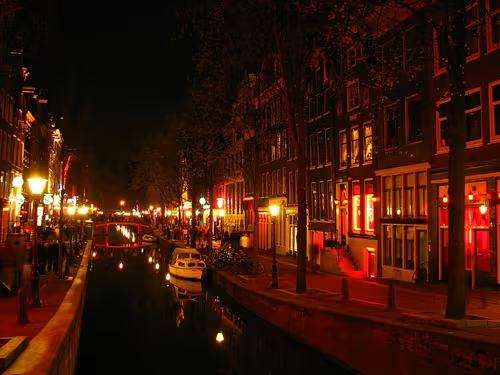
Amsterdam rewards visitors who look beyond the obvious. The canal ring, a UNESCO World Heritage site, forms the historic core with its 17th-century merchant houses and waterways built during the Dutch Golden Age. The Rijksmuseum and Van Gogh Museum hold world-class art collections, while smaller museums like Our Lord in the Attic and the Rembrandt House offer intimate encounters with history. The Jordaan neighborhood preserves working-class charm amid gentrification, with independent shops and hidden courtyards. De Pijp brings multicultural energy and the city's best street food. Parks like Vondelpark and Westerpark provide green space where locals actually spend their free time. The Red Light District and coffee shops attract curious tourists but represent only a fraction of what the city offers. Amsterdam functions as a living city rather than a museum, with a strong cycling culture, innovative food scene, and progressive social attitudes. The compact center rewards walking, but the outer neighborhoods reveal how Amsterdammers actually live. Visit the markets early, book museum tickets in advance, and explore beyond the canal belt to understand why this city consistently ranks among Europe's most livable.

Must-See Attractions in Amsterdam

  • Anne Frank House
  • Rijksmuseum
  • Canal Ring
  • Royal Palace Amsterdam
  • Begijnhof
🏛️ Must-See ⭐ Sights 💎 Hidden Gems 🎨 Museums 🍕 Food & Markets 🌳 Parks & Views

🏛️ Must-See Attractions in Amsterdam

These iconic landmarks and must-see sights are essential stops for any visitor to Amsterdam.

Anne Frank House

1. Anne Frank House

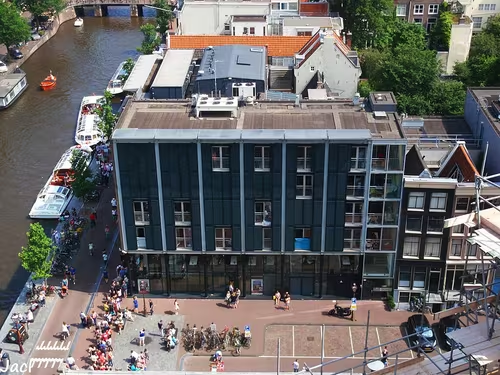
The Anne Frank House stands on Prinsengracht canal, marking the place where Anne Frank and her family hid from Nazi persecution during World War II. The museum preserves the secret annex where Anne wrote her famous diary between 1942 and 1944. Visitors walk through the narrow rooms behind the bookcase that concealed the entrance, seeing the original pages of her diary and personal belongings left behind. The museum draws over a million visitors yearly from 95 countries, with most guests between 20 and 30 years old. The experience is quiet and reflective, not a typical tourist attraction. You see the small space where eight people lived in silence for two years, and you understand the weight of what happened there. The foundation runs the museum without profit, funded entirely by entrance fees and donations.
Hours Daily: 9:00 AM – 10:00 PM
Price €16
Insider TipBook tickets online exactly two months in advance at 10:00 AM local time when they release new slots. The evening slots after 7 PM have shorter lines and a more contemplative atmosphere.
Begijnhof

2. Begijnhof

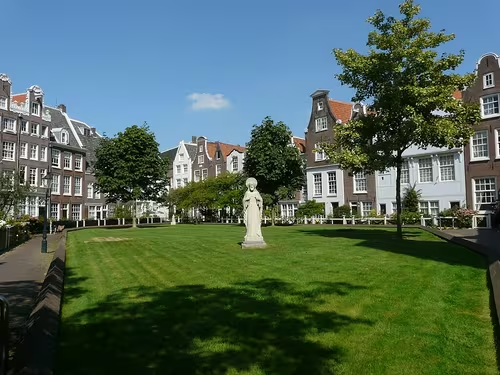
The Begijnhof is a medieval courtyard located just off the busy Spui square. It was founded in the 14th century as a home for Beguines, who were religious women that did not take full monastic vows. The level of the courtyard is about one meter lower than the surrounding city streets, reflecting the original medieval ground level.

Inside the courtyard, you will see a collection of tall townhouses, many of which still have their 17th and 18th-century facades. One of the main highlights is "Het Houten Huys," which is one of the only two remaining wooden houses in Amsterdam, dating back to around 1420. The Begijnhof also contains a hidden Catholic chapel and the English Reformed Church, which the Beguines were forced to give up during the Reformation. These sites make it a standout among Amsterdam attractions for history enthusiasts.

The courtyard is still a residential area, so visitors are expected to remain quiet and stay on the designated paths. A statue of Christ from 1920 stands in the center of the lawn, surrounded by well-kept gardens. You can enter through a small doorway on the Spui or through the historical Begijnensteeg gate. Most people visit for only about twenty minutes to see the architecture and enjoy the silence before returning to the crowded shopping streets nearby.

Hours Daily: 10:00 AM – 6:00 PM
Price Free
Location 52.36944, 4.89
Insider TipEntry is free but silence is strictly required as people still live in the houses surrounding the garden; look for the hidden chapel across from the English church.
Canal Ring

3. Canal Ring

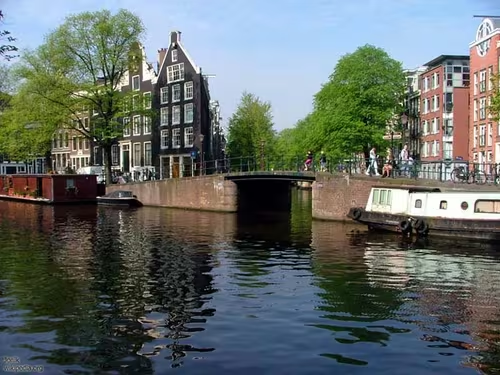
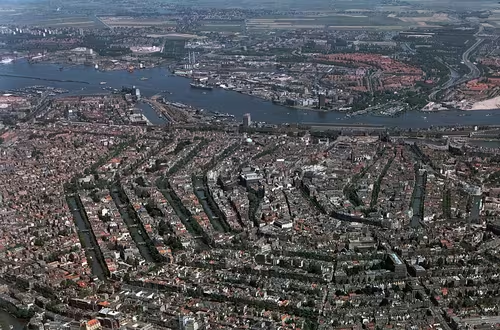
Amsterdam's Canal Ring forms a horseshoe of waterways built during the 17th century Golden Age. The four main canals, Singel, Herengracht, Keizersgracht, and Prinsengracht, curve through the city center lined with narrow brick houses built by merchants who grew rich on global trade. Each canal served a different social class, Herengracht for the wealthiest, Keizersgracht for the middle class, and Prinsengracht for workers and immigrants. The houses feature gabled facades, some stepped, some neck-shaped, others with ornate bell gables. Many have hoists on top for moving goods through the large attic windows. UNESCO listed the Canal Ring as a World Heritage Site in 2010, recognizing it as a masterpiece of urban planning. The best way to understand the layout is to walk the streets or take a boat tour, watching how the canals mirror the sky and light changes throughout the day.

Hours Always open
Price Free
Website Wikipedia
Insider TipWalk the Herengracht between Leidsestraat and Vijzelstraat for the most impressive merchant houses. Early morning light reflects beautifully off the water before the crowds arrive.
Rijksmuseum

4. Rijksmuseum

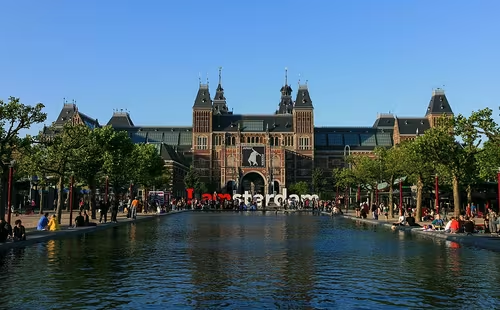
The Rijksmuseum sits at Museumplein, housing the Netherlands' most important art collection inside a red-brick Gothic Revival building designed by Pierre Cuypers. The museum opened here in 1885 and displays works by Rembrandt, Vermeer, and Frans Hals. The Gallery of Honour leads you past Dutch Golden Age masterpieces, ending at Rembrandt's “The Night Watch“ in its own specially designed chamber. The building itself deserves attention, with painted ceilings, stained glass, and intricate details everywhere you look. Beyond the famous paintings, the museum holds ship models, Delftware, dollhouses, and Asian art. You need at least three hours to see the highlights, though art lovers could spend days here. The museum connects Dutch history to its art, showing how trade wealth funded this creative explosion in the 1600s.

Hours Daily: 9:00 AM – 5:00 PM
Price €20
Location 52.36, 4.88528
Insider TipEnter through the side entrance on the left to avoid the main queue. The free multimedia guide included with admission offers excellent context for the major works.
Royal Palace Amsterdam

5. Royal Palace Amsterdam

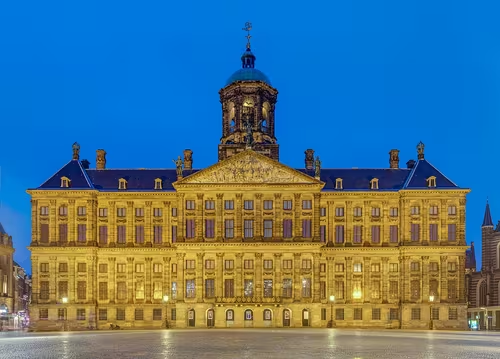
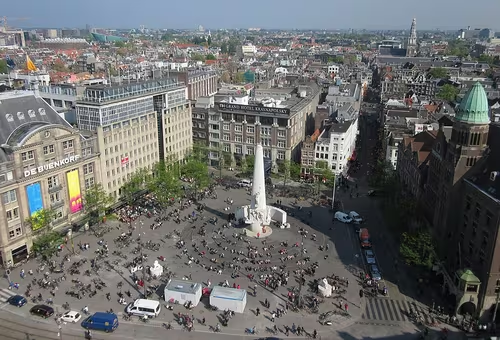
The Royal Palace dominates Dam Square, built between 1648 and 1665 as Amsterdam's city hall during the Dutch Golden Age. Architect Jacob van Campen designed the building to impress, with a sandstone facade and a dome topped by a golden ship weather vane. Inside, the Citizens' Hall features marble floors with maps of the heavens and earth, symbolizing Amsterdam's place at the center of world trade. The building became a royal palace in 1808 when Louis Napoleon converted it. Today the Dutch royal family uses it for state visits and ceremonies, though it remains open to visitors when not in official use. The interior rooms show heavy Empire-style decoration from the Napoleonic period mixed with original 17th-century elements. The palace represents the wealth and confidence of Amsterdam at its commercial peak.

Hours Daily: 9:00 AM – 5:00 PM
Price Free
Insider TipCheck the official website before visiting as the palace closes during royal events. The audio guide narrated by the king himself offers unique insights into the building's history.
Westerkerk

6. Westerkerk

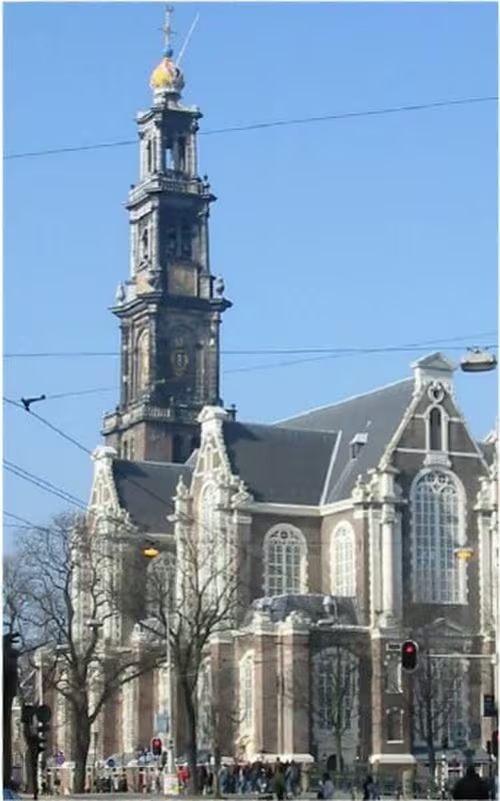
Westerkerk rises beside Prinsengracht with the tallest church tower in Amsterdam, crowned by a golden crown commemorating Emperor Maximilian of Austria. Built between 1620 and 1631, this Protestant church served the rapidly growing Jordaan neighborhood. The interior is plain, as expected for a Dutch Reformed church of this period, with white walls and a wooden barrel vault. Rembrandt lies buried somewhere inside, though the exact location remains unknown. Anne Frank wrote about hearing the church bells from her hiding place nearby. The tower offers views over the canal belt to visitors who climb the steep stairs. The church continues to hold services and concerts, maintaining its role as a living place of worship rather than just a historical monument. The location at Westermarkt places it at the heart of one of Amsterdam's most charming districts.

Hours Mon-Fri: 11:00 AM – 3:00 PM | Sat-Sun: Closed
Price Free (tower €7 Apr-Oct)
Location 52.3745, 4.8839
Insider TipTower climbs happen only a few times daily and sell out quickly, book at the church entrance when you arrive in the morning. The bells play a short melody every fifteen minutes, best heard from the church steps.
Get Your Own Private Tour with AI Guide
AI Guide
  • Personalized tour tailored to your interests
  • Your AI guide tells stories, shares facts, and cracks jokes
  • Turn-by-turn GPS navigation
  • Available in your language — no download needed
Try for Free

💎 Hidden Gems in Amsterdam - Off the Beaten Path

Beyond the tourist crowds, Amsterdam hides remarkable treasures waiting to be discovered.

Amsterdam City Archives

1. Amsterdam City Archives

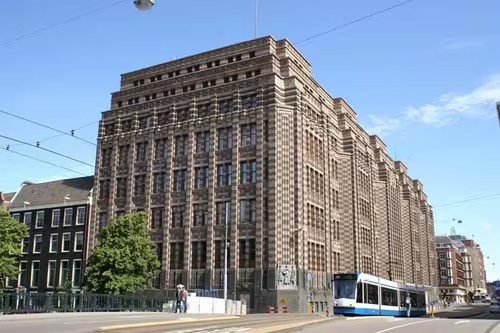
The Amsterdam City Archives occupies De Bazel, a 1920s office building designed by Karel de Bazel that serves as both a working archive and a museum. The building's architecture blends Art Deco with influences from the Amsterdam School, featuring elaborate tile work, stained glass, and a central courtyard. The archives hold 50 kilometers of documents, millions of maps and drawings, and extensive photo and film collections covering Amsterdam's history. The treasury displays over 300 highlights including the city's medieval toll privilege and Rembrandt's mortgage documents. The image bank makes over 440,000 photos available online. Temporary exhibitions in the main hall explore aspects of the city's past, while a cinema shows historical films about Amsterdam. The building itself merits a visit even for those not researching family history. The archives demonstrate how a city preserves and shares its collective memory.

Hours Mon: Closed | Tue-Fri: 10:00 AM – 5:00 PM | Sat-Sun: 12:00 – 5:00 PM
Price Free
Location 52.3646, 4.8923
Insider TipThe building's interior courtyard and staircase are worth seeing even without visiting the exhibitions. The free WiFi allows browsing the image bank on your own device while there.
Brouwersgracht

2. Brouwersgracht

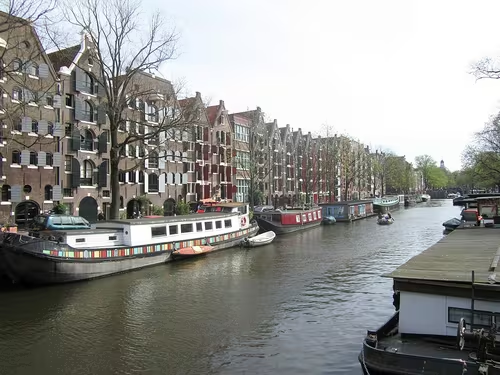
Brouwersgracht connects the Singel canal with the outer Singelgracht and defines the northern boundary of the Jordaan district. Its name comes from the many breweries that operated here during the 16th and 17th centuries. Today, the street is known for its collection of historical warehouses that have been converted into expensive apartments.

Walking along the Brouwersgracht gives you a look at the large, heavy doors and hoisting hooks that were used for loading goods from boats into the upper floors of the buildings. These warehouses used to store items like grain, coffee, and spices. Many residents live on houseboats moored along the canal, and their small gardens add a lot of greenery to the street. Because it marks the start of the main canal ring, the numbering for other famous canals like the Herengracht begins here.

The street is quieter than the central tourist zones but is still one of the key Amsterdam attractions for those seeking scenic photography. In 2007, local readers of Het Parool newspaper voted it the most beautiful street in the city. You will cross several historical bridges, including some that provide a wide view of the intersection with other canals. It is a perfect spot to sit at a canal-side cafe and watch the boats pass by while enjoying the evening light on the brick facades.

Hours Always open
Price Free
Website Wikipedia
Insider TipCheck out the house at number 188-194; these warehouses are some of the best-preserved examples on the entire canal.
De Pijp

3. De Pijp

De Pijp spreads south of the city center, a dense neighborhood built in the 19th century to house working-class families and now one of Amsterdam's most diverse and lively areas. The streets form a grid pattern unusual for Amsterdam, with narrow houses and busy commercial streets. The Albert Cuyp market runs through the center, the largest daily market in the Netherlands. Turkish, Moroccan, and Surinamese communities have made De Pijp their home, creating a multicultural food scene that ranges from Syrian bakeries to Indonesian restaurants. The Heineken Experience occupies the former brewery at the northern edge. Sarphatipark offers green space in the center. Students, young professionals, and long-time residents mix in the cafes and bars around Gerard Douplein and Marie Heinekenplein. The neighborhood feels less polished than the canal belt but more authentic, with street life continuing late into the evening.

Hours Always open
Price Free
Website Wikipedia
Location 52.3531, 4.8961
Insider TipEat at a Surinamese takeaway along Albert Cuypstraat for some of the city's best and cheapest food. The side streets south of the market offer quieter residential charm away from the crowds.
Museum Het Schip

4. Museum Het Schip

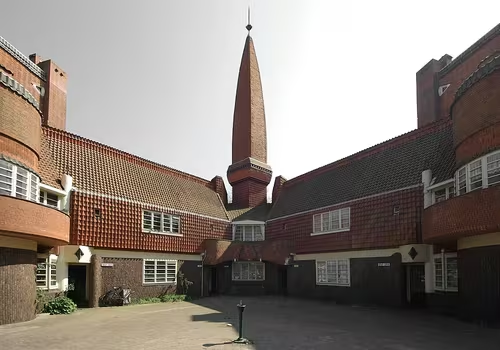
Museum Het Schip celebrates the Amsterdam School architectural movement from a building considered its finest example. Located in the Spaarndammerbuurt neighborhood, the museum occupies an apartment block designed by Michel de Klerk in 1919. The building's nickname “The Ship“ comes from its expressive brickwork and curved forms that suggest a vessel sailing through the city. The Amsterdam School emerged in the early 20th century as a reaction to sterile modernism, using elaborate brick patterns, sculpted facades, and integrated art to create social housing with dignity and beauty. The museum offers tours of a restored workers' apartment showing how families lived in the 1920s, along with exhibits on the movement's history and influence. The neighborhood contains several other Amsterdam School buildings worth seeing. This working-class district far from the tourist center rewards visitors interested in architecture and social history.

Hours Mon: Closed | Tue-Sun: 11:00 AM – 5:00 PM
Price €15
Insider TipTake the guided tour to see inside the restored apartment, as this is the only way to access the interior. Combine your visit with a walk through the surrounding streets to see more Amsterdam School architecture.
Oudemanhuispoort

5. Oudemanhuispoort

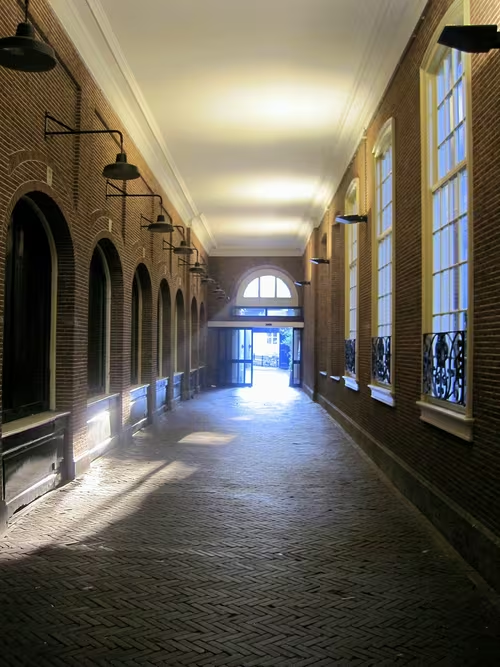
Oudemanhuispoort hides in plain sight as a covered passageway connecting Oudezijds Achterburgwal to Kloveniersburgwal, lined with secondhand book stalls that create an unexpected literary atmosphere. The gate originally formed part of a 17th-century almshouse for elderly men, with the passageway added later. Today the University of Amsterdam uses the buildings, while the corridor serves as a public shortcut and a book market. The stalls sell everything from academic texts to vintage paperbacks, maps, and prints. The arched brick ceiling and worn stone floors give the space a timeless quality rare in a city that constantly renovates. Few tourists find this spot, making it a peaceful retreat from the busy streets nearby. The book sellers know their stock and enjoy conversation with serious browsers. The gate offers a glimpse of how Amsterdam layers new functions onto old structures without erasing their history.

Hours 9am-5pm Mon-Sat
Price Free
Website N/A
Insider TipThe stalls open irregularly, weekday mornings offer the best chance of finding sellers present. Look for vintage maps of Amsterdam that show how the city has changed over centuries.
Our Lord in the Attic

6. Our Lord in the Attic

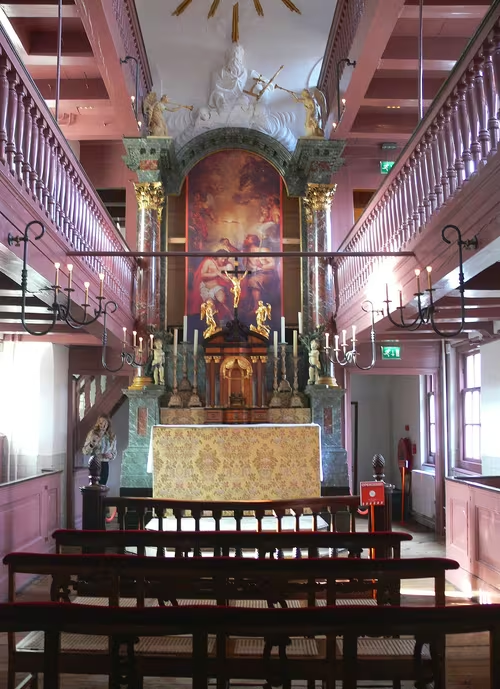
Our Lord in the Attic preserves a secret Catholic church built in the 1660s inside a canal house on Oudezijds Voorburgwal. After the Protestant Reformation made Catholic worship illegal, Amsterdam's Catholics created hidden churches in private homes. This one occupies the top three floors of a merchant's house, with a complete church interior including an altar, organ, and seating for 150 people. The museum, second oldest in Amsterdam after the Rijksmuseum, shows how Catholics maintained their faith despite official prohibition. The house itself displays 17th-century living quarters on the lower floors, creating a contrast between daily life and secret worship upstairs. The church still hosts weddings and Christmas services. A major renovation in 2015 improved accessibility and displays. The experience reveals a hidden chapter of Dutch religious history rarely visible in the outwardly Protestant city.

Hours Daily: 10:00 AM – 6:00 PM
Price €16
Insider TipThe steep stairs require good mobility, but a lift now serves most levels after the recent renovation. Visit on the first Sunday of winter months to hear the organ played during services.
Get Your Own Private Tour with AI Guide
AI Guide
  • Personalized tour tailored to your interests
  • Your AI guide tells stories, shares facts, and cracks jokes
  • Turn-by-turn GPS navigation
  • Available in your language — no download needed
Try for Free

🎨 Best Museums & Galleries in Amsterdam

World-class museums and galleries that make Amsterdam a cultural treasure.

Amsterdam Museum

1. Amsterdam Museum

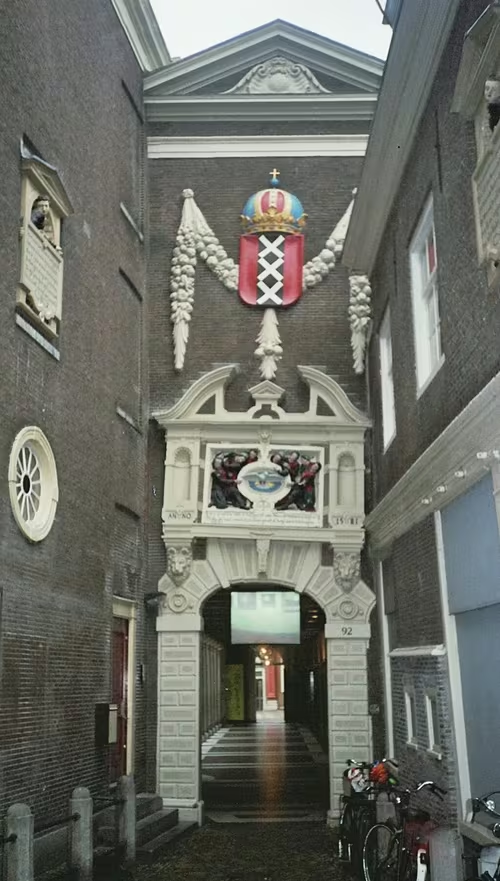
The Amsterdam Museum tells the story of the city from its medieval origins to the present day, currently operating as a network museum with locations across the city. The main building, a former orphanage in the city center, closed for renovation, so the museum now presents exhibitions at partner locations. The collection includes paintings, photographs, and objects that trace Amsterdam's development from a small fishing village to a global trading center and modern metropolis. The museum's approach emphasizes the city's diverse inhabitants and their stories rather than just official history. Current projects include “Amsterdam in Motion,“ a multimedia model at Westergas showing the city's growth over time. The museum plans to reopen in its renovated home with new permanent displays. For now, visitors should check the website to find where current exhibitions are located around the city.
Hours Thu-Fri 11am-6pm, Sat-Sun 12pm-6pm
Price €18
Insider TipCheck the museum website before visiting as exhibitions move between locations during the main building's renovation. The Westergas location offers a good starting point for exploring that neighborhood.
EYE Film Museum

2. EYE Film Museum

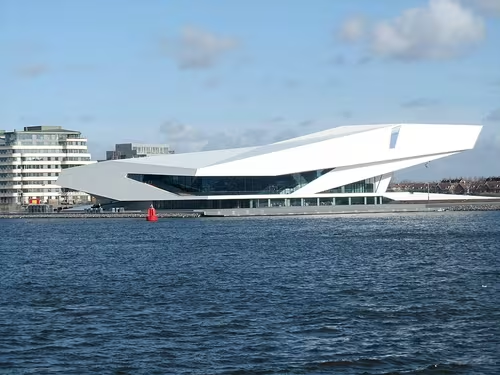
EYE Film Museum anchors the northern waterfront with a striking white building designed by Delugan Meissl, its angular form reflecting in the IJ harbor. The museum collects, preserves, and presents film history, with four cinemas showing classics, new releases, and experimental work. The permanent exhibition explores the history of cinema through interactive displays and historical equipment. The museum holds over 50,000 films in its collection, from early silent movies to contemporary Dutch cinema. The building's design creates dramatic interior spaces with views across the water to Central Station. A free ferry connects the museum to the city center, making the journey part of the experience. The restaurant and terrace offer some of Amsterdam's best waterfront dining. Film lovers can spend full days here, while others might just visit for the architecture and a harbor view.

Hours Mon: 6:00 – 10:00 PM | Tue-Thu: 10:00 AM – 10:00 PM | Fri-Sat: 10:00 AM – 11:00 PM | Sun: 10:00 AM – 10:00 PM
Price €13.50-21
Website www.eyefilm.nl/
Insider TipThe ferry ride is free and runs frequently, making this an easy addition to any itinerary. Check the cinema schedule as many screenings include introductions or Q&A sessions with filmmakers.
FOAM Photography Museum

3. FOAM Photography Museum

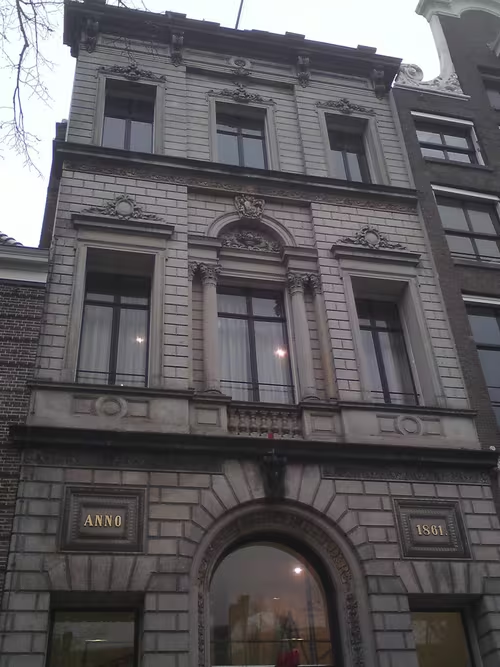
FOAM Photography Museum occupies three connected canal houses on Keizersgracht, presenting changing exhibitions of photography in all its forms. Founded in 2001, the museum shows historical photographs, art photography, photojournalism, and fashion photography in equal measure. The building's interior connects through sky bridges and covered courtyards, creating intimate gallery spaces. FOAM publishes a magazine three times yearly and runs a bookshop and cafe. The museum has no permanent collection, instead mounting temporary shows that rotate every few months. This keeps the programming fresh and responsive to current trends in photography. The location on one of the main canals makes it easy to combine with other sightseeing. Photography enthusiasts find this essential, while casual visitors discover how diverse the medium can be. The museum balances accessibility with serious curatorial standards.

Hours Mon-Wed: 10:00 AM – 6:00 PM | Thu-Fri: 10:00 AM – 9:00 PM | Sat-Sun: 10:00 AM – 6:00 PM
Price €16
Website www.foam.org/
Insider TipThursday evenings stay open until 9 PM with a more relaxed atmosphere. The museum shop stocks excellent photography books that make better souvenirs than typical tourist items.
Moco Museum

4. Moco Museum

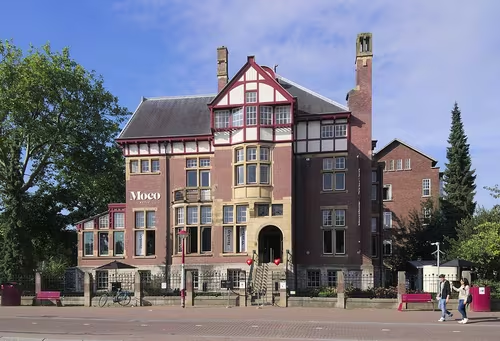
Moco Museum occupies Villa Alsberg, a 1904 townhouse on Museumplein designed by Eduard Cuypers, nephew of the Rijksmuseum architect. The private museum opened in 2016 with a mission to make modern and contemporary art accessible to younger audiences. The collection emphasizes Banksy, with a large collection of his street art and studio pieces displayed alongside works by Warhol, KAWS, and other contemporary artists. The contrast between the classical mansion and the subversive art creates an interesting tension. The museum has expanded to Barcelona and London, but the Amsterdam location remains the original. Exhibitions rotate regularly, keeping the experience fresh for repeat visitors. The museum fills a gap between the established Stedelijk and the traditional Rijksmuseum, offering something edgier and more immediate. The compact size means you can see everything in an hour or two.

Hours Daily: 9:00 AM – 9:00 PM
Price €17.95-21.95
Insider TipBuy tickets online to skip the queue that often forms at the entrance. The garden behind the museum offers a quiet spot to sit between exhibitions.
Rembrandt House Museum

5. Rembrandt House Museum

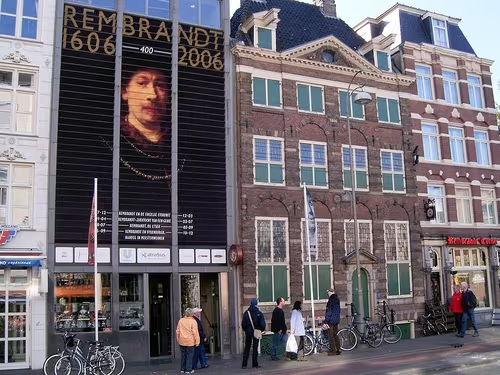
The Rembrandt House Museum preserves the home and studio where Rembrandt van Rijn lived and worked from 1639 to 1658, located on Jodenbreestraat in the old Jewish quarter. Rembrandt bought the house at the height of his success but was forced to sell it after bankruptcy. The museum, opened in 1911 after restoration by architect Karel de Bazel, shows the rooms as they might have appeared during Rembrandt's time. The etching room displays his printmaking techniques with daily demonstrations. The museum holds a nearly complete collection of Rembrandt's etchings, shown in rotating exhibitions. The collection of his possessions and tools helps visitors understand his working methods. The house gives insight into both the artist's daily life and the economic pressures that eventually forced him from his home. The restoration used historical records to recreate the interior as accurately as possible.
Hours Daily: 10:00 AM – 5:00 PM
Price €23.50
Insider TipWatch the etching demonstration to understand Rembrandt's printmaking process. The museum is smaller and less crowded than the Rijksmuseum, making it easier to engage with the material.
Stedelijk Museum

6. Stedelijk Museum

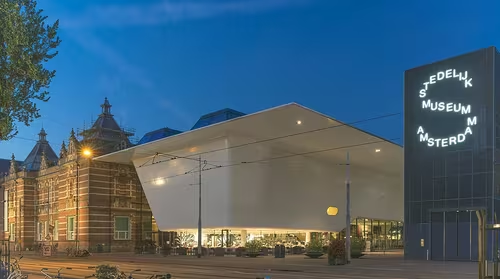
The Stedelijk Museum stands as Amsterdam's premier modern and contemporary art museum, founded in 1874 and housed in a building on Museumplein since 1895. The collection focuses on art and design from 1850 to the present, with strong holdings in De Stijl, CoBrA, pop art, and contemporary works. A controversial modern wing, nicknamed “the bathtub“ for its white synthetic facade, opened in 2012 to expand exhibition space. The museum owns major works by Malevich, Mondrian, Kandinsky, and Warhol, along with significant design objects and video art. The Stedelijk takes more risks than the Rijksmuseum, showing challenging contemporary exhibitions alongside established modern masters. The building connects the historic original with the futuristic addition through underground galleries. Visitors interested in 20th and 21st-century art find this essential, while those seeking Old Masters should head next door to the Rijksmuseum.

Hours Daily: 10:00 AM – 6:00 PM
Price €22.50
Insider TipThe museum offers free guided tours on certain days, check the schedule when you arrive. The cafe in the old building has more character than the modern wing's cafeteria.
Tropenmuseum

7. Tropenmuseum

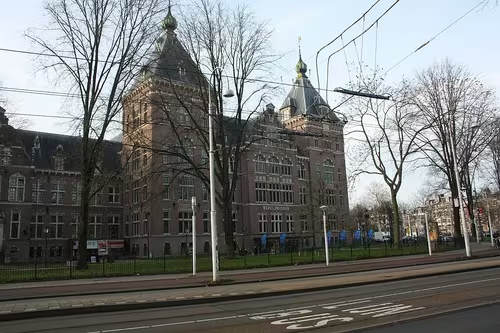
The Tropenmuseum, now part of the National Museum of World Cultures, occupies a grand 19th-century building on Linnaeusstraat in Amsterdam-Oost. Founded in 1864 as the Colonial Museum, it originally displayed artifacts from the Dutch East Indies and other colonies. Today the museum explores world cultures with a critical eye, addressing colonial history alongside contemporary global issues. The collection includes ethnographic objects, photographs, and films from Africa, Asia, and the Americas. The building itself impresses with a grand central hall and intricate details. The museum has evolved from its colonial origins to engage with questions of cultural representation and power. Exhibitions often focus on specific regions or themes, using objects to tell human stories. The location in Amsterdam-Oost, away from the main museum district, means fewer tourists and more space to explore.

Hours Mon: Closed | Tue-Sun: 10:00 AM – 5:00 PM
Price €16
Location 52.3625, 4.92111
Insider TipThe museum's permanent displays are being redeveloped, so check current exhibitions before visiting. The building's architecture alone justifies the trip to this less touristy neighborhood.
Van Gogh Museum

8. Van Gogh Museum

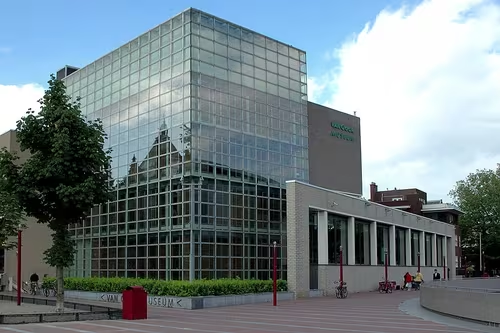
The Van Gogh Museum houses the world's largest collection of works by Vincent van Gogh, displayed in a modern building beside the Rijksmuseum at Museumplein. The collection includes over 200 paintings, 500 drawings, and 700 letters that trace the artist's development from Dutch dark tones to French bright colors. Visitors follow Van Gogh's biography through the galleries, from his early attempts in the Netherlands through his Paris period, Arles, Saint-Remy, and finally Auvers-sur-Oise where he died. The museum also displays works by artists who influenced him and his contemporaries. The building, designed by Gerrit Rietveld and opened in 1973, underwent expansion in 1999 and renovation in the 2010s. The collection draws 2 million visitors annually, making it one of Amsterdam's most popular attractions. The letters, displayed alongside relevant paintings, reveal Van Gogh's thoughts and struggles in his own words.
Hours Mon-Thu: 9:00 AM – 5:00 PM | Fri: 9:00 AM – 9:00 PM | Sat-Sun: 9:00 AM – 5:00 PM
Price €24
Insider TipBook timed entry tickets online well in advance, especially for weekends. The Friday evening extended hours offer a quieter experience with fewer tour groups.
Get Your Own Private Tour with AI Guide
AI Guide
  • Personalized tour tailored to your interests
  • Your AI guide tells stories, shares facts, and cracks jokes
  • Turn-by-turn GPS navigation
  • Available in your language — no download needed
Try for Free

🍕 Food Markets & Culinary Spots in Amsterdam

The best food markets, food halls, and culinary destinations in Amsterdam.

Albert Cuyp Market

1. Albert Cuyp Market

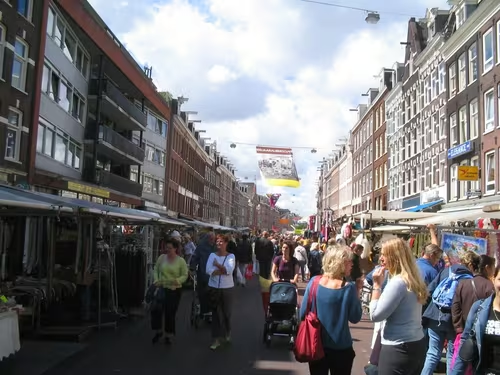
The Albert Cuyp Market stretches along Albert Cuypstraat in De Pijp, the largest daily market in the Netherlands with 260 stalls operating Monday through Saturday. Named after 17th-century painter Albert Cuyp, the market has served Amsterdam since 1905. Stalls sell fresh produce, cheese, fish, stroopwafels, clothing, fabrics, and household goods at prices lower than shops. The market attracts six million visitors yearly, with tourists making up a third of the crowd and spending significantly more than locals. Turkish, Moroccan, and Surinamese vendors add multicultural flavor to the traditional Dutch market experience. The street closes to traffic during market hours, creating space for the crowds to browse. Vendors shout their prices and deals, maintaining a tradition of market theater. The market works as both a practical shopping destination for locals and a cultural experience for visitors wanting to see everyday Amsterdam life.

Hours Mon-Sat: 9:30 AM – 5:00 PM | Sun: Closed
Price Free
Insider TipTry a fresh stroopwafel from a vendor who makes them hot on the spot. Prices drop in the final hour before closing as vendors try to sell remaining stock.
Dappermarkt

2. Dappermarkt

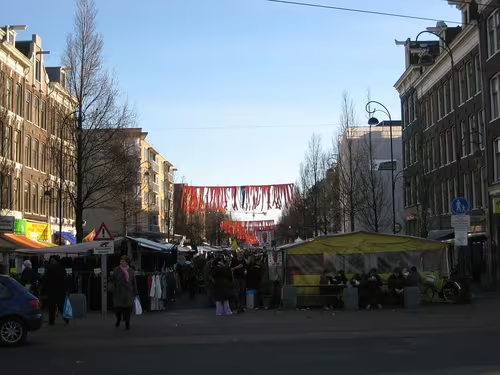
The Dappermarkt is a large street market located in the Dapperbuurt of Amsterdam-Oost. It has been a designated trading street since 1910 and remains one of the most popular places to visit in Amsterdam for locals living in the eastern part of the city. The market runs six days a week, Monday through Saturday, along the Dapperstraat. It has a reputation for being less touristy and more affordable than the Albert Cuyp Market in the center.

Visitors will find over 250 stalls selling a huge variety of products, including fresh fruit, vegetables, fish, and international spices. Because the surrounding neighborhood is very diverse, the food selection includes many Surinamese, Turkish, and Moroccan specialties. It is one of the top Amsterdam attractions for food lovers looking for authentic ingredients that you cannot always find in standard supermarkets. You can also buy clothing, household items, and fabric by the meter at very low prices.

The atmosphere at the Dappermarkt is lively and unpretentious, with many residents doing their daily shopping here. It is located near the Oosterpark and the Tropenmuseum, which makes it easy to combine a visit to the market with other sightseeing in Amsterdam-Oost. Most stalls open around 10:00 AM and start packing up by 5:00 PM. On Saturdays, it gets particularly busy, but the wide street allows for a relatively smooth flow of people compared to other markets.

Hours Mon-Sat: 10:00 AM – 5:00 PM | Sun: Closed
Price Free
Insider TipLook for the Surinamese snack stalls to try a bara or a pom sandwich; these are local favorites and are much cheaper than cafe meals.
Noordermarkt

3. Noordermarkt

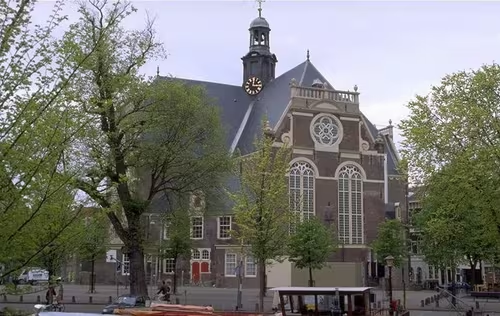
Noordermarkt occupies a square in the Jordaan, anchored by the 17th-century Noorderkerk and surrounded by cafes and shops. The market operates on different schedules throughout the week, Saturday brings an organic farmers market with local produce, cheese, and baked goods, while Monday offers a flea market with antiques, vintage clothing, and curiosities. The Saturday market has run since 1987 and attracts serious food shoppers from across the city. Farmers sell directly, explaining their products and offering samples. The Monday market draws treasure hunters hoping to find Delftware, old prints, or vintage jewelry. The square's location at the edge of the Jordaan makes it easy to combine with neighborhood exploration. The Noorderkerk occasionally hosts concerts in its austere Protestant interior. The market maintains a local character despite tourist interest, with residents doing their weekly shopping alongside visitors.

Hours Mon 9am-2pm, Sat 9am-4pm
Price Free
Website Wikipedia
Insider TipSaturday mornings before 10 AM offer the best selection at the farmers market before popular items sell out. Bring cash as not all vendors accept cards.
Get Your Own Private Tour with AI Guide
AI Guide
  • Personalized tour tailored to your interests
  • Your AI guide tells stories, shares facts, and cracks jokes
  • Turn-by-turn GPS navigation
  • Available in your language — no download needed
Try for Free

🌳 Parks & Best Viewpoints in Amsterdam

Beautiful parks, gardens, and panoramic viewpoints for the best views of Amsterdam.

Amstelpark

1. Amstelpark

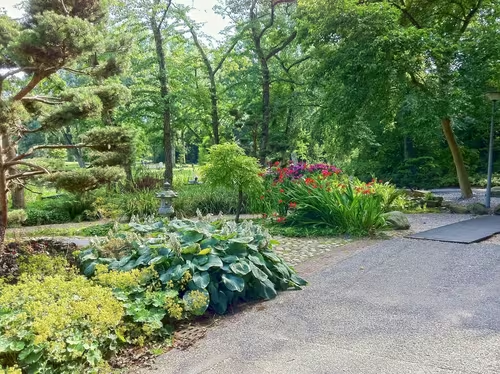
Amstelpark sits in Amsterdam-Zuid and covers a large area of green space along the Amstel River. It was originally created for the 1972 Floriade horticultural exhibition, which left behind many unique gardens. You will find a large rose garden, a rhododendron garden with over 8,000 plants, and a variety of rare trees. The park is much quieter than Vondelpark, making it a good choice if you want to avoid the crowds of other Amsterdam attractions.

Families often come here for the specialized play areas and the miniature train that runs through the park. This train, called the Amsteltrein, has been operating since the Floriade and offers a full loop of the grounds. There is also a small farm with goats and rabbits, as well as a large hedge maze. If you visit in the spring, the cherry blossoms and tulips provide a colorful display throughout the different garden sections.

The park is one of the more peaceful places to visit in Amsterdam, especially on weekdays. You can see the Orangerie, which often hosts art exhibitions, or sit by the large pond in the center. The paths are wide and well-paved, which makes it easy to walk or cycle through the different landscapes. Most of the original structures from the 1970s exhibition are still maintained, giving the area a distinct organized feel.

Hours Daily: 7:00 AM – 6:00 PM
Price Free
Insider TipTake the miniature train for a full tour of the park if you want to see the various gardens without walking the entire distance.
Frankendael Park

2. Frankendael Park

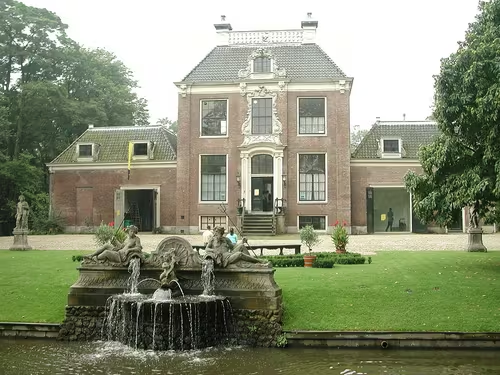
Frankendael Park preserves one of only two remaining country estates within Amsterdam's boundaries, a 17th-century buitenpla where wealthy merchants escaped the city heat. The main house, built in the late 1600s, stands as a national monument surrounded by formal gardens and parkland. The estate operated as a summer residence when the city ended at the Singelgracht, before urban expansion swallowed the surrounding countryside. Today the house hosts events and a restaurant, while the grounds offer walking paths, a walled garden, and water features. The park feels like a fragment of the past inserted into modern Amsterdam, with the house visible from nearby streets but the gardens hidden behind walls. The location in Watergraafsmeer, east of the center, requires effort to reach but rewards visitors with tranquility rare in the city. Frankendael represents the lifestyle of Amsterdam's Golden Age elite.

Hours Daily: 7:00 AM – 10:00 PM
Price Free
Insider TipHave lunch at the restaurant in the main house to experience the estate as its original owners did. The walled garden behind the house offers the most secluded and beautiful spaces.
Oosterpark

3. Oosterpark

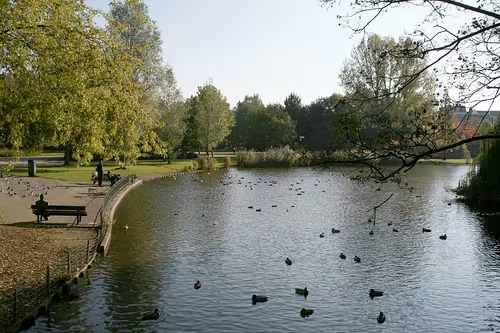
Oosterpark covers 12 hectares in Amsterdam-Oost, created in 1891 as one of the city's first planned parks outside the canal belt. The design features winding paths around a central pond with a small island, typical of English landscape style adapted to Dutch conditions. The National Monument Slavery Past stands in the park, commemorating the abolition of slavery in the Netherlands. The Tropenmuseum and Hotel Arena border the park, while the surrounding neighborhood mixes students, immigrants, and long-time residents. The park hosts festivals including Roots Open Air and Keti Koti, celebrating Surinamese culture. A children's paddling pool designed by Aldo van Eyck provides architectural interest. The park feels less manicured than Vondelpark, with wilder vegetation and a more relaxed atmosphere. Oosterpark serves as the neighborhood's shared space, reflecting the diversity of the surrounding streets.

Hours Always open
Price Free
Website Wikipedia
Insider TipVisit during the Keti Koti festival on July 1st to experience the park's role in commemorating the end of slavery. The pond area offers the most peaceful spots for reading or relaxing.
Vondelpark

4. Vondelpark

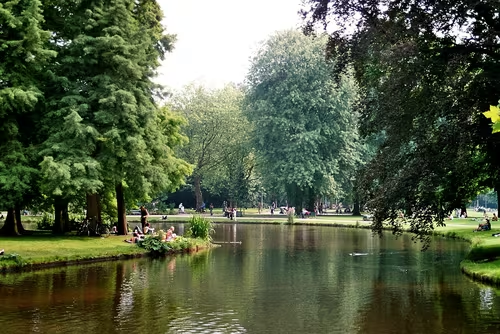
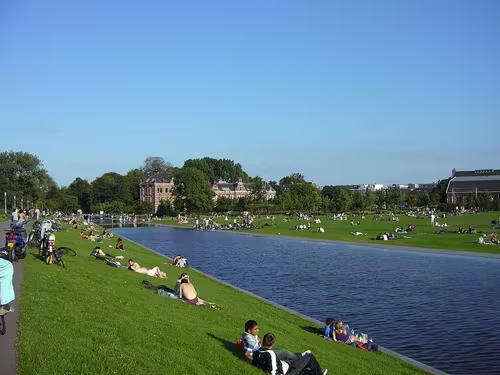
Vondelpark stretches through Amsterdam-Zuid as the city's most famous and most visited green space, drawing an estimated 10 million visits yearly. Opened in 1865 and designated a national monument in 1996, the park follows English landscape design principles with winding paths, ponds, and varied plantings. The park runs from Stadhouderskade to Amstelveenseweg, over a kilometer long but narrow enough to cross quickly. Statues dot the grounds, including one of Joost van den Vondel, the poet who gives the park its name. An open-air theater hosts free performances in summer. The park serves as Amsterdam's backyard, where locals jog, picnic, and socialize when weather permits. On sunny days, every patch of grass fills with people. The cafes at the edges offer refreshment, though many bring their own food and wine. Vondelpark represents Dutch tolerance in action, with all segments of society sharing the space.

Hours Always open
Price Free
Insider TipRent a bike to circle the park's perimeter, or find a quiet spot near the rose garden away from the main paths. Friday evenings in summer feature free concerts at the open-air theater.
Westerpark

5. Westerpark

Westerpark lies west of the city center, a green space that combines formal 19th-century park design with the cultural venues of Westergas, a former gasworks converted to creative use. The park itself offers lawns, ponds, and tree-lined paths less crowded than Vondelpark. The Westergas complex within the park hosts cafes, restaurants, a cinema, and event spaces in industrial buildings from the 1880s. The transformation from polluted industrial site to cultural hub took decades but created one of Amsterdam's most interesting public spaces. Summer brings festivals, outdoor cinema, and food markets to the grounds. The park serves the residential neighborhoods nearby, maintaining a local feel despite its attractions. The contrast between nature and industry, old and new, makes Westerpark distinct from Amsterdam's other green spaces. The location requires a tram ride from the center, keeping tourist numbers manageable.

Hours Always open
Price Free
Website Wikipedia
Insider TipCheck the Westergas website for events as the complex hosts excellent food markets and festivals. The park is particularly pleasant on summer evenings when locals gather for picnics.
Get Your Own Private Tour with AI Guide
AI Guide
  • Personalized tour tailored to your interests
  • Your AI guide tells stories, shares facts, and cracks jokes
  • Turn-by-turn GPS navigation
  • Available in your language — no download needed
Try for Free

Explore with AI Guide

AI Guide App

Get personalized tours with our AI-powered guide. No download needed — works right in your browser.