Things to Do in Bruges - Top Attractions, Hidden Gems & Must-See Sights

Discover the best things to do in Bruges. Complete guide to must-see sights, popular attractions, hidden gems, museums, food markets and parks.

20 Attractions 6 Categories Travel Guide

Table of Contents

Bruges Overview

Must-See Attractions in Bruges

  • Basilica of the Holy Blood
  • Belfry of Bruges
  • Church of Our Lady
  • Market Square
🏛️ Must-See ⭐ Sights 💎 Hidden Gems 🎨 Museums 🍕 Food & Markets 🌳 Parks & Views

🏛️ Must-See Attractions in Bruges

These iconic landmarks and must-see sights are essential stops for any visitor to Bruges.

Basilica of the Holy Blood

1. Basilica of the Holy Blood

Tucked into Burg Square, this double chapel holds one of medieval Europe's strangest relics: a vial said to contain Christ's blood, brought back from the Crusades in the 12th century. The lower chapel, built around 1150, is dark and Romanesque - thick columns, low vaults, the kind of space that feels older than the city itself. Upstairs is the complete opposite: a 19th-century neo-Gothic explosion of gold leaf, stained glass, and ornate carving.

The relic gets paraded through Bruges every May during the Procession of the Holy Blood, a tradition that's been running since the 13th century. The rest of the year, it's displayed in a silver reliquary for a few hours each afternoon. Whether or not you believe in its authenticity, the contrast between the two chapels alone makes it worth a visit. It's one of the few places in Bruges where you can see genuine 12th-century stonework next to 19th-century drama.
Hours Daily: 10:00 AM – 5:15 PM
Price Free (treasury €2.50)
Insider TipThe relic is only on view from 2 PM to 4 PM most days - get there early in the afternoon or you'll miss it entirely.
Belfry of Bruges

2. Belfry of Bruges

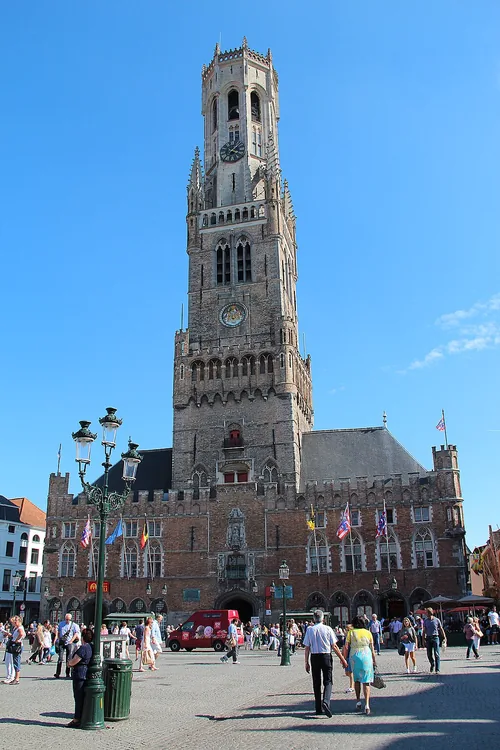
This medieval tower has watched over Bruges since the 12th century. It's the most recognizable piece of the city's skyline, and climbing its 366 steps is what to do in Bruges if you want to understand why this place mattered. The belfry wasn't just decoration - it held the city charter, treasury, and a bell set that rang out fires, attacks, and the time. From the top, you get the full layout of medieval Bruges: canals, rooftops, Market Square directly below. The climb is narrow and steep. You'll pass the old treasury room and the massive bell mechanism that still works. On Saturdays, it stays open until 8 PM, which means fewer people and better light. The belfry became a UNESCO World Heritage Site in 1999, part of a collection of Belgian belfries recognized for their role in civic independence. It's managed by Musea Brugge now, part of the city's museum network. The bells still ring - 47 of them, played by a carillonneur three times a week.

Hours Mon-Fri: 10:00 AM – 6:00 PM | Sat: 9:00 AM – 8:00 PM | Sun: 10:00 AM – 6:00 PM
Price Free
Insider TipGo on a weekday morning right at 10 AM opening - by 11 AM the stairwell gets clogged with tour groups and it's a sweaty shuffle.
Church of Our Lady

3. Church of Our Lady

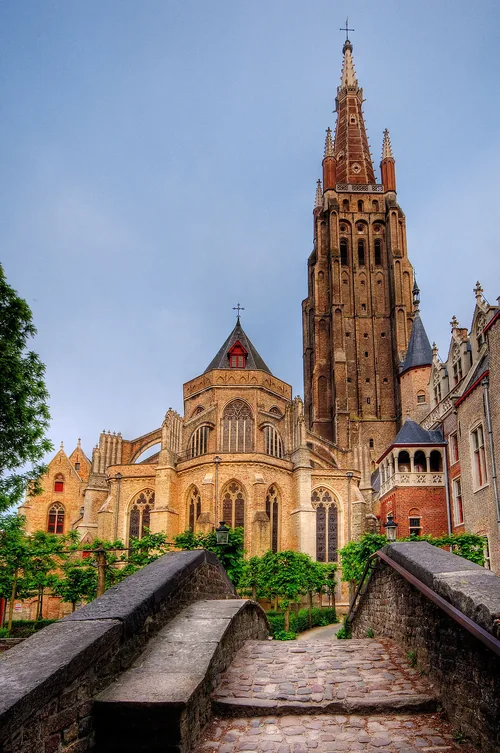
You can spot this church from anywhere in Bruges - the brick tower shoots up 115.6 meters, making it the second-tallest brick tower in the world. Construction started in the 13th century and dragged on for 200 years, which explains the mix of architectural styles inside. But most people come for one thing: Michelangelo's Madonna and Child, a white marble sculpture he finished around 1504. It's the only Michelangelo work that left Italy during his lifetime.

The sculpture sits in a small chapel to the right of the altar, behind glass but still close enough to appreciate the detail. The folds in Mary's robe, the way the infant Christ leans against her knee - it's quieter and more intimate than you'd expect from Michelangelo. The church also has a small museum section with medieval tombs, including those of Charles the Bold and his daughter Mary of Burgundy, both in elaborate bronze. Sundays the morning hours are reserved for services, so plan accordingly.

Hours Mon-Sat: 9:30 AM – 5:00 PM | Sun: 1:30 – 5:00 PM
Price Free (museum €7)
Insider TipEntry to see the Michelangelo costs around 8 euros, but the church nave itself is free - you can see the tower and the general interior without paying.
Market Square

4. Market Square

The square sits in the exact center of medieval Bruges, about one hectare of open space surrounded by guild houses and the belfry. It's been the main gathering point since the 12th century. These days it's where you'll find tour groups, horse-drawn carriages, and a Wednesday morning market that still happens like clockwork. The buildings ringing the square are mostly reconstructions - the originals were torn down or rebuilt over centuries - but the layout is original. South side: the belfry and old cloth hall. Other sides: stepped-gable facades in reds and golds, now full of restaurants with outdoor seating. The square was redesigned in 1995-96 to ban parking, so it's pedestrian-only except for taxis and tour buses. During Christmas, they set up a market with ice skating. It's one of the main things to see in Bruges, and you'll cross it multiple times. Early mornings before 9 AM, it's nearly empty. By 10 AM, it's packed.

Hours Open 24/7
Price Free
Website Wikipedia
Location 51.2085, 3.22444
Insider TipThe cafes on the square charge double what you'd pay two streets away - walk to 't Poatersgat or 't Brugs Beertje for drinks at local prices.
Get Your Own Private Tour with AI Guide
AI Guide
  • Personalized tour tailored to your interests
  • Your AI guide tells stories, shares facts, and cracks jokes
  • Turn-by-turn GPS navigation
  • Available in your language — no download needed
Try for Free

💎 Hidden Gems in Bruges - Off the Beaten Path

Beyond the tourist crowds, Bruges hides remarkable treasures waiting to be discovered.

Augustijnenrei

1. Augustijnenrei

Augustijnenrei is a canal-side street on the northern edge of Bruges' center, and it's one of the few stretches where you can walk along the water without dodging tour groups. The canal runs from the Vlamingbrug (Flemish Bridge) east to the Torenbrug (Tower Bridge), lined with old brick houses and crossed by a couple of small stone bridges. It's named after an Augustinian monastery that used to be nearby - gone now, replaced by residential buildings.

The walk is short, maybe 500 meters, but it gives you a better sense of how Bruges actually works as a city than the postcard-perfect spots around the Markt. People live here. There's laundry hanging from windows, bikes chained to railings, the occasional barge chugging past. On weekday mornings it's almost empty. If you're walking from the Jan van Eyck Square area toward the Volkskunde Museum, this is the scenic route - quieter than cutting through the shopping streets, and you'll probably have the bridges to yourself.

Hours Always open
Price Free
Website N/A
Insider TipThe view from the Augustijnenbrug, the middle bridge, is the best - you get a clean sightline down the canal with no modern buildings breaking the frame.
Cafe Vlissinghe

2. Cafe Vlissinghe

Cafe Vlissinghe has been serving beer since 1515, which makes it the oldest bar in Bruges that's still operating. It's on Blekersstraat, a quiet street north of the center, and from the outside it looks like someone's house - which it probably was, at some point. Inside, the walls are covered in old paintings, yellowed posters, and dusty trinkets that give the place a cluttered, lived-in feel. The floor is uneven. The furniture doesn't match. It's perfect.

The beer list is solid - all Belgian, heavy on the Trappists and local brews - and they serve simple bar food: cheese plates, stews, that kind of thing. But the real draw is the back garden, a sprawling outdoor space with picnic tables under the trees where locals play boules on summer afternoons. Closed Mondays and Tuesdays, and it doesn't get busy until after lunch. This is the kind of place where regulars nurse a beer for two hours and nobody rushes you.

Hours Mon-Tue: Closed | Wed-Thu: 11:00 AM – 6:30 PM | Fri-Sat: 11:00 AM – 8:30 PM | Sun: 11:00 AM – 6:30 PM
Price $$
Location Maps
Insider TipSit in the back garden if the weather's decent - it's twice the size of the indoor space and feels like you've stumbled into someone's private courtyard.
Get Your Own Private Tour with AI Guide
AI Guide
  • Personalized tour tailored to your interests
  • Your AI guide tells stories, shares facts, and cracks jokes
  • Turn-by-turn GPS navigation
  • Available in your language — no download needed
Try for Free

🎨 Best Museums & Galleries in Bruges

World-class museums and galleries that make Bruges a cultural treasure.

Choco-Story

1. Choco-Story

Choco-Story is a chocolate museum in a 15th-century building called Huis De Croone, and it does exactly what it says: tells you the history of chocolate from Mayan cacao rituals to modern Belgian pralines. The exhibits cover the whole process - how cacao beans are harvested, fermented, roasted, and turned into chocolate - with old machinery, vintage packaging, and a surprising amount of detail about pre-Columbian chocolate drinks (which were apparently bitter, spicy, and nothing like what we eat now).

The best part is the live demonstration at the end, where someone makes pralines by hand and you get to try them. It's touristy, sure, but the demonstrators know what they're doing, and the samples are good. The museum also has a section on the Belgian chocolate industry, which is less exciting unless you're really into brand history. If you're in Bruges with kids, this is a solid rainy-day option - it's interactive enough to hold their attention, and there's chocolate at the end.

Hours Daily: 10:00 AM – 6:00 PM
Price Free
Insider TipThe demonstration happens every 30 minutes or so - if you time your visit to arrive just before one starts, you can skip most of the exhibit and go straight to the free samples.
Folk Museum

2. Folk Museum

The Folk Museum is housed in a row of 17th-century almshouses on Balstraat, and it's set up to show what daily life looked like in Bruges before the tourist industry took over. Each room is staged as a different workshop or living space: a classroom, a cobbler's shop, a pharmacy, a pub. The furniture is period-appropriate, the tools are real, and the whole thing has a slightly dusty, frozen-in-time quality that works better than it should.

It's not flashy - there are no interactive displays or audio guides, just rooms full of old stuff with labels in Dutch, French, and English. But if you're curious about how ordinary people lived and worked in 19th-century Flanders, this is one of the better places to get a sense of it. There's also a small courtyard garden and a working pub at the back called De Zwarte Kat, where you can get a beer and a jenever (Belgian gin). Closed Mondays and Tuesdays, and almost empty on Wednesday mornings.

Hours Mon-Tue: Closed | Wed-Sun: 9:30 AM – 5:00 PM
Price €4
Insider TipThe pub at the back of the museum, De Zwarte Kat, is open to the public even if you don't visit the museum - it's a proper local spot with cheap beer and zero tourists.
Fries Museum

3. Fries Museum

The Fries Museum is the world's only museum dedicated entirely to the history of the potato and the Belgian fry, and yes, it's exactly as niche as it sounds. Housed in the Saaihalle, a 14th-century building on Vlamingstraat, it opened in 2008 and makes a surprisingly earnest case for why fries matter. The exhibits start with the potato's arrival in Europe from South America, move through its cultivation and eventual dominance as a food crop, and end with the cultural importance of Belgian fries.

There are old fry cutters, vintage fryers, and a lot of information about proper frying technique (twice-fried in beef fat, if you're asking). The museum also explores the origin debate - Belgium vs. France - with a clear Belgian bias. It's deeply silly and oddly thorough at the same time. If you're in Bruges and you've already done the beer and chocolate museums, this is the logical next step. Plus, there's a fry stand outside where you can put the theory into practice.

Hours Daily: 10:00 AM – 5:00 PM
Price €11
Insider TipSkip the museum gift shop fries and walk two blocks to Frituur 't Fonteintje on Geldmuntstraat - locals swear by it, and it's half the price.
Groeninge Museum

4. Groeninge Museum

This is where Bruges keeps its paintings. Six centuries of Flemish and Belgian art, from Jan van Eyck to Marcel Broodthaers, in a compact building on the Dijver canal. The Flemish Primitives collection is the reason most people come - it's one of the best in the world. You'll see van Eyck, Memling, van der Weyden, and a room full of lesser-known 15th and 16th-century masters who worked in Bruges when it was still rich. The collection moves forward in time: baroque pieces, neoclassical work, realism, then Belgian symbolism and expressionism. The museum is small enough to see in 90 minutes, but dense. Part of the Musea Brugge network since 2019. Closed Wednesdays. The building itself is unremarkable - a low-key 1930s structure that keeps the focus on what's inside. What makes it good is the depth of the Primitives section. These are paintings made when Bruges was a trade capital, commissioned by merchants who wanted something permanent.

Hours Mon-Tue: 9:30 AM – 5:00 PM | Wed: Closed | Thu-Sun: 9:30 AM – 5:00 PM
Price €12
Insider TipThe museum ticket also covers the Arentshuis next door, which has lace exhibits and works by Frank Brangwyn - it's literally 30 meters away and most people skip it.
Gruuthuse Museum

5. Gruuthuse Museum

The Gruuthuse Museum is a 15th-century palace that belonged to one of Bruges' wealthiest families, the Lords of Gruuthuse, who made their fortune controlling the gruut - a mix of herbs used to flavor beer before hops took over. The building itself is a showpiece: carved stone fireplaces, wooden ceilings, leaded glass windows, and a private chapel that connects directly to the Church of Our Lady next door so the family could attend Mass without leaving the house.

Inside, the museum displays applied arts from the 13th to 19th centuries: tapestries, furniture, weapons, silverware, ceramics. The Bruges tapestries are the highlight - massive woven scenes that cover entire walls, some dating back to the 1400s. The palace reopened in 2019 after a five-year renovation, and they did a good job - the interiors feel lived-in rather than sterile, and the lighting actually lets you see the details on the carved woodwork. The medieval chapel, built in 1472, still has its original stained glass. Closed Mondays.

Hours Mon: Closed | Tue-Sun: 9:30 AM – 5:00 PM
Price €12
Insider TipThe private chapel has a balcony overlooking the altar of the Church of Our Lady - you can see the Michelangelo Madonna from there without paying the church entry fee.
Get Your Own Private Tour with AI Guide
AI Guide
  • Personalized tour tailored to your interests
  • Your AI guide tells stories, shares facts, and cracks jokes
  • Turn-by-turn GPS navigation
  • Available in your language — no download needed
Try for Free

🍕 Food Markets & Culinary Spots in Bruges

The best food markets, food halls, and culinary destinations in Bruges.

Fish Market

1. Fish Market

The Fish Market is a covered colonnade between Braambergstraat and Steenhouwersdijk, and it's been the city's main fish-selling spot since the Middle Ages. These days it operates Monday through Saturday mornings, though "operates" is generous - there are usually only a couple of vendors left, selling fresh North Sea fish to locals who know to get there early. By midday the fish is gone and the stalls turn into a tourist market: cheap prints, lace, souvenirs, the usual.

The colonnade itself is the interesting part. It's built in neoclassical style with stone columns and a vaulted ceiling, and there's a weathered stone relief above the entrance showing Neptune and a couple of fish. The whole structure dates back to the 1820s, though there's been a fish market on this spot for much longer. If you're in Bruges on a weekday morning and you want to see the market functioning as an actual market rather than a souvenir bazaar, get there before 10 AM.

Hours Always open (market Tue–Sat morning)
Price Free
Insider TipThe fish vendors are usually packed up by 11 AM - if you want to see the market in action, come before 9:30 on a Saturday when it's busiest.
Get Your Own Private Tour with AI Guide
AI Guide
  • Personalized tour tailored to your interests
  • Your AI guide tells stories, shares facts, and cracks jokes
  • Turn-by-turn GPS navigation
  • Available in your language — no download needed
Try for Free

🌳 Parks & Best Viewpoints in Bruges

Beautiful parks, gardens, and panoramic viewpoints for the best views of Bruges.

Minnewater Park

1. Minnewater Park

Minnewater Park sits at the southern edge of Bruges' old center, next to a rectangular lake called the Minnewater - the "Lake of Love," though the name probably comes from the old Dutch word for inner harbor rather than anything romantic. The park is small, quiet, and lined with willow trees that droop into the water. There are benches, gravel paths, and a stone bridge at the far end with swans gliding underneath, which is almost too perfect to be real.

The park was laid out in the 19th century on the site of what used to be part of Bruges' medieval port. The lake itself was a commercial basin where goods were transferred from canal boats to larger ships heading out to the coast. Now it's a peaceful spot where locals walk their dogs and tourists take engagement photos. It's open 24/7, and it's at its best early in the morning or at dusk when the light turns the water gold and the cruise ship crowds haven't made it this far south yet.

Hours Open 24/7
Price Free
Location Maps
Insider TipThe swans are famously aggressive - locals know not to feed them, but tourists do it anyway. Keep your distance unless you want to explain a swan bite to your travel insurance.
Queen Astrid Park

2. Queen Astrid Park

Queen Astrid Park is a small city park in central Bruges, named after Belgium's Queen Astrid who died in a car accident in 1935. It's not a major tourist draw - there are no monuments or grand fountains - but it's a solid escape route when you need a break from the cobblestones and crowds. The park has wide lawns, flower beds, a few statues, and enough benches that you can usually find an empty one.

It's popular with locals: parents with kids, people eating lunch from a bakery bag, the occasional jogger looping through on their way somewhere else. There's a pond with ducks, and in summer the flowerbeds are well-maintained - roses, mostly, and some kind of purple thing that smells good. The park is open 24/7 and lit at night, though there's not much reason to go after dark unless you're cutting through to avoid the main streets. If you're staying near the center and you need 20 minutes of grass and quiet, this is the spot.

Hours Open 24/7
Price Free
Insider TipThere's a small playground on the east side of the park - good for burning off energy if you're traveling with kids and everyone's tired of walking.
Get Your Own Private Tour with AI Guide
AI Guide
  • Personalized tour tailored to your interests
  • Your AI guide tells stories, shares facts, and cracks jokes
  • Turn-by-turn GPS navigation
  • Available in your language — no download needed
Try for Free

Explore with AI Guide

AI Guide App

Get personalized tours with our AI-powered guide. No download needed — works right in your browser.