Things to Do in Lille - Top Attractions, Hidden Gems & Must-See Sights

Discover the best things to do in Lille. Complete guide to must-see sights, popular attractions, hidden gems, museums, food markets and parks.

21 Attractions 6 Categories Travel Guide

Table of Contents

Lille Overview

Lille feels more like a Flemish capital than a French provincial city, defined by the red-brick gables and ornate carvings of Vieux-Lille. It is a place where beer culture rivals wine, and the local architecture, like the 17th-century Vieille Bourse, reflects a history of merchant wealth rather than royal decree.

The city is compact and easy to navigate on foot. You can walk from the grand Place Rihour through narrow cobbled streets to the massive star-shaped Citadelle de Lille, which provides a vast green escape for locals. For culture, the Palais des Beaux-Arts holds a collection second only to the Louvre, while the Halles de Wazemmes offers an earthy counterpoint to the polished historic center.

Must-See Attractions in Lille

  • Vieille Bourse — A 17th-century former stock exchange where second-hand book sellers and chess players gather in the central courtyard.
  • Palais des Beaux-Arts de Lille — One of the largest museums in France, containing a massive collection of European paintings and 19th-century sculptures.
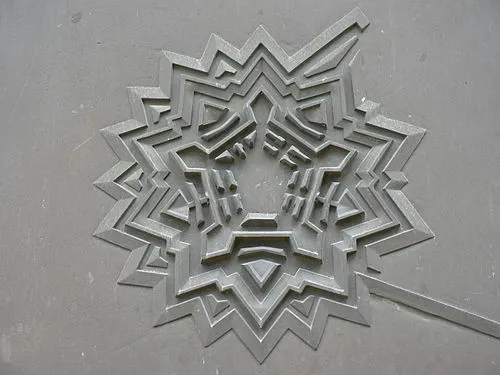
  • Citadelle de Lille — A massive star-shaped fortress designed by Vauban, now serving as the city's largest green space and home to the local zoo.
  • Vieux-Lille — The historic heart of the city filled with restored Flemish-style brick houses, narrow alleys, and traditional northern French eateries.
🏛️ Must-See ⭐ Sights 💎 Hidden Gems 🎨 Museums 🍕 Food & Markets 🌳 Parks & Views

🏛️ Must-See Attractions in Lille

These iconic landmarks and must-see sights are essential stops for any visitor to Lille.

Citadelle de Lille

1. Citadelle de Lille

Built by the military engineer Vauban in the 17th century, this star-shaped fortress is still an active military base, which means you cannot freely wander the inner barracks. However, the parklands surrounding the massive brick walls form the largest green space in the city. Runners, cyclists, and families gravitate here to escape the urban density. The geometry of the fortifications is best appreciated by walking the perimeter path, where you can see the complex layers of defense—moats, bastions, and demi-lunes—that earned it the title 'Queen of Citadels.'

The park functions as a bridge between the city and the countryside. You will see locals picnicking on the grass banks or walking dogs along the Deûle canal that feeds the moat. It serves as a necessary lung for the city, offering a break from the cobblestones of the old town. Among outdoor Lille attractions, this is the most expansive, allowing for hours of walking without crossing a road. The juxtaposition of 17th-century war infrastructure and modern leisure is sharp and distinctly French.

While the interior is restricted, guided tours are occasionally available through the tourist office if you want to see inside the gates. Otherwise, the exterior walk is the main draw. It is particularly atmospheric in the early morning mist or at sunset when the brickwork glows deep red. The terrain is flat and easy, making it accessible for anyone capable of a light walk, though the full circuit can take longer than expected due to the jagged shape of the walls.
Hours Open 24/7
Price €5.00
Insider TipWalk along the 'Voie des Combattants' path on the canal side for the best views of the ramparts reflected in the water.
Palais des Beaux-Arts de Lille

2. Palais des Beaux-Arts de Lille

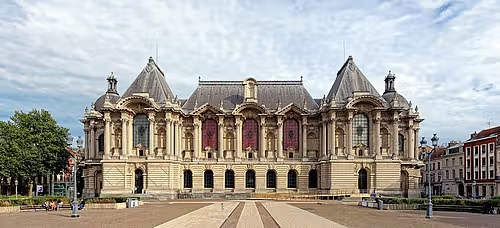
Often cited as the second most important fine arts museum in France after the Louvre, this Belle Époque palace delivers on the hype. The building itself is monumental, with a vast atrium that echoes your footsteps. The collection spans antiquity to the modern era, but the Flemish and Dutch masters are the stars here. Huge canvases by Rubens and Van Dyck dominate the main galleries, reminding you that for centuries, this region was artistically tied to the north, not Paris.

The basement contains a surprising highlight: a collection of relief maps (plans-reliefs) of fortified cities from the 18th century. These detailed scale models were used by kings and generals to plan wars. Seeing them gives you a god's-eye view of the history you have been walking through. It is a unique feature that sets this institution apart from other major Lille attractions. You could easily spend three hours here and only scratch the surface.

Despite its size, the museum feels approachable. There are plenty of benches, and the layout is logical. The 19th-century French painting section is also strong, featuring Delacroix and Courbet. It is the kind of place where you can wander aimlessly and find a masterpiece in a quiet corner. The café in the atrium is a bright, airy spot to recover from art fatigue.

Hours Mon: 2:00 – 6:00 PM | Tue: Closed | Wed-Sun: 10:00 AM – 6:00 PM
Price €8.00
Website pba.lille.fr/
Insider TipDo not skip the basement for the relief maps; they are dimly lit to protect them, so let your eyes adjust—the detail is mind-blowing.
Vieille Bourse

3. Vieille Bourse

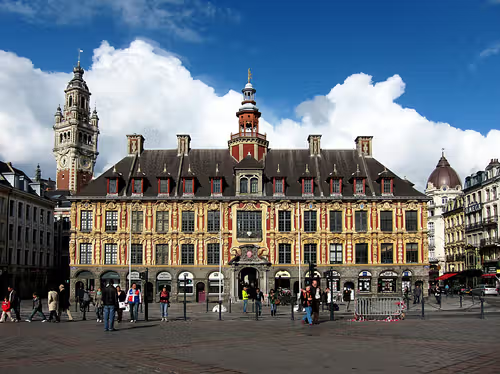
This is arguably the most beautiful building in the city. Built in the mid-17th century as a stock exchange for merchants, it is actually a ring of 24 identical houses surrounding a central courtyard. The architecture is flamboyant Flemish Renaissance—richly ornamented with garlands, fruit, and lion heads. It screams of the wealth and optimism of the Golden Age. You enter through small archways into the courtyard, which feels like a secret room hidden in plain sight.

Today, the courtyard is the domain of second-hand booksellers, chess players, and tango dancers in the summer evenings. It is a public space that feels private. The noise of the city is muffled by the four walls, replaced by the sound of turning pages and clicking chess pieces. It is the crown jewel of Lille attractions, perfectly preserving the spirit of the city's merchant past while serving a modern social function.

You do not need a ticket; you just walk through. The contrast between the busy Grand Place outside and the studious atmosphere inside is stark. Take time to look at the friezes and the color of the stone, which changes with the sun. It is a place to linger, browse through old comics or postcards, and watch the locals engage in intense chess battles.

Hours Mon: Closed | Tue-Sun: 1:00 – 7:00 PM
Price Free
Website Wikipedia
Location 50.637, 3.06427
Insider TipVisit around 5:00 PM; the light in the courtyard is softer, and the chess games are usually at their most intense.
Vieux-Lille

4. Vieux-Lille

Vieux-Lille is not a single building but the entire historic district north of the Grand Place. It is a maze of cobblestone streets, red brick facades, and hidden courtyards. This was once a slum, saved from demolition in the 1970s and restored into the most desirable real estate in the city. The architecture is a testament to the Flemish influence—warm, textured, and human-scale. Every corner offers a new perspective, a new gable, or a new color combination.

Wandering here without a map is the best strategy. You will find independent art galleries, waffle shops, and estaminets (traditional taverns) tucked into 17th-century cellars. It is the aesthetic highlight of all Lille attractions, a neighborhood that demands to be photographed. The vibe is chic but grounded; despite the luxury brands, the rough cobblestones keep it from feeling too polished.

Be prepared for uneven footing; the stones are historic and unforgiving to high heels. Sunday mornings are quiet and perfect for photography, while Saturday afternoons are a crush of shoppers. The district changes character depending on the street—some are purely residential and silent, others are buzzing with cafe terraces. It is a neighborhood that rewards curiosity.

Hours Open 24/7
Price Free
Website Wikipedia
Insider TipLook for the small shrines to the Virgin Mary set into the niches of buildings on street corners; they are remnants of old religious processions.
Get Your Own Private Tour with AI Guide
AI Guide
  • Personalized tour tailored to your interests
  • Your AI guide tells stories, shares facts, and cracks jokes
  • Turn-by-turn GPS navigation
  • Available in your language — no download needed
Try for Free

💎 Hidden Gems in Lille - Off the Beaten Path

Beyond the tourist crowds, Lille hides remarkable treasures waiting to be discovered.

Rue de Weppes

1. Rue de Weppes

Most visitors walk right past this street without realizing its significance. It follows the path of an old canal that was covered over in the 1930s, which explains its winding, river-like curve. It is a quiet, narrow lane that connects the busy Rue Esquermoise with the Rue de la Barre. Because it lacks major shops, it offers a sudden drop in decibels, a moment of silence in the middle of the bustle.

The architecture here is a mix of the very old and the discretely modern. You are walking on top of water, metaphorically speaking, and the damp, cool air sometimes hangs in the shadows. It is a favorite shortcut for locals who know how to bypass the crowds. Including this in your tour of Lille attractions gives you a glimpse of the 'invisible city'—the network of waterways that once defined the town before they were paved over.

There is nothing specific to 'do' here other than walk and appreciate the scale of the old city. The buildings lean in slightly, creating an intimate canyon. It is particularly moody in the evening when the streetlamps reflect off the cobblestones. It is a street for atmosphere, not commerce.

Hours Open 24/7
Price Free
Website N/A
Insider TipUse this street as a shortcut to get from the Grand Place to the Citadelle park; it’s faster and much quieter than the main boulevards.
Get Your Own Private Tour with AI Guide
AI Guide
  • Personalized tour tailored to your interests
  • Your AI guide tells stories, shares facts, and cracks jokes
  • Turn-by-turn GPS navigation
  • Available in your language — no download needed
Try for Free

🎨 Best Museums & Galleries in Lille

World-class museums and galleries that make Lille a cultural treasure.

Birthplace of Charles de Gaulle

1. Birthplace of Charles de Gaulle

On a relatively quiet street in the Vieux-Lille district, this modest bourgeois house preserves the environment where the French general and president was born in 1890. Rather than a grand memorial filled with statues, you walk into a domestic freeze-frame of late 19th-century industrial France. The interiors are meticulously restored, from the wallpaper to the family china, creating an atmosphere that feels as if the family has just stepped out for mass. It provides a personal, almost intimate context to a figure usually seen only in black-and-white newsreels.

The museum is split between the historic house and a modern extension across the courtyard that handles the biographical context. This separation works well, allowing you to absorb the atmosphere of the childhood home without reading placards in every corner. For history buffs exploring Lille attractions, it offers a tangible connection to the past that textbooks cannot replicate. The garden, with its period-appropriate plants, offers a brief, quiet interlude from the city streets.

Be aware that the house itself is quite narrow with many stairs, reflecting the architecture of its time. It is not a place for rushing; the audio guide is thorough and sets a slow pace. If you are not deeply interested in French political history, the domestic setting is still a fascinating study of upper-middle-class life in the industrial north, but younger children might find the 'look but don't touch' rules restrictive.

Hours Mon: 10:00 AM – 6:00 PM | Tue: Closed | Wed-Sun: 10:00 AM – 6:00 PM
Price Free
Location 50.646, 3.05896
Insider TipThe audio guide is included in the ticket price and is excellent; do not skip the 'winter garden' conservatory at the back, which many visitors miss.
Hospice Comtesse Museum

2. Hospice Comtesse Museum

Founded in 1237 by Countess Jeanne of Flanders, this former hospital transports you back to the era when Lille was a part of the Spanish Netherlands. The red brick facade and barrel-vaulted ceiling of the sick ward are strikingly beautiful, designed to comfort both the body and the soul. Inside, the museum recreates the atmosphere of a Flemish home from the 17th century, complete with heavy oak furniture, Delft tiles, and still-life paintings. It feels less like a sterile museum and more like walking into a painting by Vermeer or De Hooch.

The kitchen area, tiled in blue and white faience, is a highlight, showing the domestic scale of operations behind the hospital. You can almost smell the soup boiling in the giant hearths. The art collection in the later wings focuses on local history and religious works, which can be dry for some, but the architecture itself keeps the visit engaging. It is one of the most atmospheric Lille attractions, capturing the specific northern mood of the city perfectly.

Visiting here provides context for the rest of the old town. You begin to understand the architectural language of the streets outside—the bricks, the gables, the courtyards. It is a quiet place, usually free of the school groups that swarm the larger art museum. The medicinal garden in the courtyard continues the theme of healing, offering a rare patch of silence in the tourist center.

Hours Mon: 2:00 – 6:00 PM | Tue: Closed | Wed-Sun: 10:00 AM – 6:00 PM
Price €6.00
Website mhc.lille.fr/
Location 50.6411, 3.06317
Insider TipLook closely at the wood paneling in the chapel; the graffiti carved by bored choir boys centuries ago is still visible.
LaM - Lille Métropole Musée d'art moderne

3. LaM - Lille Métropole Musée d'art moderne

You will need to take a bus or drive to reach this museum in the suburb of Villeneuve d'Ascq, but the journey is justified by one of the finest collections of modern and outsider art in Europe. The building itself sits in a sculpture park, allowing you to encounter works by Calder and Picasso before you even buy a ticket. Inside, the collection is split: one wing for modern masters like Modigliani and Klee, and another dedicated to Art Brut (outsider art).

The Art Brut collection is the real reason to make the trip. It features thousands of works created by self-taught artists, patients in psychiatric hospitals, and spiritualists. It is raw, obsessive, and deeply moving, offering a completely different experience from the polished history of other Lille attractions. The architecture reflects this duality, with clean white galleries for the modernists and organic, winding spaces for the outsider art.

Allow at least half a day here. The surrounding park is extensive and worth exploring after your museum visit. It is not just a gallery; it is a destination. The distance from the center means you commit to the visit, but it filters out the casual tourists. You are left with serious art lovers and plenty of space to contemplate the strange, powerful works on display.

Hours Mon: Closed | Tue-Sun: 11:00 AM – 7:00 PM
Price €8.00
Location Maps
Insider TipPack a lunch to eat in the sculpture park; the on-site café is decent but the grounds are beautiful and offer plenty of benches.
Musée d'Histoire Naturelle de Lille

4. Musée d'Histoire Naturelle de Lille

This museum is a delightful throwback to the 19th century. It feels exactly how a natural history museum should: creaky wooden floors, cabinets filled with glass jars, and skeletons hanging from the ceiling. It has not been sanitized with touchscreens and slick minimalist design. Instead, it embraces the curiosity-cabinet aesthetic, with thousands of specimens packed into the galleries. The geology collection is massive, and the insect displays are mesmerizing in their geometric precision.

The centerpiece is the Great Hall, where whale skeletons float above stuffed mammals. It is popular with local school groups, so the noise level can rise, but the visual impact of the displays holds your attention. Among Lille attractions, it stands out for its old-world charm. It captures the era of exploration and categorization, even if some of the taxidermy looks a little weary after a hundred years.

They also have a vivarium with live insects and spiders, which is a hit with kids and a horror for some adults. It is located in the university quarter, giving it a slightly more academic vibe than the tourist center. It is a perfect rainy-day activity, offering a cozy, enclosed world of science and history that feels miles away from the modern city outside.

Hours Mon, Wed-Sun 10:00-17:30
Price €5.00
Website mhn.lille.fr/
Location 50.62662, 3.0667
Insider TipLook for the suspended narwhal tusk in the main hall; it’s easy to miss among the larger whale bones but is a rare specimen.
Get Your Own Private Tour with AI Guide
AI Guide
  • Personalized tour tailored to your interests
  • Your AI guide tells stories, shares facts, and cracks jokes
  • Turn-by-turn GPS navigation
  • Available in your language — no download needed
Try for Free

🍕 Food Markets & Culinary Spots in Lille

The best food markets, food halls, and culinary destinations in Lille.

Halles de Wazemmes

1. Halles de Wazemmes

This covered market is the beating heart of the working-class Wazemmes neighborhood, standing in stark contrast to the polished boutiques of the old town. Inside the red-brick building, the air is thick with the smell of roasting chickens, maturing cheeses, and fresh fish. It is loud, unapologetic, and intensely local. You come here to buy groceries, yes, but mostly to eat. The stands sell everything from North African pastries to traditional Flemish potjevleesch, reflecting the diverse makeup of the area.

Tuesday through Sunday, the indoor stalls are open, but the energy peaks around lunchtime when locals crowd the counters for quick meals. It is not a tourist trap; it is where residents actually shop. While many Lille attractions focus on the past, this market is entirely about the present. The prices are generally lower than in the city center, and the quality of produce is often higher. Navigating the aisles requires a bit of assertiveness, especially on weekends.

Surrounding the covered hall is a plaza that fills with outdoor vendors, expanding the chaos. If you are sensitive to noise or crowds, visit on a Tuesday or Wednesday morning. However, if you want to feel the pulse of the city, come right before lunch. There is no better place to assemble a picnic to take to the nearby parks, provided you can wait your turn at the bakery counter.

Hours Mon: Closed | Tue-Sat: 8:00 AM – 8:00 PM | Sun: 8:00 AM – 3:00 PM
Price Free
Location 50.6268, 3.04924
Insider TipFind the bakery stall selling 'Cramique' (brioche with raisins/sugar) inside the hall; buy a loaf still warm from the oven for breakfast.
Marché de Wazemmes

2. Marché de Wazemmes

If you visit on a Sunday morning, this is not just a market; it is a contact sport. The plaza outside the covered halls explodes with hundreds of stalls selling everything from cheap socks and batteries to rotisserie chickens and antique furniture. The noise is deafening, the crowds are tight, and the energy is infectious. It is the most multicultural experience in the city, with scents of mint tea, frying onions, and fresh flowers mixing in the air.

This is where you see the real Lille. Accordion players compete with boomboxes, and vendors shout their prices in a mix of French and Arabic. Unlike the polite museums that dominate lists of Lille attractions, the Sunday market is raw and unfiltered. You can find incredible bargains on textiles and produce if you have the patience to dig. If you hate crowds, stay far away, but if you love people-watching, there is no better theater.

By 2:00 PM, the cleanup crews arrive, and the magic vanishes, leaving behind a bare square. Timing is everything. Come hungry—food trucks and stalls serve dishes from around the world to eat while standing up. It is messy, chaotic, and absolutely essential for understanding the modern identity of the city.

Hours Mon: Closed | Tue-Sat: 7:00 AM – 1:00 PM | Sun: 7:00 AM – 2:00 PM
Price Free
Location 50.6261, 3.04969
Insider TipBring cash and small change; many outdoor vendors do not take cards, and trying to pay for a €2 bag of apples with a €50 note will not make you friends.
Get Your Own Private Tour with AI Guide
AI Guide
  • Personalized tour tailored to your interests
  • Your AI guide tells stories, shares facts, and cracks jokes
  • Turn-by-turn GPS navigation
  • Available in your language — no download needed
Try for Free

🌳 Parks & Best Viewpoints in Lille

Beautiful parks, gardens, and panoramic viewpoints for the best views of Lille.

Jardin Vauban

1. Jardin Vauban

Designed in the English style with winding paths and artificial grottoes, this garden sits right next to the massive Citadelle. It was created in the 19th century as a promenade for the bourgeoisie and retains a polite, orderly atmosphere. Heritage trees—chestnuts, beeches, and oaks—provide dense shade, making it a refuge during the occasional summer heatwave. It is smaller and more manicured than the wilder spaces around the fortress walls nearby.

Water plays a big role here, with a small stream and duck pond that define the layout. It is a classic spot for a Sunday stroll. You will often see joggers cutting through on their way to the canal, but the interior paths are generally slow-paced. As one of the greener Lille attractions, it links the urban grid of the Vauban neighborhood with the sprawling Citadelle park, acting as a soft transition zone.

There is a puppet theater (Le P’tit Jacques) located here, which is a local institution. Even if you do not speak French or have children, seeing the ornate little building adds to the charm. The lawns are protected, so do not expect to play soccer here; it is strictly for sitting or walking. In spring, the bulbs puts on a show that rivals the more famous gardens across the border in Belgium.

Hours Mon-Fri: 8:00 AM – 12:30 PM, 1:30 – 5:00 PM | Sat-Sun: Closed
Price Free
Insider TipThere is a small fruit orchard section near the back that is often empty; it’s the quietest place to read a book in the city center.
Jardin des Géants

2. Jardin des Géants

Tucked away near the high-speed train station and the business district, this garden is a strange and wonderful experiment in landscape design. Built on a former parking lot, it uses water, metal, and bamboo to create a space that feels distinct from traditional French parks. The 'Giants' in the name refer to the massive wicker heads and strange, totem-like sculptures that emerge from the vegetation. It is modern, playful, and slightly surreal, offering a sensory break for travelers arriving by Eurostar.

The park is divided into different zones, some lush and overgrown, others mineral and open. It is a favorite spot for office workers eating sandwiches, but it rarely feels crowded. If you have just finished visiting the nearby cemetery or are killing time before a train, it is a perfect detour. Unlike other Lille attractions that rely on history, this space relies on imagination and texture.

There is a distinct lack of traditional flower beds here. Instead, you get tall grasses, reflective pools, and red concrete paths. It is great for photography because of the odd angles and interesting light. The garden is not huge—you can walk through it in fifteen minutes—but it rewards those who sit down. The sound of water helps drown out the nearby traffic, creating a pocket of calm in a concrete-heavy part of town.

Hours Daily: 9:00 AM – 9:00 PM
Price Free
Location 50.6434, 3.07482
Insider TipEnter from the Rue de la Communauté side to walk through the bamboo tunnel first; it acts as a palate cleanser from the city noise.
Jardin des Plantes de Lille

3. Jardin des Plantes de Lille

Located in the southern Moulins district, this botanical garden is a bit of a trek from the main tourist circuit, which keeps it peaceful. It functions as a neighborhood park but with serious botanical credentials. The equatorial greenhouse is the architectural centerpiece, a brutalist concrete and glass structure filled with tropical humidity and oversized palms. Outside, the grounds are laid out in a mix of rigorous scientific beds and wandering pleasure paths.

It is an excellent spot if you need to escape the gray palette of the city center. The rose garden in summer is particularly impressive, and the dahlia collection in autumn keeps the color going late into the year. Because it is far from the typical cluster of Lille attractions, the vibe is strictly local—students reading on the grass, parents pushing strollers, and elderly neighbors inspecting the medicinal plants. There is zero tourist pretension here.

Facilities are somewhat basic compared to grand Parisian parks, but that is part of the charm. It feels lived-in and used. The educational plots show what vegetables look like before they hit the supermarket, which is great for kids. If you are staying in the city center, consider taking the metro to Porte de Douai rather than walking the whole way, as the route is not particularly scenic.

Hours Daily: 8:15 AM – 6:00 PM
Price Free
Location 50.6149, 3.0682
Insider TipThe greenhouse has limited opening hours (often closing for lunch); check the sign on the door immediately upon arrival so you don't miss the window.
Parc Jean-Baptiste Lebas

4. Parc Jean-Baptiste Lebas

Identifiable by its bright red metal gates, this linear park was built on a former boulevard, transforming a slab of concrete into a green corridor. It sits near the Gare Saint-Sauveur cultural center, bridging the gap between the city center and the working-class Moulins district. The design is modern and functional, with high lawns protected by low fences and gravel paths that host endless games of pétanque. It is a front yard for the neighborhood.

It is less of a botanical destination and more of a social hub. You will see families having picnics, students revising for exams, and locals walking dogs. The tall trees provide a canopy that makes the space feel intimate despite its length. As one of the more relaxed Lille attractions, it offers a place to sit down without the pressure to 'see' anything. The red gates are not just decorative; they frame the views and give the park a distinct visual identity.

The park is entirely enclosed, making it safe for children to run around. In the summer, it stays open late, and the atmosphere becomes festive as people bring drinks and food to enjoy the long evenings. It is a great spot to decompose after a visit to the nearby Natural History Museum.

Hours Daily: 7:30 AM – 10:00 PM
Price Free
Insider TipWalk to the far end to reach Gare Saint-Sauveur; there is often a free exhibition or a pop-up bar in the old station halls.
Get Your Own Private Tour with AI Guide
AI Guide
  • Personalized tour tailored to your interests
  • Your AI guide tells stories, shares facts, and cracks jokes
  • Turn-by-turn GPS navigation
  • Available in your language — no download needed
Try for Free

Explore with AI Guide

AI Guide App

Get personalized tours with our AI-powered guide. No download needed — works right in your browser.