Best Time to Visit Bucharest
Month-by-month weather, crowds and prices, plus a full calendar of festivals and events worth planning a trip around.
Best monthsMay, Sep, Oct
CheapestJan, Feb, Nov
AvoidJul
BusiestJul

When is the best time to visit Bucharest?
May, September and October are the best time to visit Bucharest: 18 to 25°C, the fullest cultural calendar, and crowds you can still navigate. July is the hottest and busiest, with 35°C-plus afternoons that flatten the Old Town. January and February are the cheapest, the trade being deep cold and grey skies.
Start our tool and find your best time to visit Bucharest
Your perfect month
Free · ~30 seconds
or tap a month directly
What matters to you?
And this?
Best overall: May, Sep. May and September are the real sweet spot: warm but walkable, every cultural site open, blossom or first foliage, and crowds you can work around. October delivers too, with peak autumn colour in Herăstrău, just book around the Marathon weekend.
Best value: Jan, Feb, Nov. January, February and November bring the lowest hotel rates of the year, budget beds from 15 to 20 euros, and free sights like Cișmigiu Garden and Revolution Square that cost nothing whatever the weather does.
Avoid: Jul. July: 35 to 40°C afternoons, no shade in the Old Town, and all of Europe on holiday at once. You pay peak summer rates to sweat through a city best seen before 10 am or after 6 pm.
- January: Good time, 4°C. This is the month you have the city to yourself. The Old Town bars are full of locals rather than stag parties, the parks are silent and frost-edged, and nobody is upselling you anything. The grey skies are real and the cold is genuine, but if you want Bucharest without performance or markup, January is honest and rewarding.
- February: Good time, 8°C. February is unperformed Bucharest. No tour groups, no seasonal markup, just a real city in winter mode. The Mărțișor fairs at the end of the month are the one moment you feel the city lean toward spring, and buying a handmade amulet directly from an artisan is a genuinely local thing to do that almost no tourist sees.
- March: Good time, 12°C. March is the last genuinely quiet month before spring fills the city. The terraces reopen, the markets pile up with the first spring produce, and you can still walk into Caru cu Bere for a weekday lunch without queuing. That window closes fast once April's Easter and weekend crowds arrive, so this is a smart, underrated month to come.
- April: Great time, 17°C. April is gorgeous and no longer quiet. The Easter weekend is the emotional high point of the Romanian year, and the midnight candlelit processions around the Patriarchal Cathedral are genuinely moving, but the city all but shuts on Easter Sunday. Come for the atmosphere with eyes open: book ahead, expect closures around the holiday, and the blossom and warm light pay you back.
- May: Great time, 22°C. May genuinely is Bucharest at its best, and unlike a lot of cities it has not been fully discovered yet, so the sweet spot still holds. Warm evenings on the Old Town terraces, blossom in Cișmigiu, and a cultural night out every weekend. Carry a compact umbrella for the afternoon storms and you have very little to complain about.
- June: Good time, 26°C. June is the tipping point into full summer: hot and busy by day, but the long light makes the evenings glorious. Pride weekend gives the Old Town a real charge, the most visible Pride in Eastern Europe. By late June the midday heat is starting to bite, so this is the moment to shift your sightseeing to early mornings and after 6 pm.
- July: Tough month, 29°C. July is for people who genuinely do not mind heat. Midday is a write-off, the unshaded Old Town is punishing, and the city is not at its best. But King Mihai I Park and Cișmigiu Garden, with their lake breezes and shaded alleys, are essential escape valves, and the long warm evenings on a terrace are a different, much better Bucharest. Plan around the heat and it works.
- August: Good time, 30°C. August is a strange bargain. The heat is real and the unshaded centre is hard work at midday, but with locals away the prices drop and the festivals give the city an energy summer otherwise lacks. If you can handle 35°C and book around the festival weekends, you get peak-season Bucharest at off-season prices, which is a genuinely good deal.
- September: Great time, 25°C. September is Bucharest at its most romantic and most comfortable. The brutal summer heat is gone, the light goes long and gold over Calea Victoriei, and every restaurant terrace is open without the July crush. The Enescu concerts at the Athenaeum are some of the finest, and most affordable, classical evenings in Eastern Europe. If you can only pick one month, this is it.
- October: Great time, 18°C. October shares the title of best month with May and September: foliage everywhere, crisp clean air, and a city in its cultural prime. The one thing to plan around is the Marathon, which takes over the centre for one Sunday morning. Outside that, this is golden-hour Bucharest, all warm light and turning leaves, and far less crowded than summer.
- November: Great time, 11°C. November is Bucharest at its most overlooked, and that is precisely the appeal if you want the city without crowds or markup. The grey is real, but the indoor culture, the beer halls, the museums, the Athenaeum, is exactly where you want to be. Time your visit for the very end of the month and you catch the Christmas market opening at bargain November prices.
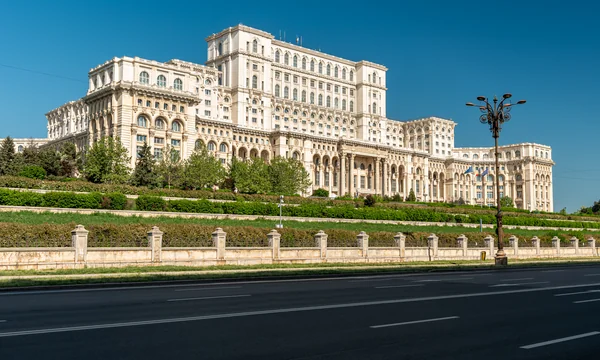
- December: Tough month, 6°C. December gives Bucharest its most atmospheric face. The Christmas market with the floodlit Palace of Parliament behind it is genuinely one of the most dramatic in Europe, and the cold, festive evenings with vin fiert in hand are the whole point. It is not a snowy postcard most years, more grey and damp, but the festive energy more than carries it.
Bucharest weather by month
HighLowRainfall
Jan4°
Feb8°
Mar12°
Apr17°
May22°
Jun26°
Jul29°
Aug30°
Sep25°
Oct18°
Nov11°
Dec6°
| Month | Temp | Rain | Sun | Crowds | Prices | Highlight |
|---|---|---|---|---|---|---|
| Jan | 4° / -4° | 48mm · 7 rainy days | 5.0 h/day | ●○○○○ | ●○○○○ | Johann Strauss Festival |
| Feb | 8° / -1° | 29mm · 6 rainy days | 6.5 h/day | ●○○○○ | ●○○○○ | Mărțișor Fairs |
| Mar | 12° / 2° | 53mm · 9 rainy days | 7.7 h/day | ●●○○○ | ●●○○○ | Mărțișor Fairs |
| Apr | 17° / 6° | 64mm · 10 rainy days | 9.6 h/day | ●●●○○ | ●●●○○ | Orthodox Good Friday |
| May | 22° / 12° | 70mm · 11 rainy days | 11.4 h/day | ●●●○○ | ●●●○○ | Open Streets |
| Jun | 26° / 17° | 89mm · 13 rainy days | 12.4 h/day | ●●●●○ | ●●●●○ | Open Streets |
| Jul | 29° / 19° | 71mm · 9 rainy days | 13.3 h/day | ●●●●● | ●●●○○ | Open Streets |
| Aug | 30° / 19° | 35mm · 5 rainy days | 12.3 h/day | ●●●●○ | ●●○○○ | Open Streets |
| Sep | 25° / 14° | 37mm · 4 rainy days | 10.5 h/day | ●●●○○ | ●●●●○ | Open Streets |
| Oct | 18° / 8° | 57mm · 7 rainy days | 7.4 h/day | ●●●○○ | ●●●●○ | Open Streets |
| Nov | 11° / 4° | 60mm · 8 rainy days | 5.1 h/day | ●○○○○ | ●●○○○ | Bucharest Christmas Market |
| Dec | 6° / 0° | 52mm · 8 rainy days | 4.7 h/day | ●●●○○ | ●●●○○ | National Day Military Parade |
How we score this: weather = long-run climate normals (Open-Meteo), crowds & prices = relative season read, events checked yearly against official dates.
Best time to visit Bucharest: weather, prices & crowds
Best months for good weather
May, Sep
May and September give Bucharest its most reliable warmth: 22 to 25°C daytime, long evenings on the Old Town terraces, and September in particular runs dry at just 4 rain days against May's 11.
Quietest months to avoid the crowds
Jan, Feb, Nov
January, February and November empty the city out: foreign visitors are scarce, Palace of Parliament tours have no real queue, and you can have Cișmigiu Garden's lakeside paths almost to yourself.
Cheapest time to visit Bucharest
Jan, Feb, Nov
January and February are the cheapest months, with budget beds from 15 to 20 euros a night and flights at their annual low. November is the second cheapest, the trade being grey skies before the Christmas market opens.
Best time for festivals and events
May, Sep
Late May brings Night of Museums, when 47 venues open free until 2 am, while late August into September the George Enescu Competition fills the ornate Romanian Athenaeum with some of the finest classical music in Eastern Europe.
How many days do you need in Bucharest?
Plan two to three days for Bucharest. Romania's sprawling capital spreads its sights across grand boulevards and distinct neighbourhoods, so distances run longer than in a compact old town, and three days lets you move at a pace where you actually take things in rather than rushing past them.

One day
Old Town to Palace of Parliament
Start at the Romanian Athenaeum on Strada Benjamin Franklin, then walk south along Calea Victoriei past the ornate CEC Palace to Revolution Square. From there, head to the Patriarchal Cathedral on Mitropoliei Hill before finishing at the Palace of Parliament. The self-guided Bucharest walking tour strings together all 13 stops across 13.4 km in roughly 4.9 hours, so wear comfortable shoes and start before 10 am in summer.
Two days
Museums and parks
Spend the morning at the National Museum of Art of Romania in the former Royal Palace on Calea Victoriei, then cross to the Village Museum in Herăstrău for the afternoon, where 272 authentic peasant dwellings sit across a 10-hectare lakeside park. End the day with a slow walk around Cișmigiu Garden, one of Bucharest's most beautiful green spaces.
Three daysRecommended
Neighbourhoods and hidden gems
Use the third day to go slower and further: the Romanian Peasant Museum on Kiseleff Boulevard, the Cantacuzino Palace facade on Calea Victoriei, and a wander through Floreasca or Dorobanți for a meal away from the tourist circuit. The Arc de Triomphe at dusk is worth the 20-minute walk north from the city centre.
Four days or more
Day trips and deeper dives
A fourth day opens up Brașov (2.5 hours by train), Sinaia (1.5 hours), or the Black Sea coast at Constanța (2.5 hours). Alternatively, take a full morning for the Palace of Parliament interior tour, which needs a booking 4 to 7 days ahead in peak season, and spend the afternoon at Carol Park with its 48-metre granite mausoleum.
Best time to visit Bucharest by traveller type
Same city, different trip. Here's the month that fits how you're travelling.
🧭
Best time to visit Bucharest for the first time
MayOct
May or October hit the ideal balance: 18 to 24°C for comfortable walking, every museum open, and moderate crowds. May adds Night of Museums and the Design Festival launch, October adds Herăstrău foliage and the Marathon spectacle.
❤️
Best time to visit Bucharest for couples
SepOct
Late September or early October for golden afternoon light on Calea Victoriei, crisp evenings on the Old Town terraces, and affordable George Enescu Competition concerts at the Athenaeum from around 10 euros.
💶
Best time to visit Bucharest on a budget
JanFebNov
January, February or November for the cheapest beds and flights of the year, paired with free sights: Revolution Square, the Arch of Triumph, Cișmigiu Garden, and free-Monday museums.
🍝
Best time to visit Bucharest for food and wine
MaySep
May to June for peak farmers' markets at Piața Obor and Piața Amzei and open terraces, or September for the new-season wine arriving at the Old Town wine bars.
Worst time to visit Bucharest
July is the month most worth skipping. Afternoons regularly push to 35 to 40°C in the urban heat island, and the Old Town's Strada Franceza and Strada Lipscani have zero shade between noon and 4 pm, making a walking tour genuinely punishing. All of Europe is on school holidays at the same time, so bars and terraces are at peak capacity during the hours when walking the city is least pleasant. Hotel prices run moderate only because locals flee to the Black Sea, but the heat-plus-crowd combination still makes it the worst trade-off of the year.
Still worth it for If July is your only option, August is the smarter pick: a few degrees cooler on average, festival energy from Summer Well and SAGA, and some of the lowest hotel prices of the year as local departures keep supply high.
Go instead in May, September, October, when Bucharest is at its best.
Best time for a tour of Bucharest
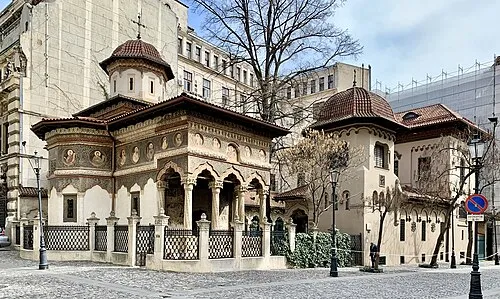
Bucharest is a long, leg-stretching walk, roughly 13 kilometres past the Romanian Athenaeum, the colossal Palace of Parliament and out to the open-air Village Museum, so the month you choose changes everything. May and September are the sweet spots: highs around 22 to 25 °C, dry-ish air and light that lasts into the evening, ideal for the wide-open expanse of Carol Park and the long boulevard up to the Arc de Triomphe. July and August are punishing, with highs near 29 to 30 °C and almost no shade on the vast plaza in front of the Palace of Parliament or along the treeless approaches, the kind of heat that turns a five-hour route into an ordeal. June is the wettest stretch at thirteen rain days, while deep winter swings the other way: January barely scrapes 3.7 °C by day and drops below freezing at night, and the short hours mean the Old Town and Stavropoleos Monastery go dark and cold by mid-afternoon. April is fresh but soggy, October crisp and quiet once the summer crowds thin out.
The advantage of walking Bucharest with AI Tourguide is that the clock is entirely yours, so the climate sets your hour rather than an operator's timetable. On a scorching August day you can set off at first light, cover the Palace of Parliament and Carol Park before the heat builds, then pause in the cool of Stavropoleos Monastery whenever you like. It all runs in your browser, no app, no download, and a voice-first guide leads the whole way, telling the stories behind each square, asking what catches your eye and adapting as you go. When you are ready, start your Bucharest tour and let the morning, not a schedule, decide your pace.

 +9
+9All 13 stops are already on the map.
You just press start.
You just press start.
 AI Tourguide
You just read the route.
Now walk it with a guide in your ear.
Press start wherever you are, even hundreds of kilometres from Bucharest, and the guide begins telling its stories right away. In the city, pick any of the 13 stops to start from: it leads you there, then talks with you the whole route, asking, listening, remembering, and shaping the tour around your answers.
13stops13.4km4.9hours11languages
▶Start the tour freeFree to start · Runs in your browser · No app, no download
Bucharest events and festivals calendar
Annual highlights worth timing a trip around, listed month by month.
January
🎵 MusicJohann Strauss Festival Festivalul Johann Strauss
Jan 17
mid-January
An annual waltz-and-operetta gala at the Romanian Athenaeum, now in its 23rd edition, with a full orchestra in one of the city's most ornate concert halls.
February
🌸 Seasonal natureMărțișor Fairs Târguri de Mărțișor
Feb 25 – Mar 8
late February to early March, around 1 March
Fairs across the city sell mărțișoare, the red-and-white spring amulets, with the Romanian Peasant Museum fair (running around 25 February to 1 March) and the Village Museum fair (running through early March) the best-known.
April
⛪ ReligiousOrthodox Good Friday Vinerea Mare
Apr 10 ~
the Friday before Orthodox Easter, late March to late April
Orthodox Good Friday, when most businesses close and the churches fill for the solemn services leading into Easter weekend.
⛪ ReligiousOrthodox Easter Paști
Apr 12–13 ~
late March to late April, often a week after Western Easter
Romania's most important religious holiday, with candlelit midnight services at every Orthodox church on the night before Easter Sunday, followed by family lunches across Easter Sunday and Monday.
🎨 Art and cultureOpen Streets Străzi Deschise
Apr 25 – Oct 31
every weekend from late April to October, 10 am to 10 pm
Calea Victoriei and Ion Brezoianu Street close to cars every Saturday and Sunday, filling with concerts, workshops and street performances.
May
🎨 Art and cultureBucharest Design Festival
May 20 – Jun 21
late May to late June
A month-long creative takeover of 100-plus venues, including Romanian Design Week, the DIPLOMA Show and the Cartierul Creativ district, with 30-plus exhibitions and 150-plus events.
🌙 Museum nightNight of Museums Noaptea Muzeelor
May 23
the third Saturday of May, 6 pm to 2 am
47 Bucharest museums and cultural spaces stay open until 2 am with guided tours, concerts and workshops, 39 of them free.
June
🏳️🌈 PrideBucharest Pride March Marșul Bucharest Pride
Jun 3–13
early to mid-June, march on the second Saturday
A 10-day LGBTQIA+ festival of film, theatre and debate, culminating in a march of 30,000-plus from Calea Victoriei toward the Palace of Parliament on the second Saturday of June.
August
🎵 MusicSummer Well Festival Summer Well
Aug 7–9
first or second weekend of August
A boutique indie and alternative festival in the 19th-century Știrbey Domain parkland at Buftea, 20km outside the city, with free shuttles from Bucharest.
🎵 MusicSAGA Festival
Aug 21–23
third or fourth weekend of August
Romania's biggest three-day electronic-music event, staged in the Romexpo and Piața Constituției zone with major international headliners.
🎵 MusicGeorge Enescu International Competition Concursul Internațional George Enescu
Aug 23 – Sep 19
late August to mid-September, biennial
A world-class classical-music competition for piano, violin, cello and composition, held at the Romanian Athenaeum and other venues, with finals running through September.
October
🏃 SportRaiffeisen Bank Bucharest Marathon Maratonul București
Oct 10–11
second weekend of October, race on the Sunday
A World Athletics Bronze Label race with full marathon, half, 10K and 5K distances, drawing 25,000-plus runners from 50-plus countries through the central streets.
November
🎄 Christmas marketBucharest Christmas Market Târgul de Crăciun București
Nov 28 – Dec 28
late November to the end of December
Around 70 wooden chalets at Piața Constituției with an ice rink, Ferris wheel, live music and traditional food like cozonac, vin fiert and mici, all set against the floodlit Palace of Parliament.
December
🇮 HolidayNational Day Military Parade Parada Militară de Ziua Națională
Dec 1
1 December, mid-morning
An annual military parade on the Bulevardul Aviatorilor and Arcul de Triumf axis, with Romanian and NATO allied troops, speeches and a grand visual spectacle.
Insider tips for visiting Bucharest
The rules buried in forums, in one place.
- Book the Palace of Parliament tour online 4 to 7 days ahead in peak season (May to October). Tours run every 30 to 60 minutes with no same-day walk-in guarantee. Arrive at the 9 am opening on a weekday for a 10 to 15 minute security queue, versus 45-plus minutes on a summer Saturday. Bring your original passport or ID, copies are not accepted. The ticket is around 70 RON (about 14 euros).
- Most Bucharest museums close on both Monday AND Tuesday, a common trap that can cost you two days in a row. The Romanian Peasant Museum and the National History Museum are both shut on those days, so plan your cultural days for Wednesday to Sunday.
- For Night of Museums (third Saturday of May), arrive at the top venues by 6 pm. By 7:30 the queues at the National Museum of Art on Calea Victoriei and the Romanian Peasant Museum stretch past 45 minutes. Lesser-known spots like the National History Museum stay much quicker.
- On Open Streets weekends (late April to October, every Saturday and Sunday 10 am to 10 pm), Calea Victoriei goes car-free. The best photo window for its grand Habsburg-style facades is early Sunday, between 10 and 11 am, before the crowds arrive.
- Festival weekends block accommodation. SAGA (late August) and Summer Well (early August) sell out Old Town hotels, so book 8 to 12 weeks ahead, and expect Uber surge pricing of 2 to 4 times from the festival grounds back into the city.
- Marathon weekend (mid-October) books out every central hotel, so reserve 6 weeks ahead. The race starts 9 am Sunday and closes Calea Victoriei and Bulevardul Aviatorilor until around noon, so line up museums or out-of-centre sights for that morning.
- Caru cu Bere, the iconic Old Town beer hall, needs a dinner reservation year-round. A weekday lunch walk-in works before 12:30, but after 1 pm there is usually a wait.
- Independent neighbourhood restaurants in Floreasca, Dorobanți and Timpuri Noi often close for 1 to 2 weeks in August as owners take their Black Sea holidays. Check the hours on Google Maps the week of your visit.
Public holidays in Bucharest
On these dates many shops and offices close, transport thins out, and sights can be mobbed or shut. Plan around them.
| Date | Holiday | What closes |
|---|---|---|
| Jan 1 | New Year's Day | Everything closed and the city quiet. Tourist sights and most restaurants shut; public transport on a reduced timetable. |
| Jan 24 | Unification Day | Public holiday marking the 1859 union of the Principalities. Government buildings closed, though some shops stay open; central events and wreath-laying near Revolution Square. |
| Apr 10 | Good Friday | Most businesses closed and churches packed. Calea Victoriei goes quiet; major sights stay open but uncrowded, a calm day to wander the centre. |
| Apr 12 | Orthodox Easter Sunday | Romania's most important religious day. The city nearly shuts; midnight candlelit processions on the night of 11 to 12 April, especially at the Patriarchal Cathedral, are stunning. Restaurants packed, reservations essential. |
| Apr 13 | Easter Monday | Public holiday; most things closed. Families gather for long lunches, so restaurants are open but full and a booking is mandatory. |
| May 1 | Labour Day | Public holiday with a long-weekend feel. Some restaurants closed; many Bucharesters head to the Black Sea coast, so the city is quieter than usual. |
| Jun 1 | Children's Day and Pentecost Monday | A double holiday. Family events fill King Mihai I Park and Cișmigiu Garden, while many businesses close for the public holiday. |
| Aug 15 | Assumption of Mary | Public holiday with church services across the city. Some Old Town bars and restaurants may close briefly, on top of the broader August owner-holiday closures. |
| Nov 30 | St. Andrew's Day | National holiday honouring Romania's patron saint. Some shops closed; it falls right as the Christmas market is opening at Piața Constituției. |
| Dec 1 | National Day | Romania's most patriotic day, with a military parade on the Arcul de Triumf axis. Central streets close from early morning and patriotic crowds gather, though it is not a peak tourist day. |
| Dec 25 | Christmas Day | Everything closed except the Christmas market at Piața Constituției, which keeps running with its ice rink and food chalets. |
| Dec 26 | Second Christmas Day | Public holiday; shops and most restaurants stay closed. The Christmas market remains open and is one of the few things to do. |
Bucharest month by month
January in Bucharest
High4°C / 39°F
Low-4°C
Rain48mm / 7 rainy days
Sun5.0 h/day
Daylight9 h/day
Humidity84%
Crowds●○○○○Prices●○○○○
January is Bucharest at its emptiest and cheapest. Daytime highs hover near 4°C and lows drop below freezing, with cold fog and freezing drizzle far more common than thick snow. It feels properly deep-winter, but a good coat handles it. Foreign visitors are scarce once New Year passes, so museums and the Palace of Parliament have no real queue. Skies are often grey, and evenings are dark by 5 pm, which is the honest trade for the year's lowest prices.
The vibe This is the month you have the city to yourself. The Old Town bars are full of locals rather than stag parties, the parks are silent and frost-edged, and nobody is upselling you anything. The grey skies are real and the cold is genuine, but if you want Bucharest without performance or markup, January is honest and rewarding.
Don't miss The Palace of Parliament runs short winter hours (10 am to 4 pm) but with almost no queue, so a weekday tour feels unhurried. The Johann Strauss Festival opens the year with a waltz-and-operetta gala at the ornate Romanian Athenaeum, a magical, warm escape from the cold.
Crowd drivers No festivals, no school holidays once New Year passes, and the lowest international visitor pressure of the entire year.
In season Deep-winter comfort food peaks: ciorbă de burtă (tripe soup), sarmale (cabbage rolls) and hot vin fiert (mulled wine) in the Old Town beer halls.
Heads up 1 January is a national holiday with almost everything shut. Most museums also close Monday and Tuesday, and the Palace of Parliament runs reduced winter hours.
Cheapest month of the year: budget beds from 15 to 20 euros and flights at their annual low.
Events this month
🎵 MusicJohann Strauss Festival Festivalul Johann Strauss
Jan 17
mid-January
An annual waltz-and-operetta gala at the Romanian Athenaeum, now in its 23rd edition, with a full orchestra in one of the city's most ornate concert halls.
It is the warmest, most elegant way to start a Bucharest winter trip, Vienna-style New Year music inside a jewel-box hall.
February in Bucharest
High8°C / 46°F
Low-1°C
Rain29mm / 6 rainy days
Sun6.5 h/day
Daylight10 h/day
Humidity79%
Crowds●○○○○Prices●○○○○
February stays deep winter, milder than January with highs near 8°C but still frost-prone overnight. It is the quietest stretch of the year for tourism, mostly domestic visitors, with hotel rates at their lowest. Late in the month the Mărțișor fairs begin, the first sign of spring, as artisans set out their red-and-white amulets. Snow days are possible but rarely thick enough to disrupt sightseeing, and the dry air (just 6 rain days) makes the cold easier to walk in.
The vibe February is unperformed Bucharest. No tour groups, no seasonal markup, just a real city in winter mode. The Mărțișor fairs at the end of the month are the one moment you feel the city lean toward spring, and buying a handmade amulet directly from an artisan is a genuinely local thing to do that almost no tourist sees.
Don't miss The Mărțișor fair at the Romanian Peasant Museum (late February into early March) is one of the best souvenir-shopping windows of the year: the vendors are artisans, not resellers, and prices are non-tourist. The UNESCO-protected red-and-white amulet tradition is unique to Romania and Moldova.
Crowd drivers Late-month Mărțișor fairs pull a domestic crowd, but international visitors stay minimal.
In season Hearty Romanian winter cooking is still in full swing: sarmale, mici (grilled minced-meat rolls) and cozonac (sweet bread) before the season turns.
Heads up Most museums close Monday and Tuesday. The Palace of Parliament keeps its short winter hours of 10 am to 4 pm.
Near-cheapest month: hotel rates run 40 to 50% below the June peak.
Events this month
🌸 Seasonal natureMărțișor Fairs Târguri de Mărțișor
Feb 25 – Mar 8
late February to early March, around 1 March
Fairs across the city sell mărțișoare, the red-and-white spring amulets, with the Romanian Peasant Museum fair (running around 25 February to 1 March) and the Village Museum fair (running through early March) the best-known.
It is a UNESCO-protected spring tradition unique to Romania and Moldova, and the chance to buy a genuine handmade amulet directly from the artisan at a non-tourist price.
March in Bucharest
High12°C / 54°F
Low2°C
Rain53mm / 9 rainy days
Sun7.7 h/day
Daylight12 h/day
Humidity72%
Crowds●●○○○Prices●●○○○
March warms quickly, with highs climbing toward 12°C and the first café terraces reopening. Mărțișor on 1 March brings a real domestic buzz as the whole city ties red-and-white strings to coats and trees. Crowds stay light, mostly city-breakers from neighbouring countries, and prices remain in shoulder territory. Cherry and apricot blossom can start in Cișmigiu Garden and Herăstrău late in the month, depending on the year, the cue that spring has truly arrived.
The vibe March is the last genuinely quiet month before spring fills the city. The terraces reopen, the markets pile up with the first spring produce, and you can still walk into Caru cu Bere for a weekday lunch without queuing. That window closes fast once April's Easter and weekend crowds arrive, so this is a smart, underrated month to come.
Don't miss Catch cherry and apricot blossom in Cișmigiu Garden and Herăstrău from late March, tied to the Mărțișor custom of knotting a red-white string to a flowering tree. The Botanical Garden starts coming into its own, with free entry most days.
Crowd drivers Mărțișor (1 March) brings a domestic surge; warming weather draws Czech and Hungarian weekenders.
In season Spring produce returns to Piața Obor and Piața Amzei, and the first outdoor coffees of the year arrive with the reopening terraces.
Heads up Most museums still close Monday and Tuesday. The Palace of Parliament switches to summer hours (9 am to 5 pm) from the start of the month.
Shoulder pricing, around 30 to 35% below peak; good value before the spring rush.
Events this month
🌸 Seasonal natureMărțișor Fairs Târguri de Mărțișor
Feb 25 – Mar 8
late February to early March, around 1 March
Fairs across the city sell mărțișoare, the red-and-white spring amulets, with the Romanian Peasant Museum fair (running around 25 February to 1 March) and the Village Museum fair (running through early March) the best-known.
It is a UNESCO-protected spring tradition unique to Romania and Moldova, and the chance to buy a genuine handmade amulet directly from the artisan at a non-tourist price.
April in Bucharest
High17°C / 63°F
Low6°C
Rain64mm / 10 rainy days
Sun9.6 h/day
Daylight14 h/day
Humidity69%
Crowds●●●○○Prices●●●○○
April is properly spring: highs near 17°C, blossom in the parks, and the city fully awake. Orthodox Easter (12 to 13 April) and Good Friday are the big draw, surging both crowds and hotel prices around the holiday weekend. Up to 10 rain days are possible, usually as short afternoon showers rather than all-day rain. Book your Palace of Parliament tour and restaurant tables well ahead, as both fill fast over the Easter weekend.
The vibe April is gorgeous and no longer quiet. The Easter weekend is the emotional high point of the Romanian year, and the midnight candlelit processions around the Patriarchal Cathedral are genuinely moving, but the city all but shuts on Easter Sunday. Come for the atmosphere with eyes open: book ahead, expect closures around the holiday, and the blossom and warm light pay you back.
Don't miss Open Streets begins in late April: Calea Victoriei goes car-free every weekend, a rare chance to walk Bucharest's grandest boulevard without traffic. The midnight Easter services on 11 to 12 April, with candlelit processions around the churches, are the most atmospheric night of the year.
Crowd drivers Orthodox Easter and Good Friday, plus Czech and Hungarian Easter-break weekenders and the spring city-break season picking up.
In season Easter brings cozonac (sweet nut bread), drob (lamb haggis) and roast lamb to every table; the first asparagus and spring greens hit the markets.
Heads up Good Friday (10 April) closes most businesses; Easter Sunday and Monday (12 to 13 April) shut almost everything except tourist restaurants. Museums still close Monday and Tuesday.
Orthodox Easter week pushes hotel rates up 20 to 30% around 10 to 13 April; book early.
Events this month
⛪ ReligiousOrthodox Easter Paști
Apr 12–13 ~
late March to late April, often a week after Western Easter
Romania's most important religious holiday, with candlelit midnight services at every Orthodox church on the night before Easter Sunday, followed by family lunches across Easter Sunday and Monday.
The midnight candlelit processions, especially around the Patriarchal Cathedral, are genuinely stunning and the emotional high point of the Romanian year.
⛪ ReligiousOrthodox Good Friday Vinerea Mare
Apr 10 ~
the Friday before Orthodox Easter, late March to late April
Orthodox Good Friday, when most businesses close and the churches fill for the solemn services leading into Easter weekend.
Calea Victoriei goes quiet and the major sights stay open but uncrowded, making it a calm, atmospheric day to wander the centre.
🎨 Art and cultureOpen Streets Străzi Deschise
Apr 25 – Oct 31
every weekend from late April to October, 10 am to 10 pm
Calea Victoriei and Ion Brezoianu Street close to cars every Saturday and Sunday, filling with concerts, workshops and street performances.
It is the rare chance to walk Bucharest's grandest boulevard free of traffic, with early Sunday morning the best window for photographing its Habsburg-style facades.

May in Bucharest
High22°C / 72°F
Low12°C
Rain70mm / 11 rainy days
Sun11.4 h/day
Daylight15 h/day
Humidity70%
Crowds●●●○○Prices●●●○○
May is the month most locals would name first: highs around 22°C, nearly 11 hours of sun, and the parks in full bloom. It is also the wettest month on paper at 70mm, but rain comes as short convective thunderstorms in the afternoon, not all-day drizzle, so mornings are usually clear. Crowds and prices are moderate, the EU visitor season is ramping up, and the cultural calendar is packed, from the Design Festival to Night of Museums. The single best month for the weather-to-value balance.
The vibe May genuinely is Bucharest at its best, and unlike a lot of cities it has not been fully discovered yet, so the sweet spot still holds. Warm evenings on the Old Town terraces, blossom in Cișmigiu, and a cultural night out every weekend. Carry a compact umbrella for the afternoon storms and you have very little to complain about.
Don't miss Night of Museums (third Saturday) opens 47 venues free until 2 am, including the National Museum of Art and the Village Museum that normally charge. The Bucharest Design Festival takes over 100-plus venues across the city, opening normally closed studios and palaces.
Crowd drivers EU tourists arriving in numbers, the month-long Design Festival, and the Night of Museums weekend drawing day-trippers.
In season Farmers' markets peak: the best fresh produce of the year arrives at Piața Obor and Piața Amzei, and restaurant terraces switch to seasonal menus.
Balanced shoulder pricing; 3-star hotels around 50 to 80 euros, the best value-to-crowd ratio of the year.
Events this month
🌙 Museum nightNight of Museums Noaptea Muzeelor
May 23
the third Saturday of May, 6 pm to 2 am
47 Bucharest museums and cultural spaces stay open until 2 am with guided tours, concerts and workshops, 39 of them free.
It is free after-dark access to the National Museum of Art, the Peasant Museum and the Village Museum, which normally all charge; arrive by 6 pm before the queues build.
🎨 Art and cultureBucharest Design Festival
May 20 – Jun 21
late May to late June
A month-long creative takeover of 100-plus venues, including Romanian Design Week, the DIPLOMA Show and the Cartierul Creativ district, with 30-plus exhibitions and 150-plus events.
It opens normally closed design studios and palaces across the city, a free pass into Bucharest's creative scene under the High Patronage of the President.
🎨 Art and cultureOpen Streets Străzi Deschise
Apr 25 – Oct 31
every weekend from late April to October, 10 am to 10 pm
Calea Victoriei and Ion Brezoianu Street close to cars every Saturday and Sunday, filling with concerts, workshops and street performances.
It is the rare chance to walk Bucharest's grandest boulevard free of traffic, with early Sunday morning the best window for photographing its Habsburg-style facades.

June in Bucharest
High26°C / 80°F
Low17°C
Rain89mm / 13 rainy days
Sun12.4 h/day
Daylight16 h/day
Humidity71%
Crowds●●●●○Prices●●●●○
June opens the Romanian summer warm and lively: highs around 26°C, the longest days of the year at over 15 hours, but also the rainiest at 89mm across 13 days, again mostly afternoon thunderstorms. Western European school half-terms push crowds and prices into peak territory. Bucharest Pride on 13 June brings a march of 30,000-plus along Calea Victoriei, and the Design Festival runs through to 21 June. The long evenings are the real reward, when the heat drops and the terraces fill.
The vibe June is the tipping point into full summer: hot and busy by day, but the long light makes the evenings glorious. Pride weekend gives the Old Town a real charge, the most visible Pride in Eastern Europe. By late June the midday heat is starting to bite, so this is the moment to shift your sightseeing to early mornings and after 6 pm.
Don't miss Bucharest Pride (13 June) marches from Calea Victoriei toward the Palace of Parliament, with a 10-day festival of film and theatre around it and the Old Town buzzing that evening. The long daylight makes late-evening park walks in Herăstrău a pleasure.
Crowd drivers Western European school half-terms, Pride week (3 to 13 June), and the Design Festival running to 21 June.
In season Terrace and aperitivo season is in full swing; early summer cherries and strawberries pile up at Piața Obor.
Peak pricing begins; 3-star hotels 70 to 100 euros, and Pride week sells out boutique hotels early.
Events this month
🏳️🌈 PrideBucharest Pride March Marșul Bucharest Pride
Jun 3–13
early to mid-June, march on the second Saturday
A 10-day LGBTQIA+ festival of film, theatre and debate, culminating in a march of 30,000-plus from Calea Victoriei toward the Palace of Parliament on the second Saturday of June.
It is Eastern Europe's most visible Pride, and the Old Town buzzes the evening of the march; security around the route is significant.
🎨 Art and cultureBucharest Design Festival
May 20 – Jun 21
late May to late June
A month-long creative takeover of 100-plus venues, including Romanian Design Week, the DIPLOMA Show and the Cartierul Creativ district, with 30-plus exhibitions and 150-plus events.
It opens normally closed design studios and palaces across the city, a free pass into Bucharest's creative scene under the High Patronage of the President.
🎨 Art and cultureOpen Streets Străzi Deschise
Apr 25 – Oct 31
every weekend from late April to October, 10 am to 10 pm
Calea Victoriei and Ion Brezoianu Street close to cars every Saturday and Sunday, filling with concerts, workshops and street performances.
It is the rare chance to walk Bucharest's grandest boulevard free of traffic, with early Sunday morning the best window for photographing its Habsburg-style facades.
July in Bucharest
High29°C / 85°F
Low19°C
Rain71mm / 9 rainy days
Sun13.3 h/day
Daylight15 h/day
Humidity64%
Crowds●●●●●Prices●●●○○
July is the busiest month and the hottest, with highs near 29°C and afternoon peaks of 35 to 40°C in the urban heat island. The Old Town's narrow Strada Franceza and Strada Lipscani have zero shade between noon and 4 pm, so walking tours work only before 10 am or after 6 pm. Summer holidays across all of Europe pack the centre, even as many locals flee the heat for the Black Sea. Curiously, hotel prices stay moderate because that local exodus keeps supply high.
The vibe July is for people who genuinely do not mind heat. Midday is a write-off, the unshaded Old Town is punishing, and the city is not at its best. But King Mihai I Park and Cișmigiu Garden, with their lake breezes and shaded alleys, are essential escape valves, and the long warm evenings on a terrace are a different, much better Bucharest. Plan around the heat and it works.
Don't miss Beat the heat in King Mihai I Park (Herăstrău) with rented boats and shaded lakeside alleys, or Cișmigiu Garden mid-afternoon. The Black Sea resorts of Mamaia and Constanța are a 3-hour trip away, with swimmable water around 24 to 26°C.
Crowd drivers Summer holidays across all of Europe at once, the single busiest month for the Old Town.
In season Watermelon (pepene) season peaks, sold from roadside trucks all over the city, and cold ciorbă and terrace beers are the survival staples.
Heads up Some independent neighbourhood restaurants start their summer closures; museums still shut Monday and Tuesday.
Surprisingly, hotels do not spike as hard as June or September; midrange around 65 to 90 euros as locals leave and supply stays high.
Events this month
🎨 Art and cultureOpen Streets Străzi Deschise
Apr 25 – Oct 31
every weekend from late April to October, 10 am to 10 pm
Calea Victoriei and Ion Brezoianu Street close to cars every Saturday and Sunday, filling with concerts, workshops and street performances.
It is the rare chance to walk Bucharest's grandest boulevard free of traffic, with early Sunday morning the best window for photographing its Habsburg-style facades.

August in Bucharest
High30°C / 86°F
Low19°C
Rain35mm / 5 rainy days
Sun12.3 h/day
Daylight14 h/day
Humidity59%
Crowds●●●●○Prices●●○○○
August is hot and dry, with highs near 30°C, afternoon peaks pushing 35°C-plus, and just 5 rain days. Many Romanians are on the Black Sea coast, which keeps the city's supply high and prices among the lowest of the year despite the summer crowds. Two big music festivals land this month, Summer Well in early August and SAGA late in the month, both of which block Old Town accommodation on their weekends. Heat management is everything: early starts, shaded parks, and long evenings.
The vibe August is a strange bargain. The heat is real and the unshaded centre is hard work at midday, but with locals away the prices drop and the festivals give the city an energy summer otherwise lacks. If you can handle 35°C and book around the festival weekends, you get peak-season Bucharest at off-season prices, which is a genuinely good deal.
Don't miss SAGA is the biggest electronic-music festival in the Balkans, three days in the Piața Constituției zone, while Summer Well is a boutique indie festival in a 19th-century estate park 20km out, with free shuttles from the city. Both sell out, so book early.
Crowd drivers Summer Well (early August) and SAGA Festival (late August) drive festival crowds and lock up Old Town hotels on their weekends.
In season Peak tomato, pepper and aubergine season fills the markets, the moment to eat zacuscă (roasted-vegetable spread) and fresh salată de vinete (aubergine salad).
Heads up Many upscale and neighbourhood restaurants in Floreasca, Dorobanți and Timpuri Noi close for 1 to 2 weeks as owners take Black Sea holidays. Assumption of Mary (15 August) shuts some bars briefly.
One of the cheapest months despite the crowds: locals are partly absent, supply is high, budget beds from 18 euros.
Events this month
🎵 MusicSummer Well Festival Summer Well
Aug 7–9
first or second weekend of August
A boutique indie and alternative festival in the 19th-century Știrbey Domain parkland at Buftea, 20km outside the city, with free shuttles from Bucharest.
It is the most atmospheric festival setting near Bucharest, an estate park rather than a fairground, but it locks up Old Town hotels on its weekend.
🎵 MusicSAGA Festival
Aug 21–23
third or fourth weekend of August
Romania's biggest three-day electronic-music event, staged in the Romexpo and Piața Constituției zone with major international headliners.
It is the biggest EDM festival in the Balkans, with sold-out days common, so book accommodation 8 to 12 weeks ahead for that weekend.
🎨 Art and cultureOpen Streets Străzi Deschise
Apr 25 – Oct 31
every weekend from late April to October, 10 am to 10 pm
Calea Victoriei and Ion Brezoianu Street close to cars every Saturday and Sunday, filling with concerts, workshops and street performances.
It is the rare chance to walk Bucharest's grandest boulevard free of traffic, with early Sunday morning the best window for photographing its Habsburg-style facades.

September in Bucharest
High25°C / 77°F
Low14°C
Rain37mm / 4 rainy days
Sun10.5 h/day
Daylight12 h/day
Humidity61%
Crowds●●●○○Prices●●●●○
September is arguably the best month overall: highs around 25°C, the driest month of the year at just 4 rain days, and golden afternoon light. The summer heat breaks, evenings turn crisp and perfect for Old Town terraces, and the cultural season hits full stride. The George Enescu Competition fills the Romanian Athenaeum with world-class classical music, which makes this the priciest shoulder month, but the weather and atmosphere are unmatched. First foliage begins in the parks late in the month.
The vibe September is Bucharest at its most romantic and most comfortable. The brutal summer heat is gone, the light goes long and gold over Calea Victoriei, and every restaurant terrace is open without the July crush. The Enescu concerts at the Athenaeum are some of the finest, and most affordable, classical evenings in Eastern Europe. If you can only pick one month, this is it.
Don't miss The George Enescu Competition holds its finals at the Romanian Athenaeum, some of the finest classical concerts in Eastern Europe, with competition rounds free to attend and concert tickets from around 10 euros. Early autumn colour starts appearing in Herăstrău and Cișmigiu late in the month.
Crowd drivers The George Enescu Competition draws classical-music visitors, and Marathon preparation builds toward the October race weekend.
In season The grape harvest brings new-season Romanian wine to the Old Town wine bars; try a Recaș or Cotnari, and the first autumn plums arrive for țuică.
The most expensive shoulder month: the George Enescu period books hotels solid, especially the Marathon-adjacent weekends.
Events this month
🎵 MusicGeorge Enescu International Competition Concursul Internațional George Enescu
Aug 23 – Sep 19
late August to mid-September, biennial
A world-class classical-music competition for piano, violin, cello and composition, held at the Romanian Athenaeum and other venues, with finals running through September.
The finals at the Athenaeum are among the finest classical concerts in Eastern Europe, and the competition rounds are free to attend.
🎨 Art and cultureOpen Streets Străzi Deschise
Apr 25 – Oct 31
every weekend from late April to October, 10 am to 10 pm
Calea Victoriei and Ion Brezoianu Street close to cars every Saturday and Sunday, filling with concerts, workshops and street performances.
It is the rare chance to walk Bucharest's grandest boulevard free of traffic, with early Sunday morning the best window for photographing its Habsburg-style facades.

October in Bucharest
High18°C / 64°F
Low8°C
Rain57mm / 7 rainy days
Sun7.4 h/day
Daylight11 h/day
Humidity74%
Crowds●●●○○Prices●●●●○
October is crisp and golden, with highs near 18°C and over 11 hours of daylight, comfortable for unhurried sightseeing. Autumn foliage peaks around mid-month in Herăstrău and Cișmigiu, with Morii Lake in the west also excellent. The cultural season is in full swing, and the Bucharest Marathon weekend draws 25,000-plus runners, which spikes hotel prices and closes central streets for a Sunday morning. Pack layers: bright days, cold evenings, and the year's loveliest light on the parks.
The vibe October shares the title of best month with May and September: foliage everywhere, crisp clean air, and a city in its cultural prime. The one thing to plan around is the Marathon, which takes over the centre for one Sunday morning. Outside that, this is golden-hour Bucharest, all warm light and turning leaves, and far less crowded than summer.
Don't miss Autumn foliage peaks mid-month in Herăstrău and Cișmigiu; Morii Lake in the west is excellent for foliage walks. Marathon weekend turns the centre into a free spectator event, with the best cheering at Piața Victoriei and Calea Dorobanților.
Crowd drivers The Bucharest Marathon weekend (mid-October) brings 25,000-plus runners from 50-plus countries and books out central hotels.
In season Autumn brings new wine, must (tulburel) and roast-chestnut and grape sagre energy; hearty stews and ciorbă return to the menus.
Heads up Marathon Sunday (mid-October) closes Calea Victoriei and Bulevardul Aviatorilor until around noon. Museums still close Monday and Tuesday, and the Palace of Parliament returns to winter hours (10 am to 4 pm) from November.
Marathon weekend (mid-October) pushes hotel rates 40 to 60% above normal; book 6-plus weeks ahead.
Events this month
🏃 SportRaiffeisen Bank Bucharest Marathon Maratonul București
Oct 10–11
second weekend of October, race on the Sunday
A World Athletics Bronze Label race with full marathon, half, 10K and 5K distances, drawing 25,000-plus runners from 50-plus countries through the central streets.
If you are not running, the central streets become a free spectator event, with the best cheering at Piața Victoriei and Calea Dorobanților; just do not plan to drive.
🎨 Art and cultureOpen Streets Străzi Deschise
Apr 25 – Oct 31
every weekend from late April to October, 10 am to 10 pm
Calea Victoriei and Ion Brezoianu Street close to cars every Saturday and Sunday, filling with concerts, workshops and street performances.
It is the rare chance to walk Bucharest's grandest boulevard free of traffic, with early Sunday morning the best window for photographing its Habsburg-style facades.

November in Bucharest
High11°C / 52°F
Low4°C
Rain60mm / 8 rainy days
Sun5.1 h/day
Daylight10 h/day
Humidity84%
Crowds●○○○○Prices●●○○○
November is the post-Marathon lull: grey skies, highs near 11°C, and very few tourists. It is the second cheapest month of the year, so it suits budget travellers willing to trade weather for value. The mood is quiet and introspective, with the parks turning bare and the light low. Then, at the very end of the month, the Christmas market begins setting up at Piața Constituției, flipping the city from off-season grey into festive mode almost overnight.
The vibe November is Bucharest at its most overlooked, and that is precisely the appeal if you want the city without crowds or markup. The grey is real, but the indoor culture, the beer halls, the museums, the Athenaeum, is exactly where you want to be. Time your visit for the very end of the month and you catch the Christmas market opening at bargain November prices.
Don't miss Indoor culture is the move: the Palace of Parliament, the National Museum of Art, and the Romanian Athenaeum's concert season. From the end of the month the Christmas market at Piața Constituției opens with its ice rink and food chalets.
Crowd drivers Post-Marathon lull with almost no tourists; the only late-month uptick is the Christmas-market setup.
In season Pig-slaughter (pomana porcului) season approaches with rich pork dishes; sarmale, mici and warming ciorbă are everywhere again.
Heads up St. Andrew's Day (30 November) closes some shops. Museums still shut Monday and Tuesday, and the Palace of Parliament is back on short winter hours of 10 am to 4 pm.
Second cheapest month of the year, ideal for budget visitors who do not mind grey skies.
Events this month
🎄 Christmas marketBucharest Christmas Market Târgul de Crăciun București
Nov 28 – Dec 28
late November to the end of December
Around 70 wooden chalets at Piața Constituției with an ice rink, Ferris wheel, live music and traditional food like cozonac, vin fiert and mici, all set against the floodlit Palace of Parliament.
It is the most atmospheric Christmas market in Romania, and the Palace-of-Parliament backdrop at night is dramatic and made for photographs.

December in Bucharest
High6°C / 43°F
Low0°C
Rain52mm / 8 rainy days
Sun4.7 h/day
Daylight9 h/day
Humidity86%
Crowds●●●○○Prices●●●○○
December is festive and cold, with highs near 6°C and the shortest days of the year at under 9 hours of daylight. The Christmas market at Piața Constituției runs from late November to 28 December, around 70 chalets with an ice rink, Ferris wheel and the dramatic Palace of Parliament lit up behind it. National Day on 1 December opens the month with a military parade and patriotic crowds. Expect cold fog and freezing drizzle rather than reliable snow, so dress for damp cold.
The vibe December gives Bucharest its most atmospheric face. The Christmas market with the floodlit Palace of Parliament behind it is genuinely one of the most dramatic in Europe, and the cold, festive evenings with vin fiert in hand are the whole point. It is not a snowy postcard most years, more grey and damp, but the festive energy more than carries it.
Don't miss The Christmas market at Piața Constituției (to 28 December) is the most atmospheric in Romania, with mici, cozonac and vin fiert under the floodlit Palace of Parliament. National Day on 1 December stages a military parade on the Arcul de Triumf axis, a grand patriotic spectacle.
Crowd drivers National Day (1 December) parade crowds, and the Christmas market drawing domestic and regional visitors through the month.
In season Festive food peaks: cozonac, sarmale, cârnați (sausages) and gallons of vin fiert (mulled wine) at the market chalets.
Heads up National Day (1 December) closes central streets from early morning. Christmas (25 to 26 December) shuts almost everything except the market. Museums close Monday and Tuesday year-round.
Christmas-market period is moderate; the National Day week (1 December) draws patriotic but not peak-tourist crowds.
Events this month
🎄 Christmas marketBucharest Christmas Market Târgul de Crăciun București
Nov 28 – Dec 28
late November to the end of December
Around 70 wooden chalets at Piața Constituției with an ice rink, Ferris wheel, live music and traditional food like cozonac, vin fiert and mici, all set against the floodlit Palace of Parliament.
It is the most atmospheric Christmas market in Romania, and the Palace-of-Parliament backdrop at night is dramatic and made for photographs.
🇮 HolidayNational Day Military Parade Parada Militară de Ziua Națională
Dec 1
1 December, mid-morning
An annual military parade on the Bulevardul Aviatorilor and Arcul de Triumf axis, with Romanian and NATO allied troops, speeches and a grand visual spectacle.
It is Romania's most patriotic day; position opposite the Arcul de Triumf for the best view, and note central streets close from early morning.
Frequently asked questions
What is the best time to visit Bucharest?
May, September and early October are the best months. You get 18 to 25°C, the fullest cultural calendar of the year (Night of Museums in May, the George Enescu Competition in September), park blossom or autumn foliage, and crowds you can still work around. September is the driest of the three at just 4 rain days.
What is the cheapest time to visit Bucharest?
January and February are the cheapest, with budget beds from 15 to 20 euros and flights at their annual low. November is the second cheapest. August is also surprisingly affordable for a summer month, because so many locals leave for the Black Sea coast that hotel supply stays high and prices drop.
What is the worst time to visit Bucharest?
July is the toughest month: afternoon temperatures hit 35 to 40°C, the Old Town's Strada Lipscani and Strada Franceza have no shade between noon and 4 pm, and all of Europe is on holiday at once. January is the other hard month, with deep cold, grey skies, and short days that go dark by 5 pm.
How many days do you need in Bucharest?
Two to three full days cover the essentials: the Palace of Parliament, the Old Town, Calea Victoriei, the Village Museum and a park like Herăstrău or Cișmigiu. Add a fourth day if you want a Black Sea or Brașov day trip, or to slow down for the museums, which close on both Monday and Tuesday.
What is the weather like in Bucharest in December?
December is cold, with highs near 6°C, lows around freezing, and the shortest days of the year at under 9 hours of daylight. Expect cold fog and freezing drizzle more often than reliable snow. The Christmas market at Piața Constituției runs to 28 December, which makes the chilly, damp evenings well worth it.
Is Bucharest worth visiting in winter?
Yes, if you want low prices and no crowds. December brings the atmospheric Christmas market under the floodlit Palace of Parliament. January and February are the cheapest and emptiest months, ideal for the Palace of Parliament, the National Museum of Art and the Athenaeum concert season without any queue. Dress for cold fog rather than snow.
When is Orthodox Easter in Bucharest?
Orthodox Easter falls on 12 to 13 April in 2026, often a week after Western Easter. The candlelit midnight services on the night of 11 to 12 April, especially at the Patriarchal Cathedral, are stunning. Hotel rates spike 20 to 30% around 10 to 13 April and most businesses close, so book early and reserve restaurant tables.
Which months have the fewest crowds in Bucharest?
January, February and November are the quietest, with foreign visitors scarce and no real queue at the Palace of Parliament or the major museums. March is still calm before the spring city-break season builds. The trade in all of these is the weather: cold or grey skies in exchange for an emptier, cheaper city.
When are the best festivals in Bucharest?
May brings Night of Museums and the Design Festival, June has Bucharest Pride, August packs in the Summer Well and SAGA music festivals, and late August into September the George Enescu Competition fills the Athenaeum with classical music. October offers the Bucharest Marathon and December the Christmas market. May and September give you the richest calendar with the best weather.

Any month, any day: your guide is already there
Whatever date you pick, a private human guide gets pricier and harder to book on weekends, holidays and in peak season. Our live AI guide, the one that walks with you and answers anything you ask out loud, works the opposite way.
One flat price, every day
No holiday, weekend, night or peak-season surcharge. A private guide in Bucharest runs well over 100 euro for a half day, and more on holidays. Ours stays the same.
Available the moment you want it
Start at midnight or at dawn, on Christmas, in the snow, in the August heat. No sold-out high season, no booking weeks ahead.
Your pace, no meter running
Pause for a long lunch, restart after dark, repeat a stop. The tour simply waits for you.
Free to try, a fraction of the cost
Test it for free, then a transparent flat price that undercuts any private guide, in every season.
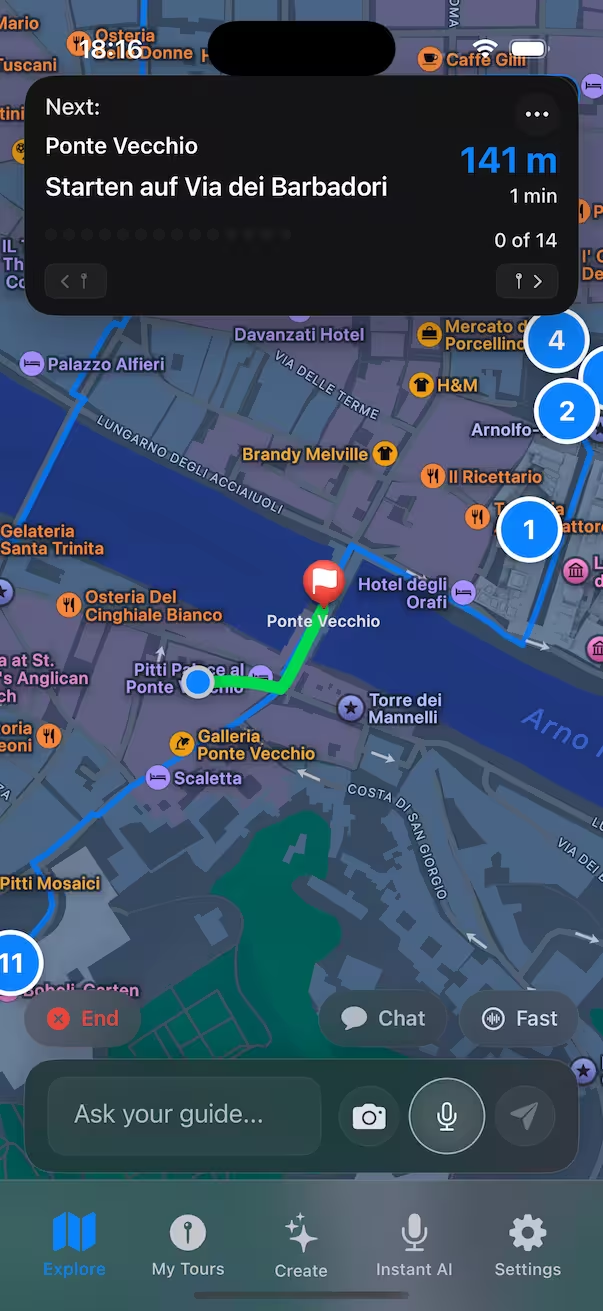
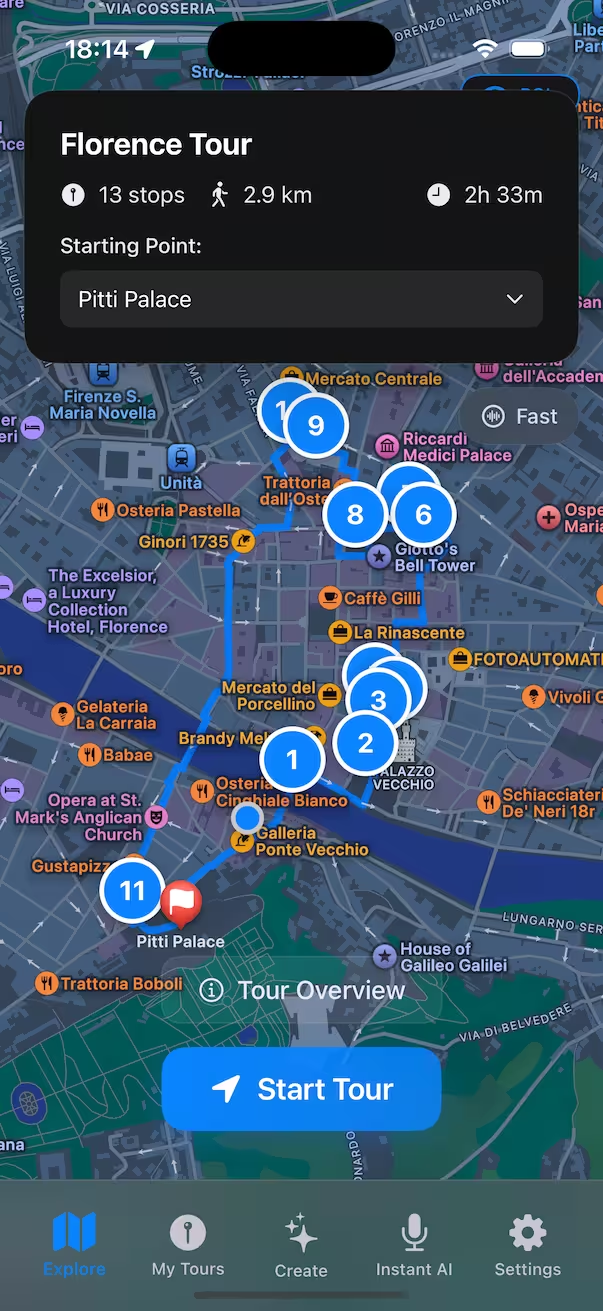
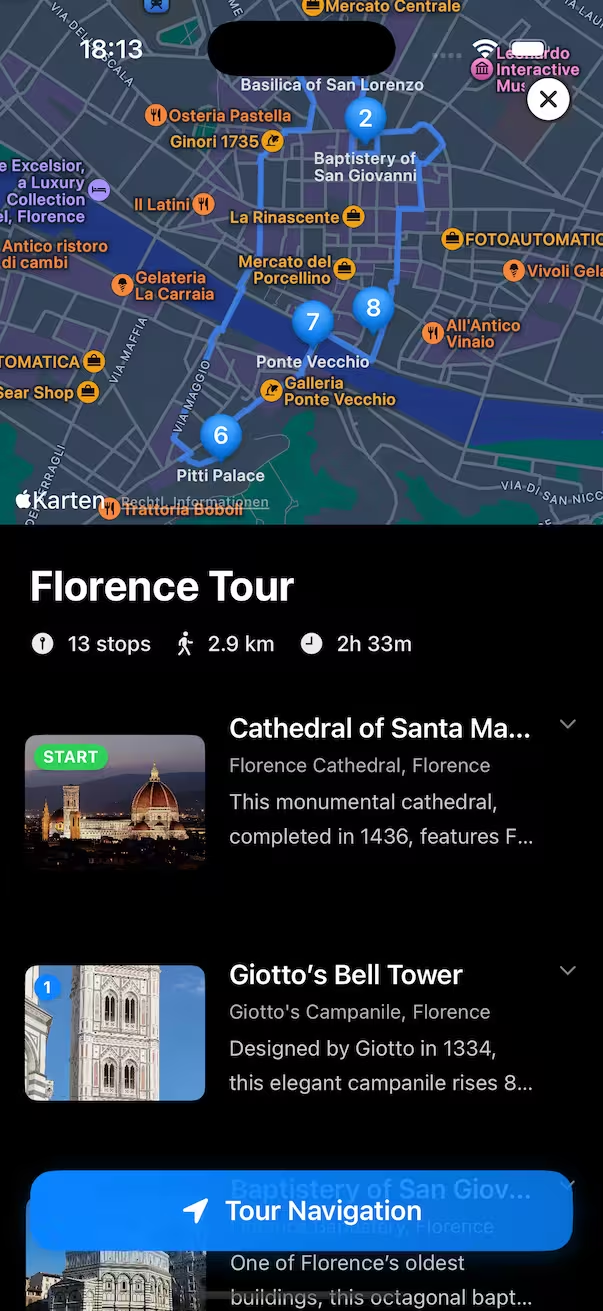
The classic Bucharest tour: 13 stops, 13.4 km, about 5 h on foot
Your live AI guide and the self-guided Bucharest route, together in your browser.