Self-Guided Walking Tour in Cusco

7 Stops 3.4 km ~1.8 hours
Start This Tour Free
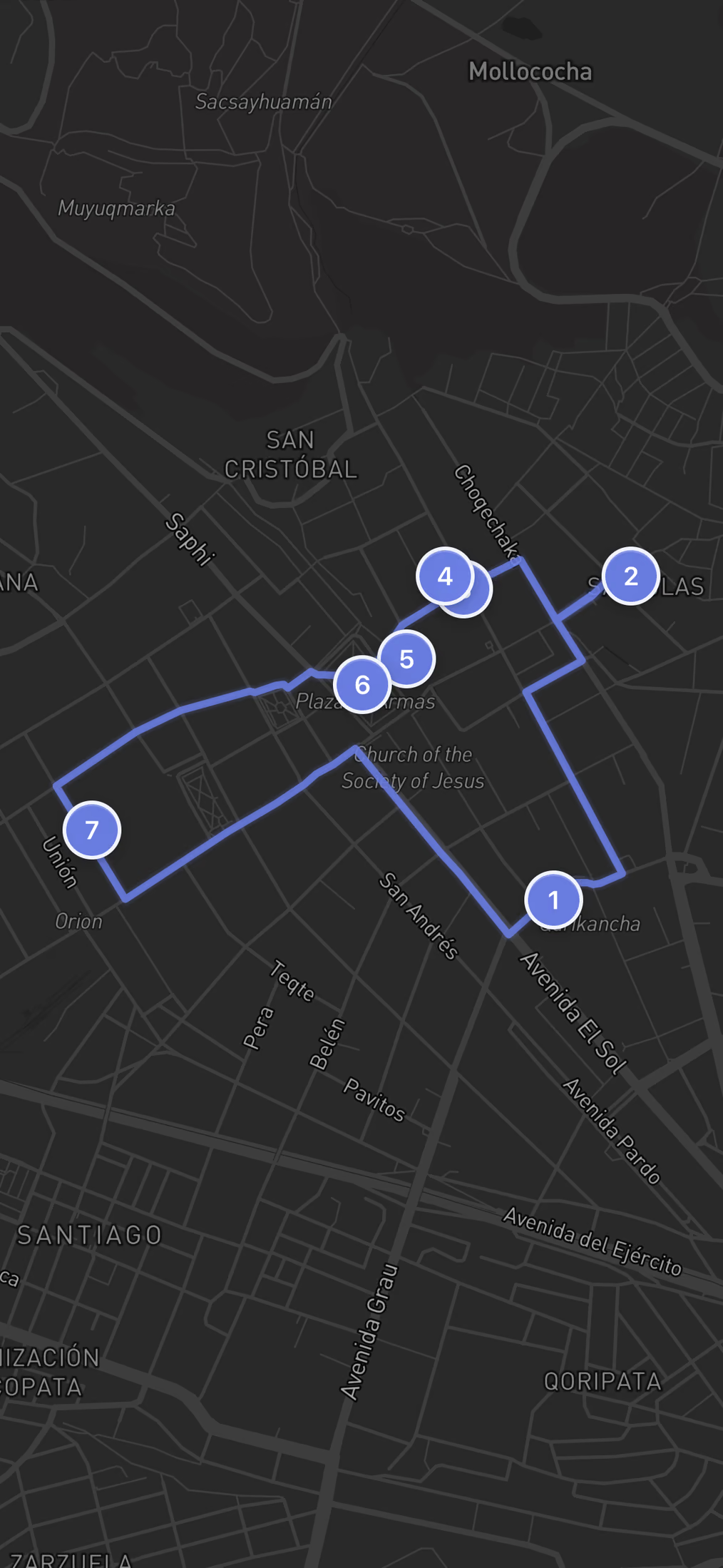
Walking tour route map of Cusco
Start This Tour Free

Why Walk Cusco? A Self-Guided Tour

This walking tour through Cusco covers 7 stops across 3.4 km in about 1.8 hours, threading through the ancient Inca capital at 3,400 meters elevation. You start at Qorikancha, the sun temple whose gold-plated walls once blinded anyone who entered, climb into the artisan quarter of San Blas, trace the precision stonework along Calle Hatunrumiyoc, and descend through the colonial heart around Plaza de Armas before finishing at the iron-framed San Pedro Market. The route is compact but steep. Cusco's altitude and cobblestone hills make even short distances feel longer, so pace yourself, carry water, and drink coca tea at breakfast. Morning starts beat the afternoon crowds at every stop on this route.

The Route: 7 Stops

Swipe through images or scroll names below

Scroll to explore →
1. Qorikancha
2. San Blas Church
3. Twelve-Angled Stone
4. Museum of Pre-Columbian Art
5. Cathedral of Cusco
6. Plaza de Armas
7. San Pedro Market

Route Map

Tap to load interactive map
AI Tourguide
Walk this exact route with a private AI guide.
Full GPS navigation, interactive stories, and a guide that answers all your questions. A private guide experience for just €5/hour.
Start This Tour

Your Cusco Walking Tour, Stop by Stop

  1. 1

    Qorikancha

    Qorikancha

    The tour begins at the most sacred site in the Inca Empire. Qorikancha was the sun temple whose interior walls once held 700 gold sheets, each weighing two kilograms. The Spanish stripped every sheet in 1533, but what they could not take was the engineering. The Inca stone foundations survived the catastrophic 1650 earthquake while the Santo Domingo convent built on top collapsed around them. Walk the lower corridors and study the joints: no mortar, no gaps, just stone cut so precisely a razor blade will not fit between blocks. The trapezoidal niches along the walls once held golden idols and offerings. The courtyard garden, where the Inca once planted ceremonial corn sculpted from gold and silver, now holds simple grass, but the scale of what was lost hits hard in this space. Open Monday to Saturday 8:30 AM to 5:30 PM, Sundays 2:00 to 5:00 PM. Visit early morning when sunlight floods the eastern chambers and tour groups have not yet arrived from the hotels.
    Learn more about Qorikancha →
    Hours
    Mon-Sat: 8:30 AM – 5:30 PM | Sun: 2:00 – 5:00 PM
    Price
    15 PEN

    8 min walk uphill

  2. 2

    San Blas Church

    San Blas Church

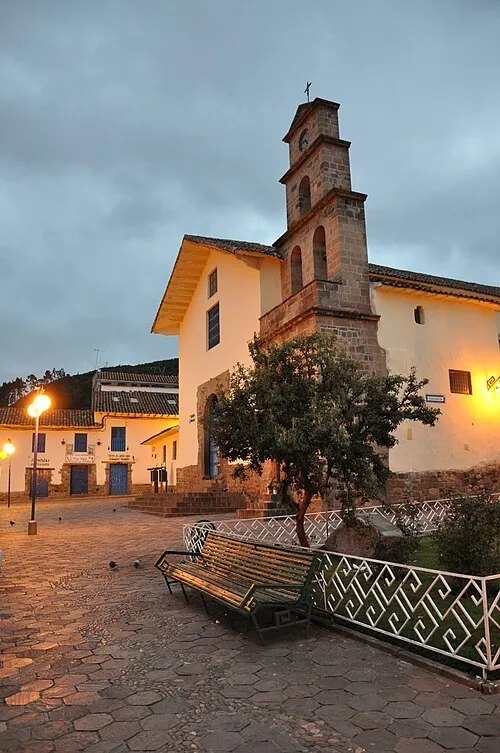
    The climb up Cuesta de San Blas is the steepest section of the entire tour. Take it slow at this altitude. You will pass ceramic workshops, weaving studios, and small galleries built directly into old Inca walls. The church sits at the top in Plazoleta de San Blas, a quiet square ringed by cafes. Founded in 1563, it holds what many consider the finest piece of colonial woodcarving in the Americas: a 17th-century pulpit carved from a single cedar trunk. The detail is staggering, with vines, saints, and faces emerging from the wood in layers so deep they seem impossible from one piece. Local legend claims the skull of the anonymous sculptor is embedded in the figure of Saint Paul at the top. Open Monday to Saturday 8:30 AM to 6:00 PM, closed Sundays. The church is small and fills quickly after 10:00 AM, so arriving before 9:30 gives you the space to study the pulpit up close without elbows.

    Learn more about San Blas Church →
    Hours
    Mon-Sat: 8:30 AM – 6:00 PM | Sun: Closed
    Price
    15 PEN (Circuito Religioso)

    5 min walk downhill

  3. 3

    Twelve-Angled Stone

    Twelve-Angled Stone

    Halfway down Calle Hatunrumiyoc, a small crowd gathered on the narrow sidewalk marks the spot. This single stone, fitted into the wall of what was once the palace of Inca Roca, has twelve perfectly cut angles. Each one interlocks with its neighbors without a drop of mortar. The precision is not decorative showmanship. Inca builders cut complex angles deliberately so walls would interlock and flex during earthquakes rather than shatter. The wall is now part of the Archbishop's Palace foundation, and the contrast between the Inca base and colonial structure above tells the same story you saw at Qorikancha. A guard usually stands nearby. This is a free, outdoor, street-side attraction visible at any hour. Take a moment to study the less famous stones flanking it: they are just as technically impressive, with fewer angles but the same impossible precision.

    Learn more about Twelve-Angled Stone →
    Hours
    Open 24/7
    Price
    Free

    2 min walk

  4. 4

    Museum of Pre-Columbian Art

    Museum of Pre-Columbian Art

    Just around the corner on Plaza de las Nazarenas, this museum occupies Casa Cabrera, a 16th-century colonial mansion built on the foundations of an Inca Yachaywasi, a school for Inca nobility. The collection spans nearly 3,000 years, from 1250 BC to 1532 AD, with 400 objects curated to show the artistic evolution of Andean civilizations before European contact. Gold work, ceramics, textiles, and carved wooden vessels fill intimate rooms organized by culture and era. The Nazca ceramics room and the gold room are the strongest sections. The building itself rewards attention: colonial arches sit on Inca stone bases, and the courtyard blends both architectural traditions seamlessly. This is a quieter alternative to the larger museums and rarely crowded. Allow 30 to 45 minutes inside. The courtyard cafe serves decent coffee and is a good place to sit if the altitude headache is creeping in.

    Learn more about Museum of Pre-Columbian Art →
    Hours
    Check locally
    Price
    20 PEN

    3 min walk

  5. 5

    Cathedral of Cusco

    Cathedral of Cusco

    The Cathedral dominates the northeast side of Plaza de Armas. Construction spanned 94 years starting in 1560, and the builders used massive red granite blocks hauled from the Sacsayhuaman fortress itself, recycling Inca stonework into a Spanish church. The interior is a showcase of the Cusquena school of painting, where indigenous artists blended Catholic iconography with Andean symbols. Find the famous Last Supper by Marcos Zapata: Jesus and the apostles are dining on cuy (guinea pig) and chicha (corn beer), a distinctly Cusquenian detail you will not find in any European cathedral. Silver altars weighing tons line the side chapels. The cathedral opens for free worship daily 6:00 to 7:00 AM and 8:00 to 9:00 AM. Those early worship hours let you see the interior without the tourist ticket price, though photography is restricted. The acoustics during morning mass, with voices echoing through the stone nave, are reason enough for the early start.

    Learn more about Cathedral of Cusco →
    Hours
    Daily: 6:00 – 7:00 AM, 8:00 – 9:00 AM
    Price
    25 PEN

    1 min walk

  6. 6

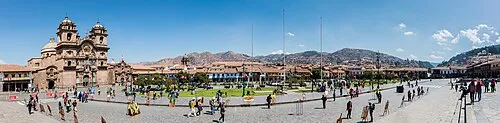
    Plaza de Armas

    Plaza de Armas

    Step outside the Cathedral and you are standing in what was once the ceremonial heart of the entire Inca Empire. At 3,399 meters elevation, this square was originally double its current size. The Inca called it Huacaypata and during major festivals the ground was covered with sand hauled from the Pacific coast, over 600 kilometers away. Today the arcaded colonial buildings ring the square with restaurants, travel agencies, and shops, but the proportions remain grand. The Cathedral on one side and the Jesuit Iglesia de la Compania on the other create a frame that rewards photographs at any hour. Open 24 hours and free. Evening is the best time here: both churches light up, the fountain glows, and the second-floor balcony restaurants offer views across the entire plaza. Skip the ground-floor tourist restaurants for food. The balcony seats are for the view and a pisco sour only.

    Learn more about Plaza de Armas →
    Hours
    Open 24/7
    Price
    Free

    5 min walk

  7. 7

    San Pedro Market

    San Pedro Market

    The tour ends at Cusco's culinary nerve center. San Pedro Market was built in 1925 with an iron structure designed by Gustave Eiffel's company, and walking inside feels like entering a cathedral of food. Over 1,000 vendors sell everything from fresh tropical fruit juices blended to order to dried alpaca meat, enormous wheels of Andean cheese, and medicinal herbs prescribed by curanderas at stalls near the back. The juice ladies near the main entrance will blend anything you point at. For a proper meal, the food stalls in the center serve plates of lomo saltado, aji de gallina, and cuy chactado at prices far below any restaurant near the plaza. The second floor has artisan crafts at better prices than the tourist shops around Plaza de Armas. Go hungry: this is the best and cheapest eating in Cusco. The market runs all day, but the busiest and most atmospheric hours are between 7:00 and 11:00 AM when local families do their shopping.

    Learn more about San Pedro Market →
    Hours
    Mon-Sat: 6:30 AM – 6:00 PM | Sun: 6:30 AM – 4:00 PM
    Price
    Free (entry)
AI Tourguide
Walk this exact route with a private AI guide.
Full GPS navigation, interactive stories, and a guide that answers all your questions. A private guide experience for just €5/hour.
Start This Tour

Self-Guided Tour vs. Group Tour in Cusco

Cusco's historic center packs 3,000 years of continuous habitation into a walkable grid where Inca walls literally support colonial churches. This tour follows that layering: you see gold-plated temple foundations beneath Spanish convents, earthquake-proof stonework that modern engineers still study, and a culinary market inside a structure designed by the builders of the Eiffel Tower. The altitude at 3,400 meters and the steep cobblestone streets make this a physical experience, not just a visual one. Every block forces you to slow down, which is exactly the pace this city rewards. The concentration of Inca and colonial heritage within 3.4 km is unmatched anywhere in South America. A guided group tour typically costs 80 to 150 PEN for a half day, and you will be rushed through each stop on someone else's schedule. Walking on your own, you can spend an hour at the museum or twenty minutes, and you can pause for coca tea whenever the altitude demands it.

Group Tour AI Self-Guided
Price €25–€50 per person €5/hour or €20 all-inclusive
Flexibility Fixed schedule Start anytime, skip stops
Languages 1–2 languages 11 languages
Pace Group pace Your own pace

How Long Does This Cusco Tour Take?

Our route covers 3.4 km with 7 stops and takes approximately 1.8 hours at a relaxed pace.

The route covers 3.4 km through the historic center, all on cobblestone streets with moderate elevation changes. Pure walking time is about 40 minutes, but at 3,400 meters, everything takes longer. Plan for 2.5 to 3.5 hours with time inside each site. Qorikancha deserves 45 minutes. The Museum of Pre-Columbian Art needs 30 to 45 minutes. San Blas Church and the Twelve-Angled Stone are quicker stops. San Pedro Market can absorb 30 minutes or more if you sit down to eat. The natural break point is the museum courtyard cafe at the midpoint of the route, or any of the small cafes around Plazoleta de San Blas.

Tips for Walking in Cusco

AI Tourguide
Walk this exact route with a private AI guide.
Full GPS navigation, interactive stories, and a guide that answers all your questions. A private guide experience for just €5/hour.
Start This Tour

AI Audio Guide for This Tour

Follow the complete route with GPS navigation, skip stops you have already visited, and get real-time walking directions between each site. The app works offline, which matters in Cusco where mobile signal drops inside thick-walled colonial buildings and underground museum spaces.

AI Audio Guide Stories, history and fun facts narrated as you walk. No earpiece rental needed.
GPS Navigation Turn-by-turn directions so you never get lost between stops.
Ask Anything Curious about a building you pass? Ask your AI guide on the spot.
11 Languages Switch language anytime. No separate tour needed.
Start This Tour Free

Common Questions

Yes, but pace yourself. The route is just 3.4 km, so distance is not the issue. The altitude at 3,400 meters means less oxygen, and the steep climb to San Blas will leave most people breathless on their first day. Ideally, do this tour on your second or third day in Cusco after some acclimatization. Drink coca tea, walk slowly, and rest at stops. If you feel dizzy or nauseous, sit down immediately and sip water.
You can walk this route independently without difficulty. The stops are well-signed, the streets are safe during daylight hours, and the entire route stays within Cusco's compact historic center. A guide adds historical context at Qorikancha and the Cathedral, but the descriptions in the app cover the same factual detail at each stop. Save your money for a guide at Sacsayhuaman or the Sacred Valley, where the ruins are spread out and context matters more.
The dry season from May to September offers the most reliable weather, with clear mornings and cold evenings. June to August brings the most tourists but also the best walking conditions. The rainy season from November to March means afternoon downpours most days, but mornings are usually clear, so starting early still works well. Avoid the week around Inti Raymi in late June if you dislike crowds, or plan around it if you want to see the city at its most festive.
No booking needed. This self-guided tour is available anytime. Open the route on your phone and start walking. The AI audio guide works instantly, no reservation required.
The AI audio guide is available in 11 languages: English, German, French, Spanish, Italian, Japanese, Chinese, Portuguese, Danish, Norwegian, and Swedish.
Yes. Skip any stop, spend extra time at places you like, or start the route from any point. You can also ask the AI to suggest a shorter route.
AI Tourguide
Curated by AI Tourguide GPS-verified routes, reviewed and updated regularly.
Last verified March 2026