Self-Guided Walking Tour in Nara

8 Stops 7.1 km ~2.7 hours
Start This Tour Free
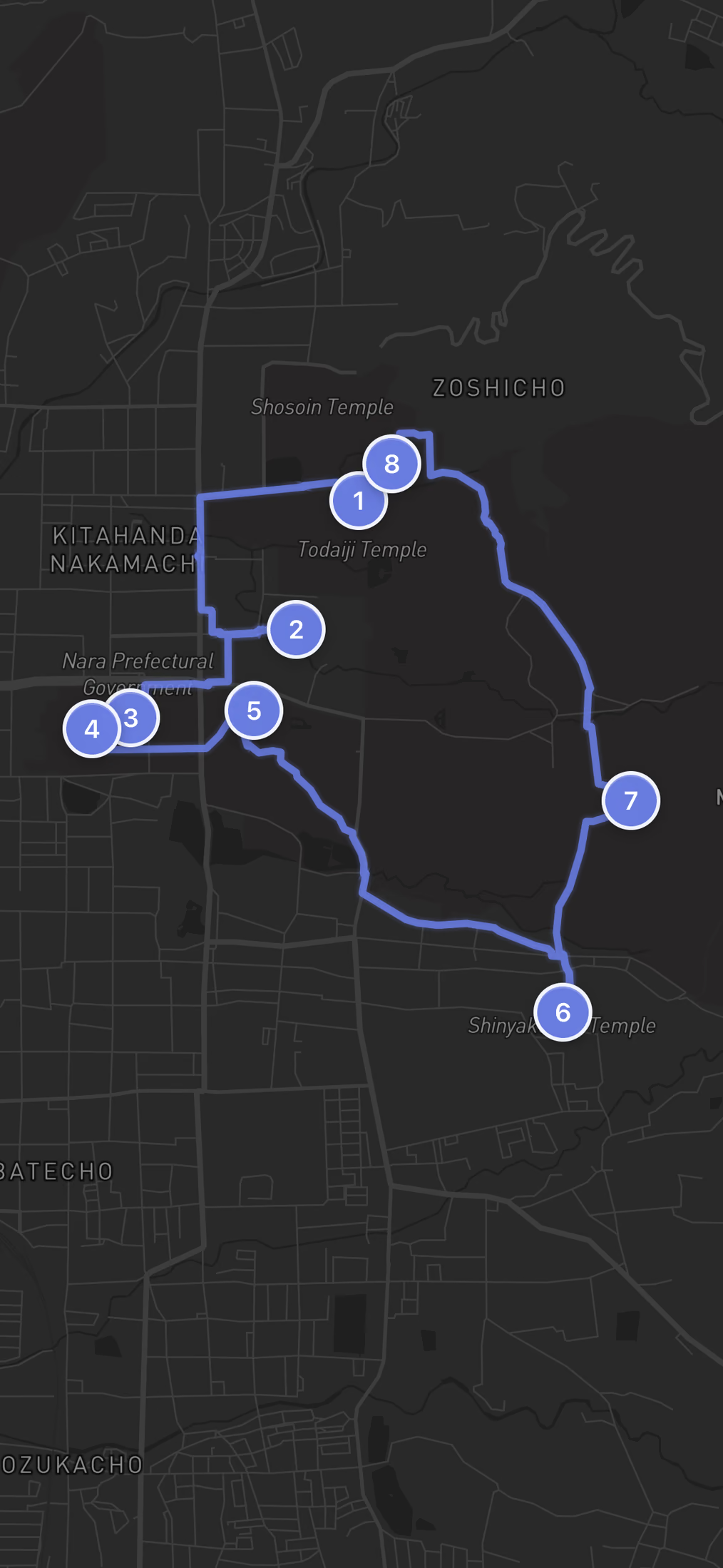
Walking tour route map of Nara
Start This Tour Free

Why Walk Nara? A Self-Guided Tour

This route crosses Nara's ancient temple belt from the Great Buddha at Todai-ji south through deer-filled parkland to Kasuga Grand Shrine, detours into a quiet residential neighborhood for a hidden 8th-century temple, then climbs back to a hillside balcony with panoramic views across the entire basin. Eight stops, 7.1 kilometers, roughly 2.5 to 3 hours of walking. Plan for a full day if you give each site the time it deserves.

What makes walking this route better than taking a bus between the big-name sights is the connective tissue. Nara's deer park covers 660 hectares, and the temples sit inside it rather than behind walls. Walking reveals how the sacred landscape was designed: Todai-ji faces the morning sun, Kasuga Shrine sits at the forest's edge where wild deer still sleep between moss-covered lanterns, and Nigatsu-do perches on the hillside above everything, placed there specifically so monks could watch the sunrise over the mountains. More than 1,200 deer roam freely across the entire route, protected as divine messengers since the 8th century. Buy a pack of shika senbei (deer crackers, 200 JPY) from any licensed vendor and you will be surrounded in seconds.

The Route: 8 Stops

Swipe through images or scroll names below

Scroll to explore →
1. Todai-ji
2. Isuien Garden
3. Kofukuji National Treasure Hall
4. Kofukuji Temple
5. Nara National Museum
6. Shin-Yakushiji Temple
7. Kasuga Grand Shrine
8. Nigatsu-do Hall

Route Map

Tap to load interactive map
AI Tourguide
Walk this exact route with a private AI guide.
Full GPS navigation, interactive stories, and a guide that answers all your questions. A private guide experience for just €5/hour.
Start This Tour

Your Nara Walking Tour, Stop by Stop

  1. 1

    Todai-ji

    Todai-ji

    The Nandaimon gate announces the scale before you even reach the main hall. Two 8-meter wooden guardian statues, carved by the master sculptor Unkei in 1203 from over 3,000 pieces of assembled cypress, stand in the gate's niches with veins bulging from their arms. Walk through and the Great Buddha Hall fills the end of a wide gravel courtyard. The building is 57 meters wide and 49 meters high. Inside, a 15-meter bronze Buddha cast in 752 AD sits cross-legged beneath the wooden rafters, surrounded by smaller attendant figures. Look for the pillar near the rear right with a rectangular hole at its base, sized to match the Buddha's nostril at roughly 35 by 30 centimeters. Squeezing through is said to grant enlightenment in your next life. The line on weekends can hit 20 minutes, but it moves quickly. Open daily 7:30 AM to 5:30 PM. Arrive before 8:30 AM and the courtyard will be nearly empty. By 10:00 AM, school groups flood in. Budget 30 to 45 minutes. Walk behind the main hall where few tourists venture for a quieter view of the compound.

    Learn more about Todai-ji →
    Hours
    Daily: 7:30 AM – 5:30 PM
    Price
    600 JPY

    5 min walk to next stop

  2. 2

    Isuien Garden

    Isuien Garden

    After the overwhelming scale of Todai-ji, Isuien feels like exhaling. Two gardens joined into one: the front section dates to the 1670s, designed around a naturalistic pond with a small island, while the rear garden from 1899 uses the silhouette of Mount Wakakusa and the roofline of Todai-ji as borrowed scenery, a classical technique called shakkei that makes the garden feel as if it extends into the mountains behind it. The stepping stones crossing the ponds are repurposed millstones from the original owner's Edo-period textile business. A teahouse on the edge of the rear garden serves matcha with a seasonal wagashi sweet. The view from that spot, looking across the water toward the distant temple roofs, is one of the most serene in Nara. Admission is 650 JPY. Open daily 9:30 AM to 4:00 PM, closed Tuesdays. Twenty to thirty minutes covers both gardens at a contemplative pace. The quiet here is striking given how close you are to the tourist bustle on the Todai-ji approach road.

    Learn more about Isuien Garden →
    Hours
    Mon: 9:30 AM – 4:00 PM | Tue: Closed | Wed-Sun: 9:30 AM – 4:00 PM
    Price
    650 JPY

    5 min walk to next stop

  3. 3

    Kofukuji National Treasure Hall

    Kofukuji National Treasure Hall

    The concrete museum building looks unremarkable from outside, but what it holds inside is among the finest Buddhist sculpture anywhere in Japan. The centerpiece is the Ashura statue from 734 AD, standing 153.4 centimeters tall with three faces and six arms, its expression somehow both fierce and tender. Recent CT scans revealed a hidden second face beneath the lacquer surface, more aggressive than the visible one, suggesting the sculptor changed his mind during the carving process. Around the hall, you find bronze Buddha heads salvaged from temple fires over the centuries, each showing a distinct carving style spanning 500 years of artistic evolution. Open daily 9:00 AM to 5:00 PM. The interior lighting is deliberately dim, designed to show the sculptures as they would have appeared by oil lamp in their original temple halls. No photography permitted. Budget 20 to 30 minutes. The cool, quiet space is a welcome refuge on hot summer days. Exit and turn left toward the main Kofukuji Temple grounds.

    Learn more about Kofukuji National Treasure Hall →
    Hours
    Daily: 9:00 AM – 5:00 PM
    Price
    700 JPY

    3 min walk to next stop

  4. 4

    Kofukuji Temple

    Kofukuji Temple

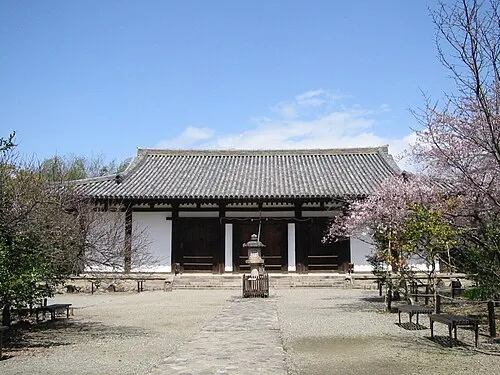
    The Five-Story Pagoda dominates the skyline. At 50.1 meters, it is the second-tallest wooden pagoda in Japan. Originally built in 730, it burned and was rebuilt five times. The current structure dates to 1426 and uses interlocking wooden joints without a single nail, a construction method flexible enough to have survived earthquakes that toppled modern reinforced buildings nearby. Walk south to Sarusawa Pond for the best angle: on still mornings, the pagoda reflects perfectly in the water, and late afternoon sunlight catches the warm wood against the sky. Kofukuji was once the most powerful temple in Nara, the religious headquarters of the Fujiwara clan, with over 175 buildings at its peak. Today a handful survive, but the recently reconstructed Central Golden Hall, completed in 2018 using traditional techniques, gives you a sense of the original ambition. The grounds are open 24 hours and free to walk through. Interior halls open daily 9:00 AM to 5:00 PM. Spend 15 to 20 minutes. The deer here are particularly bold because tourists feed them near the pagoda.

    Learn more about Kofukuji Temple →
    Hours
    Daily: 9:00 AM – 5:00 PM
    Price
    Free (grounds)

    5 min walk to next stop

  5. 5

    Nara National Museum

    Nara National Museum

    The original 1894 building is a handsome French Renaissance structure with a green copper roof that looks transplanted from a Parisian boulevard. Inside, the museum specializes entirely in Buddhist art, making it unique among Japan's national museums. The permanent collection includes a 12th-century hell scroll painted with disturbing precision, wooden Buddha sculptures of extraordinary delicacy, and metalwork spanning a thousand years of temple craft. The underground passage connecting the old and new wings doubles as a gallery in its own right. Closed Mondays. Open Tuesday through Sunday 9:30 AM to 5:00 PM. The annual Shosoin Exhibition in late October through early November draws enormous crowds to see treasures from the imperial storehouse that are displayed only during this two-week window. Outside that period, the galleries are pleasantly uncrowded. Budget 30 to 45 minutes, or longer if Buddhist sculpture genuinely interests you. The museum shop in the new wing sells high-quality art prints worth browsing. The museum cafe on the ground floor is a decent rest stop.

    Learn more about Nara National Museum →
    Hours
    Mon: Closed | Tue-Sun: 9:30 AM – 5:00 PM
    Price
    700 JPY

    15 min walk to next stop

  6. 6

    Shin-Yakushiji Temple

    Shin-Yakushiji Temple

    The walk south from the museum takes you away from the tourist corridor into the quiet Takabatake neighborhood, where traditional wooden houses line narrow lanes and the pace slows dramatically. Shin-Yakushiji sits behind a low earthen wall on a residential street. Empress Komyo founded it in 747 AD to pray for her husband Emperor Shomu's recovery from an eye disease, and the connection is visible in the central Buddha statue's unusually large, wide-open eyes that seem to follow you across the dim hall. Surrounding the Buddha stand twelve divine generals, the Juni Shinsho, in a protective circle. Eleven of the twelve are original 8th-century clay figures, making this one of the oldest intact sculptural ensembles in Japan. The temple bell outside bears deep scratches said to have been left by a demon. Admission is 600 JPY. Open daily 9:00 AM to 5:00 PM. Few tourists make it here, so you may have the hall entirely to yourself. Fifteen to twenty minutes is enough to take in the sculptures. The stillness is a sharp contrast to the bustle at Todai-ji earlier.

    Learn more about Shin-Yakushiji Temple →
    Hours
    Daily: 9:00 AM – 5:00 PM
    Price
    600 JPY

    15 min walk to next stop

  7. 7

    Kasuga Grand Shrine

    Kasuga Grand Shrine

    The approach is half the experience. A wide gravel path cuts through dense primeval forest, lined on both sides by roughly 2,000 stone lanterns, many covered in thick moss and tilted with centuries of settling. Deer sleep in the shade between them, unbothered by passing visitors. The shrine itself, established in 768 AD as the tutelary shrine of the Fujiwara clan, is painted a striking vermilion that contrasts sharply with the dark green canopy. Another 1,000 bronze lanterns hang from the eaves of the sanctuary buildings. Twice a year, during the Mantoro festivals in February and August, all 3,000 lanterns are lit simultaneously. An 800-year-old wisteria tree near the main hall produces flower clusters that hang over a meter long during the late April to mid-May blooming season. Open daily 7:00 AM to 5:00 PM. Budget 30 to 40 minutes for the approach path and shrine grounds. The deer here are calmer than near Todai-ji, accustomed to the forest shade rather than tourist snacks.

    Learn more about Kasuga Grand Shrine →
    Hours
    Daily: 7:00 AM – 5:00 PM
    Price
    Free (inner shrine 500 JPY)

    10 min walk to next stop

  8. 8

    Nigatsu-do Hall

    Nigatsu-do Hall

    A stone staircase climbs through the trees east of the Great Buddha Hall to this sub-temple of Todai-ji, perched on the hillside above everything you have walked through today. The wooden balcony wraps around the front of the hall and delivers the finest panoramic view in Nara: the city's old rooftops spread below, the green expanse of the deer park stretches toward Kofukuji's pagoda, and on clear days the mountains of Ikoma and Nijo form the horizon. The hall dates to 752 AD, though the current structure was rebuilt in 1669 after a fire. Every March, monks perform the Omizutori ceremony here, swinging enormous flaming torches of bundled cedar from the balcony and sending cascades of sparks into the darkness below. The ritual has run unbroken for over 1,270 years. Free to visit and open around the clock. Late afternoon is the ideal time, when golden light washes across the view and the tour groups have left. Spend 15 to 20 minutes sitting on the wooden deck. This is the right place to end the day.

    Learn more about Nigatsu-do Hall →
    Hours
    Open 24/7
    Price
    Free
AI Tourguide
Walk this exact route with a private AI guide.
Full GPS navigation, interactive stories, and a guide that answers all your questions. A private guide experience for just €5/hour.
Start This Tour

Self-Guided Tour vs. Group Tour in Nara

Guided group tours of Nara typically cost 8,000 to 15,000 JPY per person for a half day, covering Todai-ji, the deer park, and sometimes Kasuga Shrine. Private guides charge 15,000 to 30,000 JPY. Walking this route on your own, you pay only individual admission fees: 650 JPY for Isuien Garden and 600 JPY for Shin-Yakushiji Temple, for a total of 1,250 JPY at the two ticketed sites. The other six stops are free to enter.

The real advantage is time. Todai-ji deserves 45 minutes of slow looking, but guided tours give you 20 before marching you to the next stop. Kasuga Shrine's lantern-lined forest path takes 15 minutes to walk properly, but groups rush through in five. No guided tour includes Shin-Yakushiji or Nigatsu-do Hall, two of the most atmospheric stops on this entire route, because they sit outside the standard bus-tour circuit. On your own, you can reach Todai-ji at 7:30 AM when it opens and have the Great Buddha Hall nearly to yourself. You can sit in Isuien Garden for as long as the borrowed scenery holds your attention. You can detour through the Takabatake neighborhood and discover a temple that most visitors to Nara never know exists.

The honest tradeoff: Nara's historical context is deep, and a knowledgeable guide adds genuine value at sites like Kofukuji and Kasuga Shrine where the Fujiwara clan's political and religious power shaped centuries of Japanese culture. The app fills that gap with background information at each stop, but it is not the same as a live storyteller.

Group Tour AI Self-Guided
Price €25–€50 per person €5/hour or €20 all-inclusive
Flexibility Fixed schedule Start anytime, skip stops
Languages 1–2 languages 11 languages
Pace Group pace Your own pace

How Long Does This Nara Tour Take?

Our route covers 7.1 km with 8 stops and takes approximately 2.7 hours at a relaxed pace.

The 7.1-kilometer route takes about 2.5 to 3 hours of pure walking time, but plan for 4 to 5 hours with proper stops at each site. Todai-ji and Kasuga Grand Shrine each deserve 30 to 45 minutes. The National Treasure Hall and Nara National Museum need 20 to 45 minutes depending on your interest in Buddhist sculpture. The longest continuous walk is the 15-minute stretch from the museum south to Shin-Yakushiji, heading into the quiet Takabatake neighborhood.

For a meal break, the best timing falls between stops 4 and 5, after Kofukuji and before the museum. Higashimuki Shopping Street, a covered arcade a few minutes west of Kofukuji, has udon shops, kakinoha-zushi restaurants (persimmon leaf sushi, a Nara specialty, around 1,000 JPY for a set), and cafes. Nakatanidou on Sanjo-dori puts on a mochi-pounding performance where staff hammer glutinous rice at remarkable speed, producing fresh yomogi mochi for about 200 JPY per piece.

The stops that reward the most time are Todai-ji (the sheer scale of the Buddha repays extended looking, and the area behind the main hall is peaceful), Kasuga Grand Shrine (the forest approach should not be rushed), and Nigatsu-do (the sunset view from the balcony is worth timing your arrival for golden hour).

Tips for Walking in Nara

AI Tourguide
Walk this exact route with a private AI guide.
Full GPS navigation, interactive stories, and a guide that answers all your questions. A private guide experience for just €5/hour.
Start This Tour

AI Audio Guide for This Tour

Standing at Kintetsu Nara Station trying to figure out which direction to walk first? Open the AI Tour Guide app and the full 8-stop route appears on your screen, from the Great Buddha to the hilltop view at Nigatsu-do. The app works offline, so the forested paths around Kasuga Shrine where your phone signal drops are fully covered.

AI Audio Guide Stories, history and fun facts narrated as you walk. No earpiece rental needed.
GPS Navigation Turn-by-turn directions so you never get lost between stops.
Ask Anything Curious about a building you pass? Ask your AI guide on the spot.
11 Languages Switch language anytime. No separate tour needed.
Start This Tour Free

Common Questions

Most visitors treat Nara as a half-day trip from Kyoto or Osaka, rushing through Todai-ji and the deer park before catching a train back. That covers the Great Buddha, but you miss the best parts. Kasuga Shrine's forest path, the hidden sculptures at Shin-Yakushiji, and the sunset view from Nigatsu-do all require slowing down. With this walking route, a full day lets you cover all 8 stops at a comfortable pace with a proper lunch break. The 35-minute Kintetsu train from Kyoto or 40 minutes from Osaka makes it easy to arrive early and leave after sunset.
Rain actually improves several stops on this route. The moss on Kasuga Shrine's stone lanterns turns vivid green, the gardens at Isuien gain a misty depth, and the crowds thin dramatically. Todai-ji's Great Buddha Hall, the National Treasure Hall, and the Nara National Museum are fully sheltered indoor stops where you can extend your time. Buy a clear vinyl umbrella at any convenience store for about 500 JPY. The main park paths can get muddy on unpaved sections, and the stone staircase to Nigatsu-do becomes slippery in heavy rain. Wear shoes with grip.
Start between 7:30 and 8:00 AM. Todai-ji opens at 7:30 and the first hour is the quietest it will be all day. By 10:00 AM, school groups and tour buses arrive and the courtyard becomes chaotic. Starting early means you reach Kasuga Grand Shrine around midday when it is less crowded, and you arrive at Nigatsu-do in late afternoon for the best light. Avoid weekends and Japanese holidays entirely if you can. Weekday mornings in Nara feel like a completely different city.
No booking needed. This self-guided tour is available anytime. Open the route on your phone and start walking. The AI audio guide works instantly, no reservation required.
The AI audio guide is available in 11 languages: English, German, French, Spanish, Italian, Japanese, Chinese, Portuguese, Danish, Norwegian, and Swedish.
Yes. Skip any stop, spend extra time at places you like, or start the route from any point. You can also ask the AI to suggest a shorter route.
AI Tourguide
Curated by AI Tourguide GPS-verified routes, reviewed and updated regularly.
Last verified March 2026