Self-Guided Walking Tour in Osaka

9 Stops 10.3 km ~3.6 hours
Start This Tour Free
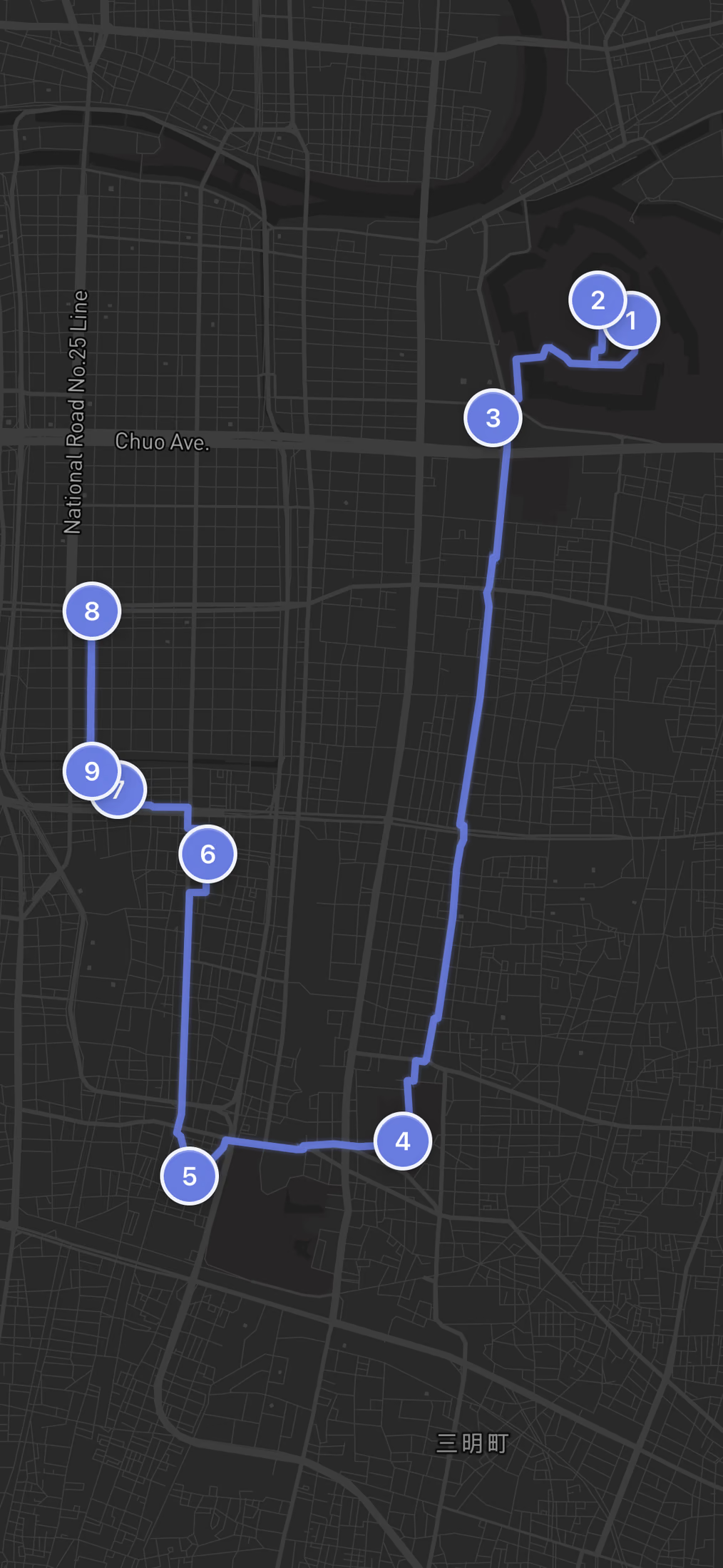
Walking tour route map of Osaka
Start This Tour Free

Why Walk Osaka? A Self-Guided Tour

Osaka built its reputation on food and personality, and this walking tour gives you both in a single 10.3 km loop through the city's most rewarding neighborhoods. You start at Osaka Castle, the 1583 fortress that anchored Hideyoshi's unification of Japan, then work south through the castle park and a museum that puts the entire city timeline in context. From there the route drops into the ancient temple district around Shitenoji, crosses through the neon chaos of Shinsekai, and finishes in the tight alleys of Dotonbori where the canal reflects a wall of signs advertising takoyaki, kushikatsu, and everything in between.

Nine stops, roughly 3.5 hours of walking with time for food breaks at nearly every turn. The route connects three train lines, so you can bail out at any point if your feet give up before your appetite does. Osaka rewards the curious more than the organized. Half the fun is ducking into a side street because something smells good. This walk gives you the framework. The detours are up to you.

The Route: 9 Stops

Swipe through images or scroll names below

Scroll to explore →
1. Osaka Castle
2. Osaka Castle Park
3. Osaka Museum of History
4. Shitenoji Temple
5. Shinsekai & Tsutenkaku Tower
6. Kuromon Ichiba Market
7. Hozenji Yokocho
8. Shinsaibashi
9. Dotonbori

Route Map

Tap to load interactive map
AI Tourguide
Walk this exact route with a private AI guide.
Full GPS navigation, interactive stories, and a guide that answers all your questions. A private guide experience for just €5/hour.
Start This Tour

Your Osaka Walking Tour, Stop by Stop

  1. 1

    Osaka Castle

    Osaka Castle

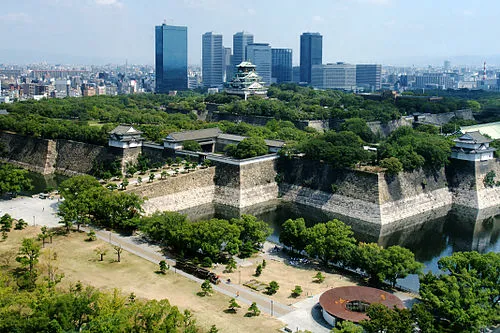
    The castle tower rises eight stories above the largest moat system in Japan, and the view from the observation deck on the top floor spans from the Ikoma mountains to the harbor cranes of Osaka Bay. Toyotomi Hideyoshi built the original in 1583 as the headquarters for his campaign to unify Japan. The current reconstruction dates to 1931 and houses a museum inside that walks you through the Siege of Osaka and the rise and fall of the Toyotomi clan. Admission is 1,200 JPY, and the castle is open daily from 9:00 AM to 6:00 PM. The exterior is the photogenic part. The interior is essentially an elevator and display cases. If you only want the grounds and the moat views, you can skip the ticket entirely. Cherry blossom season (late March to early April) turns the surrounding park into one of Osaka's premier hanami spots with over 3,000 trees. Get your photos from the southwest side near Nishinomaru Garden for the best angle with the tower framed above the stone walls.
    Learn more about Osaka Castle →
    Hours
    Daily: 9:00 AM – 6:00 PM
    Price
    600 JPY

    5 min walk

  2. 2

    Osaka Castle Park

    Osaka Castle Park

    The 105-hectare park surrounding the castle is where most visitors end up spending more time than inside the tower itself. The park is free, open around the clock, and full of joggers, street performers, and families picnicking on the lawns. The real value is the original Edo-period fortifications: massive stone walls fitted together without mortar, turret gates, and double moats that once made this compound virtually impregnable. Walking along the outer moat gives you a better sense of the castle's military scale than anything inside the museum. Nishinomaru Garden (200 JPY separate entry) is the best cherry blossom viewing spot, with roughly 300 trees lighting up against the castle backdrop each spring. The plum grove near the garden blooms in late February, about a month before the cherries, and draws almost no tourists. Head south from the park toward the next stop. The walk takes you along tree-lined paths before crossing into the city grid.

    Learn more about Osaka Castle Park →
    Hours
    Open 24/7
    Price
    Free

    8 min walk

  3. 3

    Osaka Museum of History

    Osaka Museum of History

    This modern high-rise sits right next to the castle, and the 10th floor opens with a life-sized recreation of the ancient Naniwa Palace throne room. From there you descend floor by floor through the city's timeline: medieval commerce, Edo-period kabuki theater, and modern urban development. The views of Osaka Castle from the upper floors are among the best you will get anywhere, with the tower framed perfectly through floor-to-ceiling windows at the same height. Admission is 600 JPY, and the museum is open 9:30 AM to 5:00 PM daily except Tuesdays. Plan 45 minutes to an hour. The excavated ruins of Naniwa Palace, the 7th-century precursor to Osaka, are visible in the basement and outside the building. This is the stop that gives context to everything else on the route. Before visiting the castle park you see the military fortress. Here you understand why Osaka became Japan's merchant capital.

    Learn more about Osaka Museum of History →
    Hours
    Mon: 9:30 AM – 5:00 PM | Tue: Closed | Wed-Sun: 9:30 AM – 5:00 PM
    Price
    600 JPY

    15 min walk

  4. 4

    Shitenoji Temple

    Shitenoji Temple

    Founded in 593 AD by Prince Shotoku, Shitenoji is one of the oldest Buddhist temples in Japan, predating most European cathedrals by centuries. The temple compound follows the original Shitennoji-style layout, with the main gate, five-story pagoda, main hall, and lecture hall aligned on a single straight axis. The buildings have been rebuilt multiple times after fires and war, but the layout has remained unchanged for over 1,400 years. Admission to the inner precinct costs 500 JPY, and the temple is open daily from 8:30 AM to 4:00 PM. Compared to the sensory overload of Dotonbori or Shinsekai later on this route, Shitenoji is quiet and contemplative. The gardens around the pagoda provide genuine calm in a city that rarely sits still. If you happen to visit on the 21st of any month, the Kobo Daishi flea market fills the temple grounds with hundreds of stalls selling antiques, food, and secondhand goods starting around 8:00 AM.

    Learn more about Shitenoji Temple →
    Hours
    Daily: 8:30 AM – 4:00 PM
    Price
    300 JPY

    12 min walk

  5. 5

    Shinsekai & Tsutenkaku Tower

    Shinsekai & Tsutenkaku Tower

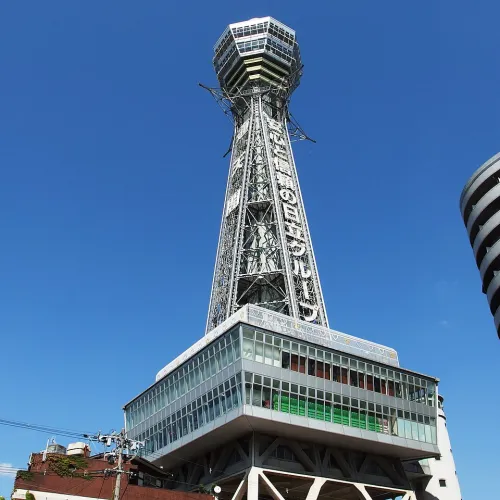
    Shinsekai means "New World," which is deeply ironic because the neighborhood looks like it has not changed since the 1960s. The district opened in 1912 with Osaka's first amusement park, and the current Tsutenkaku Tower (rebuilt in 1956, 103 meters tall) still anchors the skyline. Beneath it, the streets are a tangle of kushikatsu joints, pachinko parlors, and retro signage glowing in every shade of neon. The food is the reason to come. Kushikatsu (deep-fried skewers of meat, seafood, and vegetables) was invented here, and the neighborhood has dozens of shops serving it. The golden rule at every kushikatsu place: never double-dip in the communal sauce. Try Yaekatsu or Tengu instead of the famous Daruma chain for the same quality with shorter waits. Janjan Yokocho, the narrow alley at the south end, has old-school shogi parlors and tiny bars that have operated for half a century. Evenings are best, when the lanterns glow and the beer flows.

    Learn more about Shinsekai & Tsutenkaku Tower →
    Hours
    Daily: 9:00 AM – 9:45 PM
    Price
    900 JPY

    15 min walk

  6. 6

    Kuromon Ichiba Market

    Kuromon Ichiba Market

    Kuromon Ichiba has been Osaka's main fresh market for over 190 years, earning the nickname "Osaka's Kitchen." The covered arcade stretches about 580 meters and holds 150 to 160 shops selling seafood, fruit, meat, and prepared food. In recent years it has shifted heavily toward tourists, with stalls offering grilled scallops, sea urchin, wagyu skewers, and fresh sashimi meant to eat on the spot. Most individual items run between 500 and 2,000 JPY. The quality remains high despite the tourist tilt. Go before 11:00 AM for the best selection and fewer crowds. Skip the tourist-priced wagyu stalls near the main entrance and walk deeper into the market toward the south end, where the fishmongers sell sashimi plates at roughly half the price. The market is open daily from 9:00 AM to 6:00 PM, though some stalls close earlier if they sell out. Fresh fugu, fat tuna cuts, and seasonal fruit at peak ripeness are all available if you know where to look.

    Learn more about Kuromon Ichiba Market →
    Hours
    Daily: 9:00 AM – 6:00 PM
    Price
    Free (entry)

    5 min walk

  7. 7

    Hozenji Yokocho

    Hozenji Yokocho

    Step off the neon madness of the main streets and into this narrow stone-paved alley that feels like it belongs in a different century. Hozenji Yokocho is lined with small restaurants, bars, and a tiny temple: Hozenji, home to the Mizukake Fudo, a stone statue of the deity Fudo Myoo completely covered in thick green moss from decades of water splashing. Visitors pour water on the statue and make a wish. It is free, open 24 hours, and a two-minute walk from the Dotonbori canal. The contrast with surrounding Namba is the entire point. Where Dotonbori is loud and bright, this alley is dim, quiet, and old. The restaurants here lean toward kappo (Japanese multi-course dining) and intimate izakaya, more expensive than the street food stalls nearby but worth it for the atmosphere. The alley survived a fire in 2002 and was carefully rebuilt in the traditional style. Look for the stone lanterns at the entrance marking the transition between modern Osaka and something much older.

    Learn more about Hozenji Yokocho →
    Hours
    Check locally
    Price
    Free (entry)

    5 min walk

  8. 8

    Shinsaibashi

    Shinsaibashi

    This 600-meter covered shopping arcade has operated since 1726, connecting the Shinsaibashi district to Namba in a continuous river of retail, food, and people. The original stone Shinsaibashi bridge that gave the area its name was built in 1622 and is preserved nearby. The arcade is roofed end to end, making it one of the best rain-proof walks in the city. You will find department stores, international brands, drugstores stacked to the ceiling with Japanese cosmetics, and small local shops that have survived for generations between the chains. The side streets branching off Shinsaibashisuji are worth exploring: narrow alleys packed with ramen shops, vintage clothing stores, and tiny bars that seat six people. The energy picks up toward the Namba end, where the arcade intersects with the entertainment district. The arcade functions as a pedestrian street around the clock, though individual shops keep their own hours. From here, follow the crowds south toward the canal.

    Learn more about Shinsaibashi →
    Hours
    Check locally
    Price
    Free (entry)

    4 min walk

  9. 9

    Dotonbori

    Dotonbori

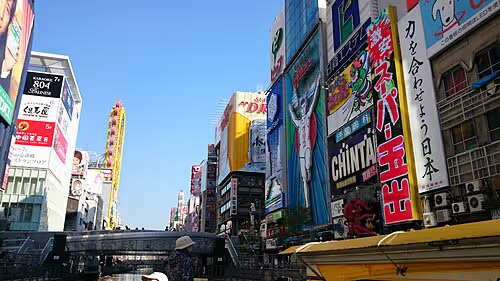
    This is Osaka at maximum volume. The canal-side entertainment strip, named after merchant Yasui Doton who financed its construction in the 1600s, is a wall of neon signs, giant mechanical crabs, and the famous Glico Running Man billboard. Both sides of the Dotonbori Canal in the Minami district are lined with takoyaki stalls, okonomiyaki restaurants, gyoza joints, and kushikatsu shops. Most portions cost between 500 and 1,000 JPY, so you can eat well without sitting down once. The atmosphere peaks after dark, when the neon reflects off the canal water and the crowds thicken. If you want the classic photo of the Glico Running Man, stand on the Tazaemon Bridge at the east end and shoot toward the south bank after sunset for the canal reflection. Dotonbori is less than a 10-minute walk from Namba Station, so getting back to your hotel from here is straightforward on any of the three lines running through the area. This is where Osaka's kuidaore philosophy comes to life. Eat until you drop.

    Learn more about Dotonbori →
    Hours
    Check locally
    Price
    Free (entry)
AI Tourguide
Walk this exact route with a private AI guide.
Full GPS navigation, interactive stories, and a guide that answers all your questions. A private guide experience for just €5/hour.
Start This Tour

Self-Guided Tour vs. Group Tour in Osaka

Osaka has a growing walking tour scene, with free tours (tips-based) and paid options ranging from 3,000 to 8,000 JPY per person. The Dotonbori food tours are especially popular and typically run 5,000 to 7,000 JPY including several food tastings. For this specific route covering the castle, temples, and food districts, a guide adds genuine value at Osaka Castle and Shitenoji Temple, where the historical layers are not obvious from the signage alone.

For the food stops, however, a guide mostly tells you what to order. You can figure that out yourself by pointing at whatever smells best or watching what the person next to you is eating. The 10.3 km distance is long enough that you should be comfortable with urban walking, but the route follows major streets with subway stations every few blocks. You can cut the walk short at any point and pick it up later. If you are choosing between paying for a guided tour and spending that money on food, spend it on food. Osaka's street food is its own kind of education.

Group Tour AI Self-Guided
Price €25–€50 per person €5/hour or €20 all-inclusive
Flexibility Fixed schedule Start anytime, skip stops
Languages 1–2 languages 11 languages
Pace Group pace Your own pace

How Long Does This Osaka Tour Take?

Our route covers 10.3 km with 9 stops and takes approximately 3.6 hours at a relaxed pace.

Pure walking time for this 10.3 km route is roughly 2 hours if you did not stop at all. Nobody does that in Osaka. Budget 3.5 to 4.5 hours with food stops, and you will need food stops. The castle and museum together take 60 to 90 minutes depending on whether you go inside the tower (1,200 JPY). Shitenoji Temple is a 20 to 30-minute visit. Shinsekai can absorb 30 minutes to an hour depending on how many kushikatsu skewers you eat. Kuromon Ichiba Market is best as a 30 to 45-minute graze.

The natural split point is between Shitenoji Temple and Shinsekai. You can do the castle, park, museum, and temple in the morning, grab lunch in Shinsekai, then continue to Kuromon, Hozenji, Shinsaibashi, and Dotonbori in the afternoon and evening. The second half of the route is best after dark when the neon comes alive. If you start at 9:00 AM at Osaka Castle, you will hit Dotonbori around 1:00 to 2:00 PM for a late lunch, or around 6:00 PM for the full evening atmosphere if you take your time.

Tips for Walking in Osaka

AI Tourguide
Walk this exact route with a private AI guide.
Full GPS navigation, interactive stories, and a guide that answers all your questions. A private guide experience for just €5/hour.
Start This Tour

AI Audio Guide for This Tour

Standing in Dotonbori wondering which takoyaki stall to try? The app has this entire 10.3 km route on your phone with turn-by-turn navigation, offline maps, and every opening hour and price updated. Start walking from wherever you are.

AI Audio Guide Stories, history and fun facts narrated as you walk. No earpiece rental needed.
GPS Navigation Turn-by-turn directions so you never get lost between stops.
Ask Anything Curious about a building you pass? Ask your AI guide on the spot.
11 Languages Switch language anytime. No separate tour needed.
Start This Tour Free

Common Questions

Osaka is one of the safest major cities in the world. The entire route runs through well-trafficked neighborhoods with no areas to avoid. The Shinsekai district has an older reputation for roughness, but that has not been true for years. It is now busy with tourists and food lovers at all hours. Late-night Dotonbori can get rowdy with weekend crowds, but it is noisy rather than dangerous. Normal city awareness is all you need.
Yes, with modifications. The full 10.3 km is too long for young children on foot, so plan to use the subway for the Shitenoji to Shinsekai stretch (Tennoji Station connects both areas). Kids will enjoy the castle park, the market food stalls at Kuromon Ichiba, and the neon chaos of Dotonbori. Shinsekai's kushikatsu is fun for older kids who like trying new foods. The Osaka Museum of History has interactive displays that work well for ages 8 and up.
Late March to mid-April for cherry blossoms in the castle park, or October to November for comfortable temperatures and autumn color. Avoid July and August unless you enjoy walking in 35-degree heat with 80 percent humidity. Winter (December to February) is manageable with a jacket, and the crowds are thinnest. Dotonbori looks good year-round after dark, and the covered arcades at Kuromon and Shinsaibashi are weatherproof regardless of season.
No booking needed. This self-guided tour is available anytime. Open the route on your phone and start walking. The AI audio guide works instantly, no reservation required.
The AI audio guide is available in 11 languages: English, German, French, Spanish, Italian, Japanese, Chinese, Portuguese, Danish, Norwegian, and Swedish.
Yes. Skip any stop, spend extra time at places you like, or start the route from any point. You can also ask the AI to suggest a shorter route.
AI Tourguide
Curated by AI Tourguide GPS-verified routes, reviewed and updated regularly.
Last verified March 2026