Self-Guided Walking Tour in Rio de Janeiro

A point-to-point walk through Rio's Centro, from the 1909 opera house at Cinelandia to the waterfront Museum of Tomorrow at Praca Maua. Six stops, 4.8 flat kilometers, the tiled Selaron staircase and the colonial Lapa arches in between. This page has the map, the per-leg times, and real prices and hours.

6 Stops4.8 km~2 hours walking2–3 hours with stops
What you get with AI Tourguide
Full GPS navigationInteractive AI guidePersonalized to youWorks in your browser
Try this tour with Alex

Rio de Janeiro Walking Tour at a Glance

This route is built for travelers who want the Rio that isn't the beach: the historic downtown where 450 years are packed into a few walkable blocks. It runs from the Theatro Municipal to the Museum of Tomorrow, and every interior along the way is optional. You set the pace, skip what you like, and linger where you want.

StartTeatro Municipal (Teatro Municipal do Rio de Janeiro)
FinishMuseum of Tomorrow (Museu do Amanhã)
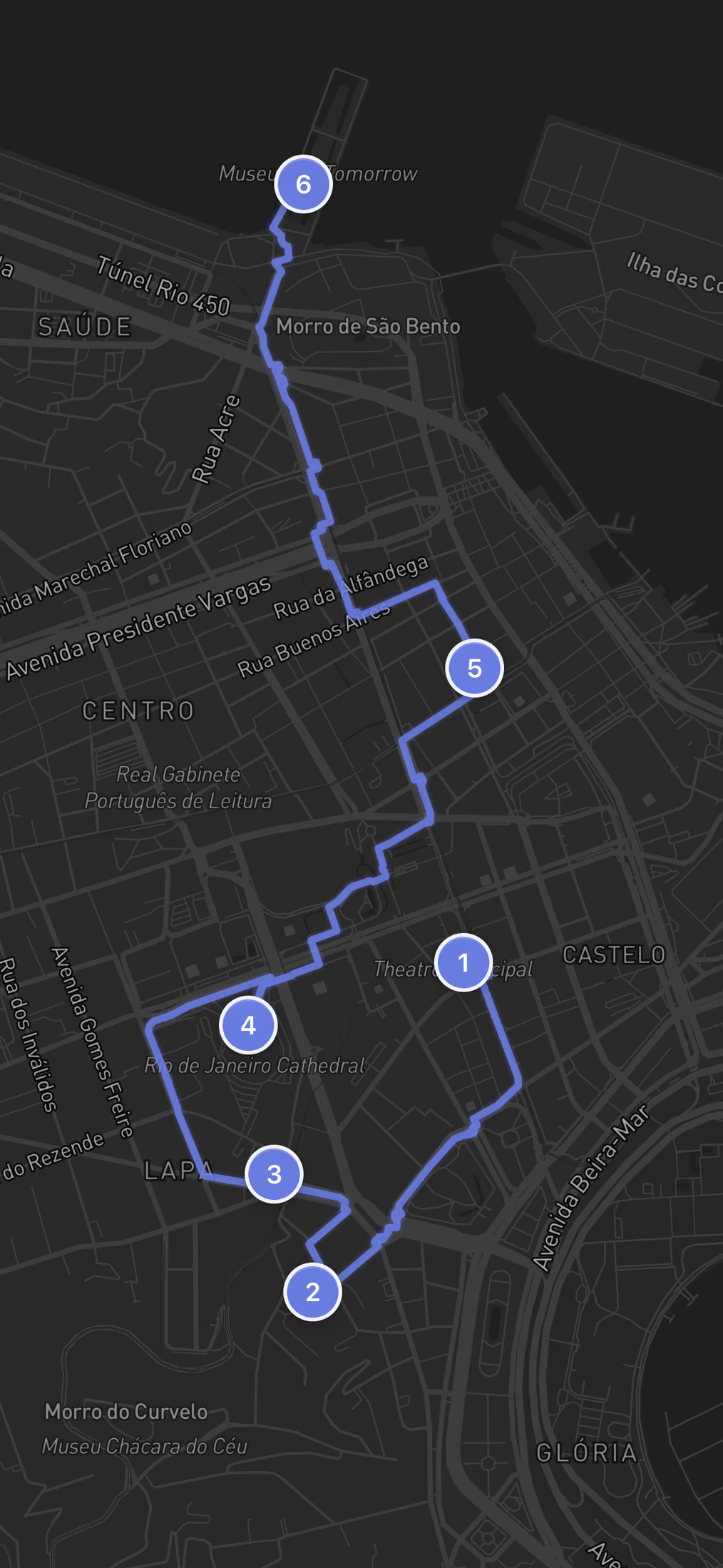
Route typeA point-to-point walk, not a loop. It dips south-west from the Theatro Municipal to the Selaron staircase, then works steadily north through Lapa and Centro to the waterfront, so you end well away from where you began with no backtracking.
Realistic timeAround 2 hours of easy walking and outdoor stops for the 4.8 km. Add a full hour if you go inside the Museum of Tomorrow, plus time for a coffee stop at Confeitaria Colombo.
DifficultyEasy. The whole 4.8 km stays flat across downtown pavements, with no hills or climbs on the route itself. The Selaron staircase is optional to climb, and the walking between stops is straightforward city sidewalk.
Cost to followThe outdoor route is free to walk. Only two interiors cost money: a guided tour of the Theatro Municipal at BRL 20, and admission to the Museum of Tomorrow at R$26. The staircase, the arches, the cathedral, and Confeitaria Colombo cost nothing to enter.
Best for:

Travelers who want downtown history, architecture across three centuries, and a working-city atmosphere rather than the tourist beach strip, all on flat ground in a single morning.

The Route

Free Walking Tour Map of Rio de Janeiro

6 stops4.8 kmabout 2 hours
Loading the interactive map…The complete walking route will appear here.
Want the route to guide you while you walk?Open the route with navigation and a personal guide for the history, stories and questions that matter to you.
Open route + AI guide

The 6 stops along this route

  1. Teatro Municipal (Teatro Municipal do Rio de Janeiro) in Rio de Janeiro, stop 1 on the self-guided walking tour
    1Teatro Municipal (Teatro Municipal do Rio de Janeiro)
  2. Escadaria Selarón in Rio de Janeiro, stop 2 on the self-guided walking tour
    2Escadaria Selarón
  3. Carioca Aqueduct (Aqueduto da Carioca) in Rio de Janeiro, stop 3 on the self-guided walking tour
    3Carioca Aqueduct (Aqueduto da Carioca)
  4. Rio de Janeiro Cathedral (Catedral de São Sebastião do Rio de Janeiro) in Rio de Janeiro, stop 4 on the self-guided walking tour
    4Rio de Janeiro Cathedral (Catedral de São Sebastião do Rio de Janeiro)
  5. Confeitaria Colombo in Rio de Janeiro, stop 5 on the self-guided walking tour
    5Confeitaria Colombo
  6. Museum of Tomorrow (Museu do Amanhã) in Rio de Janeiro, stop 6 on the self-guided walking tour
    6Museum of Tomorrow (Museu do Amanhã)
  7. That's the complete route.

    If you want more than the map and text, add live navigation and a conversational AI guide while you walk.

    Open route + AI guide
    You made it
Stop 1 of 6
Swipe →

Your Rio de Janeiro Walking Tour, Stop by Stop

  1. 1

    Teatro Municipal (Teatro Municipal do Rio de Janeiro)

    Teatro Municipal (Teatro Municipal do Rio de Janeiro) in Rio de Janeiro, stop 1 on the self-guided walking tour

    Your walk begins at Rio's grandest building: a full-scale homage to the Paris Opera Garnier, completed in 1909. The theater seats 2,360 and its ceiling was painted by Eliseu Visconti, Brazil's leading Art Nouveau artist. The facade is decorated with bronze eagles, and the interior drips with marble, gold leaf, and Assyrian-themed mosaics in the basement bar (Salao Assyrio), which is an attraction in itself. Guided tours run regularly and are the only way to see the painted ceiling and the ornate foyer without buying a performance ticket. The building anchors Cinelandia square, which buzzes with office workers, street food vendors, and protesters in roughly equal measure.

  2. 2

    Escadaria Selarón

    Escadaria Selarón in Rio de Janeiro, stop 2 on the self-guided walking tour

    Heading south through the Lapa neighborhood, you reach the 215 tiled steps that Chilean artist Jorge Selaron covered with colorful ceramics starting in 1990. He worked on the staircase continuously until his death in 2013, covering it with over 2,000 tiles collected from more than 60 countries. Each tile was placed by hand, and many carry messages or national symbols from the countries of origin. The staircase connects Rua Joaquim Silva at the bottom to the Convento de Santa Teresa at the top. It gets crowded by mid-morning, so arriving before 9:00 AM gives you the best chance at photos without dozens of other visitors in the frame. The bottom section is the most densely tiled and most photogenic. Watch your belongings here, as the area attracts pickpockets during busy periods.

  3. 3

    Carioca Aqueduct (Aqueduto da Carioca)

    Carioca Aqueduct (Aqueduto da Carioca) in Rio de Janeiro, stop 3 on the self-guided walking tour

    Just below the staircase, the massive white arches of the Lapa Aqueduct stretch 270 meters across the neighborhood. Built in 1750 to carry water from the Carioca River to the city center, the aqueduct was converted into a tramway viaduct in 1896. The Santa Teresa bonde (tram) still runs across the top of the 42 arches, connecting the hilltop bohemian neighborhood of Santa Teresa to Centro below. Watching the yellow tram rattle across the top of the aqueduct is one of Rio's signature sights. Lapa comes alive at night with samba clubs and bars, but during the day the arches stand as the most impressive piece of colonial infrastructure in the city. Stand on Rua dos Arcos for the classic view.

  4. 4

    Rio de Janeiro Cathedral (Catedral de São Sebastião do Rio de Janeiro)

    Rio de Janeiro Cathedral (Catedral de São Sebastião do Rio de Janeiro) in Rio de Janeiro, stop 4 on the self-guided walking tour

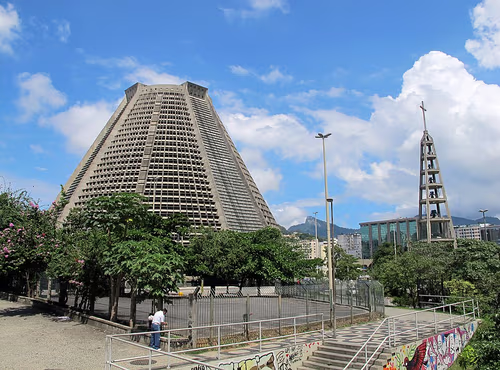
    Walking north from the arches, you hit one of the most unusual churches in the world. Completed in 1979, this brutalist concrete cone rises 96 meters and can hold 20,000 standing worshippers (5,000 seated). The exterior looks like a Mayan pyramid, but step inside and the space transforms: four massive stained glass windows stretch 64 meters from floor to ceiling, flooding the interior with colored light in red, green, yellow, and blue. The effect at midday, when sunlight hits all four windows simultaneously, is genuinely stunning. The basement houses a small sacred art museum. Free entry.

    Hours
    7 AM - 5 PM
    Price
    Free
  5. 5

    Confeitaria Colombo

    Confeitaria Colombo in Rio de Janeiro, stop 5 on the self-guided walking tour

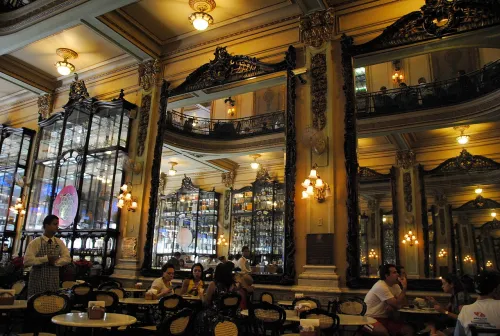
    Heading north through the financial district, you reach Rio's most celebrated tearoom, in operation since 1894. The ground-floor salon is a Belle Epoque masterpiece: Belgian mirrors cover the walls, Italian marble lines the counters, and a stained glass skylight bathes the space in warm light. The pastry cases display traditional Brazilian sweets including quindim (coconut and egg yolk custard) and brigadeiros (chocolate truffles). Order a coffee and a pastel de nata at the marble counter for the full experience. The upstairs restaurant serves a weekend brunch buffet that draws long lines. On weekdays at lunchtime, the ground floor is busy with local office workers picking up pastries, which gives it an authentic buzz that tourist-only spots lack.

    Hours
    Mon-Sat: 11:00 AM – 6:00 PM | Sun: Closed
    Price
    Free (entry)
  6. 6

    Museum of Tomorrow (Museu do Amanhã)

    Museum of Tomorrow (Museu do Amanhã) in Rio de Janeiro, stop 6 on the self-guided walking tour

    Your walk ends at the Porto Maravilha waterfront, where Santiago Calatrava's science museum extends 340 meters over Guanabara Bay like a futuristic spine. Opened in 2015, the building collects rainwater and draws cooling water from the bay, earning it LEED Gold certification. Inside, the exhibition explores humanity's relationship with the planet through interactive displays covering climate, population, technology, and sustainability. The content is available in Portuguese and English. The surrounding Praca Maua plaza has been transformed from a derelict port zone into one of Rio's most pleasant public spaces, with wide walkways, public art (including Eduardo Kobra's massive "Etnias" mural), and views across the bay to Niteroi. Open Monday, Tuesday, Thursday through Sunday 10:00 AM to 6:00 PM, closed Wednesday. Admission is R$26.

    Hours
    Mon-Tue: 10:00 AM – 6:00 PM | Wed: Closed | Thu-Sun: 10:00 AM – 6:00 PM
    Price
    26

How Long Does This Walking Tour Really Take?

Plan on roughly 2 hours to walk the 4.8 km and enjoy the six stops from the outside. The staircase, arches, and cathedral take only a few minutes each, but the Museum of Tomorrow needs a full extra hour if you go inside, and a coffee at Confeitaria Colombo is worth building in.

Allow about 2 hours for the full 4.8 km walk, including time to admire the staircase, step inside the cathedral, and have a coffee at Confeitaria Colombo. Add another hour if you visit the Museum of Tomorrow's exhibitions. The walking itself is flat and straightforward.

Full Route, Shorter Walk or Two-Day Version?

The full route is short and flat, but you can trim it or split it depending on your time and interest. Here are three ways to walk it, using the real stop order and the per-leg distances.

The short version

The historic core only

Stops 1 to 5, about 3.3 km, roughly 90 minutes

Stop at Confeitaria Colombo instead of pushing on. This drops the longest leg, the 1530 m stretch north to the Museum of Tomorrow, and keeps the tightly clustered historic heart. Ideal if the waterfront museum doesn't interest you or the day is running short.

Two easy halves

Split at the cathedral

Stops 1 to 4, then 4 to 6 later, split at the Metropolitan Cathedral

Walk the opera house, staircase, arches, and cathedral first, an easy hour covering the Lapa cluster. Break at the cathedral, then pick up later for Confeitaria Colombo and the Museum of Tomorrow. A relaxed way to fit the walk around lunch or the afternoon.

You can walk it in reverse, from the Museum of Tomorrow back to the Theatro Municipal, but the given direction is the better one. Starting at Cinelandia lets you hit the crowded Selaron staircase early in the morning before the tour groups, and ending on the open Praca Maua waterfront gives the walk a natural, spacious finish.

Is This Rio de Janeiro Walking Tour Right for You?

This is a flat, compact downtown walk with a mix of free outdoor sights and a couple of optional paid interiors. It suits some travelers better than others, so here's who it's built for and how to bend it.

A good fit if you…

  • Anyone who wants the historic, architectural side of Rio rather than the beaches
  • Walkers who prefer flat ground: the full 4.8 km has no hills or climbs
  • People who like mixing free outdoor sights with a couple of optional interiors
  • Photographers, thanks to the Selaron staircase and the stained-glass cathedral
  • Travelers with a spare morning who want to end near the Porto Maravilha waterfront

Adapt the route if you…

  • You have limited time: stop at Confeitaria Colombo (stop 5) and skip the longest leg
  • You want museum time: budget an extra hour inside the Museum of Tomorrow
  • You're going on a weekend: Confeitaria Colombo closes Sunday and Centro is quiet
  • You want to photograph the staircase in peace: start early and reach it before 9:00 AM
  • You'd rather break it up: split the walk at the Metropolitan Cathedral into two halves

Tickets & Skip-the-Line in Rio de Janeiro

Most of this route is free open-air sights you can simply walk up to. Only two stops charge admission, and both are worth knowing about before you arrive so you don't turn up on a closed day.

Teatro Municipal (Teatro Municipal do Rio de Janeiro)A guided tour of the interior costs BRL 20 and is the only way to see the painted ceiling and ornate foyer without a performance ticket. Tours run Monday to Friday, 10:00 AM to 6:00 PM; closed Saturday and Sunday. Buy on site at the box office.
Museum of Tomorrow (Museu do Amanhã)Admission is R$26. Open Monday and Tuesday 10:00 AM to 6:00 PM, closed Wednesday, and Thursday to Sunday 10:00 AM to 6:00 PM. Allow a full hour inside for the interactive exhibitions, which are shown in Portuguese and English.
Everything elseThe Escadaria Selaron, the Arcos da Lapa, the Metropolitan Cathedral, and Confeitaria Colombo are all free to enter. No tickets or bookings needed; just walk in during opening hours.
Optional upgrade
+2
The same 6-stop route,
now with navigation and a guide.
Optional AI experience

You already have the route.
The AI guide brings it to life.

Standing on the tiled steps of Escadaria Selarón or below the Arcos da Lapa? Open AI Tourguide in your browser, no app and no download, and a voice guide walks the heart of Centro with you, greeting you, telling the story from the Theatro Municipal to the Museum of Tomorrow and asking what you want to see so it can shape the rest of the walk. A real conversation built into the walk, not a recording. Start with 100 free credits.

Livenavigation13languagesAnyquestionYourinterests
Open this route with the AI guide

Try it in your browser · No app or download required

Tips for Walking in Rio de Janeiro

  • Do this walk on a weekday morning. Centro empties out on weekends and some stops (including Confeitaria Colombo on Sundays) have reduced hours or closures. Weekdays give you the liveliest street atmosphere and full opening hours.
  • Arrive at Escadaria Selaron before 9:00 AM to photograph the staircase without crowds. By 10:00 AM, tour groups begin arriving and the bottom steps become difficult to photograph.
  • Keep your phone and camera close to your body, especially around Lapa and the staircase area. Petty theft is common in busy spots. Do not wear flashy jewelry or carry a dangling camera strap.
  • The Metro is the easiest way to reach the start point. Take Line 1 or 2 to Cinelandia station, which exits directly onto the square in front of Theatro Municipal.
  • After finishing at the Museum of Tomorrow, catch the VLT light rail from Praca Maua back to Centro or onward to Santos Dumont airport. The VLT is clean, air-conditioned, and covers the entire port and downtown area.

Why Walk This Route?

This 4.8 km walk through Rio de Janeiro's historic center covers 6 stops over roughly 2 hours, connecting the grand opera house to the futuristic waterfront museum. The route takes you through the heart of Centro, past the famous tiled staircase, the colonial aqueduct, a brutalist cathedral that seats 20,000, a Belle Epoque tearoom, and ends at the revitalized Porto Maravilha district. This is downtown Rio at its most layered: Portuguese colonial, French-inspired imperial, and 21st-century waterfront revival, all compressed into a few flat kilometers.

Common Questions

Is this walk safe?

During weekday business hours (roughly 8:00 AM to 6:00 PM), Centro is busy with office workers, police presence is visible, and the route feels safe. Avoid walking this route after dark or on deserted weekend afternoons. The Porto Maravilha area around the Museum of Tomorrow is well-patrolled and safe during museum hours.

Can I combine this walk with a visit to Christ the Redeemer or Sugarloaf?

Yes. Finish this walk by early afternoon, then take the Metro from Cinelandia to Largo do Machado and connect to the Corcovado train (Christ the Redeemer) or to Botafogo and taxi to Sugarloaf. Both attractions are best visited in the afternoon for lighting and sunset views.

What should I eat along the route?

Confeitaria Colombo is the highlight for pastries and coffee. For a proper lunch, the streets around Travessa do Comercio (near the start) have traditional Brazilian per-kilo restaurants (comida a quilo) where you pay by weight. A full plate with rice, beans, grilled meat, and salad typically costs R$25 to R$40.

Take this route with you

Open this exact tour with navigation and your personal AI guide.

Start GPS Navigation + AI Guide
AI Tourguide
Researched and curated by the AI Tourguide teamWe plan and quality-check every route, then research and verify the opening hours, prices, and practical tips for each stop along it.
▶ Open route with AI guideNavigation, stories and your questions