Self-Guided Walking Tour in Salzburg

10 Stops 3.7 km ~2.2 hours
Start This Tour Free
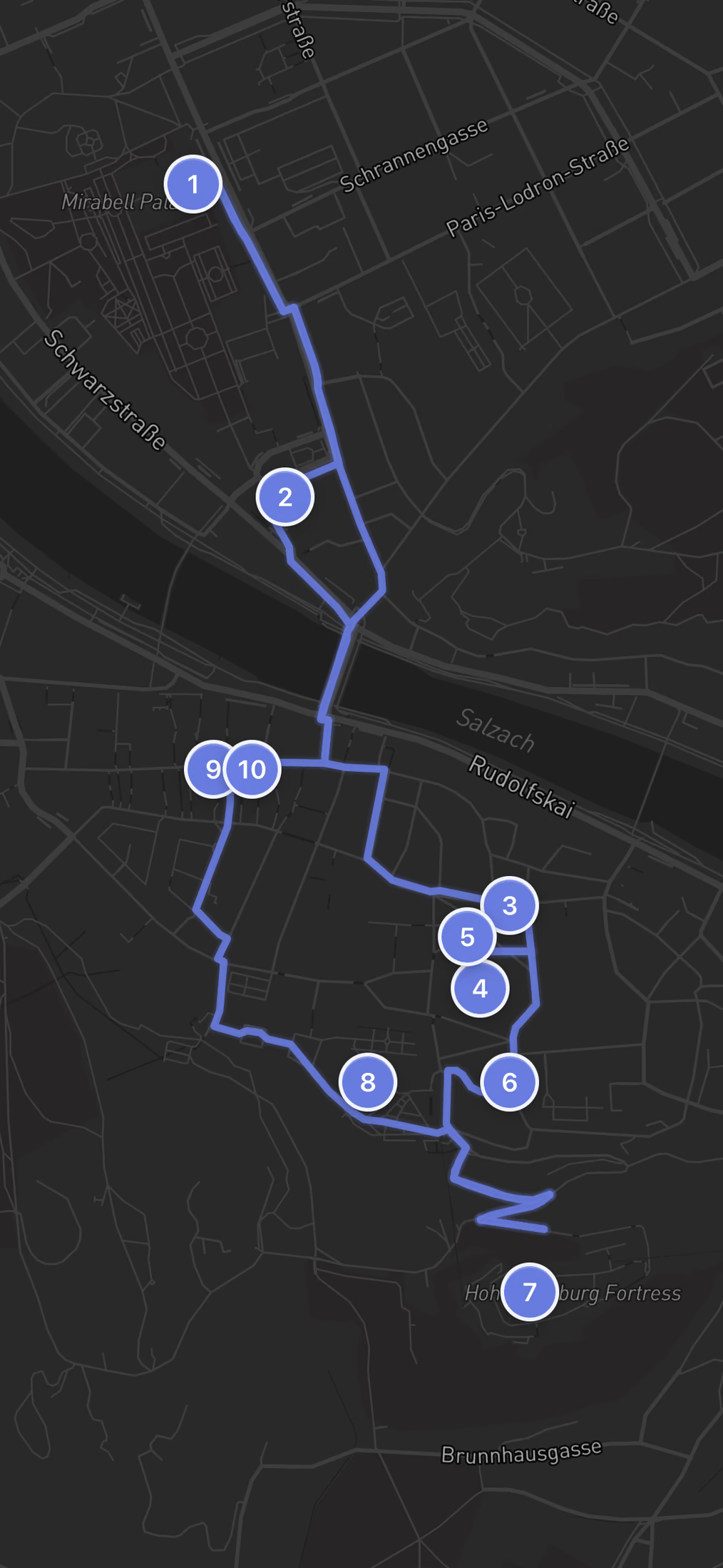
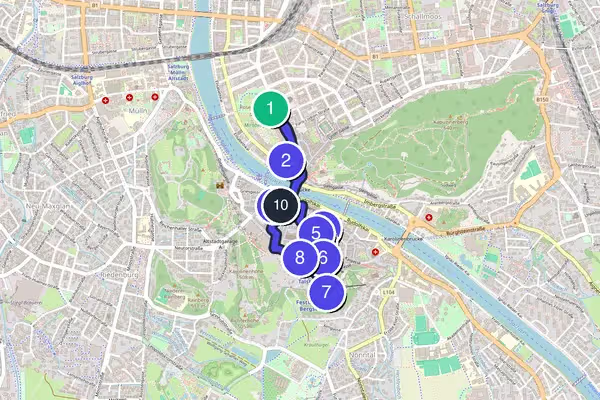
Walking tour route map of Salzburg
Start This Tour Free

Why Walk Salzburg? A Self-Guided Tour

This walking tour covers 3.7 km through the heart of Salzburg in about 2.2 hours, hitting 10 stops that trace the city from its Baroque palace gardens to the narrow medieval lanes where Mozart grew up. You start north of the Salzach River at Mirabell, cross into the Altstadt through a sequence of connected squares, climb to the fortress, and wind back down to Getreidegasse. It is a compact route with almost no backtracking.

Salzburg rewards slow walking. The city is small enough that you can see the fortress from nearly every angle, and the Old Town's pedestrian streets make it easy to get distracted by a courtyard or a bakery window. This tour gives you a logical thread through it all, but leave room for detours. The best moments here are the unplanned ones: a choir rehearsing in the Cathedral, the Salzach turning green after rain, a busker playing Mozart on Mozartplatz like it is mandatory.

A note on Sound of Music tourism: it is everywhere. Mirabell Gardens, the fountain at Residenzplatz, even random benches have plaques. If you love the film, you will spot the locations naturally. If you do not care, nothing on this route forces it on you. The city has 1,300 years of history beyond Julie Andrews.

The Route: 10 Stops

Swipe through images or scroll names below

Scroll to explore →
1. Mirabell Palace & Gardens
2. Mozart Residence
3. Mozartplatz
4. Salzburg Cathedral
5. Residenzplatz
6. Kapitelplatz
7. Hohensalzburg Fortress
8. St. Peter's Abbey
9. Getreidegasse
10. Mozart's Birthplace

Route Map

Tap to load interactive map
AI Tourguide
Walk this exact route with a private AI guide.
Full GPS navigation, interactive stories, and a guide that answers all your questions. A private guide experience for just €5/hour.
Start This Tour

Your Salzburg Walking Tour, Stop by Stop

  1. 1

    Mirabell Palace & Gardens

    Mirabell Palace & Gardens

    The geometrically perfect gardens hit you first. Rows of clipped hedges frame a direct sightline to the fortress on the hill across the river, and this view alone is worth arriving early. Prince-Archbishop Wolf Dietrich built the palace in 1606 for his mistress Salome Alt (they had 15 children together, so "mistress" undersells it). The gardens are free and open year-round, which means they get packed by 10 AM in summer. Come before 9 if you want photos without tour groups. Inside the palace, the Marble Hall is considered one of the most beautiful wedding venues in Europe. The Pegasus Fountain and the Dwarf Garden on the south side are easy to miss if you stick to the main axis. Walk through the entire garden before heading south toward Makartplatz.

    Learn more about Mirabell Palace & Gardens →
    Hours
    Mon-Sat: 8:00 AM – 6:00 PM | Sun: Closed
    Price
    Free

    4 min walk to next stop

  2. 2

    Mozart Residence

    Mozart Residence

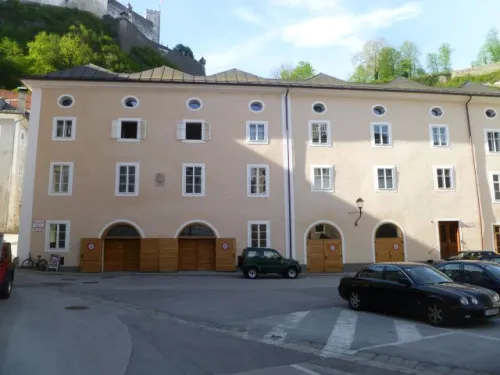
    Head south down Dreifaltigkeitsgasse to Makartplatz, where the Tanzmeisterhaus sits at number 8. The Mozart family moved here in 1773 when their Getreidegasse apartment got too small, and Wolfgang composed over 150 works in this building before leaving for Vienna. An Allied bomb destroyed much of it in 1944, so what you see today is a reconstruction, but the museum inside does a good job of showing how the family actually lived. Admission is 11 EUR, and the combo ticket with the Birthplace on Getreidegasse saves a few euros if you plan to visit both. The museum is open daily from 9:00 AM to 5:30 PM. From here, cross the Staatsbrucke bridge over the Salzach to enter the Old Town proper.

    Learn more about Mozart Residence →
    Hours
    Daily: 9:00 AM – 5:30 PM
    Price
    €11

    6 min walk to next stop

  3. 3

    Mozartplatz

    Mozartplatz

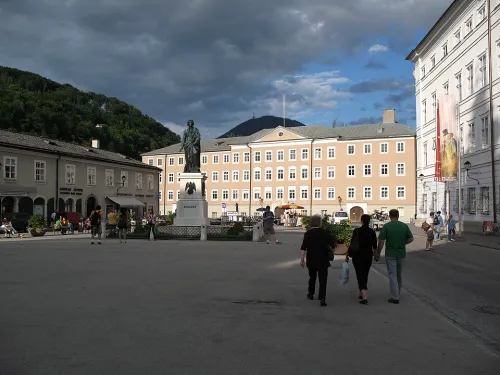
    You cross the river and enter the Altstadt through a cluster of squares that flow into each other. Mozartplatz is the first one you reach, centered on a bronze statue of the composer unveiled in 1842. It was the first public monument ever dedicated to Mozart, and the ceremony drew crowds from across Europe. The square itself is quieter than Residenzplatz next door, which makes it a good place to get your bearings. Archaeological digs in the 1990s uncovered Roman-era remains beneath the pavement, a reminder that Salzburg's history goes back to the settlement of Iuvavum. The Salzburg Museum occupies the Neue Residenz on the east side. On the quarter hour, listen for the Glockenspiel chiming from the tower above. Walk through the archway south toward the Cathedral.

    Learn more about Mozartplatz →
    Hours
    Check locally
    Price
    Free

    1 min walk to next stop

  4. 4

    Salzburg Cathedral

    Salzburg Cathedral

    The Cathedral's facade appears suddenly as you step into Domplatz, its twin 79-meter towers framing the sky. Finished in 1628, this was the first major Baroque church north of the Alps, and it still seats 10,000 people. Entry is free. Inside, look for the bronze baptismal font where Mozart was christened on January 28, 1756, the day after his birth. The interior is bright Italian Baroque, all white stucco and dome frescoes, very different from the dark Gothic churches further north. The Cathedral is open Monday to Saturday 9:00 AM to 5:00 PM, Sundays from 1:00 to 5:00 PM. Sunday mornings are reserved for services, and the organ concerts during Salzburg Festival in July and August are extraordinary. Exit through the south portal into Kapitelplatz.

    Learn more about Salzburg Cathedral →
    Hours
    Mon-Sat: 9:00 AM – 5:00 PM | Sun: 1:00 – 5:00 PM
    Price
    Free

    1 min walk to next stop

  5. 5

    Residenzplatz

    Residenzplatz

    Step back north briefly to take in this square properly. Residenzplatz is the ceremonial heart of Salzburg, dominated by the Residenz Fountain at its center: 15 meters of Untersberg marble, completed in 1661, the largest Baroque fountain north of the Alps. The Alte Residenz (Old Residence) fills the western edge, the New Residence with its Glockenspiel sits east. The square was designed to impress, and it works. In December, the Christkindlmarkt fills the space with wooden stalls selling Gluhwein and handmade ornaments. In summer, the square hosts open-air film screenings and concert broadcasts during the Festival. The open layout makes this the best people-watching spot in the Altstadt. Grab a coffee at Cafe Tomaselli on the north side, Salzburg's oldest coffeehouse, operating since 1705.

    Learn more about Residenzplatz →
    Hours
    Open 24/7
    Price
    Free

    2 min walk to next stop

  6. 6

    Kapitelplatz

    Kapitelplatz

    Walk south past the Cathedral to reach Kapitelplatz, a broad open square that sits directly below the fortress. You cannot miss the Sphaera, a nine-meter sculpture of a man standing on a golden sphere, installed by Stephan Balkenhol in 2007. It is one of Salzburg's most photographed contemporary artworks, and the fortress rising behind it creates a perfect composition. The square also has a large open-air chess set that anyone can use. More importantly, this is where you decide: take the Festungsbahn funicular up to the fortress (included in the fortress ticket), or walk up the steep path through the Festungsgasse. The walk takes about 20 minutes and gives you better views, but the funicular has been running since 1892 and is an experience in itself. Either way, the fortress is next.

    Learn more about Kapitelplatz →
    Hours
    Check locally
    Price
    Free

    8 min walk to next stop

  7. 7

    Hohensalzburg Fortress

    Hohensalzburg Fortress

    Construction started in 1077, making this one of the largest fully preserved medieval castles in Europe, covering over 14,000 square meters including the bastions. The views from the top terrace are the highlight: the entire city laid out below, the Salzach River curving through, and on clear days the Berchtesgaden Alps to the south. Admission is 16 EUR (includes the funicular both ways and access to the interior museums). The fortress rooms house collections on medieval life, archbishops' quarters with painted ceilings, and a somewhat eerie marionette museum. Budget at least 45 minutes inside, more if you explore the ramparts. Open daily 9:30 AM to 5:00 PM. The crowds thin out after 3 PM. Head back down via the walking path through the Nonnberg side for views of the abbey where the real Maria von Trapp was a novice.

    Learn more about Hohensalzburg Fortress →
    Hours
    Daily: 9:30 AM – 5:00 PM
    Price
    €16

    7 min walk to next stop

  8. 8

    St. Peter's Abbey

    St. Peter's Abbey

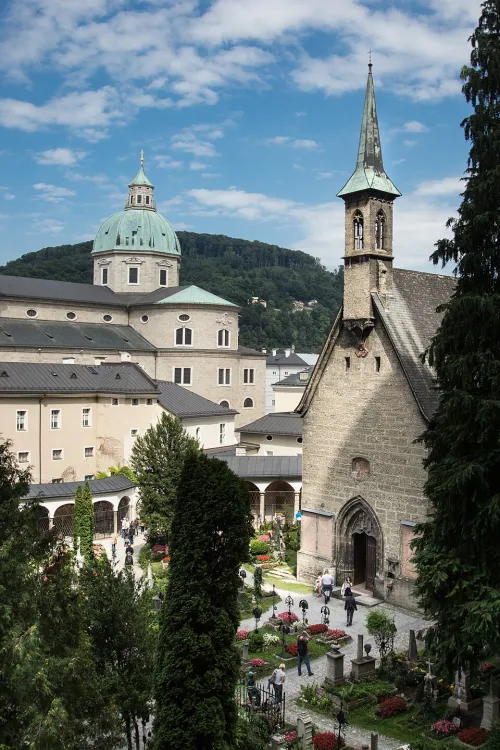
    Descend from the fortress toward St. Peter's, the oldest monastery in the German-speaking world, founded in 696 AD by Saint Rupert. The cemetery alone is worth the stop: graves pressed against the Monchsberg cliff face, wrought-iron crosses, flowers on every plot, and catacombs carved directly into the rock above. The catacombs offer a view down over the cemetery that most visitors skip. The abbey church has been remodeled so many times that you get Romanesque bones under Baroque decoration. Next door, the Stiftskeller St. Peter restaurant claims to be the oldest in Central Europe, documented since 803 AD. Prices are high and the food is average, but having a beer in an 8th-century cellar has a certain appeal. From here, walk north through the passageway toward Getreidegasse.

    Learn more about St. Peter's Abbey →
    Hours
    Mon-Fri: 8:00 AM – 12:00 PM, 12:30 – 6:30 PM | Sat-Sun: Closed
    Price
    Free

    3 min walk to next stop

  9. 9

    Getreidegasse

    Getreidegasse

    You enter Salzburg's most famous street from the west end, where it is slightly less chaotic. Getreidegasse follows its original 12th-century layout: narrow, hemmed in by tall buildings, and packed with shoppers. Look up. The wrought-iron guild signs hanging above every shop are the real attraction here, some dating back centuries. Zara and H&M have stores here, but they had to install period-appropriate signs to match. The through-houses (Durchhauser) are Getreidegasse's secret: narrow passages that cut through buildings into hidden courtyards behind the main street. Duck into any open doorway and explore. The street is at its worst between 11 AM and 3 PM in summer, wall-to-wall tourists shoulder to shoulder. Early morning or evening is a different experience entirely. Walk east toward number 9.

    Learn more about Getreidegasse →
    Hours
    Open 24/7
    Price
    Free

    1 min walk to next stop

  10. 10

    Mozart's Birthplace

    Mozart's Birthplace

    The bright yellow facade at Getreidegasse 9 is where the tour ends. Wolfgang Amadeus Mozart was born on the third floor on January 27, 1756, and the family lived here until he was 17. The museum displays his childhood violin, a lock of his hair, original manuscripts, and period rooms that recreate the cramped conditions of an 18th-century Salzburg apartment. Admission is 14 EUR, and the museum is open daily from 9:00 AM to 5:30 PM. It gets very crowded, especially the small rooms on the upper floors. If you only visit one Mozart site, make it this one over the Residence on Makartplatz. Afterward, reward yourself at Cafe Furst on Brodgasse, around the corner. They invented the original Mozartkugel in 1890, and theirs are handmade, wrapped in blue and silver foil, completely different from the mass-produced red ones sold everywhere else.

    Learn more about Mozart's Birthplace →
    Hours
    Daily: 9:00 AM – 5:30 PM
    Price
    14 EUR
AI Tourguide
Walk this exact route with a private AI guide.
Full GPS navigation, interactive stories, and a guide that answers all your questions. A private guide experience for just €5/hour.
Start This Tour

Self-Guided Tour vs. Group Tour in Salzburg

Guided walking tours in Salzburg typically cost between 20 and 40 EUR per person, and most cover the same ground as this self-guided route. The standard two-hour group tour hits Mirabell, the Cathedral, and Mozart's Birthplace, but moves too fast to explore the Durchhauser on Getreidegasse or linger in the St. Peter's cemetery. Sound of Music tours run 45 to 55 EUR and spend half their time on a bus driving to locations outside the city.

With this free route on your phone, you walk at your own pace, spend as long as you want at the fortress, and skip what does not interest you. The only paid entries on the route are Mozart Residence (11 EUR), Hohensalzburg Fortress (16 EUR), and Mozart's Birthplace (14 EUR). You can skip all three and still have a full morning of Baroque squares, abbey gardens, and Getreidegasse. Or visit just the fortress, which gives you the best value for the panoramic views alone.

The money you save on a guided tour buys a very good lunch at one of the Altstadt's restaurants, plus a Melange at Tomaselli. That is a better Salzburg experience than following an umbrella through a crowd.

Group Tour AI Self-Guided
Price €25–€50 per person €5/hour or €20 all-inclusive
Flexibility Fixed schedule Start anytime, skip stops
Languages 1–2 languages 11 languages
Pace Group pace Your own pace

How Long Does This Salzburg Tour Take?

Our route covers 3.7 km with 10 stops and takes approximately 2.2 hours at a relaxed pace.

The route is 3.7 km, which is a comfortable distance even in summer heat. Without entering any museums or the fortress, you could walk the entire loop in about 90 minutes. Realistically, plan for 2 to 2.5 hours. The fortress alone deserves 45 minutes to an hour if you go inside, and the St. Peter's cemetery and catacombs add another 20 minutes.

If you want to visit both Mozart museums (Birthplace and Residence), add an hour total. The Cathedral and the squares between stops 3 and 6 flow into each other quickly, so you will cover that middle section faster than you expect. Getreidegasse can eat up time if you explore the Durchhauser, which you should. The route is almost entirely flat except for the climb to the fortress, and even that can be skipped by taking the funicular.

Tips for Walking in Salzburg

AI Tourguide
Walk this exact route with a private AI guide.
Full GPS navigation, interactive stories, and a guide that answers all your questions. A private guide experience for just €5/hour.
Start This Tour

AI Audio Guide for This Tour

Open this Salzburg walking tour in the AI Guide app and follow the route stop by stop with GPS navigation, offline maps, and automatic audio descriptions at each location. The app works without mobile data, which is handy when you are deep in the Getreidegasse passageways or inside the fortress walls where signal drops.

AI Audio Guide Stories, history and fun facts narrated as you walk. No earpiece rental needed.
GPS Navigation Turn-by-turn directions so you never get lost between stops.
Ask Anything Curious about a building you pass? Ask your AI guide on the spot.
11 Languages Switch language anytime. No separate tour needed.
Start This Tour Free

Common Questions

Salzburg is one of the safest cities in Europe for walking. The entire Altstadt is a pedestrian zone with no car traffic, and the route stays on well-lit, busy streets. Pickpocketing happens occasionally on Getreidegasse and at the Christmas markets, so keep valuables in a front pocket during peak season. Evening walks along the Salzach riverbanks are popular with locals and feel completely safe.
Salzburg gets about 1,200 mm of rain per year, more than London, so rain is likely. The good news: the Cathedral, both Mozart museums, the fortress interior, and St. Peter's Abbey are all covered stops. The Durchhauser passageways on Getreidegasse provide shelter while still being interesting. Bring a compact umbrella. The fortress funicular runs in all weather, and the city actually looks beautiful in the rain with the wet cobblestones reflecting the Baroque facades.
Start between 8:30 and 9:00 AM to reach Mirabell Gardens before the tour buses arrive around 10. The fortress opens at 9:30, so timing works well if you walk at a normal pace. You will finish on Getreidegasse around 11:30, just before the worst crowds. If you are a morning person, the gardens at 7:30 AM in summer are practically empty. Avoid starting after noon in July and August because the midday heat in the squares can be intense, and every stop will be at peak crowds.
No booking needed. This self-guided tour is available anytime. Open the route on your phone and start walking. The AI audio guide works instantly, no reservation required.
The AI audio guide is available in 11 languages: English, German, French, Spanish, Italian, Japanese, Chinese, Portuguese, Danish, Norwegian, and Swedish.
Yes. Skip any stop, spend extra time at places you like, or start the route from any point. You can also ask the AI to suggest a shorter route.
AI Tourguide
Curated by AI Tourguide GPS-verified routes, reviewed and updated regularly.
Last verified March 2026