
Self-Guided Walking Tour in Tel Aviv

9 Stops 4.9 km ~2.4 hours
Start This Tour Free
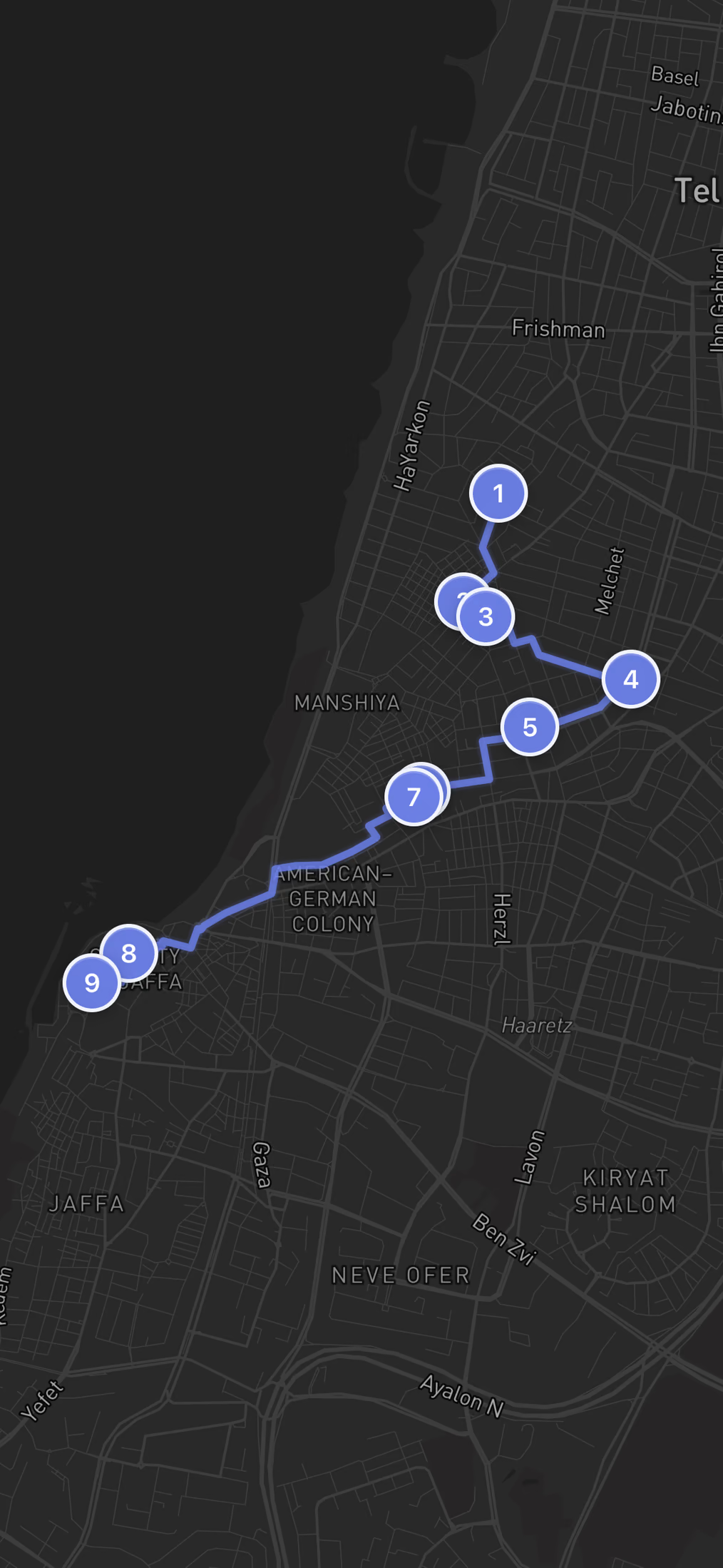
Walking tour route map of Tel Aviv
Start This Tour Free

Why Walk Tel Aviv? A Self-Guided Tour

Tel Aviv is a city that makes sense on foot. The entire core, from the Bauhaus boulevards of the White City to the 4,000-year-old stone alleys of Jaffa, fits into a compact coastal strip you can walk end to end in an afternoon. This route covers 9 stops across 4.9 kilometers in about 2.5 hours of walking, threading through market stalls, tree-lined boulevards, the room where Israel was declared a nation, and one of the oldest port cities on Earth.

The sequencing follows the city's own history. You start at the Bauhaus Museum, where the story of Tel Aviv's 1930s architectural identity is told in 120 square meters, then move south through the commercial energy of Carmel Market, past the founding story at Independence Hall, through the restored Ottoman lanes of Neve Tzedek, and finish in the ancient stone labyrinth of Old Jaffa. Every transition between stops shifts the era underfoot. The pavement changes from smooth modern sidewalk to market cobblestones to worn limestone as you walk, and the shift is the whole point.

The Route: 9 Stops

Swipe through images or scroll names below

Scroll to explore →
1. Bauhaus Museum
2. Carmel Market
3. Nahalat Binyamin Street
4. Rothschild Boulevard
5. Independence Hall
6. Neve Tzedek
7. Nahum Gutman Museum
8. Old City of Jaffa
9. Ilana Goor Museum

Route Map

Tap to load interactive map
AI Tourguide
Walk this exact route with a private AI guide.
Full GPS navigation, interactive stories, and a guide that answers all your questions. A private guide experience for just €5/hour.
Start This Tour

Your Tel Aviv Walking Tour, Stop by Stop

  1. 1

    Bauhaus Museum

    Bauhaus Museum

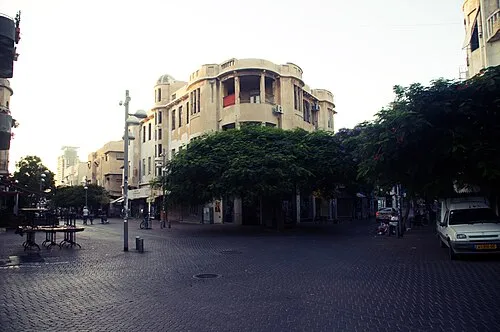
    A small private museum at 21 Bialik Street, on the ground floor of a restored 1934 International Style building. The exhibition space covers just 120 square meters but packs in original Bauhaus furniture and objects from the 1920s and 1930s alongside rotating exhibitions about the architectural movement that defines Tel Aviv's UNESCO-listed White City. Admission is free. Open Monday through Thursday 10 AM to 8 PM, Friday until 3 PM, Sunday 10 AM to 8 PM. Closed Saturday. A 20 to 30 minute visit is plenty. The real value is context: after this, every white curved balcony and horizontal ribbon window on the surrounding streets starts to click into place. The Bauhaus Center also runs guided walking tours of the White City from here, check their website for schedules.
    Learn more about Bauhaus Museum →
    Hours
    Mon-Thu: 10:00 AM – 8:00 PM | Fri: 10:00 AM – 3:00 PM | Sat: Closed | Sun: 10:00 AM – 8:00 PM
    Price
    Free

    8 min walk

  2. 2

    Carmel Market

    Carmel Market

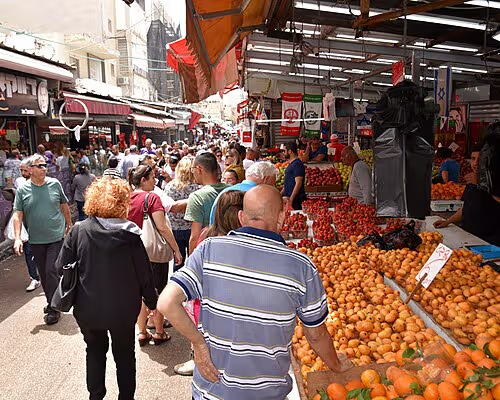
    The noise hits first. Vendors calling prices, crates scraping across wet concrete, music from competing speakers. Shuk HaCarmel is the largest and oldest open-air market in Tel Aviv, stretching over 500 meters along HaCarmel Street from Magen David Square south into the Yemenite Quarter. Stalls sell produce, spices, halva in every flavor, clothing, flowers, and prepared food. Fresh-squeezed pomegranate juice runs about 15 ILS. The halva vendors let you taste before buying. Open Sunday through Thursday 7 AM to 9 PM, Friday 7 AM to 4 PM. Closed Saturday. Prices drop as you move deeper in, away from the main entrance. The side streets off the main market lane, particularly along HaShomer Street, have the best falafel and shawarma at lower prices than the well-known spots near the entrance. Come before 10 AM on a weekday for easier movement.

    Learn more about Carmel Market →
    Hours
    Mon-Thu: 7:00 AM – 9:00 PM | Fri: 7:00 AM – 4:00 PM | Sat: Closed | Sun: 7:00 AM – 9:00 PM
    Price
    Free (entry)

    3 min walk

  3. 3

    Nahalat Binyamin Street

    Nahalat Binyamin Street

    The contrast with Carmel Market is immediate. This pedestrianized street is lined with Eclectic-style buildings from the early 1900s and fabric shops. On Tuesdays and Fridays, the northern section hosts an arts and crafts fair with over 200 artisans selling handmade jewelry, ceramics, Judaica, leather goods, and painted glassware. Every artisan must pass a rigorous jury process proving their products are 100% handmade and original. The buildings along here include some of the oldest residential structures in Tel Aviv, with distinctive ceramic facades from the 1920s. The fair runs roughly 10 AM until late afternoon. Free to stroll. If the fair is not running, the architecture and fabric shops still make the street interesting. Tuesday is better than Friday: less crowded, vendors are more willing to chat, and you avoid the pre-Shabbat rush.

    Learn more about Nahalat Binyamin Street →
    Hours
    Free
    Price
    Free

    5 min walk

  4. 4

    Rothschild Boulevard

    Rothschild Boulevard

    This tree-lined avenue is where Tel Aviv's founding mythology lives. Laid out in 1909 as one of the city's first five streets, the 1.5-kilometer boulevard runs through the financial district with a wide pedestrian center strip, benches, a bike path, and some of the densest concentration of Bauhaus and Eclectic-style buildings in the world. The original kiosk of Tel Aviv still stands here, restored and functioning. Walk the center strip from north to south. During the day it is a calm, shaded corridor with joggers and people reading on benches. At night the southern end fills with bar and restaurant crowds. The boulevard earned its UNESCO White City designation in 2003. Free, open air, no hours. Allow 20 to 30 minutes including photo stops. At the southern end, Independence Hall is one block west.

    Learn more about Rothschild Boulevard →
    Hours
    Free
    Price
    Free

    3 min walk

  5. 5

    Independence Hall

    Independence Hall

    On May 14, 1948, David Ben-Gurion proclaimed the State of Israel in this building, the former home of Meir Dizengoff, Tel Aviv's first mayor. The 32-minute ceremony that changed the Middle East happened in the main hall on the second floor. The room has been restored to appear exactly as it did that day, down to the original microphones, the chairs, and the portrait of Theodor Herzl on the wall. A short film plays the original radio broadcast audio over footage of the declaration. Guided tours run regularly. Open Sunday through Thursday 9 AM to 5 PM, Friday until 2 PM. Whether you are deeply interested in Israeli history or not, standing in the room where a nation was declared carries a weight that photographs cannot capture. Budget 30 to 40 minutes including the tour and the film.

    Learn more about Independence Hall →
    Hours
    ILS 30
    Price
    ILS 30

    8 min walk

  6. 6

    Neve Tzedek

    Neve Tzedek

    Founded in 1887 as the first Jewish neighborhood outside Jaffa's walls, Neve Tzedek was nearly demolished in the 1960s before being designated a heritage site. Today its narrow lanes are lined with restored Ottoman-era houses converted into boutiques, galleries, and cafes. Shabazi Street is the main artery, and the architecture shifts block by block from crumbling stone to polished restoration. The Suzanne Dellal Centre at the quarter's heart hosts the Batsheva Dance Company in a beautifully restored Ottoman-era school complex, and the courtyard is free to walk through. The neighborhood is small enough to explore in 20 to 30 minutes. Prices at cafes here run higher than central Tel Aviv, but a coffee on Shabazi Street surrounded by low stone buildings is worth one stop. This is the transition point: modern Tel Aviv behind you, ancient Jaffa ahead.

    Learn more about Neve Tzedek →
    Hours
    Check locally
    Price
    Free

    5 min walk

  7. 7

    Nahum Gutman Museum

    Nahum Gutman Museum

    Inside Beit HaSoferim (the Writers' House), one of Neve Tzedek's original buildings from 1887 and among the oldest structures in Tel Aviv. The permanent collection holds paintings, illustrations, and sculptures by Nahum Gutman, an artist who documented the early decades of Tel Aviv and Jaffa with warm colors and a storytelling style that captures a city that no longer exists: sand dunes, newly planted trees, fishermen in the old port. Admission is 25 ILS. Open Monday and Thursday 10 AM to 7 PM, Tuesday and Wednesday until 3 PM, Friday until 2 PM, Saturday until 3 PM. Closed Sunday. The museum is tiny, maybe 30 to 45 minutes total. Before leaving, find the mosaic fountain by Gutman on the corner of Rokach Boulevard outside. It tells the story of Jaffa and Tel Aviv in tile, and most people walk right past it.

    Learn more about Nahum Gutman Museum →
    Hours
    Mon: 10:00 AM – 7:00 PM | Tue-Wed: 10:00 AM – 3:00 PM | Thu: 10:00 AM – 7:00 PM | Fri: 10:00 AM – 2:00 PM | Sat: 10:00 AM – 3:00 PM | Sun: Closed
    Price
    ILS 25

    15 min walk

  8. 8

    Old City of Jaffa

    Old City of Jaffa

    The ground changes under your feet. Smooth sidewalks give way to worn limestone and uneven cobblestones as you climb the hill into Old Jaffa. The city here is over 4,000 years old, one of the oldest functioning ports in the world. The narrow alleyways are named after zodiac signs and lead to artists' studios, galleries, and the hilltop Abrasha Park with unobstructed views north along the entire Tel Aviv coastline. A 17th-century orange tree suspended in a lead-lined clay pot hangs in midair in one of the courtyards, part art installation, part botanical curiosity. Free to walk, no gates, no hours. Late afternoon light makes the stone glow gold and thins out the day-trippers. Give yourself at least 45 minutes to wander. Enter through the Jaffa Clock Tower side and walk uphill through the artists' quarter for the quietest path to the sea views at the top.

    Learn more about Old City of Jaffa →
    Hours
    Free
    Price
    Free

    5 min walk

  9. 9

    Ilana Goor Museum

    Ilana Goor Museum

    The final stop occupies a restored 18th-century building on Mazal Dagim Street in Old Jaffa. The thick limestone walls exceed 1.5 meters in places, and the structure originally served as the first Jewish inn for pilgrims arriving at the ancient port. Ilana Goor opened her private home as a museum in 1995, filling it with over 500 works: her own metal sculptures alongside pieces by international and Israeli artists. Admission is 35 ILS. Open Monday through Thursday 10 AM to 4 PM, Friday until 2 PM, weekends until 4 PM. Plan 30 to 45 minutes. The rooftop terrace is the highlight: a quiet perch above the Jaffa rooftops with a direct sightline over the Mediterranean and the port below. This is the right place to end. Sit on the terrace, look back north at the Tel Aviv skyline you just walked, and decide where to have dinner.

    Learn more about Ilana Goor Museum →
    Hours
    Mon-Thu: 10:00 AM – 4:00 PM | Fri: 10:00 AM – 2:00 PM | Sat-Sun: 10:00 AM – 4:00 PM
    Price
    ILS 30
AI Tourguide
Walk this exact route with a private AI guide.
Full GPS navigation, interactive stories, and a guide that answers all your questions. A private guide experience for just €5/hour.
Start This Tour

Self-Guided Tour vs. Group Tour in Tel Aviv

Guided group tours of Tel Aviv typically cost 150 to 300 ILS per person for three to four hours and cover six or seven stops. They move at the group's pace, spend too long at some spots and rush through others, and rarely go further south than Rothschild Boulevard. Walking on your own covers the full sweep from the Bauhaus district to Jaffa, lets you stop when something catches your eye, and skip what does not interest you. Your only costs are museum tickets, food, and water.

The city is genuinely flat and walkable. Sidewalks are wide, shade trees line the main boulevards, and the coastal breeze keeps things tolerable even in warm months. The one exception is the short uphill climb into Old Jaffa on cobblestones, nothing strenuous. The real advantage of self-guiding is timing: Carmel Market is best before 10 AM, Independence Hall is quietest on weekday mornings, and Jaffa glows in late afternoon sun. No group tour hits all those windows. You can.

Group Tour AI Self-Guided
Price €25–€50 per person €5/hour or €20 all-inclusive
Flexibility Fixed schedule Start anytime, skip stops
Languages 1–2 languages 11 languages
Pace Group pace Your own pace

How Long Does This Tel Aviv Tour Take?

Our route covers 4.9 km with 9 stops and takes approximately 2.4 hours at a relaxed pace.

The route covers 4.9 kilometers with 9 stops. At a relaxed pace with time inside museums and markets, plan for 5 to 6 hours including a lunch break. The natural stopping point is Rothschild Boulevard, roughly a third of the way through. Sit on a bench under the trees, grab a cold drink from the kiosk, and recharge before the second half: Neve Tzedek, the museums, and Jaffa. The stops that need the most time are Carmel Market (30 to 45 minutes), Old City of Jaffa (45 minutes to an hour), and Independence Hall (30 to 40 minutes).

Tips for Walking in Tel Aviv

AI Tourguide
Walk this exact route with a private AI guide.
Full GPS navigation, interactive stories, and a guide that answers all your questions. A private guide experience for just €5/hour.
Start This Tour

AI Audio Guide for This Tour

Standing on Rothschild Boulevard wondering which Bauhaus building is which? Or just out of Carmel Market and unsure which direction leads to Jaffa? Open the app and this entire 9-stop route loads with turn-by-turn directions and offline maps, so you can stop planning and start walking.

AI Audio Guide Stories, history and fun facts narrated as you walk. No earpiece rental needed.
GPS Navigation Turn-by-turn directions so you never get lost between stops.
Ask Anything Curious about a building you pass? Ask your AI guide on the spot.
11 Languages Switch language anytime. No separate tour needed.
Start This Tour Free

Common Questions

Yes, the areas on this route are well-trafficked and well-lit day and night. In Jaffa's side streets after dark, stick to the main tourist areas around Kikar Kdumim and the port. Watch your phone and bag at Carmel Market, where dense crowds create easy opportunities for pickpockets. Standard city awareness applies. Carry small bills for market purchases, as many stalls do not take cards.
Rain falls mostly between November and March, and when it pours, it can be heavy for an hour then clear completely. Your indoor options on this route are strong: Bauhaus Museum, Independence Hall, Nahum Gutman Museum, and Ilana Goor Museum. The stone archways in Old Jaffa provide decent shelter in a shower. Carry a compact umbrella during winter months.
October through November and March through May offer comfortable temperatures (18 to 25 degrees), lighter crowds, and clear skies. Summer (June to September) is hot but manageable if you start early and plan a midday break. Winter (December to February) brings occasional rain but also pleasant walking temperatures around 15 to 20 degrees. Avoid starting after 11 AM in summer, when the pavement temperature makes walking unpleasant.
No booking needed. This self-guided tour is available anytime. Open the route on your phone and start walking. The AI audio guide works instantly, no reservation required.
The AI audio guide is available in 11 languages: English, German, French, Spanish, Italian, Japanese, Chinese, Portuguese, Danish, Norwegian, and Swedish.
Yes. Skip any stop, spend extra time at places you like, or start the route from any point. You can also ask the AI to suggest a shorter route.
AI Tourguide
Curated by AI Tourguide GPS-verified routes, reviewed and updated regularly.
Last verified March 2026