Self-Guided Walking Tour in Tokyo

11 Stops 13.5 km ~4.7 hours
Start This Tour Free
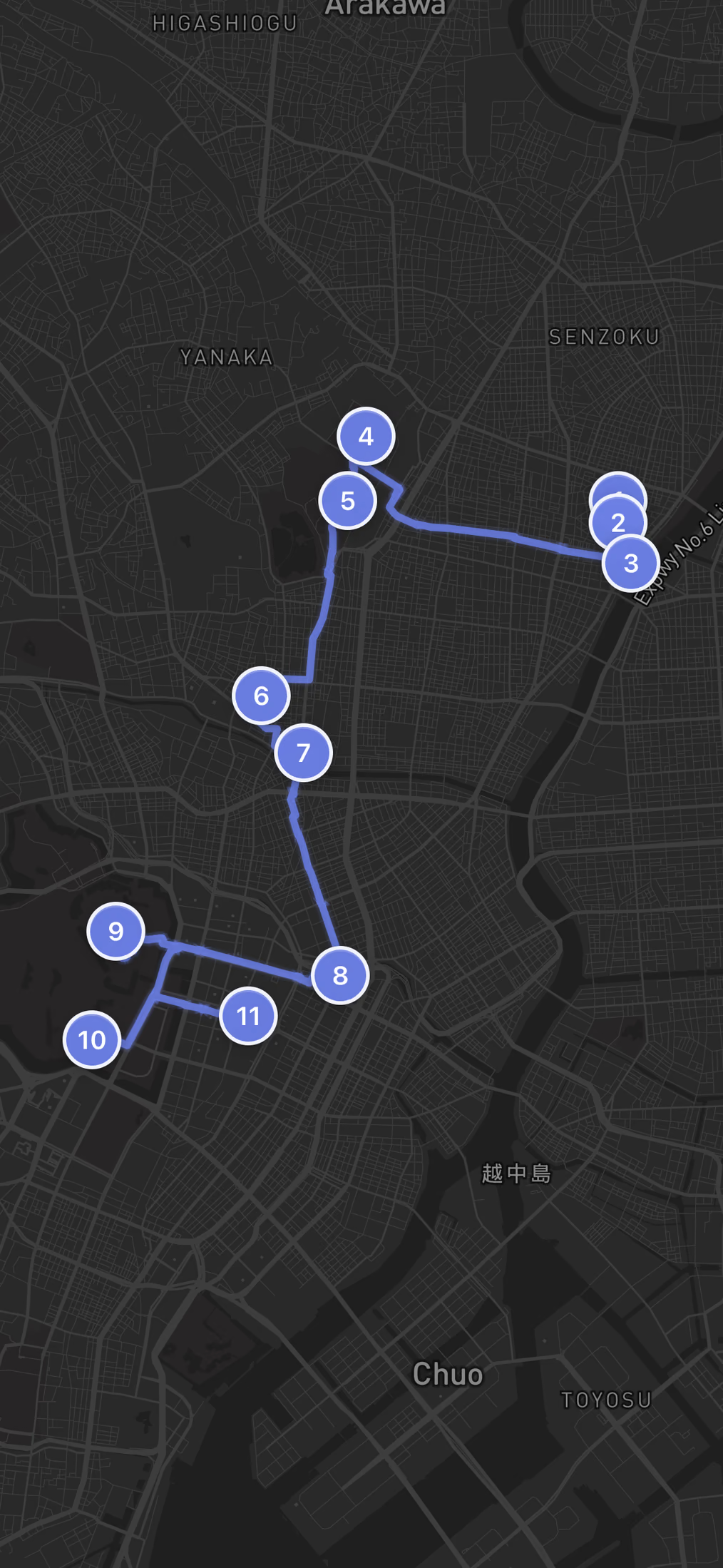
Walking tour route map of Tokyo
Start This Tour Free

Why Walk Tokyo? A Self-Guided Tour

This 13.5-kilometer walk through Tokyo connects 11 stops across some of the city's most rewarding neighborhoods, from the incense-filled courtyards of Asakusa to the imperial grounds and red-brick grandeur near Tokyo Station. Budget roughly 4.7 hours for the full route, though you could easily spend a whole day if you linger at the museums and gardens along the way. The route follows a loose arc from northeast to south-central Tokyo, threading through backstreets, riverbanks, and shopping arcades that most tour buses skip entirely.

You start at Senso-ji, Tokyo's oldest temple, then walk the length of Nakamise Street before crossing the Sumida River at Azuma Bridge for one of the best Skytree photo spots in the city. From there you head into Ueno Park for the National Museum and a golden Tokugawa shrine, then south through the electronics jungle of Akihabara, across the historic Nihonbashi Bridge, and into the quiet gardens of the former Edo Castle. The walk ends at Tokyo Station's restored Marunouchi facade, where you are perfectly positioned for ramen in the basement food halls or a Shinkansen to your next destination.

The Route: 11 Stops

Swipe through images or scroll names below

Scroll to explore →
1. Senso-ji Temple
2. Nakamise Shopping Street
3. Azuma Bridge
4. Tokyo National Museum
5. Ueno Toshogu Shrine
6. Kanda Myojin Shrine
7. Radio Kaikan
8. Nihonbashi Bridge
9. Imperial Palace East Gardens
10. Nijubashi Bridge
11. Tokyo Station

Route Map

Tap to load interactive map
AI Tourguide
Walk this exact route with a private AI guide.
Full GPS navigation, interactive stories, and a guide that answers all your questions. A private guide experience for just €5/hour.
Start This Tour

Your Tokyo Walking Tour, Stop by Stop

  1. 1

    Senso-ji Temple

    Senso-ji Temple

    The enormous red Kaminarimon gate appears at the end of the approach road, its 700-kilogram lantern swaying slightly overhead. Walk beneath it and you are standing at the entrance to Tokyo's oldest temple, founded in 645 AD and drawing 30 million visitors a year. The main hall opens at 6:00 AM (closing at 5:00 PM from October to March, 7:00 PM April through September), and admission is free. Buy a 100-yen fortune slip (omikuji) from the brass dispensers to the left of the main hall. If you draw bad luck, tie it to the wire rack nearby. That is the tradition. Early morning, before 8:00 AM, is the only time you will have the courtyard mostly to yourself. The five-story pagoda catches the first light beautifully from the east side.

    Learn more about Senso-ji Temple →
    Hours
    6:00 AM - 5:00 PM (Oct-Mar), 6:00 AM - 7:00 PM (Apr-Sep)
    Price
    Free

    2 min walk to next stop

  2. 2

    Nakamise Shopping Street

    Nakamise Shopping Street

    Step back through Kaminarimon and you are on Nakamise-dori, a 250-meter covered arcade that has been selling to temple visitors since the 1680s. About 90 stalls line both sides. The freshly grilled senbei (rice crackers, 200-400 JPY each) are the classic buy. Kibidango mochi from Azuma, roughly halfway down on the left side, costs 350 JPY for five skewered dumplings, and the line moves fast. Melon-pan (melon bread) from Kagetsudo near the Senso-ji end runs 220 JPY and is best eaten warm. Most stalls open around 9:30 AM and close by 5:00 PM. If you arrive before they open, the side streets (especially Dempoin-dori running perpendicular) have small cafes serving morning sets. Avoid the overpriced souvenir katana. The handmade tenugui cotton towels (800-1500 JPY) are the better keepsake.

    Learn more about Nakamise Shopping Street →
    Hours
    Daily: 9:00 AM – 8:00 PM
    Price
    Free

    5 min walk to next stop

  3. 3

    Azuma Bridge

    Azuma Bridge

    Walk south from Senso-ji past the Sumida Park entrance to reach Azuma Bridge, a 150-meter steel span over the Sumida River. Stop at the midpoint of the bridge and look north. You will see the 634-meter Tokyo Skytree framed perfectly to the left, with the golden flame sculpture atop the Asahi Beer Hall on the right bank. This is one of Tokyo's most reliable photo compositions, and it works at any time of day, though late afternoon gives you warm light on the Skytree. The bridge itself dates to 1931 and was designed for both road and rail traffic. Sumida Park on the western bank below you is one of Tokyo's top cherry blossom spots in late March and early April, with about 640 trees along the riverside promenade. From here, you will walk northwest through Ueno's quieter residential streets toward the park.

    Learn more about Azuma Bridge →
    Hours
    Open 24/7
    Price
    Free

    20 min walk to next stop

  4. 4

    Tokyo National Museum

    Tokyo National Museum

    Enter Ueno Park from the south and walk straight to the back. The Tokyo National Museum sits at the north end, Japan's oldest and largest museum with 120,000 objects across five buildings. Admission is 1000 JPY. Start with the Honkan (main building), which houses samurai armor, ukiyo-e woodblock prints, lacquerware, and swords arranged chronologically from Jomon-period pottery to Edo-era screens. The second floor alone takes 45 minutes if you are selective. If you only have time for one gallery, make it Room 2 on the Honkan's second floor: the National Treasure rotation changes monthly and always features something extraordinary. The museum is open Tuesday through Sunday, 9:30 AM to 5:00 PM (until 8:00 PM on Saturdays). Closed Mondays. The garden behind the Honkan opens seasonally and is worth checking.

    Learn more about Tokyo National Museum →
    Hours
    Tue-Sun 9:30am-5pm (Sat until 8pm), closed Mon
    Price
    1000 JPY

    7 min walk to next stop

  5. 5

    Ueno Toshogu Shrine

    Ueno Toshogu Shrine

    From the museum, cut south through Ueno Park's tree-lined paths. You will pass the park's boating lake on your right before the golden glint of Ueno Toshogu appears through the trees. Built in 1627 to honor Tokugawa Ieyasu, the founder of the shogunate, this shrine is one of the very few structures in Tokyo that survived the 1923 earthquake, the firebombing of World War II, and the Boshin War battles fought right here in the park. The approach path is lined with 200 stone lanterns donated by feudal lords, many now covered in moss. The main hall's gold leaf exterior is genuinely striking. You can view the exterior for free. The inner garden and the peony garden adjacent to the shrine are seasonal highlights (January and April), well worth the small entry fee if they are open during your visit.

    Learn more about Ueno Toshogu Shrine →
    Hours
    Daily: 9:00 AM – 5:30 PM
    Price
    JPY 500

    18 min walk to next stop

  6. 6

    Kanda Myojin Shrine

    Kanda Myojin Shrine

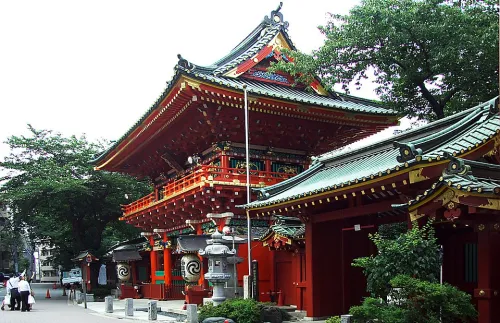
    Leave Ueno heading south along Chuo-dori and turn right just past Yushima Station. Kanda Myojin sits on a small hill above the surrounding streets, its vermilion gate unmistakable. Founded in 730 AD and moved to this spot by Tokugawa Ieyasu in 1616, the shrine is now famous for two things: the Kanda Matsuri festival (held in odd-numbered years, one of Tokyo's three great festivals) and its role as the unofficial guardian shrine of Akihabara's tech culture. You will see IT professionals and anime fans alike buying the shrine's tech-themed omamori (charms, 800-1000 JPY). The main hall's bright vermilion lacquer was fully restored in recent years. The courtyard is compact but photogenic, and the elevated position gives a nice sense of separation from the city noise below. Free to visit.

    Learn more about Kanda Myojin Shrine →
    Hours
    Open 24/7
    Price
    Free

    8 min walk to next stop

  7. 7

    Radio Kaikan

    Radio Kaikan

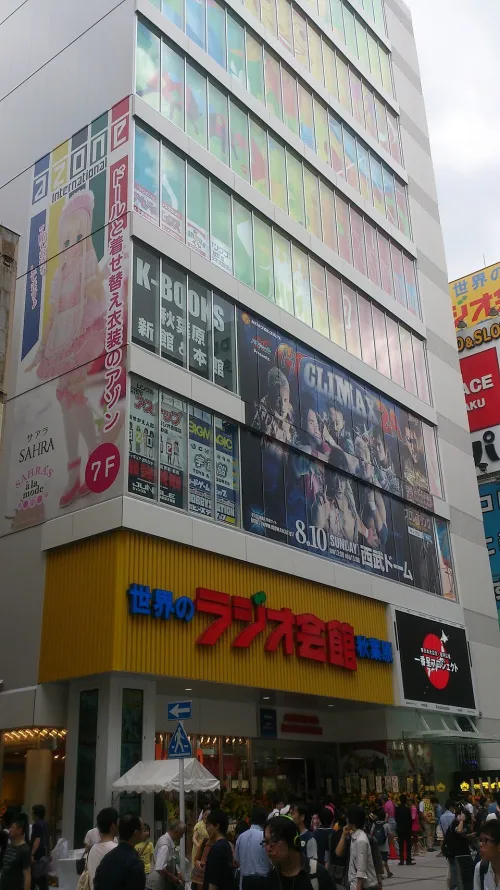
    Walk downhill from Kanda Myojin toward the train tracks and you are in Akihabara within minutes. Radio Kaikan is the 10-story building directly in front of JR Akihabara Station's Electric Town exit. The original opened in 1962 as an electronics market; the current building was rebuilt in 2014 and now packs manga shops, trading card stores, figurine dealers, and retro game vendors across its floors. Floors 5 through 7 are the sweet spot for browsing. You do not need to be into anime to appreciate the sheer density of niche goods here. Gashapon (capsule toy) machines line the ground floor entrance, 200-500 JPY per turn. Even a quick walk-through of Radio Kaikan gives you a concentrated taste of Akihabara's otaku ecosystem without getting lost in the district's more chaotic side streets.

    Learn more about Radio Kaikan →
    Hours
    Daily: 10:00 AM – 8:00 PM
    Price
    Free (entry)

    20 min walk to next stop

  8. 8

    Nihonbashi Bridge

    Nihonbashi Bridge

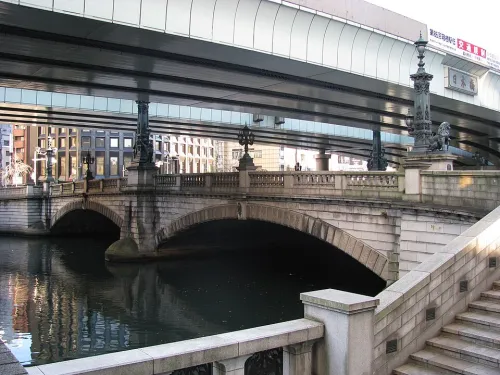
    From Akihabara, walk south along Chuo-dori for about 20 minutes, passing through the Kanda business district. The energy shifts completely: from blinking anime billboards to banks and department stores. Nihonbashi Bridge appears almost modestly beneath an expressway overpass. Do not let the highway overhead fool you. This stone bridge, completed in its current Renaissance-style form in 1911, marks kilometer zero for all of Japan's national road distances. A bronze plaque on the bridge's center marks the exact spot. The original wooden bridge was built here in 1603, the starting point for the five great highways of the Tokugawa era. Look for the bronze dragon and kirin (mythical creature) statues along the railings. The Mitsukoshi department store on the north end, founded in 1673, is worth ducking into for the basement food hall alone.

    Learn more about Nihonbashi Bridge →
    Hours
    Free
    Price
    Free

    18 min walk to next stop

  9. 9

    Imperial Palace East Gardens

    Imperial Palace East Gardens

    Head west from Nihonbashi along Eitai-dori, then follow the moat north to the Ote-mon gate entrance. The Imperial Palace East Gardens occupy the innermost ring of the former Edo Castle, seat of the Tokugawa shoguns for 260 years. Admission is free. The stone foundations of the original castle keep, destroyed by fire in 1657 and never rebuilt, stand at the highest point of the gardens. Climb up for a panoramic view over manicured lawns and the surrounding skyscrapers. The contrast is surreal: 350-year-old castle walls against the glass towers of Otemachi. The gardens are open 9:00 AM to 4:30 PM (extended hours in summer) and closed Mondays and Fridays. Check the schedule before you walk over. The ninomaru garden on the east side has a traditional Japanese garden with a pond and seasonal flowers. Allow 30 to 45 minutes here.

    Learn more about Imperial Palace East Gardens →
    Hours
    Mon: Closed | Tue-Thu: 9:00 AM – 4:00 PM | Fri: Closed | Sat-Sun: 9:00 AM – 4:00 PM
    Price
    Free

    10 min walk to next stop

  10. 10

    Nijubashi Bridge

    Nijubashi Bridge

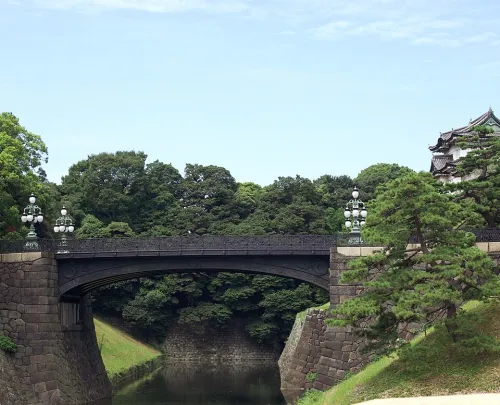
    Exit the East Gardens through the Ote-mon gate and walk south along the moat. The path curves around the outer walls and opens up into the broad Imperial Palace Plaza, a gravel expanse with perfectly trimmed pine trees. Nijubashi, the double-arched stone bridge built in 1888, sits directly ahead, framing the watchtower behind it. This is Tokyo's single most photographed composition, and for good reason. The bridge leads to the inner palace grounds, which open to the public only on January 2 and the Emperor's birthday. On normal days, you view from the plaza. The wide-open space here makes for a welcome break after the density of Akihabara and Nihonbashi. On a clear day, you can see the Marunouchi office towers rising sharply behind the palace walls.

    Learn more about Nijubashi Bridge →
    Hours
    Open 24/7
    Price
    Free

    12 min walk to next stop

  11. 11

    Tokyo Station

    Tokyo Station

    Walk east from the palace plaza down Gyoko-dori, a broad tree-lined avenue that points directly at Tokyo Station's Marunouchi facade. The three-story red-brick building, designed by Tatsuno Kingo and opened in 1914, was modeled after Amsterdam Centraal Station. Wartime bombing reduced it to two stories, and a painstaking restoration completed in 2012 brought back the original roofline and interior dome details. Stand in the plaza in front of the facade for the full effect. The octagonal domed ceilings inside the north and south entrance halls are decorated with relief sculptures of the zodiac, easy to miss if you do not look up. Below the station, Tokyo Ramen Street (Yaesu South exit, B1 floor) has eight top-tier ramen shops. Rokurinsha's tsukemen (dipping ramen, around 1100 JPY) draws the longest line for good reason. This is the perfect place to end the walk with a serious bowl of noodles.

    Learn more about Tokyo Station →
    Hours
    Free (exterior)
    Price
    Free (exterior)
AI Tourguide
Walk this exact route with a private AI guide.
Full GPS navigation, interactive stories, and a guide that answers all your questions. A private guide experience for just €5/hour.
Start This Tour

Self-Guided Tour vs. Group Tour in Tokyo

Guided walking tours in Tokyo typically run between 5000 and 15000 JPY per person, depending on group size and duration. For that price, you get a local guide who can navigate the backstreets, translate menus, and explain the Shinto rituals at each shrine in real time. That context genuinely adds value at stops like Kanda Myojin and Ueno Toshogu, where the historical layers are deep but not obvious from the buildings alone.

That said, this particular route is straightforward to walk on your own. Tokyo's signage is excellent, with most major intersections labeled in English and romaji. The stops are all public spaces or have clear entrances. Where a guide really earns their fee is in Akihabara (navigating the subculture) and at the Tokyo National Museum (explaining the significance of specific National Treasures). If you are comfortable using Google Maps and reading a few plaques, you will do fine solo. Download the route in the app, save it offline, and you have a self-guided tour that covers the same ground at your own pace for free.

Group Tour AI Self-Guided
Price €25–€50 per person €5/hour or €20 all-inclusive
Flexibility Fixed schedule Start anytime, skip stops
Languages 1–2 languages 11 languages
Pace Group pace Your own pace

How Long Does This Tokyo Tour Take?

Our route covers 13.5 km with 11 stops and takes approximately 4.7 hours at a relaxed pace.

The full route takes roughly 4.7 hours if you walk at a steady pace with brief stops at each location. In practice, plan for a full day. The Tokyo National Museum alone can absorb 90 minutes if you visit even two of its five buildings, and the Imperial Palace East Gardens deserve at least 30 to 45 minutes of slow wandering. Akihabara's Radio Kaikan is a 15-minute browse or a 90-minute deep dive, depending on your interest in Japanese pop culture.

A good midpoint break is near Kanda Myojin, where the surrounding streets have small kissaten (old-school Japanese coffee shops). Yanaka Coffee on Kanda-Sudacho serves a solid pour-over for 450 JPY. If you start at Senso-ji by 8:00 AM, you will reach the Imperial Palace gardens before the midday heat and finish at Tokyo Station in time for a late lunch in the basement food halls.

Tips for Walking in Tokyo

AI Tourguide
Walk this exact route with a private AI guide.
Full GPS navigation, interactive stories, and a guide that answers all your questions. A private guide experience for just €5/hour.
Start This Tour

AI Audio Guide for This Tour

Open this Tokyo walking tour in the app and follow the route turn by turn, with offline maps that work underground and between stations. Every stop is pinned on the map with its opening hours and prices, so you never arrive at a closed gate. Save it to your phone before you land at Narita or Haneda and you are ready to walk from Senso-ji to Tokyo Station without checking a guidebook once.

AI Audio Guide Stories, history and fun facts narrated as you walk. No earpiece rental needed.
GPS Navigation Turn-by-turn directions so you never get lost between stops.
Ask Anything Curious about a building you pass? Ask your AI guide on the spot.
11 Languages Switch language anytime. No separate tour needed.
Start This Tour Free

Common Questions

Tokyo is one of the safest major cities in the world for walking, day or night. Violent crime is extremely rare. Petty theft is uncommon compared to European capitals. The biggest hazard on this route is cyclists on sidewalks, especially around Ueno Park and the Nihonbashi area. Stay aware and walk on the left side of sidewalks (Japanese convention). Solo travelers, including women walking alone, consistently rate Tokyo among the safest cities they have visited.
Rain is common in Tokyo, especially during the tsuyu rainy season (June through mid-July). This route handles rain well because several stops are indoors or covered: Nakamise Street is a roofed arcade, the Tokyo National Museum is fully indoors, Radio Kaikan is a building, and Tokyo Station is obviously covered. Buy a clear vinyl umbrella at any convenience store (500-700 JPY) and keep walking. The temple grounds and palace gardens are actually beautiful in light rain.
Start between 7:00 and 8:00 AM. You will have Senso-ji nearly to yourself before the tour groups arrive around 9:30. This timing puts you at the Tokyo National Museum right when it opens at 9:30 AM and gets you to the Imperial Palace East Gardens before the early afternoon heat. In summer, starting early is not optional: afternoon temperatures in July and August regularly hit 35 degrees Celsius with high humidity. Cherry blossom season (late March to early April) is spectacular along the Sumida River near Azuma Bridge, but expect heavy crowds.
No booking needed. This self-guided tour is available anytime. Open the route on your phone and start walking. The AI audio guide works instantly, no reservation required.
The AI audio guide is available in 11 languages: English, German, French, Spanish, Italian, Japanese, Chinese, Portuguese, Danish, Norwegian, and Swedish.
Yes. Skip any stop, spend extra time at places you like, or start the route from any point. You can also ask the AI to suggest a shorter route.
AI Tourguide
Curated by AI Tourguide GPS-verified routes, reviewed and updated regularly.
Last verified March 2026