Best Time to Visit Zagreb
Month-by-month weather, crowds and prices, plus a full calendar of festivals and events worth planning a trip around.
Best monthsMay, Sep
CheapestJan, Feb, Nov
AvoidDec
BusiestJul, Aug, Dec

When is the best time to visit Zagreb?
Come in May or September. You get mild 22-26°C days, café terraces in full swing, every attraction open, and hotel rates 20-25% below the December and summer peaks. May adds the Cest is d'Best street-arts festival and spring blossom; September drops the July-August heat without losing the warmth. January, February and early November are the cheapest and quietest. December is magical for Advent in Zagreb but it is the year's busiest and priciest stretch, with weekends selling out weeks ahead.
Start our tool and find your best time to visit Zagreb
Your perfect month
Free · ~30 seconds
or tap a month directly
What matters to you?
And this?
Best overall: May, Sep. May and September are the real sweet spot: 22-26°C, every attraction open, café culture at full tilt, and rates 20-25% below peak. May brings spring blossom in the green horseshoe parks and the city-wide Cest is d'Best street-arts festival; September drops the punishing summer heat with no single dominant event pushing prices up.
Best value: Jan, Feb, Nov. January, February and early November bring the year's lowest hotel rates (45-90 EUR for a 3-star centre room), no queues anywhere, and free entries that stretch a budget: the Botanical Garden always, the Strossmayer Gallery on the first Sunday of the month, and the whole green horseshoe of parks. The catch is cold, grey, often foggy days, so pack for sub-zero evenings in deep winter.
Avoid: Dec, Aug. December weekends during Advent are the priciest and most crowded of the year, with central 3-star hotels selling out 4-6 weeks ahead and rates matching or beating summer. Mid-July to mid-August is the other one to dodge if you are heat-sensitive: 35-38°C days are common and Zagreb has no sea breeze to soften them.
- January: Good time, 6°C. This is the one month you have the Museum of Broken Relationships and the Upper Town lanes near Saint Mark's almost to yourself. Cold and grey is the honest trade, but the city is walkable, the cafés are warm, and a morning over coffee still costs barely 2 EUR. Slow, cheap and unhurried.
- February: Good time, 8°C. February is honest, unperformed Zagreb: no seasonal markup and no crowds, just a cold, quiet city going about its business. If you want the Upper Town, Dolac and the museums without a soul in your way and at the lowest prices of the year, this is your month.
- March: Great time, 12°C. March is the last genuinely quiet month before spring fills the centre. The terraces start to reopen, the green horseshoe parks turn green, and you can still get a table without a fight. That window closes fast once May arrives, so use it.
- April: Great time, 17°C. April is when Zagreb shakes off winter: blossom, café terraces back outside, and a film-festival buzz around Kaptol. It is busier and a touch pricier than March, especially over Easter, but the spring energy and the long-light evenings earn it.
- May: Good time, 20°C. May is the quietly perfect month: warm enough for terraces, green and blossoming, with real festival energy but no punishing heat. The Cest is d'Best weekend is a joy if you want the city buzzing, while earlier in the month you get the same fine weather with smaller crowds. Bring a light rain layer and you have Zagreb close to its best.
- June: Good time, 26°C. June is the tipping point into full summer, and the long evenings are the payoff. Light past 21:00 means late dinners on Tkalciceva and concerts in the parks, and the city genuinely comes alive after work. It is busy and getting pricey, but the energy is the best of the year.
- July: Good time, 28°C. July is hot, busy and best taken early or late in the day. Midday walking in the Lower Town is genuinely uncomfortable, so do your sightseeing before 10:00 or after 17:00, when Tkalciceva and Zrinjevac offer shade and the Upper Town catches a breeze. When the heat peaks, a cable-car ride up Medvednica drops you 10-15°C cooler.
- August: Good time, 28°C. August is full-summer Zagreb at its hottest, and many locals are away at the coast. The city is walkable only in the early and late hours; the rest of the day belongs to shaded terraces, Lake Jarun and the cooler heights of Medvednica. If you are heat-sensitive, this is the month to skip in favour of May or September.
- September: Great time, 22°C. September feels like Zagreb exhaling: warm enough for terraces, every attraction open, but without August's heat, crowds or prices. This is the month to come if you want everything running and the weather still kind, with the locals back from the coast and the city in its normal rhythm.
- October: Great time, 17°C. October is the couples' month: deep gold and copper foliage, the most intimate café and restaurant atmosphere on Tkalciceva, and almost no tourist crowds. Cool, romantic and quiet, with the Mirogoj arcades at their photographic best in the low afternoon light.
- November: Good time, 11°C. Early November is Zagreb at its most introverted: foggy, quiet and cheap, with the foliage hanging on and the Mirogoj candles a once-a-year spectacle. Late November is the smart play, catching the opening of Advent without the peak-week prices. Bring warm layers and patience for the grey.
- December: Tough month, 6°C. December trades the autumn quiet for full festive bustle: lights, mulled wine, the ice rink and crowds across the centre. It is genuinely magical, and worth timing a trip around, but it is the priciest, busiest stretch of the year. Go midweek (Mon-Thu) for markets that are 20-30% cheaper and far easier to book than the weekend crush.
Zagreb weather by month
HighLowRainfall
Jan6°
Feb8°
Mar12°
Apr17°
May20°
Jun26°
Jul28°
Aug28°
Sep22°
Oct17°
Nov11°
Dec6°
| Month | Temp | Rain | Sun | Crowds | Prices | Highlight |
|---|---|---|---|---|---|---|
| Jan | 6° / -2° | 62mm · 10 rainy days | 5.2 h/day | ●○○○○ | ●○○○○ | Advent in Zagreb |
| Feb | 8° / 0° | 72mm · 9 rainy days | 6.4 h/day | ●○○○○ | ●○○○○ | |
| Mar | 12° / 2° | 48mm · 8 rainy days | 8.6 h/day | ●●○○○ | ●●○○○ | Festival of Lights |
| Apr | 17° / 6° | 70mm · 10 rainy days | 10.0 h/day | ●●○○○ | ●●○○○ | ZagrebDox |
| May | 20° / 11° | 114mm · 15 rainy days | 10.3 h/day | ●●●○○ | ●●●○○ | Floraart |
| Jun | 26° / 16° | 81mm · 11 rainy days | 12.3 h/day | ●●●●○ | ●●●●○ | Animafest Zagreb |
| Jul | 28° / 18° | 85mm · 10 rainy days | 12.4 h/day | ●●●●○ | ●●●●○ | Zagreb Classic |
| Aug | 28° / 18° | 78mm · 9 rainy days | 11.7 h/day | ●●●●○ | ●●●●○ | Gymnastics European Championships |
| Sep | 22° / 13° | 106mm · 10 rainy days | 9.4 h/day | ●●●○○ | ●●●○○ | |
| Oct | 17° / 9° | 89mm · 9 rainy days | 7.6 h/day | ●●○○○ | ●●○○○ | |
| Nov | 11° / 4° | 85mm · 9 rainy days | 5.0 h/day | ●●○○○ | ●●○○○ | Zagreb Film Festival |
| Dec | 6° / 0° | 65mm · 9 rainy days | 4.9 h/day | ●●●●● | ●●●●● | Advent in Zagreb |
How we score this: weather = long-run climate normals (Open-Meteo), crowds & prices = relative season read, events checked yearly against official dates.
Best time to visit Zagreb: weather, prices & crowds
Best months for good weather
May, Sep
May and September give Zagreb its most comfortable walking weather: 22-26°C, the urban heat island still bearable, and café terraces on Tkalciceva and at Zrinjevac open all day. You skip the 35-38°C July and August heatwaves that make midday in the Lower Town genuinely uncomfortable.
Quietest months to avoid the crowds
Jan, Feb, Nov
January, February and early November are the emptiest months. You walk straight into the Museum of Broken Relationships, browse Dolac Market without tour groups, and have the Upper Town lanes near Saint Mark's almost to yourself. The trade is cold, often foggy days.
Cheapest time to visit Zagreb
Jan, Feb, Nov
January and February are the floor: 3-star centre hotels run 45-80 EUR a night, roughly 35-40% below summer. Early November (1-27 Nov, before Advent pre-bookings surge) holds 60-90 EUR with far nicer weather. Coffee over a whole morning still costs 1.50-2.50 EUR.
Best time for festivals and events
Nov, Dec, Jan
Two stand out. On All Saints' Day (1 November), Mirogoj Cemetery is lit by tens of thousands of candles from dusk, an extraordinary, solemn spectacle. From 28 November, Advent in Zagreb turns roughly 25 locations into an award-winning Christmas market, with the King Tomislav Square ice rink and the illuminated Upper Town its centrepiece.
How many days do you need in Zagreb?
Two days suits Zagreb very well. The historic core is genuinely compact, so a focused first day covers the Upper Town and all the Lower Town highlights on foot; a second day lets you slow down, linger over the green horseshoe parks and explore the museum strip at a proper pace. If time is tight, one long day is workable.

One day
Upper Town to Lower Town in a single sweep
Start at Zagreb Cathedral on Kaptol, then cross to Dolac Market by 8:30 for local cheese and produce before stalls thin out around noon. Walk up through the medieval Stone Gate into Gradec, photograph the tiled roof of St. Mark's Church from the square, and reach Lotrscak Tower by 11:55 for the noon cannon. The self-guided Zagreb walking tour links all 9 stops, including the Museum of Broken Relationships and Ban Jelacic Square, in a tight 2.8 km loop that takes about 1.9 hours. Finish with an evening coffee on Tkalciceva Street.
Two daysRecommended
Parks, museums and the green horseshoe
With the Upper Town done, spend the morning in the Lower Town museum belt: the Mimara, the Strossmayer Gallery of Old Masters (free on the first Sunday of the month) and a long walk through Zrinjevac Park to King Tomislav Square. In the afternoon, take tram 14 out to Mirogoj Cemetery for the colonnaded arcades and the best long-light photography in the city. End back on Tkalciceva for dinner on the terrace.
Three days
Medvednica, Jarun and the neighbourhood pace
A third day earns a proper Medvednica excursion: take the cable car up to Sljeme at 1,033 m, where the temperature drops 10-15°C and forested trails are short and easy. Return via the Maksimir Park and Zoo on the east side of the city, a good half-day if you have children in tow. The Botanical Garden and the quiet backstreets of Gornji Grad reward an unhurried evening on foot.
Four days or more
Plitvice, wine country and deeper Croatia
From four days, Zagreb becomes a base for wider exploration. Plitvice Lakes National Park is about two hours south by car or bus, doable as a long day-trip and most comfortable in May, September or October when the trails are cool and uncrowded. The Zagorje hills north of the city hold Trakoscan Castle and the thermal spa town of Krapinske Toplice, both reachable in under an hour. Finish with a tasting at one of the small Pleso-area wineries on the way back.
Best time to visit Zagreb by traveller type
Same city, different trip. Here's the month that fits how you're travelling.
🧭
Best time to visit Zagreb for the first time
MaySep
May or September give you the complete Zagreb: Upper Town and Saint Mark's, Dolac Market, Tkalciceva, Zrinjevac and a Medvednica day-trip, all in 22-26°C weather with manageable crowds and rates well below peak. May has more festival energy, September the steadier weather.
❤️
Best time to visit Zagreb for couples
OctNov
October for golden foliage at Maksimir and through the Mirogoj arcades, plus the most intimate café and restaurant atmosphere on Tkalciceva, or late November (20-27 Nov) to catch the opening of Advent without the peak-week prices and crowds.
💶
Best time to visit Zagreb on a budget
JanFebNov
January and February for absolute floor rates (45-80 EUR a night), or 1-27 November for value with kinder weather (60-90 EUR). Free wins: the Strossmayer Gallery on the first Sunday, the Botanical Garden always, the green-horseshoe parks, browsing Dolac, and the Jarun lakeside. Skip December, when Advent pushes rates to their annual high.
🍝
Best time to visit Zagreb for food and wine
NovMay
Early-to-mid November for Istrian truffle season flooding the markets and restaurants, plus the late-November opening of the Fuliranje and Advent food stalls. Or May for the Asian Street Food Festival (13-19 May) and the Cest is d'Best street-food stands. Dolac Market is the year-round constant: arrive by 8:30 for the widest cheese, truffle and produce selection before stalls pack up around noon.
Worst time to visit Zagreb
December weekends during Advent are the single hardest time to visit on a normal budget: central 3-star hotels sell out 4-6 weeks ahead and rates reach 120-180 EUR a night, at or above summer levels. Mid-July to mid-August is the other window to reconsider for anyone heat-sensitive. As an inland city at 118 m, Zagreb has no sea breeze to soften the 35-38°C heatwaves that arrive in July and August, and midday walking in the Lower Town becomes genuinely uncomfortable.
Still worth it for December is genuinely worth it if you come midweek (Monday to Thursday), when markets are 20-30% cheaper and far easier to book. Summer is fine if you plan sightseeing before 10:00 or after 17:00 and use Medvednica and Lake Jarun as midday escapes.
Go instead in May, September, when Zagreb is at its best.
Best time for a tour of Zagreb
Zagreb's 2.8-kilometre loop through the Upper Town and down to Zrinjevac Park is genuinely pleasant to walk in April, May, September, and October. Temperatures sit between 13 and 20 °C, the chestnut trees along Tkalčićeva Street are either budding or turning gold, and you can linger in Dolac Market without being jostled. June, July, and August push highs to 26 to 28 °C; the stone cobbles of the Upper Town hold heat, there is almost no shade between St. Mark's Church and Lotrščak Tower, and the streets fill with visitors, making the narrow lanes feel shoulder to shoulder by midday. May is the trickiest month to time: highs of around 20 °C feel ideal, but it averages 15 rain days, so mornings can start grey and wet before clearing. Winter tells a different story. December pulls the most visitors of any cold month, and the Christmas market on Ban Jelačić Square turns the lower town heaving, yet January and February are near-empty, with highs barely reaching 5 to 8 °C and the Stone Gate tunnel feeling genuinely cold. If you can dress for it, a clear winter morning in the Upper Town offers the sort of quiet that summer never does.
The advantage of walking Zagreb with AI Tourguide is that you set the clock, not a tour operator. On a hot August day you can start your Zagreb tour at 7 am, reach St. Mark's Church before the sun clears the rooftops, and finish at Zrinjevac Park in comfortable shade by mid-morning. In spring, when a May shower rolls in, you duck into the Stone Gate and let the guide pick up the story there until the rain passes. The guide runs entirely in your browser, no download or login needed. It greets you, tells you the real history behind each stop, asks what catches your eye, and adapts the rest of the walk to what you say. Full control of pace and route stays with you from the first step to the last.

 +5
+5All 9 stops are already on the map.
You just press start.
You just press start.
 AI Tourguide
You just read the route.
Now walk it with a guide in your ear.
Press start wherever you are, even hundreds of kilometres from Zagreb, and the guide begins telling its stories right away. In the city, pick any of the 9 stops to start from: it leads you there, then talks with you the whole route, asking, listening, remembering, and shaping the tour around your answers.
9stops2.8km1.9hours11languages
▶Start the tour freeFree to start · Runs in your browser · No app, no download
Zagreb events and festivals calendar
Annual highlights worth timing a trip around, listed month by month.
March
💡 LightsFestival of Lights Festival svjetla
Mar 18–22 ~
five days in mid-to-late March
Light installations illuminate Lower Town landmarks including Zrinjevac Park and Ban Jelacic Square over five evenings, turning a spring city break into an after-dark walking trail.
April
🍷 Food and wineZagreb Pizza Festival
Apr 16–26 ~
ten days in late April
A ten-day outdoor pizza event at Franjo Tudman Park, gathering Croatian and international pizzaiolos for a casual, open-air food run.
🎬 FilmZagrebDox
Apr 19–26 ~
a week in late April
The International Documentary Film Festival at the Kaptol Boutique Cinema, with more than 100 films from over 50 countries across a week.
May
🍷 Food and wineAsian Street Food Festival Azijski street food festival
May 13–19 ~
a week in mid-May
A week-long outdoor street-food market on Strossmayer Square, a relaxed prelude to the summer season.
🌸 Seasonal natureFloraart
May 14–17 ~
four days in mid-May
An international flower and garden exhibition at Lake Bundek, with more than 200 exhibitors filling the lakeside with colour.
🎉 FestivalCest is d'Best
May 28–31 ~
four days at the end of May
Croatia's biggest street-arts festival, with 500-plus performers from 15-plus countries on open-air stages across the centre, at Zrinjevac, Tkalciceva and Cvjetni trg.
June
🎬 FilmAnimafest Zagreb
Jun 8–13 ~
six days in early-to-mid June
The World Festival of Animated Film, the oldest competitive animation festival in the world, with 300-plus films from 47 countries.
🏳️🌈 PrideZagreb Pride
Jun 13 ~
the second Saturday of June
A Pride parade through the city centre, politically significant in a traditionally conservative country and with growing attendance each year.
🎵 MusicZagreb Classic
Jun 19 – Jul 3 ~
mid-June into early July
Free open-air classical concerts in King Tomislav Square, with world-class orchestras and soloists filling the park on summer evenings.
🎵 MusicINmusic Festival
Jun 22–24 ~
three days in late June
Croatia's biggest open-air music festival, set on the island at Lake Jarun with international headliners and on-site camping over three days.
🍷 Food and wineFuliranje Summer Sunset
Jun 30 – Jul 6 ~
a week spanning late June into early July
A week-long street-food and cocktail festival at Strossmayer Square, showcasing Zagreb's culinary scene outdoors at dusk.
July
🎉 FestivalZagreb International Folklore Festival Medunarodna smotra folklora
Jul 15–19 ~
five days in mid-July
Folklore groups from 30-plus countries perform traditional music and dance on open-air stages across the city centre, free to watch outdoors.
August
🏃 SportGymnastics European Championships Europsko prvenstvo u gimnastici
Aug 13–23 ~
mid-to-late August
Elite artistic gymnastics at Zagreb Arena: the women's competition (13-16 August) followed by the men's (19-23 August).
November
🎬 FilmZagreb Film Festival
Nov 9–15 ~
a week in mid-November
A week of premieres, guest directors and retrospectives at cinemas across the city, drawing a creative-traveller crowd.
🎄 Christmas marketAdvent in Zagreb Advent u Zagrebu
Nov 28 – Jan 7 ~
late November to early January
An award-winning, city-wide Christmas market across roughly 25 locations, including Zrinjevac, the King Tomislav Square ice rink, Ban Jelacic Square, Strossmayer Square, Tkalciceva Street and the illuminated Upper Town.
Insider tips for visiting Zagreb
The rules buried in forums, in one place.
- Get to Dolac Market by 8:30. The best stalls (cheese, Istrian truffles, local fruit and veg) run 7:00-12:00 Monday to Saturday; by 13:00 half the vendors are packing up. Early arrival also means the fewest tour groups.
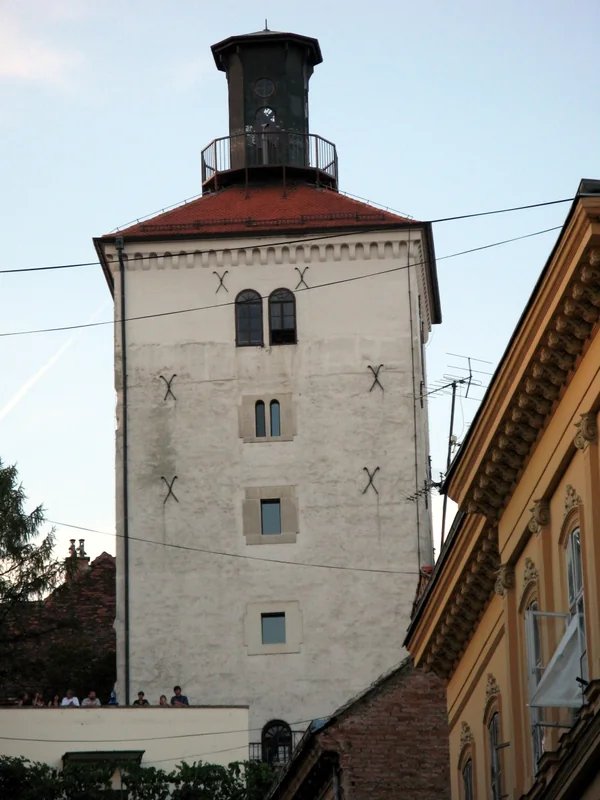
- The Gric cannon fires at exactly noon every day from Lotrscak Tower. Stand on the adjacent terrace by 11:55 for the view, and not directly below, where the bang makes unprepared tourists jump. The tower is closed every Monday.
- Take the Uspinjaca funicular up to the Upper Town: a 3-minute ride for 0.66 EUR, running roughly every 10 minutes from 6:30 to 23:30. Or walk up via the Strossmayer Promenade in about 15 minutes for city views, which is the better call on a clear evening.
- Around INmusic Festival and Anti-Fascist Struggle Day (22 June), accommodation comes under dual pressure. Central 3-star hotels lift rates 30-40% for 21-25 June. Festival-goers camping at Lake Jarun free up city beds but fill the hostels, so book at least 8 weeks ahead.
- During Advent, the four December weekends (Fri-Sun) sell out central 3-star hotels 4-6 weeks in advance. Weekday stays (Mon-Thu) in the same week are easier to find and 20-30% cheaper, so fly in Wednesday and leave Sunday.
- Saint Mark's Church is realistically an exterior-only sight. The interior opens only on weekday mornings (9:00-12:00) and during brief mass windows, and is closed Saturday and Sunday. Photograph the famous tiled roof from the square in morning light, when the east-facing facade is lit.
- The Museum of Broken Relationships (7 EUR, open daily 9:00-21:00) takes no advance booking. Summer afternoons bring 20-30 minute waits, so go by 10:00 or after 18:00 to walk straight in.
- On All Saints' Day (1 November), Mirogoj Cemetery is lit by tens of thousands of candles from dusk. Tram lines 14 and 106 add extra frequency; arrive by 17:00, before true darkness falls around 17:30-18:00, to see the arcades come alight.
- Tkalciceva Street, the city's main bar and café strip, peaks nightly from 20:00 and stays busy until 2:00. It is the best place to watch Zagreb's kavana coffee-house culture in action, though on summer weekends you may queue for a table at the popular spots.
- The Strossmayer Gallery of Old Masters is closed Mondays and free on the first Sunday of every month, a known local bargain. On those free Sundays, arrive before 10:00 to beat the school groups.
- When the summer heat or the cost of a private guide climbs, our in-browser AI tour guide is the cheap, fully flexible alternative: no app, no download, just a real conversation that tells you the story at each stop and answers your questions as you walk the Upper Town in the cooler early hours. You pick where to start and tap to the next sight, at a flat 5 EUR per hour or 20 EUR all-in, with 100 free credits to try it.
Public holidays in Zagreb
On these dates many shops and offices close, transport thins out, and sights can be mobbed or shut. Plan around them.
| Date | Holiday | What closes |
|---|---|---|
| Jan 1 | New Year's Day | Most shops and museums closed; restaurants open. The city is quiet after the Advent crowds. A slow, low-key day. |
| Jan 6 | Epiphany | Banks and most shops closed. Dolac Market may run shortened hours. Advent in Zagreb runs to 7 January, so the markets are still going. |
| Apr 5 | Easter Sunday | The cathedral is packed for mass and almost everything else is closed. Domestic visitors fill the city and short-break prices spike for a few days. |
| Apr 6 | Easter Monday | Most museums and shops closed. A calm public holiday before the post-Easter dip in demand returns. |
| May 1 | Labour Day | Mass picnics fill the city parks. Dolac Market stays open, but most shops close. A lively, local day outdoors. |
| May 30 | Statehood Day | National celebration with flag ceremonies and public events. It overlaps the Cest is d'Best street-arts weekend, so plan transport and parking early and book accommodation well ahead. |
| Jun 4 | Corpus Christi | Religious processions move through the Upper Town. Some attractions close for the day. |
| Jun 22 | Anti-Fascist Struggle Day | Public holiday that coincides with the INmusic Festival opening. Some shops and museums run reduced hours, and transport toward Lake Jarun is busier than usual. |
| Aug 5 | Victory and Homeland Thanksgiving Day | Civic ceremonies around the city. Most tourist sites stay open, but expect a more solemn, formal tone to the day. |
| Aug 15 | Assumption of Mary | Strong religious observance: churches are packed and some museums close. Falls in the August peak, so the city stays busy. |
| Nov 1 | All Saints' Day | Mirogoj Cemetery is candle-lit from dusk, drawing thousands of visitors; extra tram routes run to Mirogoj. Most shops close during the day. The single most atmospheric date in November. |
| Nov 18 | Remembrance Day | A sombre national day of remembrance. Tourist operations run as normal, but expect a quieter, more reflective city. |
| Dec 25 | Christmas Day | Almost everything is closed and restaurant service is limited, so reserve ahead. The Advent markets keep operating, which is where the city gathers. |
| Dec 26 | St. Stephen's Day | The Advent markets continue and some attractions reopen. Tourism and hotel prices stay near their annual peak through the holiday week. |
Zagreb month by month
January in Zagreb
High6°C / 42°F
Low-2°C
Rain62mm / 10 rainy days
Sun5.2 h/day
Daylight9 h/day
Humidity83%
Crowds●○○○○Prices●○○○○
January is Zagreb at its quietest and cheapest. Highs sit near 3-5°C, the air is dry but cold, and fog (magla) can settle over the Lower Town for days. It is the post-Advent lull, with only domestic weekenders and business travellers about, so museums are empty and rates are at their floor. Advent in Zagreb runs to 7 January, giving the first week a festive tail before the city goes fully quiet.
The vibe This is the one month you have the Museum of Broken Relationships and the Upper Town lanes near Saint Mark's almost to yourself. Cold and grey is the honest trade, but the city is walkable, the cafés are warm, and a morning over coffee still costs barely 2 EUR. Slow, cheap and unhurried.
Don't miss A perfect month for the indoor sights: the Museum of Broken Relationships (7 EUR, daily 9:00-21:00), the city and art museums, and a warming session in Tkalciceva's coffee houses. If snow has fallen, Medvednica's Sljeme ski runs (December-March, snow-dependent) are a 10-15°C colder day-trip up the cable car.
Crowd drivers The deep post-Advent off-season: only domestic weekenders and business travellers remain. The Advent markets close on 7 January, after which visitor pressure hits its annual low.
In season Truffle season carries on from autumn, and warming Zagreb classics shine: strukli (the city's baked cheese pastry) and crni rizot are at their cosiest in the Tkalciceva and Opatovina restaurants.
Heads up New Year's Day (1 January) closes most shops and museums; Epiphany (6 January) closes banks and most shops, with Dolac Market possibly on shortened hours. Most museums are closed Mondays year-round.
The cheapest month of the year: 3-star centre hotels run 45-75 EUR a night, roughly 35-40% below summer.
Events this month
🎄 Christmas marketAdvent in Zagreb Advent u Zagrebu
Nov 28 – Jan 7 ~
late November to early January
An award-winning, city-wide Christmas market across roughly 25 locations, including Zrinjevac, the King Tomislav Square ice rink, Ban Jelacic Square, Strossmayer Square, Tkalciceva Street and the illuminated Upper Town. It has won multiple Best Christmas Market in Europe titles.
The single biggest tourism event of the year, and genuinely transformative to the city's atmosphere. Hotel prices peak to or above summer rates, especially on December weekends; book 6-10 weeks ahead for those, and prefer a midweek stay to save 20-30%.
February in Zagreb
High8°C / 47°F
Low0°C
Rain72mm / 9 rainy days
Sun6.4 h/day
Daylight10 h/day
Humidity78%
Crowds●○○○○Prices●○○○○
February is still deep off-season. Highs creep toward 5-7°C but it stays cold and often foggy. Zagreb has no big pre-Lent draw, so international visitors are scarce and museums stay uncrowded. The Gast Fair at Velesajam (26-28 February) lifts rates a little at fair-adjacent hotels mid-week, but central rooms hold at their floor.
The vibe February is honest, unperformed Zagreb: no seasonal markup and no crowds, just a cold, quiet city going about its business. If you want the Upper Town, Dolac and the museums without a soul in your way and at the lowest prices of the year, this is your month.
Don't miss The indoor heavyweights are at their emptiest: the Strossmayer Gallery of Old Masters (free on the first Sunday), the Mimara and city museums, and the Nikola Tesla Technical Museum. On a clear day, take the funicular up to the Upper Town and the Gric cannon at noon with no crowd at all.
Crowd drivers Still the off-season trough, with international tourism at its annual low. The Gast Fair (26-28 February) at Velesajam draws a trade crowd to the southwest of the centre, not the city core.
In season Still hearty-winter eating: strukli, sarma and game dishes, with Dolac Market quietest and most local on weekday mornings. Coffee culture is at its most unhurried.
Heads up No public holidays this month, but most museums stay closed on Mondays, and Lotrscak Tower is shut every Monday too.
Prices at their annual floor alongside January: 45-80 EUR a night, with fair-adjacent hotels nudged 10-15% mid-week by the Gast Fair (26-28 Feb).
March in Zagreb
High12°C / 54°F
Low2°C
Rain48mm / 8 rainy days
Sun8.6 h/day
Daylight12 h/day
Humidity70%
Crowds●●○○○Prices●●○○○
March brings the first spring warming, drawing the earliest short-break visitors back. The Botanical Garden and King Tomislav Park begin to bloom, and crowds stay moderate. The Festival of Lights (18-22 March) adds evening foot traffic to the Lower Town, and the Place2Go tourism fair (20-22 March) at Velesajam nudges rates at fair-adjacent hotels. It is still cool and changeable, but the worst of the grey is lifting.
The vibe March is the last genuinely quiet month before spring fills the centre. The terraces start to reopen, the green horseshoe parks turn green, and you can still get a table without a fight. That window closes fast once May arrives, so use it.
Don't miss The Festival of Lights illuminates Zrinjevac and Ban Jelacic Square over five evenings, a free after-dark walk. Spring blossom starts in the free Botanical Garden and King Tomislav Park, the opening of the classic green-horseshoe season.
Crowd drivers Spring warming brings the first city-break crowd, and the Festival of Lights (18-22 March) draws evening visitors to the Lower Town. The Place2Go fair concentrates demand near Velesajam, southwest of the core, so book a central hotel instead.
In season Transitional eating as the markets shift toward spring produce; Dolac begins to show the first early greens. The truffle stock from autumn is winding down on restaurant menus.
Prices recover gently as the first short-break visitors return: 60-95 EUR a night, with the Place2Go fair (20-22 Mar) lifting hotels near Velesajam.
Events this month
💡 LightsFestival of Lights Festival svjetla
Mar 18–22 ~
five days in mid-to-late March
Light installations illuminate Lower Town landmarks including Zrinjevac Park and Ban Jelacic Square over five evenings, turning a spring city break into an after-dark walking trail.
A low-cost, free add-on to an early-spring trip. It draws evening crowds into the Lower Town, so it is a good reason to base yourself centrally.
April in Zagreb
High17°C / 62°F
Low6°C
Rain70mm / 10 rainy days
Sun10.0 h/day
Daylight14 h/day
Humidity68%
Crowds●●○○○Prices●●○○○
April is spring proper. Highs climb into the mid-teens, the horse chestnuts on Zrinjevac flower, and the green horseshoe is at its freshest. Easter (5-6 April) packs the cathedral and spikes short-break prices for a few days, with many shops shut Good Friday to Easter Monday. ZagrebDox (19-26 April) fills boutique hotels near Kaptol, and the Pizza Festival adds a relaxed open-air run. A pleasant, moderately busy month.
The vibe April is when Zagreb shakes off winter: blossom, café terraces back outside, and a film-festival buzz around Kaptol. It is busier and a touch pricier than March, especially over Easter, but the spring energy and the long-light evenings earn it.
Don't miss ZagrebDox screens 100-plus documentaries at the Kaptol Boutique Cinema, a strong draw in a quieter month. Spring blossom peaks in the Botanical Garden and King Tomislav Park, and the ten-day Zagreb Pizza Festival at Franjo Tudman Park runs free open-air.
Crowd drivers Easter (5-6 April) fills the city with domestic visitors for a few days, and ZagrebDox (19-26 April) books out boutique hotels near Kaptol. The post-Easter dip then returns demand to moderate levels.
In season The Zagreb Pizza Festival (16-26 April) brings Croatian and international pizzaiolos outdoors. Spring produce arrives at Dolac, and the city's signature strukli is a year-round constant on the Tkalciceva strip.
Heads up Easter Sunday (5 April) and Easter Monday (6 April) close most museums and shops, with many also shut from Good Friday. The cathedral is packed for Easter mass.
Rates 65-100 EUR; Easter (5-6 April) spikes short-break demand for 3-4 days, then prices dip back after the holiday.
Events this month
🍷 Food and wineZagreb Pizza Festival
Apr 16–26 ~
ten days in late April
A ten-day outdoor pizza event at Franjo Tudman Park, gathering Croatian and international pizzaiolos for a casual, open-air food run.
An easy, free-entry add-on to a spring trip with no impact on accommodation. Pleasant on a warm April evening.
🎬 FilmZagrebDox
Apr 19–26 ~
a week in late April
The International Documentary Film Festival at the Kaptol Boutique Cinema, with more than 100 films from over 50 countries across a week.
A strong reason to visit in an otherwise quieter April. Boutique hotels near Kaptol fill fast, so book ahead if you want to be close to the screenings.

May in Zagreb
High20°C / 69°F
Low11°C
Rain114mm / 15 rainy days
Sun10.3 h/day
Daylight15 h/day
Humidity72%
Crowds●●●○○Prices●●●○○
May is one of Zagreb's two sweet spots: highs of 22-26°C, the city in full leaf, and the café terraces properly open. It is among the wettest months (90-100 mm), but rain tends to come as 30-60 minute afternoon thunderstorms, not all-day soakings, so pack an umbrella. Cest is d'Best (28-31 May), Croatia's biggest street-arts festival, fills the centre over the Statehood Day weekend, while the Asian Street Food Festival and Floraart add lower-key colour earlier in the month.
The vibe May is the quietly perfect month: warm enough for terraces, green and blossoming, with real festival energy but no punishing heat. The Cest is d'Best weekend is a joy if you want the city buzzing, while earlier in the month you get the same fine weather with smaller crowds. Bring a light rain layer and you have Zagreb close to its best.
Don't miss Cest is d'Best puts 500-plus performers on open stages at Zrinjevac, Tkalciceva and Cvjetni trg, with central streets closed to traffic. Floraart fills Lake Bundek with 200-plus flower exhibitors, and the green horseshoe of parks is at its most lush for long walks.
Crowd drivers Cest is d'Best (28-31 May) is the peak hotel-fill event for its size, and it overlaps Statehood Day (30 May), stacking demand into one long weekend. Earlier weeks stay calmer.
In season The Asian Street Food Festival (13-19 May) on Strossmayer Square and the Cest is d'Best food stalls give the month two strong street-food runs. Dolac is at its spring best for local cheese and produce.
Heads up Labour Day (1 May) closes most shops, though Dolac Market stays open and the parks fill with picnics. Statehood Day (30 May) brings flag ceremonies and overlaps the Cest is d'Best crowds.
Shoulder-high pricing at 80-120 EUR; Cest is d'Best (28-31 May) and the Statehood Day long weekend fill central hotels.
Events this month
🌸 Seasonal natureFloraart
May 14–17 ~
four days in mid-May
An international flower and garden exhibition at Lake Bundek, with more than 200 exhibitors filling the lakeside with colour.
A scenic add-on to a May trip and a fine excuse for a lakeside afternoon if the weather is kind.
🍷 Food and wineAsian Street Food Festival Azijski street food festival
May 13–19 ~
a week in mid-May
A week-long outdoor street-food market on Strossmayer Square, a relaxed prelude to the summer season.
Free, central and easy, it makes a good first evening in a May city break before the festivals and crowds build.
🎉 FestivalCest is d'Best
May 28–31 ~
four days at the end of May
Croatia's biggest street-arts festival, with 500-plus performers from 15-plus countries on open-air stages across the centre, at Zrinjevac, Tkalciceva and Cvjetni trg. Central streets close for it.
The ideal energy for a late-May long weekend, but it is the peak hotel-fill event for its size, and it overlaps Statehood Day (30 May). Book well ahead.

June in Zagreb
High26°C / 79°F
Low16°C
Rain81mm / 11 rainy days
Sun12.3 h/day
Daylight16 h/day
Humidity69%
Crowds●●●●○Prices●●●●○
June opens Zagreb's peak season. Highs reach the high 20s, the days are long and bright until past 21:00, and the festival calendar is dense: Animafest (8-13 June), Zagreb Pride (13 June), INmusic at Lake Jarun (22-24 June) and the free Zagreb Classic concerts running from mid-month. Afternoon thunderstorms can roll through, but the long warm evenings make June one of the liveliest months to be here.
The vibe June is the tipping point into full summer, and the long evenings are the payoff. Light past 21:00 means late dinners on Tkalciceva and concerts in the parks, and the city genuinely comes alive after work. It is busy and getting pricey, but the energy is the best of the year.
Don't miss INmusic brings international headliners and camping to the island at Lake Jarun. The free Zagreb Classic concerts pack King Tomislav Square on summer evenings, Animafest screens animation for cinema fans, and Zagreb Pride parades through the centre.
Crowd drivers INmusic (22-24 June) drives mid-range and budget sell-outs, and it coincides with Anti-Fascist Struggle Day (22 June), creating dual pressure on accommodation. Zagreb Pride (13 June) also fills central hotels for its weekend.
In season The Fuliranje Summer Sunset food-and-cocktail run begins at Strossmayer Square (from 30 June), and the first stone fruit reaches Dolac. Terrace-grill and aperitivo season is in full swing along Tkalciceva and Opatovina.
Heads up Corpus Christi (4 June) brings religious processions to the Upper Town and closes some attractions. Anti-Fascist Struggle Day (22 June) runs some shops and museums on reduced hours.
Peak begins: 105-155 EUR a night, with INmusic and the 22 June holiday lifting central rooms 30-40% for 21-25 June.
Events this month
🎬 FilmAnimafest Zagreb
Jun 8–13 ~
six days in early-to-mid June
The World Festival of Animated Film, the oldest competitive animation festival in the world, with 300-plus films from 47 countries.
Niche but significant, it is one for cinema and animation fans. It creates no hotel crunch, so it slots neatly into a June trip.
🏳️🌈 PrideZagreb Pride
Jun 13 ~
the second Saturday of June
A Pride parade through the city centre, politically significant in a traditionally conservative country and with growing attendance each year.
A strong, colourful presence downtown. Central hotels fill for the weekend, so LGBTQ+ travellers should book early.
🎵 MusicZagreb Classic
Jun 19 – Jul 3 ~
mid-June into early July
Free open-air classical concerts in King Tomislav Square, with world-class orchestras and soloists filling the park on summer evenings.
An unmissable free cultural programme. The square gets packed on concert nights, so come early for a good spot on the grass.
🎵 MusicINmusic Festival
Jun 22–24 ~
three days in late June
Croatia's biggest open-air music festival, set on the island at Lake Jarun with international headliners and on-site camping over three days.
A major price driver for mid-range and budget rooms; book 8-plus weeks ahead. The lakeside setting is a real draw, but if you are not attending, expect heavier traffic on the southwest ring routes.
🍷 Food and wineFuliranje Summer Sunset
Jun 30 – Jul 6 ~
a week spanning late June into early July
A week-long street-food and cocktail festival at Strossmayer Square, showcasing Zagreb's culinary scene outdoors at dusk.
An easy summer add-on during the Zagreb Classic and post-INmusic stretch. Free to enter and central.
July in Zagreb
High28°C / 82°F
Low18°C
Rain85mm / 10 rainy days
Sun12.4 h/day
Daylight15 h/day
Humidity66%
Crowds●●●●○Prices●●●●○
July is high summer and one of Zagreb's busiest months. Highs sit in the high 20s with heatwaves pushing 32-36°C, and as an inland city at 118 m, Zagreb has no sea breeze, so the Lower Town heat island is real at midday. Rain comes as short afternoon thunderstorms. The Folklore Festival (15-19 July) fills the central squares, and the free Zagreb Classic concerts carry into early July.
The vibe July is hot, busy and best taken early or late in the day. Midday walking in the Lower Town is genuinely uncomfortable, so do your sightseeing before 10:00 or after 17:00, when Tkalciceva and Zrinjevac offer shade and the Upper Town catches a breeze. When the heat peaks, a cable-car ride up Medvednica drops you 10-15°C cooler.
Don't miss The Folklore Festival puts groups from 30-plus countries on free open-air stages across the centre. For relief from the heat, the Medvednica cable car climbs to Sljeme (1,033 m, 10-15°C cooler), and Lake Jarun is the local swimming and picnic escape. When the noon sun or guided-tour prices climb, our flat-priced in-browser AI guide walks the cooler early hours with you, telling the story at each stop.
Crowd drivers Domestic and regional tourism peaks, and the Folklore Festival (15-19 July) brings crowds to the central squares midweek, though without heavy accommodation pressure of its own.
In season The Fuliranje run continues into early July at Strossmayer Square, and Dolac is heavy with summer fruit. Cooler evening dining on the shaded Tkalciceva and Opatovina terraces is the way to eat in the heat.
High-summer pricing at 100-150 EUR, sustained by domestic and regional tourism and the festival run.
Events this month
🎵 MusicZagreb Classic
Jun 19 – Jul 3 ~
mid-June into early July
Free open-air classical concerts in King Tomislav Square, with world-class orchestras and soloists filling the park on summer evenings.
An unmissable free cultural programme. The square gets packed on concert nights, so come early for a good spot on the grass.
🍷 Food and wineFuliranje Summer Sunset
Jun 30 – Jul 6 ~
a week spanning late June into early July
A week-long street-food and cocktail festival at Strossmayer Square, showcasing Zagreb's culinary scene outdoors at dusk.
An easy summer add-on during the Zagreb Classic and post-INmusic stretch. Free to enter and central.
🎉 FestivalZagreb International Folklore Festival Medunarodna smotra folklora
Jul 15–19 ~
five days in mid-July
Folklore groups from 30-plus countries perform traditional music and dance on open-air stages across the city centre, free to watch outdoors.
Free street performances bring the central squares to life midweek, with no real accommodation pressure. A lively, low-cost reason to be in town in mid-July.

August in Zagreb
High28°C / 82°F
Low18°C
Rain78mm / 9 rainy days
Sun11.7 h/day
Daylight14 h/day
Humidity68%
Crowds●●●●○Prices●●●●○
August stays hot and busy, with German, Austrian, Croatian and Hungarian school holidays all overlapping. Highs hold in the high 20s with 35-plus heatwaves common and no sea breeze to soften them. The Gymnastics European Championships at Zagreb Arena (13-23 August) spike demand for sports hotels and apartments mid-month, and Assumption (15 August) brings strong religious observance, with some museums closed.
The vibe August is full-summer Zagreb at its hottest, and many locals are away at the coast. The city is walkable only in the early and late hours; the rest of the day belongs to shaded terraces, Lake Jarun and the cooler heights of Medvednica. If you are heat-sensitive, this is the month to skip in favour of May or September.
Don't miss The Gymnastics Championships draw an elite-sport audience to Zagreb Arena. Otherwise August is about heat escapes: the Medvednica cable car to cooler Sljeme, swimming and shade at Lake Jarun, and a Plitvice Lakes day-trip (about 2 hours each way) for forest, water and lower temperatures.
Crowd drivers Regional school holidays keep demand high, and the Gymnastics European Championships (13-23 August) stack a sports crowd onto the peak, spiking hotel and apartment rates near the arena. Book at least 10 weeks ahead for that window.
In season Peak summer produce at Dolac and cool evening dining on the Tkalciceva terraces. Some family-run kitchens take their own summer break, so check ahead for a specific restaurant.
Heads up Victory and Homeland Thanksgiving Day (5 August) brings civic ceremonies, with most sites open. Assumption of Mary (15 August) packs the churches and closes some museums.
Sustained peak at 100-150 EUR; the Gymnastics Championships (13-23 Aug) spike sports-hotel demand near Zagreb Arena.
Events this month
🏃 SportGymnastics European Championships Europsko prvenstvo u gimnastici
Aug 13–23 ~
mid-to-late August
Elite artistic gymnastics at Zagreb Arena: the women's competition (13-16 August) followed by the men's (19-23 August).
Sports-hotel and apartment demand spikes around the arena in mid-August, stacking onto the school-holiday peak. Book at least 10 weeks ahead, or avoid this window if you want a quieter, cheaper city.
September in Zagreb
High22°C / 72°F
Low13°C
Rain106mm / 10 rainy days
Sun9.4 h/day
Daylight12 h/day
Humidity74%
Crowds●●●○○Prices●●●○○
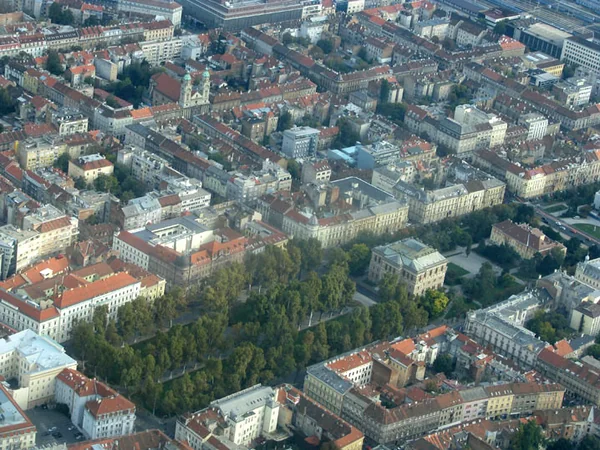
September is the other sweet spot, often the single best month of all. The summer heat breaks to a comfortable 25-27°C, the queues shorten at Lotrscak Tower and the Museum of Broken Relationships, and rates fall 20-25% below August. There is no dominant festival pushing prices, so you get fine weather, café terraces still buzzing, and the full city without the crush. A reliable, easy month to visit.
The vibe September feels like Zagreb exhaling: warm enough for terraces, every attraction open, but without August's heat, crowds or prices. This is the month to come if you want everything running and the weather still kind, with the locals back from the coast and the city in its normal rhythm.
Don't miss The full city without the queues: the Upper Town and Saint Mark's roof in morning light, Dolac at its produce best, and long walks through the green horseshoe in mild air. A Medvednica hike or a Plitvice day-trip is at its most comfortable now that the heat has gone.
Crowd drivers Demand eases as the school holidays end and the heat breaks. With no dominant single event, general pressure stays moderate and prices settle into the shoulder.
In season Early autumn produce arrives at Dolac, and the restaurant kitchens shift toward heartier seasonal cooking. It is the comfortable lead-in to the October-December truffle stretch.
Shoulder pricing returns at 80-120 EUR, down 20-25% from August, with no single dominant event driving rates.

October in Zagreb
High17°C / 63°F
Low9°C
Rain89mm / 9 rainy days
Sun7.6 h/day
Daylight11 h/day
Humidity81%
Crowds●●○○○Prices●●○○○
October is golden-autumn Zagreb. Highs ease into the mid-teens, and the foliage peaks late in the month at Zrinjevac, Maksimir and through the Mirogoj arcades, where the afternoon light is exceptional. Crowds thin to a creative-traveller trickle and prices fall. Grey, drizzly spells appear, but rarely all-day downpours. A calm, atmospheric, well-priced month.
The vibe October is the couples' month: deep gold and copper foliage, the most intimate café and restaurant atmosphere on Tkalciceva, and almost no tourist crowds. Cool, romantic and quiet, with the Mirogoj arcades at their photographic best in the low afternoon light.
Don't miss Autumn foliage peaks in late October at Maksimir Park and through the Mirogoj Cemetery arcades, where the afternoon light is at its finest. The green horseshoe and the Botanical Garden glow copper, and the Medvednica trails are crisp and quiet for hiking.
Crowd drivers A genuinely low-pressure month. A creative-traveller crowd drifts through for the autumn light and the run-up to the film festival, but there is no event driving real demand.
In season Istrian truffle season opens, flooding Dolac and the restaurants from October into December, the foodie high point of the year. Game and chestnut dishes return to the menus.
Quiet, good-value autumn at 65-95 EUR a night, a calm window before the late-November Advent run-up.

November in Zagreb
High11°C / 52°F
Low4°C
Rain85mm / 9 rainy days
Sun5.0 h/day
Daylight10 h/day
Humidity86%
Crowds●●○○○Prices●●○○○
November splits in two. Through the 27th it is the cheapest, calmest non-January window, with highs near 9-10°C, autumn foliage lingering and almost no tourists. All Saints' Day (1 November) lights Mirogoj Cemetery with tens of thousands of candles. The Zagreb Film Festival (9-15 November) draws a creative crowd. Then, from 28 November, Advent in Zagreb opens and the city flips into festive high season, with prices climbing fast.
The vibe Early November is Zagreb at its most introverted: foggy, quiet and cheap, with the foliage hanging on and the Mirogoj candles a once-a-year spectacle. Late November is the smart play, catching the opening of Advent without the peak-week prices. Bring warm layers and patience for the grey.
Don't miss All Saints' Day (1 November) is the month's standout: Mirogoj Cemetery candle-lit from dusk, with extra trams running. The Zagreb Film Festival fills the cinemas, and the late-month Advent opening brings the first lights, ice rink and food stalls to Zrinjevac and Ban Jelacic Square.
Crowd drivers The first 27 days are deep value with minimal crowds. The Zagreb Film Festival adds a small midweek draw, and from 28 November the opening of Advent in Zagreb flips demand sharply upward, with pre-bookings surging from around the 20th.
In season Peak truffle season on the markets and menus, plus the late-November opening of the Fuliranje and Advent food stalls. Mulled wine and chestnuts appear on the street corners as the markets begin.
Heads up All Saints' Day (1 November) closes most shops during the day, with the focus on Mirogoj. Remembrance Day (18 November) is a sombre national day, with normal tourist operations.
Early November is the cheapest non-January window at 60-90 EUR; prices begin climbing from around 20 November as Advent pre-bookings surge.
Events this month
🎬 FilmZagreb Film Festival
Nov 9–15 ~
a week in mid-November
A week of premieres, guest directors and retrospectives at cinemas across the city, drawing a creative-traveller crowd.
A good excuse for a November trip in the value window, after the autumn quiet and before Advent prices kick in from late in the month.
🎄 Christmas marketAdvent in Zagreb Advent u Zagrebu
Nov 28 – Jan 7 ~
late November to early January
An award-winning, city-wide Christmas market across roughly 25 locations, including Zrinjevac, the King Tomislav Square ice rink, Ban Jelacic Square, Strossmayer Square, Tkalciceva Street and the illuminated Upper Town. It has won multiple Best Christmas Market in Europe titles.
The single biggest tourism event of the year, and genuinely transformative to the city's atmosphere. Hotel prices peak to or above summer rates, especially on December weekends; book 6-10 weeks ahead for those, and prefer a midweek stay to save 20-30%.

December in Zagreb
High6°C / 44°F
Low0°C
Rain65mm / 9 rainy days
Sun4.9 h/day
Daylight9 h/day
Humidity87%
Crowds●●●●●Prices●●●●●
December is Advent Zagreb, the busiest and most expensive month of the year. Highs sit near 0-5°C, fog settles in the Lower Town, and the award-winning Advent in Zagreb fills roughly 25 locations with markets, the King Tomislav Square ice rink and the illuminated Upper Town. The atmosphere genuinely earns its Best Christmas Market in Europe titles, but weekends sell out weeks ahead and rates match or beat summer. Christmas Day (25 December) closes most things, though the markets keep going.
The vibe December trades the autumn quiet for full festive bustle: lights, mulled wine, the ice rink and crowds across the centre. It is genuinely magical, and worth timing a trip around, but it is the priciest, busiest stretch of the year. Go midweek (Mon-Thu) for markets that are 20-30% cheaper and far easier to book than the weekend crush.
Don't miss The Advent markets span Zrinjevac, Ban Jelacic Square, Strossmayer Square, Tkalciceva and the Upper Town, with the King Tomislav Square ice rink at the centre. The illuminated Upper Town and the candle-lit mood make for the most atmospheric evening walks of the year, best escaped to midweek.
Crowd drivers Advent in Zagreb is the single biggest tourism event of the year, crushing summer peaks on December weekends. The four Friday-to-Sunday windows sell out central 3-star hotels 4-6 weeks ahead; weekdays are noticeably calmer.
In season The Fuliranje food run is part of the Advent programme at Strossmayer Square, and the markets pour mulled wine, fritule and roasted chestnuts. Truffle season is still in full flow in the restaurants.
Heads up Christmas Day (25 December) closes almost everything and limits restaurant service, so reserve ahead; the Advent markets keep operating. St. Stephen's Day (26 December) sees some attractions reopen while the markets continue.
The annual peak at 120-180 EUR a night, matching or exceeding summer; December weekends sell out 4-6 weeks ahead.
Events this month
🎄 Christmas marketAdvent in Zagreb Advent u Zagrebu
Nov 28 – Jan 7 ~
late November to early January
An award-winning, city-wide Christmas market across roughly 25 locations, including Zrinjevac, the King Tomislav Square ice rink, Ban Jelacic Square, Strossmayer Square, Tkalciceva Street and the illuminated Upper Town. It has won multiple Best Christmas Market in Europe titles.
The single biggest tourism event of the year, and genuinely transformative to the city's atmosphere. Hotel prices peak to or above summer rates, especially on December weekends; book 6-10 weeks ahead for those, and prefer a midweek stay to save 20-30%.
Frequently asked questions
What is the best time to visit Zagreb?
May and September are the best overall. You get mild 22-26°C days, every attraction open, café terraces in full swing, and hotel rates 20-25% below the December and summer peaks. May adds the Cest is d'Best street-arts festival and spring blossom in the green horseshoe parks; September drops the July-August heat without losing the warmth, and carries no single dominant event to push prices up.
What is the cheapest time to visit Zagreb?
January and February are the cheapest, with 3-star centre hotels at 45-80 EUR a night, roughly 35-40% below summer. Early November (1-27 Nov, before Advent pre-bookings surge) holds 60-90 EUR with much nicer weather. Avoid December: despite the wintry look, Advent in Zagreb pushes hotel rates to their annual high, matching or beating summer.
What is the worst time to visit Zagreb?
December weekends during Advent if you dislike crowds and high prices: central 3-star hotels sell out 4-6 weeks ahead and rates peak. The other one to dodge is mid-July to mid-August if you are heat-sensitive, when 35-38°C days are common and Zagreb, sitting inland at 118 m, has no sea breeze. If you do come in August, skip 13-23 August, when the Gymnastics Championships stack onto the school-holiday peak.
Is Zagreb worth visiting in December for the Christmas market?
Yes, very much. Advent in Zagreb (28 November to 7 January) is an award-winning, city-wide market across roughly 25 locations, with multiple Best Christmas Market in Europe titles, the King Tomislav Square ice rink and the illuminated Upper Town. Expect hotel prices at their annual peak and weekends sold out weeks ahead. Go midweek (Monday to Thursday) for markets that are 20-30% cheaper and far easier to book.
How hot does Zagreb get in summer?
Hot and without sea relief. As an inland city at 118 m, Zagreb sees July and August heatwaves push 35-38°C, and the Lower Town's urban heat island makes midday walking uncomfortable. Plan sightseeing before 10:00 or after 17:00, when Tkalciceva and Zrinjevac give shade and the Upper Town catches a breeze. For a real escape, the Medvednica cable car climbs to Sljeme (1,033 m), which runs 10-15°C cooler.
When can you see the autumn foliage in Zagreb?
Late October is peak colour. Zrinjevac Park, Maksimir Park and the Mirogoj Cemetery arcades turn deep gold and copper, and the afternoon light through the Mirogoj arcades in October is exceptional. October is also one of the quietest, best-value months (65-95 EUR a night), so it pairs golden scenery with calm streets and low prices.
How many days do you need in Zagreb?
Two to three days cover the essentials: the Upper Town with Saint Mark's Church and Lotrscak Tower (noon cannon), Dolac Market in the morning, the Museum of Broken Relationships, a stroll through Zrinjevac and the green horseshoe, and an evening on Tkalciceva. Add a half-day for the Medvednica cable car, or a full day for a Plitvice Lakes trip (about 2 hours each way), viable year-round.
What should I know about opening times and closures in Zagreb?
A few quirks catch visitors out. Most museums are closed Mondays, as is Lotrscak Tower. Saint Mark's Church interior is realistically weekday-mornings only (9:00-12:00), closed at weekends, so treat it as an exterior sight. Dolac Market is best 7:00-12:00 before stalls pack up around noon. The Strossmayer Gallery is free on the first Sunday of the month. Croatia does not move a holiday to Monday when it falls on a Sunday.

Any month, any day: your guide is already there
Whatever date you pick, a private human guide gets pricier and harder to book on weekends, holidays and in peak season. Our live AI guide, the one that walks with you and answers anything you ask out loud, works the opposite way.
One flat price, every day
No holiday, weekend, night or peak-season surcharge. A private guide in Zagreb runs well over 100 euro for a half day, and more on holidays. Ours stays the same.
Available the moment you want it
Start at midnight or at dawn, on Christmas, in the snow, in the August heat. No sold-out high season, no booking weeks ahead.
Your pace, no meter running
Pause for a long lunch, restart after dark, repeat a stop. The tour simply waits for you.
Free to try, a fraction of the cost
Test it for free, then a transparent flat price that undercuts any private guide, in every season.
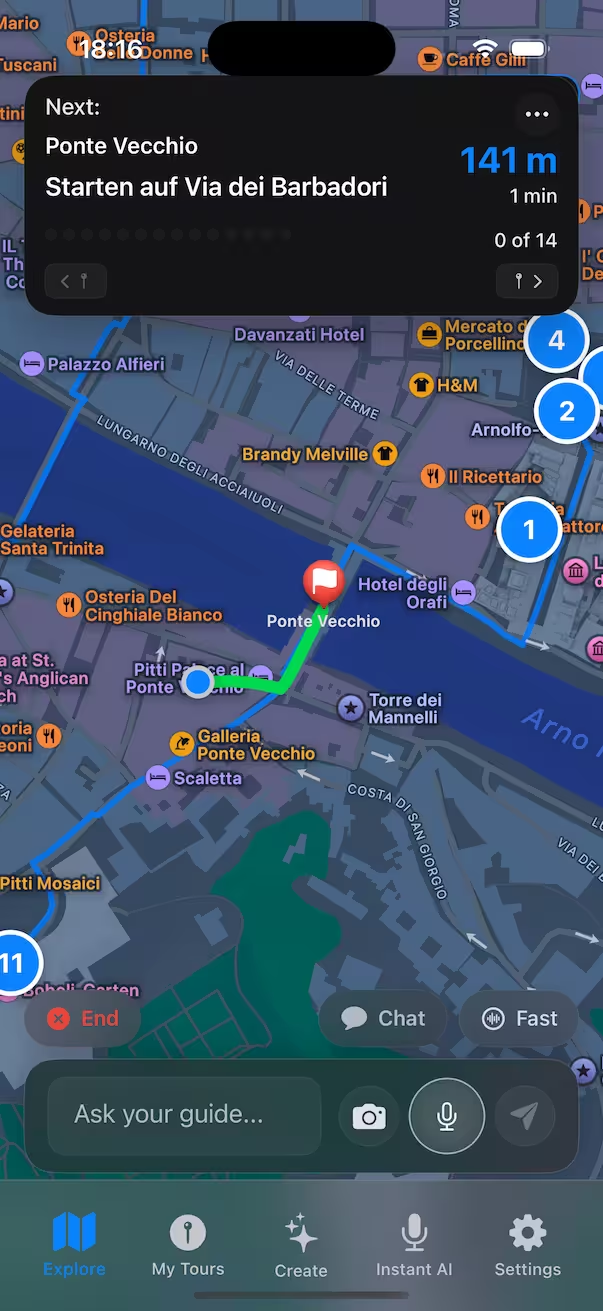
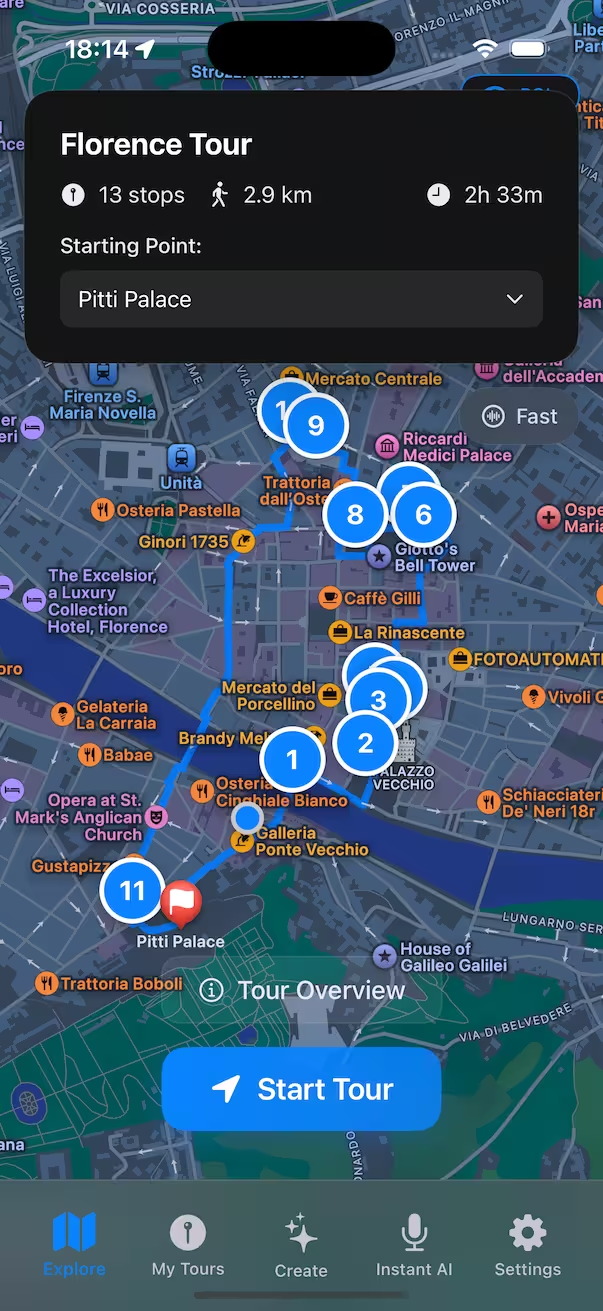
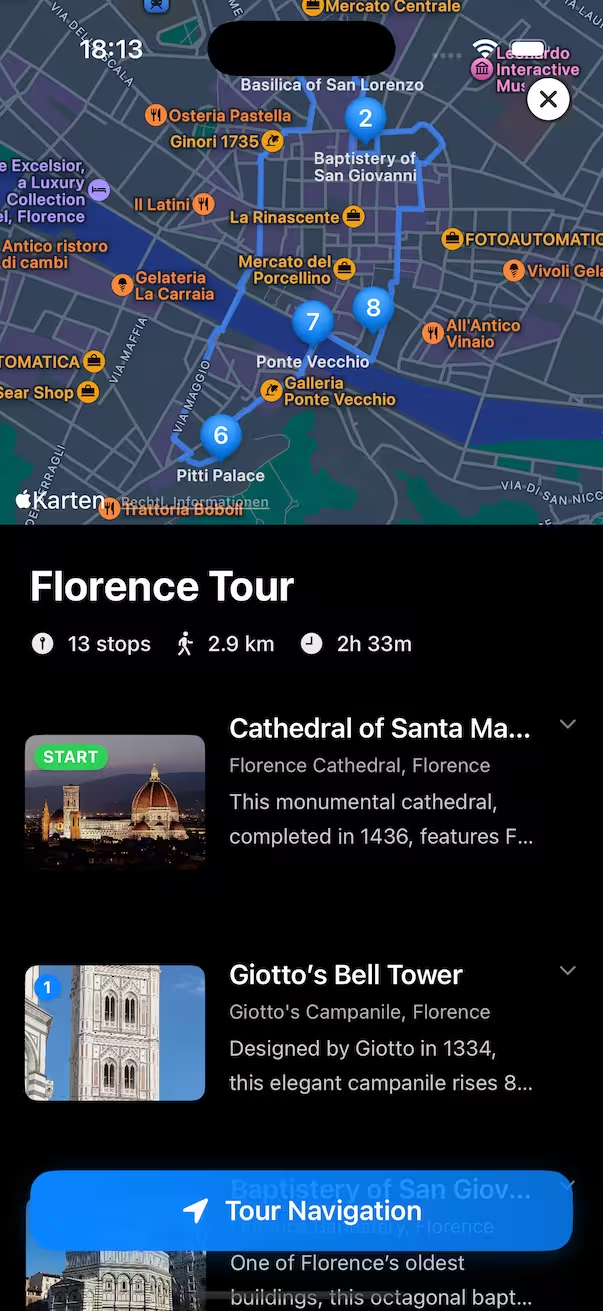
The classic Zagreb tour: 9 stops, 2.8 km, about 2 h on foot
Your live AI guide and the self-guided Zagreb route, together in your browser.