Things to Do in Avignon - Top Attractions, Hidden Gems & Must-See Sights

Discover the best things to do in Avignon. Complete guide to must-see sights, popular attractions, hidden gems, museums, food markets and parks.

18 Attractions 5 Categories Travel Guide

Table of Contents

Avignon Overview

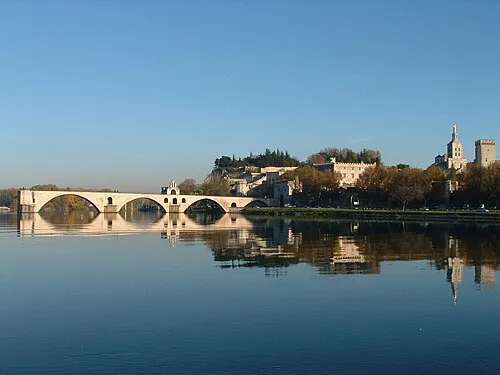
Avignon owes its skyline to the 14th century, when it briefly replaced Rome as the seat of the Catholic Church. The massive Palace of the Popes dominates the center, a fortress-like structure that anchors the city’s identity. Just outside its gates, the Place du Palais opens up to the Avignon Cathedral and the high gardens of Rocher des Doms, which provide a clear view across the Rhône to the broken arches of the Pont Saint-Bénézet.

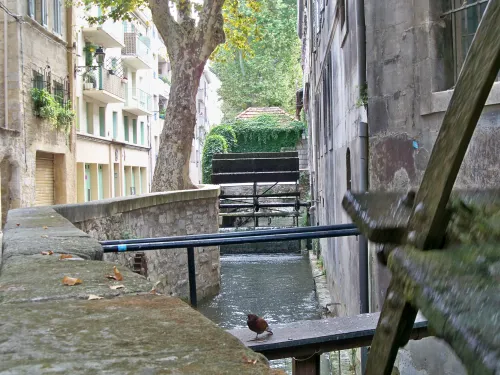
Most of what you’ll want to see sits within the intact Avignon Ramparts. It is a compact, walkable city where narrow lanes eventually lead to the waterwheels of Rue des Teinturiers. For a different perspective, crossing to Île de la Barthelasse or visiting the fortresses in Villeneuve-lès-Avignon offers a quieter look at the Provencal landscape away from the main crowds.

Must-See Attractions in Avignon

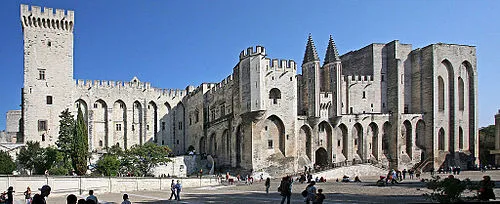
  • Palace of the Popes — The world's largest Gothic palace, serving as a fortress and residence for nine popes during the 14th century.
  • Pont Saint-Bénézet — A partial medieval bridge that famously stops mid-river, offering a unique vantage point of the city walls.
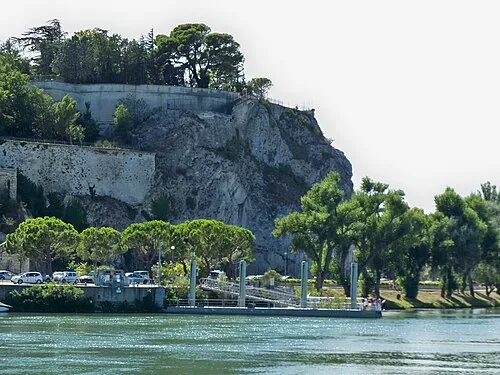
  • Rocher des Doms — A hilltop park above the palace that provides panoramic views of the Rhône Valley and the Alpilles mountains.
  • Rue des Teinturiers — A narrow, cobblestone street lined with ancient waterwheels and plane trees that follows the path of the Sorgue canal.
  • Avignon Ramparts — The well-preserved 14th-century stone walls that still completely encircle the historic old town.
🏛️ Must-See ⭐ Sights 💎 Hidden Gems 🎨 Museums 🌳 Parks & Views

🏛️ Must-See Attractions in Avignon

These iconic landmarks and must-see sights are essential stops for any visitor to Avignon.

Avignon Ramparts

1. Avignon Ramparts

Encircling the entire old town, these limestone walls define the physical and psychological limits of the historic center. Built in the fourteenth century to protect the papal seat from mercenaries and plague, they remain remarkably intact, running for nearly three miles. Unlike many European cities that tore down their fortifications to let traffic flow, Avignon kept its corset tight, which is why the city center feels so dense and contained compared to the sprawling suburbs beyond.

You cannot walk along the top of the entire circuit, but the sheer presence of the walls shapes your experience of the city. Seven gates still pierce the masonry, and the best way to appreciate their scale is from the outside, perhaps while walking from the train station or along the Rhone. The stone glows a warm honey color in the late afternoon sun, creating a visual boundary that separates the medieval time capsule from the modern world.

While hunting for Avignon attractions, you will inevitably pass through these gates. The stretch near the Porte de la République is often the most chaotic, but if you head towards the Rue des Teinturiers side, the walls feel more integrated into the daily life of the neighborhood, with locals leaning against the ancient stones to smoke or chat.
Hours Mon-Sat: 9:00 AM – 6:00 PM | Sun: Closed
Price Free
Insider TipFor the best perspective on the walls' height and defensive layout, walk the exterior path near the Pont Saint-Bénézet rather than just driving past them.
Palace of the Popes

2. Palace of the Popes

This is the beast that dominates the city. As the largest gothic palace in the world, its scale is hard to comprehend until you are standing at the base of its sheer stone walls. It served as the fortress and residence for the popes during the fourteenth century, a time when Avignon replaced Rome as the center of Christendom. The interior is a maze of cavernous halls, chapels, and private apartments, stripping away the romanticism of the era to reveal the cold, hard power of the medieval church.

Be warned: the rooms are largely empty. The furniture was looted or destroyed centuries ago, so you are walking through bare stone shells. To bridge this gap, the entry ticket includes a 'Histopad' (a tablet) that uses augmented reality to show you how the rooms looked when they were filled with frescoes, textiles, and feasts. It is essential for understanding the space; otherwise, it can feel like an endless series of drafty corridors.

It is the heavyweight champion of Avignon attractions, so expect lines and crowds. The climb to the roof terraces is non-negotiable; it offers a commanding view over the courtyard and the city roofs, helping you understand why they built it here—it is defensive, imposing, and absolute. Even if you find the history dry, the sheer architectural audacity of building this mountain of stone is impressive.

Hours Daily: 10:00 AM – 5:00 PM
Price Free
Location 43.9508, 4.8075
Insider TipIf you visit in July, the Courtyard of Honor transforms into the main stage for the Avignon Theatre Festival; try to book a show to see the palace 'alive' at night.
Place de l'Horloge

3. Place de l'Horloge

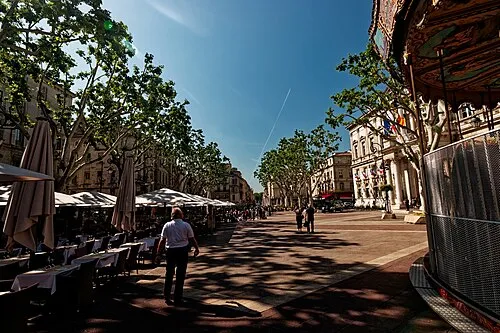
This is the living room of Avignon, lined with plane trees and terraced cafes that spill out onto the pavement. It is where the Town Hall and the Opera House sit, making it the civic center of the town. In summer, it is loud, busy, and filled with the spinning lights of a vintage carousel. It functions as the primary funnel for tourists moving toward the palace, so the energy is always high, though often chaotic.

The restaurants here are prime territory for people-watching, though you pay a premium for the location and the food is often standard tourist fare. It is better used as a navigation point or a place to grab a drink and watch the street performers than for a serious meal. In winter, the Christmas market takes over, filling the air with the smell of mulled wine and churros.

While it might not be the most historically deep of the Avignon attractions, it is unavoidable. The square dates back to the Roman forum, meaning people have been gathering here to gossip and trade for two thousand years. The clock tower that gives the square its name is actually hard to see from the square itself—you have to step back quite a bit to spot the mechanical figures striking the hours.

Hours Open 24/7
Price Free
Website N/A
Insider TipAvoid eating right on the main drag if you want quality; walk two streets away from the square in any direction for better food at lower prices.
Pont Saint-Bénézet

4. Pont Saint-Bénézet

Known globally from the nursery rhyme 'Sur le pont d'Avignon', this bridge is famous precisely because it is broken. Only four of the original twenty-two arches remain, ending abruptly in the middle of the Rhone. It was once the only crossing point on the river between Lyon and the Mediterranean, a vital economic artery that was repeatedly smashed by floods until the city finally gave up rebuilding it in the seventeenth century.

Walking out onto the bridge is a strange experience; you are suspended over the water with nowhere to go. The audio guide is crucial here, as it explains the engineering struggles and the legend of the shepherd Bénézet who supposedly laid the first stone. There is also a small chapel dedicated to Saint Nicholas built directly onto one of the piers, a precarious place to pray given the river's history of violence.

It is one of the ticketed Avignon attractions where the reality is quite different from the song—you don't dance 'on' the bridge (it's too narrow), but historically, people danced 'under' it on the island. Visiting requires a ticket, often bundled with the palace. If you don't want to pay to walk on a stump of a bridge, you can see it perfectly well from the riverbanks or the Rocher des Doms park for free.

Hours Daily: 10:00 AM – 5:00 PM
Price Free
Location 43.95389, 4.805
Insider TipThe ticket includes an audio guide that is actually very good; listen to the section about the 'dancing' legend to correct your childhood misconceptions.
Get Your Own Private Tour with AI Guide
AI Guide
  • Personalized tour tailored to your interests
  • Your AI guide tells stories, shares facts, and cracks jokes
  • Turn-by-turn GPS navigation
  • Available in your language — no download needed
Try for Free

💎 Hidden Gems in Avignon - Off the Beaten Path

Beyond the tourist crowds, Avignon hides remarkable treasures waiting to be discovered.

Église Saint-Pierre

1. Église Saint-Pierre

Tucked away on a small square just off the main commercial drag, this church is famous for its solid walnut doors, which are arguably the finest examples of wood carving in Provence. Carved in 1551, they depict St. Jerome and St. Michael with such depth and fluidity that the wood almost looks like molded clay. Most people walk right past, distracted by the nearby shops, but stopping to examine the details reveals a masterclass in Renaissance expression.

Inside, the church is a classic example of Flamboyant Gothic architecture, with a spacious nave and side chapels that were funded by wealthy local families centuries ago. The stone lacework around the choir is delicate and impressive, contrasting with the heavy, fortress-like build of the papal buildings nearby. It feels like a parish church rather than a monument, often smelling of incense and old wax.

It serves as a quick, free stop while navigating other Avignon attractions in the pedestrian center. You do not need to dedicate hours here; popping in for ten minutes gives you a sense of the city's wealthy merchant history, distinct from the papal power. The facade, especially in the morning light, shows off the intricate gargoyles and grotesques that have watched over the square for five hundred years.

Hours Mon-Wed: 9:30 AM – 1:00 PM, 2:30 – 5:00 PM | Thu: 2:30 – 5:00 PM | Fri-Sat: 9:30 AM – 1:00 PM, 2:30 – 5:00 PM | Sun: 8:30 – 10:30 AM
Price Free
Location 43.9492, 4.8083
Insider TipThe church is often closed for a long lunch break from 12:00 to 14:00, so plan your visit for the morning or late afternoon to ensure the doors are open.
Get Your Own Private Tour with AI Guide
AI Guide
  • Personalized tour tailored to your interests
  • Your AI guide tells stories, shares facts, and cracks jokes
  • Turn-by-turn GPS navigation
  • Available in your language — no download needed
Try for Free

🎨 Best Museums & Galleries in Avignon

World-class museums and galleries that make Avignon a cultural treasure.

Collection Lambert

1. Collection Lambert

Housed in the eighteenth-century Hôtel de Caumont, this museum creates a deliberate and striking collision between aristocratic architecture and cutting-edge contemporary art. The white-walled galleries are filled with works from Yvon Lambert’s personal donation—think Sol LeWitt, Basquiat, and Nan Goldin—displayed in spaces that retain their classical proportions and grand staircases. It is a refreshing palate cleanser if you have overdosed on medieval history and religious iconography elsewhere in the city.

The curation here is rarely safe; it tends to be intellectual and occasionally provocative, challenging the conservative stone surroundings. Special exhibitions often take over the entire space, transforming the way you move through the rooms. The courtyard is particularly lovely, offering a stark, minimalist calm that feels miles away from the crowded tourist streets nearby.

Including this stop among your list of Avignon attractions adds a necessary layer of modern relevance to a visit that can otherwise feel stuck in the 1300s. Even if you are not a die-hard fan of conceptual art, the way the museum utilizes natural light and space makes it a soothing environment to wander through for an hour, especially when the summer heat makes the outdoor sites unbearable.

Hours Mon-Tue: Closed | Wed-Fri: 2:00 – 6:00 PM | Sat-Sun: 11:00 AM – 6:00 PM
Price 8€
Insider TipThe museum restaurant, Le Violette, sets up tables in the courtyard during warmer months and serves one of the most peaceful lunches in town.
Musée Calvet

2. Musée Calvet

Housed in a sumptuous eighteenth-century mansion, this is the city's primary fine arts museum and arguably its most elegant. The building itself is a draw, with a grand courtyard where peacocks often roam freely, adding a touch of surreal luxury to the experience. The collection is eclectic, ranging from Egyptian sarcophagi and Roman ironwork to French paintings from the sixteenth to the twentieth centuries, reflecting the broad tastes of the physician Esprit Calvet who founded it.

It feels less like a didactic museum and more like exploring the private collection of a wealthy, eccentric uncle. The rooms are spacious and creaky-floored, filled with porcelain, silverware, and tapestries that give you a glimpse into the lifestyle of the Provencal aristocracy. It is rarely crowded, allowing you to stand nose-to-canvas with works by Vernet or David without getting elbowed.

As one of the free Avignon attractions, it is a fantastic resource for budget travelers who want high culture without the ticket price. It is also a cool refuge in summer. Even if you are not an art historian, the sheer variety of objects—from wrought iron locks to marble busts—keeps the visit engaging without being exhausting.

Hours Mon: Closed | Tue-Sun: 11:00 AM – 6:00 PM
Price 0
Insider TipDo not skip the room dedicated to ironwork (ferronnerie); the intricate locks and keys are surprisingly fascinating and unique to this collection.
Musée Lapidaire

3. Musée Lapidaire

This museum occupies a seventeenth-century Jesuit chapel on the main Rue de la République, and the setting is as compelling as the collection. Inside the baroque nave, devoid of pews, you will find a dense arrangement of stone artifacts: Greek, Roman, and Gallo-Roman sculptures, sarcophagi, and inscriptions. The contrast between the baroque architecture of the church and the classical white marble of the exhibits creates a unique, almost theatrical atmosphere.

It serves as an annex to the Musée Calvet, specifically for stone objects. The layout is somewhat old-school, with statues lining the walls and filling the center of the floor, inviting you to wander among them. You are looking at the literal foundations of the region's history, from the time when the Romans controlled the Rhone valley. The 'Tarasque de Noves', a man-eating monster sculpture, is a particular highlight that is equal parts terrifying and fascinating.

Because it is small and right on the main shopping street, it is one of the easiest Avignon attractions to pop into spontaneously. You do not need hours here; thirty minutes is enough to admire the craftsmanship of the Roman busts and the strange beauty of ancient funerary art. The lighting from the high church windows gives the marble a shifting, dramatic quality throughout the day.

Hours Mon: Closed | Tue-Sun: 10:00 AM – 1:00 PM, 2:00 – 5:00 PM
Price 5€
Location Maps
Insider TipEntry is free, making it a perfect quick diversion if you need to escape the rain or heat while shopping on Rue de la République.
Musée Louis Vouland

4. Musée Louis Vouland

Hidden behind a modest gate near the city walls, this museum opens up into the intimate world of eighteenth-century decorative arts. It was the home of a local collector, and it still feels like a residence rather than a public institution. The rooms are furnished with exquisite period pieces—commodes, tapestries, clocks, and ceramics—arranged as if the owners have just stepped out for a walk. It showcases the 'art de vivre' of Provence's upper class before the revolution.

The collection of faience (glazed earthenware) from Marseille and Moustiers is particularly strong, showing off the region's ceramic heritage. But the real joy is the atmosphere; the creaking parquet floors and the ticking of antique clocks create a sense of time travel. It is a quiet, domestic counterpoint to the grand, empty halls of the papal palace.

For travelers interested in design and interiors, this is one of the most rewarding Avignon attractions. The museum also hosts temporary exhibitions that often focus on textiles or contemporary artists engaging with the historic setting. The garden at the back is a small, green oasis where you can sit and digest the visual feast of marquetry and velvet you have just witnessed.

Hours Mon: Closed | Tue-Sun: 2:00 – 6:00 PM
Price 6€
Insider TipCheck their schedule for 'tea time' events or workshops, which are sometimes held in the garden or the salon, offering a very local cultural experience.
Musée Requien

5. Musée Requien

Located next to the Musée Calvet, this natural history museum is the legacy of Esprit Requien, a nineteenth-century botanist and collector who seems to have kept everything he ever found. The museum is packed with taxidermy, fossils, herbariums, and geological specimens. It has that charming, slightly dusty vibe of old-world science, where the sheer volume of cataloged nature is the main attraction.

It is fantastic for families or anyone with a curiosity about the physical makeup of Provence. You will find displays on local fauna—from beavers of the Rhone to birds of the Ventoux—alongside more exotic specimens brought back from expeditions. It is not a high-tech, interactive science center; it is a cabinet of curiosities expanded to building size, which gives it a specific, nostalgic appeal.

As one of the free Avignon attractions, it is a low-risk stop that can be surprisingly engaging. It anchors you in the geography and biology of the region, reminding you that before the popes arrived, this was a land of riverbeds, limestone plateaus, and specific ecosystems. It is quick to visit, and the proximity to the Calvet museum makes it easy to do both in a single afternoon.

Hours Mon-Fri: 11:00 AM – 5:30 PM | Sat-Sun: 10:00 AM – 6:00 PM
Price Free
Insider TipThe museum holds one of the most significant herbariums in the world; while most is in storage, ask the staff if there are any current displays highlighting their botanical treasures.
Musée du Petit Palais

6. Musée du Petit Palais

At the northern end of the square, facing the Palace of the Popes, this museum occupies the former Archbishop's palace. It holds an exceptional collection of medieval and Renaissance paintings, specifically focusing on Italian primitives and the Avignon School. If you have an affinity for gold-leaf backgrounds, stiff-necked saints, and the transition from medieval symbolism to Renaissance realism, this collection is world-class, rivaling what you might find in Florence or Siena.

Newcomers to art history might find row after row of Madonna and Child paintings repetitive, but the setting helps sell it. The building is a fortress-like structure with jagged battlements, yet the interior rooms are airy and well-lit. It fills in the cultural context of the papal residency, showing you the kind of art that surrounded the popes who lived across the square.

It is often quieter than the other major Avignon attractions nearby, offering a break from the school groups swarming the main palace. You can trace the evolution of perspective and human emotion in painting just by walking through the chronological rooms. Botticelli has a presence here, which is always a crowd-pleaser, but the lesser-known masters of the Avignon School provide the real local flavor.

Hours Mon: Closed | Tue-Fri: 11:00 AM – 6:00 PM | Sat-Sun: 10:00 AM – 6:00 PM
Price 7€
Insider TipThere is a small tearoom with a garden inside the museum courtyard that is usually empty and offers a very quiet spot for a coffee break.
Get Your Own Private Tour with AI Guide
AI Guide
  • Personalized tour tailored to your interests
  • Your AI guide tells stories, shares facts, and cracks jokes
  • Turn-by-turn GPS navigation
  • Available in your language — no download needed
Try for Free

🌳 Parks & Best Viewpoints in Avignon

Beautiful parks, gardens, and panoramic viewpoints for the best views of Avignon.

Jardins de Saint-André

1. Jardins de Saint-André

Located across the river in Villeneuve-lès-Avignon, these gardens unfold within the ruins of a Benedictine abbey and offer a poetic, overgrown beauty that feels secret and ancient. You wander through terraces filled with Mediterranean plants—olive trees, oleanders, and cypresses—intertwined with the crumbling stone remains of churches and tombs. It is quiet here, the kind of silence that feels heavy with history, broken only by the sound of cicadas or the wind in the pines.

The vantage point is strategic and spectacular; from the upper terraces, you look directly across the Rhone to the Palace of the Popes and the broken bridge. It provides the reverse angle to the view from Avignon, showing you the city's fortifications from a distance. The gardens are carefully tended but not manicured to death, allowing wildflowers and moss to claim their space among the Romanesque vaults.

While technically outside the city walls, it is an essential addition to any itinerary of Avignon attractions for those who prefer atmosphere over audio guides. It requires a bit of effort to reach, which keeps the crowds thin. You can easily lose an hour just sitting on a stone bench, watching the river flow and imagining the monks who once walked these same paths.

Hours 8:00-19:00 daily
Price Free
Website N/A
Location Maps
Insider TipCombine this with a visit to the Fort Saint-André next door, but do the gardens last—they are the perfect place to rest your legs after climbing the fort's towers.
Rocher des Doms

2. Rocher des Doms

Rising directly above the cathedral and the palace, this hilltop park is the highest point in the city and a necessary escape from the stone maze below. It is a classic French garden with fountains, statues, and a pond that has been a favorite strolling spot for centuries. The climb up is steep but short, and the reward is a breeze that you rarely feel in the narrow streets of the old town.

From the varied terraces, you get unbeatable views in every direction: the Rhone river winding away, the Fort Saint-André across the water in Villeneuve, and on clear days, the white-capped peak of Mont Ventoux in the distance. It is the best place to understand the geography of the region. There is a cafe near the pond where you can grab a cold drink and watch the ducks, surrounded by peacocks that seem to own the place.

Among all Avignon attractions, this is the one that feels most like a exhale. After the intense history lesson of the palace, coming up here to look at the horizon resets your brain. It creates a vertical layer to the city visit—you have the river, the streets, and then this green crown on top of the rock.

Hours Open 24/7
Price Free
Website N/A
Insider TipIf you are tired, there is a small tourist train that drives up here, but walking up the ramp from the cathedral side is the most scenic route.
Get Your Own Private Tour with AI Guide
AI Guide
  • Personalized tour tailored to your interests
  • Your AI guide tells stories, shares facts, and cracks jokes
  • Turn-by-turn GPS navigation
  • Available in your language — no download needed
Try for Free

Explore with AI Guide

AI Guide App

Get personalized tours with our AI-powered guide. No download needed — works right in your browser.