1. Cathédrale Saint-Pierre de Montpellier
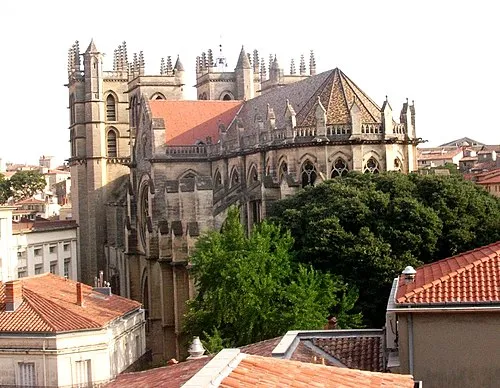
This building looks more like a fortress preparing for a siege than a welcoming place of worship, which is exactly what saved it during the Wars of Religion. The two massive conical pillars supporting the front porch are the defining feature, creating a heavy, protective entrance that feels medieval and impenetrable. Once you step inside, the atmosphere shifts from defensive stone to soaring gothic vaults, with colored light filtering through stained glass that softens the severe exterior.
It stands as a survivor in a city that saw many of its churches destroyed, and its walls still bear the scars of history. The interior is vast and often quiet, offering a cool retreat from the heat of the streets outside, with side chapels that hold centuries of art and devotion. The organ loft is particularly impressive, often filling the nave with sound during practice sessions that you might be lucky enough to catch.
Compared to other Montpellier attractions, the Cathedral commands respect rather than just admiration. It sits right next to the Faculty of Medicine, physically connecting the spiritual and scientific history of the city. Walking around the perimeter reveals the sheer scale of the buttresses and the way the building dominates the narrow streets of the old town.