1. Cava de Viriato
This is perhaps the most confusing and singular site in the city. It is not a castle in the traditional sense but a massive, octagonal earthwork fortification surrounded by a deep moat. For centuries, locals believed it was the camp of Viriato, the Lusitanian leader who resisted Rome, but modern archaeology suggests it was likely a Roman military camp or perhaps an unfinished Islamic fortress city. The scale is immense, and when you stand in the center, the modern city vanishes behind the high, tree-lined earthen walls.
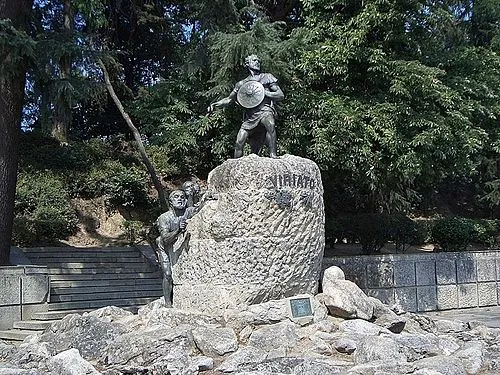
There are no ticket booths or guided tours here; it is essentially a geometric forest park. The lack of stone structures forces you to use your imagination to visualize the thousands of soldiers that would have filled this enclosure. A bronze statue of Viriato stands guard, a piece of nationalist imagery that has become the definitive photo of the location, even if the historical connection is shaky.
It sits north of the center, distinct from the cluster of medieval Viseu attractions. You go here to understand the strategic importance of this territory. The shadows are long, and the damp earth smells of pine and eucalyptus. It is a place for walking and wondering about the layers of history that didn't leave stone ruins behind.