Things to Do in Barcelona - Top Attractions, Hidden Gems & Must-See Sights

Discover the best things to do in Barcelona. Complete guide to must-see sights, popular attractions, hidden gems, museums, food markets and parks.

36 Attractions 6 Categories Travel Guide

Table of Contents

Barcelona Overview

Barcelona captivates visitors with its unique blend of Mediterranean charm, groundbreaking architecture, and vibrant street life. The city is defined by Antoni Gaudí's whimsical masterpieces—especially the unfinished Sagrada Família, the surreal Casa Batlló, and the colorful Park Güell—whose organic shapes and mosaic tiles seem straight from a dreamscape. Beyond its modernist icons, Barcelona's character unfolds in the narrow medieval lanes of the Gothic Quarter, the bustling energy of La Rambla, and the sun-drenched beaches of Barceloneta. Each neighborhood offers its own personality: from the trendy boutiques of El Born to the bohemian squares of Gràcia, creating a city that invites endless exploration on foot.

Must-See Attractions in Barcelona

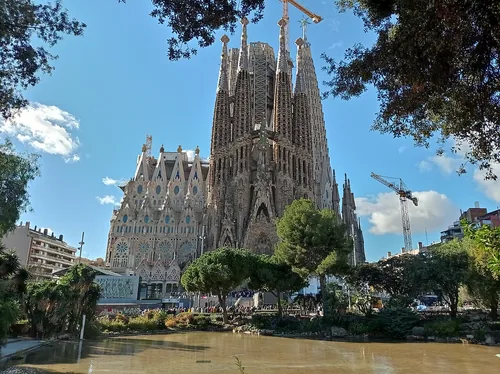
  • Sagrada Família - Gaudí's towering masterpiece and Spain's most visited monument
  • Park Güell - A whimsical garden city with mosaic serpentine benches and city panoramas
  • Casa Batlló - A fairy-tale stone facade on Passeig de Gràcia that seems melted by imagination
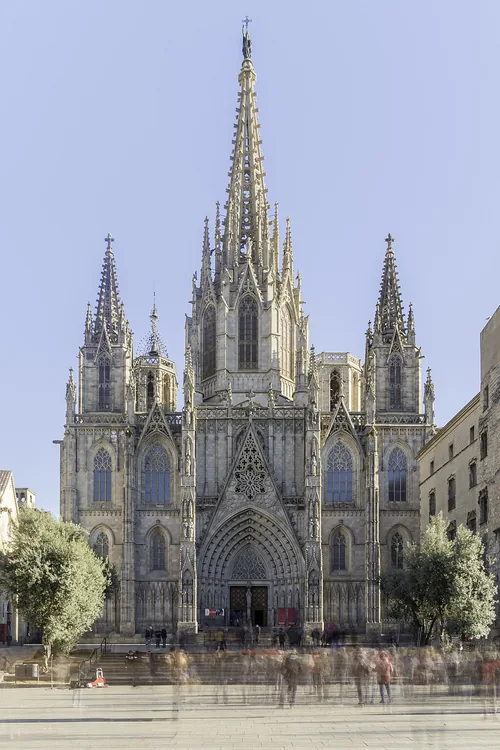
  • Gothic Quarter - Medieval labyrinth of Roman walls, hidden courtyards, and the Barcelona Cathedral
  • La Rambla - The iconic tree-lined boulevard alive with street performers, flower stalls, and La Boqueria market
🏛️ Must-See ⭐ Sights 💎 Hidden Gems 🎨 Museums 🍕 Food & Markets 🌳 Parks & Views

🏛️ Must-See Attractions in Barcelona

These iconic landmarks and must-see sights are essential stops for any visitor to Barcelona.

Casa Batlló

1. Casa Batlló

Casa Batlló is a masterpiece of Modernisme designed by Antoni Gaudí between 1904 and 1906. It sits on the Passeig de Gràcia as part of the 'Manzana de la Discordia', a block of buildings by different famous architects. The house is known locally as the 'House of Bones' because of its skeletal stone structures. It is one of the essential places to visit in Barcelona for fans of unique design. The facade is decorated with a colorful mosaic made of broken ceramic tiles and glass. Its roof is arched and looks like the back of a dragon, with scales that change color in the light. Gaudí avoided straight lines throughout the building, choosing instead to follow organic shapes found in nature. Even the window frames and doorknobs were custom-made to fit the human hand. Inside, the house uses light and color in clever ways to create a feeling of being underwater. The central light well is covered in blue tiles that get darker as you go higher to distribute light evenly. A visit includes an audio guide that explains the symbolism behind the various architectural choices. Tickets are expensive, costing around €35, but the level of detail makes it worth the price for many.

Hours Daily: 8:30 AM – 10:30 PM
Price €35
Insider TipBuy your tickets online in advance to skip the long lines and save a few euros on the booking fee.
Casa Milà

2. Casa Milà

Casa Milà, also known as La Pedrera, is another landmark designed by Antoni Gaudí on Passeig de Gràcia. It was built between 1906 and 1912 for the Milà family. The building is famous for its undulating stone exterior which looks like a natural cliff. It is one of the top Barcelona attractions and has been a UNESCO World Heritage site since 1984. The design was very controversial when it was first built because of its strange, heavy appearance. Unlike traditional buildings, it has a self-supporting stone facade and large windows that provide plenty of natural light. There are two inner courtyards that help with ventilation and light for the apartments. Today, part of the building is still residential, while other areas are open for public tours. The most impressive part of the visit is the rooftop terrace. It features several large chimneys that look like warriors in helmets covered in broken glass or ceramics. The views from the roof over the Eixample district are excellent. Inside, you can also see a restored apartment that shows how a wealthy family lived in the early 20th century. The attic hosts an exhibit about Gaudí's life and his innovative architectural methods.

Hours Daily: 9:00 AM – 11:00 PM
Price €29
Insider TipCheck for night tour options which include a light show on the rooftop chimneys and a glass of cava.
Gothic Quarter

3. Gothic Quarter

The Gothic Quarter is the old heart of Barcelona. Roman walls once stood here, and fragments of them remain near Plaça Nova. Medieval streets wind between buildings that have accumulated over centuries, creating a neighborhood where the Cathedral of Barcelona, the Catalan government palace, and the city hall all sit within a few blocks of each other. The streets are narrow enough that cars barely fit. Some passages are so tight you can touch both walls at once. This dense layout has practical origins: medieval builders wanted shade in summer and protection from winter winds. Today it means the area stays cooler than the rest of the city and forces you to slow down. You'll find stone gargoyles, hidden courtyards, and the remains of a Roman temple beneath the city history museum. The Jewish Quarter, or Call, preserves traces of Barcelona's medieval Jewish community. Plaça Sant Jaume serves as the civic center, where protests and celebrations spill out from government buildings. For the best sights in Barcelona concentrated in a walkable area, start here and get lost.

Hours Open 24/7
Price Free
Website Wikipedia
Insider TipVisit the Cathedral rooftop (extra ticket) for views over the Gothic rooftops. The cloister keeps 13 white geese, one for each year of Saint Eulalia's life before her martyrdom.
La Rambla

4. La Rambla

La Rambla stretches 1.2 kilometers from Plaça de Catalunya down to the Christopher Columbus monument at the old port. What started as a dried-up streambed outside the medieval walls became Barcelona's most famous street. The Catalan name "Les Rambles" actually refers to five separate stretches, each with its own character, but visitors simply call the whole thing La Rambla. Flower stalls have operated here since the 18th century. The British writer Somerset Maugham once called it "the most beautiful walk in the world," and while that's debatable now, the energy remains. Street performers, newspaper kiosks, outdoor cafes, and crowds of tourists fill the pedestrian median from morning until late night. The boulevard passes several landmarks worth knowing about. The Liceu opera house sits on the left, and La Boqueria market opens off to the right. The Palau de la Virreina, an 18th-century palace, now hosts cultural exhibitions. Side streets lead to Plaça Reial, where stamp and coin collectors gather on weekends.

Hours Open 24/7
Price Free
Website Wikipedia
Insider TipWalk La Rambla early morning (before 9 AM) to see it without the crowds. Avoid the restaurants right on the boulevard. Better food is one block away in either direction.
Park Güell

5. Park Güell

Park Güell was supposed to be a housing development. Eusebi Güell commissioned Antoni Gaudí in 1900 to design an exclusive residential enclave on Barcelona's Carmel Hill, complete with market stalls, a theater, and communal gardens. Only two houses were ever built. The project failed commercially, but the city gained one of the strangest public parks in Europe. The monumental zone is where most visitors spend their time. A serpentine bench covered in colorful tile shards wraps around a large plaza, and a dragon fountain guards the main stairway. Gaudí designed the colonnaded pathways to look like tree trunks and branches. The whole place feels like walking through a fever dream of Mediterranean mythology. The park opened to the public in 1926 and became a UNESCO World Heritage Site in 1984. Located in the Gràcia district, it sits on the southern slope of Carmel Hill with views across Barcelona to the sea. For things to see in Barcelona that combine architecture with a proper walk, this is hard to beat.

Hours Daily: 9:00 AM – 8:00 PM
Price €18
Insider TipOnly the monumental zone requires paid entry (book online). The rest of the park is free, and the upper terraces have the same views without the crowds. Go before 10 AM or after 6 PM.
Sagrada Familia

6. Sagrada Familia

The Sagrada Família has been under construction since 1882, which tells you something about its ambition. Antoni Gaudí took over the project a year after it started and devoted the last 43 years of his life to it. At his death in 1926, only the crypt, apse, and part of the Nativity facade were finished. Construction continues today, with completion expected around 2026. The interior feels like a stone forest. Columns rise in branching patterns, and light filters through stained glass in reds, blues, and greens that shift throughout the day. Gaudí designed everything with mathematical precision, using hyperboloid structures and catenary arches that distribute weight without the heavy buttresses Gothic cathedrals required. When finished, the basilica will have 18 towers: 12 for the apostles, four for the evangelists, one for the Virgin Mary, and a central tower reaching 172.5 meters dedicated to Jesus. It became the tallest church in the world in 2025, surpassing Ulm Minster. The Sagrada Família draws more visitors than any other monument in Spain. If you're deciding what to do in Barcelona, this building alone justifies the trip.

Hours Mon-Sat: 9:00 AM – 6:00 PM | Sun: 10:30 AM – 6:00 PM
Price €26
Insider TipBook your tickets at least 2-3 weeks in advance. Morning slots (9-10 AM) offer the best light through the stained glass, and the Passion facade entrance typically has shorter queues.
Get Your Own Private Tour with AI Guide
AI Guide
  • Personalized tour tailored to your interests
  • Your AI guide tells stories, shares facts, and cracks jokes
  • Turn-by-turn GPS navigation
  • Available in your language — no download needed
Try for Free

💎 Hidden Gems in Barcelona - Off the Beaten Path

Beyond the tourist crowds, Barcelona hides remarkable treasures waiting to be discovered.

Antic Teatre

1. Antic Teatre

Antic Teatre is a small cultural space located in the Ribera district. It is famous for its large courtyard which contains a huge tree and plenty of tables. People come here to escape the busy city streets and enjoy a drink under the leaves. It is one of the most unique places to visit in Barcelona because it feels like a secret garden. The building was originally a private palace before it became a theater. Today, it hosts experimental plays, dance performances, and community workshops. The atmosphere is very relaxed and attracts a local crowd of artists and students. You can enter for free to look at the garden, though you should buy a drink at the bar if you plan to stay. Prices at the bar are much lower than in the tourist areas nearby. It is located just a few minutes away from the Palau de la Música Catalana. The space supports independent culture and helps keep the local spirit alive in the city center. It is an excellent spot for a quiet afternoon or a pre-dinner beer in a historical setting.

Hours Mon-Wed: 10:00 AM – 11:00 PM | Thu-Fri: 10:00 AM – 12:00 AM | Sat: 5:00 PM – 12:00 AM | Sun: 5:00 – 11:00 PM
Price Free
Insider TipThe bar only takes cash for small amounts, so bring some change for your coffee or beer.
Gràcia Neighbourhood

2. Gràcia Neighbourhood

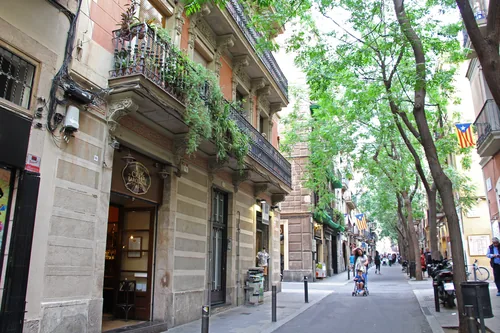
Gràcia was its own town until 1897, when Barcelona swallowed it whole. The neighborhood has never quite accepted the annexation. The streets are narrower than the Eixample grid, the plazas feel like village squares, and locals still identify first with Gràcia and second with Barcelona. The heart is Plaça de la Vila de Gràcia, where a clock tower rises from the center and the old town hall still operates as the district headquarters. Plaça del Sol is the nightlife hub, packed with tables until 2 AM on weekends. Plaça de la Virreina has a church on one side and cafes under the trees. Each square has its own personality. Every August, Gràcia hosts the Festa Major, a neighborhood festival where streets compete to out-decorate each other. Residents spend months building elaborate themed decorations that transform entire blocks into underwater worlds, jungle scenes, or political statements. The competition gets fierce. For attractions in Barcelona that feel more like a village than a metropolis, this is where locals bring their visitors.

Hours Open 24/7
Price Free
Website Wikipedia
Insider TipCome during Festa Major (around August 15) if you can. Otherwise, explore the back streets off Carrer Verdi on a weekday evening when the neighborhood is lively but not packed with tourists.
Pedralbes Monastery

3. Pedralbes Monastery

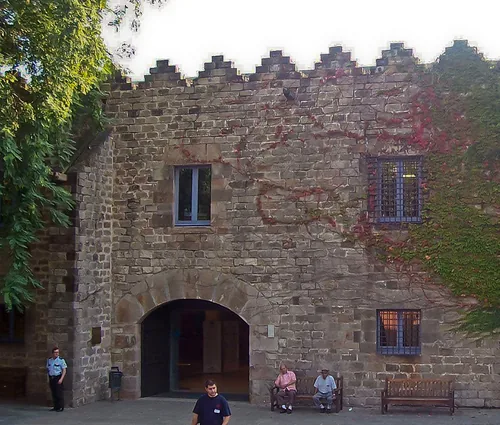
The Monastery of Pedralbes was founded in 1326 by Queen Elisenda de Montcada, widow of King Jaume II. She moved here after his death and lived among the Poor Clare nuns until her own death in 1367. The complex remains one of the purest examples of Catalan Gothic in Barcelona, largely unchanged for nearly 700 years. The three-story cloister is the largest in Catalonia. Walk around it and you'll pass a chapel, a day room, the refectory, and the nuns' dormitory, all preserved with their original frescoes and furniture. The gardens contain medicinal herbs that the nuns cultivated for centuries. A small museum displays religious art and daily objects from monastic life. The neighborhood around it is one of Barcelona's wealthiest, which helps explain why the monastery feels so removed from the city below. From 1993 to 2004, part of the Thyssen-Bornemisza art collection was housed here. For what to do in Barcelona when you need quiet and space, this monastery delivers both.

Hours Mon: Closed | Tue-Fri: 10:00 AM – 1:30 PM | Sat-Sun: 10:00 AM – 4:30 PM
Price €5
Insider TipVisit on a Sunday morning when admission is free after 3 PM. The chapel of Sant Miquel contains 14th-century frescoes by Ferrer Bassa, rediscovered only in 1901.
Plaça Sant Felip Neri

4. Plaça Sant Felip Neri

Plaça Sant Felip Neri sits hidden in the Gothic Quarter, reachable only through narrow passages that discourage casual wandering. The Baroque church of Sant Felip Neri presides over one side, its stone walls still pockmarked with shrapnel holes. On January 30, 1938, a bomb from Franco's forces hit the square during the Spanish Civil War. Forty-two people died, most of them children who had taken shelter in the church basement. The bomb destroyed the houses around the square. Architect Adolfo Florensa rebuilt it as a tranquil plaza, transplanting Renaissance facades from buildings elsewhere in the city that had been demolished. The Shoe Museum now occupies the former shoemakers' guild building. An octagonal fountain bubbles in the center, and a few tall trees provide shade. Tour groups sometimes stop here for a few minutes, but the square empties quickly. Children from the neighborhood school play here during recess, their shouts echoing off the same walls that bear the war's scars. For things to see in Barcelona that hold history without shouting about it, this quiet square is worth finding.

Hours Open 24/7
Price Free
Website Wikipedia
Insider TipThe easiest approach is through Carrer de Sant Felip Neri from Carrer de la Palla. Sit on the low wall by the fountain and wait. The silence here is unlike anywhere else in the Gothic Quarter.
Poblenou

5. Poblenou

Poblenou was Barcelona's industrial engine in the 19th century, a district of factories and textile mills that locals called the "Catalan Manchester." When the industry collapsed in the 1970s, the neighborhood went quiet. The 1992 Olympics brought the first wave of redevelopment, and the last decade has transformed it into something between a tech hub and an artists' colony. The Rambla del Poblenou runs through the middle, connecting the old industrial core to the beach. Low-rise factories have been converted into lofts, studios, and startups. The streets are wider than the Gothic Quarter and less polished than Eixample. It feels real in a way the tourist center doesn't. The cemetery at the eastern edge contains one of Barcelona's most photographed sculptures: a grieving angel leaning over a tomb. The neighborhood also has better beach access than Barceloneta, without the cruise ship crowds. For the best sights in Barcelona where locals actually live, this is the direction to head.

Hours Open 24/7
Price Free
Website Wikipedia
Insider TipWalk Rambla del Poblenou on a Sunday morning when the market is open. Eat at one of the xampanyet bars (sparkling wine and tapas) that locals have been visiting for decades.
Get Your Own Private Tour with AI Guide
AI Guide
  • Personalized tour tailored to your interests
  • Your AI guide tells stories, shares facts, and cracks jokes
  • Turn-by-turn GPS navigation
  • Available in your language — no download needed
Try for Free

🎨 Best Museums & Galleries in Barcelona

World-class museums and galleries that make Barcelona a cultural treasure.

CCCB

1. CCCB

The Center of Contemporary Culture of Barcelona is a major art hub located in the Raval district. It opened in 1994 in the buildings of a former almshouse called the Casa de la Caritat. The center focuses on urban culture and the challenges facing modern cities. It is one of the most interesting Barcelona attractions for those who enjoy modern art and social debate. The architecture is a mix of the old stone almshouse and a modern glass wing. One of the courtyard walls is a giant mirror that reflects the sky and the surrounding neighborhood. The CCCB does not have a permanent collection, so the exhibits are always changing. They cover a wide range of topics, from photography and film to philosophy and technology. In addition to exhibitions, the center hosts festivals, lectures, and workshops throughout the year. It is a popular meeting point for local students and creatives who use the open courtyards to relax. The World Press Photo exhibition is held here every year and is one of its most popular events. It is a great place to see a different side of the city's cultural life away from the traditional museums.

Hours Mon: Closed | Tue-Sun: 10:00 AM – 8:00 PM
Price €6-8
Website www.cccb.org/
Insider TipEntry is free on Sunday afternoons after 3:00 PM, but you must book your ticket online in advance.
CosmoCaixa

2. CosmoCaixa

CosmoCaixa is a science museum located at the foot of Mount Tibidabo. It opened in 2004 and is managed by the 'la Caixa' Foundation. The museum is housed in a beautiful brick building that was once an asylum for the blind. It is one of the top Barcelona attractions for families because of its hands-on exhibits and interactive displays. The most famous feature is the Flooded Forest, a huge glass-enclosed rainforest that covers 1,000 square meters. It contains actual trees, tropical birds, and even anacondas and piranhas from the Amazon. You can walk through the forest and experience the heat and humidity of a real jungle. Another highlight is the Planetarium, which uses modern technology to show the stars and planets in great detail. The museum also has a Geological Wall that shows different types of rock formations and how they are created. Kids love the 'Touch, touch!' area where they can learn about animals and plants through direct contact. Prices are very reasonable, usually around €6 for adults. It is a large museum, so you should plan to spend at least three hours to see everything properly.

Hours Daily: 10:00 AM – 8:00 PM
Price €8
Website cosmocaixa.org/
Insider TipThe museum has a great outdoor plaza with picnic tables if you want to bring your own lunch.
Joan Miró Foundation

3. Joan Miró Foundation

The Fundació Joan Miró holds more than 10,000 works by the Barcelona-born artist, including paintings, sculptures, tapestries, and over 8,000 preparatory drawings. Miró himself conceived the museum as a living space for contemporary art, not just a monument to his own work. He collaborated with architect Josep Lluís Sert on the building, which opened in 1975 on Montjuïc. Sert designed a rationalist building with Mediterranean touches: white walls, terraces, and courtyards that let natural light filter through. The building was considered radical when it opened, and it still feels fresh. Works are arranged chronologically but also thematically, letting you see how Miró's visual vocabulary evolved while his subjects stayed constant. The collection includes major donations from Miró himself, his wife Pilar Juncosa, and his friend Joan Prats. Temporary exhibitions often feature contemporary artists whose work connects to Miró's legacy. For the best sights in Barcelona dedicated to a single artist's vision, this foundation sets the standard.

Hours Mon: Closed | Tue-Sun: 10:00 AM – 7:00 PM
Price €18
Location 41.36861, 2.16
Insider TipThe rooftop terrace is easy to miss but essential. Miró's mercury fountain, originally created for the 1937 Paris World's Fair, is displayed behind glass. The gift shop has excellent prints.
MACBA

4. MACBA

The Museu d'Art Contemporani de Barcelona opened in 1995 in a Richard Meier-designed building that broke up the Raval's medieval streets with a blast of white modernism. The American architect created a structure defined by curves, ramps, and skylights, with enough glass to let you see through the building from one side to the other. The permanent collection focuses on the second half of the 20th century and includes Catalan artists like Antoni Tàpies alongside international figures such as Sol LeWitt and Dan Flavin. The museum rotates its displays regularly, so repeat visits rarely feel redundant. MACBA also commissions new work and hosts performances, talks, and film screenings. The plaza outside has become one of Barcelona's iconic skate spots. You'll find skateboarders there most afternoons, working the smooth marble surfaces while tourists watch from the museum steps. For what to do in Barcelona where contemporary art meets street culture, this corner of the Raval captures both.

Hours Mon: 11:00 AM – 7:30 PM | Tue: Closed | Wed-Fri: 11:00 AM – 7:30 PM | Sat: 10:00 AM – 8:00 PM | Sun: 10:00 AM – 3:00 PM
Price €12
Insider TipAdmission is free on Saturday afternoons after 4 PM. The museum is closed on Tuesdays. If contemporary art isn't your thing, the plaza in front is still worth a look for the architecture alone.
MNAC

5. MNAC

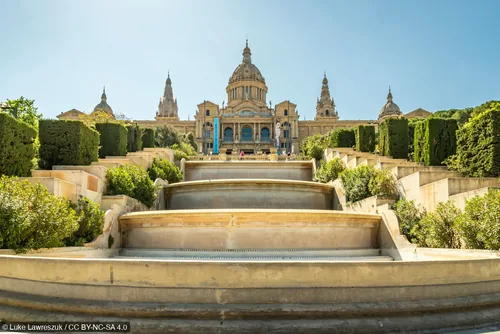
The Museu Nacional d'Art de Catalunya sits in the Palau Nacional at the top of Montjuïc, overlooking Plaça d'Espanya. The building was constructed for the 1929 International Exhibition and looks like a grandiose palace, which is exactly what it was meant to be. Inside, the museum holds the world's most important collection of Romanesque art. The Romanesque section alone takes up several large rooms. Frescoes from 11th- and 12th-century Pyrenean churches cover the walls, transported here in the 1930s to protect them from deterioration and potential damage during the Civil War. The Christ Pantocrator from Sant Climent de Taüll is the star, staring down from the apse with those enormous, severe eyes. The collection continues through Gothic altarpieces, Renaissance and Baroque paintings (including works by El Greco and Velázquez), and into modern art. The photography department holds nearly 400,000 images. The museum was formed in 1990 by merging several older institutions. For places to visit in Barcelona where you can trace Catalan art across a thousand years, start here.

Hours Mon: Closed | Tue-Sat: 10:00 AM – 6:00 PM | Sun: 10:00 AM – 3:00 PM
Price €12
Insider TipTake the escalators up from Plaça d'Espanya for the full approach. Free admission on Saturdays after 3 PM and the first Sunday of each month. The cafe terrace has one of the best views in Barcelona.
Maritime Museum

6. Maritime Museum

The Maritime Museum occupies the Royal Shipyards of Barcelona, a vast Gothic building where ships were constructed from the 13th century onward. Documentation from 1243 mentions shipbuilding on this site. The structure itself, with its stone arches and vast open spaces, is as impressive as anything inside. The collection tells the story of Mediterranean seafaring through models, navigational instruments, figureheads, and maps. The centerpiece is a full-scale replica of the galley used by Don John of Austria at the Battle of Lepanto in 1571. The original flagship was built in these very shipyards. Stand next to it and you get a sense of how cramped and terrifying life at sea must have been. Barcelona's maritime heritage runs deep. The Aragonese crown dominated the Mediterranean in the Middle Ages, and ships built here connected an empire stretching from Athens to Sicily. For things to see in Barcelona that connect the city to the sea, this museum sits at the literal intersection of land and water.

Hours Daily: 10:00 AM – 8:00 PM
Price €10
Website www.mmb.cat/
Insider TipThe museum can be underwhelming if you're not into maritime history. Combine it with a walk along the port afterward, and look for the preserved dry docks at the back of the building.
Picasso Museum

7. Picasso Museum

The Picasso Museum occupies five connected medieval palaces on Carrer Montcada, a street that was Barcelona's most fashionable address in the 15th century. The museum opened in 1963 and now holds more than 4,000 works, making it the most complete collection of Picasso's early work anywhere in the world. Pablo Picasso lived in Barcelona from 1895 to 1904, during his formative years as an artist. The collection traces his development from childhood sketches through his Blue Period and beyond. You can watch him master academic painting, then reject it entirely. The Meninas series, his 58 reinterpretations of Velázquez's masterpiece, fills an entire room. Picasso himself suggested Barcelona as the location for the museum. He wanted his early work to remain in the city where he came of age. The building itself is worth attention. Stone staircases, carved doorways, and medieval courtyards connect the five palaces. For attractions in Barcelona that connect a world-famous artist to the city he loved, this museum delivers the full story.

Hours Mon: Closed | Tue-Sun: 10:00 AM – 7:00 PM
Price €19
Insider TipBook timed tickets online. The queue can stretch an hour or more. Go first thing in the morning or late afternoon, and don't miss the sketchbooks in the basement.
Get Your Own Private Tour with AI Guide
AI Guide
  • Personalized tour tailored to your interests
  • Your AI guide tells stories, shares facts, and cracks jokes
  • Turn-by-turn GPS navigation
  • Available in your language — no download needed
Try for Free

🍕 Food Markets & Culinary Spots in Barcelona

The best food markets, food halls, and culinary destinations in Barcelona.

La Boqueria

1. La Boqueria

La Boqueria has occupied its spot just off La Rambla since the early 19th century, though market stalls existed here even earlier. Officially named Mercat de Sant Josep, it covers 2,583 square meters with more than 300 stalls selling everything from Iberian ham to tropical fruit. It's the largest market in Catalonia and the one every tourist finds. The market earned its nickname from "boc," the Catalan word for goat. In the old days, goat meat was sold at the entrance. Now the entrance stalls push smoothies in plastic cups, colorful fruit cups, and jamón Ibérico by the gram. Prices here reflect the tourist traffic. Walk deeper into the market for better deals. Butifarra, the traditional Catalan sausage, sits next to fresh-caught seafood from the Mediterranean. Cheese vendors offer samples of aged Manchego. Some stalls have been operated by the same families for generations. Others cater almost entirely to visitors. For the best sights in Barcelona that assault every sense at once, follow the smell of cured meat through the metal gates.

Hours Mon-Sat: 8:00 AM – 8:30 PM | Sun: Closed
Price Free
Location 41.3818, 2.17155
Insider TipGo before 10 AM to see locals shopping. The bar at Quim de la Boqueria serves some of the best fried eggs and baby squid in the city, but there's always a wait after 11.
Mercat de Sant Antoni

2. Mercat de Sant Antoni

Mercat de Sant Antoni was the first market built outside Barcelona's medieval walls. Architect Antoni Rovira i Trias designed it, and construction finished in 1882. The building sat on the site of the old Sant Antoni bastion, one of the main entrances to the walled city. After a decade-long renovation that finished in 2018, the market reopened with the original iron structure restored and Roman ruins visible beneath glass floors. Three different markets operate here. The main hall sells fresh food: fish, meat, vegetables, bread. The surrounding stalls sell clothing, known locally as "els Encants." On Sundays, the entire neighborhood transforms for the book and coin market, where stalls selling second-hand books, comics, and trading cards spread across the surrounding streets. The market sits in the Sant Antoni neighborhood, a working-class area that's been gentrifying rapidly. Locals still dominate the produce stalls. The prices are lower than La Boqueria, and the vendors speak less English. For things to see in Barcelona where you shop alongside residents rather than tourists, take the metro to Sant Antoni station.

Hours Mon-Sat: 8:00 AM – 8:30 PM | Sun: Closed
Price Free
Insider TipCome on Sunday morning for the book market, which runs roughly 9 AM to 2 PM. The surrounding bars fill up afterward with locals having vermouth and tapas.
Mercat de Santa Caterina

3. Mercat de Santa Caterina

Mercat de Santa Caterina is Barcelona's oldest covered market, built in 1844 on the site of a demolished convent. The 2005 renovation by architects Enric Miralles and Benedetta Tagliabue gave it one of the most striking roofs in the city: a multi-colored mosaic of ceramic tiles that ripples across the structure like a frozen wave. The market sits in the Sant Pere, Santa Caterina i la Ribera neighborhood, close to the Cathedral and the Palau de la Música Catalana. It receives far fewer tourists than La Boqueria. The clientele is mostly local: elderly couples buying fish for lunch, young parents with strollers, chefs from neighborhood restaurants collecting produce. The produce vendors, fishmongers, and butchers operate from stalls that have been here for decades. Archaeological remains discovered during the renovation, including Roman foundations and part of the old convent, are visible through glass panels in the floor. A small tapas bar in the back serves excellent tortillas. For what to do in Barcelona when you want a market without the crowds, this one feels like a secret.

Hours Mon: 7:30 AM – 3:30 PM | Tue: 7:30 AM – 8:00 PM | Wed: 7:30 AM – 3:30 PM | Thu: 7:30 AM – 8:00 PM | Fri: 7:30 AM – 8:30 PM | Sat: 7:30 AM – 3:30 PM | Sun: Closed
Price Free
Insider TipThe Cuines de Santa Caterina restaurant at the back entrance serves market-fresh dishes and is popular with locals for lunch. The market closes at 3:30 PM on Monday, Wednesday, and Saturday.
Get Your Own Private Tour with AI Guide
AI Guide
  • Personalized tour tailored to your interests
  • Your AI guide tells stories, shares facts, and cracks jokes
  • Turn-by-turn GPS navigation
  • Available in your language — no download needed
Try for Free

🌳 Parks & Best Viewpoints in Barcelona

Beautiful parks, gardens, and panoramic viewpoints for the best views of Barcelona.

Collserola Natural Park

1. Collserola Natural Park

Collserola is a huge green space that borders the city to the west. It covers over 8,000 hectares, making it one of the largest metropolitan parks in the world. It is the lungs of the city and offers a massive network of trails for hiking and mountain biking. For locals, it is one of the best places to visit in Barcelona for outdoor exercise. The park is dominated by Tibidabo mountain, but there are many other peaks and valleys to explore. You can find Mediterranean forests of pine and oak, as well as several old farmhouses known as 'masias'. Many of these farmhouses have been turned into restaurants where you can eat traditional grilled meats. The air here is much cleaner than in the city center below. One of the most famous landmarks in the park is the Torre de Collserola, a tall telecommunications tower designed by Norman Foster. From various points in the park, you get panoramic views of the city and the Mediterranean Sea. It is easy to reach by taking the FGC trains to stations like Baixador de Vallvidrera. It provides a quick way to swap the busy streets for a quiet natural environment.

Hours Mon, Sat: 7:30 AM - 2:00 PM; Tue-Wed, Sat: 7:30 AM - 3:30 PM; Thu-Fri: 7:30 AM - 8:30 PM (closed Sunday)
Price Free
Insider TipFollow the 'Carretera de les Aigües' trail for a flat, easy walk with the best views of the city skyline.
Montjuïc

2. Montjuïc

Montjuïc rises 177 meters above the Mediterranean, a broad hill that separates Barcelona's port from the Llobregat river delta. The name translates roughly to "Jewish Mountain," possibly from a medieval Jewish cemetery that once existed on its slopes. The hill has served as a quarry, a military fortress, and the site of public executions. Now it's a 200-hectare park. The 1929 International Exhibition transformed the eastern slopes. The grand staircase leading up to the MNAC museum, the Spanish Village, and several pavilions all date from this period. The 1992 Olympics added the stadium, the telecommunications tower, and the swimming pools. Gardens, cemeteries, and museums fill the spaces between. Joan Miró's foundation sits near the top. The castle, a former military prison, occupies the summit. Cable cars connect the port to the hilltop. A funicular rises from Parallel metro station. You can also walk up, though it's steep.

Hours Mon-Sat: 8:00 AM - 8:30 PM (closed Sunday)
Price Free
Website Wikipedia
Insider TipThe Montjuïc cable car from Barceloneta offers the most dramatic views, but the T2 bus from Plaça d'Espanya is cheaper and less crowded. Bring water if you're walking. The Jardins del Teatre Grec are peaceful and usually empty.
Parc de la Ciutadella

3. Parc de la Ciutadella

Parc de la Ciutadella was built on the ruins of a hated military fortress. In 1714, after Catalonia lost the War of Spanish Succession, King Felipe V demolished part of La Ribera neighborhood to build a citadel that could bombard the city if it rebelled. The fortress stood for 150 years before the city tore it down in 1869 and turned the land into a park. Architect Josep Fontserè designed the layout, modeled on the Luxembourg Gardens in Paris. The 1888 Universal Exhibition transformed it again, leaving behind several of the buildings that still stand today. The Catalan Parliament occupies the old arsenal. The Barcelona Zoo takes up the eastern section. A monumental fountain, the Cascada, was designed by Josep Fontserè with contributions from a young Antoni Gaudí. At 17 hectares, this is Barcelona's second-largest urban park after Montjuïc. Rowboats drift on the small lake. Locals jog the paths, couples occupy the benches, and musicians set up near the bandstand. For attractions in Barcelona where you can escape the crowds without leaving the city center, this park is the obvious choice.

Hours Daily: 7:00 AM – 10:30 PM
Price Free
Insider TipRent a rowboat on the lake (about 6 euros for 30 minutes). The mammoth sculpture near the zoo entrance is a popular photo spot. Sundays bring drum circles and outdoor markets.
Parc del Laberint d'Horta

4. Parc del Laberint d'Horta

The Parc del Laberint d'Horta is the oldest surviving garden in Barcelona. Italian architect Domenico Bagutti began work in 1794, and the first phase finished in 1808. The Desvalls family owned the estate for generations, using it as a country retreat. The garden opened to the public in 1971. The centerpiece is an 820-meter cypress maze, the oldest of its kind in the city. The hedges grow dense enough that you can actually get lost, at least briefly. At the center, a statue of Eros waits on a raised platform. Beyond the maze, the park expands into a neoclassical garden with box hedges, sculpture gardens, and a romantic section added in the 19th century. Located in the Horta-Guinardó district on the slopes of Collserola, the park sits far from the tourist center. The metro ride takes about 30 minutes from Plaça de Catalunya, plus a 10-minute walk. The payoff is a tranquil space that feels nothing like the crowded sites downtown. For the best sights in Barcelona that reward a journey to the outskirts, this garden justifies the trip.

Hours Daily: 10:00 AM – 6:00 PM
Price Free
Insider TipThe park limits daily visitors to 750 people. Go early or late to avoid being turned away. Sunday mornings are busiest. Admission is free on Wednesday and Sunday.
Get Your Own Private Tour with AI Guide
AI Guide
  • Personalized tour tailored to your interests
  • Your AI guide tells stories, shares facts, and cracks jokes
  • Turn-by-turn GPS navigation
  • Available in your language — no download needed
Try for Free

Explore with AI Guide

AI Guide App

Get personalized tours with our AI-powered guide. No download needed — works right in your browser.