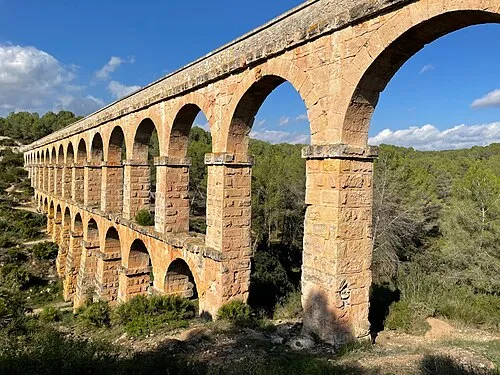
1. Les Ferreres Aqueduct
Locals call it the "Pont del Diable" (Devil's Bridge), and it stands in a wooded valley about four kilometers outside the city center. This two-tiered Roman aqueduct bridged a ravine to bring fresh water to the ancient city, and unlike many ruins that are fenced off, this one is open. You can—and should—walk across the top tier where the water once flowed. The drop is significant, and the lack of high modern railings makes the crossing feel thrillingly exposed.
The structure is 217 meters long and built from massive stone blocks without mortar, held together purely by physics for two thousand years. Surrounding the stone bridge is a Mediterranean pine forest with hiking trails, making the stone glow warm orange against the deep green trees in the late afternoon. It is silent here, far removed from the traffic noise of the modern city.
Visiting requires a deliberate trip, unlike the central Tarragona attractions, but the payoff is a direct, tactile connection to Roman engineering. There are no tickets and no gates. It is just you, the stone, and the wind moving through the arches.