Best Time to Visit Bangkok
Month-by-month weather, crowds and prices, plus a full calendar of festivals and events worth planning a trip around.
Best monthsNov, Dec, Jan, Feb
CheapestJun, Jul, Aug, Sep
AvoidSep, Apr
BusiestDec, Jan

When is the best time to visit Bangkok?
Come November to February: dry, 26-32°C by day, low humidity and Bangkok's whole festival calendar. December and January are the priciest and busiest. June to September are 40-50% cheaper but wet, and September is the single hardest month with 280mm of rain and street flooding.
Start our tool and find your best time to visit Bangkok
Your perfect month
Free · ~30 seconds
or tap a month directly
What matters to you?
And this?
Best overall: Nov, Feb. November and February are the real sweet spot: dry, 30-32°C, low humidity, and the city's fullest event calendar from Loy Krathong to Chinese New Year. November edges it for value, landing 15-25% below the December peak before prices climb.
Best value: Jun, Jul, Aug. June, July and August bring hotel rates 40-50% below the December high, the temples at their emptiest, and rain that mostly falls in short afternoon bursts. Pack a 79 THB 7-Eleven poncho and the monsoon barely slows you down.
Avoid: Sep, Apr. September for the year's heaviest rain (280mm) and real flooding risk, and April for feels-like 44°C heat plus the Songkran shutdown. Both have their defenders, but neither is the easy first trip.
- January: Tough month, 31°C. If you only get one shot at Bangkok, January delivers the weather you were promised: blue skies, low humidity, perfect riverside evenings. The catch is that the whole northern hemisphere had the same idea, so this is the priciest, most crowded month and the temples reflect it. Worth it for the comfort, just go in clear-eyed about the queues.
- February: Tough month, 32°C. February is the connoisseur's cool-season pick: nearly January's weather without quite January's prices, plus Chinese New Year giving Yaowarat an electric edge most months lack. The 17 February celebrations are the one time the Chinatown energy genuinely matches the hype, so build your trip around an evening there.
- March: Tough month, 33°C. March is when Bangkok quietly hands you a deal, if you can take the heat. The crowds thin, the prices soften, and you can actually move through Wat Pho without a scrum. The honest catch: by mid-afternoon the concrete radiates and you will be retreating to air conditioning. Plan your temples for dawn and you win this month.
- April: Tough month, 34°C. April splits travellers in two. If Songkran is why you came, nothing else on earth is quite like getting soaked alongside half a million people on Silom Road. If it is not, the three-day shutdown plus 44°C feels-like heat makes this the month to skip. There is no neutral April in Bangkok; you either lean into the water fight or you wait for November.
- May: Tough month, 34°C. May is the underrated bargain. The crowds are gone, the rain is still mostly afternoon-only, and the city feels like it belongs to locals again. The first rains turn the temple lawns vivid green, which is genuinely beautiful. If you can plan your sightseeing for the clear mornings and let the afternoon storms pass, May rewards you with a near-empty Grand Palace.
- June: Tough month, 33°C. June is for travellers who do their homework. Everyone fears the monsoon, but early-rainy-season Bangkok is a steal: empty temples, deeply discounted hotels, and rain that hits in predictable afternoon bursts rather than all day. If you treat the 7-Eleven poncho as part of the kit and plan temples for the morning, June quietly outperforms its reputation.
- July: Tough month, 32°C. July is monsoon Bangkok at its most authentic. The merit-making season fills the wats with locals at dawn, the temples are free of tour groups, and you are paying low-season prices throughout. The honest trade is the two alcohol-ban days at month's end, so if a cold Singha matters to your evening, check the calendar and shift it.
- August: Tough month, 31°C. August is the value sweet spot inside the monsoon. The downpours are predictable and short, the temples are at their absolute quietest, and luxury hotels go for mid-range money. The humidity is the real cost: 80% is genuinely sticky, and you will sweat through shirts. But if a near-empty Wat Pho and a 5-star room at a 3-star price appeal, this is your month.
- September: Tough month, 31°C. September is the month to be honest about. It is the wettest, the most humid, and the one with real flooding risk, so it is not the easy first trip. That said, the Chao Phraya is at its most dramatic, brown and swollen and rushing, and the prices are rock bottom. Come only if you are weatherproof in attitude and happy to rework a day around the rain.
- October: Tough month, 31°C. October is the smart shoulder play. The worst of the rain is behind you, the prices have not yet caught up, and the Vegetarian Festival gives Yaowarat a once-a-year character no other month has. It is a transitional, slightly unpredictable month weather-wise, but for a food-led trip with thin crowds and soft prices, the timing is hard to fault.
- November: Tough month, 31°C. November is the answer most thoughtful travellers are looking for. You get December's weather without December's prices, the monsoon is done, and Loy Krathong gives the city its most romantic, photogenic night of the year. If someone asks for the single best time to visit Bangkok, this is it: cool, dry, festive, and not yet at peak rates.
- December: Tough month, 31°C. December is Bangkok showing off: flawless weather, the city decorated end to end, and an electric New Year energy that peaks with fireworks over the Chao Phraya. The price is the price, literally, this is the most expensive month and you will book everything early. But for sheer atmosphere and reliably perfect conditions, December delivers exactly what the brochures promise.
Bangkok weather by month
HighLowRainfall
Jan31°
Feb32°
Mar33°
Apr34°
May34°
Jun33°
Jul32°
Aug31°
Sep31°
Oct31°
Nov31°
Dec31°
| Month | Temp | Rain | Sun | Crowds | Prices | Highlight |
|---|---|---|---|---|---|---|
| Jan | 31° / 22° | 23mm · 4 rainy days | 10.3 h/day | ●●●●● | ●●●●● | Bangkok Design Week |
| Feb | 32° / 23° | 28mm · 5 rainy days | 10.6 h/day | ●●●●○ | ●●●●○ | Bangkok Design Week |
| Mar | 33° / 26° | 40mm · 7 rainy days | 10.8 h/day | ●●●○○ | ●●●○○ | Makha Bucha Day |
| Apr | 34° / 27° | 88mm · 12 rainy days | 10.9 h/day | ●●●●○ | ●●●●○ | Chakri Day |
| May | 34° / 27° | 142mm · 20 rainy days | 10.3 h/day | ●●○○○ | ●●○○○ | Royal Ploughing Ceremony |
| Jun | 33° / 26° | 139mm · 22 rainy days | 9.4 h/day | ●●○○○ | ●○○○○ | Bangkok Pride Festival |
| Jul | 32° / 26° | 175mm · 24 rainy days | 8.3 h/day | ●●○○○ | ●○○○○ | King Vajiralongkorn's Birthday |
| Aug | 31° / 26° | 185mm · 26 rainy days | 7.7 h/day | ●●○○○ | ●○○○○ | Queen Sirikit's Birthday (Mother's Day) |
| Sep | 31° / 25° | 280mm · 26 rainy days | 8.1 h/day | ●●○○○ | ●○○○○ | |
| Oct | 31° / 24° | 238mm · 22 rainy days | 8.8 h/day | ●●○○○ | ●●○○○ | Vegetarian Festival (Nine Emperor Gods) |
| Nov | 31° / 24° | 72mm · 11 rainy days | 9.8 h/day | ●●●○○ | ●●●○○ | Bangkok Art Biennale |
| Dec | 31° / 22° | 19mm · 4 rainy days | 10.1 h/day | ●●●●● | ●●●●● | Amazing Thailand Marathon |
How we score this: weather = long-run climate normals (Open-Meteo), crowds & prices = relative season read, events checked yearly against official dates.
Best time to visit Bangkok: weather, prices & crowds
Best months for good weather
Nov, Dec, Jan
November through January is Bangkok at its kindest: dry, daytime highs of 30-31°C with humidity down near 66%, and evenings that drop to a comfortable 22-24°C for walking the riverside.
Quietest months to avoid the crowds
Jun, Jul, Aug
June to August empties the major temples of Western tour groups. Wat Pho and the Grand Palace courtyards are at their quietest, the trade being short, violent afternoon downpours that pass in one to two hours.
Cheapest time to visit Bangkok
Jun, Jul, Aug, Sep
June to September is the deep-monsoon price floor: hotel rates run 40-50% below the December peak, and even 4-star Sukhumvit properties drop to roughly 1,800-2,500 THB a night.
Best time for festivals and events
Apr, Nov
April brings Songkran (13-15 April), the city-wide Thai New Year water battle with 650,000-plus people on Silom alone, while November's Loy Krathong (25 Nov) floats thousands of candlelit krathongs down the Chao Phraya.
How many days do you need in Bangkok?
Bangkok rewards three to four days. The headline temples cluster tight on the Rattanakosin island, but the city around them is vast, hot and worth absorbing at a sensible pace, so rushing it in a day means seeing the queues and missing the texture.

One day
The riverside temple core
Give your first day to the Chao Phraya core. Start at the Grand Palace before 9 am to beat the tour buses, walk south to the giant reclining Buddha at Wat Pho, then take the 5 THB cross-river ferry to the porcelain-studded spire of Wat Arun. Our self-guided Bangkok walking tour threads 6 of these landmarks across 4.8 km in about 1.9 hours, from Wat Saket and Khao San Road down to Wat Arun. It is a focused morning circuit that gets you through the open-air temples before the heat peaks.
Two days
History and the backstreets
Day two fills in the old quarter around the route. Climb the 318-step spiral of Wat Saket, the Golden Mount, soon after its 7:30 am opening for a panorama over old Bangkok. Spend a slow hour at the Bangkok National Museum, the largest Thai collection anywhere, then drift into the backpacker buzz of Khao San Road for cheap eats and people-watching once the sun drops.
Three daysRecommended
Markets, canals and street food
By day three you escape Rattanakosin. Hit Chatuchak Weekend Market on a Saturday morning (it only opens Saturday and Sunday, 9 am to 6 pm), take a longtail boat through the Thonburi canals across the river, and graze a night market like Jodd Fairs where boat noodles run 60 to 80 THB. This is the day the city stops being a checklist and starts being itself.
Four days or more
Day trips and a slower pace
A fourth day buys you breathing room: a floating market like Damnoen Saduak, the railway market at Maeklong, or simply more time in Chinatown's Yaowarat for the evening food crawl. In the cool, dry months from November to February, comfortable walking weather lets you string these together without retreating to air conditioning by noon, so an extra day or two pays off most in winter.
Best time to visit Bangkok by traveller type
Same city, different trip. Here's the month that fits how you're travelling.
🧭
Best time to visit Bangkok for the first time
NovFeb
November or February: the best weather of the year, every temple walkable in the cooler morning air, and February adds Chinese New Year in Yaowarat. Skip April's heat and Songkran chaos unless that festival is the whole reason you came.
❤️
Best time to visit Bangkok for couples
NovJan
November for Loy Krathong (25 Nov), when candlelit boats drift down the Chao Phraya, and late January for Bangkok Design Week's free riverside art walks. Cool-season evenings are when the rooftop bars and dinner cruises peak.
💶
Best time to visit Bangkok on a budget
JunJulAug
June to August for hotel rates 40-50% off peak, free temple grounds and Lumphini Park, and Jodd Fairs night market every evening. Boat noodles run 60-80 THB and the rain is a poncho problem, not a deal-breaker.
🍝
Best time to visit Bangkok for food and wine
OctNov
October for the Yaowarat Vegetarian Festival's nine nights of yellow-flag vegan stalls, and November for cool-enough evenings to graze street food for hours at Or-Tor-Kor and the Rot Fai night markets.
Worst time to visit Bangkok
September is the month most worth avoiding. It averages 280mm of rain, the heaviest of the year, with downpours that can run three to four hours and flood low-lying sois off Sukhumvit and around Khlong Toei. Humidity sits near 83% and the heat still pushes 31°C. April is the other tough month: feels-like temperatures reach 40 to 44°C, and Songkran turns central roads into a three-day water battle that closes Silom and Khao San from noon to 8 pm.
Still worth it for Both months have their defenders. September brings rock-bottom prices and near-empty temples for anyone happy to rework a day around the afternoon storms, and April's Songkran is the most immersive Thai festival there is if getting soaked is the whole point of the trip.
Go instead in November, December, January, February, when Bangkok is at its best.
Best time for a tour of Bangkok
Bangkok on foot is a negotiation with heat, and the calendar decides whether you win it. The cool, dry window from late November through February is the only stretch the city is genuinely comfortable to walk: highs around 30 to 31 °C, lows dropping to 22 to 23 °C, and just 4 rain days in December and January, so the long sun-baked courtyards of the Grand Palace and the open river terrace at Wat Arun stay bearable. March through May is the punishment: April peaks at 34 °C with 26 °C nights, and there is no shade to be found climbing the golden mount of Wat Saket or crossing the bright plaza at Wat Pho, where the marble underfoot turns into a griddle by noon. The monsoon months from May to October pile on the rain, 20 to 26 wet days a month at the soggy peak, though crowds thin to almost nothing and a downpour at least breaks the swelter for an hour. The cool season is also the busiest, so plan the temple stops for early morning before the tour buses arrive.
The smart move in a climate this unforgiving is to own your start time, and that is exactly what AI Tourguide gives you: it runs in your browser with no app and no booking, so you can start your Bangkok tour at dawn on a steamy August morning, walk Wat Pho and the Grand Palace before the heat lands, then break for an iced coffee whenever you like. A voice-first guide leads the whole way, telling the stories behind each temple, asking what draws you, and adapting as you go, so you keep full control of pace and route while the climate, not a fixed departure time, sets your hour.


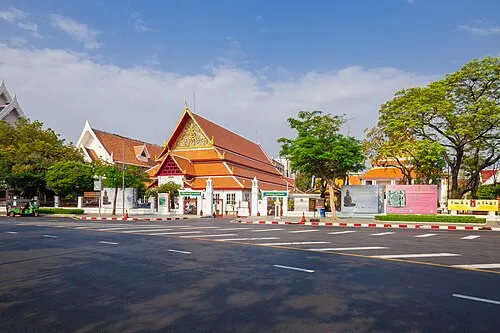 +2
+2All 6 stops are already on the map.
You just press start.
You just press start.
 AI Tourguide
You just read the route.
Now walk it with a guide in your ear.
Press start wherever you are, even hundreds of kilometres from Bangkok, and the guide begins telling its stories right away. In the city, pick any of the 6 stops to start from: it leads you there, then talks with you the whole route, asking, listening, remembering, and shaping the tour around your answers.
6stops4.8km1.9hours11languages
▶Start the tour freeFree to start · Runs in your browser · No app, no download
Bangkok events and festivals calendar
Annual highlights worth timing a trip around, listed month by month.
January
🎨 Art and cultureBangkok Design Week บางกอก ดีไซน์ วีค
Jan 29 – Feb 8
Late January into early February, ten days across Charoenkrung, Silom and Thonglor.
A ten-day, city-wide design festival with 300-plus installations, talks and pop-ups spread across the Charoenkrung, Silom and Thonglor districts.
February
🎉 FestivalChinese New Year at Yaowarat ตรุษจีน เยาวราช
Feb 15–17 ~
Main celebrations over three days in late January or February, set by the lunar calendar, with decorative lights up for roughly three weeks around them.
Chinese New Year festivities centred on Yaowarat Chinatown: lion dances, dragon parades and wall-to-wall street food.
March
⛪ ReligiousMakha Bucha Day วันมาฆบูชา
Mar 3 ~
Full moon of the third lunar month, typically late February to early March.
A Buddhist holy day marked by candlelit circumambulation, the Wien Thien, at major temples in the evening, with a nationwide alcohol ban for the day.
🍷 Food and wineThailand Travel Festival เทศกาลท่องเที่ยวไทย
Mar 25–29
Late March at Lumpini Park, running five days.
A five-day tourism festival at Lumpini Park with regional food, tourism booths and cultural shows, serving free street food from all 77 Thai provinces in central Bangkok.
April
🇮 HolidayChakri Day วันจักรี
Apr 6
6 April every year, commemorating the founding of the Chakri Dynasty.
A national holiday with royal ceremonies at the Grand Palace and Wat Phra Kaew, which both close to tourists for the day.
🎉 FestivalSongkran (Bangkok Water Festival) สงกรานต์ กรุงเทพฯ
Apr 13–15
Official Thai New Year 13-15 April, with extended water-fight zones running 9-19 April.
Thai New Year as a city-wide water battle.
May
⛪ ReligiousRoyal Ploughing Ceremony พระราชพิธีพืชมงคล
May 13 ~
A May date chosen by royal astrologers each year, so it shifts within the month.
An ancient royal rice-blessing ritual at Sanam Luang in front of the Grand Palace, where sacred oxen are said to predict the coming harvest.
🏳️🌈 PrideBangkok Pride Festival Bangkok Pride
May 28 – Jun 1
Late May into early June, with the main parade on the final Saturday of May.
Pride Month culminating in a 3.8 km parade through central Bangkok, which has grown into the largest in Thai history with 500,000-plus marchers.
⛪ ReligiousVisakha Bucha Day วันวิสาขบูชา
May 31 ~
Full moon of the sixth lunar month, usually in May, with a substitute holiday the following day.
The holiest Buddhist day, commemorating Buddha's birth, enlightenment and death, with Wien Thien candlelit processions at all major temples and a nationwide alcohol ban from the evening of 30 May.
July
🇮 HolidayKing Vajiralongkorn's Birthday วันเฉลิมพระชนมพรรษา รัชกาลที่ 10
Jul 28
28 July every year, the reigning king's birthday.
A national holiday with royal illuminations along Ratchadamnoen Avenue, and portraits and yellow flowers citywide.
⛪ ReligiousAsanha Bucha & Khao Phansa วันอาสาฬหบูชา / วันเข้าพรรษา
Jul 29–30 ~
Around the full moon of the eighth lunar month, usually in July: Asanha Bucha first, then Khao Phansa the next day.
Asanha Bucha marks Buddha's first sermon, and Khao Phansa begins the three-month Buddhist Lent when monks stay put.
August
🇮 HolidayQueen Sirikit's Birthday (Mother's Day) วันเฉลิมพระชนมพรรษา สมเด็จพระบรมราชชนนีพันปีหลวง
Aug 12
12 August every year, also Thailand's Mother's Day.
A national holiday honouring the Queen Mother and Mother's Day, with the city draped in yellow and blue flowers and grand ceremonies around the royal sites.
October
⛪ ReligiousVegetarian Festival (Nine Emperor Gods) เทศกาลกินเจ
Oct 1–9 ~
Nine days of the ninth lunar month, typically late September to mid-October.
A nine-day Taoist-Buddhist festival when Thai-Chinese communities abstain from meat.
🇮 HolidayChulalongkorn Day วันปิยมหาราช
Oct 23
23 October every year, commemorating King Rama V's death.
Thousands lay flowers at King Rama V's equestrian statue on Royal Plaza, and government buildings are draped in purple.
🎨 Art and cultureBangkok Art Biennale
Oct 29 – Feb 28
Biennial, every two years, opening in late October and running into the following February.
An international contemporary art biennial themed 'Angels and Mara', spread across 30-plus venues including the BACC, Charoenkrung warehouses, WAP and hotels, with 200-plus artists.
November
🏃 SportBangkok Marathon Standard Chartered Bangkok Marathon
Nov 15
Mid-November each year, through the historic Rattanakosin district.
A full, half, 10k and 5k race whose course runs through the historic Rattanakosin district along the Chao Phraya and past the Grand Palace.
🎉 FestivalLoy Krathong วันลอยกระทง
Nov 25 ~
Full moon of the twelfth lunar month, typically in November, with the Wat Saket fair running the full week around it.
The festival of floating banana-leaf boats on the Chao Phraya and city lakes, with lanterns released at some venues.
December
🏃 SportAmazing Thailand Marathon Amazing Thailand Marathon Bangkok
Dec 6
First Sunday of December, through central Bangkok.
A government-promoted marathon running through central Bangkok, timed around the ASEAN Tourism Forum, with minor road closures on Sukhumvit and Silom.
Insider tips for visiting Bangkok
The rules buried in forums, in one place.
- Reach the Grand Palace by 8:30 am or pay for it later. Tour buses arrive from 9:30 am and by 10 the ticket queue stretches 30-60 minutes in open sun. Entry is 500 THB and the dress code is enforced: shoulders and knees covered. Ignore the touts at the gate claiming the palace is closed today; that scam runs daily.
- Go to Chatuchak Weekend Market on Saturday, not Sunday. It is equally open both days, but Saturday runs 15-20% less packed, and by Sunday afternoon the heat in the labyrinth of alleys turns oppressive. Aim for 9-11 am for a full browse before the heat peaks. The market only opens Saturday and Sunday 9 am to 6 pm, so weekdays are a wasted trip.
- For the riverside temples, take the boat, not a tuk-tuk. The Grand Palace, Wat Pho and Wat Arun are off the BTS and MRT grid. The Chao Phraya Express Boat from Sathorn Pier, below BTS Saphan Taksin, to Maharaj Pier costs 15 THB. Tuk-tuk drivers quote 200-400 THB and almost always detour to commission-paying gem shops.
- Plan around the four alcohol-ban days in 2026: Makha Bucha (3 Mar), Visakha Bucha (31 May), Asanha Bucha (29 Jul) and Khao Phansa (30 Jul). On these dates 7-Elevens, malls, bars and restaurants are all legally dry, and some hotel minibars stop too. If nightlife is the plan, shift it by a day.
- Climb Wat Saket, the Golden Mount, between 7 and 9 am. It opens at 7:30, and the 318-step spiral to the chedi (100 THB) gives panoramic views over old Bangkok before the haze and heat build. By 10 am the climb is sweaty and crowded.
- Bangkok's heat dictates the day from March to May: outdoor sightseeing is only comfortable from 6 to 9:30 am and 4:30 to 7 pm. The Rattanakosin concrete around the Grand Palace radiates heat from 10 am, and a midday walk between temples can bring on heat exhaustion in under 20 minutes without water and shade.
- Monsoon rain here is violent but episodic, not an all-day drizzle. From May to October, downpours mostly hit in the afternoon and evening and last one to two hours; mornings are usually clear. Do outdoor temples 8-11 am and save museums and malls for the afternoon. The BTS Skytrain and MRT stay above any street flooding.
- For Loy Krathong on 25 November, Asiatique is spectacular but mobbed by 7 pm. Lumphini Park offers the same floating-krathong experience on the lake in a calmer setting, with families arriving 5-6 pm. The Wat Saket temple fair runs the full week around the date until midnight, so arrive by 7 pm for the candlelit procession up the steps.
Public holidays in Bangkok
On these dates many shops and offices close, transport thins out, and sights can be mobbed or shut. Plan around them.
| Date | Holiday | What closes |
|---|---|---|
| Jan 1 | New Year's Day | Public holiday; malls and temples open, some government offices closed. With the 2 January special holiday it creates a 5-day break, so hotel rates sit at their December peak and need booking months ahead. |
| Feb 17 | Chinese New Year (Year of the Horse) | Not an official Thai holiday, but Yaowarat Chinatown fills with lion dances and dragon parades, and Asian tourist volumes spike. Expect a 20-30% hotel premium around 15-19 February; Yaowarat lights run 6-11 pm nightly for three weeks. |
| Mar 3 | Makha Bucha Day | Buddhist holy day with a nationwide alcohol ban this date. Candlelit Wien Thien processions circle the major temples in the evening; sights stay open, but no alcohol is sold anywhere. |
| Apr 6 | Chakri Day | Public holiday. The Grand Palace and Wat Phra Kaew close to tourists for royal ceremonies; Wat Pho stays open. Plan palace visits for the day before or after. |
| Apr 13 | Songkran (Thai New Year) | Three-day public holiday (13-15 April) with city-wide water battles. Silom and Khao San roads close, taxis and tuk-tuks vanish in those zones noon to 8 pm (use the BTS), and hotel prices jump 20-40%. Protect your phone in a waterproof case. |
| May 4 | Coronation Day | Public holiday with royal illuminations; government buildings closed. Low tourist impact on sights and malls. |
| May 31 | Visakha Bucha Day | Holiest Buddhist day, with a substitute holiday on 1 June. Nationwide alcohol ban from the evening of 30 May to the evening of 31 May; temples are packed, and the best candlelit Wien Thien is at Wat Benchamabophit, the Marble Temple, from about 6:30 pm. |
| Jul 28 | King Vajiralongkorn's Birthday | Public holiday with golden royal illuminations along Ratchadamnoen Avenue; restaurants and malls stay open. Best dusk photo from Sanam Luang. |
| Jul 29 | Asanha Bucha Day | Public holiday marking Buddha's first sermon, with Buddhist ceremonies at every wat. Alcohol ban from the evening of 28 July to the evening of 30 July, overlapping with Khao Phansa. |
| Jul 30 | Khao Phansa Day | Public holiday opening the three-month Buddhist Lent; the alcohol ban continues. Some bars open quietly anyway, but police checks are common. |
| Aug 12 | Queen Sirikit's Birthday / Mother's Day | Public holiday with yellow and blue floral decorations citywide and royal ceremonies. Malls and major sights stay open. |
| Oct 23 | Chulalongkorn Day | Public holiday honouring King Rama V. Crowds lay flowers at his equestrian statue on Royal Plaza from 5 to 11 am, and the Friday date makes a long weekend with a domestic-travel spike. |
| Nov 25 | Loy Krathong | Not an official holiday, so businesses stay open, but the Chao Phraya waterfront, Asiatique and Lumphini Park get very busy in the evening with floating krathongs and lanterns. |
| Dec 7 | King Bhumibol's Birthday / Father's Day | Observed public holiday (King Bhumibol's birthday is 5 Dec), with gold and yellow decorations citywide and a long weekend pushing up hotel demand. |
| Dec 10 | Constitution Day | Public holiday with low tourist impact; sights, malls and transport run close to normal. |
| Dec 31 | New Year's Eve | Not an official holiday, but the CentralWorld countdown draws 100,000-plus, Silom closes after 9 pm, and fireworks light up the Chao Phraya. Book riverside dinner cruises and hotels months ahead. |
Bangkok month by month
January in Bangkok
High31°C / 87°F
Low22°C
Rain23mm / 4 rainy days
Sun10.3 h/day
Daylight11 h/day
Humidity66%
Crowds●●●●●Prices●●●●●
January is Bangkok at its best and its busiest. Dry cool-season weather holds: highs around 31°C, humidity down near 66%, and evenings dropping to a comfortable 22°C. This is the European and North American winter-escape peak, stacked on top of New Year hangover crowds. The Rattanakosin temples are walkable from early morning, but you share them with everyone else, and ticket queues at the Grand Palace form fast.
The vibe If you only get one shot at Bangkok, January delivers the weather you were promised: blue skies, low humidity, perfect riverside evenings. The catch is that the whole northern hemisphere had the same idea, so this is the priciest, most crowded month and the temples reflect it. Worth it for the comfort, just go in clear-eyed about the queues.
Don't miss The Chao Phraya and the Rattanakosin temples are at their photogenic best under clear skies, with Wat Arun's prang glowing in the dusk light at 5:30-6:30 pm. Late January, Bangkok Design Week scatters 300-plus free installations and art walks across Charoenkrung and the riverside warehouses.
Crowd drivers European and North American winter escape at full tilt, New Year holiday overhang, and the dry cool-season weather everyone is chasing.
In season Cool, dry evenings make this prime street-food grazing season at Or-Tor-Kor Market and the Rot Fai night markets, when the heat no longer kills your appetite.
Heads up New Year's Day (1 Jan) and the 2 January special holiday close some government offices, but malls and temples stay open.
Peak rates: mid-range hotels run 2,500-4,000 THB a night versus 1,200-1,800 THB in the low season. Book 2-3 months ahead for the New Year window.
Events this month
🎨 Art and cultureBangkok Design Week บางกอก ดีไซน์ วีค
Jan 29 – Feb 8
Late January into early February, ten days across Charoenkrung, Silom and Thonglor.
A ten-day, city-wide design festival with 300-plus installations, talks and pop-ups spread across the Charoenkrung, Silom and Thonglor districts. Each edition carries its own theme, and the riverside warehouses turn into open galleries for free public art walks all day.
It is the most creative, free-to-roam way to see Bangkok's design scene, turning the old riverside quarters into an open-air gallery for ten days.
February in Bangkok
High32°C / 89°F
Low23°C
Rain28mm / 5 rainy days
Sun10.6 h/day
Daylight12 h/day
Humidity68%
Crowds●●●●○Prices●●●●○
February keeps the cool-season magic going: dry, 32°C highs, humidity near 68%, and the most comfortable conditions of the year alongside November. Chinese New Year (17 Feb, Year of the Horse) spikes Asian tourist volumes and turns Yaowarat Chinatown into three weeks of lanterns, lion dances and street food. Crowds are heavy but a notch below January, and rates ease slightly outside the Chinese New Year window.
The vibe February is the connoisseur's cool-season pick: nearly January's weather without quite January's prices, plus Chinese New Year giving Yaowarat an electric edge most months lack. The 17 February celebrations are the one time the Chinatown energy genuinely matches the hype, so build your trip around an evening there.
Don't miss Yaowarat's Chinese New Year lights run 6-11 pm every night for three weeks, with the best atmosphere on the evening of 17-19 February. CentralWorld hosts the country's largest Tianma horse installation from 12-17 February.
Crowd drivers Chinese New Year (17 Feb) drawing Asian tourists, Valentine's couples, and the tail of the Western cool-season peak.
In season Chinese New Year unleashes a street-food explosion in Yaowarat: dim sum, roast meats and festival sweets at peak quality for the lunar new year.
Still 30-40% above the June-September lows, with a Chinese New Year premium of 20-30% on hotels around 15-19 February.
Events this month
🎉 FestivalChinese New Year at Yaowarat ตรุษจีน เยาวราช
Feb 15–17 ~
Main celebrations over three days in late January or February, set by the lunar calendar, with decorative lights up for roughly three weeks around them.
Chinese New Year festivities centred on Yaowarat Chinatown: lion dances, dragon parades and wall-to-wall street food. CentralWorld hosts the country's largest Tianma horse installation from 12-17 February, and Yaowarat's lights run 6-11 pm nightly for three weeks.
Yaowarat at Chinese New Year is the one time the Chinatown energy genuinely matches the hype, with the best atmosphere on the evening of 17-19 February.
🎨 Art and cultureBangkok Design Week บางกอก ดีไซน์ วีค
Jan 29 – Feb 8
Late January into early February, ten days across Charoenkrung, Silom and Thonglor.
A ten-day, city-wide design festival with 300-plus installations, talks and pop-ups spread across the Charoenkrung, Silom and Thonglor districts. Each edition carries its own theme, and the riverside warehouses turn into open galleries for free public art walks all day.
It is the most creative, free-to-roam way to see Bangkok's design scene, turning the old riverside quarters into an open-air gallery for ten days.
March in Bangkok
High33°C / 92°F
Low26°C
Rain40mm / 7 rainy days
Sun10.8 h/day
Daylight12 h/day
Humidity73%
Crowds●●●○○Prices●●●○○
March is the turn toward the hot season. Highs climb past 33°C and the humid heat starts to bite, so fewer Western tourists stick around and crowds noticeably drop. Mornings and evenings are still pleasant, but midday in Rattanakosin gets punishing. This is a genuine shoulder month: thinner queues, easier rates, and the Thailand Travel Festival (25-29 Mar) bringing free regional street food to Lumpini Park.
The vibe March is when Bangkok quietly hands you a deal, if you can take the heat. The crowds thin, the prices soften, and you can actually move through Wat Pho without a scrum. The honest catch: by mid-afternoon the concrete radiates and you will be retreating to air conditioning. Plan your temples for dawn and you win this month.
Don't miss The Thailand Travel Festival (25-29 Mar, Lumpini Park) lays out free street food from all 77 Thai provinces in central Bangkok, with low tourist awareness keeping crowds manageable. Makha Bucha (3 Mar) brings candlelit Wien Thien processions to Wat Benchamabophit, Wat Pho and Wat Saket in the evening.
Crowd drivers Crowds fall as temperatures push toward 35°C and fewer Western tourists tolerate the heat; the Thailand Travel Festival adds a minor late-March spike.
In season The Thailand Travel Festival is a once-a-year chance to eat regional Thai cuisine from all 77 provinces in one Lumpini Park spot, free of charge.
Heads up Makha Bucha (3 Mar) brings a nationwide alcohol ban for the day; sights stay open but no alcohol is sold.
Rates ease 15-20% from the February peak as the heat builds and Western numbers thin.
Events this month
⛪ ReligiousMakha Bucha Day วันมาฆบูชา
Mar 3 ~
Full moon of the third lunar month, typically late February to early March.
A Buddhist holy day marked by candlelit circumambulation, the Wien Thien, at major temples in the evening, with a nationwide alcohol ban for the day. The best processions are at Wat Benchamabophit, Wat Pho and Wat Saket.
The evening candlelit Wien Thien at the temples is one of Bangkok's most quietly moving sights, and it only happens on this date.
🍷 Food and wineThailand Travel Festival เทศกาลท่องเที่ยวไทย
Mar 25–29
Late March at Lumpini Park, running five days.
A five-day tourism festival at Lumpini Park with regional food, tourism booths and cultural shows, serving free street food from all 77 Thai provinces in central Bangkok.
Low tourist awareness keeps the crowds manageable while you eat your way around all 77 provinces for free, a rare combination.
April in Bangkok
High34°C / 93°F
Low27°C
Rain88mm / 12 rainy days
Sun10.9 h/day
Daylight12 h/day
Humidity72%
Crowds●●●●○Prices●●●●○
April is the hottest, most intense month. Highs hit 34°C and feels-like temperatures reach 40 to 44°C with the humidity, so outdoor sightseeing only works from 6 to 9:30 am and 4:30 to 7 pm. The whole month bends around Songkran, the Thai New Year water battle that draws 650,000-plus to Silom alone. Hotels fill weeks ahead and prices climb. Plan temples for the cool dawn window: start before the heat builds, and a walking guide you can quiz aloud as you go, like our live AI guide at a flat €5/hour, keeps you moving while the midday sun shuts everything else down.
The vibe April splits travellers in two. If Songkran is why you came, nothing else on earth is quite like getting soaked alongside half a million people on Silom Road. If it is not, the three-day shutdown plus 44°C feels-like heat makes this the month to skip. There is no neutral April in Bangkok; you either lean into the water fight or you wait for November.
Don't miss Songkran's epicentres are Silom Road (12-14 Apr, 1-9 pm, Sala Daeng to Nararom) and Khao San Road (13-15 Apr, noon-8 pm). The S2O Songkran Music Festival (11-13 Apr, near Thailand Cultural Centre MRT) brings global DJs for a ticketed electronic edition.
Crowd drivers Songkran (13-15 Apr) is the biggest week of the year, with the entire city celebrating Thai New Year and extended water-fight zones running 9-19 April.
In season Songkran street stalls cluster around Silom and Khao San, but bring a fully waterproof case for your phone; nothing stays dry in the festival zones.
Heads up Chakri Day (6 Apr) closes the Grand Palace and Wat Phra Kaew for royal ceremonies. During Songkran (13-15 Apr), Silom and Khao San roads close and taxis vanish in those zones noon to 8 pm.
Hotel rates jump 20-40% around Songkran (13-15 Apr) and street-level accommodation books out weeks ahead.
Events this month
🇮 HolidayChakri Day วันจักรี
Apr 6
6 April every year, commemorating the founding of the Chakri Dynasty.
A national holiday with royal ceremonies at the Grand Palace and Wat Phra Kaew, which both close to tourists for the day. Wat Pho stays open.
Worth knowing about mainly so you do not waste a morning at a closed Grand Palace; shift your palace visit to the day before or after.
🎉 FestivalSongkran (Bangkok Water Festival) สงกรานต์ กรุงเทพฯ
Apr 13–15
Official Thai New Year 13-15 April, with extended water-fight zones running 9-19 April.
Thai New Year as a city-wide water battle. Silom Road (Sala Daeng to Nararom, 1 to 9 pm) draws 650,000-plus, and Khao San Road closes from noon to 8 pm over the holiday. The ticketed S2O Songkran Music Festival near Thailand Cultural Centre MRT adds a global-DJ electronic edition in the days around it.
It is the most immersive Thai cultural experience there is, but book hotels months ahead and protect your electronics in a waterproof case.

May in Bangkok
High34°C / 93°F
Low27°C
Rain142mm / 20 rainy days
Sun10.3 h/day
Daylight13 h/day
Humidity75%
Crowds●●○○○Prices●●○○○
May starts the transition into the rainy season, and Western tourist numbers thin right out. Highs ease to 33-34°C but humidity climbs near 75% and the first monsoon rains arrive, mostly as short, intense afternoon downpours. This is a quietly good value month: temples uncrowded, rates 25-35% off peak, and Bangkok Pride (28 May-1 Jun) bringing Asia's most vibrant rainbow parade through central Bangkok.
The vibe May is the underrated bargain. The crowds are gone, the rain is still mostly afternoon-only, and the city feels like it belongs to locals again. The first rains turn the temple lawns vivid green, which is genuinely beautiful. If you can plan your sightseeing for the clear mornings and let the afternoon storms pass, May rewards you with a near-empty Grand Palace.
Don't miss Bangkok Pride's main parade (31 May, 2-10 pm) runs 3.8 km through central Bangkok and reportedly drew 500,000-plus in 2026, the largest in Thai history. The Royal Ploughing Ceremony (13 May) closes Sanam Luang for the ancient royal rice-blessing ritual at the Grand Palace.
Crowd drivers Hot season tails off and the rainy season begins; Western numbers thin, with Bangkok Pride (28 May-1 Jun) giving a brief late-month spike.
In season Mango and tropical-fruit season is at its peak, so seek out mango sticky rice from a streetside cart before the heavy rains set in.
Heads up The Royal Ploughing Ceremony (13 May) closes Sanam Luang in the morning and congests the Grand Palace area. Visakha Bucha (31 May) brings an alcohol ban from the evening of 30 May.
Good value: hotel rates run 25-35% below the December-January high as the hot season tails off.
Events this month
⛪ ReligiousRoyal Ploughing Ceremony พระราชพิธีพืชมงคล
May 13 ~
A May date chosen by royal astrologers each year, so it shifts within the month.
An ancient royal rice-blessing ritual at Sanam Luang in front of the Grand Palace, where sacred oxen are said to predict the coming harvest. Sanam Luang closes for the morning of the ceremony.
A rare glimpse of living royal tradition, though it disrupts an early Grand Palace visit, so check the palace site the day before.
⛪ ReligiousVisakha Bucha Day วันวิสาขบูชา
May 31 ~
Full moon of the sixth lunar month, usually in May, with a substitute holiday the following day.
The holiest Buddhist day, commemorating Buddha's birth, enlightenment and death, with Wien Thien candlelit processions at all major temples and a nationwide alcohol ban from the evening of 30 May. The finest procession is at Wat Benchamabophit, the Marble Temple, from about 6:30 pm.
The best candlelit Wien Thien in Bangkok happens this evening, so arrive at the Marble Temple by 6:30 pm to see it properly.
🏳️🌈 PrideBangkok Pride Festival Bangkok Pride
May 28 – Jun 1
Late May into early June, with the main parade on the final Saturday of May.
Pride Month culminating in a 3.8 km parade through central Bangkok, which has grown into the largest in Thai history with 500,000-plus marchers. The LGBTQ+ rainbow zone concentrates along Silom and Surawong.
Asia's most vibrant Pride, and the late-May timing means thin tourist crowds everywhere else in the city.

June in Bangkok
High33°C / 91°F
Low26°C
Rain139mm / 22 rainy days
Sun9.4 h/day
Daylight13 h/day
Humidity77%
Crowds●●○○○Prices●○○○○
June is the rainy season in full, and the best-value month of the year. Highs settle to 32 to 33°C and the early rains are mostly short afternoon and evening bursts, with mornings usually clear. Western visitors are at their fewest, so the major temples are at their quietest and prices hit the annual floor, 40 to 50% below the December peak. Bangkok Pride spills into the first of the month. With a 79 THB poncho and your temple-walking saved for the clear mornings, the monsoon barely slows you down.
The vibe June is for travellers who do their homework. Everyone fears the monsoon, but early-rainy-season Bangkok is a steal: empty temples, deeply discounted hotels, and rain that hits in predictable afternoon bursts rather than all day. If you treat the 7-Eleven poncho as part of the kit and plan temples for the morning, June quietly outperforms its reputation.
Don't miss With the temples nearly empty, this is the month to wander Wat Pho's reclining Buddha hall and the Grand Palace courtyards without crowds. Schedule outdoor temples for 8-11 am, then retreat to museums and malls when the afternoon storms roll in.
Crowd drivers Rainy season fully in and the fewest Western visitors of the year; Bangkok Pride spills into 1 June for a brief overlap.
In season Budget eating is easy: boat noodles and pad thai from riverside markets run 60-80 THB, and the daily Jodd Fairs night market (5 pm-1 am) stays dry under cover.
Cheapest month for flights and hotels, 40-50% below the December-February peak; 4-star hotels reachable for 1,800-2,500 THB a night.
Events this month
🏳️🌈 PrideBangkok Pride Festival Bangkok Pride
May 28 – Jun 1
Late May into early June, with the main parade on the final Saturday of May.
Pride Month culminating in a 3.8 km parade through central Bangkok, which has grown into the largest in Thai history with 500,000-plus marchers. The LGBTQ+ rainbow zone concentrates along Silom and Surawong.
Asia's most vibrant Pride, and the late-May timing means thin tourist crowds everywhere else in the city.

July in Bangkok
High32°C / 89°F
Low26°C
Rain175mm / 24 rainy days
Sun8.3 h/day
Daylight13 h/day
Humidity79%
Crowds●●○○○Prices●○○○○
July sits in the middle of the monsoon: humid, 32°C highs, and rain on roughly 24 days, though still mostly in concentrated afternoon downpours. It is also a heavy Buddhist merit-making stretch, with Asanha Bucha and Khao Phansa (29-30 Jul) bringing a 48-hour alcohol ban and lively temple mornings. Crowds and prices stay at the low-season floor, so this is a quiet, cheap, atmospheric month for anyone who plans around the rain and the dry days.
The vibe July is monsoon Bangkok at its most authentic. The merit-making season fills the wats with locals at dawn, the temples are free of tour groups, and you are paying low-season prices throughout. The honest trade is the two alcohol-ban days at month's end, so if a cold Singha matters to your evening, check the calendar and shift it.
Don't miss Asanha Bucha and Khao Phansa (29-30 Jul) are when you see monks receiving alms and candle processions at their most vivid; the wats are extremely lively on these mornings. King Vajiralongkorn's Birthday (28 Jul) lights Ratchadamnoen Avenue gold at dusk, best photographed from Sanam Luang.
Crowd drivers Mid-monsoon with the fewest crowds; the Buddhist merit-making season around Asanha Bucha and Khao Phansa draws locals to the temples, not tourists.
In season The Buddhist Lent merit-making season fills temple grounds with morning alms-giving, a window into everyday Thai food culture you miss in peak months.
Heads up A 48-hour nationwide alcohol ban runs from the evening of 28 July through 30 July, covering both Asanha Bucha (29 Jul) and Khao Phansa (30 Jul).
Second cheapest alongside the June-September window, the same deep 40-50% discount versus peak.
Events this month
🇮 HolidayKing Vajiralongkorn's Birthday วันเฉลิมพระชนมพรรษา รัชกาลที่ 10
Jul 28
28 July every year, the reigning king's birthday.
A national holiday with royal illuminations along Ratchadamnoen Avenue, and portraits and yellow flowers citywide. The streets around the Grand Palace are lit up with golden decorations.
The golden illuminations around the Grand Palace are striking at dusk, best photographed from Sanam Luang.
⛪ ReligiousAsanha Bucha & Khao Phansa วันอาสาฬหบูชา / วันเข้าพรรษา
Jul 29–30 ~
Around the full moon of the eighth lunar month, usually in July: Asanha Bucha first, then Khao Phansa the next day.
Asanha Bucha marks Buddha's first sermon, and Khao Phansa begins the three-month Buddhist Lent when monks stay put. A nationwide alcohol ban runs from the evening of 28 July to the evening of 30 July, and temples are at their liveliest on these mornings.
Witnessing the candle processions and monks receiving alms is a window into everyday Thai Buddhism that peak-season visitors rarely see.

August in Bangkok
High31°C / 89°F
Low26°C
Rain185mm / 26 rainy days
Sun7.7 h/day
Daylight13 h/day
Humidity80%
Crowds●●○○○Prices●○○○○
August is peak monsoon heat and humidity, with highs of 31°C, humidity near 80% and short afternoon downpours that usually clear in one to two hours. It also delivers the emptiest major temples of the year and the lowest hotel occupancy, so bargaining power is strong. Mother's Day (12 Aug), Queen Sirikit's birthday, decks the city in yellow and blue flowers. For value-driven travellers who can handle humidity, August is hard to beat.
The vibe August is the value sweet spot inside the monsoon. The downpours are predictable and short, the temples are at their absolute quietest, and luxury hotels go for mid-range money. The humidity is the real cost: 80% is genuinely sticky, and you will sweat through shirts. But if a near-empty Wat Pho and a 5-star room at a 3-star price appeal, this is your month.
Don't miss This is the month to have Wat Pho and Wat Arun nearly to yourself. Mother's Day (12 Aug) drapes the city in yellow and blue floral decorations with grand ceremonies around the royal sites.
Crowd drivers Peak monsoon with the fewest crowds at the major temples; only Mother's Day (12 Aug) brings a brief local-holiday bump.
In season Covered night markets like Jodd Fairs come into their own in the wet season, letting you graze street food regardless of the afternoon storms.
Lowest occupancy of the year, with strong bargaining power on longer stays and luxury properties available at mid-range rates.
Events this month
🇮 HolidayQueen Sirikit's Birthday (Mother's Day) วันเฉลิมพระชนมพรรษา สมเด็จพระบรมราชชนนีพันปีหลวง
Aug 12
12 August every year, also Thailand's Mother's Day.
A national holiday honouring the Queen Mother and Mother's Day, with the city draped in yellow and blue flowers and grand ceremonies around the royal sites.
A photogenic burst of national colour in an otherwise quiet monsoon month, with sights and malls staying open.

September in Bangkok
High31°C / 88°F
Low25°C
Rain280mm / 26 rainy days
Sun8.1 h/day
Daylight12 h/day
Humidity83%
Crowds●●○○○Prices●○○○○
September is the wettest month of the year, averaging 280mm, and the single hardest month to visit. Downpours can run three to four hours and cause street flooding in low-lying areas like Khlong Toei and Ladprao, though main roads drain within two to four hours and the BTS and MRT stay above it all. Heat still sits near 31°C with humidity around 83%. Crowds and prices remain at the floor, so it is cheap, but the weather demands real flexibility.
The vibe September is the month to be honest about. It is the wettest, the most humid, and the one with real flooding risk, so it is not the easy first trip. That said, the Chao Phraya is at its most dramatic, brown and swollen and rushing, and the prices are rock bottom. Come only if you are weatherproof in attitude and happy to rework a day around the rain.
Don't miss The Chao Phraya River is at its highest and most dramatic in September and October, brown and rushing, the closest Bangkok gets to a seasonal natural spectacle. Plan outdoor temples tightly for 8-11 am before the long afternoon storms set in.
Crowd drivers Wettest month of the year keeps tourist numbers low; only the late-September start of dry-season pre-booking nudges things.
In season Covered markets and mall food courts are your wet-weather friends; the Vegetarian Festival's lunar timing sometimes begins in late September in Yaowarat.
Heads up Periodic surface flooding after heavy rain can block low-lying sois off Sukhumvit and around the canals; the BTS Skytrain and MRT stay unaffected.
Rates stay at the low-season floor; the value window starts even as the weather improves in late September.

October in Bangkok
High31°C / 87°F
Low24°C
Rain238mm / 22 rainy days
Sun8.8 h/day
Daylight12 h/day
Humidity83%
Crowds●●○○○Prices●●○○○
October is the rains easing and the value window opening. Rainfall drops through the month and by late October the weather is turning, though humidity stays high near 83%. The Yaowarat Vegetarian Festival (about 1-9 Oct) closes two Chinatown lanes for nine nights of vegan street food, and Chulalongkorn Day (23 Oct) draws crowds to Royal Plaza. Rates start their slow climb from mid-month, so October still offers good value before the season fully turns.
The vibe October is the smart shoulder play. The worst of the rain is behind you, the prices have not yet caught up, and the Vegetarian Festival gives Yaowarat a once-a-year character no other month has. It is a transitional, slightly unpredictable month weather-wise, but for a food-led trip with thin crowds and soft prices, the timing is hard to fault.
Don't miss The Vegetarian Festival (about 1-9 Oct) lines two lanes of Yaowarat Road with yellow-flag vegan stalls for nine nights, best from 6-9 pm via MRT. Bangkok Art Biennale opens late October across 30-plus venues, pairing well with the festival.
Crowd drivers Rains easing mid-month and dry-season pre-booking starting from 15 October; Chulalongkorn Day (23 Oct) makes a domestic long weekend.
In season The nine-night Vegetarian Festival in Yaowarat is a completely unique all-vegan Thai street-food experience, with yellow-flag stalls and the whole district smelling of incense and woks.
Heads up Chulalongkorn Day (23 Oct) packs Royal Plaza and the equestrian statue from 5 to 11 am, and the Friday date triggers a domestic-travel long weekend.
Rates begin creeping up from 15 October as dry-season pre-booking starts, but stay 25-35% below peak.
Events this month
⛪ ReligiousVegetarian Festival (Nine Emperor Gods) เทศกาลกินเจ
Oct 1–9 ~
Nine days of the ninth lunar month, typically late September to mid-October.
A nine-day Taoist-Buddhist festival when Thai-Chinese communities abstain from meat. Yaowarat Chinatown closes two lanes for a vegan street-food market lined with yellow-flag stalls, best visited 6-9 pm via MRT.
It is a completely unique all-vegan Thai street-food experience that exists nowhere else, with the whole district smelling of incense and woks.
🇮 HolidayChulalongkorn Day วันปิยมหาราช
Oct 23
23 October every year, commemorating King Rama V's death.
Thousands lay flowers at King Rama V's equestrian statue on Royal Plaza, and government buildings are draped in purple. The early-morning floral tributes at the Ananta Samakhom Throne Hall run 5-9 am.
A genuinely moving display of national reverence, best seen 5-9 am before the crowds arrive; the Friday date makes a domestic long weekend.
🎨 Art and cultureBangkok Art Biennale
Oct 29 – Feb 28
Biennial, every two years, opening in late October and running into the following February.
An international contemporary art biennial themed 'Angels and Mara', spread across 30-plus venues including the BACC, Charoenkrung warehouses, WAP and hotels, with 200-plus artists. Most venues are free.
Opening late October, it pairs perfectly with Loy Krathong for an art-and-festival double bill in the cool season.

November in Bangkok
High31°C / 88°F
Low24°C
Rain72mm / 11 rainy days
Sun9.8 h/day
Daylight12 h/day
Humidity75%
Crowds●●●○○Prices●●●○○
November is the connoisseur's pick: the best overall weather arrives as the monsoon clears, 25-30°C with low humidity and skies opening up. The compact Rattanakosin island is fully walkable in the cooler morning air. Loy Krathong (25 Nov) floats thousands of candlelit krathongs down the Chao Phraya and city lakes, and the Bangkok Marathon (15 Nov) runs through the historic centre. Prices sit below the December peak, making this the year's best weather-to-value balance.
The vibe November is the answer most thoughtful travellers are looking for. You get December's weather without December's prices, the monsoon is done, and Loy Krathong gives the city its most romantic, photogenic night of the year. If someone asks for the single best time to visit Bangkok, this is it: cool, dry, festive, and not yet at peak rates.
Don't miss Loy Krathong (25 Nov) is romantic and photographically spectacular: float a krathong at Asiatique, Lumphini Park or the Chao Phraya waterfront, and catch the week-long Wat Saket temple fair with its candlelit procession up the Golden Mount. The Bangkok Marathon (15 Nov) runs past the Grand Palace at dawn.
Crowd drivers Best post-monsoon weather pulling visitors back; Loy Krathong (25 Nov) and the Bangkok Marathon (15 Nov) add festive spikes.
In season Cool, dry evenings make this the ideal month to graze street food for hours at Or-Tor-Kor Market and the Rot Fai night markets without the heat killing your appetite.
Heads up The Bangkok Marathon (15 Nov) closes the riverside River Road from 4 to 9 am, so plan an early Grand Palace visit or an alternative route.
Shoulder pricing 15-25% below the December-January peak: the best weather-to-price ratio of the year.
Events this month
🏃 SportBangkok Marathon Standard Chartered Bangkok Marathon
Nov 15
Mid-November each year, through the historic Rattanakosin district.
A full, half, 10k and 5k race whose course runs through the historic Rattanakosin district along the Chao Phraya and past the Grand Palace. River Road closes from 4 to 9 am on race day.
Running or watching the field pass the Grand Palace at dawn is a Bangkok moment few visitors get, though it closes riverside roads, so plan around it.
🎉 FestivalLoy Krathong วันลอยกระทง
Nov 25 ~
Full moon of the twelfth lunar month, typically in November, with the Wat Saket fair running the full week around it.
The festival of floating banana-leaf boats on the Chao Phraya and city lakes, with lanterns released at some venues. Best spots are Asiatique, Lumphini Park, Benjasiri Park and the Chao Phraya waterfront, and Wat Saket hosts its famous week-long temple fair with a candlelit procession up the Golden Mount.
Romantic and photographically spectacular, it is Bangkok's single most beautiful night, so head to the Wat Saket fair on 25 November for peak atmosphere.
🎨 Art and cultureBangkok Art Biennale
Oct 29 – Feb 28
Biennial, every two years, opening in late October and running into the following February.
An international contemporary art biennial themed 'Angels and Mara', spread across 30-plus venues including the BACC, Charoenkrung warehouses, WAP and hotels, with 200-plus artists. Most venues are free.
Opening late October, it pairs perfectly with Loy Krathong for an art-and-festival double bill in the cool season.

December in Bangkok
High31°C / 87°F
Low22°C
Rain19mm / 4 rainy days
Sun10.1 h/day
Daylight11 h/day
Humidity66%
Crowds●●●●●Prices●●●●●
December is the peak of the season and the priciest month. The weather is excellent: dry, 31°C highs, humidity down near 66%, and evenings dropping to a comfortable 22°C, the lowest of the year. The Christmas and New Year rush fills the city with Western and Middle Eastern visitors, the malls go full festive, and hotel rates hit their annual high. Book well ahead, especially for the New Year window, when the CentralWorld countdown draws 100,000-plus.
The vibe December is Bangkok showing off: flawless weather, the city decorated end to end, and an electric New Year energy that peaks with fireworks over the Chao Phraya. The price is the price, literally, this is the most expensive month and you will book everything early. But for sheer atmosphere and reliably perfect conditions, December delivers exactly what the brochures promise.
Don't miss The Amazing Thailand Marathon (6 Dec) runs through central Bangkok, and the New Year's Eve CentralWorld countdown draws 100,000-plus with fireworks from the Chao Phraya. The cool, clear December sky gives Wat Arun its sharpest dusk photos of the year.
Crowd drivers Christmas and New Year holiday rush, Western and Middle Eastern tourists, and the fully decorated city at its festive peak.
In season Riverside dinner cruises and rooftop bars are at peak ambience in the cool, dry December evenings, the year's best conditions for outdoor dining over the river.
Heads up Father's Day (observed 7 Dec) and Constitution Day (10 Dec) are public holidays; on New Year's Eve (31 Dec) Silom closes after 9 pm for the countdown.
Busiest, priciest month: premium hotels 3,500-6,000-plus THB a night; book 2-3 months ahead for 24 December to 2 January.
Events this month
🏃 SportAmazing Thailand Marathon Amazing Thailand Marathon Bangkok
Dec 6
First Sunday of December, through central Bangkok.
A government-promoted marathon running through central Bangkok, timed around the ASEAN Tourism Forum, with minor road closures on Sukhumvit and Silom.
A good spectator event in the cool, dry December air, with only light disruption to sightseeing.
Frequently asked questions
What is the best time of year to visit Bangkok?
November to February is the best time to visit Bangkok: dry cool-season weather, daytime highs of 30-32°C, low humidity, and evenings dropping to 22-24°C. November is the sweet spot, with the best weather arriving as the monsoon clears and prices 15-25% below the December peak. December and January have perfect weather but the highest rates and crowds.
What are the cheapest months to visit Bangkok?
June, July and August are the cheapest months, with hotel rates 40-50% below the December peak. Even 4-star Sukhumvit properties drop to roughly 1,800-2,500 THB a night, and the major temples are at their quietest. The trade-off is the monsoon, though the rain mostly falls in short, intense afternoon bursts of one to two hours rather than all day.
When should I avoid visiting Bangkok?
September is the month most worth avoiding, with the year's heaviest rain at 280mm, real flooding risk in low-lying areas, and humidity near 83%. April is the other tough month: feels-like temperatures reach 40-44°C, and Songkran (13-15 Apr) shuts down central roads for a three-day water battle that is wonderful if you want it and exhausting if you do not.
Is the rainy season a bad time to visit Bangkok?
Not necessarily. Bangkok's monsoon rain is violent but episodic, usually short afternoon downpours of one to two hours, with clear mornings. From May to October the temples are quiet and hotels run 40-50% cheaper. The exception is September, the wettest month at 280mm with flooding risk. Plan outdoor sights for 8-11 am and museums for the afternoon, and the rain barely slows you down.
What is the weather like in Bangkok in December?
December has Bangkok's best weather: dry, highs around 31°C, humidity down near 66%, and evenings dropping to a comfortable 22°C, the lowest of the year. It is the peak tourist month, so hotel rates hit their annual high (premium hotels 3,500-6,000-plus THB) and the New Year window books out months ahead. The CentralWorld countdown draws 100,000-plus on 31 December.
When is Songkran and is it worth timing a trip around?
Songkran, the Thai New Year water festival, runs 13-15 April in 2026, with extended zones from 9-19 April. The epicentres are Silom Road and Khao San Road, where 650,000-plus joined the Silom water fight in 2025. It is the most immersive Thai cultural experience there is, but hotels book out months ahead at 20-40% above normal, and the heat hits feels-like 44°C.
When is the best time to see Loy Krathong in Bangkok?
Loy Krathong falls on 25 November in 2026, when thousands of candlelit krathongs float down the Chao Phraya and city lakes. The best spots are Asiatique, Lumphini Park and the Chao Phraya waterfront, plus the week-long Wat Saket temple fair with its candlelit procession up the Golden Mount. It coincides with November's excellent cool-season weather, making it ideal.
How many days do you need in Bangkok?
Three to four days covers Bangkok's essentials: the Grand Palace, Wat Pho and Wat Arun in Rattanakosin, the Chao Phraya river boats, Chatuchak Weekend Market (open Saturday and Sunday only), and a night market like Jodd Fairs. Add a day or two in the cool season (November to February) when comfortable walking weather lets you explore Chinatown, Lumphini Park and the rooftop bars at a slower pace.
What is the best time to visit Bangkok to avoid the heat?
November to February is the coolest, driest window, with highs of 30-32°C and humidity down near 66%. March through May is the hot season, with April reaching feels-like 40-44°C, so outdoor sightseeing only works from 6-9:30 am and 4:30-7 pm. In the cool months you can comfortably walk the Rattanakosin temples through the morning without retreating to air conditioning by noon.

Any month, any day: your guide is already there
Whatever date you pick, a private human guide gets pricier and harder to book on weekends, holidays and in peak season. Our live AI guide, the one that walks with you and answers anything you ask out loud, works the opposite way.
One flat price, every day
No holiday, weekend, night or peak-season surcharge. A private guide in Bangkok runs well over 100 euro for a half day, and more on holidays. Ours stays the same.
Available the moment you want it
Start at midnight or at dawn, on Christmas, in the snow, in the August heat. No sold-out high season, no booking weeks ahead.
Your pace, no meter running
Pause for a long lunch, restart after dark, repeat a stop. The tour simply waits for you.
Free to try, a fraction of the cost
Test it for free, then a transparent flat price that undercuts any private guide, in every season.
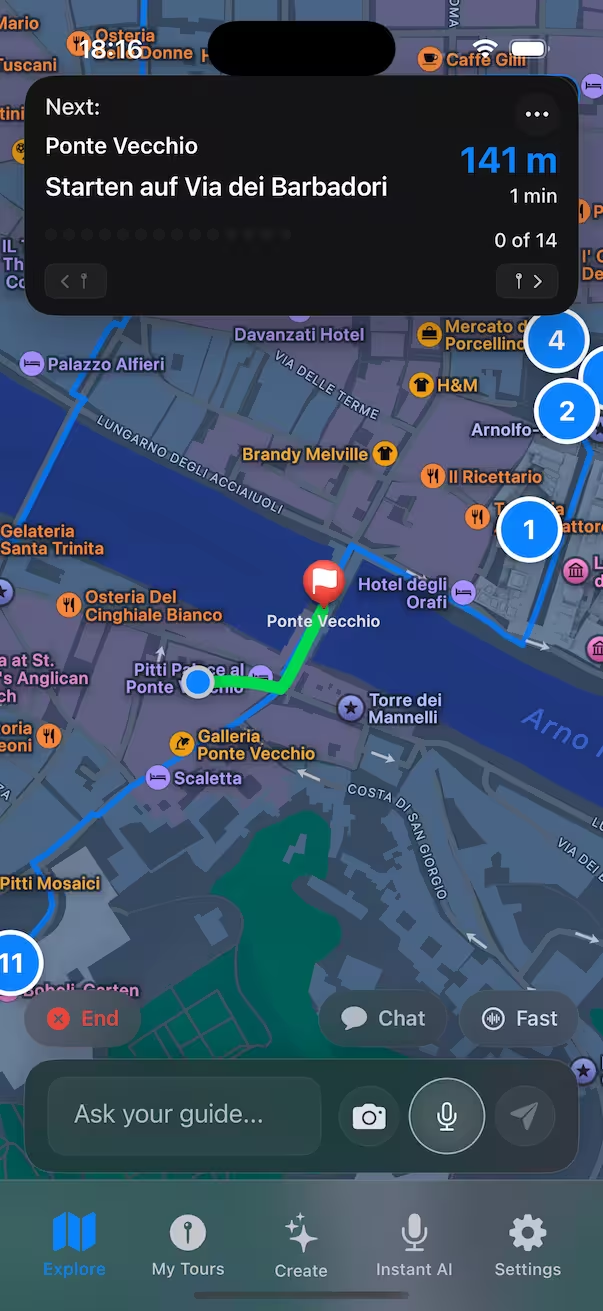
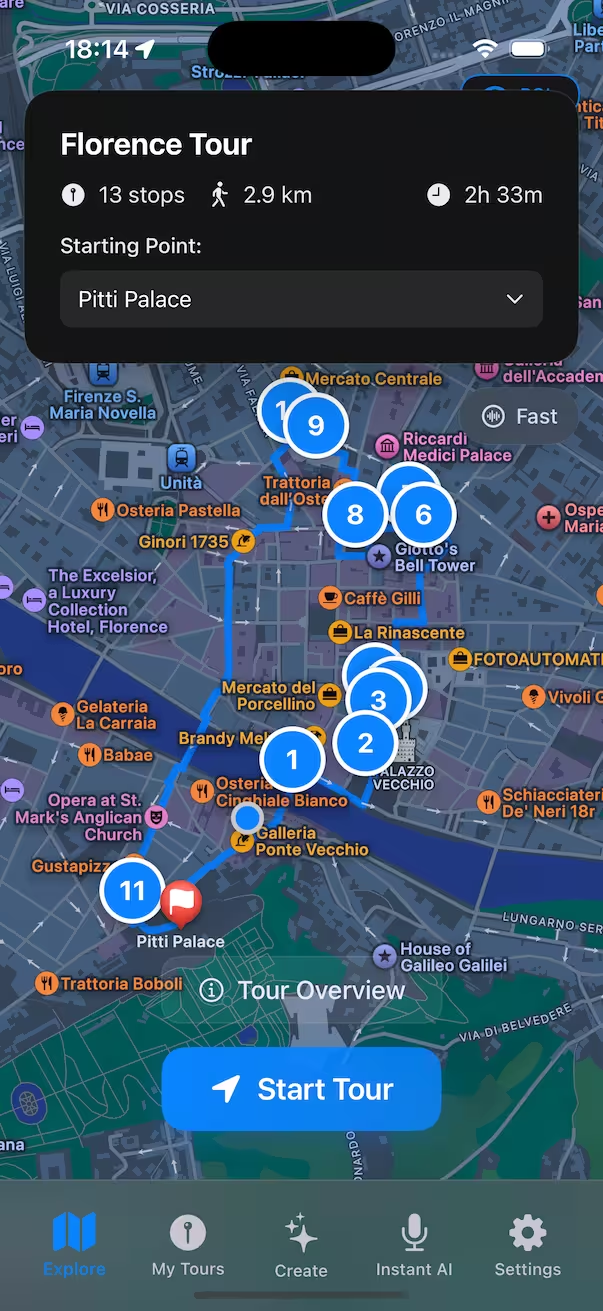
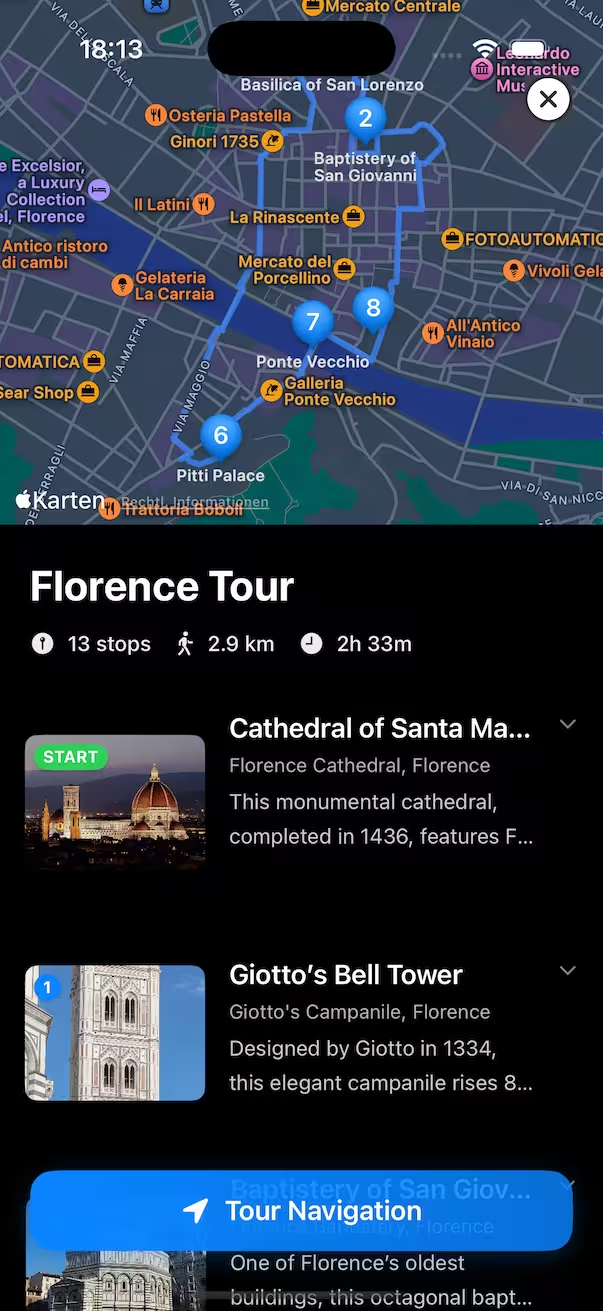
The classic Bangkok tour: 6 stops, 4.8 km, about 2 h on foot
Your live AI guide and the self-guided Bangkok route, together in your browser.