Best Time to Visit Brussels
Month-by-month weather, crowds and prices, plus a full calendar of festivals and events worth planning a trip around.
Best monthsApr, May, Sep, Oct
CheapestJan, Feb
AvoidDec
BusiestJul, Dec
When is the best time to visit Brussels?
Come in late April to mid-May or in September: 15 to 20°C, the Grand Place still walkable, spring blossom or the start of mussel season, and museums without summer queues. July and August bring the school-holiday peak. December's Christmas market is gorgeous but the most crowded and expensive stretch of the year.
Start our tool and find your best time to visit Brussels
Your perfect month
Free · ~30 seconds
or tap a month directly
What matters to you?
And this?
Best overall: May, Sep. May and September are the real sweet spot: mild 18 to 20°C, the Grand Place walkable, and the fullest event calendar. May carries three public-holiday long weekends that push hotel prices up, so the precise window is late April into the first half of May, then early September once the school-holiday crowd thins.
Best value: Jan, Feb, Nov. January, February and November bring hotels around 150 dollars a night, zero museum queues, and the 13 euro Magritte plus MRBAB combo ticket all to yourself. The trade is grey skies, short days, and a compact umbrella you will use most afternoons.
Avoid: Dec. December weekends: peak prices, a Grand Place packed shoulder to shoulder for the Christmas market, and a fresh 5 euro nightly tourist tax on top. Beautiful by night, but the worst value and the hardest booking of the year.
- January: Good time, 6°C. This is the month you stand under the Grand Place guildhalls almost alone. The locals are home, café life is slow, and you hear French and Dutch instead of a tour-group babble. Grey skies and 8.5 hours of daylight are the honest trade, and for the prices and the quiet it is a fair one.
- February: Good time, 8°C. February is honest, unperformed Brussels. No show put on for tourists, no seasonal markup, just a real working city in winter. Hop the train to Binche on Shrove Tuesday and you get the most spectacular carnival in Belgium for the price of a return ticket.
- March: Good time, 11°C. March is the last genuinely calm month before spring fills the city. Terraces reappear, the light lengthens, and you can still walk into a Saint-Gilles brasserie on a Saturday without a booking. That window shuts fast once April arrives, so use it.
- April: Great time, 14°C. April is the quiet favourite: the rain backs off, the parks bloom, and the Grand Place is still walkable before the summer rush sets in. Dodge the Easter weekend itself and you get the best weather of the year with shoulder-season calm.
- May: Great time, 18°C. Everyone calls May the shoulder-season secret. It stopped being one a while ago. Three long weekends, Pride and the best weather of the year mean the centre is busy and hotels know it. Come anyway for the light and the long evenings, but book early and aim for the first half of the month.
- June: Good time, 22°C. June is the tipping point, when Brussels shifts from busy-but-easy into full summer mode. The days are gloriously long and the festival energy is real, but by the third week the centre is hectic and prices have climbed. The Cinquantenaire on a warm Fête de la Musique evening is when the city feels at its best.
- July: Good time, 23°C. July is busy but never punishing the way a Mediterranean city is. The temperate weather means you can sightsee through the afternoon, and the events are the real reason to come: the Ommegang on the Grand Place at night, with 1,400 costumed actors and fire-spitters, is the most theatrical thing the city does all year.
- August: Good time, 23°C. August is summer winding down rather than peaking. The weather is comfortable, the crowds are real but not oppressive, and the back half of the month quietens noticeably as the holiday traffic ebbs. In a Flower Carpet year, the August 15 weekend is the single most photogenic the Grand Place ever gets.
- September: Great time, 20°C. September feels like the city exhaling after summer. The weather holds, the prices ease after the 20th, and the events lean local rather than touristy. For anyone who comes to Brussels for the beer and the mussels, this is unambiguously the month.
- October: Great time, 16°C. October is the quiet, golden return of the shoulder season. The crowds are gone, the guildhalls catch a low autumn light by late afternoon, and the beech forest at Soignes turns properly spectacular. Pack the umbrella, but the colour and the calm are worth a few showers.
- November: Good time, 10°C. November is honest Brussels in its quietest mood. The light is short and the rain is frequent, but the museums are empty, the brasseries are warm and the prices are the second-lowest of the year. The Christmas crowds have not yet arrived, so it is the city to yourself before it transforms.
- December: Tough month, 8°C. December is Brussels at its most magical and its most crowded at once. The Grand Place under the Christmas lights is genuinely one of the best in Europe, but you pay the year's top prices to share it shoulder to shoulder. Come midweek, and accept the trade for the spectacle.
Brussels weather by month
HighLowRainfall
Jan6°
Feb8°
Mar11°
Apr14°
May18°
Jun22°
Jul23°
Aug23°
Sep20°
Oct16°
Nov10°
Dec8°
| Month | Temp | Rain | Sun | Crowds | Prices | Highlight |
|---|---|---|---|---|---|---|
| Jan | 6° / 2° | 75mm · 14 rainy days | 3.6 h/day | ●○○○○ | ●○○○○ | Winter Wonders |
| Feb | 8° / 2° | 64mm · 12 rainy days | 5.6 h/day | ●○○○○ | ●○○○○ | Carnival of Binche |
| Mar | 11° / 3° | 64mm · 12 rainy days | 7.3 h/day | ●●○○○ | ●●○○○ | Brussels Art Nouveau and Art Deco Festival |
| Apr | 14° / 5° | 40mm · 10 rainy days | 9.9 h/day | ●●○○○ | ●●○○○ | Museum Nocturnes |
| May | 18° / 9° | 60mm · 11 rainy days | 11.1 h/day | ●●●○○ | ●●●●○ | Royal Greenhouses of Laeken |
| Jun | 22° / 13° | 69mm · 10 rainy days | 11.4 h/day | ●●●●○ | ●●●●○ | Music Day |
| Jul | 23° / 14° | 69mm · 11 rainy days | 11.3 h/day | ●●●●○ | ●●●○○ | Ommegang Pageant |
| Aug | 23° / 14° | 67mm · 12 rainy days | 10.6 h/day | ●●●●○ | ●●●○○ | Royal Palace Summer Opening |
| Sep | 20° / 12° | 57mm · 11 rainy days | 9.1 h/day | ●●●○○ | ●●●○○ | Belgian Beer Weekend |
| Oct | 16° / 10° | 73mm · 13 rainy days | 6.1 h/day | ●●○○○ | ●●●○○ | Museum Night Fever |
| Nov | 10° / 5° | 69mm · 14 rainy days | 4.7 h/day | ●○○○○ | ●●○○○ | Winter Wonders |
| Dec | 8° / 3° | 76mm · 14 rainy days | 3.2 h/day | ●●●●● | ●●●●● | Winter Wonders |
How we score this: weather = long-run climate normals (Open-Meteo), crowds & prices = relative season read, events checked yearly against official dates.
Best time to visit Brussels: weather, prices & crowds
Best months for good weather
Apr, May, Jun
Late April through June gives Brussels its driest, brightest stretch: April averages just 40mm of rain against 75mm in winter, highs climb from 14 to 22°C, and the long evenings let you sit out on the Place du Châtelain until well after nine.
Quietest months to avoid the crowds
Jan, Feb, Nov
January, February and November empty the city right out. The Grand Place is near silent before nine, the Magritte Museum and MRBAB have no queue at all, and you hear French and Dutch on the street instead of a dozen tour-group languages.
Cheapest time to visit Brussels
Jan, Feb
January and February are the cheapest months by a clear margin: hotels run around 150 dollars a night, roughly 30 percent below May, and you can walk into a Saturday-night brasserie in Ixelles without a booking.
Best time for festivals and events
Apr, Aug
Two rarities sit at opposite ends of the warm season: the royal Laeken greenhouses open free for just two weeks in late April, and in even years the million-flower carpet covers the Grand Place over the August 15 weekend.
How many days do you need in Brussels?
Brussels rewards two full days, though three is the comfortable sweet spot. The historic core is compact enough to walk in an afternoon, but the city's museums are genuinely serious and deserve time on their own terms.

One day
Grand Place to Sablon in one sweep
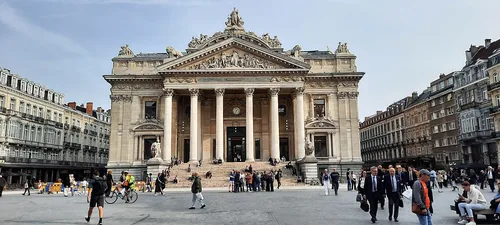
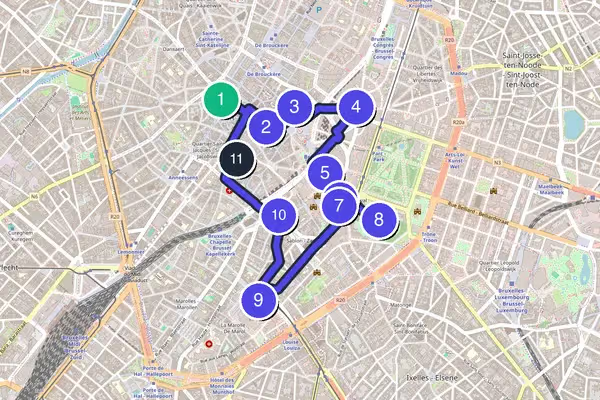
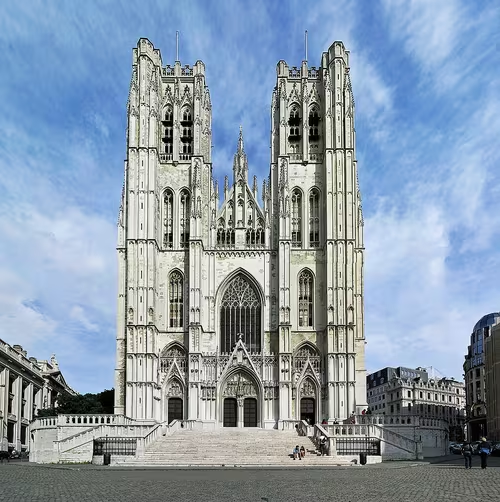
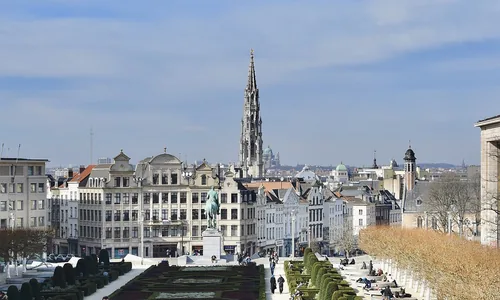
Start at the Bourse de Bruxelles and walk east to the Grand-Place, then through the glass-roofed Royal Galleries of Saint-Hubert to Brussels Cathedral and up to the Mont des Arts terraces. A self-guided Brussels walking tour strings all 11 stops across 4.6 km in about 2.5 hours, adding the Royal Palace of Brussels and the Palais de Justice. Finish in the Sablon around Notre-Dame du Sablon for a late lunch.
Two daysRecommended
Museums and neighbourhoods
Day two goes inside what you passed on day one. The Magritte Museum and the neighbouring Royal Museums of Fine Arts share a 13 euro combo ticket and together take three to four hours without rushing. Spend the afternoon in Ixelles or Saint-Gilles, where the side streets hold Art Nouveau townhouses and the Place du Châtelain terrace scene goes until dark.
Three days
Atomium, Horta, and the forest
A third day lets you reach the Atomium and neighbouring Mini-Europe in Laeken without rushing the rest of the itinerary. Fit in the Horta Museum on its tight weekday window (2pm to 5:30pm Tuesday to Friday) or go on a weekend morning. If the season is right, take tram 94 from Ixelles to the Forêt de Soignes for beech forest in autumn gold.
Four days or more
Day trips and deeper dives
Four days open the door to Ghent by IC train in 35 minutes or Bruges in under an hour, both doable as full day trips. A fourth Brussels day itself suits anyone chasing an event: the BANAD festival in March, the Laeken greenhouses in late April, the Belgian Beer Weekend in September, or the Museum Night Fever pass in October all benefit from a day dedicated to a single experience.
Best time to visit Brussels by traveller type
Same city, different trip. Here's the month that fits how you're travelling.
🧭
Best time to visit Brussels for the first time
AprMaySepOct
Late April to May or September to October is the answer most first-timers want: mild 15 to 20°C, the Grand Place before the summer crush, easy access to the Horta Museum and the Sablon, and hotels 20 to 30 percent below July.
❤️
Best time to visit Brussels for couples
MayOct
May for spring blossom, Pride atmosphere and 9pm sunsets over a Grand Place dinner, or October for golden light on the guildhalls and the Museum Night Fever pass turning 30 museums into one long date night.
💶
Best time to visit Brussels on a budget
JanFeb
January or February for the lowest hotel rates of the year, free Grand Place, free park browsing, and the Sunday Marché du Midi, with the Binche Carnival a free 45-minute train ride away in February.
🍝
Best time to visit Brussels for food and wine
SepNov
September for the opening of mussel season and the Belgian Beer Weekend on the Grand Place, or November for game dishes on brasserie menus with no tourists fighting you for a table.
Worst time to visit Brussels
December weekends are the stretch most worth skipping on value grounds. The Winter Wonders market on the Grand-Place is genuinely one of Europe's best, but from late November to the end of December hotel rates climb to their annual peak, around 228 dollars a night plus a 5 euro nightly tourist tax on top. The Grand-Place is elbow to elbow, any room booked under six weeks ahead is already gone, and December 23 to 26 is the single most crowded window of the entire year.
Still worth it for If the Christmas market is the reason you are coming, arrive midweek and accept the trade. The illuminated Grand-Place by night in December is the most photogenic it ever gets, and the 8 euro ice rink at Place de Brouckère is the cheapest leisure in the city.
Go instead in April, May, September, October, when Brussels is at its best.
Best time for a tour of Brussels
Brussels is a compact city best read on foot, and the calendar matters more than the postcards admit. The genuinely good walking months run from late April through September, when highs sit between 14 and 23 °C and the long evenings let you linger on the Grand-Place after the day-trippers thin out. May and September are the sweet spot: mild at 18 to 20 °C, the cobbles dry, and the cafés on the squares manageable rather than packed. High summer is pleasant but never scorching, peaking around 23 °C, so the open expanse of the Mont des Arts and the climb up to the Palais de Justice stay comfortable. The cold half of the year is the real test. January and December barely scrape 6 to 7 °C with dark falling by mid-afternoon, and Brussels is stubbornly wet, with 12 to 14 rainy days in most months, so the slick stone around Manneken Pis and the Royal Galleries of Saint-Hubert can turn a leisurely loop into a damp dash. Always pack a layer and something waterproof; the weather here changes hour to hour.
The upside of walking Brussels yourself is that you fit the route to the sky rather than to a clock. With AI Tourguide everything runs in your browser, no app and no download, so you simply open the page and set off the moment the rain lifts or the morning light hits the gilded guild houses on the Grand-Place. A voice-first guide leads the whole way, telling you the story behind the Royal Galleries, asking what catches your eye, then adapting the next stretch to your pace, whether you dawdle over the Magritte Museum or push on to the Sablon before the next shower. If you want to dodge a wet afternoon, start your Brussels tour on a bright spring morning when the squares are quiet, take your breaks where you please, and let the changeable Belgian weather, not a fixed departure time, decide your hour.

 +7
+7All 11 stops are already on the map.
You just press start.
You just press start.
 AI Tourguide
You just read the route.
Now walk it with a guide in your ear.
Press start wherever you are, even hundreds of kilometres from Brussels, and the guide begins telling its stories right away. In the city, pick any of the 11 stops to start from: it leads you there, then talks with you the whole route, asking, listening, remembering, and shaping the tour around your answers.
11stops4.6km2.5hours11languages
▶Start the tour freeFree to start · Runs in your browser · No app, no download
Brussels events and festivals calendar
Annual highlights worth timing a trip around, listed month by month.
February
More in February →March
🌙 Museum nightMuseum Nocturnes Nocturnes des musées
Mar 12 – Apr 23
seven consecutive Thursday evenings, mid-March to late April
Seven Thursday evenings when Brussels museums stay open until 10pm, with the participating venues rotating week to week across the run.
🎨 Art and cultureBrussels Art Nouveau and Art Deco Festival BANAD Festival
Mar 14–29
three weekends in mid to late March
Across three weekends, around 60 Art Nouveau and Art Deco interiors normally closed to the public open up, with guided walks on foot and by bike and a ticketed Objects Fair on the final weekend.
April
🌸 Seasonal natureRoyal Greenhouses of Laeken Serres Royales de Laeken
Apr 17 – May 3 ~
roughly two weeks in late April to early May
The royal greenhouses at Laeken Palace open to the public for just two weeks a year, free entry, when the vast 19th-century glass-and-iron conservatories are in full bloom.
May
🏳️🌈 PrideBrussels Pride
May 16
mid-May
A city-wide Pride with the Pride Village opening at Mont des Arts from noon and the Pride March setting off at 2:30pm through the centre.
🌙 Museum nightEuropean Museum Night Nuit Européenne des Musées
May 23
the fourth Saturday of May
Many Brussels museums open free from dusk until midnight for the European-wide museum night, with late hours and special programming.
🏃 SportBrussels 20km Run 20 km de Bruxelles
May 31
the last Sunday of May
Around 47,000 runners start and finish at the Cinquantenaire Park, with major road closures on Louise, Roosevelt and Souverain from roughly 8:30am to 4pm.
June
🎵 MusicMusic Day Fête de la Musique
Jun 18–21
four days around June 21
Four days of free concerts across Brussels, with the Cinquantenaire Park as the main stage and rap, rock, jazz and classical playing at over 100 venues city-wide.
🎵 MusicCouleur Café Festival Couleur Café
Jun 26–28
the last weekend of June
A multicultural world-music festival at Osseghem Park in Laeken, mixing reggae, soul, hip-hop and Afro sets with a DJ stage and a food village.
July
🎨 Art and cultureOmmegang Pageant Ommegang de Bruxelles
Jul 1–3
the first Wednesday and Friday of July, at 8:45pm
A medieval pageant on the Grand Place recreating the 1549 procession for Emperor Charles V, with 1,400 actors, horses, folk groups and fire-spitters.
🎨 Art and cultureRoyal Palace Summer Opening Palais Royal ouvert
Jul 3 – Aug 16
early July to mid-August
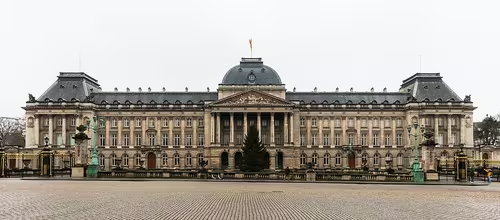
The Royal Palace opens free to the public for the summer, showing the Throne Room, Grand Gallery, gardens and temporary exhibitions, with advance booking compulsory from June 1.
🇮 HolidayBelgian National Day Fête nationale belge
Jul 21
July 21 every year
Brussels is the epicentre of the national holiday, with a military parade, a Te Deum mass, free concerts at Place des Palais and fireworks at dusk near the Park of Brussels.
August
🌸 Seasonal natureFlower Carpet Tapis de Fleurs
Aug 13–16
the weekend nearest August 15, even years only
A 70 by 24 metre carpet of around a million dahlias and begonias laid across the Grand Place, created by 120 volunteers in four hours.
September
🍷 Food and wineBelgian Beer Weekend
Sep 4–6
the first weekend of September
The Grand Place turns into an open-air beer hall with more than 500 Belgian beers from 50-plus breweries, opened by a parade of brewers in traditional guild costume.
🎨 Art and cultureHeritage Days Journées du Patrimoine
Sep 19–20
the third weekend of September
More than 60 normally-closed buildings open for free over one weekend, from private mansions and government offices to embassies and guild halls.
October
🌙 Museum nightMuseum Night Fever
Oct 17
the third Saturday of October, 7pm to 1am
Around 30 museums stay open until 1am with performances, installations, DJs and live music inside, all covered by a single pass.
November
🎄 Christmas marketWinter Wonders Plaisirs d'Hiver
Nov 27 – Jan 3
late November to the first Sunday of January
Brussels' Christmas market, with 200-plus chalets, a ferris wheel, an ice rink, curling and a nightly sound-and-light show on the Grand Place, open daily noon to 10pm.
Insider tips for visiting Brussels
The rules buried in forums, in one place.
- The Grand Place is a selfie-stick canyon by 10am. Arrive before 8:30 for near-empty cobbles and golden light on the guildhalls, or come after 9pm when the crowds thin and the illuminated facades look better than they ever do in daylight.
- Most Brussels museums close on Monday, including the Magritte Museum, the Royal Museums of Fine Arts, the Horta Museum and the Musical Instrument Museum. The Atomium is the dependable exception, open daily 10am to 6pm. Plan museum days for Tuesday to Sunday.
- The Horta Museum has a brutally narrow weekday window: Tuesday to Friday it opens only 2pm to 5:30pm, so arrive by 4:30 or you get half a visit. Weekends are kinder at 11am to 5:30pm. Closed Monday, and last entry is well before closing.
- The Royal Palace opens to the public only in summer (roughly early July to mid-August) and reservations are free but compulsory. Slots release on June 1 and the popular Tuesday-to-Thursday mornings sell out within days, so set a reminder for June 1 at 9am.
- The Place du Jeu de Balle flea market runs daily but the real antiques are gone by 11am. Serious hunters arrive at 7am, Saturday has the most stalls, Sunday the best café scene around the square, and most sellers take cash only.
- Skip Rue des Bouchers entirely. The touristy alley pushes aggressive touts and 25 euro mussels of poor quality. Eat in the Ixelles side streets, around the Sablon, or in Saint-Gilles instead, where locals actually go.
- Mussel season traditionally runs September to April, the months with an R, and locals genuinely skip moules from June to August. September is the prime month, when the Atlantic catch is at its fattest and freshest.
- Rain in Brussels is showery and brief rather than an all-day soak, but it falls on roughly 200 days a year, so a compact umbrella is essential whatever the season. Spring, April and May, is the driest stretch and the best bet for a dry walking day.
Public holidays in Brussels
On these dates many shops and offices close, transport thins out, and sights can be mobbed or shut. Plan around them.
| Date | Holiday | What closes |
|---|---|---|
| Apr 3 | Good Friday | Not an official public holiday in Belgium, but many private businesses close. Public transport runs normally and restaurants are busy. |
| Apr 6 | Easter Monday | Official holiday: shops closed, most museums open, hotels surged for the long weekend. Draws French and Dutch family visitors, so book six or more weeks ahead. |
| May 1 | Labour Day | Official holiday: all shops closed, museums mostly open, and trade-union demonstrations cross the city centre during the day. |
| May 14 | Ascension Day | Official holiday that creates a Thursday-to-Sunday long weekend. Shops closed, hotels spike, and a strong French visitor influx fills the centre. |
| May 25 | Whit Monday | Official holiday and the third long weekend in four weeks. Shops closed, a marked French visitor spike, and city-centre hotels at a seasonal high. |
| Jul 21 | Belgian National Day | Official holiday with Brussels at its epicentre: military parade, Te Deum mass, free concerts and dusk fireworks near Place des Palais. Major road closures all afternoon and evening, so walk or take the metro and avoid driving. |
| Aug 15 | Assumption of Mary | Official holiday falling on the Flower Carpet weekend in even years. Some shops closed, tourist sights open, and the Grand Place area fully pedestrianised. |
| Nov 1 | All Saints' Day | Official holiday: most shops closed, a sombre atmosphere, and cemeteries busy with families visiting graves. |
| Nov 11 | Armistice Day | Official holiday with a remembrance ceremony at the Colonne du Congrès. Shops closed; museums and transport largely normal. |
| Dec 25 | Christmas Day | Official holiday: virtually everything closes, and the Winter Wonders market shuts early at 6pm on December 24 then closes outright on the 25th. |
| Dec 26 | Boxing Day | Official holiday in Belgium: some shops reopen, museums open, and the Winter Wonders market is back in full swing. |
Brussels month by month
January in Brussels
High6°C / 44°F
Low2°C
Rain75mm / 14 rainy days
Sun3.6 h/day
Daylight8 h/day
Humidity87%
Crowds●○○○○Prices●○○○○
January is Brussels at its emptiest and most affordable. Daytime hovers around 6 to 7°C under often-grey skies with about 14 rainy days, but snow is rare and a warm jacket handles it. Once the Winter Wonders market closes on January 3, the post-Christmas slump leaves the Grand Place near silent before 9am and museums with zero queue. There are no school holidays and no events competing for hotel rooms, which is exactly why the prices fall.
The vibe This is the month you stand under the Grand Place guildhalls almost alone. The locals are home, café life is slow, and you hear French and Dutch instead of a tour-group babble. Grey skies and 8.5 hours of daylight are the honest trade, and for the prices and the quiet it is a fair one.
Don't miss The Magritte Museum and MRBAB next door share a 13 euro combo ticket and you will have whole rooms to yourself. Note some restaurants close for a two-week winter break this month, so check before you set your heart on a specific table.
Crowd drivers No school holidays once the market closes on January 3, no festivals, the lowest visitor pressure of the entire year.
In season Deep in mussel season: moules-frites are at their winter best, and game dishes like wild boar and venison still feature on brasserie menus.
Heads up Winter Wonders ends January 3. Most museums shut on Monday year-round, so build museum days around Tuesday to Sunday.
The cheapest month of the year: hotels around 150 dollars a night, roughly 30 percent below May.
February in Brussels
High8°C / 47°F
Low2°C
Rain64mm / 12 rainy days
Sun5.6 h/day
Daylight10 h/day
Humidity81%
Crowds●○○○○Prices●○○○○
February is the single quietest tourism month in Brussels, mild but damp at 8°C with around 12 rainy days. The Belgian school carnival break lands mid-month and adds some domestic visitors, but nothing close to a crowd. The real draw is an easy day trip: the UNESCO-listed Binche Carnival on February 15 to 17, where the Gilles clowns throw oranges on Shrove Tuesday, a 45-minute train from Brussels-Midi.
The vibe February is honest, unperformed Brussels. No show put on for tourists, no seasonal markup, just a real working city in winter. Hop the train to Binche on Shrove Tuesday and you get the most spectacular carnival in Belgium for the price of a return ticket.
Don't miss The Binche Carnival (February 15 to 17) is free to watch and a short train ride away. Go on the Tuesday for the full Gilles procession, the part that earned its UNESCO listing.
Crowd drivers Belgian school carnival break mid-February adds domestic families; Binche day-trippers spike midweek around February 15 to 17.
In season Still firmly in mussel season, and the perfect month for a long lunch of moules-frites with a Trappist beer while the rain passes outside.
Heads up Museums remain closed on Monday. The Horta Museum keeps its narrow weekday 2pm to 5:30pm window, easy to miss.
Joint-cheapest with January; the Binche Carnival midweek can nudge nearby rates up briefly.
Events this month
🎭 CarnivalCarnival of Binche Carnaval de Binche
Feb 15–17 ~
the three days before Ash Wednesday (February)
A UNESCO-listed carnival in Binche, 55km from Brussels, where the costumed Gilles clowns parade and throw oranges to the crowd on Shrove Tuesday. It is a 45-minute train ride from Brussels-Midi.
The most spectacular carnival in Belgium and a recognised piece of intangible heritage, free to watch; go on the Tuesday for the full Gilles procession.
March in Brussels
High11°C / 52°F
Low3°C
Rain64mm / 12 rainy days
Sun7.3 h/day
Daylight12 h/day
Humidity77%
Crowds●●○○○Prices●●○○○
March opens the spring shoulder. Highs climb toward 11°C, the rain eases to one of its lower points, and café terraces start reopening. Crowds stay moderate. The standout is the BANAD festival (March 14 to 29), three weekends when around 60 Art Nouveau and Art Deco interiors normally locked shut open to the public, the single best chance to step inside Horta's Brussels.
The vibe March is the last genuinely calm month before spring fills the city. Terraces reappear, the light lengthens, and you can still walk into a Saint-Gilles brasserie on a Saturday without a booking. That window shuts fast once April arrives, so use it.
Don't miss BANAD (March 14 to 29) opens roughly 60 private Art Nouveau mansions and government buildings, with guided walks on foot and by bike. The Thursday-evening Museum Nocturnes also begin mid-March, extending hours to 10pm and letting you skip the daytime queues.
Crowd drivers Spring shoulder begins; the niche BANAD architecture crowd arrives mid to late month, but no mass tourism yet.
In season Mussel season runs on through March, and the first hints of spring produce begin appearing at the covered Marché du Midi on Sundays.
Heads up Monday museum closures still apply. BANAD interiors are open only on its three festival weekends, so check the schedule before you plan a specific house.
Hotels still 20 to 25 percent below summer, with good deals on midweek stays.
Events this month
🎨 Art and cultureBrussels Art Nouveau and Art Deco Festival BANAD Festival
Mar 14–29
three weekends in mid to late March
Across three weekends, around 60 Art Nouveau and Art Deco interiors normally closed to the public open up, with guided walks on foot and by bike and a ticketed Objects Fair on the final weekend.
The single best chance to step inside Horta's private mansions and government buildings that stay locked the rest of the year.
🌙 Museum nightMuseum Nocturnes Nocturnes des musées
Mar 12 – Apr 23
seven consecutive Thursday evenings, mid-March to late April
Seven Thursday evenings when Brussels museums stay open until 10pm, with the participating venues rotating week to week across the run.
Evening light adds atmosphere and you skip the daytime queues, a calmer alternative to a standard museum visit.
April in Brussels
High14°C / 58°F
Low5°C
Rain40mm / 10 rainy days
Sun9.9 h/day
Daylight14 h/day
Humidity72%
Crowds●●○○○Prices●●○○○
April is the driest month in Brussels at just 40mm of rain, with highs around 14°C and nearly 10 hours of sun a day, which makes it the single best month for a walking trip. Easter (April 5 to 6) brings a wave of French and Dutch families and a weekend price bump, but the weekdays around it stay calm. Spring blossom fills the parks and the cherry trees along Avenue de Tervuren peak in early April.
The vibe April is the quiet favourite: the rain backs off, the parks bloom, and the Grand Place is still walkable before the summer rush sets in. Dodge the Easter weekend itself and you get the best weather of the year with shoulder-season calm.
Don't miss The royal Laeken greenhouses open free for just two weeks in late April, one of Brussels' most overlooked events, but you must book ahead on laeken.be. Cherry blossom lines Avenue de Tervuren in early April and the Mont des Arts garden comes into colour.
Crowd drivers Easter (April 5 to 6) draws French and Dutch family visitors; spring blossom pulls day-trippers on fine weekends.
In season The last good stretch of mussel season before it pauses for summer, so order moules-frites now if you want them at their best.
Heads up Easter Monday (April 6) closes shops, though museums stay open. Monday museum closures continue the rest of the month.
Easter weekend lifts hotels 15 to 20 percent; weekdays before and after stay quiet and well-priced.
Events this month
🌸 Seasonal natureRoyal Greenhouses of Laeken Serres Royales de Laeken
Apr 17 – May 3 ~
roughly two weeks in late April to early May
The royal greenhouses at Laeken Palace open to the public for just two weeks a year, free entry, when the vast 19th-century glass-and-iron conservatories are in full bloom.
One of Brussels' most overlooked annual events and a rare look behind the royal gates; book ahead on laeken.be.
🌙 Museum nightMuseum Nocturnes Nocturnes des musées
Mar 12 – Apr 23
seven consecutive Thursday evenings, mid-March to late April
Seven Thursday evenings when Brussels museums stay open until 10pm, with the participating venues rotating week to week across the run.
Evening light adds atmosphere and you skip the daytime queues, a calmer alternative to a standard museum visit.
🌙 Museum nightEuropean Museum Night Nuit Européenne des Musées
May 23
the fourth Saturday of May
Many Brussels museums open free from dusk until midnight for the European-wide museum night, with late hours and special programming.
Free entry and late hours make it popular, so arrive early at the Magritte Museum and MRBAB before they fill.
May in Brussels
High18°C / 65°F
Low9°C
Rain60mm / 11 rainy days
Sun11.1 h/day
Daylight16 h/day
Humidity72%
Crowds●●●○○Prices●●●●○
May has the best balance of warmth and length, with highs near 18°C, 15-plus hours of daylight, and sunsets after 9pm that stretch dinner on the Grand Place. The catch is the calendar: Labour Day, Ascension and Whit Monday stack three long weekends into four weeks, Pride lands on May 16, and hotel rates run their highest of the year against the weather. The precise sweet spot is late April into the first half of May, before the holidays bite.
The vibe Everyone calls May the shoulder-season secret. It stopped being one a while ago. Three long weekends, Pride and the best weather of the year mean the centre is busy and hotels know it. Come anyway for the light and the long evenings, but book early and aim for the first half of the month.
Don't miss Brussels Pride (May 16, its 30th edition) fills Mont des Arts with the Pride Village from noon and a march at 2:30pm. The European Museum Night on May 23 opens many museums free from dusk, so arrive early at the Magritte and MRBAB. The 20km de Bruxelles closes half the city's ring roads on May 31.
Crowd drivers Labour Day (May 1), Ascension (May 14) and Whit Monday (May 25) create three long weekends; Brussels Pride on May 16 packs the centre.
In season Terrace and aperitif season opens in earnest; the long evenings make a Trappist or lambic beer on a Châtelain terrace the move of the month.
Heads up Three public holidays (May 1, 14, 25) close shops, with museums mostly open. National-Day-style road closures hit the centre on May 31 for the 20km race.
The year's highest prices relative to the weather: around 224 dollars a night, with three holiday long weekends and Pride spiking the centre.
Events this month
🏳️🌈 PrideBrussels Pride
May 16
mid-May
A city-wide Pride with the Pride Village opening at Mont des Arts from noon and the Pride March setting off at 2:30pm through the centre.
A massive street party that closes central arteries and brings a spectacular atmosphere; expect a hotel-rate spike in the centre.
🌙 Museum nightEuropean Museum Night Nuit Européenne des Musées
May 23
the fourth Saturday of May
Many Brussels museums open free from dusk until midnight for the European-wide museum night, with late hours and special programming.
Free entry and late hours make it popular, so arrive early at the Magritte Museum and MRBAB before they fill.
🏃 SportBrussels 20km Run 20 km de Bruxelles
May 31
the last Sunday of May
Around 47,000 runners start and finish at the Cinquantenaire Park, with major road closures on Louise, Roosevelt and Souverain from roughly 8:30am to 4pm.
Half the city's ring roads shut until mid-afternoon, so plan to be carless or near the Cinquantenaire; the street-festival atmosphere is lively for spectators.

June in Brussels
High22°C / 72°F
Low13°C
Rain69mm / 10 rainy days
Sun11.4 h/day
Daylight16 h/day
Humidity71%
Crowds●●●●○Prices●●●●○
June opens the Brussels summer warm and bright, with highs around 22°C, the longest daylight of the year at 16-plus hours, and only the gentlest, showery rain. Belgian school holidays begin mid-month and crowds build steadily. Two free, city-wide music events define it: the Fête de la Musique (June 18 to 21) scatters more than 100 concerts across town, and Couleur Café (June 26 to 28) brings world music to Osseghem Park near the Atomium.
The vibe June is the tipping point, when Brussels shifts from busy-but-easy into full summer mode. The days are gloriously long and the festival energy is real, but by the third week the centre is hectic and prices have climbed. The Cinquantenaire on a warm Fête de la Musique evening is when the city feels at its best.
Don't miss The Fête de la Musique (June 18 to 21) is completely free, with the Cinquantenaire Park as its main stage and over 100 venues across the city. Couleur Café (June 26 to 28) is Brussels' premier outdoor music festival, walkable from the Atomium but a ticketed three-day pass.
Crowd drivers Belgian school holidays start mid-June; the Fête de la Musique and Couleur Café festival weekends push hotels up sharply.
In season This is when locals stop ordering mussels, holding off until the R-months return in September, so summer is the season for frites, waffles and a terrace beer instead.
Heads up Few seasonal closures, but festival weekends book out the centre, so reserve hotels and tables well ahead of June 18 to 21 and June 26 to 28.
Around 221 dollars a night; festival weekends add 30 to 50 euros over mid-June weekdays.
Events this month
🎵 MusicMusic Day Fête de la Musique
Jun 18–21
four days around June 21
Four days of free concerts across Brussels, with the Cinquantenaire Park as the main stage and rap, rock, jazz and classical playing at over 100 venues city-wide.
Completely free and the best city-wide street-music event of the year; head to the Cinquantenaire on the Saturday evening.
🎵 MusicCouleur Café Festival Couleur Café
Jun 26–28
the last weekend of June
A multicultural world-music festival at Osseghem Park in Laeken, mixing reggae, soul, hip-hop and Afro sets with a DJ stage and a food village.
Brussels' premier outdoor music festival, walkable from the Atomium, though it needs a ticketed three-day pass.
July in Brussels
High23°C / 74°F
Low14°C
Rain69mm / 11 rainy days
Sun11.3 h/day
Daylight16 h/day
Humidity71%
Crowds●●●●○Prices●●●○○
July is the peak tourist month, with French, Dutch and German summer holidays flooding the city, yet the heat stays civilised: highs around 23°C and only a handful of 30°C-plus days, so walking all day is comfortable most years. It is a rich month for spectacle. The Ommegang medieval pageant fills the Grand Place on July 1 and 3, National Day on July 21 turns the centre into a parade and fireworks epicentre, and the Royal Palace opens free from July 3.
The vibe July is busy but never punishing the way a Mediterranean city is. The temperate weather means you can sightsee through the afternoon, and the events are the real reason to come: the Ommegang on the Grand Place at night, with 1,400 costumed actors and fire-spitters, is the most theatrical thing the city does all year.
Don't miss The Royal Palace opens free to the public from July 3 (advance booking compulsory, slots from June 1), the only window to see the Throne Room and Grand Gallery. The Ommegang stages its 1549 procession on the Grand Place on July 1 and 3, and National Day on July 21 ends in fireworks near Place des Palais.
Crowd drivers Peak month with French, Dutch and German summer holidays overlapping; the Ommegang and National Day pull big domestic crowds into the centre.
In season Mussels are off the local menu until September, so lean into summer street food: a cone of frites with proper mayonnaise and a fresh Liège waffle.
Heads up Avoid driving on July 21, when National Day closes broad swaths of the centre and pedestrianises the Grand Place area entirely.
Around 212 dollars a night; Ommegang stand tickets run 55 to 85 euros on the July 1 and 3 nights on top of the hotel surge.
Events this month
🎨 Art and cultureOmmegang Pageant Ommegang de Bruxelles
Jul 1–3
the first Wednesday and Friday of July, at 8:45pm
A medieval pageant on the Grand Place recreating the 1549 procession for Emperor Charles V, with 1,400 actors, horses, folk groups and fire-spitters. It runs the nights of July 1 and 3.
The Grand Place at night with costumes and fire is the city's most theatrical event; book stands two to three months ahead, they sell out.
🇮 HolidayBelgian National Day Fête nationale belge
Jul 21
July 21 every year
Brussels is the epicentre of the national holiday, with a military parade, a Te Deum mass, free concerts at Place des Palais and fireworks at dusk near the Park of Brussels.
Free fireworks and roughly 200,000 people in the park area make it a spectacle, but avoid driving as the centre closes off.
🎨 Art and cultureRoyal Palace Summer Opening Palais Royal ouvert
Jul 3 – Aug 16
early July to mid-August
The Royal Palace opens free to the public for the summer, showing the Throne Room, Grand Gallery, gardens and temporary exhibitions, with advance booking compulsory from June 1.
The only chance all year to see the palace interior, free of charge; popular slots sell out within days of release, so book on June 1.
August in Brussels
High23°C / 73°F
Low14°C
Rain67mm / 12 rainy days
Sun10.6 h/day
Daylight14 h/day
Humidity73%
Crowds●●●●○Prices●●●○○
August keeps July's warmth, with highs around 23°C and German and UK school holidays sustaining the crowds. In even years the Flower Carpet covers the Grand Place over the August 15 weekend, a million dahlias and begonias laid out by 120 volunteers in four hours. The Royal Palace stays open free until August 16, and once the 20th passes hotel prices fall quickly into the autumn shoulder.
The vibe August is summer winding down rather than peaking. The weather is comfortable, the crowds are real but not oppressive, and the back half of the month quietens noticeably as the holiday traffic ebbs. In a Flower Carpet year, the August 15 weekend is the single most photogenic the Grand Place ever gets.
Don't miss The Flower Carpet (August 13 to 16, even years only) is free to see from the square, but the City Hall balcony for the aerial view is ticketed and books out, and the after-dark sound-and-light show is the spectacular part. The Royal Palace stays open free until August 16.
Crowd drivers German and UK summer holidays sustain the peak; the Flower Carpet weekend (August 13 to 16, even years only) spikes the centre.
In season Still the no-mussel window for locals, so it is a frites, waffle and Belgian-beer month until the catch returns in September.
Heads up Assumption (August 15) closes some shops, and the Flower Carpet weekend pedestrianises the Grand Place area. The Royal Palace closes for the year after August 16.
Around 196 dollars a night; the Flower Carpet weekend adds 30 to 40 euros in the centre, then rates drop fast after August 20.
Events this month
🌸 Seasonal natureFlower Carpet Tapis de Fleurs
Aug 13–16
the weekend nearest August 15, even years only
A 70 by 24 metre carpet of around a million dahlias and begonias laid across the Grand Place, created by 120 volunteers in four hours. It happens only in even years.
A spectacle you can catch only every two years; see it from the City Hall balcony for the aerial view and stay for the illuminated evening show.
🎨 Art and cultureRoyal Palace Summer Opening Palais Royal ouvert
Jul 3 – Aug 16
early July to mid-August
The Royal Palace opens free to the public for the summer, showing the Throne Room, Grand Gallery, gardens and temporary exhibitions, with advance booking compulsory from June 1.
The only chance all year to see the palace interior, free of charge; popular slots sell out within days of release, so book on June 1.
September in Brussels
High20°C / 68°F
Low12°C
Rain57mm / 11 rainy days
Sun9.1 h/day
Daylight13 h/day
Humidity77%
Crowds●●●○○Prices●●●○○
September is the best autumn-shoulder month: highs near 20°C, the rain at one of its lowest points, and the school-holiday crowd gone by early in the month. It is the foodie's window, when mussel season reopens with the Atlantic catch at its fattest. The Belgian Beer Weekend (September 4 to 6) turns the Grand Place into a beer hall with 500-plus beers, and Heritage Days (September 19 to 20) open 60-plus normally-shut buildings.
The vibe September feels like the city exhaling after summer. The weather holds, the prices ease after the 20th, and the events lean local rather than touristy. For anyone who comes to Brussels for the beer and the mussels, this is unambiguously the month.
Don't miss The Belgian Beer Weekend (September 4 to 6) gathers 500-plus beers from 50-plus breweries around the Grand Place, free to enter with the Friday evening least crowded. Heritage Days (September 19 to 20) are your only chance to enter buildings like the Berlaymont and private Art Nouveau townhouses.
Crowd drivers Schools resume and crowds thin from early September; the Beer Weekend and Heritage Days draw weekend spikes, mostly domestic.
In season Mussel season reopens and September is its prime month, when the catch is freshest, so this is the time to order moules-frites where the locals do, off Rue des Bouchers.
Heads up Heritage Days buildings open only on September 19 to 20. Standard Monday museum closures otherwise apply.
Around 210 dollars a night, with a Beer Weekend spike on the Grand Place, then shoulder rates after September 20.
Events this month
🍷 Food and wineBelgian Beer Weekend
Sep 4–6
the first weekend of September
The Grand Place turns into an open-air beer hall with more than 500 Belgian beers from 50-plus breweries, opened by a parade of brewers in traditional guild costume. Entry is free, tasting tokens are paid.
The best single event of the year for beer lovers; the Friday evening is the least crowded time to dive in.
🎨 Art and cultureHeritage Days Journées du Patrimoine
Sep 19–20
the third weekend of September
More than 60 normally-closed buildings open for free over one weekend, from private mansions and government offices to embassies and guild halls.
The only chance to enter places like the Berlaymont and private Art Nouveau townhouses; entry is free across the board.
October in Brussels
High16°C / 60°F
Low10°C
Rain73mm / 13 rainy days
Sun6.1 h/day
Daylight11 h/day
Humidity82%
Crowds●●○○○Prices●●●○○
October is autumn proper: highs around 16°C, the rainiest stretch of the year beginning, and the daylight dropping below 11 hours. The trade-off is the foliage, with Bois de la Cambre and the UNESCO-listed Forêt de Soignes turning gold from mid-month and peaking in the last week. Museum Night Fever on October 17 opens around 30 museums until 1am on a single pass, the best museum night of the year.
The vibe October is the quiet, golden return of the shoulder season. The crowds are gone, the guildhalls catch a low autumn light by late afternoon, and the beech forest at Soignes turns properly spectacular. Pack the umbrella, but the colour and the calm are worth a few showers.
Don't miss Museum Night Fever (October 17, 7pm to 1am) puts around 30 museums on one pass with performances, installations and DJs inside, and it is better value pre-purchased online. Take tram 94 from Ixelles to the Forêt de Soignes for the beech forest at its golden peak in the last week.
Crowd drivers Shoulder season returns with crowds light; autumn-colour day-trippers head to Bois de la Cambre on fine weekends.
In season Prime mussel month continues, and brasseries start bringing out autumn game dishes like venison alongside the season's freshest moules.
Heads up Monday museum closures apply. Daylight drops fast this month, so the after-5pm darkness starts to compress sightseeing time.
Around 207 dollars a night; decent value as the autumn shoulder settles in and leaf-season day-trippers arrive.
Events this month
🌙 Museum nightMuseum Night Fever
Oct 17
the third Saturday of October, 7pm to 1am
Around 30 museums stay open until 1am with performances, installations, DJs and live music inside, all covered by a single pass.
The best-value museum night of the year, with the Magritte, MRBAB, Cinquantenaire and Horta all taking part; pre-purchase online before popular venues hit capacity.

November in Brussels
High10°C / 51°F
Low5°C
Rain69mm / 14 rainy days
Sun4.7 h/day
Daylight9 h/day
Humidity86%
Crowds●○○○○Prices●●○○○
November is the deep pre-Christmas lull: highs around 10°C, the rainiest period of the year, and the shortest, darkest days with sunset near 4:30pm. Crowds are at a near-winter low, which makes it the best month for a museum-heavy trip with no queues. Armistice Day (November 11) is a public holiday, and the Winter Wonders market preview begins in the final days of the month.
The vibe November is honest Brussels in its quietest mood. The light is short and the rain is frequent, but the museums are empty, the brasseries are warm and the prices are the second-lowest of the year. The Christmas crowds have not yet arrived, so it is the city to yourself before it transforms.
Don't miss This is the ideal month for the Magritte, MRBAB and Horta with no queue at all and the 13 euro combo ticket to yourself. The Forêt de Soignes holds the last of its autumn colour in early November before the leaves drop.
Crowd drivers Pre-Christmas quiet keeps crowds low until the Winter Wonders preview begins in the final days of the month.
In season An excellent month for winter game on brasserie menus, wild boar and venison, with mussels still in full season and no tourists competing for tables.
Heads up All Saints' Day (November 1) and Armistice Day (November 11) are two holidays ten days apart with reduced services and many shops closed on both.
The second-cheapest month, around 212 dollars a night, though the late-November Christmas-market preview begins to lift rates.
Events this month
🎄 Christmas marketWinter Wonders Plaisirs d'Hiver
Nov 27 – Jan 3
late November to the first Sunday of January
Brussels' Christmas market, with 200-plus chalets, a ferris wheel, an ice rink, curling and a nightly sound-and-light show on the Grand Place, open daily noon to 10pm.
It consistently ranks among Europe's top three Christmas markets and the Grand Place by night in December is exceptional; avoid December 23 to 26 for the crowds.

December in Brussels
High8°C / 46°F
Low3°C
Rain76mm / 14 rainy days
Sun3.2 h/day
Daylight8 h/day
Humidity88%
Crowds●●●●●Prices●●●●●
December is the busiest and priciest month, defined by the Winter Wonders Christmas market that runs the Grand Place and surrounds with 200-plus chalets, a ferris wheel, an ice rink and a nightly sound-and-light show. The weather is cold and dark at 7 to 8°C with sunset near 4:30pm, but the market by night is exceptional. Hotels hit their annual peak and the centre is elbow to elbow, so book six or more weeks ahead and avoid December 23 to 26.
The vibe December is Brussels at its most magical and its most crowded at once. The Grand Place under the Christmas lights is genuinely one of the best in Europe, but you pay the year's top prices to share it shoulder to shoulder. Come midweek, and accept the trade for the spectacle.
Don't miss Winter Wonders (open daily noon to 10pm) brings the sound-and-light show on the Grand Place, a ferris wheel and an ice rink at Place de Brouckère, where 8 euro skate rental is the cheapest leisure in the city. Come Thursday or Friday evening to dodge the 30 to 45 minute weekend rink queues.
Crowd drivers The Winter Wonders market plus the French and Belgian school break pack the centre; December 23 to 26 is the worst of it.
In season Christmas-market food is everywhere, from tartiflette to vin chaud, and mussel season is still going strong for a warming moules-frites between the chalets.
Heads up Christmas Day (December 25) closes nearly everything and the market shuts early at 6pm on the 24th, then closes outright on the 25th. Boxing Day (December 26) sees some shops and museums reopen.
The most expensive month, around 228 dollars a night plus a 5 euro nightly tourist tax, with the Christmas market adding 40 euros in the centre.
Events this month
🎄 Christmas marketWinter Wonders Plaisirs d'Hiver
Nov 27 – Jan 3
late November to the first Sunday of January
Brussels' Christmas market, with 200-plus chalets, a ferris wheel, an ice rink, curling and a nightly sound-and-light show on the Grand Place, open daily noon to 10pm.
It consistently ranks among Europe's top three Christmas markets and the Grand Place by night in December is exceptional; avoid December 23 to 26 for the crowds.
Frequently asked questions
What is the best time of year to visit Brussels?
Late April to mid-May and September are the best windows. You get mild 15 to 20°C weather, the Grand Place still walkable before the summer crush, and the fullest event calendar. May carries three public-holiday long weekends that raise hotel prices, so aim for the first half. September adds the Belgian Beer Weekend and the reopening of mussel season.
What is the cheapest month to visit Brussels?
January is the cheapest, with hotels around 150 dollars a night, roughly 30 percent below May. February matches it closely. Both bring zero museum queues and the 13 euro Magritte plus MRBAB combo to yourself. The trade is grey skies, around 14 rainy days, and short 8 to 10 hour days, plus a few restaurants closing for a winter break in January.
What is the worst time to visit Brussels?
December weekends are the stretch to avoid for value. The Winter Wonders market is beautiful, but hotels hit their annual peak around 228 dollars a night plus a 5 euro nightly tourist tax, the Grand Place is packed shoulder to shoulder, and rooms booked under six weeks ahead sell out. December 23 to 26 is the most crowded of all.
How many days do you need in Brussels?
Two full days cover the essentials: the Grand Place, Manneken Pis as a two-minute detour, the Sablon, the Magritte Museum and a beer in Ixelles or Saint-Gilles. A third day lets you reach the Atomium, the Horta Museum on its narrow weekday afternoon hours, or the Forêt de Soignes. Most visitors find Brussels makes a relaxed long weekend rather than a week.
Is Brussels worth visiting in winter?
Yes, for two very different reasons. December brings one of Europe's top-three Christmas markets on the Grand Place, busy and pricey but genuinely magical by night. January and February swing the other way: the cheapest, emptiest months of the year, ideal for a museum-heavy trip with no queues, plus the free Binche Carnival a short train ride away in February.
What is the weather like in Brussels in summer?
Summer is mild rather than hot. July and August highs sit around 23°C, with only a handful of 30°C-plus days a year, so walking all day stays comfortable. Rain is showery and brief but frequent, falling on 11 to 12 days a month. The long daylight, up to 16 hours in June, is the real summer draw, stretching evenings out on the terraces.
When is the Brussels Christmas market?
Winter Wonders runs from November 27, 2026 to January 3, 2027, open daily from noon to 10pm. It fills the Grand Place and surrounds with 200-plus chalets, a ferris wheel, an ice rink with 8 euro skate rental and a nightly sound-and-light show. Come Thursday or Friday evening to dodge the 30 to 45 minute weekend queues and avoid December 23 to 26.
Does it rain a lot in Brussels?
Yes, Brussels is one of the rainiest capitals in Western Europe, with rain on roughly 200 days a year. The good news is it is usually showery and brief rather than an all-day downpour, so a compact umbrella handles it. April and May are the driest months, April averaging just 40mm, while October and November are the wettest.
When can you see the Flower Carpet on the Grand Place?
The Flower Carpet covers the Grand Place only in even years, over the weekend nearest August 15, so August 13 to 16 in 2026. Around a million dahlias and begonias form a 70 by 24 metre carpet laid by 120 volunteers in four hours. See it free from the square, pay for the City Hall balcony aerial view, and stay for the illuminated evening show.

Any month, any day: your guide is already there
Whatever date you pick, a private human guide gets pricier and harder to book on weekends, holidays and in peak season. Our live AI guide, the one that walks with you and answers anything you ask out loud, works the opposite way.
One flat price, every day
No holiday, weekend, night or peak-season surcharge. A private guide in Brussels runs well over 100 euro for a half day, and more on holidays. Ours stays the same.
Available the moment you want it
Start at midnight or at dawn, on Christmas, in the snow, in the August heat. No sold-out high season, no booking weeks ahead.
Your pace, no meter running
Pause for a long lunch, restart after dark, repeat a stop. The tour simply waits for you.
Free to try, a fraction of the cost
Test it for free, then a transparent flat price that undercuts any private guide, in every season.
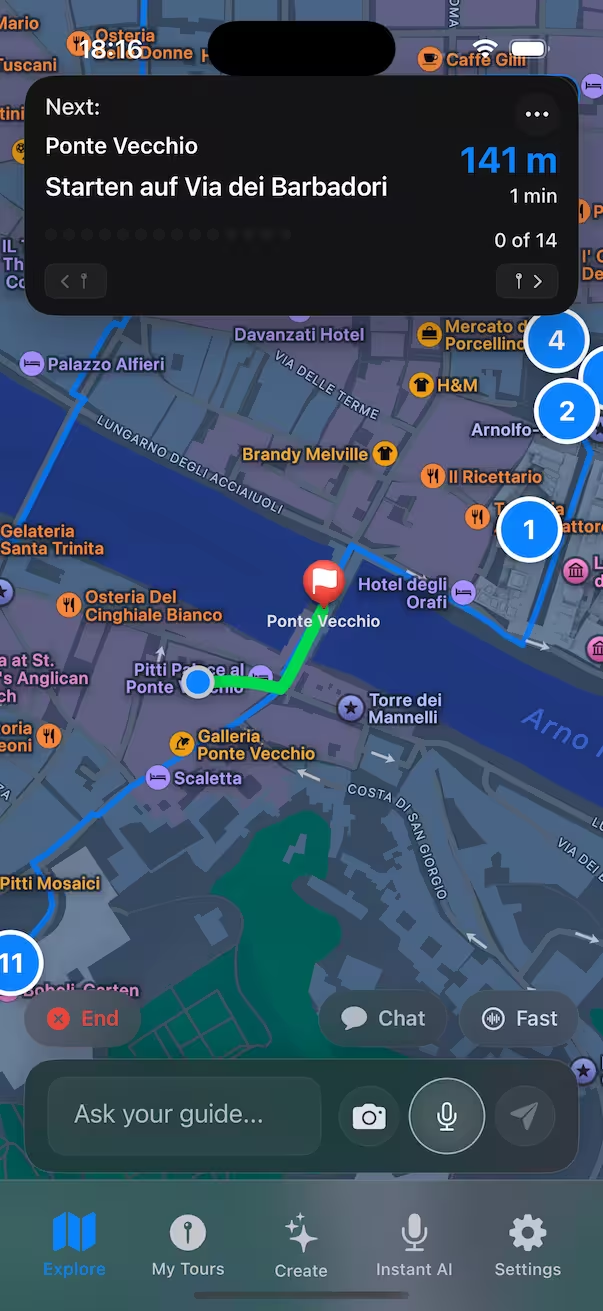
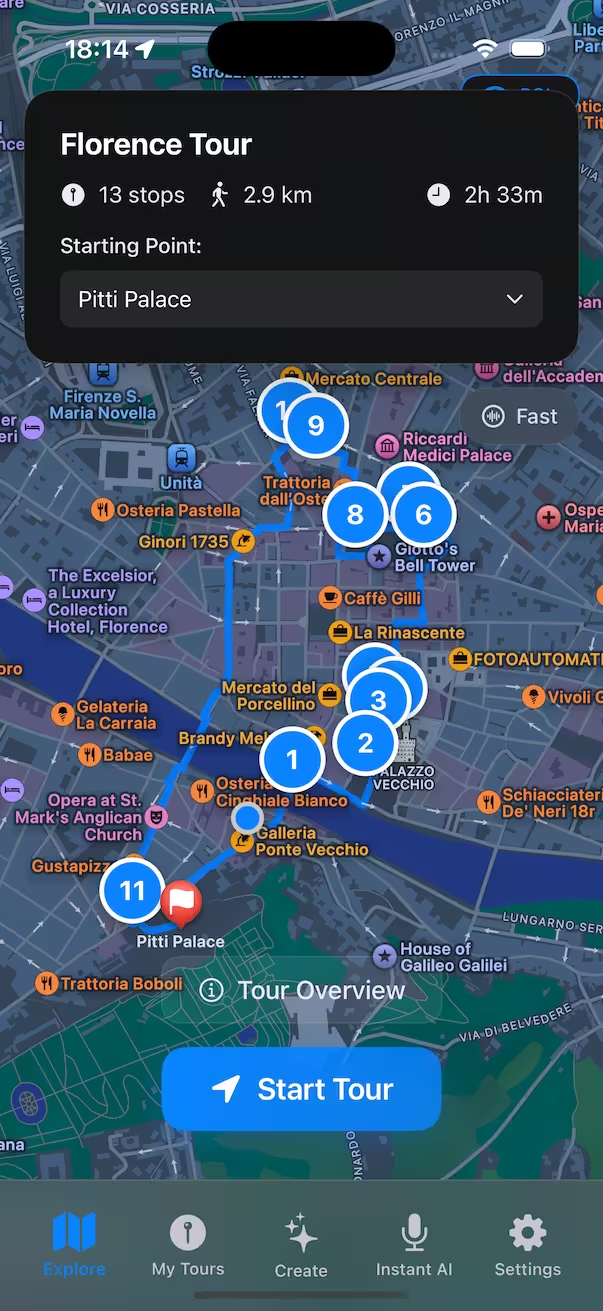
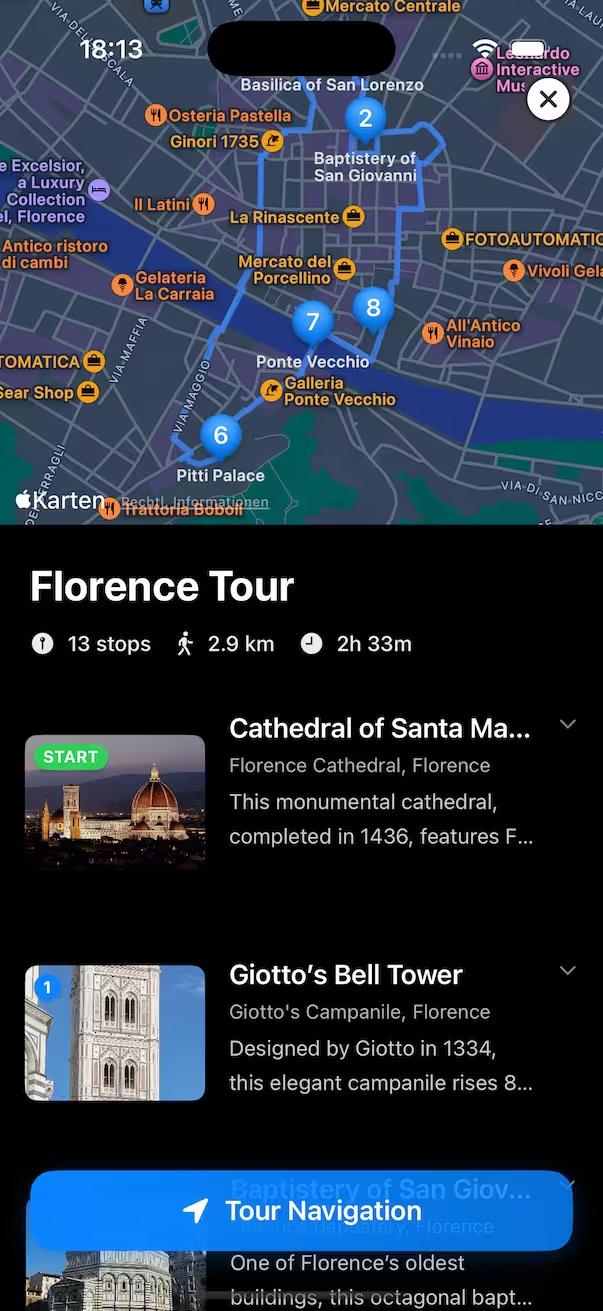
The classic Brussels tour: 11 stops, 4.6 km, about 3 h on foot
Your live AI guide and the self-guided Brussels route, together in your browser.