Best Time to Visit Cape Town
Month-by-month weather, crowds and prices, plus a full calendar of festivals and events worth planning a trip around.
Best monthsMar, Apr, Sep, Oct
CheapestJun, Jul
Avoid–
BusiestDec, Jan, Feb

When is the best time to visit Cape Town?
Come in March, April, September or October. You get 21 to 24°C days, the Cape Doctor wind easing off, full whale and wildflower seasons in spring, and hotel rates 20 to 30% below the December peak. Midsummer (December to February) is hot, windy and the most expensive time by far.
Start our tool and find your best time to visit Cape Town
Your perfect month
Free · ~30 seconds
or tap a month directly
What matters to you?
And this?
Best overall: Mar, Apr, Sep, Oct. March to April and September to October are the real sweet spots: 21 to 24°C, the cableway and Robben Island bookable with a fortnight's notice, whales or wildflowers in spring, and prices 20 to 30% under midsummer. Everything is open and you can still find a table.
Best value: Jun, Jul. June and July bring the lowest rates of the year, no queue at any sight, and the start of whale season offshore. The trade is Cape winter: rain on roughly 9 to 12 days a month and seas too cold to swim.
Avoid: Dec, Jan. Mid-December to mid-January is the worst value: accommodation runs up to 80% above winter, Robben Island sells out weeks ahead, the cableway queue forms by 09:30, and every beach is packed by mid-morning.
- January: Tough month, 26°C. This is the busiest, most expensive, most photogenic month, and you pay for all three. The light is glorious and the city is electric, but do not expect a quiet moment anywhere near Table Mountain or the Waterfront. Beat the heat and the wind by doing everything before 11:00.
- February: Tough month, 26°C. Postcard weather, full-price reality. February delivers the most dependable sun of the year, but the wind can flatten a beach afternoon and the harvest-season estates need booking ahead. Romantic if you plan it, frustrating if you wing it.
- March: Good time, 24°C. This is when Cape Town becomes genuinely comfortable again. The wind drops, the heat softens, and you can walk Table Mountain or Cape Point without the February gusts. The big bike races aside, March feels like the city exhaling.
- April: Great time, 22°C. April is the under-rated month. The summer crowds are gone, the weather is still kind, and prices have dropped without the city feeling shut. Dodge the Easter long weekend and you get the Cape close to its best, with elbow room.
- May: Great time, 19°C. May is Cape Town with the volume turned down. Fewer tourists, lower prices, and a city that feels like it belongs to locals again. The catch is the weather, more grey mornings than blue ones, so come for value and atmosphere, not guaranteed beach days.
- June: Great time, 17°C. Real winter, and a real bargain. June rewards anyone who does not need a tan: empty sights, cheap rooms, and a city living its everyday life. Pack for rain, plan indoor fallbacks, and you get the Cape without the crowds or the markup.
- July: Great time, 16°C. July asks you to embrace the weather rather than fight it. Storms roll through, the sea is icy, but the prices are unbeatable and the sights are yours alone. Snow occasionally dusts the Table Mountain summit, a rare winter spectacle worth catching.
- August: Great time, 17°C. August is the bridge from winter quiet to spring buzz. It still rains, but the wildflowers and whales give you a reason to brave it, and the crowds have not yet caught up to the bloom. A canny month if you time the flower window right.
- September: Great time, 18°C. September is the locals' favourite and it is easy to see why. The whales are in, the flowers are out, the weather has turned, and the crowds have not. If you had to pick one month for the full Cape experience at fair prices, this is a strong contender.
- October: Good time, 21°C. October is the last of the great-value spring weather before the summer machine fires up. Whales, wildflowers tailing off, warm dry days, and prices that have not yet hit the peak. Book early, because plenty of people have worked out that October is special.
- November: Good time, 22°C. November is summer arriving without the full December madness. Warm, dry, long days, and the energy building, but you can still find a table and a stretch of beach. The window before peak, and a smart one if you want summer at a slight discount.
- December: Tough month, 24°C. December is Cape Town's party month, and you pay the full price for the privilege. The atmosphere is unbeatable and the weather glorious, but every sight, beach and restaurant is heaving. Book everything months out or do not come at all in the last two weeks.
Cape Town weather by month
HighLowRainfall
Jan26°
Feb26°
Mar24°
Apr22°
May19°
Jun17°
Jul16°
Aug17°
Sep18°
Oct21°
Nov22°
Dec24°
| Month | Temp | Rain | Sun | Crowds | Prices | Highlight |
|---|---|---|---|---|---|---|
| Jan | 26° / 18° | 16mm · 4 rainy days | 13.3 h/day | ●●●●● | ●●●●● | Cape Town Minstrel Carnival |
| Feb | 26° / 18° | 9mm · 2 rainy days | 12.3 h/day | ●●●●● | ●●●●● | Kirstenbosch Summer Sunset Concerts |
| Mar | 24° / 16° | 31mm · 4 rainy days | 11.0 h/day | ●●●●○ | ●●●●○ | Kirstenbosch Summer Sunset Concerts |
| Apr | 22° / 14° | 30mm · 5 rainy days | 10.0 h/day | ●●●○○ | ●●●○○ | Easter Long Weekend |
| May | 19° / 12° | 62mm · 8 rainy days | 8.7 h/day | ●●○○○ | ●●○○○ | |
| Jun | 17° / 11° | 127mm · 12 rainy days | 8.1 h/day | ●●○○○ | ●○○○○ | |
| Jul | 16° / 10° | 93mm · 9 rainy days | 8.6 h/day | ●●○○○ | ●○○○○ | |
| Aug | 17° / 10° | 76mm · 10 rainy days | 9.2 h/day | ●●●○○ | ●●○○○ | West Coast Wildflower Season |
| Sep | 18° / 11° | 49mm · 8 rainy days | 10.1 h/day | ●●●○○ | ●●○○○ | West Coast Wildflower Season |
| Oct | 21° / 13° | 34mm · 6 rainy days | 11.9 h/day | ●●●●○ | ●●●○○ | Hermanus Whale Festival |
| Nov | 22° / 14° | 25mm · 5 rainy days | 12.5 h/day | ●●●●○ | ●●●●○ | Kirstenbosch Summer Sunset Concerts |
| Dec | 24° / 16° | 25mm · 4 rainy days | 13.2 h/day | ●●●●● | ●●●●● | Kirstenbosch Summer Sunset Concerts |
How we score this: weather = long-run climate normals (Open-Meteo), crowds & prices = relative season read, events checked yearly against official dates.
Best time to visit Cape Town: weather, prices & crowds
Best months for good weather
Mar, Nov
March and November give you the most settled Cape weather: 22 to 24°C, long sunny days, and the fierce summer South-Easter wind either fading out (March) or not yet at full force (November).
Quietest months to avoid the crowds
May, Jun, Jul
May, June and July empty the city of international visitors. Table Mountain has no queue, restaurant tables open up, and a winter Saturday at the Oranjezicht market feels like local Cape Town at its most unguarded.
Cheapest time to visit Cape Town
Jun, Jul
June and July are the cheapest months: midrange hotels drop to R700 to R950 a night, flights run up to 40% below the summer peak, and you can walk into almost any restaurant without a booking.
Best time for festivals and events
Sep, Oct
September and October put Southern Right Whales right under the Hermanus cliff path at calving peak, with spring wildflowers carpeting the West Coast and the Hermanus Whale Festival on the first weekend of October.
How many days do you need in Cape Town?
Cape Town rewards at least four days. The city centre is walkable in an afternoon, but the headline draws sit well outside it: Table Mountain, the Cape Peninsula to Cape Point, and the Stellenbosch wine country each deserve a full day of their own. Arrive with four days and you cover the city, the mountain and two major day trips without rushing.
One day
City bowl in a single sweep
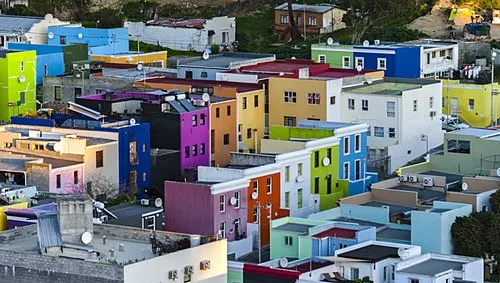
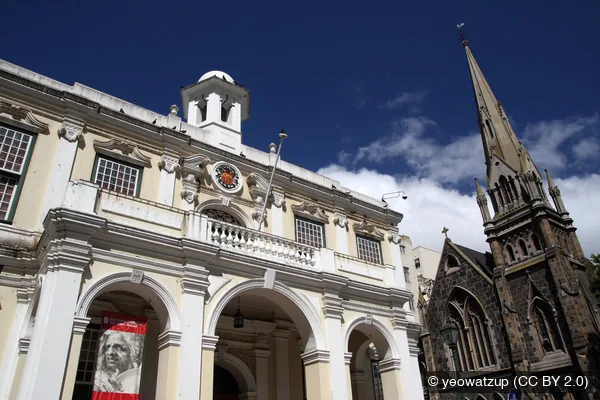
Start at the V&A Waterfront, then head into the historic centre. The self-guided Cape Town walking tour links 8 stops across 6.5 km in about 2.6 hours: Bo-Kaap's painted houses on Wale Street, Greenmarket Square's craft stalls, St George's Cathedral, Company's Garden, City Hall where Mandela addressed 50,000 people in 1990, and the Castle of Good Hope, the oldest surviving colonial building in the country. Finish at a Waterfront restaurant for sundowners over the harbour.
Two days
Add Table Mountain and the Atlantic coast
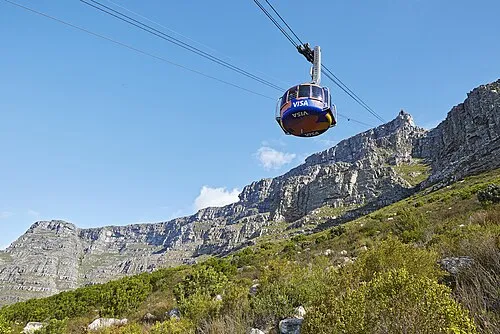
Ride the cableway before 09:30 to beat the queues and the tablecloth cloud, then walk a summit trail above 1,086 metres. The afternoon belongs to Camps Bay: Victoria Road south through Sea Point, and a late lunch above the beach. Book the cableway online in advance at tablemountain.net and check wind status before heading up, as it closes without warning above 50 km/h.
Three days
Cape Peninsula and Boulders Beach penguins
Drive the Cape of Good Hope route via Chapman's Peak Drive and Cape Point, then loop back through Simon's Town to the African penguin colony at Boulders Beach, where the entry fee is R240 per adult. The False Bay coast at Muizenberg warms to 19 to 21 degrees from November onward, the only realistic swimming beach on the peninsula. The full circuit runs about 150 km and needs an early start.
Four days or moreRecommended
Winelands and whale coast
A fourth day reaches Stellenbosch in under an hour: cellar doors on the R44 between Stellenbosch and Paarl, a long lunch in Franschhoek, and the Constantia valley for a late afternoon tasting. In September and October, divert to Hermanus instead, where Southern Right Whales calve along the cliff path in what is rated among the world's best land-based whale watching. Add Hermanus Whale Festival on the first weekend of October if timing allows.
Best time to visit Cape Town by traveller type
Same city, different trip. Here's the month that fits how you're travelling.
🧭
Best time to visit Cape Town for the first time
MarAprOctNov
March to April or October to November is the safe answer: reliable 22 to 26°C, low wind, the full checklist of Table Mountain, Robben Island, Cape Point and the Winelands all open, and no need to book hotels three months out.
❤️
Best time to visit Cape Town for couples
FebSep
February for warm evenings, Kirstenbosch sunset concerts and Constantia harvest dinners, or September for whale-watching day trips, golden light on Table Mountain and prices a fifth below peak.
💶
Best time to visit Cape Town on a budget
MayJunJul
May to July for hotel rates 40 to 50% below summer, with free wins like the Bo-Kaap walk, Company's Garden and a Signal Hill sunset still on the table all winter.
🍝
Best time to visit Cape Town for food and wine
JanFebMar
January to March is wine-harvest peak: must-tastings at Constantia and Stellenbosch cellar doors, the Groot Constantia harvest dinner in early February, and the city's restaurant scene at its open-air best.
Best time for a tour of Cape Town
Cape Town is a Southern Hemisphere city, so its walking seasons run backwards from Europe's, and the route through the City Bowl rewards the shoulder months most. March and April are the sweet spot, with highs around 22 to 24 °C, just four or five rain days, and thinning crowds, so the open stretches across Greenmarket Square and the Company's Garden feel warm but never punishing. October and November are the spring twin of that window, dry and clear at 21 to 22 °C before the summer rush arrives. High summer, December through February, looks tempting on paper at 25 to 26 °C, but the light is fierce and the steep, pastel lanes of the Bo-Kaap offer almost no shade by midday, while the V&A Waterfront groans under packed-crowd numbers. Winter, June and July, is the honest hard season: highs barely scrape 16 to 17 °C and the rain falls on nine to twelve days a month, soaking the cobbles around the Castle of Good Hope, though you will have the streets almost to yourself.
The smart move in this climate is to control your own clock, and that is exactly what AI Tourguide lets you do: there are no fixed departure times, so on a hot February day you can start your Cape Town tour at first light and reach the Bo-Kaap before the sun turns the slopes into an oven, then wander the Company's Garden in the cool shade. It runs entirely in your browser with nothing to download, and a voice-first guide walks the whole route with you, telling the stories behind St George's Cathedral and the District Six Museum, asking what you want to linger on and remembering your answers as it goes. You keep full control of pace and breaks, the guide simply keeps you company and adapts, in any of 13 languages, so the weather sets your hour, not an operator's schedule.


 +4
+4All 8 stops are already on the map.
You just press start.
You just press start.
 AI Tourguide
You just read the route.
Now walk it with a guide in your ear.
Press start wherever you are, even hundreds of kilometres from Cape Town, and the guide begins telling its stories right away. In the city, pick any of the 8 stops to start from: it leads you there, then talks with you the whole route, asking, listening, remembering, and shaping the tour around your answers.
8stops6.5km2.6hours11languages
▶Start the tour freeFree to start · Runs in your browser · No app, no download
Cape Town events and festivals calendar
Annual highlights worth timing a trip around, listed month by month.
January
🎭 CarnivalCape Town Minstrel Carnival Kaapse Klopse
Jan 5 ~
first days of January (traditionally 2 January, Tweede Nuwe Jaar)
More than 20,000 costumed minstrels in 16-plus troupes march through the CBD, the largest street carnival in Africa, watched by 80,000 to 100,000 spectators.
February
🏳️🌈 PrideCape Town Pride Festival Cape Town Pride
Feb 5 – Mar 1
month-long through February, parade in late February
Africa's largest Pride event, a month-long LGBTQ festival culminating in a parade from De Waterkant along Somerset Road to the Green Point Track around 28 February.
🍷 Food and wineWine Harvest Commemorative Evening Oesprysfees
Feb 5
early February
A black-tie sit-down dinner at Groot Constantia, South Africa's oldest wine estate, marking 367 years of Cape wine with cellar tours and tasting.
🍷 Food and wineBuitenverwachting Wine Harvest Festival Buitenverwachting Oesfees
Feb 14
mid-February, around Valentine's Day
A boutique outdoor wine and food festival on the Constantia estate lawns, with premium producers and live music.
March
🏃 SportCape Town Cycle Tour
Mar 8 ~
second Sunday of March
A 109km road race around the peninsula with 35,000 riders, held on the second Sunday of March, closing major roads through the CBD, Green Point, Sea Point, Camps Bay and Chapman's Peak for several days around the event.
🏃 SportAbsa Cape Epic
Mar 15–22 ~
mid-to-late March, eight days
An eight-day UCI mountain bike stage race covering about 700km through the Western Cape, the world's most televised MTB race with 1,200-plus teams.
🎵 MusicCape Town International Jazz Festival
Mar 27–28 ~
late March, two days
A two-day festival at the CTICC with 40-plus acts across four stages, drawing 40,000 attendees, the biggest jazz festival in Africa.
April
🇮 HolidayEaster Long Weekend Paasnaweek
Apr 3–6 ~
Good Friday to Family Day, late March or April
A four-day public-holiday weekend that packs the beaches, Winelands and Garden Route with South African domestic travel.
🍷 Food and winePick n Pay Wine & Food Festival
Apr 25–26 ~
late April weekend
A weekend festival at the Claremont Cricket Club with local producers, restaurant pop-ups and live music, paired with the Constantia wine route.
August
🌸 Seasonal natureWest Coast Wildflower Season Namakwaland Veldblomme
Aug 15 – Sep 30 ~
mid-August to mid-September, rain-dependent
An annual carpet of daisies, gazanias and vygies that explodes after the winter rains; the West Coast National Park's Postberg section opens only August to September for it.
October
🌸 Seasonal natureHermanus Whale Festival Hermanus Walvisfees
Oct 2–4 ~
first weekend of October
A three-day eco-marine festival in Hermanus (1 hour 40 minutes from Cape Town) with land-based whale watching, live music and food stalls as Southern Right Whales hit their peak.
November
🎵 MusicKirstenbosch Summer Sunset Concerts Kirstenbosch Somerkonserte
Nov 23 – Mar 29
every Sunday at 17:30, late November to late March
Weekly outdoor concerts in the botanical gardens at sunset, with line-ups spanning local acts like Mi Casa, Goldfish and Mango Groove across the summer season.
🍷 Food and wineTaste of Cape Town
Nov 28–29 ~
late November weekend
Curated restaurant pop-ups, chef demos, an artisan market and live music at the Green Point Cricket Stadium, part of the global Taste Festival brand.
Insider tips for visiting Cape Town
The rules buried in forums, in one place.
- Ride the Table Mountain cableway before 09:30 or pre-book online at tablemountain.net. In December and January it sells out by 10:30, and it closes without warning when the wind tops 50 km/h, so check the live status first. Mornings have the best odds of clear air before the tablecloth cloud rolls in. It shuts completely for annual maintenance from 27 July to 9 August.
- Book Robben Island four to six weeks ahead in peak season; December and January tours sell out daily through the only official site, robben-island.org.za. Ferries do not run in high winds or fog and cancel without refund, so leave a buffer day. Your guide is a former prisoner, part of the experience, not just transport.
- Plan around the Cape Town Cycle Tour on 8 March. Chapman's Peak Drive, Camps Bay's Victoria Road and the M3 close from Saturday morning, and if you are staying in the southern suburbs you cannot drive into the centre on race Sunday. Watching from Chapman's Peak or Hout Bay is the better play.
- For Kirstenbosch summer concerts, arrive before 17:00. Gates open at 16:00, music starts at 17:30, and parking fills by 16:30. Bring a picnic blanket but no glass bottles, and have a rideshare plan: the post-concert exit takes over 30 minutes by car.
- Hit Clifton's four beaches on a weekday morning in peak season. By 11:00 on a December weekend all four are at capacity and parking is gone by 09:30. The Cape Doctor makes most afternoons rough from July to March, so the sheltered mornings are the only calm window.
- Skip the Constantia and Stellenbosch wineries during the January to February harvest crush if you want them quiet. May and June give you the same wines with personal service and usually no booking needed, just no harvest theatre.
- Photograph the pastel houses of the Bo-Kaap by 09:00 on a weekday. By 10:30 in summer the tour groups arrive and the narrow streets clog up. The same early start catches the best light on Signal Hill next door.
- Book December and January restaurant tables two to four weeks ahead; New Year's Eve dinners go by October, and many of the best kitchens close for two weeks in January for the chefs' own holidays.
Public holidays in Cape Town
On these dates many shops and offices close, transport thins out, and sights can be mobbed or shut. Plan around them.
| Date | Holiday | What closes |
|---|---|---|
| Jan 1 | New Year's Day | Most shops and many restaurants shut. The V&A Waterfront stays open and the beaches are packed. The Cape Town Minstrel Carnival builds toward its big CBD parade in the first days of January. |
| Mar 21 | Human Rights Day | Shops mostly open, traffic light. Some museums run special programmes. Little impact on a visitor's day. |
| Apr 3 | Good Friday | Most supermarkets and bottle stores close and alcohol sales are restricted. Beaches and Kirstenbosch fill with local day-trippers, so book restaurants ahead and stock up the day before. |
| Apr 6 | Family Day (Easter Monday) | Public holiday capping a four-day Easter weekend. Some shops close, coastal roads congest, and accommodation in the Winelands and along the coast books out weeks ahead. |
| Apr 27 | Freedom Day | Public holiday with light tourist impact and few closures. A normal sightseeing day for most visitors. |
| May 1 | Workers' Day | Banks and government offices close. The V&A Waterfront and most restaurants stay open, so the day barely registers for a visitor. |
| Jun 16 | Youth Day | Public holiday in the quietest part of winter. No major events and minimal tourist impact. |
| Aug 10 | Women's Day (observed) | Public holiday observed on the Monday, since 9 August falls on a Sunday. Some shops close, but the tourist impact is minimal. |
| Sep 24 | Heritage Day (Braai Day) | Outdoor braais everywhere. Beaches and mountain trails are popular, and museums run Heritage Day events. A good day to join the local rhythm rather than fight it. |
| Dec 16 | Day of Reconciliation | Signals the start of the summer season. Hotels move to pre-peak rates and the first wave of local holidaymakers arrives. |
| Dec 25 | Christmas Day | Almost everything closes except the V&A Waterfront. Beaches are packed and restaurant tables are booked weeks ahead, so reserve early and plan grocery runs around the closures. |
| Dec 26 | Day of Goodwill | Beaches hit absolute capacity. Many shops reopen and the V&A Waterfront buzzes through the day. |
Cape Town month by month
January in Cape Town
High26°C / 78°F
Low18°C
Rain16mm / 4 rainy days
Sun13.3 h/day
Daylight14 h/day
Humidity71%
Crowds●●●●●Prices●●●●●
January is Cape Town at full volume: 25 to 26°C, barely any rain (16mm over 4 days) and almost 14 hours of daylight that keep the beaches busy past 20:00. South African and European school holidays overlap, so every Clifton beach is full by 11:00 and the cableway sells out by 10:30. The South-Easter, the Cape Doctor, blows hardest now, cooling the city but closing the cableway on its windiest days.
The vibe This is the busiest, most expensive, most photogenic month, and you pay for all three. The light is glorious and the city is electric, but do not expect a quiet moment anywhere near Table Mountain or the Waterfront. Beat the heat and the wind by doing everything before 11:00.
Don't miss Kirstenbosch Summer Sunset Concerts run every Sunday at 17:30 with a picnic on the lawn. The Cape Town Minstrel Carnival sends 20,000 costumed marchers through the CBD in the first week, the largest street carnival in Africa.
Crowd drivers South African and European school holidays overlap, winter-escape visitors arrive from the UK, Germany and the Netherlands, and Kirstenbosch runs a sunset concert every Sunday.
In season Wine harvest opens at the Constantia and Stellenbosch estates, with cellar doors pouring must-tastings straight from the press.
Heads up New Year's Day shuts most shops and many restaurants, though the V&A Waterfront stays open and the beaches stay packed.
Peak: hotel rates up to 80% above winter, with minimum-stay rules on most villas; book three months ahead.
Events this month
🎭 CarnivalCape Town Minstrel Carnival Kaapse Klopse
Jan 5 ~
first days of January (traditionally 2 January, Tweede Nuwe Jaar)
More than 20,000 costumed minstrels in 16-plus troupes march through the CBD, the largest street carnival in Africa, watched by 80,000 to 100,000 spectators.
An unmissable free street spectacle if you are in town in early January, though you should avoid driving the CBD on parade day.
🎵 MusicKirstenbosch Summer Sunset Concerts Kirstenbosch Somerkonserte
Nov 23 – Mar 29
every Sunday at 17:30, late November to late March
Weekly outdoor concerts in the botanical gardens at sunset, with line-ups spanning local acts like Mi Casa, Goldfish and Mango Groove across the summer season.
Cape Town's most beloved summer ritual: bring a picnic blanket and combine it with a late afternoon in the gardens.
February in Cape Town
High26°C / 78°F
Low18°C
Rain9mm / 2 rainy days
Sun12.3 h/day
Daylight13 h/day
Humidity71%
Crowds●●●●●Prices●●●●●
February is the driest, sunniest month, with 25 to 26°C and just 9mm of rain over 2 days. It is also when the Cape Doctor wind peaks, gusting 40 to 70 km/h on its strongest days and shutting the cableway without warning. Crowds and prices stay at their January high through the wine harvest, Valentine's weekend and Cape Town Pride, so the city feels busy and expensive but reliably warm and bright.
The vibe Postcard weather, full-price reality. February delivers the most dependable sun of the year, but the wind can flatten a beach afternoon and the harvest-season estates need booking ahead. Romantic if you plan it, frustrating if you wing it.
Don't miss Cape Town Pride runs through late February with its parade and Mardi Gras around 28 February. Groot Constantia's black-tie harvest dinner (5 February) and the Buitenverwachting wine festival (14 February) anchor the Winelands calendar.
Crowd drivers The summer peak continues, the wine harvest fills Constantia and Stellenbosch, Valentine's weekend books out, and Cape Town Pride takes over De Waterkant.
In season Peak wine harvest in the Constantia valley: must-tastings, cellar dinners and estate festivals straight off the vine.
Rates hold at peak; wine-harvest dinners and Cape Epic accommodation sell out weeks ahead.
Events this month
🏳️🌈 PrideCape Town Pride Festival Cape Town Pride
Feb 5 – Mar 1
month-long through February, parade in late February
Africa's largest Pride event, a month-long LGBTQ festival culminating in a parade from De Waterkant along Somerset Road to the Green Point Track around 28 February.
It transforms the De Waterkant neighbourhood, so book accommodation there months ahead if you want to be in the heart of it.
🍷 Food and wineWine Harvest Commemorative Evening Oesprysfees
Feb 5
early February
A black-tie sit-down dinner at Groot Constantia, South Africa's oldest wine estate, marking 367 years of Cape wine with cellar tours and tasting.
A unique prestige event with limited tickets that sells out fast, ideal for serious wine lovers.
🍷 Food and wineBuitenverwachting Wine Harvest Festival Buitenverwachting Oesfees
Feb 14
mid-February, around Valentine's Day
A boutique outdoor wine and food festival on the Constantia estate lawns, with premium producers and live music.
An intimate Winelands experience, though it overlaps Valentine's Day so book early.
🎵 MusicKirstenbosch Summer Sunset Concerts Kirstenbosch Somerkonserte
Nov 23 – Mar 29
every Sunday at 17:30, late November to late March
Weekly outdoor concerts in the botanical gardens at sunset, with line-ups spanning local acts like Mi Casa, Goldfish and Mango Groove across the summer season.
Cape Town's most beloved summer ritual: bring a picnic blanket and combine it with a late afternoon in the gardens.
March in Cape Town
High24°C / 75°F
Low16°C
Rain31mm / 4 rainy days
Sun11.0 h/day
Daylight12 h/day
Humidity75%
Crowds●●●●○Prices●●●●○
March is the start of the sweet spot: still warm at 23 to 24°C, the Cape Doctor finally easing off, and rain still rare at 31mm. The light turns golden as autumn sets in over the Winelands. Crowds thin from their summer high and rates dip 10 to 15%, though the Cape Town Cycle Tour and Cape Epic spike hotels mid-month and Easter preparations firm prices toward month's end.
The vibe This is when Cape Town becomes genuinely comfortable again. The wind drops, the heat softens, and you can walk Table Mountain or Cape Point without the February gusts. The big bike races aside, March feels like the city exhaling.
Don't miss The Cape Town International Jazz Festival (27 to 28 March) brings 40-plus acts to the CTICC, Africa's biggest jazz event. The Cape Town Cycle Tour sends 35,000 riders 109km around the peninsula, best watched from Chapman's Peak.
Crowd drivers Late peak with UK half-term and Easter build-up, plus the Cape Town Cycle Tour (8 March) and Cape Epic (15 to 22 March) flooding hotels around their routes.
In season Wine harvest runs to its close, the last good window for must-tastings and harvest experiences in Constantia and Stellenbosch.
10 to 15% below January, though the late-month Easter run keeps rates firm; mid-March is the value window.
Events this month
🏃 SportCape Town Cycle Tour
Mar 8 ~
second Sunday of March
A 109km road race around the peninsula with 35,000 riders, held on the second Sunday of March, closing major roads through the CBD, Green Point, Sea Point, Camps Bay and Chapman's Peak for several days around the event.
Spectacular to watch from Hout Bay or Chapman's Peak, but if you are staying in the southern suburbs you cannot drive into the centre on race day.
🏃 SportAbsa Cape Epic
Mar 15–22 ~
mid-to-late March, eight days
An eight-day UCI mountain bike stage race covering about 700km through the Western Cape, the world's most televised MTB race with 1,200-plus teams.
Accommodation in the Stellenbosch, Paarl and Wellington area sells out around it, but the stage finishes make for spectacular spectator spots.
🎵 MusicCape Town International Jazz Festival
Mar 27–28 ~
late March, two days
A two-day festival at the CTICC with 40-plus acts across four stages, drawing 40,000 attendees, the biggest jazz festival in Africa.
Book a hotel within a kilometre of the CTICC months ahead, as weekend flights surge 20 to 30% around it.
April in Cape Town
High22°C / 72°F
Low14°C
Rain30mm / 5 rainy days
Sun10.0 h/day
Daylight11 h/day
Humidity74%
Crowds●●●○○Prices●●●○○
April is reliable autumn: comfortable 22°C days, low wind, and rain still light at 30mm over 5 days. Outside the four-day Easter weekend (3 to 6 April), when local travel packs the beaches and Winelands, the city quiets noticeably and value returns. The autumn colours move through the Winelands, and you can book Robben Island or the cableway with just a couple of weeks' notice.
The vibe April is the under-rated month. The summer crowds are gone, the weather is still kind, and prices have dropped without the city feeling shut. Dodge the Easter long weekend and you get the Cape close to its best, with elbow room.
Don't miss Autumn colours sweep the Stellenbosch and Franschhoek vineyards. The Pick n Pay Wine & Food Festival (25 to 26 April) at Claremont is good shoulder-season value, and Franschhoek's truffle season runs from late April.
Crowd drivers The Easter long weekend (3 to 6 April) drives a sharp domestic-travel spike; after it, the shoulder-season calm settles in.
In season Truffle season opens in Franschhoek, about an hour's drive, pairing well with the cooler autumn Winelands menus.
Heads up Good Friday (3 April) closes most supermarkets and bottle stores and restricts alcohol sales; stock up the day before.
Easter weekend (3 to 6 April) pushes hotels 30% above normal; the quiet sets in straight after.
Events this month
🍷 Food and winePick n Pay Wine & Food Festival
Apr 25–26 ~
late April weekend
A weekend festival at the Claremont Cricket Club with local producers, restaurant pop-ups and live music, paired with the Constantia wine route.
Affordable entry and good shoulder-season activity, a relaxed way into the Cape food and wine scene.
🇮 HolidayEaster Long Weekend Paasnaweek
Apr 3–6 ~
Good Friday to Family Day, late March or April
A four-day public-holiday weekend that packs the beaches, Winelands and Garden Route with South African domestic travel.
Book accommodation six-plus weeks ahead and reserve restaurants, as the V&A Waterfront and Kirstenbosch run at capacity.
May in Cape Town
High19°C / 67°F
Low12°C
Rain62mm / 8 rainy days
Sun8.7 h/day
Daylight10 h/day
Humidity80%
Crowds●●○○○Prices●●○○○
May tips into Cape winter: 19°C days, the first real rains (62mm over 8 days) and shorter 10-hour daylight. International arrivals fall away, making this the quiet secret season. It is the foodie's favourite for the harvest's close in the wine country, and the cheapest time to fly, though the weather turns grey and you will want a jacket and a flexible plan.
The vibe May is Cape Town with the volume turned down. Fewer tourists, lower prices, and a city that feels like it belongs to locals again. The catch is the weather, more grey mornings than blue ones, so come for value and atmosphere, not guaranteed beach days.
Don't miss Great White shark cage diving at Gansbaai, two hours out, enters its most reliable season from May as seal pups draw the sharks in. Quiet winery time at Constantia means personal service and no booking needed.
Crowd drivers Low season with few international arrivals; the autumn quiet is broken only by the odd long weekend.
In season The wine country closes out its harvest season, the foodie's quiet window for cellar visits without the summer crowds.
Cheapest flights of the year (around 40% below peak); midrange hotels from about R900 a night.

June in Cape Town
High17°C / 63°F
Low11°C
Rain127mm / 12 rainy days
Sun8.1 h/day
Daylight10 h/day
Humidity79%
Crowds●●○○○Prices●○○○○
June is the quietest, cheapest month of the year. Cape winter brings the heaviest rain (127mm over 12 days) and cool 17°C days, with the shortest daylight at under 10 hours. International arrivals all but vanish, so Table Mountain has no queue, restaurant tables open up, and hotel deals are at their best. Whale season begins offshore, a preview of the spring spectacle to come.
The vibe Real winter, and a real bargain. June rewards anyone who does not need a tan: empty sights, cheap rooms, and a city living its everyday life. Pack for rain, plan indoor fallbacks, and you get the Cape without the crowds or the markup.
Don't miss Winter Saturdays at the Oranjezicht City Farm Market and the V&A food market are local Cape Town at its best. The quietest winery window means cellar doors with personal attention and no booking.
Crowd drivers The quietest month, with the fewest international arrivals; British school summer is not Cape Town peak, so winter stays calm.
In season Hearty Cape winter cooking comes into its own, and restaurant tables at the city's best kitchens open up without weeks of notice.
Cheapest hotel month: midrange from R700 to R950 a night, with flights up to 40% off.

July in Cape Town
High16°C / 62°F
Low10°C
Rain93mm / 9 rainy days
Sun8.6 h/day
Daylight10 h/day
Humidity79%
Crowds●●○○○Prices●○○○○
July is the depth of Cape winter: the wettest month (93mm) with 16°C days and long, dark nights as sunset hits around 18:00. It is also the cheapest and quietest stretch of the year, with whale season building offshore. Storms can briefly close coastal roads, and the Atlantic at 10 to 12°C is far too cold to swim, so this is a month for value, hikes between showers and cosy interiors.
The vibe July asks you to embrace the weather rather than fight it. Storms roll through, the sea is icy, but the prices are unbeatable and the sights are yours alone. Snow occasionally dusts the Table Mountain summit, a rare winter spectacle worth catching.
Don't miss Shark cage diving at Gansbaai is at its peak as winter draws the Great Whites in. Land-based whale spotting starts to pay off along the False Bay and Hermanus coast.
Crowd drivers Cape winter at its quietest; local domestic travel is limited and international numbers stay at their annual floor.
In season Deep winter is the season for slow Cape stews and long lunches, with restaurant availability at its easiest all year.
Heads up The Table Mountain Cableway closes for annual maintenance from 27 July to 9 August; plan hikes up Platteklip Gorge instead, or shift your timing.
Joint cheapest and quietest month; rates match June's winter low.

August in Cape Town
High17°C / 62°F
Low10°C
Rain76mm / 10 rainy days
Sun9.2 h/day
Daylight11 h/day
Humidity79%
Crowds●●●○○Prices●●○○○
August turns the corner. Days stay cool at 17°C and rain is still frequent (76mm), but the wildflower season explodes mid-month and whale numbers build, drawing the first wave of spring visitors. The cableway reopens on 9 August after its maintenance closure, and the West Coast National Park's Postberg section opens for its short flower window. Prices begin their slow climb out of the winter low.
The vibe August is the bridge from winter quiet to spring buzz. It still rains, but the wildflowers and whales give you a reason to brave it, and the crowds have not yet caught up to the bloom. A canny month if you time the flower window right.
Don't miss Namaqualand and West Coast wildflowers peak from mid-August; Postberg in the West Coast National Park opens only August to September. Check the Flower Hotline (072 938 8186) before booking, as the bloom is rain-dependent.
Crowd drivers Wildflower season and building whale numbers draw the first South African and international spring visitors after the winter lull.
In season Late-winter Cape cooking carries on, with the wildflower road trips opening up farm-stall and West Coast seafood stops.
Heads up The Table Mountain Cableway stays closed for maintenance until 9 August, then reopens for the spring season.
Budget season ends: rates nudge up 5 to 10% as whale and wildflower visitors arrive.
September in Cape Town
High18°C / 64°F
Low11°C
Rain49mm / 8 rainy days
Sun10.1 h/day
Daylight12 h/day
Humidity77%
Crowds●●●○○Prices●●○○○
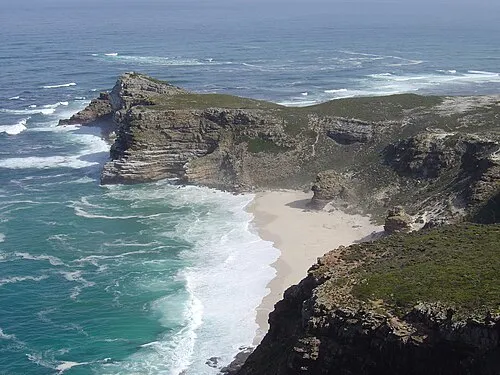
September is spring at its most rewarding: warm and sunny at 18 to 21°C, no heat extremes, and whale numbers peaking offshore as the Southern Rights calve. Rain eases to 49mm and the wind stays mild. Late wildflowers linger, the light on Table Mountain turns golden, and prices sit a fifth below summer. This is the connoisseur's month, the spring spectacle without the December prices.
The vibe September is the locals' favourite and it is easy to see why. The whales are in, the flowers are out, the weather has turned, and the crowds have not. If you had to pick one month for the full Cape experience at fair prices, this is a strong contender.
Don't miss Southern Right Whales are at calving peak along the Hermanus cliff path, rated among the world's best land-based whale watching. Spring proteas and fynbos colour Kirstenbosch from August onward.
Crowd drivers Whale peak (September to October) and late wildflowers draw nature visitors; the Heritage Day long weekend (24 September) lifts domestic travel.
In season Spring menus return to the Winelands, and Heritage Day (24 September) fills the city with braais, the South African open-fire feast.
20 to 25% below summer: the best value shoulder month with reliable sunshine.

October in Cape Town
High21°C / 70°F
Low13°C
Rain34mm / 6 rainy days
Sun11.9 h/day
Daylight13 h/day
Humidity72%
Crowds●●●●○Prices●●●○○
October is full spring: 21°C days, drier at 34mm, and the outdoor season wide open. Whales remain at their peak through the month and the Hermanus Whale Festival (2 to 4 October) packs the coast. South African spring school holidays and surging international arrivals push crowds and prices up, so book ahead, but the weather is warm and reliable and the wind has not yet returned to summer strength.
The vibe October is the last of the great-value spring weather before the summer machine fires up. Whales, wildflowers tailing off, warm dry days, and prices that have not yet hit the peak. Book early, because plenty of people have worked out that October is special.
Don't miss The Hermanus Whale Festival (first weekend of October) is the year's marine highlight, with land-based whale watching, music and food stalls an hour and 40 minutes from the city. Muizenberg's learn-to-surf season hits its stride in the warming False Bay water.
Crowd drivers Spring blooms, the Hermanus Whale Festival (2 to 4 October), and South African spring school holidays bring the outdoor season fully to life.
In season Spring produce and the first warm-weather rosés return to Winelands tables as the al fresco dining season reopens in earnest.
Rates rising: book four weeks ahead, and far earlier for Hermanus over the Whale Festival weekend.
Events this month
🌸 Seasonal natureHermanus Whale Festival Hermanus Walvisfees
Oct 2–4 ~
first weekend of October
A three-day eco-marine festival in Hermanus (1 hour 40 minutes from Cape Town) with land-based whale watching, live music and food stalls as Southern Right Whales hit their peak.
The best time to pair a Cape Town trip with world-class whale watching, but book Hermanus accommodation months ahead.
November in Cape Town
High22°C / 72°F
Low14°C
Rain25mm / 5 rainy days
Sun12.5 h/day
Daylight14 h/day
Humidity70%
Crowds●●●●○Prices●●●●○
November is pre-peak summer: 22°C, dry at 25mm, and long 14-hour days that stretch the beach afternoons. The international surge arrives and South African spring school holidays add to it, so rates climb toward December levels by month's end. The Cape Doctor wind starts to pick up again. The swimming season opens at warmer False Bay, and the Kirstenbosch concerts return on 23 November.
The vibe November is summer arriving without the full December madness. Warm, dry, long days, and the energy building, but you can still find a table and a stretch of beach. The window before peak, and a smart one if you want summer at a slight discount.
Don't miss The Kirstenbosch Summer Sunset Concerts return on 23 November for their Sunday-evening run. The Taste of Cape Town festival (28 to 29 November) at Green Point launches the summer restaurant season.
Crowd drivers International arrivals surge, South African spring school holidays continue, and the season's first big festivals fill Waterfront-area hotels.
In season Taste of Cape Town (28 to 29 November) opens the summer food calendar with chef demos and restaurant pop-ups at Green Point.
Rates approach December levels by late month; the Taste of Cape Town weekend spikes Waterfront hotels.
Events this month
🎵 MusicKirstenbosch Summer Sunset Concerts Kirstenbosch Somerkonserte
Nov 23 – Mar 29
every Sunday at 17:30, late November to late March
Weekly outdoor concerts in the botanical gardens at sunset, with line-ups spanning local acts like Mi Casa, Goldfish and Mango Groove across the summer season.
Cape Town's most beloved summer ritual: bring a picnic blanket and combine it with a late afternoon in the gardens.
🍷 Food and wineTaste of Cape Town
Nov 28–29 ~
late November weekend
Curated restaurant pop-ups, chef demos, an artisan market and live music at the Green Point Cricket Stadium, part of the global Taste Festival brand.
It marks the start of the summer season and is a great introduction to Cape Town's restaurant scene, so book tickets and a hotel early.

December in Cape Town
High24°C / 75°F
Low16°C
Rain25mm / 4 rainy days
Sun13.2 h/day
Daylight14 h/day
Humidity70%
Crowds●●●●●Prices●●●●●
December is the single busiest month: hot 24°C days, dry at 25mm, and almost 14.5 hours of daylight that keep the beaches full into the evening. South African, UK and German school summer holidays converge with Christmas and New Year, and every beach is packed. The Cape Doctor blows strong, and demand pushes prices to their absolute high. Festive and electric, but the most crowded and expensive time to come by a distance.
The vibe December is Cape Town's party month, and you pay the full price for the privilege. The atmosphere is unbeatable and the weather glorious, but every sight, beach and restaurant is heaving. Book everything months out or do not come at all in the last two weeks.
Don't miss Kirstenbosch sunset concerts run every Sunday, with marquee New Year line-ups. The Cape Town Minstrel Carnival builds toward its big parade as the year turns, and the V&A Waterfront buzzes through the festive season.
Crowd drivers South African, UK and German school summer holidays overlap with Christmas and New Year, making this the busiest single month with every beach at capacity.
In season Festive-season dining peaks, so book the top kitchens weeks ahead; New Year's Eve tables go by October.
Heads up Christmas Day closes almost everything except the V&A Waterfront; the Day of Reconciliation (16 December) marks the start of the peak season.
Absolute peak: mid-December to mid-January runs up to 80% above winter; book accommodation by September.
Events this month
🎵 MusicKirstenbosch Summer Sunset Concerts Kirstenbosch Somerkonserte
Nov 23 – Mar 29
every Sunday at 17:30, late November to late March
Weekly outdoor concerts in the botanical gardens at sunset, with line-ups spanning local acts like Mi Casa, Goldfish and Mango Groove across the summer season.
Cape Town's most beloved summer ritual: bring a picnic blanket and combine it with a late afternoon in the gardens.
🎭 CarnivalCape Town Minstrel Carnival Kaapse Klopse
Jan 5 ~
first days of January (traditionally 2 January, Tweede Nuwe Jaar)
More than 20,000 costumed minstrels in 16-plus troupes march through the CBD, the largest street carnival in Africa, watched by 80,000 to 100,000 spectators.
An unmissable free street spectacle if you are in town in early January, though you should avoid driving the CBD on parade day.
Frequently asked questions
What is the best time of year to visit Cape Town?
March to April and September to October are the best overall. You get warm 21 to 24°C days, the Cape Doctor wind at its mildest, whales or wildflowers in spring, and hotel rates 20 to 30% below the December peak. Everything is open and you can book Robben Island and the cableway with just a couple of weeks' notice.
What is the cheapest month to visit Cape Town?
June and July are the cheapest, in the depth of Cape winter. Midrange hotels drop to R700 to R950 a night and flights run up to 40% below the summer peak. The trade-off is rain on roughly 9 to 12 days a month and seas too cold to swim, but every sight is queue-free and restaurant tables are easy to get.
What is the worst time to visit Cape Town?
Mid-December to mid-January is the worst for value and crowds. Accommodation runs up to 80% above winter, Robben Island sells out weeks ahead, the cableway queue forms by 09:30, and every beach is packed by mid-morning. The weather is glorious, but you pay peak prices and share the city with the year's biggest crowds.
When is the best time to see whales in Cape Town?
Southern Right Whales arrive June to December, with peak numbers in September and October when they calve. The land-based viewing from the Hermanus cliff path, about an hour and 40 minutes away, is world-class. Time it with the Hermanus Whale Festival on the first weekend of October. Humpbacks pass Cape Point in April and May.
Can you swim in the sea in Cape Town?
It depends which coast. The Atlantic side at Clifton and Camps Bay stays a bracing 10 to 18°C year-round, fine for a quick dip but not a long swim. False Bay at Muizenberg, warmed by the Agulhas Current, reaches 19 to 21°C from November to March, the only realistic beach for longer swims and warm enough for children.
When is wildflower season near Cape Town?
Mid-August to mid-September is peak, when daisies and vygies carpet the West Coast and Namaqualand after the winter rains. The West Coast National Park's Postberg section opens only for those two months. The bloom is rain-dependent, so check the Flower Hotline (072 938 8186) before booking a trip around it.
How many days do you need in Cape Town?
Plan four to five days minimum. You need a full day each for Table Mountain, the Cape Peninsula drive to Cape Point and Boulders Beach, Robben Island plus the V&A Waterfront, and the Constantia or Stellenbosch Winelands. Add days for whale watching at Hermanus or wildflowers on the West Coast if you visit in spring.
What is the weather like in Cape Town in winter?
June and July are the coldest and wettest, with 16 to 17°C days, rain on 9 to 12 days a month, and short daylight as sunset hits around 18:00. It is rarely all-day torrential: grey mornings often clear by afternoon. Snow occasionally dusts the Table Mountain summit. The upside is the cheapest, quietest stretch of the year.
Is the Table Mountain cableway always open?
No. It closes for annual maintenance from 27 July to 9 August, and it shuts without warning whenever the wind tops 50 km/h, common from November to March. In December and January it sells out by 10:30, so go before 09:30 or pre-book online at tablemountain.net, and always check the live status before heading up.

Any month, any day: your guide is already there
Whatever date you pick, a private human guide gets pricier and harder to book on weekends, holidays and in peak season. Our live AI guide, the one that walks with you and answers anything you ask out loud, works the opposite way.
One flat price, every day
No holiday, weekend, night or peak-season surcharge. A private guide in Cape Town runs well over 100 euro for a half day, and more on holidays. Ours stays the same.
Available the moment you want it
Start at midnight or at dawn, on Christmas, in the snow, in the August heat. No sold-out high season, no booking weeks ahead.
Your pace, no meter running
Pause for a long lunch, restart after dark, repeat a stop. The tour simply waits for you.
Free to try, a fraction of the cost
Test it for free, then a transparent flat price that undercuts any private guide, in every season.
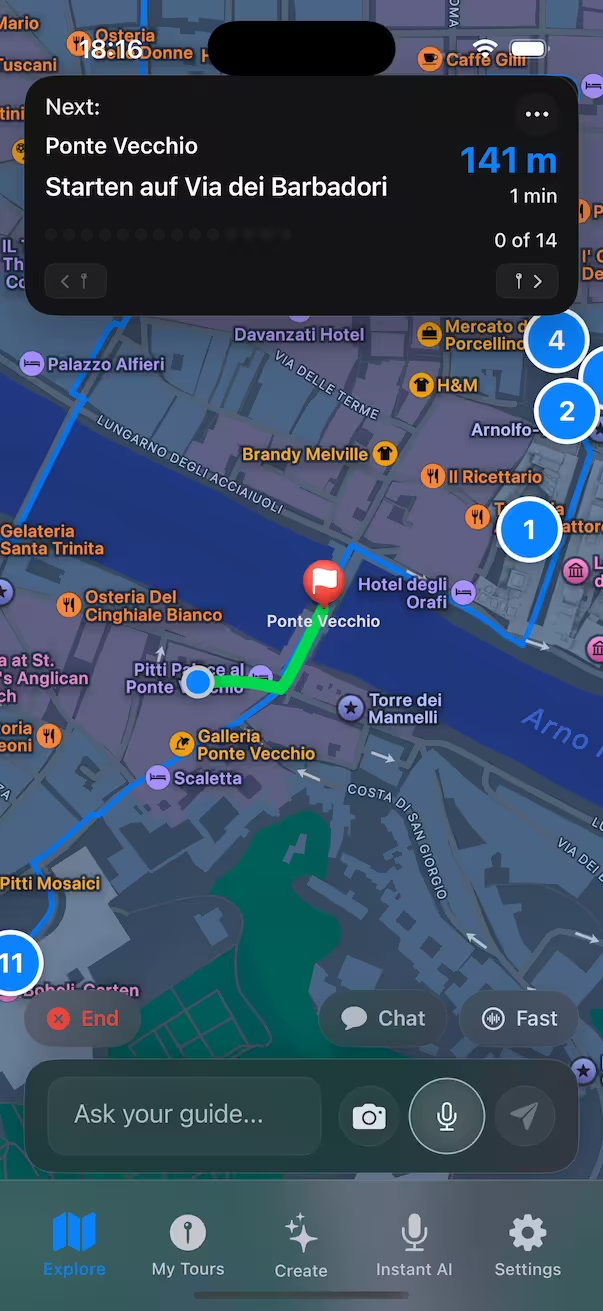
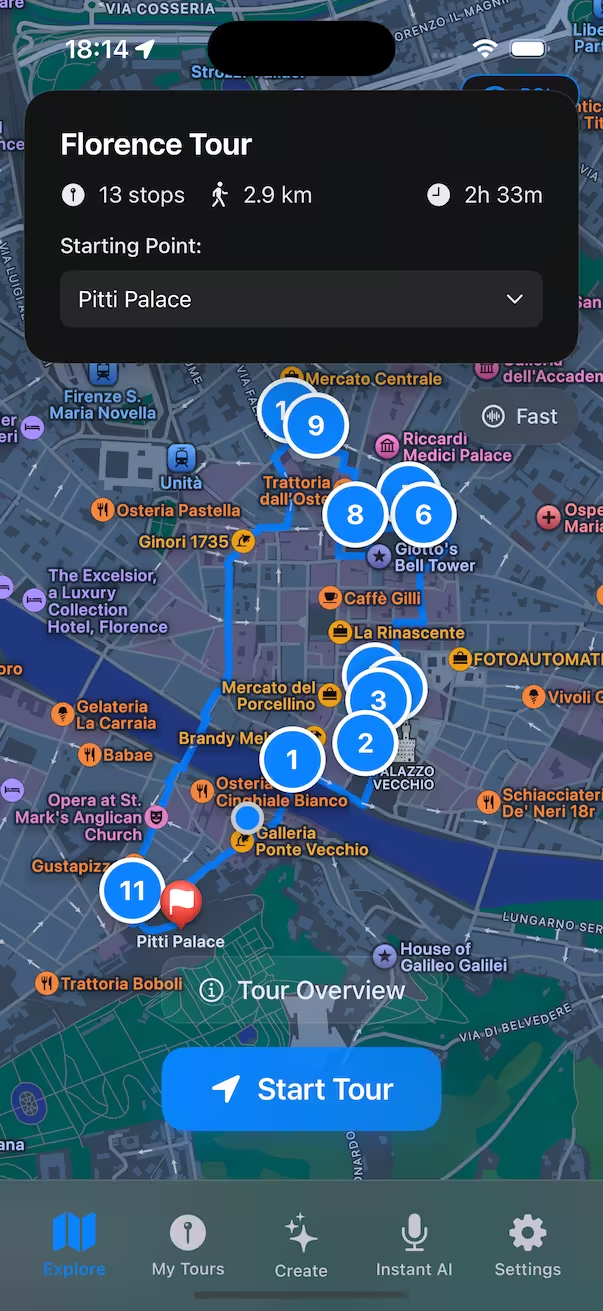
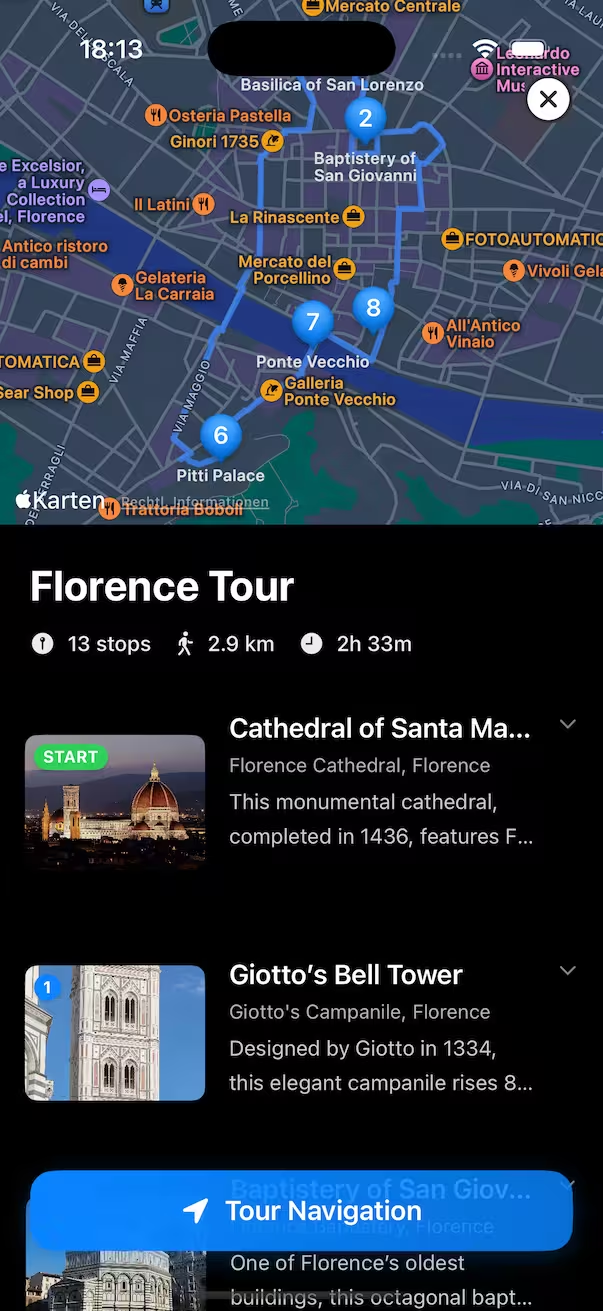
The classic Cape Town tour: 8 stops, 6.5 km, about 3 h on foot
Your live AI guide and the self-guided Cape Town route, together in your browser.