Best Time to Visit Ghent
Month-by-month weather, crowds and prices, plus a full calendar of festivals and events worth planning a trip around.
Best monthsMay, Sep
CheapestJan, Feb, Nov
Avoid–
BusiestJul

When is the best time to visit Ghent?
May and September are the sweet spot: 18-20°C, long evenings on the Graslei, every museum open, and hotel rates a fair €100-120/night. July is busiest, with the Gentse Feesten (17-26 July) drawing a million people. January is cheapest and quietest, the trade being grey, 7°C days.
Start our tool and find your best time to visit Ghent
Your perfect month
Free · ~30 seconds
or tap a month directly
What matters to you?
And this?
Best overall: May, Sep. May and September are the real answer: dry, long-lit days, every sight open, students giving the city its natural energy, and rates well below the July peak. May has terrace season opening, September brings the Flanders Festival classical concerts.
Best value: Jan, Feb, Nov. January, February and November bring hotel rates near €95-100/night, no queue for the Ghent Altarpiece, and a city that sounds like Flemish rather than English. The trade is short, grey days and frequent drizzle.
Avoid: Jul. The Gentse Feesten week (17-26 July) unless you want it: hotels inside the festival perimeter cost €180-250+/night, the centre is pedestrianised, and noise runs past midnight. Book by January or skip the week entirely.
- January: Good time, 7°C. This is the honest, unperformed Ghent that locals keep to themselves. No festival, no markup, just a real Flemish city in winter mode, with cafe windows fogged up and the Graslei quiet enough to hear the water. The grey is genuinely relentless by mid-afternoon, so this month rewards anyone who likes a city stripped back rather than dressed up.
- February: Good time, 8°C. February feels like a secret. The damp and the short light keep most visitors away, so the altarpiece, the Gravensteen and the museum cluster are yours to take slowly. If you want Ghent without a single queue and do not mind a grey sky, this is the month few people think to choose.
- March: Good time, 11°C. March is the last properly calm month before spring fills the centre. The terrace tables come back out, the light has real warmth by midday, and you can still walk into most restaurants on a Saturday. That window shuts fast once the long weekends of May arrive, so use it.
- April: Good time, 14°C. April is genuinely lovely and not yet overrun. The blossom on the canal facades, the long light afternoons and the quiet museums make it a couples' month, but Easter weekend is the exception: book ahead or it gets busy and pricey fast.
- May: Good time, 18°C. May is the month locals would tell you to pick. The evenings are long and golden, the canals stay animated late, and the city feels alive rather than mobbed. The only catch is the two public-holiday long weekends, when domestic visitors pour in and the centre tightens.
- June: Good time, 22°C. June is the tipping point where Ghent shifts from easy to genuinely busy, and your wallet feels it before the crowds peak in July. The redemption is the light: the canal evenings are the best of the year, and golden hour drags on past 21:30 over the guild houses.
- July: Tough month, 23°C. July is for people who actively want the party. During the Gentse Feesten the whole medieval core becomes one giant free stage, electric and unforgettable if you love crowds, exhausting and sleep-wrecking if you do not. Outside that week the city is just busy and expensive, with the redemption being Gent Jazz in a 14th-century abbey courtyard.
- August: Good time, 23°C. August is the gentler half of high summer: still lively, still warm, but without the Feesten frenzy. The Patershol street party is the hidden-gem moment, bringing pop-up tables and music to the cobbled lanes where restaurants normally need booking weeks ahead. Expect a few drenching showers and pack accordingly.
- September: Great time, 20°C. September is when Ghent gets its soul back. The students return, the cafe terraces stay open, the classical festival fills the evenings, and the summer crush is gone. If May is the city in bloom, September is the city back in its proper rhythm, and the better choice for anyone who likes culture over crowds.
- October: Good time, 16°C. October is the couples' and cinephiles' month. The autumn gold frames the Graslei perfectly, the evenings hum with film-festival energy, and midweek hotel rates stay peaceful. The trade is shorter, wetter days, but the washed autumn light over the canals more than pays for it.
- November: Good time, 11°C. November is bare-bones Ghent again, with one loud exception. The Six Days at 't Kuipke is Belgian cycling culture at its rawest, intimate, beery and intense, and the student battle for the Gravensteen is the kind of spontaneous local ritual you only stumble into if you happen to be in town. The rest of the month is grey, short-dayed and yours alone.
- December: Tough month, 8°C. December is Ghent at its cosiest. The market is the antidote to the Bruges crush: smaller, calmer, and set against a genuinely medieval backdrop of lit-up guild houses and the floodlit castle. The short, dark days are the real cost, but a glühwein on an illuminated square at dusk is exactly the point.
Ghent weather by month
HighLowRainfall
Jan7°
Feb8°
Mar11°
Apr14°
May18°
Jun22°
Jul23°
Aug23°
Sep20°
Oct16°
Nov11°
Dec8°
| Month | Temp | Rain | Sun | Crowds | Prices | Highlight |
|---|---|---|---|---|---|---|
| Jan | 7° / 2° | 77mm · 14 rainy days | 3.7 h/day | ●○○○○ | ●○○○○ | Ghent Winter Festival |
| Feb | 8° / 2° | 59mm · 12 rainy days | 5.5 h/day | ●●○○○ | ●○○○○ | |
| Mar | 11° / 3° | 62mm · 12 rainy days | 7.4 h/day | ●●○○○ | ●●○○○ | Queer March Ghent |
| Apr | 14° / 5° | 42mm · 10 rainy days | 10.1 h/day | ●●●○○ | ●●○○○ | |
| May | 18° / 9° | 59mm · 12 rainy days | 11.2 h/day | ●●●○○ | ●●●○○ | |
| Jun | 22° / 13° | 69mm · 11 rainy days | 11.6 h/day | ●●●●○ | ●●●●○ | Copacobana Festival |
| Jul | 23° / 14° | 63mm · 11 rainy days | 11.3 h/day | ●●●●● | ●●●●● | Gent Jazz Festival |
| Aug | 23° / 14° | 77mm · 13 rainy days | 10.6 h/day | ●●●●○ | ●●●●○ | Patershol Festival |
| Sep | 20° / 12° | 54mm · 10 rainy days | 9.0 h/day | ●●●○○ | ●●●○○ | Flanders Festival Ghent |
| Oct | 16° / 10° | 70mm · 13 rainy days | 6.3 h/day | ●●●○○ | ●●●○○ | Film Fest Ghent |
| Nov | 11° / 6° | 74mm · 14 rainy days | 4.5 h/day | ●●○○○ | ●●○○○ | Six Days of Ghent |
| Dec | 8° / 4° | 74mm · 14 rainy days | 3.3 h/day | ●●●○○ | ●●●○○ | Ghent Winter Festival |
How we score this: weather = long-run climate normals (Open-Meteo), crowds & prices = relative season read, events checked yearly against official dates.
Best time to visit Ghent: weather, prices & crowds
Best months for good weather
May, Jun, Sep
May and June bring the year's most reliable light, 18-22°C and up to 16.5 hours of daylight at the June solstice, with golden hour on the Graslei guild houses lasting past 21:00.
Quietest months to avoid the crowds
Jan, Feb, Nov
January, February and November empty the city out, with no festivals and 70,000 students back at lectures, so you can stand alone before the Ghent Altarpiece on a weekday morning.
Cheapest time to visit Ghent
Jan, Feb
January and February are Ghent's cheapest months: hotel rates run 30-31% below high season at around €95/night, and Patershol restaurants take walk-ins.
Best time for festivals and events
Jul
The Gentse Feesten (17-26 July) turns the entire medieval centre into Europe's biggest free street festival, a million visitors, ten days of music and theatre, and the city closed to cars.
How many days do you need in Ghent?
Ghent rewards two full days for most visitors. The medieval centre is tight and flat, so the headline sights fit comfortably into one day, and a second lets you slow down for museums, the Patershol quarter and a boat tour on the Leie without feeling rushed.

One day
The essential medieval core
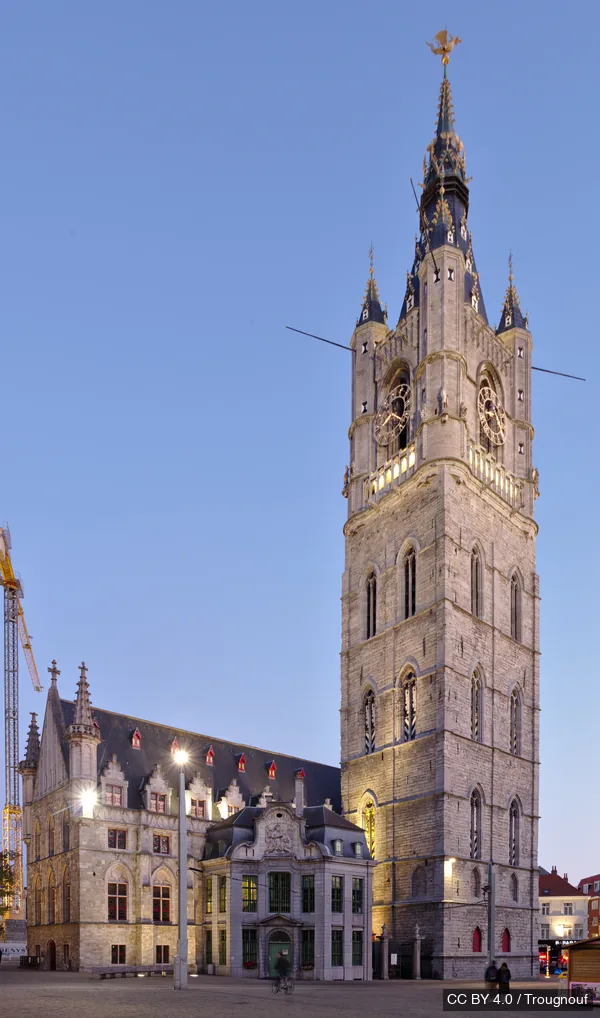
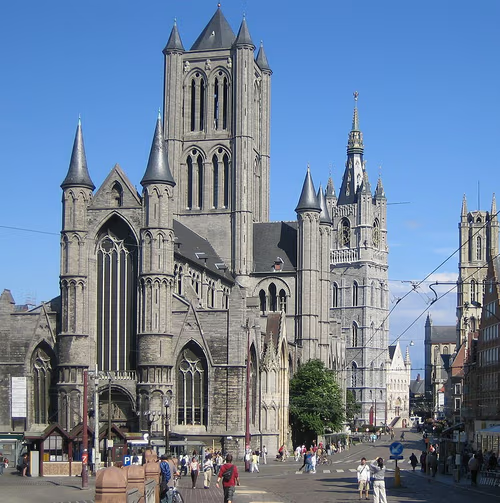
Start at Saint Bavo's Square and book the 08:30 slot for the Ghent Altarpiece in the cathedral, avoiding the tour-group crush later in the morning. Walk north to the Belfry of Ghent and St. Nicholas' Church, then cross Saint Michael's Bridge for the triple-tower view. Finish at Gravensteen Castle before noon. Take the self-guided Ghent walking tour, covering all 9 stops across just 1.8 km in about 1.6 hours, which leaves plenty of afternoon for a canal-side cafe stop on the Graslei.
Two daysRecommended
Museums, waterways and the Patershol
Spend the morning at the Design Museum in the Hotel de Coninck and the MSK's Flemish Primitives collection (skip both on a Monday, when they close). After lunch, take a 40-minute Leie boat tour from the Graslei quay, then wander into the cobbled lanes of the Patershol quarter for dinner at one of its bistros. By evening the Graslei waterfront turns gold: the best free view in Ghent.
Three days
Day trips and slower Ghent
A third day is the festival or day-trip day. If you are visiting in September, an evening at the Flanders Festival classical concerts fills it perfectly. Otherwise, the S.M.A.K. contemporary art museum (closed Mondays) or the Citadelpark botanical garden fills a slower morning. Bruges and Antwerp are both under an hour by train for an afternoon side trip.
Four days or more
Festival weeks and East Flanders villages
Four or more days makes real sense only around the Gentse Feesten in late July or the Film Fest Ghent in October, when the city's evening programme runs long and rewards a slower pace. Beyond the centre, the Flanders Festival extends into East Flanders villages in September, and the Blaarmeersen beach park at the city edge is a full-day escape in warm weather.
Best time to visit Ghent by traveller type
Same city, different trip. Here's the month that fits how you're travelling.
🧭
Best time to visit Ghent for the first time
MaySep
May or September: 15+ hours of daylight in May, the Flanders Festival in September, every museum running, and prices 20-25% under July. The iconic Ghent without the Gentse Feesten chaos.
❤️
Best time to visit Ghent for couples
AprOct
Late April for wisteria on the canal facades and Citadelpark in fresh green, or October for autumn gold framing the Graslei and evening cinema at Film Fest Gent.
💶
Best time to visit Ghent on a budget
JanFebNov
January, February or November for hotels near €95/night, the €42 CityCard that breaks even in a day, and free sights like the Graslei and Saint Peter's Abbey gardens year-round.
🍝
Best time to visit Ghent for food and wine
Sep
September for waterzooi season at its most atmospheric, or any Thursday year-round for Donderdag Veggiedag, when 120+ Ghent restaurants go all-vegetarian.
Best time for a tour of Ghent
Ghent is a compact, canal-laced walk, barely 1.8 km from Saint Bavo's Square to the Graslei waterfront, and the month you pick changes the whole mood of it. The sweet spot is May through September, when highs sit between 18 and 23 °C and the long northern evenings keep the Graslei and Korenlei facades golden well past 8 pm, perfect for the slow stretch along the water to Saint Michael's Bridge. April and October are cooler at 14 to 16 °C but still very walkable, and crowds thin noticeably. Winter is the honest catch: January barely scrapes 7 °C with the low near 2 °C and 14 rainy days, so the open expanse in front of Gravensteen Castle and the Belfry feels raw and the cobbles stay slick. July is the warmest and by far the busiest, crowds at their peak, though even then the heat is mild enough that midday in the shadow of the Belfry never punishes you the way a Mediterranean square would.
The beauty of doing this on foot is that you set the clock. Because AI Tourguide runs straight in your browser with no app and no download, a voice-first guide leads you the whole way, telling the story of the Ghent Altarpiece and listening when you want to linger longer at Gravensteen, so you can start your Ghent tour the moment the light is right. Set off on a still, empty September morning before the day-trippers reach the Graslei, or wait for the cool of a long June evening, and let the weather pick your hour instead of a tour operator's fixed departure time.

 +5
+5All 9 stops are already on the map.
You just press start.
You just press start.
 AI Tourguide
You just read the route.
Now walk it with a guide in your ear.
Press start wherever you are, even hundreds of kilometres from Ghent, and the guide begins telling its stories right away. In the city, pick any of the 9 stops to start from: it leads you there, then talks with you the whole route, asking, listening, remembering, and shaping the tour around your answers.
9stops1.8km1.6hours11languages
▶Start the tour freeFree to start · Runs in your browser · No app, no download
Ghent events and festivals calendar
Annual highlights worth timing a trip around, listed month by month.
March
🏳️🌈 PrideQueer March Ghent Queer March Gent
Mar 1–31
Throughout March, a month-long programme across the city.
A month-long programme of talks, workshops, exhibitions and performances celebrating LGBTQ+ culture across Ghent, culminating in a march through the city centre.
June
🎵 MusicCopacobana Festival
Jun 26–28
Late June, a single summer weekend at the city edge.
An outdoor summer music festival staged at the edge of the city, signalling the opening of Ghent's festival season.
July
🎵 MusicGent Jazz Festival Gent Jazz
Jul 2–18
Early to mid-July, a 17-day run at the Bijloke site.
A 17-day jazz festival in the medieval abbey courtyard of the Bijloke, with world-class headliners across jazz, soul and blues, making it one of Europe's top summer jazz events.
🎉 FestivalGhent Festivities Gentse Feesten
Jul 17–26
Ten days in mid-to-late July, built around the 21 July national holiday.
A ten-day street festival across the entire historic centre, drawing around a million visitors with music, street theatre, a puppet festival, the Bal 1900 dance and children's programming.
🇮 HolidayBelgian National Day Belgische Nationale Feestdag
Jul 21
21 July every year, falling inside the Gentse Feesten week.
Belgium's national holiday marking the 1831 Declaration of Independence, with a military parade in Brussels and celebrations in Ghent during the Gentse Feesten.
August
🎨 Art and culturePatershol Festival Patersholfestiviteiten
Aug 14–16
Mid-August, a single weekend in the Patershol quarter.
A neighbourhood street party in Patershol, Ghent's oldest medieval quarter, with local restaurants, music and evening atmosphere spilling onto the cobbled lanes.
🎨 Art and cultureBijloke Wonderland
Aug 20–30
Late August, around ten days at the medieval Bijloke site.
A summer culture festival at the medieval Bijloke site with sunrise concerts, theatre, dance, visual arts and guided tours across De Bijloke, LOD muziektheater, STAM and KASK.
September
🎵 MusicFlanders Festival Ghent Festival van Vlaanderen Gent
Sep 11–27
Mid-to-late September, spread across the city and into East Flanders villages.
180 concerts with 1,500+ national and international artists, centred on classical music with world music and jazz, extending into the villages of East Flanders.
October
🎬 FilmFilm Fest Ghent Film Fest Gent
Oct 7–18
Early-to-mid October, around eleven days across the city's cinemas.
Belgium's largest film festival, with 100-plus films and a recurring focus on the relationship between music and cinema, staged across Kinepolis, Studio Skoop, Sphinx and KASKcinema and drawing around 100,000 visitors each year.
November
🎨 Art and cultureBattle for the Gravensteen Slag om het Gravensteen
Nov 16
16 November, typically a Monday-evening student commemoration.
An annual commemoration of the 1949 student beer-tax protest: students parade, sing 'The Battle of Gravensteen' and occupy the castle streets.
🏃 SportSix Days of Ghent Lotto Zesdaagse Vlaanderen-Gent
Nov 17–22
Six days in mid-to-late November at the 't Kuipke velodrome.
An elite indoor track cycling race at the 't Kuipke velodrome, one of the oldest and most prestigious six-day races in cycling.
December
🎄 Christmas marketGhent Winter Festival Gentse Winterfeesten
Dec 5 – Jan 3
Early December to early January, across the historic centre.
A Christmas market and winter festival across the historic centre, with an ice rink, chalets and Sinterklaas events set against the Gravensteen and Graslei.
Insider tips for visiting Ghent
The rules buried in forums, in one place.
- Book the Ghent Altarpiece for the 08:30 slot, Monday to Saturday, online at sintbaafskathedraal.be. The 25-minute timed window has no tour groups; by 10:30 the chapel feels crowded. Slots sell out days ahead in July and August.
- Saint Bavo's Cathedral opens at 13:00 on Sundays, not 08:30, and the altarpiece chapel is compressed to 13:00-17:00. Turning up Sunday morning to a locked door is Ghent's most common tourist mistake, so plan the altarpiece on a weekday.
- Skip the Graslei terraces for the view. The canal-side restaurants charge €6-8 for a beer you can buy for €2.50 at Jan Breydelstraat shops and drink on the stone quay with the exact same view, which is what students and locals do.
- S.M.A.K. and the MSK close every Monday, so a Monday museum day frustrates. Gravensteen castle, the Design Museum, Saint Peter's Abbey and all outdoor sights stay open, so save the art museums for any other day.
- Climb the Gravensteen rooftop before 11:00. The three-tower battlement walkway gets crowded once tour buses arrive, but the 10:00 opening gives you the panorama nearly to yourself and the best south-facing photo light.
- Every Thursday is Donderdag Veggiedag: about 120 restaurants switch to all-vegetarian menus. Meat-eaters should check the menu before sitting down; vegetarians get Europe's highest density of veggie-friendly kitchens at its best.
- Boat tours on the Leie run only 1 April to 2 November, €11 for 40 minutes from the Graslei. Go early April or late October for near-empty boats and a 30-minute wait, versus July's queues despite 15-minute departures.
- The CityCard Gent (€42 for 48h, €48 for 72h) pays off if you plan three or more paid museums. It covers Gravensteen, the Design Museum, S.M.A.K., the MSK, the Belfry, free transport and boat tours, and breaks even after one castle plus a museum.
Public holidays in Ghent
On these dates many shops and offices close, transport thins out, and sights can be mobbed or shut. Plan around them.
| Date | Holiday | What closes |
|---|---|---|
| Jan 1 | New Year's Day | Most shops, museums and offices close; restaurants run limited service. A very quiet city; plan around what is open. |
| Apr 6 | Easter Monday | Official holiday: shops closed, but museums follow their normal schedule and stay open. Expect extra domestic tourists from Belgium and the Netherlands. |
| May 1 | Labour Day | Shops and banks closed; some cafes and restaurants open. No parades specific to Ghent, just a slow public-holiday rhythm. |
| May 14 | Ascension Day | Thursday holiday; many Belgians take Friday off for a four-day weekend, so the city is noticeably busier and long-weekend hotel rates rise. |
| May 25 | Whit Monday | Official holiday: shops closed. A peak day for domestic city-trippers, so the canal-side terraces and museums fill up. |
| Jul 21 | Belgian National Day | Official holiday that falls inside the Gentse Feesten (17-26 July), so the city is already at peak festival mode with extra closures possible. |
| Aug 15 | Assumption Day | Official holiday during the Bijloke Wonderland period; some shops close, but cafes and terraces stay open. |
| Nov 1 | All Saints' Day | Shops and banks closed; cemeteries busy with locals. A quiet day with low tourist numbers. |
| Nov 11 | Armistice Day | Official holiday; quiet across the city. Museum closures vary, so check each sight individually before you go. |
| Dec 25 | Christmas Day | Nearly everything closes; only a handful of restaurants open. Book a Christmas-Day meal well ahead or self-cater. |
Ghent month by month
January in Ghent
High7°C / 44°F
Low2°C
Rain77mm / 14 rainy days
Sun3.7 h/day
Daylight8 h/day
Humidity86%
Crowds●○○○○Prices●○○○○
January is Ghent at its emptiest and cheapest. Daytime highs sit near 7°C under grey skies, with around 14 rainy days and barely 3.7 hours of sun, so pack a waterproof layer and plan around indoor sights. With the Christmas market closed after 3 January and 70,000 students back at the university, tourism drops to its floor. You can stand before the Ghent Altarpiece on a weekday morning with almost nobody else in the chapel.
The vibe This is the honest, unperformed Ghent that locals keep to themselves. No festival, no markup, just a real Flemish city in winter mode, with cafe windows fogged up and the Graslei quiet enough to hear the water. The grey is genuinely relentless by mid-afternoon, so this month rewards anyone who likes a city stripped back rather than dressed up.
Don't miss The 08:30 Ghent Altarpiece slot feels nearly private this month, and the covered Groot Vleeshuis meat hall and the Citadelpark museum cluster make natural refuges when the drizzle sets in.
Crowd drivers Post-Christmas lull with no festivals and minimal international tourism; the lowest visitor pressure of the year.
In season Waterzooi, the creamy Ghent stew of chicken or fish, is at its most comforting in the cold; order it in a Patershol bistro you can walk straight into.
Heads up New Year's Day (1 Jan) shuts most shops, museums and offices; boat tours on the Leie are closed all month until April.
Cheapest month: hotel rates 30-31% below high season, averaging around €95/night.
February in Ghent
High8°C / 47°F
Low2°C
Rain59mm / 12 rainy days
Sun5.5 h/day
Daylight10 h/day
Humidity81%
Crowds●●○○○Prices●○○○○
February stays quiet and cheap, with highs near 8-9°C and slightly less rain than January. The Krokusvakantie, the Flemish school break around 16-22 February, brings some domestic families, but the city never feels busy. It is the second-cheapest month, museums are uncrowded, and you can book a Patershol table the same day. Daylight is finally stretching back past 10 hours, so afternoons no longer vanish at 16:30.
The vibe February feels like a secret. The damp and the short light keep most visitors away, so the altarpiece, the Gravensteen and the museum cluster are yours to take slowly. If you want Ghent without a single queue and do not mind a grey sky, this is the month few people think to choose.
Don't miss With the boat tours still shut for winter, focus on indoor depth: the MSK's Flemish Primitives and the Design Museum's Art Nouveau rooms reward a slow, crowd-free visit.
Crowd drivers Krokusvakantie (Flemish school break, around 16-22 Feb) brings domestic family visitors; otherwise very quiet.
In season A cone of frites with the local andalouse sauce eaten standing on Sint-Baafsplein is the cheapest, most Flemish lunch going.
Budget-friendly; hostels from €20 a dorm bed, restaurants calm and walk-in friendly.
March in Ghent
High11°C / 52°F
Low3°C
Rain62mm / 12 rainy days
Sun7.4 h/day
Daylight12 h/day
Humidity77%
Crowds●●○○○Prices●●○○○
March eases Ghent into spring: highs climb toward 11°C, sun hours roughly double from January to 7.4 a day, and the first blossom shows in Citadelpark and Saint Peter's Abbey garden. Shoulder demand begins, with Dutch and UK day-trippers reappearing, but crowds stay moderate. The month-long Queer March programme runs across the city with talks, exhibitions and performances, all in a still-quiet town with fair hotel prices.
The vibe March is the last properly calm month before spring fills the centre. The terrace tables come back out, the light has real warmth by midday, and you can still walk into most restaurants on a Saturday. That window shuts fast once the long weekends of May arrive, so use it.
Don't miss Early spring foliage and blossom appear in Citadelpark's old trees and the university botanical garden, the first green of the year before the crowds and before the boat-tour season opens in April.
Crowd drivers Queer March programme runs city-wide all month; shoulder demand starts as Dutch and UK day-trippers return.
In season Belgian asparagus and the first spring greens start reaching market stalls; the Vrijdagmarkt and Groentenmarkt are the places to see them.
Good value; hotel rates rising but still 20-25% below the summer peak.
Events this month
🏳️🌈 PrideQueer March Ghent Queer March Gent
Mar 1–31
Throughout March, a month-long programme across the city.
A month-long programme of talks, workshops, exhibitions and performances celebrating LGBTQ+ culture across Ghent, culminating in a march through the city centre.
Ghent's main queer cultural moment lands in a quiet, low-priced month, so you get the city and the celebration without summer crowds.
April in Ghent
High14°C / 58°F
Low5°C
Rain42mm / 10 rainy days
Sun10.1 h/day
Daylight14 h/day
Humidity72%
Crowds●●●○○Prices●●○○○
April is Ghent's driest month at around 42mm of rain, with highs near 14°C and over 10 hours of sun a day. The Easter holidays (around 6-19 April) bring Belgian and Dutch families and a brief hotel-price spike over the Easter weekend, then the month settles back to fair value. Wisteria drapes the canal buildings in late April and the Citadelpark wakes up in fresh green, making it one of the prettiest, least sweaty months to walk the old town.
The vibe April is genuinely lovely and not yet overrun. The blossom on the canal facades, the long light afternoons and the quiet museums make it a couples' month, but Easter weekend is the exception: book ahead or it gets busy and pricey fast.
Don't miss Boat tours on the Leie reopen on 1 April with near-empty boats and short waits, the best window before July's queues, and wisteria on the canal buildings peaks in late April.
Crowd drivers Easter holidays (around 6-19 Apr) bring Belgian and Dutch domestic travel and a short Easter-weekend hotel surge.
In season Belgian white asparagus, the prized witte goud, comes into season, served classically with butter, egg and ham across the city's bistros.
Heads up Easter Monday (6 Apr) closes shops, but museums keep their normal hours; Saint Bavo's altarpiece tickets sell fast over the Easter weekend.
Good value overall, but the Easter weekend spikes hotel prices by about 30%; book that weekend early.
May in Ghent
High18°C / 65°F
Low9°C
Rain59mm / 12 rainy days
Sun11.2 h/day
Daylight16 h/day
Humidity72%
Crowds●●●○○Prices●●●○○
May is one of the two best months to visit. Highs reach 18°C, daylight stretches past 15 hours, and terrace culture takes over the Graslei and Korenlei. Crowds are present but not overwhelming, and every museum is running. Two long weekends drive Belgian micro-trips: Ascension Day (14 May) and Whit Monday (25 May), so those dates fill up and rates climb. Outside them, May is the ideal balance of weather, light and manageable crowds.
The vibe May is the month locals would tell you to pick. The evenings are long and golden, the canals stay animated late, and the city feels alive rather than mobbed. The only catch is the two public-holiday long weekends, when domestic visitors pour in and the centre tightens.
Don't miss Golden-hour light on the Graslei and Korenlei guild houses lasts well past 21:00 by late May, and the Saint Peter's Abbey herb garden is at its freshest, both free and crowd-free in the evenings.
Crowd drivers Ascension Day (14 May) and Whit Monday (25 May) long weekends trigger Belgian micro-trips; terraces fill as daylight extends.
In season Aperitivo on a canal-side terrace returns in force; a local Gruut city-brewery beer on the Graslei quay is the cheap, scenic version.
Moderate rates rising toward summer; book four-plus weeks ahead for the Ascension and Whit long weekends.

June in Ghent
High22°C / 72°F
Low13°C
Rain69mm / 11 rainy days
Sun11.6 h/day
Daylight16 h/day
Humidity71%
Crowds●●●●○Prices●●●●○
June is warm, long-lit and busy. Highs reach 22°C and the solstice delivers 16.5 hours of daylight, so the Graslei stays animated until midnight. European city-trippers arrive in force even before the Flemish school holidays start in July, which makes June statistically the priciest month at around €160/night. The Copacobana Festival (26-28 June) opens the summer music season at the city edge. Pack for short Atlantic showers rather than all-day rain.
The vibe June is the tipping point where Ghent shifts from easy to genuinely busy, and your wallet feels it before the crowds peak in July. The redemption is the light: the canal evenings are the best of the year, and golden hour drags on past 21:30 over the guild houses.
Don't miss The June solstice gives Ghent its longest days, with the Graslei waterfront animated well past midnight, the single best month for late-evening canal walks and waterside terraces.
Crowd drivers European city-trippers in full flow; Copacobana Festival (26-28 Jun) draws music fans before the July rush.
In season Belgian strawberries and the first summer beers on terrace menus; the Graslei quay is the place to enjoy both in the long light.
Statistically the most expensive month, averaging around €160/night as European city-trippers arrive.
Events this month
🎵 MusicCopacobana Festival
Jun 26–28
Late June, a single summer weekend at the city edge.
An outdoor summer music festival staged at the edge of the city, signalling the opening of Ghent's festival season.
A chance to catch live music and the first proper summer atmosphere before the July crowds and the Gentse Feesten arrive.

July in Ghent
High23°C / 73°F
Low14°C
Rain63mm / 11 rainy days
Sun11.3 h/day
Daylight16 h/day
Humidity71%
Crowds●●●●●Prices●●●●●
July is Ghent at full intensity. The Gentse Feesten (17-26 July) draws roughly a million visitors over ten days, the centre closes to cars, and noise runs past midnight. Gent Jazz (2-18 July) fills the Bijloke abbey courtyard, and the Flemish summer holidays add to the crush. Highs sit around 23°C, comfortable rather than punishing, but the festival week pushes hotels to €180-250+/night and every sight to capacity. Early July (1-16) is merely busy, not chaotic.
The vibe July is for people who actively want the party. During the Gentse Feesten the whole medieval core becomes one giant free stage, electric and unforgettable if you love crowds, exhausting and sleep-wrecking if you do not. Outside that week the city is just busy and expensive, with the redemption being Gent Jazz in a 14th-century abbey courtyard.
Don't miss Gent Jazz at the Bijloke (2-18 July) stages world-class names in a medieval abbey courtyard, and the Gentse Feesten turns every square into free music, street theatre and the Bal 1900 dance, the biggest free urban festival in Europe.
Crowd drivers Gentse Feesten (17-26 Jul, around 1 million visitors), Gent Jazz (2-18 Jul) and full Flemish summer holidays stack together.
In season Festival street-food stalls take over the centre during the Feesten; for something quieter, the Blaarmeersen lakeside has summer beach-bar food.
Heads up Belgian National Day (21 Jul) falls mid-Feesten with possible extra closures; book any festival-week hotel by January.
Busiest and priciest: during the Gentse Feesten (17-26 Jul) hotels run €180-250+/night; non-festival July still averages €140+/night.
Events this month
🎵 MusicGent Jazz Festival Gent Jazz
Jul 2–18
Early to mid-July, a 17-day run at the Bijloke site.
A 17-day jazz festival in the medieval abbey courtyard of the Bijloke, with world-class headliners across jazz, soul and blues, making it one of Europe's top summer jazz events.
One of Europe's top jazz festivals in an exceptional medieval setting, well worth timing a trip around if you book accommodation early.
🎉 FestivalGhent Festivities Gentse Feesten
Jul 17–26
Ten days in mid-to-late July, built around the 21 July national holiday.
A ten-day street festival across the entire historic centre, drawing around a million visitors with music, street theatre, a puppet festival, the Bal 1900 dance and children's programming. It is UNESCO-listed Flemish intangible heritage.
The biggest free urban festival in Europe turns the whole city into one stage, unmissable if you love crowds and atmosphere, best avoided if you want a quiet city break.
🇮 HolidayBelgian National Day Belgische Nationale Feestdag
Jul 21
21 July every year, falling inside the Gentse Feesten week.
Belgium's national holiday marking the 1831 Declaration of Independence, with a military parade in Brussels and celebrations in Ghent during the Gentse Feesten.
It lands mid-festival, so the city is already at peak mode, expect extra closures and the fullest crowds of the year.

August in Ghent
High23°C / 73°F
Low14°C
Rain77mm / 13 rainy days
Sun10.6 h/day
Daylight14 h/day
Humidity74%
Crowds●●●●○Prices●●●●○
August stays warm at around 23°C and busy through the Flemish school holidays, which run until 31 August, though it is calmer than July. It is also the wettest month, tying January at 77mm of rain over roughly 13 days, mostly short showers. The Patershol Festival (14-16 August) turns Ghent's oldest medieval quarter into a street party, and Bijloke Wonderland (20-30 August) brings sunrise concerts to a 14th-century hospital courtyard. Mid-August runs noticeably slower than the first week.
The vibe August is the gentler half of high summer: still lively, still warm, but without the Feesten frenzy. The Patershol street party is the hidden-gem moment, bringing pop-up tables and music to the cobbled lanes where restaurants normally need booking weeks ahead. Expect a few drenching showers and pack accordingly.
Don't miss Bijloke Wonderland (20-30 Aug) stages sunrise concerts in a medieval hospital courtyard, and the Patershol Festival opens up the city's oldest restaurant quarter without the usual weeks-ahead reservation.
Crowd drivers Flemish school holidays until 31 Aug; Patershol Festival (14-16 Aug) and Blaarmeersen beach packed on warm weekends.
In season The Patershol Festival (14-16 Aug) is the year's best chance to graze the quarter's restaurants (normally €35-55 a head) in a pop-up street-party setting.
Heads up Assumption Day (15 Aug) closes some shops, but cafes and terraces stay open through the holiday.
Rates softer than July but still 50-60% above January; mid-August is slower than the early days.
Events this month
🎨 Art and culturePatershol Festival Patersholfestiviteiten
Aug 14–16
Mid-August, a single weekend in the Patershol quarter.
A neighbourhood street party in Patershol, Ghent's oldest medieval quarter, with local restaurants, music and evening atmosphere spilling onto the cobbled lanes.
A hidden-gem event that brings pop-up access to a quarter whose restaurants (€35-55 a head) normally need booking weeks ahead.
🎨 Art and cultureBijloke Wonderland
Aug 20–30
Late August, around ten days at the medieval Bijloke site.
A summer culture festival at the medieval Bijloke site with sunrise concerts, theatre, dance, visual arts and guided tours across De Bijloke, LOD muziektheater, STAM and KASK.
The unique setting of sunrise concerts in a 14th-century hospital courtyard makes it a quality-over-scale highlight of late summer.

September in Ghent
High20°C / 69°F
Low12°C
Rain54mm / 10 rainy days
Sun9.0 h/day
Daylight13 h/day
Humidity77%
Crowds●●●○○Prices●●●○○
September is the other joint-best month. The 70,000 students return mid-month, restoring the city's natural energy, and highs near 20°C with the most reliable shoulder-season light make it ideal for walking. The Flanders Festival (11-27 September) brings 180 classical concerts to venues across the city, while hotel rates stay at a fair €110/night. Autumn tone sets in by month's end, but September delivers the best balance of weather, value and atmosphere all year.
The vibe September is when Ghent gets its soul back. The students return, the cafe terraces stay open, the classical festival fills the evenings, and the summer crush is gone. If May is the city in bloom, September is the city back in its proper rhythm, and the better choice for anyone who likes culture over crowds.
Don't miss The Flanders Festival (11-27 September) stages 180 concerts with 1,500+ artists, Belgium's best classical festival, while September's softer light is ideal for outdoor dining and canal walks.
Crowd drivers Students return to Ghent University mid-September; Flanders Festival classical music (11-27 Sep) draws 50,000+ visitors.
In season Waterzooi season is at its most atmospheric, and outdoor dining is still comfortable; the Patershol quarter is fully accessible without festival crowds.
Good shoulder value; hotels average around €110/night, the best weather-to-crowd balance of the year.
Events this month
🎵 MusicFlanders Festival Ghent Festival van Vlaanderen Gent
Sep 11–27
Mid-to-late September, spread across the city and into East Flanders villages.
180 concerts with 1,500+ national and international artists, centred on classical music with world music and jazz, extending into the villages of East Flanders.
The best classical music festival in Belgium lands in a fair-priced shoulder month, so hotels stay reasonable while the culture peaks.

October in Ghent
High16°C / 61°F
Low10°C
Rain70mm / 13 rainy days
Sun6.3 h/day
Daylight11 h/day
Humidity82%
Crowds●●●○○Prices●●●○○
October turns Ghent copper-gold. Citadelpark glows from mid-month, the best park light of the year, while highs ease to 16°C and rain picks up to around 70mm. Film Fest Gent (7-18 October) draws 100,000 visitors and the buzz of Belgium's biggest film festival, tightening hotel supply during its run. The Flemish herfstvakantie in the last week adds domestic families. It is a strong shoulder month: cinematic, atmospheric, and far calmer than July.
The vibe October is the couples' and cinephiles' month. The autumn gold frames the Graslei perfectly, the evenings hum with film-festival energy, and midweek hotel rates stay peaceful. The trade is shorter, wetter days, but the washed autumn light over the canals more than pays for it.
Don't miss Citadelpark goes copper-gold from mid-October, the best park light of the year, and the first week of Film Fest Gent (7-12 Oct) is the most film-forward, with October 7-10 the best balance of buzz and hotel availability.
Crowd drivers Film Fest Gent (7-18 Oct, 100,000 visitors) plus the Flemish herfstvakantie in the last week of October.
In season Mussels season (moules-frites) peaks in autumn; a steaming pot with frites and a Belgian beer is the classic October meal.
Autumn rates; the Film Fest Gent week tightens hotel supply in the city centre.
Events this month
🎬 FilmFilm Fest Ghent Film Fest Gent
Oct 7–18
Early-to-mid October, around eleven days across the city's cinemas.
Belgium's largest film festival, with 100-plus films and a recurring focus on the relationship between music and cinema, staged across Kinepolis, Studio Skoop, Sphinx and KASKcinema and drawing around 100,000 visitors each year.
Belgium's most important international film festival fills the city with cinephile energy, a great time to visit for atmosphere without the July chaos.

November in Ghent
High11°C / 51°F
Low6°C
Rain74mm / 14 rainy days
Sun4.5 h/day
Daylight9 h/day
Humidity86%
Crowds●●○○○Prices●●○○○
November is the quiet, value-friendly month before the Christmas season. Highs drop to 11°C, the light fades by 16:30, and around 14 rainy days bring persistent grey drizzle, so plan indoor sights. The Six Days of Ghent track cycling (17-22 November) packs the intimate 't Kuipke velodrome, and the Gravensteen student commemoration on 16 November adds a burst of authentic local colour. Otherwise the city is as calm and cheap as January.
The vibe November is bare-bones Ghent again, with one loud exception. The Six Days at 't Kuipke is Belgian cycling culture at its rawest, intimate, beery and intense, and the student battle for the Gravensteen is the kind of spontaneous local ritual you only stumble into if you happen to be in town. The rest of the month is grey, short-dayed and yours alone.
Don't miss The Six Days of Ghent (17-22 Nov) is one of cycling's oldest six-day races in the intimate 't Kuipke velodrome, and the Slag om het Gravensteen on 16 November is a free, spontaneous student parade through the castle streets.
Crowd drivers Six Days of Ghent cycling (17-22 Nov) packs 't Kuipke; the Gravensteen student commemoration (16 Nov) is a one-evening local event.
In season Cosy beer-cafe season is at its best; this is the month to work through the Belgian Trappist and Ghent Gruut beers indoors.
Heads up All Saints' Day (1 Nov) closes shops and banks; Armistice Day (11 Nov) is quiet with variable museum hours; boat tours end on 2 November.
January-level quiet, averaging around €100/night; the Six Days of Ghent week brings a small hotel bump.
Events this month
🏃 SportSix Days of Ghent Lotto Zesdaagse Vlaanderen-Gent
Nov 17–22
Six days in mid-to-late November at the 't Kuipke velodrome.
An elite indoor track cycling race at the 't Kuipke velodrome, one of the oldest and most prestigious six-day races in cycling.
Belgian cycling culture at its rawest, the intimate, loud, beer-fuelled 't Kuipke is a bucket-list night for fans of the sport.
🎨 Art and cultureBattle for the Gravensteen Slag om het Gravensteen
Nov 16
16 November, typically a Monday-evening student commemoration.
An annual commemoration of the 1949 student beer-tax protest: students parade, sing 'The Battle of Gravensteen' and occupy the castle streets.
Authentic, free and spontaneous Ghent student culture, charming to stumble into if you happen to be in town.
December in Ghent
High8°C / 47°F
Low4°C
Rain74mm / 14 rainy days
Sun3.3 h/day
Daylight8 h/day
Humidity88%
Crowds●●●○○Prices●●●○○
December wraps Ghent in its Winterfeesten Christmas market, running 5 December to 3 January with an ice rink, chalets and Sinterklaas events across the historic centre. Days are short at 8 hours of light, dark by 16:30, with highs near 8°C and frequent grey drizzle. The illuminated medieval buildings around the Gravensteen and Graslei more than compensate. Ghent's market is smaller than Brussels or Bruges but far less crowded, cosy rather than hectic, with holiday-shopper demand lifting hotel rates.
The vibe December is Ghent at its cosiest. The market is the antidote to the Bruges crush: smaller, calmer, and set against a genuinely medieval backdrop of lit-up guild houses and the floodlit castle. The short, dark days are the real cost, but a glühwein on an illuminated square at dusk is exactly the point.
Don't miss The Gentse Winterfeesten market (from 5 Dec) sets an ice rink and chalets against the floodlit Gravensteen and Graslei, a cosier, far less crowded alternative to the Bruges and Brussels markets.
Crowd drivers Gentse Winterfeesten Christmas market (5 Dec-3 Jan) and early-December Sinterklaas crowds bring holiday shoppers.
In season Glühwein, smoutebollen (Flemish doughnuts) and oliebollen fill the market stalls; the illuminated squares are the place to graze them.
Heads up Christmas Day (25 Dec) closes nearly everything, with only a handful of restaurants open; book a festive meal well ahead.
Christmas-market demand lifts rates; book six-plus weeks ahead for mid-December weekends.
Events this month
🎄 Christmas marketGhent Winter Festival Gentse Winterfeesten
Dec 5 – Jan 3
Early December to early January, across the historic centre.
A Christmas market and winter festival across the historic centre, with an ice rink, chalets and Sinterklaas events set against the Gravensteen and Graslei.
Smaller than the Brussels and Bruges markets but far less crowded, a cosy medieval backdrop rather than a hectic one.
Frequently asked questions
What is the best time to visit Ghent?
May and September are the joint best months. May gives you 18°C, 15+ hours of daylight and terrace season on the Graslei. September brings the Flanders Festival classical concerts, returning students and the year's best weather-to-crowd balance, with hotels at a fair €110/night. Both avoid the July Gentse Feesten crush.
What is the cheapest month to visit Ghent?
January is the cheapest, with hotel rates 30-31% below high season at around €95/night and hostels from €20 a dorm bed. February is nearly as cheap. The trade is grey weather, highs near 7°C and roughly 14 rainy days, but museums and the Ghent Altarpiece are virtually queue-free.
When should you avoid visiting Ghent?
Avoid 17-26 July, the Gentse Feesten, unless you specifically want the festival. Hotels inside the perimeter cost €180-250+/night and must be booked months ahead, the centre is pedestrianised, and noise runs past midnight. Every sight hits maximum capacity. Early July (1-16) is merely busy, not chaotic.
What is the Gentse Feesten and when is it?
The Gentse Feesten runs 17-26 July 2026, a ten-day free street festival drawing around a million visitors. The whole historic centre closes to cars and fills with music, street theatre, the Bal 1900 dance and a puppet festival. It is UNESCO-listed heritage and the biggest free urban festival in Europe, but book any hotel by January.
What is the weather like in Ghent in summer?
Summer is mild rather than hot, with July and August highs around 23°C and only occasional 28-30°C heat waves. Older buildings rarely have air-conditioning. Rain comes as short Atlantic showers, so always carry a compact umbrella. The best summer sightseeing is 9-11:30 and after 17:00, when the Graslei facades turn gold.
Is the Ghent Christmas market worth visiting?
Yes, especially if you want a calmer alternative to Bruges. The Gentse Winterfeesten runs 5 December to 3 January with an ice rink and chalets across the historic centre. It is smaller than the Brussels and Bruges markets but far less crowded, set against the floodlit Gravensteen and Graslei. Days are short, dark by 16:30.
Which days are Ghent's museums closed?
S.M.A.K. and the MSK close every Monday, so avoid planning an art-museum day then. Gravensteen castle, the Design Museum and Saint Peter's Abbey stay open daily. Saint Bavo's Cathedral opens only at 13:00 on Sundays, not 08:30, so book the Ghent Altarpiece on a weekday morning to avoid the locked-door surprise.
How many days do you need in Ghent?
Two full days suit most visitors: one for the core sights, the Ghent Altarpiece, Saint Bavo's, the Belfry and the Gravensteen, and one for the museums, the Patershol quarter and a Leie boat tour. Add a third day in festival months like July, September or October to take in an event without rushing the city.

Any month, any day: your guide is already there
Whatever date you pick, a private human guide gets pricier and harder to book on weekends, holidays and in peak season. Our live AI guide, the one that walks with you and answers anything you ask out loud, works the opposite way.
One flat price, every day
No holiday, weekend, night or peak-season surcharge. A private guide in Ghent runs well over 100 euro for a half day, and more on holidays. Ours stays the same.
Available the moment you want it
Start at midnight or at dawn, on Christmas, in the snow, in the August heat. No sold-out high season, no booking weeks ahead.
Your pace, no meter running
Pause for a long lunch, restart after dark, repeat a stop. The tour simply waits for you.
Free to try, a fraction of the cost
Test it for free, then a transparent flat price that undercuts any private guide, in every season.
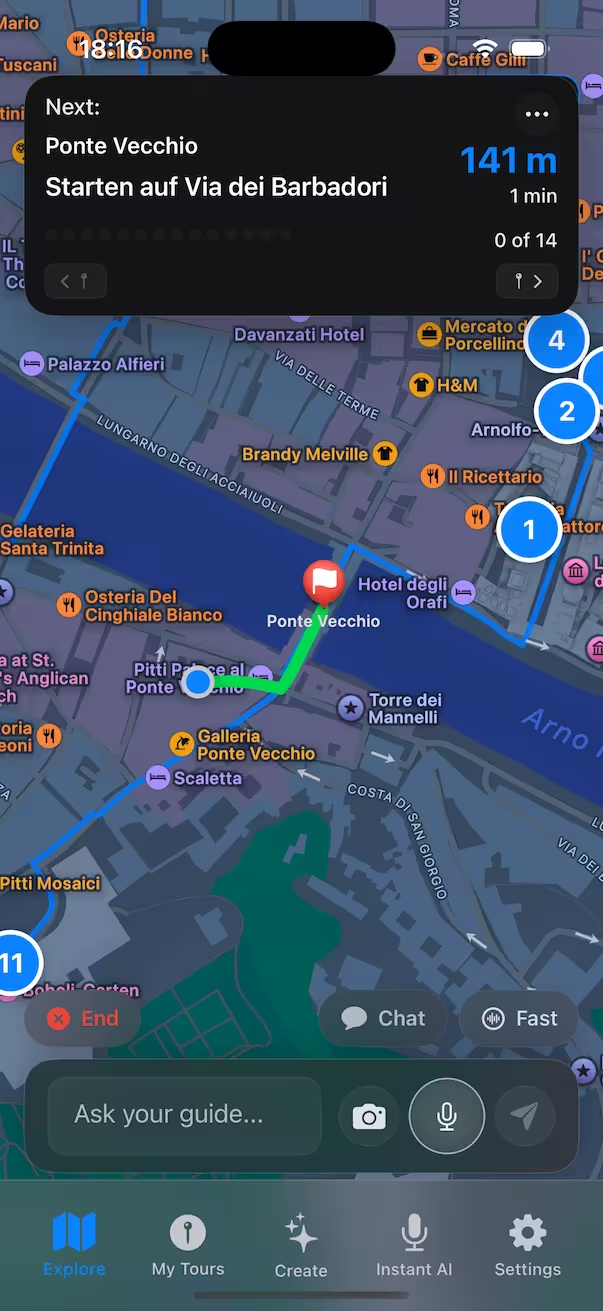
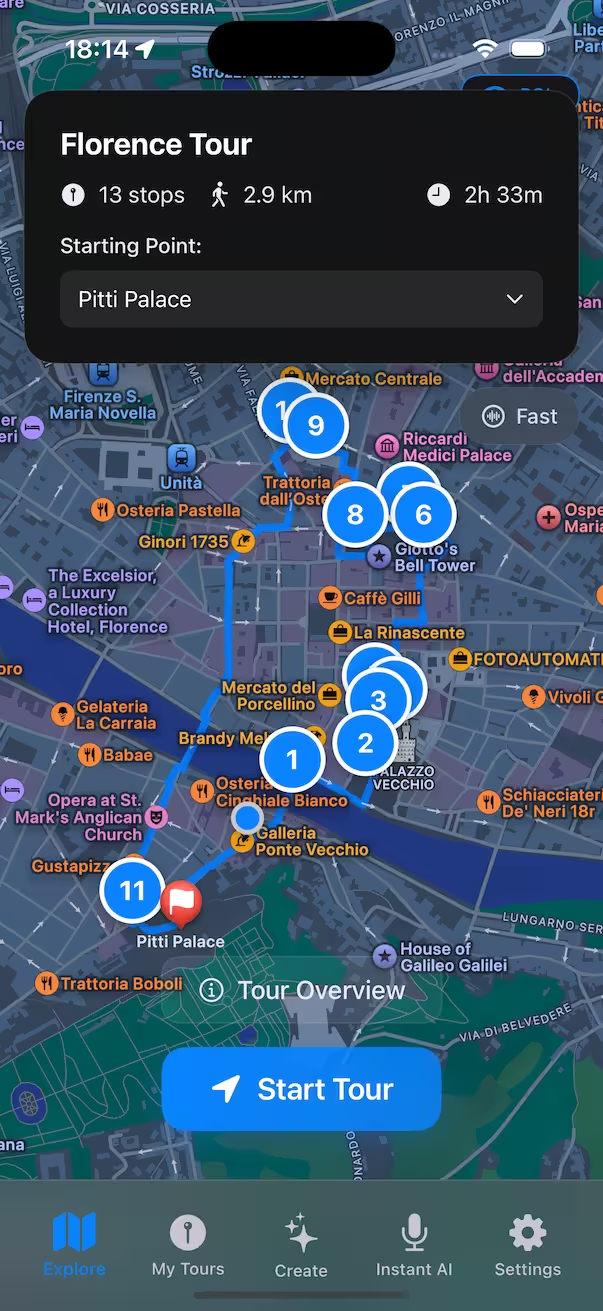
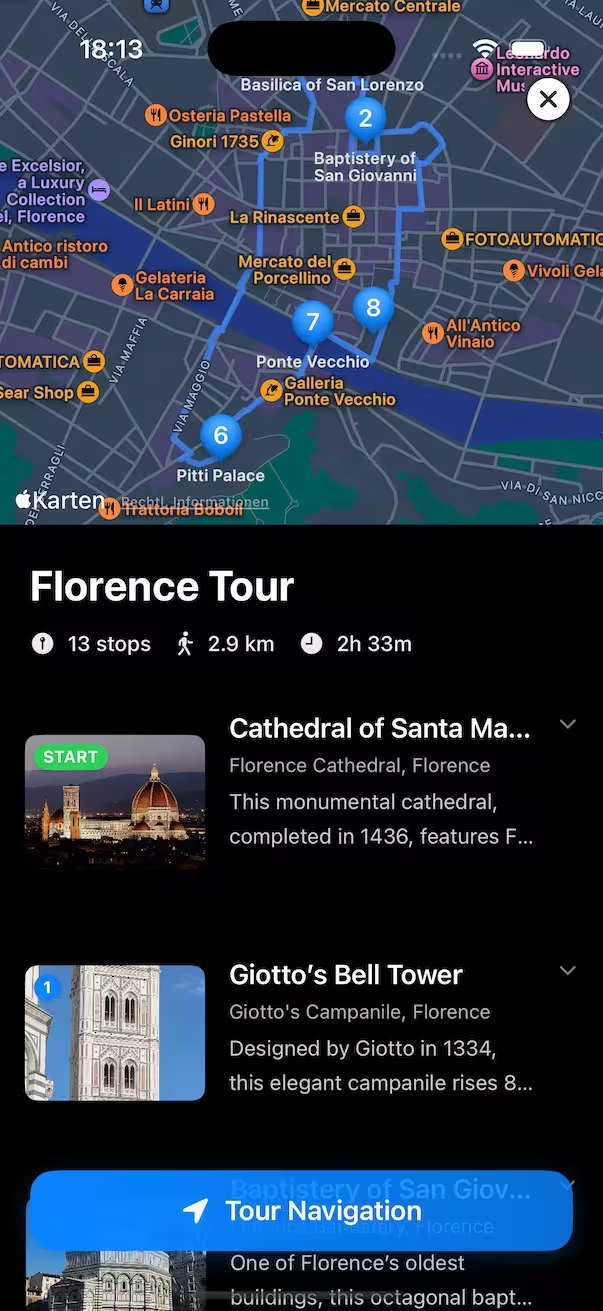
The classic Ghent tour: 9 stops, 1.8 km, about 2 h on foot
Your live AI guide and the self-guided Ghent route, together in your browser.