Best Time to Visit Ho Chi Minh City
Month-by-month weather, crowds and prices, plus a full calendar of festivals and events worth planning a trip around.
Best monthsDec, Jan, Mar
CheapestSep, Oct
AvoidSep, Oct
BusiestJan, Feb

When is the best time to visit Ho Chi Minh City?
Come December to March. This is the dry season: 28-32°C, low 65-70% humidity, almost no rain, and the city's biggest festivals (Ao Dai in March, the River Festival in April) clustered at the end of it. January is the easiest month for a first visit. Steer around the Tet closure days (around 17-22 February in 2026), when small restaurants shut and five million residents leave the city, and around September and October, when rainfall peaks past 300mm and low streets flood daily. Budget travellers can flip the wet season to their advantage: September hotel rates fall to about 28 USD a night and the queues at the War Remnants Museum vanish.
Start our tool and find your best time to visit Ho Chi Minh City
Your perfect month
Free · ~30 seconds
or tap a month directly
What matters to you?
And this?
Best overall: Dec, Jan, Mar. December to March is the clear winner. You get dry-season comfort at 28-32°C, low humidity, no meaningful rain, the full tourism and restaurant machine running, and the year's biggest cultural festivals stacked up. January is the smoothest month for a first trip; March adds the month-long Ao Dai Festival that turns Nguyen Hue photogenic.
Best value: Sep, Oct. September and October give you the best price-to-experience ratio if you can handle afternoon rain. Hotels sit at 28-55 USD a night, the museums are empty, and the rain pattern is blue-sky mornings then a heavy 30-90 minute downpour around 2-5PM. Sightsee in the morning, take shelter at lunch, and you save a third on the dry-season rates.
Avoid: Sep, Oct. September and October bring the heaviest rainfall of the year and daily flooding in low-lying districts, so skip them if walking the city is the point of the trip. Separately, avoid roughly 17-22 February (Tet) for normal tourism: most small restaurants and shops close and the city feels abandoned, though that emptiness is itself a draw for some.
- January: Tough month, 32°C. The best all-round month for a first trip: warm but not punishing, dry, and buzzing. Sunrise around 5:30AM and golden colonial light on Dong Khoi at 5:30-6:15PM. The catch is price and demand, so book your central hotel and the A O Show well ahead.
- February: Tough month, 33°C. A month of extremes. For normal tourism, avoid 10-17 February when the city is mobbed and transport is chaotic. But arriving 17-19 February gives you something unique: eerily empty streets, fireworks, and the rare sight of a megacity at rest. Just know that most small restaurants and shops are shut 17-22 February.
- March: Tough month, 34°C. The sweet spot for romance and street photography: dry, festive, and not yet brutally hot. The whole city turns photogenic during the Ao Dai Festival, and the soft evening light on the Dong Khoi colonial facades is at its best. Shoulder prices make it good value too.
- April: Tough month, 34°C. Hot, busy and festive. If you can handle the midday heat (sunscreen, hat and water from 9AM are essential), April rewards you with the year's richest events calendar. Reunification Day at Independence Palace is the single best day to see the palace. Pair the River Festival with a Mekong Delta day trip.
- May: Tough month, 33°C. Underrated. The rain is short and dramatic, not an all-day grey, and the streets flood briefly then clear. Crowds are gone, prices are low, and the Mekong Delta is turning lush green, arguably its best season for a day trip. Carry an umbrella and waterproof shoes rather than a heavy rain jacket.
- June: Tough month, 31°C. Quiet and cheap, with the same reliable rhythm: dry mornings for sightseeing, a downpour around 2-5PM, then it clears. The humidity makes 31°C feel hotter, so pace yourself and use the rain as a museum cue. Indoor sights and the Mekong green season are the wins this month.
- July: Tough month, 31°C. Low season with frequent but brief rain. The mornings are reliably workable for sightseeing before the clouds build. Families on summer break find good value and thin crowds; just plan indoor options for the afternoon downpour and accept the sticky humidity.
- August: Tough month, 31°C. A quieter month with two events that can lift it. The wet-season rhythm continues, so morning sightseeing and indoor afternoons are the play. Leisure travellers on a budget should dodge the ITE weekend (27-29 August) when business hotels jump; everyone else can enjoy low rates and one of Southeast Asia's most visible Pride events.
- September: Good time, 30°C. Cheapest and quietest, but genuinely wet. Mornings are workable, then heavy afternoon rain and the odd flooded street. If your budget is tight and you can shape your day around the rain, the rewards are real: empty museums, rock-bottom rooms, and Cholon's lantern spectacle. Otherwise this is a month to plan around.
- October: Good time, 30°C. The deepest of the low season: cheap, empty, and damp. Street flooding is common in low-lying districts, so this is one for budget travellers and Mekong enthusiasts rather than first-timers chasing dry-city walks. The queues at the War Remnants Museum are the shortest you will ever see them.
- November: Tough month, 30°C. One of the best-kept secrets in the calendar: weather improving toward dry, crowds still thin, and prices below the December-January peak. Late November in particular gives you dry colonial-quarter walks on Dong Khoi with a romantic, uncrowded feel. A smart family or couple's choice.
- December: Tough month, 31°C. Festive, dry and lively, with the year ending on a high. The weather is back to comfortable, the city is decorated, and the free outdoor Countdown is the best New Year's Eve party in Southeast Asia for budget travellers. The trade is rising prices and the marathon road closures on 6 December, so plan District 1 movement around them.
Ho Chi Minh City weather by month
HighLowRainfall
Jan32°
Feb33°
Mar34°
Apr34°
May33°
Jun31°
Jul31°
Aug31°
Sep30°
Oct30°
Nov30°
Dec31°
| Month | Temp | Rain | Sun | Crowds | Prices | Highlight |
|---|---|---|---|---|---|---|
| Jan | 32° / 23° | 29mm · 4 rainy days | 10.4 h/day | ●●●●○ | ●●●●○ | |
| Feb | 33° / 23° | 13mm · 2 rainy days | 11.3 h/day | ●●●●● | ●●●●● | Tet, Lunar New Year (Year of the Horse) |
| Mar | 34° / 24° | 16mm · 4 rainy days | 11.7 h/day | ●●●●○ | ●●●●○ | Ho Chi Minh City Ao Dai Festival |
| Apr | 34° / 26° | 84mm · 13 rainy days | 11.5 h/day | ●●●●○ | ●●●●○ | Ho Chi Minh City Tourism Festival |
| May | 33° / 26° | 211mm · 24 rainy days | 10.1 h/day | ●●○○○ | ●●○○○ | International Labour Day |
| Jun | 31° / 25° | 254mm · 27 rainy days | 9.1 h/day | ●●○○○ | ●●○○○ | |
| Jul | 31° / 25° | 291mm · 29 rainy days | 8.5 h/day | ●●○○○ | ●●○○○ | |
| Aug | 31° / 25° | 289mm · 29 rainy days | 9.2 h/day | ●●●○○ | ●●●○○ | VietPride / Rainbow Walk Saigon |
| Sep | 30° / 25° | 327mm · 29 rainy days | 8.4 h/day | ●●○○○ | ●●○○○ | National Day (Independence Day) |
| Oct | 30° / 24° | 298mm · 27 rainy days | 8.2 h/day | ●●○○○ | ●●○○○ | |
| Nov | 30° / 24° | 152mm · 19 rainy days | 9.2 h/day | ●●●○○ | ●●●○○ | |
| Dec | 31° / 23° | 59mm · 10 rainy days | 9.6 h/day | ●●●●○ | ●●●●○ | Tourism Week and Techcombank Marathon |
How we score this: weather = long-run climate normals (Open-Meteo), crowds & prices = relative season read, events checked yearly against official dates.
Best time to visit Ho Chi Minh City: weather, prices & crowds
Best months for good weather
Dec, Jan, Feb
December to February is the kindest stretch for walking: 28-30°C by day, humidity down at 66-70%, a light breeze, and rainfall under 60mm a month. March is still dry but the heat starts climbing toward 34°C, and by April the midday sun between 11AM and 3PM turns punishing.
Quietest months to avoid the crowds
Jun, Sep, Oct
June, September and October are the quietest. Domestic summer travel scatters to beach resorts, foreign numbers stay low, and indoor sights like the War Remnants Museum and Independence Palace are close to queue-free. The trade is the wet-season rain, which falls in short afternoon bursts rather than all day.
Cheapest time to visit Ho Chi Minh City
Sep, Oct
September and October are the annual price floor: three-star central hotels drop to around 28-55 USD a night, roughly 20-30% below the dry-season peak, and same-day rooms are easy to find. Free or near-free sights (the Central Post Office, Nguyen Hue, Notre-Dame exterior) cost nothing whatever the season.
Best time for festivals and events
Feb, Sep, Dec
Time it to a one-off spectacle. Tet around 17 February empties the streets into an eerie calm broken by midnight fireworks at Nguyen Hue and Phu My Bridge. Mid-Autumn Festival on 25 September lights up Cholon's lantern street. The New Year Countdown on Nguyen Hue from 27-31 December is Southeast Asia's best free outdoor party.
How many days do you need in Ho Chi Minh City?
Two days is the right call for Ho Chi Minh City. The central District 1 sights cluster within easy walking distance, so one day captures the colonial core and the history, but a second gives you room for the markets, Cholon, and the city's relentless energy after dark.

One day
Colonial core and the war
Start at Independence Palace at 7:30AM before the coaches arrive, then walk north to the War Remnants Museum, which opens at the same hour and is most powerful before the midday heat. Loop back along Dong Khoi to the Saigon Central Post Office and the Notre-Dame Cathedral Basilica, pause at the Saigon Opera House, then end the afternoon on Nguyen Hue Walking Street. The self-guided Ho Chi Minh City walking tour connects all 9 stops over 4.9 km in about 2.3 hours, an ideal spine for this first day. December through March keeps things driest and most comfortable underfoot.
Two daysRecommended
Markets, Cholon, and the night scene
Spend the morning in Ben Thanh Market, then take a Grab west to Cholon for hu tieu Nam Vang and dim sum at the Binh Tay Market stalls before the coaches arrive by 9:30AM. Visit Thien Hau Temple and the Museum of Fine Arts on the way back. After dark, the outdoor stalls on the Ben Thanh perimeter run until midnight, and a can of 333 in a District 3 bia hoi stall costs VND 12,000 to 15,000.
Three days
Cu Chi Tunnels and a river afternoon
Take a morning trip to the Cu Chi Tunnels on a weekday, first entry at 7AM, to beat the heat and the weekend coach groups. The Ben Dinh site is less crowded than Ben Duoc. Back in the city by midday, spend the afternoon on the Saigon River: the Nha Rong Wharf area and a sunset cruise give the city a completely different perspective. Book the A O Show at the Municipal Theatre for 6PM or 8PM at least two weeks ahead in high season.
Four days or more
Mekong Delta and a day beyond the city
With a fourth day, add a Mekong Delta overnight trip while the waterways are at their most photogenic: lush green in May and June, highest water levels in October. The delta towns of My Tho, Ben Tre and Can Tho are each two to four hours by road from District 1. For a full city-plus-coast extension, Vung Tau is 90 minutes by high-speed ferry for calm, clear swimming, at its best from December to February.
Best time to visit Ho Chi Minh City by traveller type
Same city, different trip. Here's the month that fits how you're travelling.
🧭
Best time to visit Ho Chi Minh City for the first time
DecJan
December and January are the safe answer: dry, 28-30°C, low humidity comfortable for walking, the Tet flower market building on Nguyen Hue, and the full tourist infrastructure at capacity. Skip the Tet closure days themselves (around 17-22 February) unless you specifically want the ghost-city atmosphere.
❤️
Best time to visit Ho Chi Minh City for couples
MarNov
March is the sweet spot: dry season still in full swing, the Ao Dai Festival turning the city photogenic all month, heat not yet brutal, and shoulder prices at 55-85 USD a night. Evening walks on Nguyen Hue with the soft 5:30-6:15PM light hitting the Dong Khoi colonial facades. Late November is the romantic alternative, thinner crowds and improving weather.
💶
Best time to visit Ho Chi Minh City on a budget
SepOct
September and October are the cheapest weeks of the year: 28-55 USD a night for a three-star room in District 1, and the War Remnants Museum, Independence Palace, Central Post Office and Nguyen Hue all free or under 3 USD. Rain is afternoon-only, so morning sightseeing is fine, and Mid-Autumn Festival on 25 September in Cholon is free and unmissable.
🍝
Best time to visit Ho Chi Minh City for food and wine
AprMay
April and May concentrate the street-food scene: the Tourism Festival (2-5 April) and the River Festival's food week pull regional cooking into one place, and late April is peak mango, rambutan and dragon fruit season in the surrounding provinces. Year-round, Cholon for banh mi, hu tieu Nam Vang and dim sum is best on weekday mornings from 7-10AM before the coaches arrive.
Worst time to visit Ho Chi Minh City
September and October are the months to avoid if walking the city is the point of the trip. Rainfall peaks at 327mm in September and 298mm in October, humidity sits at 86%, and the low streets around District 4 and Ben Thanh flood after the daily afternoon downpour. Extended outdoor sightseeing becomes genuinely unpleasant for much of the day. The second window to plan around is the Tet closure, roughly 17 to 22 February, when small restaurants, street stalls and many shops shut for five to seven days and around five million residents leave the city.
Still worth it for Budget travellers can turn both periods to their advantage: September hotel rates fall to around 28 USD a night and the queues at the War Remnants Museum vanish, while the Tet closure brings rock-bottom prices and the eerie spectacle of a megacity at rest.
Go instead in December, January, March, when Ho Chi Minh City is at its best.
Best time for a tour of Ho Chi Minh City
Saigon never gets cold, so the question is heat and rain, not warmth. The dry season from December to March is the obvious window to walk this 4.9 km loop: highs sit around 31 to 32 °C with only two to four rainy days a month, and the air stays clear enough that the open plaza in front of Notre-Dame Cathedral Basilica and the long forecourt of Independence Palace are bearable rather than punishing. March creeps up to 34 °C, the hardest stretch for a midday walk with little shade between the Saigon Central Post Office and Ben Thanh Market. Then the monsoon arrives: from May through October you face 24 to 29 rain days a month, and the daily pattern is a sticky, gluey morning that breaks into a heavy afternoon downpour, so the walk is doable only if you start early and duck the 3 pm cloudburst. January and February are the most pleasant on foot but also the most packed, with crowds peaking in February.
That morning-versus-monsoon trade-off is exactly where setting your own clock matters. With AI Tourguide there is no fixed departure time and no operator's schedule to obey: a voice-first guide leads the whole way, telling the story of each stop, asking what you want to linger on, and adapting the route to your pace, all of it running in your browser with nothing to download. So on a humid June day you start your Ho Chi Minh City tour at first light, cover Dong Khoi Street and the Saigon Opera House while the pavement is still cool, and be sipping iced coffee long before the afternoon rain rolls in.


 +5
+5All 9 stops are already on the map.
You just press start.
You just press start.
 AI Tourguide
You just read the route.
Now walk it with a guide in your ear.
Press start wherever you are, even hundreds of kilometres from Ho Chi Minh City, and the guide begins telling its stories right away. In the city, pick any of the 9 stops to start from: it leads you there, then talks with you the whole route, asking, listening, remembering, and shaping the tour around your answers.
9stops4.9km2.3hours11languages
▶Start the tour freeFree to start · Runs in your browser · No app, no download
Ho Chi Minh City events and festivals calendar
Annual highlights worth timing a trip around, listed month by month.
February
🇮 HolidayTet, Lunar New Year (Year of the Horse) Tết Nguyên Đán
Feb 14–22 ~
A nine-day official holiday tied to the lunar calendar, falling anywhere from late January to mid-February. New Year's Day shifts each year with the lunar cycle, with the holiday block typically running for nine days around it.
Vietnam's biggest celebration.
March
🎨 Art and cultureHo Chi Minh City Ao Dai Festival Lễ hội Áo dài Thành phố Hồ Chí Minh
Mar 1–31
Runs the full month of March, with the peak week 2-8 March. The 12th edition carries the theme Golden Threads, Weaving Aspirations.
A citywide celebration of the traditional Vietnamese dress: ao dai parades and fashion shows on Nguyen Hue, themed tours, the Hai Ba Trung commemoration, and an ao dai contest final.
🎉 FestivalVietnam-Japan Festival Lễ hội Việt-Nhật
Mar 7–8
A two-day event on 7-8 March, running concurrently with the Ao Dai Festival. The 11th edition's theme is Holding Hands Together.
A two-day cultural exchange at 23/9 Park: Japanese food, music and martial arts alongside Vietnamese cultural performances.
April
🌸 Seasonal natureHo Chi Minh City River Festival Lễ hội Sông nước Thành phố Hồ Chí Minh
Apr 1–30
Runs the full month of April, with the main events around 10-12 April. An annual celebration of Saigon's waterways.
A month-long celebration of Saigon's waterways: an opening ceremony with fireworks, carnival parades, water sports, a river food week, and immersive exhibitions at Nha Rong, Khanh Hoi, Binh Dong Wharf and Saigon Riverfront Park.
🎉 FestivalHo Chi Minh City Tourism Festival Ngày hội Du lịch Thành phố Hồ Chí Minh
Apr 2–5
Four days in early April (2-5 April), the 22nd edition, held at 23/9 Park.
Over 150 tourism and culinary booths from 34 provinces at 23/9 Park, with airlines, hotels and travel agencies offering discounts up to 50%, plus cultural performances.
🇮 HolidayHung Kings Commemoration Day Giỗ Tổ Hùng Vương
Apr 26–27 ~
The 10th day of the 3rd lunar month, which falls on a different Gregorian date each year, usually in April. When the date lands on a Sunday, a compensatory Monday is added, creating a two-day block that often merges with the Reunification Day long weekend.
A public holiday honouring the legendary founders of Vietnam.
🇮 HolidayReunification Day Ngày Thống nhất
Apr 30
Fixed on 30 April every year, commemorating the fall of Saigon in 1975. Cultural events run citywide from 26 April to 1 May.
Commemorates the fall of Saigon on 30 April 1975 with parades, military displays, fireworks at 9PM, and an art performance on Nguyen Hue at 7:30PM.
May
🇮 HolidayInternational Labour Day Ngày Quốc tế Lao động
May 1
Fixed on 1 May, combining with Reunification Day to create a four-day weekend.
A public holiday that, combined with 30 April, forms a four-day break.
August
🏳️🌈 PrideVietPride / Rainbow Walk Saigon VietPride Sài Gòn
Aug 1–31 ~
An annual August or early-September window; the exact date varies each year, so check vietpride.vn closer to the time.
Vietnam's annual LGBTQ+ celebration.
🎉 FestivalITE HCMC, International Travel Expo Hội chợ Du lịch Quốc tế Thành phố Hồ Chí Minh
Aug 27–29
Three days in late August (27-29 August), the 20th edition, at the SECC. Theme: Vibrant Connections, Global Destinations.
Asia's largest travel trade fair, with 520+ exhibitors, 260 international buyers from 32 countries and 28,000+ visitors at the SECC.
September
🇮 HolidayNational Day (Independence Day) Ngày Quốc khánh
Sep 1–2
A two-day public holiday on 1-2 September, stretching to a five-day break with the weekend.
Commemorates Ho Chi Minh's 1945 declaration of independence, with parades, flag ceremonies, and special exhibitions at some museums and government buildings.
🌸 Seasonal natureMid-Autumn Festival Tết Trung Thu
Sep 25 ~
The full moon of the 8th lunar month, which falls in September or early October depending on the year. Best experienced two to five days before the main date, when the lantern market sets up on Luong Nhu Hoc Street in Cholon.
Vietnam's Children's Festival: lion dances, lantern processions and mooncake stalls.
December
🏃 SportTourism Week and Techcombank Marathon Tuần lễ Du lịch TP.HCM, Giải Marathon Techcombank
Dec 4–12
Tourism Week runs 4-12 December; the marathon race day is Sunday 6 December (9th edition).
A combined week of tourism promotions, music and the city's flagship international marathon.
⛪ ReligiousChristmas at Notre-Dame Cathedral Lễ Giáng Sinh tại Nhà thờ Đức Bà Sài Gòn
Dec 24–25
Christmas Eve and Day, 24-25 December, with midnight mass on 24 December.
The Vietnamese Catholic community and large crowds of secular visitors gather outside Saigon Notre-Dame Basilica for midnight mass.
🎉 FestivalNew Year's Eve Countdown Countdown Chào Năm Mới
Dec 27–31
A five-day festival 27-31 December, with the main show on 31 December from 7PM to midnight.
A five-day outdoor festival on Nguyen Hue Walking Street spilling onto Le Loi Street and Lam Son Park: a main stage from Ton Duc Thang to Mac Thi Buoi, 7 LED screens, top Vietnamese artists, and six fireworks sites at midnight including the Saigon River tunnel entrance.
Insider tips for visiting Ho Chi Minh City
The rules buried in forums, in one place.
- Hit the War Remnants Museum at 7:30AM when it opens, not on a Saturday afternoon. Saturday 2-5PM is when Vietnamese school groups and weekend visitors peak. The queue forms fast but moves quickly, and the courtyard aircraft sit in morning shade. It runs 7:30AM-5:30PM daily with last entry at 5PM.
- Open the Grab or Be app before the rain hits, not after. Fares surge 3-4x during tropical downpours. Pre-book a car (not a bike) ten minutes before any afternoon museum closing time, when every tourist rushes out at once and demand spikes.
- Walk the Tet flower market on Nguyen Hue free between 6 and 15 February. On the final day, 15 February, unsold ochna (hoa mai) trees are given away at midnight, a fun local tradition, but the crowd is enormous, so go earlier in the run for the photos.
- Do Cu Chi Tunnels on a Tuesday or Wednesday morning, first entry 7AM. Weekends fill with Vietnamese school and family groups, and coach tours from District 1 hotels arrive by 9:30AM. The Ben Dinh site (closer, smaller) is less crowded than Ben Duoc on weekdays. Entry is VND 110,000.
- If you only see Independence Palace once, make it 30 April. On Reunification Day the palace shows its full historical context, rooftop access is often extended, and period vehicles may be displayed near the gates. Entry stays VND 65,000. It opens daily 7AM-6PM, with last guided-group entry at 11AM and 4PM.
- Visit Cholon's Thien Hau Temple on the lunar 1st or 15th of the month, when incense smoke fills every courtyard and the devotional atmosphere peaks. The temple opens daily 6AM-5:30PM and is free. Mid-Autumn Festival on 25 September is the absolute high point of the year there.
- Photograph Nguyen Hue Walking Street before 8AM. By 9AM it fills with selfie-stick vendors and tour groups. The scale model of the People's Committee Hall photographs cleanly without tourists in frame before 7:30AM.
- Book the A O Show at the Municipal Theatre two or more weeks ahead for December and January, when it sells out in peak season. Show times are 6PM and 8PM, tickets roughly 30-60 USD. The bamboo-acrobatics show is the city's standout evening ticket.
- Go up the Saigon Skydeck at Landmark 81 between 8 and 9AM, before the tropical haze thickens by early afternoon. Morning visits also dodge the lunch rush. Entry is VND 250,000.
- Avoid the Bui Vien backpacker strip for drinks: it inflates prices for foreigners 5-10x. One street over on De Tham, or at a local District 3 bia hoi stall, a can of 333 or Saigon Green runs VND 12,000-15,000.
Public holidays in Ho Chi Minh City
On these dates many shops and offices close, transport thins out, and sights can be mobbed or shut. Plan around them.
| Date | Holiday | What closes |
|---|---|---|
| Jan 1 | New Year's Day | Government offices and banks close, but tourist attractions, Ben Thanh Market and restaurants all stay open. Effectively a normal sightseeing day for visitors. |
| Feb 17 | Tet (Lunar New Year, Year of the Horse) | The most severe closure of the year. Official nine-day holiday 14-22 February, New Year's Day on 17 February. Small restaurants, street stalls and local shops close 17-22 February, many for five to seven days. Supermarkets, 7-Eleven and hotel restaurants stay open. War Remnants Museum and Independence Palace run reduced hours or close 17-19 February. Taxis and Grab work but surge in price; long-distance buses sell out from 10 February. The city feels abandoned on 17-18 February as around five million residents return to home provinces. Midnight fireworks 16-17 February at Nguyen Hue and Phu My Bridge. |
| Apr 26 | Hung Kings Commemoration Day | Public holiday on the 10th day of the 3rd lunar month, with a compensatory day on 27 April since 26 April falls on a Sunday. Banks close 26-27 April. The three-day block triggers a domestic travel surge and heavy road and coach congestion leaving the city. |
| Apr 30 | Reunification Day | National holiday marking the fall of Saigon in 1975. Independence Palace is open and at its most atmospheric. Nguyen Hue Walking Street closes to traffic 6PM-10PM on 29 and 30 April, with fireworks at 9PM on 30 April. Some museums run altered hours. Avoid driving in District 1 and book dinners early. |
| May 1 | International Labour Day | National holiday that combines with Reunification Day into a four-day break (29 April to 1 May plus the weekend). Most Vietnamese head to beach resorts, leaving the city surprisingly quiet, which can mean hotel bargains in District 1 itself. |
| Sep 2 | National Day (Independence Day) | Two-day public holiday (1-2 September) marking Ho Chi Minh's 1945 declaration, stretching to a five-day break with the weekend. Parades and flag ceremonies; museums stay open, government buildings close, and many residents travel out so city hotels often run emptier. |
| Dec 24 | Christmas Eve at Notre-Dame Cathedral | Not a public holiday, but a major night out. The large Catholic community and crowds of secular visitors gather outside Saigon Notre-Dame Basilica for midnight mass on 24 December; Dong Khoi and Nguyen Hue are pedestrianised and strung with lights. Arrive by 9PM for a spot near the cathedral; ongoing renovation may partly obscure the facade. |
Ho Chi Minh City month by month
January in Ho Chi Minh City
High32°C / 89°F
Low23°C
Rain29mm / 4 rainy days
Sun10.4 h/day
Daylight12 h/day
Humidity70%
Crowds●●●●○Prices●●●●○
January is peak dry season and the easiest month to visit. Daytime highs sit at a comfortable 31.5°C with humidity down at 70% and just 29mm of rain across four days, so walking the city is genuinely pleasant. The Christmas and New Year holiday overhang keeps Western visitor numbers high, and the Tet flower preparations start building toward the end of the month. This is the city at full tourist capacity, every sight open and the restaurant scene firing.
The vibe The best all-round month for a first trip: warm but not punishing, dry, and buzzing. Sunrise around 5:30AM and golden colonial light on Dong Khoi at 5:30-6:15PM. The catch is price and demand, so book your central hotel and the A O Show well ahead.
Don't miss Walk Nguyen Hue before 8AM for clean photos of the People's Committee Hall, then catch the A O Show at the Municipal Theatre in the evening. Day trips to Vung Tau for calm, clear sea swimming are at their best now.
Crowd drivers Peak dry season plus the Western Christmas and New Year holiday overhang; the highest foreign visitor volume of the year.
In season Dry-season weather keeps Ben Thanh Market's outdoor perimeter food stalls busy until midnight. Cholon's banh mi and hu tieu Nam Vang are best on weekday mornings before the coaches arrive.
Three-star central hotels run 55-90 USD a night, the busiest month for Western long-haul tourists; book central rooms six weeks ahead.
February in Ho Chi Minh City
High33°C / 91°F
Low23°C
Rain13mm / 2 rainy days
Sun11.3 h/day
Daylight12 h/day
Humidity66%
Crowds●●●●●Prices●●●●●
February is dominated by Tet, the Lunar New Year. The month splits in two: a frantic pre-Tet surge with the highest hotel prices and enormous domestic movement, then from around 17 February the city empties as roughly five million residents head to their home provinces. Weather is superb, 32.9°C, just 13mm of rain and 66% humidity, the driest month of the year. The ochna flower market on Nguyen Hue runs 6-15 February, and midnight fireworks light Nguyen Hue and Phu My Bridge on 16-17 February.
The vibe A month of extremes. For normal tourism, avoid 10-17 February when the city is mobbed and transport is chaotic. But arriving 17-19 February gives you something unique: eerily empty streets, fireworks, and the rare sight of a megacity at rest. Just know that most small restaurants and shops are shut 17-22 February.
Don't miss Walk the free ochna (hoa mai) flower market on Nguyen Hue between 6 and 15 February; on the final night unsold trees are given away at midnight. Catch the midnight Tet Eve fireworks from the Saigon River on 16-17 February.
Crowd drivers Tet is the dominant event of the year; pre-Tet sees the heaviest domestic travel and the year's highest prices, then the city deserts during the holiday itself.
In season Tricky for eating out: small restaurants and street stalls close 17-22 February. Supermarkets, 7-Eleven and hotel restaurants stay open, so plan around the closures or lean on the bigger venues.
Pre-Tet week (10-16 February) is the year's price peak at 70-120 USD a night, then rates crash to 35-55 USD during the Tet closure (17-22 February) when the city empties.
Events this month
🇮 HolidayTet, Lunar New Year (Year of the Horse) Tết Nguyên Đán
Feb 14–22 ~
A nine-day official holiday tied to the lunar calendar, falling anywhere from late January to mid-February. New Year's Day shifts each year with the lunar cycle, with the holiday block typically running for nine days around it.
Vietnam's biggest celebration. The Nguyen Hue flower street, midnight fireworks from the Saigon River, and ochna blossom (hoa mai) decorations citywide. Tet Eve fireworks on 16 February light up Nguyen Hue and Phu My Bridge.
Avoid 10-17 February for normal tourism, the city is mobbed, transport chaotic and prices at their yearly highest. Arrive 17-19 February instead to witness the unique empty streets and the fireworks, but note most restaurants and shops close 17-22 February.
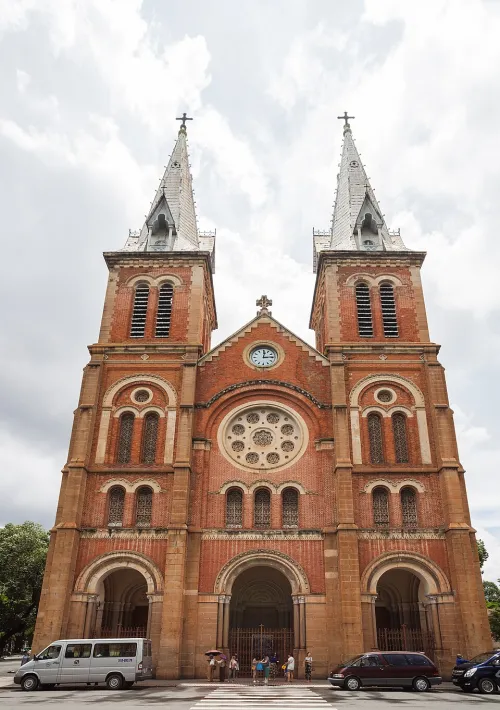
March in Ho Chi Minh City
High34°C / 94°F
Low24°C
Rain16mm / 4 rainy days
Sun11.7 h/day
Daylight12 h/day
Humidity66%
Crowds●●●●○Prices●●●●○
March is the photographer's and couple's month. Still firmly dry season at 34.3°C with just 16mm of rain, it carries the month-long Ao Dai Festival (1-31 March), which fills Nguyen Hue with parades and fashion shows celebrating the traditional Vietnamese dress. European spring-break visitors arrive, but the post-Tet crowds have thinned. The heat is starting to build toward its April peak, so the 11AM-3PM stretch is best spent in museum interiors.
The vibe The sweet spot for romance and street photography: dry, festive, and not yet brutally hot. The whole city turns photogenic during the Ao Dai Festival, and the soft evening light on the Dong Khoi colonial facades is at its best. Shoulder prices make it good value too.
Don't miss Watch the ao dai parades and fashion shows on Nguyen Hue, peaking in the first week (2-8 March). The Vietnam-Japan Festival at 23/9 Park (7-8 March) is a free cultural bonus running alongside.
Crowd drivers Still dry season with European spring-break visitors; the Ao Dai Festival adds cultural buzz all month, but volumes stay below January's peak.
In season Dry-season comfort keeps the Ben Thanh perimeter stalls open late. A good month for Cholon's weekday-morning dim sum runs before the coaches arrive.
Three-star central hotels run 55-85 USD a night, comfortable shoulder pricing as the post-Tet surge fades.
Events this month
🎨 Art and cultureHo Chi Minh City Ao Dai Festival Lễ hội Áo dài Thành phố Hồ Chí Minh
Mar 1–31
Runs the full month of March, with the peak week 2-8 March. The 12th edition carries the theme Golden Threads, Weaving Aspirations.
A citywide celebration of the traditional Vietnamese dress: ao dai parades and fashion shows on Nguyen Hue, themed tours, the Hai Ba Trung commemoration, and an ao dai contest final.
The best cultural window of the year paired with dry-season weather. The streets stay photogenic all month, making March a top pick for couples and photographers.
🎉 FestivalVietnam-Japan Festival Lễ hội Việt-Nhật
Mar 7–8
A two-day event on 7-8 March, running concurrently with the Ao Dai Festival. The 11th edition's theme is Holding Hands Together.
A two-day cultural exchange at 23/9 Park: Japanese food, music and martial arts alongside Vietnamese cultural performances.
A pleasant, free bonus during the Ao Dai Festival week. Worth dropping by if you are in town in early March.
April in Ho Chi Minh City
High34°C / 93°F
Low26°C
Rain84mm / 13 rainy days
Sun11.5 h/day
Daylight12 h/day
Humidity73%
Crowds●●●●○Prices●●●●○
April is the hottest and most event-packed month. Highs hit 33.9°C, the heat peaks toward 35°C by noon, and the first wet-season showers begin appearing (84mm over 13 days). It is also the festival climax: the Tourism Festival (2-5 April), the month-long River Festival, the Hung Kings holiday (26-27 April) and Reunification Day (30 April) with its 9PM fireworks. Domestic travel surges hard around the late-April long weekend.
The vibe Hot, busy and festive. If you can handle the midday heat (sunscreen, hat and water from 9AM are essential), April rewards you with the year's richest events calendar. Reunification Day at Independence Palace is the single best day to see the palace. Pair the River Festival with a Mekong Delta day trip.
Don't miss Visit Independence Palace on 30 April for its full historical context and tanks at the gate (entry VND 65,000). The River Festival's water sports and food week run along the Saigon waterfront, and late April is peak mango and rambutan season in the provinces.
Crowd drivers Reunification Day and the Hung Kings holiday create back-to-back long weekends and a major domestic travel surge; the Tourism and River festivals draw crowds all month.
In season The best foodie window of the year: the Tourism Festival and the River Festival food week concentrate regional street food in one place, and tropical fruit hits its provincial peak.
Three-star central hotels run 55-85 USD a night, spiking to 80-110 USD over the 29 April to 1 May long weekend.
Events this month
🎉 FestivalHo Chi Minh City Tourism Festival Ngày hội Du lịch Thành phố Hồ Chí Minh
Apr 2–5
Four days in early April (2-5 April), the 22nd edition, held at 23/9 Park.
Over 150 tourism and culinary booths from 34 provinces at 23/9 Park, with airlines, hotels and travel agencies offering discounts up to 50%, plus cultural performances.
A good budget-travel entry point: package deals and flight discounts are sold on-site. Time a foodie trip around it to graze regional cooking in one place.
🌸 Seasonal natureHo Chi Minh City River Festival Lễ hội Sông nước Thành phố Hồ Chí Minh
Apr 1–30
Runs the full month of April, with the main events around 10-12 April. An annual celebration of Saigon's waterways.
A month-long celebration of Saigon's waterways: an opening ceremony with fireworks, carnival parades, water sports, a river food week, and immersive exhibitions at Nha Rong, Khanh Hoi, Binh Dong Wharf and Saigon Riverfront Park.
The only river-focused festival of the year, and it pairs perfectly with a Mekong Delta day trip in April. The food week is a highlight for visiting foodies.
🇮 HolidayHung Kings Commemoration Day Giỗ Tổ Hùng Vương
Apr 26–27 ~
The 10th day of the 3rd lunar month, which falls on a different Gregorian date each year, usually in April. When the date lands on a Sunday, a compensatory Monday is added, creating a two-day block that often merges with the Reunification Day long weekend.
A public holiday honouring the legendary founders of Vietnam. Many businesses close, and Independence Palace and museums may run reduced hours.
The three-day break (25-27 April) triggers a domestic travel surge, so avoid it for value and expect road and coach congestion leaving the city.
🇮 HolidayReunification Day Ngày Thống nhất
Apr 30
Fixed on 30 April every year, commemorating the fall of Saigon in 1975. Cultural events run citywide from 26 April to 1 May.
Commemorates the fall of Saigon on 30 April 1975 with parades, military displays, fireworks at 9PM, and an art performance on Nguyen Hue at 7:30PM. Nguyen Hue closes to traffic 6PM-10PM on 29-30 April.
Independence Palace is the place to be this day, with tanks at the gate and full historical context. Book dinners early and avoid driving in District 1.
🇮 HolidayInternational Labour Day Ngày Quốc tế Lao động
May 1
Fixed on 1 May, combining with Reunification Day to create a four-day weekend.
A public holiday that, combined with 30 April, forms a four-day break. Businesses close and domestic beach tourism peaks, while the city itself stays fairly quiet as residents leave.
The combined holiday creates hotel bargains in the city itself as locals head to the coast. A quiet, cheaper window if you stay put.
May in Ho Chi Minh City
High33°C / 91°F
Low26°C
Rain211mm / 24 rainy days
Sun10.1 h/day
Daylight13 h/day
Humidity80%
Crowds●●○○○Prices●●○○○
May opens the wet season and the value window. Rainfall jumps to 211mm over 24 days, but the pattern is tropical: blue-sky mornings, clouds building, then a heavy 30-90 minute downpour in the afternoon that clears fast. Highs ease to 32.8°C as the rain cools things down, though humidity climbs to 80%. Domestic visitor numbers fall and prices follow, making this the cheapest dry-feeling month if you sightsee in the morning.
The vibe Underrated. The rain is short and dramatic, not an all-day grey, and the streets flood briefly then clear. Crowds are gone, prices are low, and the Mekong Delta is turning lush green, arguably its best season for a day trip. Carry an umbrella and waterproof shoes rather than a heavy rain jacket.
Don't miss Take a Mekong Delta day or overnight trip while the waterways fill and the paddy fields turn vivid green. The River Festival food culture carries momentum from April into early May.
Crowd drivers Wet season begins and domestic visitors drop sharply; European school terms keep foreign numbers moderate. One of the quieter, cheaper months.
In season April-May is the foodie peak: tropical fruit at its best and the regional street-food scene still concentrated from the spring festivals.
Three-star central hotels drop to 35-60 USD a night as the wet season begins and domestic visitors thin out.

June in Ho Chi Minh City
High31°C / 88°F
Low25°C
Rain254mm / 27 rainy days
Sun9.1 h/day
Daylight13 h/day
Humidity85%
Crowds●●○○○Prices●●○○○
June is mid wet season and one of the cheapest months. Rainfall climbs to 254mm over 27 days, with short daily afternoon downpours, and humidity sits at a heavy 85%. Highs ease to 31.3°C. The Vietnamese school year ends, so domestic summer holidays drive some local movement, but overall foreign visitor pressure stays low and budget accommodation is wide open.
The vibe Quiet and cheap, with the same reliable rhythm: dry mornings for sightseeing, a downpour around 2-5PM, then it clears. The humidity makes 31°C feel hotter, so pace yourself and use the rain as a museum cue. Indoor sights and the Mekong green season are the wins this month.
Don't miss Indoor sights like the War Remnants Museum and Independence Palace are near empty and a smart use of rainy afternoons. The Mekong Delta is at its green-season best for an overnight trip.
Crowd drivers Mid wet season with the Vietnamese school year ending; some Southeast Asian visitors arrive but overall volume stays low.
In season Duck into Cholon for hu tieu Nam Vang and dim sum on weekday mornings; the wet-season afternoons are ideal for long, lazy indoor meals while the rain passes.
Three-star central hotels run 30-55 USD a night, one of the two cheapest months, roughly 20-30% below the dry-season peak with same-day rooms easy to find.

July in Ho Chi Minh City
High31°C / 87°F
Low25°C
Rain291mm / 29 rainy days
Sun8.5 h/day
Daylight13 h/day
Humidity86%
Crowds●●○○○Prices●●○○○
July continues the wet season with 291mm of rain over 29 days and 86% humidity, the rainiest stretch beginning to bite. Highs are at their annual coolest, 30.6°C, thanks to the cloud and rain. Western school holidays bring some families, but the same short-afternoon-shower pattern holds and overall volume stays low. Accommodation is plentiful and cheap.
The vibe Low season with frequent but brief rain. The mornings are reliably workable for sightseeing before the clouds build. Families on summer break find good value and thin crowds; just plan indoor options for the afternoon downpour and accept the sticky humidity.
Don't miss Use the rainy afternoons for the indoor museums and Cholon's covered markets. Morning Cu Chi Tunnels trips (first entry 7AM) beat both the heat and the weekend coach crowds.
Crowd drivers Wet season continues; Western school holidays bring some families, but overall visitor volume stays low.
In season A good month to linger over indoor meals: Cholon's hu tieu and dim sum, or a long lunch while the rain passes. Local bia hoi stalls in District 3 stay cheap and lively.
Three-star central hotels run 30-60 USD a night; budget accommodation is easy to find even as some Western families arrive.

August in Ho Chi Minh City
High31°C / 87°F
Low25°C
Rain289mm / 29 rainy days
Sun9.2 h/day
Daylight12 h/day
Humidity85%
Crowds●●●○○Prices●●●○○
August stays firmly in the wet season, 289mm of rain over 29 days at 85% humidity and a cool-for-here 30.8°C. The standout is ITE HCMC, Asia's largest travel trade fair, at the SECC on 27-29 August, drawing 28,000-plus visitors and spiking business-hotel rates that weekend. VietPride and the Rainbow Walk typically fall in August too, bringing a colourful march along Nguyen Hue.
The vibe A quieter month with two events that can lift it. The wet-season rhythm continues, so morning sightseeing and indoor afternoons are the play. Leisure travellers on a budget should dodge the ITE weekend (27-29 August) when business hotels jump; everyone else can enjoy low rates and one of Southeast Asia's most visible Pride events.
Don't miss Join the VietPride Rainbow Walk along Nguyen Hue if dates align (historically late August). Travel-industry professionals can attend ITE HCMC at the SECC, with public visitor passes available.
Crowd drivers The ITE HCMC travel fair (27-29 August) spikes business-hotel rates that weekend; VietPride adds colour but the rest of the month stays low-season quiet.
In season Wet-season afternoons suit Cholon's indoor markets and long dim sum sessions. Street food stays cheap and abundant outside the festival crowds.
Three-star central hotels run 35-65 USD a night, but business hotels spike 30-40% to 80-120 USD over the ITE travel-fair weekend (27-29 August).
Events this month
🏳️🌈 PrideVietPride / Rainbow Walk Saigon VietPride Sài Gòn
Aug 1–31 ~
An annual August or early-September window; the exact date varies each year, so check vietpride.vn closer to the time.
Vietnam's annual LGBTQ+ celebration. Thousands march on Nguyen Hue Walking Street with rainbow banners and costumes, and ICS Vietnam runs a supporting week of events. It has grown from a few hundred to thousands of participants since 2014.
One of Southeast Asia's most visible Pride events: vibrant, colourful and welcoming. A good reason to time an August trip if dates align.
🎉 FestivalITE HCMC, International Travel Expo Hội chợ Du lịch Quốc tế Thành phố Hồ Chí Minh
Aug 27–29
Three days in late August (27-29 August), the 20th edition, at the SECC. Theme: Vibrant Connections, Global Destinations.
Asia's largest travel trade fair, with 520+ exhibitors, 260 international buyers from 32 countries and 28,000+ visitors at the SECC. B2B accreditation for the trade, plus public visitor passes.
Business-hotel rates spike 30-40% on 27-29 August, so budget leisure travellers should avoid that weekend. Useful for travel-industry professionals.
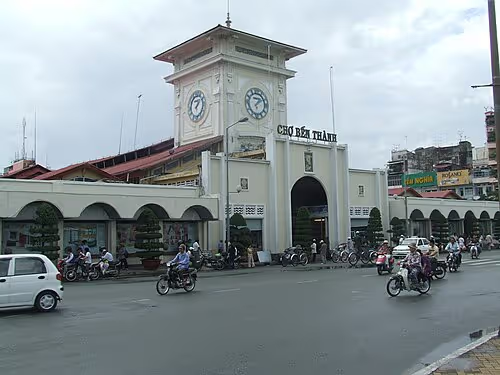
September in Ho Chi Minh City
High30°C / 87°F
Low25°C
Rain327mm / 29 rainy days
Sun8.4 h/day
Daylight12 h/day
Humidity86%
Crowds●●○○○Prices●●○○○
September is the wettest month, 327mm of rain over 29 days at 86% humidity, with occasional flooding on low-lying streets. Highs are 30.5°C. It is the year's price floor and the quietest stretch, which is exactly what budget travellers want. The cultural highlight is Mid-Autumn Festival on 25 September, when Cholon's Luong Nhu Hoc Street becomes the city's lantern street, alive with lion dances and mooncake stalls from 5PM.
The vibe Cheapest and quietest, but genuinely wet. Mornings are workable, then heavy afternoon rain and the odd flooded street. If your budget is tight and you can shape your day around the rain, the rewards are real: empty museums, rock-bottom rooms, and Cholon's lantern spectacle. Otherwise this is a month to plan around.
Don't miss Experience Mid-Autumn Festival on 25 September in Cholon, best 2-5 days before when the market sets up, combined with a Thien Hau Temple visit on 23-25 September. The War Remnants Museum and indoor sights are uncrowded all month.
Crowd drivers Peak rainfall and occasional flooding keep numbers at their annual low; National Day (1-2 September) sends residents out of the city, leaving hotels emptier still.
In season Mooncake stalls take over Cholon ahead of Mid-Autumn. Rainy afternoons are perfect for the district's hu tieu Nam Vang and dim sum on weekday mornings.
The cheapest month of the year: three-star central hotels fall to around 28-55 USD a night, with empty queues at every indoor sight.
Events this month
🇮 HolidayNational Day (Independence Day) Ngày Quốc khánh
Sep 1–2
A two-day public holiday on 1-2 September, stretching to a five-day break with the weekend.
Commemorates Ho Chi Minh's 1945 declaration of independence, with parades, flag ceremonies, and special exhibitions at some museums and government buildings.
The five-day break triggers a domestic travel surge out of the city, so HCMC hotels are often emptier. Museums stay open.
🌸 Seasonal natureMid-Autumn Festival Tết Trung Thu
Sep 25 ~
The full moon of the 8th lunar month, which falls in September or early October depending on the year. Best experienced two to five days before the main date, when the lantern market sets up on Luong Nhu Hoc Street in Cholon.
Vietnam's Children's Festival: lion dances, lantern processions and mooncake stalls. Cholon's Luong Nhu Hoc Street transforms into the city's lantern street, alive with colour and noise from 5PM.
The one night a year when Cholon's Chinese-Vietnamese quarter is fully alive after dark. Combine it with a Thien Hau Temple visit on 23-25 September.
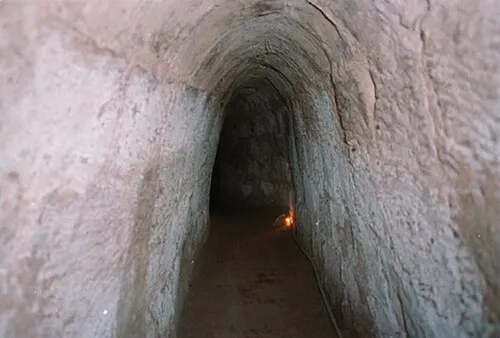
October in Ho Chi Minh City
High30°C / 86°F
Low24°C
Rain298mm / 27 rainy days
Sun8.2 h/day
Daylight12 h/day
Humidity86%
Crowds●●○○○Prices●●○○○
October is the tail end of the wet season and still very wet, 298mm of rain over 27 days at 86% humidity, with heavy rains persisting into the early month and the highest cumulative rainfall totals. Highs are at their annual lowest, 30.2°C. It is the quietest overall and excellent value, with average nightly rates around 35 USD. The Mekong Delta water levels peak now, making for spectacular trips despite the rain.
The vibe The deepest of the low season: cheap, empty, and damp. Street flooding is common in low-lying districts, so this is one for budget travellers and Mekong enthusiasts rather than first-timers chasing dry-city walks. The queues at the War Remnants Museum are the shortest you will ever see them.
Don't miss Take a Mekong Delta trip while water levels peak and the waterways are at their fullest. The War Remnants Museum, Independence Palace and Central Post Office are near deserted, ideal for unhurried indoor days.
Crowd drivers The tail of the wet season with persistent heavy rain keeps numbers at the annual low; the quietest, best-value month overall.
In season A great month for slow, covered meals: Cholon's markets and dim sum, and District 3 bia hoi stalls where 333 stays at VND 12,000-15,000 a can.
Average nightly rates around 35 USD, near the annual floor (28-55 USD for three-star central rooms), with the emptiest queues of the year.

November in Ho Chi Minh City
High30°C / 87°F
Low24°C
Rain152mm / 19 rainy days
Sun9.2 h/day
Daylight12 h/day
Humidity84%
Crowds●●●○○Prices●●●○○
November is the turning point. The wet season ends through the month, rainfall halving to 152mm over 19 days as the weather improves, and by late November the streets are dry again with comfortable 30.5°C walking temperatures. Early European winter-escape travellers begin arriving, lifting numbers off the wet-season floor. It is a quietly excellent shoulder month, especially for families and couples wanting dry weather without January's crowds.
The vibe One of the best-kept secrets in the calendar: weather improving toward dry, crowds still thin, and prices below the December-January peak. Late November in particular gives you dry colonial-quarter walks on Dong Khoi with a romantic, uncrowded feel. A smart family or couple's choice.
Don't miss By late November the streets are reliably dry, ideal for unhurried walks on Dong Khoi and Nguyen Hue, and for Cu Chi Tunnels and Ben Thanh Market without the peak-season crush.
Crowd drivers Transitional shoulder month; the wet season ends and early European winter-escape travellers start arriving, but volumes stay below the dry-season peak.
In season As the rain eases, the Ben Thanh perimeter night-market stalls get livelier again, running until midnight. A good time to start eating outdoors after the wet season.
Three-star central hotels run 40-65 USD a night, a transitional shoulder rate as the dry season approaches.

December in Ho Chi Minh City
High31°C / 87°F
Low23°C
Rain59mm / 10 rainy days
Sun9.6 h/day
Daylight12 h/day
Humidity77%
Crowds●●●●○Prices●●●●○
December resumes the dry season and ramps up the festivities. Rainfall drops to 59mm, humidity falls to 77%, and highs settle at a comfortable 30.6°C, ideal for walking. The month carries the Tourism Week and Techcombank Marathon (4-12 December, race day 6 December), the Christmas crowds at Notre-Dame on 24-25 December, and the New Year Countdown on Nguyen Hue (27-31 December). The marathon closes key District 1 routes 4AM-10AM on 6 December.
The vibe Festive, dry and lively, with the year ending on a high. The weather is back to comfortable, the city is decorated, and the free outdoor Countdown is the best New Year's Eve party in Southeast Asia for budget travellers. The trade is rising prices and the marathon road closures on 6 December, so plan District 1 movement around them.
Don't miss Watch the Techcombank Marathon (6 December) route through Notre-Dame, Independence Palace and Ben Thanh, then gather on Nguyen Hue for the Countdown's fireworks and live acts on 31 December. Christmas Eve at Notre-Dame is extremely photogenic, arrive by 9PM.
Crowd drivers Dry season resumes alongside the Christmas and New Year period; the Tourism Week, marathon and five-day Countdown all draw crowds and lift central-hotel prices.
In season Dry weather brings the Ben Thanh perimeter food stalls back to full late-night life. Book festive-season dinners early, especially around Christmas Eve and New Year's Eve in District 1.
Three-star central hotels run 55-95 USD a night, spiking to 80-130 USD over the New Year Countdown (27-31 December); book District 1 by October.
Events this month
🏃 SportTourism Week and Techcombank Marathon Tuần lễ Du lịch TP.HCM, Giải Marathon Techcombank
Dec 4–12
Tourism Week runs 4-12 December; the marathon race day is Sunday 6 December (9th edition).
A combined week of tourism promotions, music and the city's flagship international marathon. Routes run past Notre-Dame, Independence Palace, Ben Thanh and the Saigon River, with full, half, 10K, 5K and kids categories. Road closures in District 1 from 4AM-10AM on 6 December.
An exciting spectator event, but the road closures affect District 1 transport on the morning of 6 December, so plan movements around them.
⛪ ReligiousChristmas at Notre-Dame Cathedral Lễ Giáng Sinh tại Nhà thờ Đức Bà Sài Gòn
Dec 24–25
Christmas Eve and Day, 24-25 December, with midnight mass on 24 December.
The Vietnamese Catholic community and large crowds of secular visitors gather outside Saigon Notre-Dame Basilica for midnight mass. Dong Khoi and Nguyen Hue are pedestrianised and festooned with lights.
Extremely photogenic given the city's large Catholic minority. Arrive by 9PM on 24 December for a spot near the cathedral, and note renovation work may partly obscure the facade.
🎉 FestivalNew Year's Eve Countdown Countdown Chào Năm Mới
Dec 27–31
A five-day festival 27-31 December, with the main show on 31 December from 7PM to midnight.
A five-day outdoor festival on Nguyen Hue Walking Street spilling onto Le Loi Street and Lam Son Park: a main stage from Ton Duc Thang to Mac Thi Buoi, 7 LED screens, top Vietnamese artists, and six fireworks sites at midnight including the Saigon River tunnel entrance.
The best New Year's Eve party in Southeast Asia for budget travellers: free, outdoors and massive. Book District 1 hotels by October.
Frequently asked questions
What is the best time to visit Ho Chi Minh City?
December to March is the best window. This is the dry season: 28-32°C, low 65-70% humidity, almost no rain, and the full tourism and restaurant scene running. The year's biggest cultural festivals cluster at the end of it, with the Ao Dai Festival all through March. January is the smoothest month for a first visit, and March is the photographer's and couple's pick. Just plan around the Tet closure days, roughly 17-22 February, when the city empties and small businesses shut.
What is the cheapest time to visit Ho Chi Minh City?
September and October are the annual price floor. Three-star central hotels drop to around 28-55 USD a night, with September the single cheapest month and October averaging about 35 USD. These are the wettest months, but the rain falls in short afternoon bursts rather than all day, so morning sightseeing stays fine. The queues at the War Remnants Museum and Independence Palace are the shortest you will ever see them, and most major sights are free or under 3 USD anyway.
When is the rainy season in Ho Chi Minh City?
The wet season runs May to November, peaking in September (327mm) and October (298mm). The pattern is tropical rather than grey and drizzly: blue-sky mornings, clouds building through the day, then a heavy 30-90 minute downpour around 2-5PM that clears fast. Low-lying districts like District 4 and the streets near Ben Thanh flood briefly after the heaviest rain. Carry an umbrella and waterproof shoes rather than a full rain jacket, and time your outdoor sightseeing for the morning.
Should I visit during Tet (Lunar New Year)?
It depends what you want. For normal sightseeing, avoid 10-17 February in 2026: the city is mobbed, transport is chaotic, and hotel prices hit their yearly peak at 70-120 USD a night. But if you arrive 17-19 February you get something genuinely rare, eerily empty streets as around five million residents leave for their home provinces, plus midnight fireworks at Nguyen Hue and Phu My Bridge. The catch is that most small restaurants and shops close 17-22 February, so you lean on supermarkets, 7-Eleven and hotel restaurants. Prices actually crash to 35-55 USD during those closure days.
How hot does Ho Chi Minh City get?
It is warm to hot year-round, sitting at 10°N with no cold month. December to February is the most comfortable for walking at 28-30°C with humidity down at 66-70%. March and April are the hottest, climbing toward 34-35°C by noon, when the 11AM-3PM stretch becomes punishing and museum interiors are the smart midday plan. In the wet season, highs ease to around 30°C but 85-86% humidity makes it feel much hotter. From 9AM onward in the dry months, a hat, sunscreen and water are essential.
Is the wet season a bad time to visit?
Not as bad as the rainfall figures suggest. The rain is concentrated in short, heavy afternoon downpours, so mornings are usually clear and workable for sightseeing. Crowds are thin, prices are at their lowest, and the Mekong Delta is at its lush green-season best (water levels peak in October), arguably the best time for a delta day trip. September and October are the genuinely tough months for street flooding, but May through August are an underrated value window if you shape your day around the afternoon rain.
When are the best festivals in Ho Chi Minh City?
The dry-season months hold the biggest ones. The Ao Dai Festival fills March, the Tourism Festival and month-long River Festival run through April alongside Reunification Day on 30 April, and December packs in the Tourism Week, the Techcombank Marathon on 6 December, Christmas at Notre-Dame, and the New Year Countdown on Nguyen Hue (27-31 December). In the wet season, Mid-Autumn Festival on 25 September lights up Cholon's lantern street, and VietPride brings a colourful march in August.
How do I beat the crowds at the main sights?
Go early. The War Remnants Museum opens at 7:30AM and is best then, not on a Saturday afternoon when school groups peak. Cu Chi Tunnels reward a Tuesday or Wednesday first-entry at 7AM before the coaches arrive by 9:30AM, and the morning beats the heat too. Photograph Nguyen Hue before 8AM, and go up the Landmark 81 Skydeck between 8 and 9AM before the tropical haze thickens. A self-guided morning routine like this is exactly where our in-browser AI tour guide fits: no app to download, it walks you through District 1 like a human guide, tells the story at each stop and answers your questions as you go, at a flat 5 euros an hour or 20 euros all-in with 100 free credits, a cheap, fully flexible alternative to a group tour or a private guide.
Is Ho Chi Minh City good for a family trip, and when?
Yes, and November or early December is the best window. The big school holidays haven't started, the wet season has cleared, and temperatures settle at a manageable 28-30°C. Cu Chi Tunnels (go early to beat the heat) and Ben Thanh Market are fun without the peak-season crush, and entry stays cheap at VND 110,000 for Cu Chi and VND 65,000 for Independence Palace. Avoid the wet season with young children, when flooding and the 86% humidity combine badly. For older kids, the Reunification Day fireworks on 30 April and the lantern-filled Mid-Autumn Festival on 25 September are real highlights.

Any month, any day: your guide is already there
Whatever date you pick, a private human guide gets pricier and harder to book on weekends, holidays and in peak season. Our live AI guide, the one that walks with you and answers anything you ask out loud, works the opposite way.
One flat price, every day
No holiday, weekend, night or peak-season surcharge. A private guide in Ho Chi Minh City runs well over 100 euro for a half day, and more on holidays. Ours stays the same.
Available the moment you want it
Start at midnight or at dawn, on Christmas, in the snow, in the August heat. No sold-out high season, no booking weeks ahead.
Your pace, no meter running
Pause for a long lunch, restart after dark, repeat a stop. The tour simply waits for you.
Free to try, a fraction of the cost
Test it for free, then a transparent flat price that undercuts any private guide, in every season.
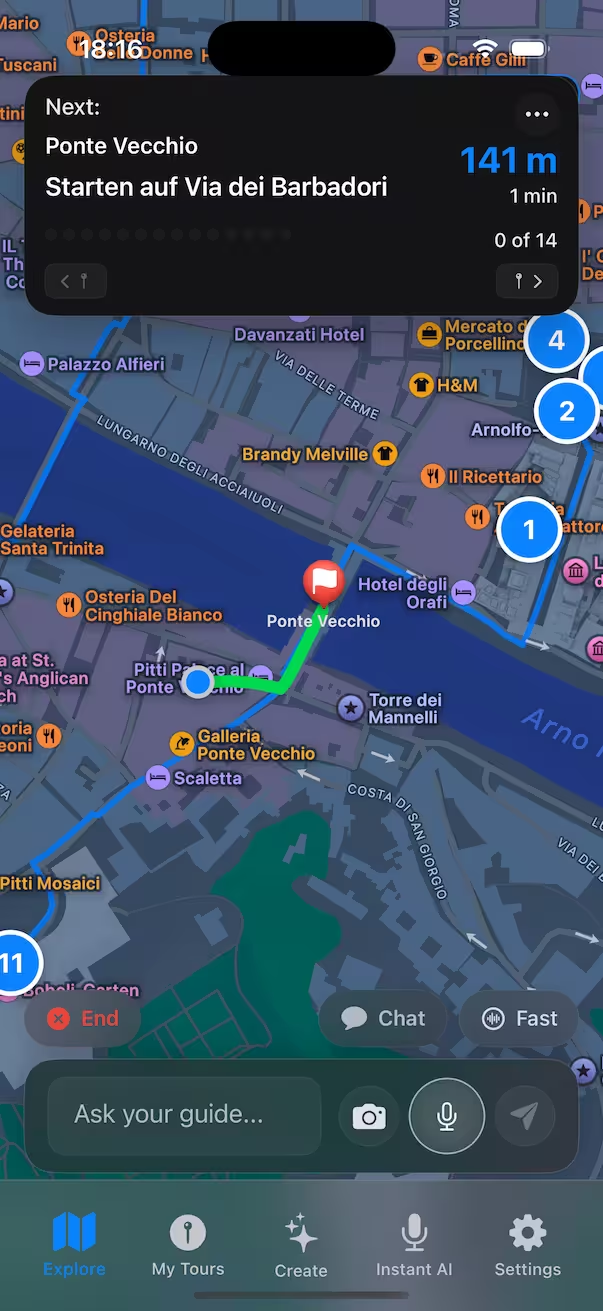
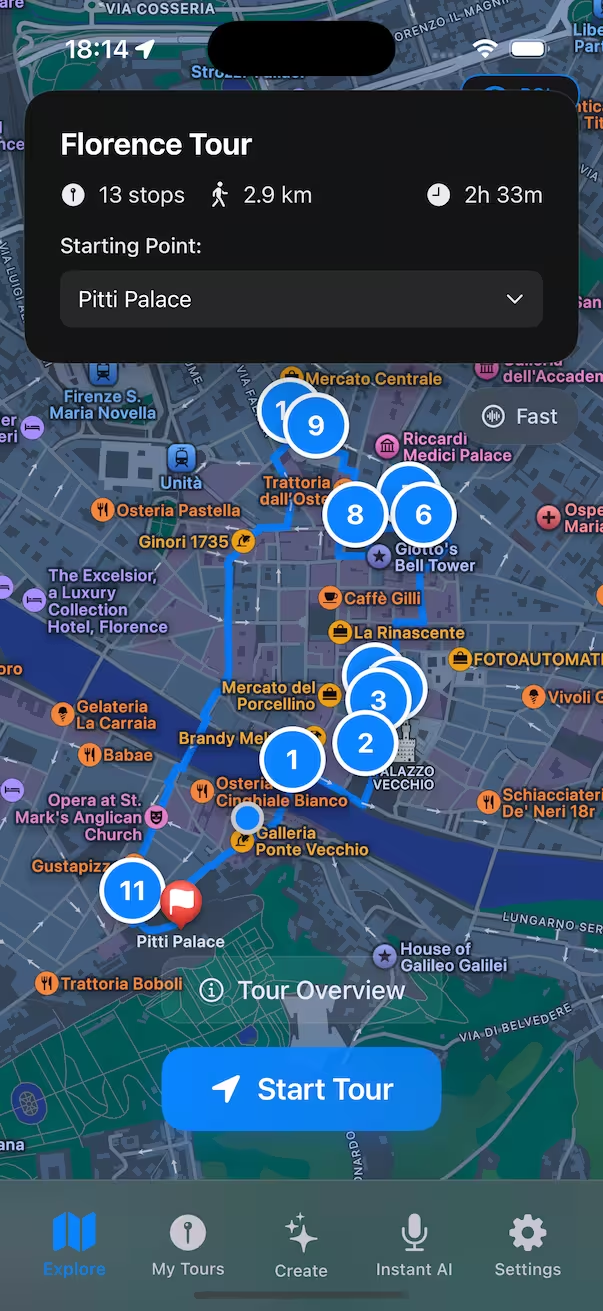
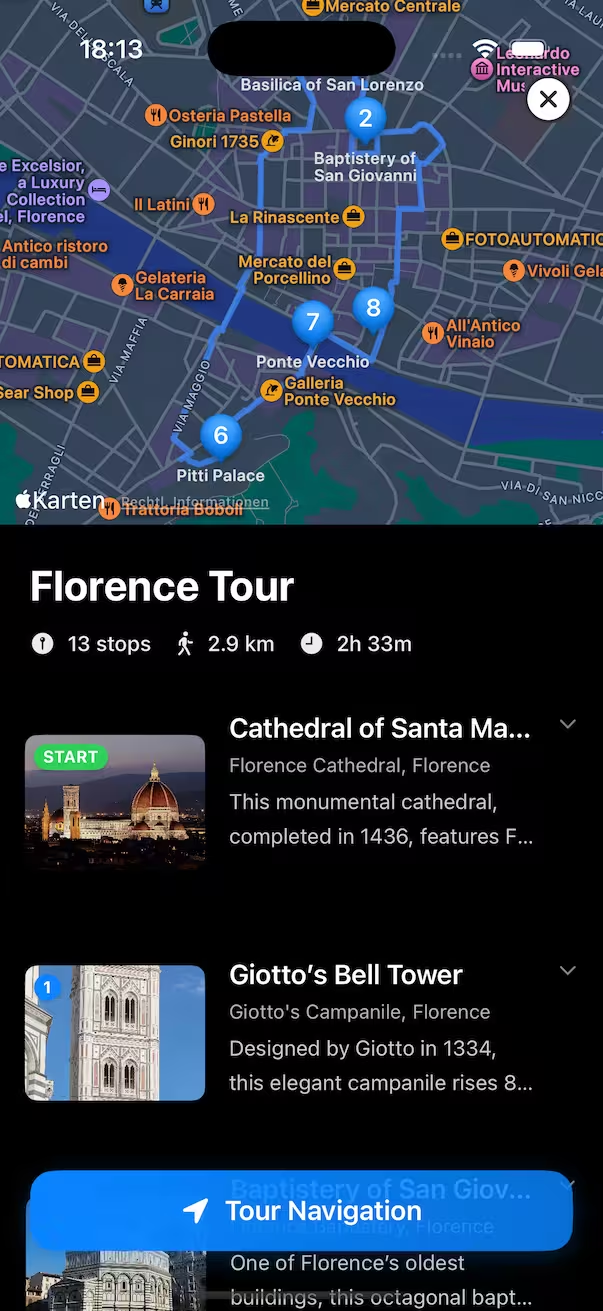
The classic Ho Chi Minh City tour: 9 stops, 4.9 km, about 2 h on foot
Your live AI guide and the self-guided Ho Chi Minh City route, together in your browser.