Best Time to Visit Mainz
Month-by-month weather, crowds and prices, plus a full calendar of festivals and events worth planning a trip around.
Best monthsMay, Jun, Sep
CheapestJan, Feb, Aug
AvoidFeb
BusiestOct, Dec
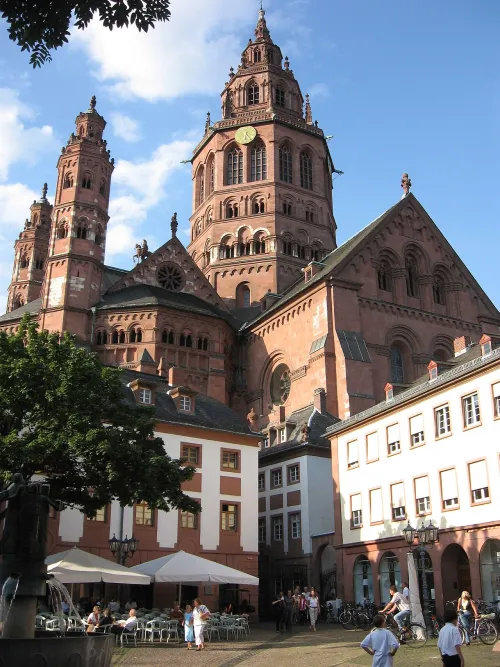
When is the best time to visit Mainz?
Come in late May, early June or September: warm 19-25°C days, wine festivals on the Rhine promenade, golden Rheinhessen vineyards, and none of the carnival or Christmas crush. The Rosenmontag weekend (around 14-16 February) packs 600,000 people into a city of 220,000 and triples hotel prices. January and the non-carnival February weeks are cheapest, the trade being grey, cold and quiet. October has the year's highest hotel rates, so skip it unless you want the Rhine cruise and foliage season.
Start our tool and find your best time to visit Mainz
Your perfect month
Free · ~30 seconds
or tap a month directly
What matters to you?
And this?
Best overall: May, Jun, Sep. Late May to mid-June and September are the real sweet spot: comfortable 19-25°C, long Rhine-promenade evenings, and wine on the river without carnival or Christmas crowds. Late May brings WeinUfer and the Open Ohr festival over Whitsun; September stacks the Weinmarkt and golden Rheinhessen harvest light, with rates about 20% below the October peak.
Best value: Jan, Aug. January and August bring 3-star central hotels at 55-110 euro a night with no queues anywhere. January is cold and grey but dead quiet; August is the summer budget surprise, when school holidays orient everything toward families and Rheinhessen wine villages are free to reach by bike. Skip October, the priciest month, and the Rosenmontag weekend in February.
Avoid: Feb. The Rosenmontag weekend (around 14-16 February) is the year's tightest market unless carnival is exactly why you came: 600,000 spectators in a city of 220,000, the entire Altstadt pedestrianised, hotels at 180-250 euro and booked out months ahead, and the city functionally inaccessible by car. Glorious for the parade, miserable otherwise.
- January: Good time, 6°C. January is the introvert's month: cold, grey and almost touristless, but cheap and calm. This is when you walk the cathedral and the Roman-era museums without a single queue, and have the Altstadt wine bars to yourself. Bring warm layers and accept the short, grey days as the price of an empty, well-priced city.
- February: Good time, 8°C. February is either the deadest-quiet bargain of the year or its wildest party, with nothing in between. If you come for Fastnacht, come in costume, because normal clothes make you the odd one out, and book by the previous autumn. If you come for the quiet, just avoid that one weekend and you get January prices with a touch more daylight.
- March: Good time, 11°C. March is the city waking up: blossom in the parks, the first fair lights on the Rhine, and longer days, but still without crowds or high prices. It is a quietly rewarding time to visit, with the Rheinfruhling Ferris wheel for panoramic river views and museums you can still walk into without a queue.
- April: Great time, 16°C. April is full spring in Mainz: dry, bright and green, with the Rhine fair still running and the Altstadt terraces filling up. It is busier and a touch pricier than March, especially over Easter, but the long dry days and the riverside fair earn it. Good for a first visit if you do not mind the Easter-weekend bustle.
- May: Great time, 20°C. May is the quietly excellent month for a first visit: warm enough for riverside dinners, alive with wine and arts festivals, but without the high-summer heat or the carnival and Christmas crowds. The WeinUfer keep-the-glass tasting walk and the Open Ohr festival give you the city at ease with itself, and the rates stay reasonable.
- June: Good time, 25°C. June is Mainz at its liveliest and most enjoyable, before the worst of the heat. The long evenings are the payoff, with the Rhine promenade alive into the night. Time it around Johannisnacht: the festival is magical if you came for it and overwhelming with small children, so the days either side are calmer. Early June, before the rush, is ideal for couples.
- July: Good time, 26°C. July is hot and family-focused, with the Altstadt stone streets radiating midday heat and little shade. The trick is timing: walk before 10:00 or after 18:00, and let the riverside come alive in the cooler evenings. When the heat and the price of a private guide climb, our live in-browser AI guide is the flexible, flat-priced alternative, telling you the story of everything you pass as you walk the cooler early hours, with 100 free credits to start and then 5 euro an hour or 20 euro all-in.
- August: Great time, 26°C. August is the quiet bargain of high summer: warm, family-oriented and noticeably cheaper than the September wine peak. The locals are away on holiday and conference demand is low, so the city breathes. Reach the Rheinhessen wine villages free by bike, and let the evenings on the Rhine carry the day once the midday heat eases.
- September: Good time, 21°C. September feels like Mainz at its best: warm enough for late riverside dinners, alive with wine and harvest, but without high summer's heat or October's prices. The Rheinhessen vineyards are golden and active with the Lese, a 20-minute train south, and the light over the Rhine turns rich and amber. This is the month for couples and foodies alike.
- October: Good time, 16°C. October is golden-autumn Mainz, but at the year's highest prices and with the first grey, drizzly days. It is a lovely time for foliage along the Rhine and in the vineyards, and for the closing harvest atmosphere, but the value is poor compared with September. Come for the colour and the Rhine gorge day trips, not for a bargain.
- November: Good time, 9°C. November is a month of two halves: quiet, grey and well-priced until the Christmas markets arrive, then a first burst of festive light and crowds. Early November is for the traveller who wants the city calm and cheap; the last week is for the early Christmas-market visitor, before the December weekend crush sets in.
- December: Tough month, 6°C. December trades January's emptiness for festive bustle under the Dom's illuminated towers: mulled wine, 100 decorated stalls and short, atmospheric dark afternoons. It is genuinely magical, but the final weekends are crowded and the most expensive of the season. Go on a weekday morning or at dusk, and book the 18-23 December stretch well ahead.
Mainz weather by month
HighLowRainfall
Jan6°
Feb8°
Mar11°
Apr16°
May20°
Jun25°
Jul26°
Aug26°
Sep21°
Oct16°
Nov9°
Dec6°
| Month | Temp | Rain | Sun | Crowds | Prices | Highlight |
|---|---|---|---|---|---|---|
| Jan | 6° / 0° | 62mm · 13 rainy days | 3.4 h/day | ●○○○○ | ●○○○○ | New Year's Parade |
| Feb | 8° / 1° | 46mm · 10 rainy days | 5.8 h/day | ●●○○○ | ●●○○○ | Mainz Carnival Rose Monday Parade |
| Mar | 11° / 2° | 48mm · 12 rainy days | 7.7 h/day | ●●○○○ | ●●○○○ | Rhine Spring Fair |
| Apr | 16° / 6° | 43mm · 10 rainy days | 10.2 h/day | ●●●○○ | ●●●○○ | Rhine Spring Fair |
| May | 20° / 10° | 60mm · 11 rainy days | 11.1 h/day | ●●●○○ | ●●●○○ | WeinUfer Rhine Wine Shore |
| Jun | 25° / 15° | 56mm · 9 rainy days | 12.0 h/day | ●●●●○ | ●●●●○ | Gutenberg Festival (Johannisnacht) |
| Jul | 26° / 16° | 62mm · 10 rainy days | 12.1 h/day | ●●●○○ | ●●●○○ | Mainz Beer Exchange |
| Aug | 26° / 16° | 63mm · 10 rainy days | 10.9 h/day | ●●●○○ | ●●○○○ | Mainz Wine Market |
| Sep | 21° / 12° | 52mm · 8 rainy days | 9.3 h/day | ●●●●○ | ●●●●○ | Mainz Wine Market |
| Oct | 16° / 8° | 59mm · 12 rainy days | 5.8 h/day | ●●●●○ | ●●●●● | |
| Nov | 9° / 4° | 62mm · 13 rainy days | 3.9 h/day | ●●○○○ | ●●●○○ | 11.11 Carnival Season Opener |
| Dec | 6° / 2° | 70mm · 14 rainy days | 2.8 h/day | ●●●○○ | ●●●○○ | Mainz Christmas Markets |
How we score this: weather = long-run climate normals (Open-Meteo), crowds & prices = relative season read, events checked yearly against official dates.
Best time to visit Mainz: weather, prices & crowds
Best months for good weather
May, Jun, Sep
Late May, June and September give Mainz its most comfortable weather: 19-25°C, sheltered from westerly rain by the Taunus hills, with long Rhine-promenade evenings light until past 21:00 in June and warm, golden harvest light in September, without July and August's 30-35°C heat spikes.
Quietest months to avoid the crowds
Jan, Aug
January and the non-carnival February weeks empty the city right out: no queues at the Gutenberg interim exhibition or LEIZA, the Dom almost to yourself on a weekday. August dips again as conference demand falls, despite the summer holidays.
Cheapest time to visit Mainz
Jan, Aug
January and August are Mainz's cheapest months: 3-star central hotels run 55-110 euro a night, well below the October peak of 100-155 euro. February outside the Rosenmontag weekend is just as cheap, but that one weekend triples to 180-250 euro.
Best time for festivals and events
Sep, Oct
September and October are when Rheinhessen, Germany's largest wine region, turns amber-gold for the harvest (Lese), a 20-minute regional train or an 8-kilometre flat bike ride south to Nierstein. Combine it with the Mainzer Weinmarkt's second weekend (early September) for harvest-season tasting on the Rhine.
How many days do you need in Mainz?
Two days is the right length for Mainz. The medieval Altstadt, the Roman layer and the Rhine promenade each deserve unhurried time, and the compact old town means you cover a lot on foot without backtracking. A single focused day hits the essentials, but a second unlocks the Roman city and a half-day trip into the Rheinhessen vineyards.

One day
Dom, Gutenberg and the Rhine
Start at the thousand-year-old Mainzer Dom, then trace the story of movable type at the Gutenberg interim exhibition on Reichklarastrasse. Walk the half-timbered Kirschgarten and Augustinerstraße before heading to St. Stephan to see Marc Chagall's luminous blue windows (arrive before 12:00 for the best light, the church closes at 16:30). The self-guided Mainz walking tour links all ten stops across 4.8 km in about 2.4 hours, ending at the Rheinpromenade for an evening glass of Rheinhessen wine.
Two daysRecommended
The Roman city and the vineyards
Spend the morning at the Zitadelle, the Drususstein cenotaph and the excavated Römisches Theater, the largest Roman theatre north of the Alps. Afternoon, take a regional train 20 minutes south to Nierstein and cycle the flat Rhine path back through the amber-gold Rheinhessen vineyards. End with dinner on the Rheinpromenade as the light fades over the river toward Wiesbaden.
Three days
Festivals, museums and the Rhine gorge
Use the third day for what you missed: the Landesmuseum (closed Mondays, late Tuesday opening until 20:00) or LEIZA's Roman-Germanic collection (closed Mondays). In season, add a Rhine cruise or an S-Bahn day trip to Rüdesheim or Bingen for the gorge foliage. If it is late May, the WeinUfer festival lines 25 estates along the Rhine promenade for a 22-euro tasting walk with a glass to keep.
Four days or more
Slow travel and deeper Rheinhessen
Four days or more suits visitors who want to combine Mainz with the wider wine region: day trips west into Rheinhessen villages like Oppenheim or Nieder-Olm, a Rhine cruise south to Rudesheim, or a connection to Wiesbaden across the river. Mainz also makes a strong base for Frankfurt (25 minutes by RE train), so four days can absorb both cities at a relaxed pace.
Best time to visit Mainz by traveller type
Same city, different trip. Here's the month that fits how you're travelling.
🧭
Best time to visit Mainz for the first time
MaySep
May or September: warm days, uncrowded museums, and a wine festival on the Rhine (WeinUfer in May, Weinmarkt in September). Both let you walk the Dom, LEIZA and St. Stephan's Chagall windows, and the Rhine promenade, without the extremes of carnival or Christmas-market crowds, and at rates roughly 20% below the October peak.
❤️
Best time to visit Mainz for couples
SepJun
Late September for vineyard evenings, amber harvest light and warm enough Rhine-promenade dinners at 20:00 with lower crowds than summer. Or early June, before the Johannisnacht rush, when long evenings, photogenic Chagall windows and wine-bar terraces line up at 90-125 euro a night.
💶
Best time to visit Mainz on a budget
JanAug
January outside the New Year's parade, the non-carnival February weeks, and August: 55-110 euro a night, no queues at the Gutenberg interim exhibition or LEIZA, the Dom almost empty. In August the Rheinhessen wine villages are free to reach by bike, and the Weinmarkt's first weekend has free entry.
🍝
Best time to visit Mainz for food and wine
SepMay
Early September for the Weinmarkt's second weekend, with Rheinhessen harvest atmosphere and warm Rheinpromenade evenings, or mid-May for WeinUfer, when 25 estates line the Rhine for a 22-euro tasting walk. The year-round Wochenmarkt (Tuesday, Friday and Saturday, 07:00-14:00 in the Altstadt) puts regional producers in front of you any week.
Worst time to visit Mainz
The Rosenmontag carnival weekend (around mid-February, dates shift each year with the moveable feast) is the year's worst time to visit unless the parade is your reason for coming. The city absorbs 600,000 spectators into a population of 220,000, the entire Altstadt is pedestrianised and inaccessible by car, and hotels charge 180 to 250 euro a night, booked out months in advance. February outside that one weekend is perfectly pleasant, the quietest and cheapest time of year, so the calendar split matters.
Still worth it for If carnival is exactly why you came, it is one of Germany's three great Fastnacht events alongside Cologne and Dusseldorf: come in costume, book by the previous autumn, and stay near the station or in Wiesbaden if central options are gone.
Go instead in May, June, September, when Mainz is at its best.
Best time for a tour of Mainz
The sweet spot for walking Mainz falls squarely in May and the first half of June, when temperatures climb from around 19 to 25 °C, rain averages just nine to eleven days a month, and the streets hold a comfortable buzz without tipping into the frantic. That warmth makes the climb up to the Zitadelle Mainz genuinely enjoyable rather than a slog, and you arrive at the top with enough energy to take in the view. By late June and through July and August, the Rhine Promenade bakes in full sun with precious little shade, and the midday stretch between the Mainzer Dom and the Gutenberg-Museum can feel punishing at 26 °C. September brings the wine-festival crowds, busy enough that the cathedral square fills shoulder to shoulder on weekends, yet the temperature drops to a pleasant 21 °C and the light turns golden. The other window worth noting is late April: highs of 15 to 16 °C, thin crowds, and the old quarter around Kirschgarten looking freshly green. January and November are the hard months: barely 5 to 9 °C, thirteen rain days each, and the light gone by late afternoon.
With AI Tourguide's Mainz walk, the clock is entirely yours. On a hot August afternoon you can set off at 7 am, catch the Römisches Theater in cool morning shadow, and finish along the Rhine Promenade before the heat builds. In October, when the festival crowds pack the old town at noon, you simply start at 9 am, move at whatever pace the guide's stories pull you to, and have the Drususstein almost to yourself. The AI guide runs in your browser with no download, leads you through the full 4.8 km route with spoken stories, asks what catches your eye, listens, and shapes the rest of the walk around what you find interesting. No departure times, no group pace.


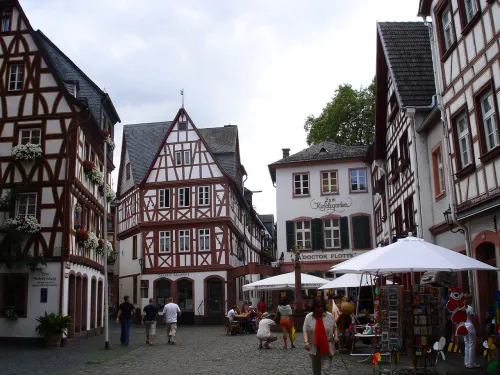 +6
+6All 10 stops are already on the map.
You just press start.
You just press start.
 AI Tourguide
You just read the route.
Now walk it with a guide in your ear.
Press start wherever you are, even hundreds of kilometres from Mainz, and the guide begins telling its stories right away. In the city, pick any of the 10 stops to start from: it leads you there, then talks with you the whole route, asking, listening, remembering, and shaping the tour around your answers.
10stops4.8km2.4hours11languages
▶Start the tour freeFree to start · Runs in your browser · No app, no download
Mainz events and festivals calendar
Annual highlights worth timing a trip around, listed month by month.
January
🎉 FestivalNew Year's Parade Neujahrsumzug der Gartenvereine
Jan 1
1 January at 11:11
A traditional New Year's parade by the garden societies and brass bands through the Altstadt, with around 1,200 gardeners and 400 musicians, kicking off the carnival season at 11:11.
February
🎉 FestivalMainz Carnival Rose Monday Parade Mainzer Fastnacht - Rosenmontagszug
Feb 12–16 ~
street carnival around 12-16 February, parade on Rose Monday
A 9-kilometre parade through the Neustadt and Altstadt with around 9,260 active participants, 126 floats, 40 horses and 2,000 musicians, watched by 600,000 spectators.
March
🎉 FestivalRhine Spring Fair Mainzer Rheinfrühling
Mar 28 – Apr 12
16 days from late March to mid-April
A 16-day folk fair on the Rhine promenade between Kaisertor and Kurfürstenbrunnen, with a Ferris wheel, rides and food stalls, plus fireworks after dark on the opening night (28 March) and closing night (11 April).
May
🍷 Food and wineWeinUfer Rhine Wine Shore Mainzer WeinUfer
May 14–17 ~
mid-May, four days over the Ascension weekend
Twenty-five Rheinhessen wine estates line the Rhine promenade between the Theodor-Heuss-Brucke and Kaisertor, with 23 food stalls and evening live music.
🎨 Art and cultureOpen Ohr Festival OPEN OHR Festival
May 22–25 ~
the four-day Whitsun weekend in late May
A counter-culture festival on the Zitadelle over the long Whitsun weekend: music, cabaret, film and theatre drawing more than 10,000 visitors across four days, with a new theme each year reflecting contemporary social questions.
June
🎵 MusicSummer in the City Concerts Summer in the City
Jun 1 – Aug 31 ~
individual dates across June to August
An open-air concert series at the Volkspark and the Zitadelle through the summer, with national and international acts across June to August.
🎉 FestivalGutenberg Festival (Johannisnacht) Mainzer Johannisnacht
Jun 19–22
a four-day weekend in late June
Mainz's signature event, a 50-plus-year-old festival honouring Johannes Gutenberg, with five music and cabaret stages, aerial performers, an artists' market, an antiquarian book market, the Gautschen printer's baptism ceremony, amusement rides, a Rhine sailing regatta and a drone light show finale on Monday around 22:30.
July
🍷 Food and wineMainz Beer Exchange Mainzer Bierbörse
Jul 3–5
first weekend of July
An annual craft beer festival on the Rhine riverbank near the Kurfürstliches Schloss, with several hundred beers from around the world, 60 beer and food vendors, and more than 30,000 visitors over the weekend.
August
🍷 Food and wineMainz Wine Market Mainzer Weinmarkt
Aug 27 – Sep 6
two weekends, late August and early September
The Stadtpark becomes a wine-tasting hub over two weekends (27-30 August and 3-6 September), pouring Rheinhessen, Rheingau and Nahe wines alongside regional cuisine and live music.
November
🎉 Festival11.11 Carnival Season Opener 11.11. in Mainz
Nov 11
11 November
The traditional kickoff of the Fastnacht season at Schillerplatz, with live performances through the day and the ceremonies of the Mainzer Carneval-Verein.
🎄 Christmas marketMainz Christmas Markets Weihnachtsstadt Mainz
Nov 26 – Dec 23
late November to 23 December
Six simultaneous markets, led by the Historic Christmas Market at the cathedral on Liebfrauenplatz (100 stalls), plus the Mainzer WinterZeit markets at Schillerplatz, the Hopfengarten, the station forecourt and the castle courtyard, and the Neuwintermarkt on Neubrunnenplatz.
Insider tips for visiting Mainz
The rules buried in forums, in one place.
- Book Rosenmontag accommodation by September of the previous year. The 14-16 February weekend draws 600,000 visitors into a city of 220,000, the tightest hotel market of the year. By November, 3-star options under 200 euro a night are gone, and the Altstadt is pedestrianised, so do not plan on driving in.
- The Gutenberg Museum has been at an interim location since November 2024. The original Liebfrauenplatz building is under demolition; the interim exhibition Gutenberg Museum MOVED is at the Naturhistorisches Museum on Reichklarastrasse. Do not arrive at the old address. Check gutenberg-museum.de for current interim hours before you go.
- The Mainzer Dom is free but runs services on Sunday mornings, so the nave is not open to visitors until 13:00 on Sundays. Schedule the cathedral for a weekday (Monday to Saturday from 09:00) to walk it without crowds or a service in progress.
- For St. Stephan's Marc Chagall windows, the artist's only complete church cycle, made after the Holocaust as a Jewish act of reconciliation, arrive before 12:00 for the full blue glow from inside; the west-facing glass lights from behind after 14:00. The church closes promptly at 16:30 (Sunday from 12:00), and many visitors arrive too late and find it shut.
- The Christmas markets are about 60% emptier on weekday mornings. Frankfurt day-trippers (25 minutes by RE train) flood Mainz on Fridays and Saturdays; the Cathedral market at Liebfrauenplatz on a Tuesday at 11:00 is a different experience from a Saturday at 15:00. For atmosphere, come at dusk (15:30-16:30) when the Dom illumination begins.
- For Johannisnacht (around 19-22 June), accommodation within 1 kilometre of the Altstadt sells out 6-8 weeks ahead. Mainz Hbf is 1.3 kilometres from the festival core; staying near the station, or in Wiesbaden 10 minutes over the Rhine, and commuting in is a viable option.
- Cycle into the Rheinhessen wine villages on a hired city bike (Mainz Rad / DB Rad): the flat, waymarked Rhine cycle path runs 8 kilometres south to Nierstein or west to Nieder-Olm. Weekday mornings are rider-only; weekend afternoons in August and September see amateur cyclists and some congestion.
- The Landesmuseum Mainz is closed Mondays (open Tuesday 10:00-20:00, Wednesday to Sunday 10:00-17:00), and LEIZA, the former Roman-Germanic Central Museum, is also closed Mondays (Tuesday to Sunday 10:00-18:00). A Monday morning meets locked doors, so plan museums for Tuesday to Sunday and use the late Tuesday evening at the Landesmuseum for a quieter visit.
Public holidays in Mainz
On these dates many shops and offices close, transport thins out, and sights can be mobbed or shut. Plan around them.
| Date | Holiday | What closes |
|---|---|---|
| Jan 1 | New Year's Day | All shops and most museums closed; the Dom is open for services only. The garden societies' New Year's parade (Neujahrsumzug) runs through the Altstadt at 11:11, a charming local kickoff to the carnival season. |
| Feb 16 | Rosenmontag (Rose Monday) | Not a legal public holiday, but treated as one in Mainz: most businesses close voluntarily, schools and many offices shut, and the entire Altstadt is pedestrianised for the 9-kilometre Rosenmontagszug parade from 11:11. Plan on nothing being open and no driving into the centre. |
| Apr 3 | Good Friday | Shops closed; most museums open and the Dom on reduced hours. Very quiet, observed streets across the city. |
| Apr 6 | Easter Monday | Public holiday: shops shut, most museums open (check individually). Easter Sunday the day before fills the Dom with very busy services and an entry queue, and the Altstadt is busy with families. |
| May 1 | Labour Day | Shops closed, museums open. The Friday-to-Monday long weekend draws domestic visitors into the city. |
| May 14 | Ascension Day | Public holiday: shops closed. It coincides with the opening day of the WeinUfer wine festival on the Rhine promenade, which runs regardless, giving a very local, authentic crowd. |
| May 25 | Whit Monday | Public holiday and the final day of the Open Ohr Festival on the Zitadelle. Shops closed; a lively long Whitsun weekend across the city. |
| Jun 4 | Corpus Christi | Public holiday in Rhineland-Palatinate: shops closed, with a Dom procession through the Altstadt. Many visitors from other German states are caught out, as it is not a holiday everywhere. |
| Oct 3 | Day of German Unity | National holiday, falling on a Saturday in 2026: shops closed as on a normal Saturday, museums open. The long weekend is one of October's busiest, adding to the year's highest hotel prices. |
| Nov 1 | All Saints' Day | Public holiday in Rhineland-Palatinate, falling on a Sunday in 2026. The Dom is busy with services; otherwise a quiet observed day. |
| Dec 25 | Christmas Day | Everything closed, with Dom services only. The Christmas markets have already ended on 23 December, so there is little to do beyond a service or a quiet walk. |
| Dec 26 | Boxing Day (2nd Christmas Day) | Public holiday: most things closed. The Christmas markets are already over, and the post-holiday lull sets in toward the cheap, quiet January ahead. |
Mainz month by month
January in Mainz
High6°C / 42°F
Low0°C
Rain62mm / 13 rainy days
Sun3.4 h/day
Daylight9 h/day
Humidity85%
Crowds●○○○○Prices●○○○○
January is Mainz's dead season: highs near 5-6°C, the shortest run of the year just behind it, and the post-Christmas city quiet and grey. Hotels sit at their annual floor of 55-85 euro, the Dom is almost empty on a weekday, and there are no queues at the Gutenberg interim exhibition or LEIZA. The one event is the garden societies' New Year's parade on 1 January, a charming local kickoff to the carnival season.
The vibe January is the introvert's month: cold, grey and almost touristless, but cheap and calm. This is when you walk the cathedral and the Roman-era museums without a single queue, and have the Altstadt wine bars to yourself. Bring warm layers and accept the short, grey days as the price of an empty, well-priced city.
Don't miss Walk the free Mainzer Dom on a weekday with no crowds, see the Chagall windows at St. Stephan, and visit the Gutenberg interim exhibition at the Naturhistorisches Museum on Reichklarastrasse. The 1 January parade at 11:11 brings 1,200 gardeners and 400 musicians through the Altstadt.
Crowd drivers No major draw after the Christmas markets close on 23 December. The 1 January New Year's parade brings locals but no overnight demand, and the city stays quiet all month.
Heads up New Year's Day (1 January) closes all shops and most museums, with the Dom open for services only.
The cheapest month of the year alongside the non-carnival February weeks: 3-star central hotels run 55-85 euro a night.
Events this month
🎉 FestivalNew Year's Parade Neujahrsumzug der Gartenvereine
Jan 1
1 January at 11:11
A traditional New Year's parade by the garden societies and brass bands through the Altstadt, with around 1,200 gardeners and 400 musicians, kicking off the carnival season at 11:11.
A charming, very local event worth catching only if you are already in Mainz for New Year. It has no effect on hotels or crowds.
February in Mainz
High8°C / 46°F
Low1°C
Rain46mm / 10 rainy days
Sun5.8 h/day
Daylight10 h/day
Humidity79%
Crowds●●○○○Prices●●○○○
February is two cities. Outside the carnival weekend it is as cheap and quiet as January, with highs near 7°C and the year's driest air. But around 14-16 February the Mainzer Fastnacht erupts: the Rosenmontagszug on 16 February brings 600,000 spectators, 126 floats and 2,000 musicians through a 9-kilometre route, the single biggest crowd spike of the year. Hotels triple and sell out months ahead, and the Altstadt is fully pedestrianised.
The vibe February is either the deadest-quiet bargain of the year or its wildest party, with nothing in between. If you come for Fastnacht, come in costume, because normal clothes make you the odd one out, and book by the previous autumn. If you come for the quiet, just avoid that one weekend and you get January prices with a touch more daylight.
Don't miss The Rosenmontagszug on 16 February starts at 11:11 on the corner of Josefs- and Boppstrasse and runs 9 kilometres through the Neustadt and Altstadt. Costume is the norm; jester or witch hats are sold across the Altstadt from January. Outside carnival, it is a quiet month for the Dom and the museums.
Crowd drivers The Rosenmontag weekend (around 14-16 February) is the year's single biggest crowd event, with street carnival from roughly 12 February. The rest of the month is among the quietest of the year.
Heads up Rosenmontag (16 February) is treated as a full public holiday in Mainz: most businesses close voluntarily, schools and offices shut, and the Altstadt is closed to traffic for the parade.
A split month: regular weeks are the year's cheapest at 60-90 euro, but the Rosenmontag weekend (around 14-16 February) triples to 180-250 euro and more.
Events this month
🎉 FestivalMainz Carnival Rose Monday Parade Mainzer Fastnacht - Rosenmontagszug
Feb 12–16 ~
street carnival around 12-16 February, parade on Rose Monday
A 9-kilometre parade through the Neustadt and Altstadt with around 9,260 active participants, 126 floats, 40 horses and 2,000 musicians, watched by 600,000 spectators. It starts at 11:11 on the corner of Josefs- and Boppstrasse.
Mainz is one of Germany's Big Three carnival cities alongside Cologne and Dusseldorf, so this is the city at its most exuberant. Costume is the norm, not the exception. But hotels run at 2-3 times normal rates, the Altstadt is fully blocked, and you must book months ahead and not drive in.
March in Mainz
High11°C / 52°F
Low2°C
Rain48mm / 12 rainy days
Sun7.7 h/day
Daylight12 h/day
Humidity74%
Crowds●●○○○Prices●●○○○
March brings rapid warming, with highs climbing to 11°C and cherry blossom peaking mid-to-late month in the Stadtpark and along residential streets. The Mainzer Rheinfruhling folk fair opens on 28 March on the Rhine promenade, with a Ferris wheel, rides and opening-night fireworks. It is still off-peak, so hotels hold at 65-95 euro, and the spring energy arrives without the crowds.
The vibe March is the city waking up: blossom in the parks, the first fair lights on the Rhine, and longer days, but still without crowds or high prices. It is a quietly rewarding time to visit, with the Rheinfruhling Ferris wheel for panoramic river views and museums you can still walk into without a queue.
Don't miss Cherry blossom peaks mid-to-late March in the Stadtpark and along residential streets. The Rheinfruhling fair from 28 March brings a Ferris wheel with panoramic Rhine views and opening-night fireworks after dark, with Wednesday as the discount Family Day.
Crowd drivers The Mainzer Rheinfruhling opening on 28 March adds moderate weekend demand on the Rhine promenade, but March stays a low-pressure, off-peak month overall.
Off-peak pricing at 65-95 euro a night; the Rheinfrühling fair from 28 March adds moderate weekend demand but no severe spike.
Events this month
🎉 FestivalRhine Spring Fair Mainzer Rheinfrühling
Mar 28 – Apr 12
16 days from late March to mid-April
A 16-day folk fair on the Rhine promenade between Kaisertor and Kurfürstenbrunnen, with a Ferris wheel, rides and food stalls, plus fireworks after dark on the opening night (28 March) and closing night (11 April).
A pleasant, family-friendly introduction to Mainz in spring; the Ferris wheel gives panoramic Rhine views and Wednesday is the discount Family Day. It adds moderate weekend demand but does not spike hotel rates severely.
April in Mainz
High16°C / 60°F
Low6°C
Rain43mm / 10 rainy days
Sun10.2 h/day
Daylight14 h/day
Humidity67%
Crowds●●●○○Prices●●●○○
April is warm and bright, with highs near 15-16°C and the year's lowest rainfall (43mm). The Rheinfruhling fair runs on the Rhine until 12 April, and the Easter weekend draws families into a busy Altstadt and Dom. Easter Sunday (5 April) fills the cathedral with queues, and Good Friday (3 April) closes most shops. Prices step up to 75-110 euro as spring tourism builds.
The vibe April is full spring in Mainz: dry, bright and green, with the Rhine fair still running and the Altstadt terraces filling up. It is busier and a touch pricier than March, especially over Easter, but the long dry days and the riverside fair earn it. Good for a first visit if you do not mind the Easter-weekend bustle.
Don't miss The Rheinfruhling fair winds up with closing fireworks on 11 April. The Dom and St. Stephan's Chagall windows are at their spring best; visit the cathedral on a weekday rather than over the crowded Easter weekend, and reach St. Stephan before 12:00 for the full blue glow.
Crowd drivers The Easter weekend (3-6 April) mobs the Altstadt and Dom, and the Rheinfruhling fair runs until 12 April. Otherwise April is a pleasant, moderately busy spring month.
Heads up Good Friday (3 April) closes shops, with most museums open and the Dom on reduced hours. Easter Monday (6 April) is a public holiday with shops shut and museums mostly open.
Rates rise to 75-110 euro a night, with the Easter weekend the busiest stretch of the month.
Events this month
🎉 FestivalRhine Spring Fair Mainzer Rheinfrühling
Mar 28 – Apr 12
16 days from late March to mid-April
A 16-day folk fair on the Rhine promenade between Kaisertor and Kurfürstenbrunnen, with a Ferris wheel, rides and food stalls, plus fireworks after dark on the opening night (28 March) and closing night (11 April).
A pleasant, family-friendly introduction to Mainz in spring; the Ferris wheel gives panoramic Rhine views and Wednesday is the discount Family Day. It adds moderate weekend demand but does not spike hotel rates severely.

May in Mainz
High20°C / 67°F
Low10°C
Rain60mm / 11 rainy days
Sun11.1 h/day
Daylight15 h/day
Humidity66%
Crowds●●●○○Prices●●●○○
May is one of Mainz's sweet spots: highs near 19-20°C, long Rhine-promenade evenings, and two festivals on the river. The WeinUfer wine festival (14-17 May) lines 25 Rheinhessen estates along the Rhine, overlapping Ascension Day for a local, authentic crowd, and the Open Ohr counter-culture festival fills the Zitadelle over the Whitsun weekend (22-25 May). Vine shoots green up mid-month in the nearby Rheinhessen vineyards.
The vibe May is the quietly excellent month for a first visit: warm enough for riverside dinners, alive with wine and arts festivals, but without the high-summer heat or the carnival and Christmas crowds. The WeinUfer keep-the-glass tasting walk and the Open Ohr festival give you the city at ease with itself, and the rates stay reasonable.
Don't miss WeinUfer (14-17 May) offers a 22-euro tasting walk with 25 estates, a glass to keep and 23 food stalls between the Theodor-Heuss-Brucke and Kaisertor, with a Pink Sunday family afternoon. The Open Ohr Festival fills the Zitadelle with music, cabaret and theatre over Whitsun. Vine shoots green up mid-month in Rheinhessen, a 20-minute train south.
Crowd drivers WeinUfer (14-17 May) and the Open Ohr Festival over the Whitsun weekend (22-25 May) draw festival crowds, and the Ascension (14 May) and Whit Monday (25 May) holidays add bridge-day demand.
Heads up Labour Day (1 May), Ascension Day (14 May) and Whit Monday (25 May) all close shops, though museums stay open and the festivals run regardless.
Mid-range pricing at 80-115 euro a night, lifted on the Whitsun long weekend (22-25 May).
Events this month
🍷 Food and wineWeinUfer Rhine Wine Shore Mainzer WeinUfer
May 14–17 ~
mid-May, four days over the Ascension weekend
Twenty-five Rheinhessen wine estates line the Rhine promenade between the Theodor-Heuss-Brucke and Kaisertor, with 23 food stalls and evening live music. A 22-euro walk ticket includes a nine-wine tasting, a glass to keep and a bag, and Pink Sunday brings a family afternoon and pink riverside illumination.
A perfect spring wine introduction with a keep-the-glass tasting option. Because it overlaps Ascension Day (14 May), the crowd is very local and the atmosphere feels authentic rather than touristy.
🎨 Art and cultureOpen Ohr Festival OPEN OHR Festival
May 22–25 ~
the four-day Whitsun weekend in late May
A counter-culture festival on the Zitadelle over the long Whitsun weekend: music, cabaret, film and theatre drawing more than 10,000 visitors across four days, with a new theme each year reflecting contemporary social questions.
A unique political-arts festival with strong local identity, and a good alternative to the overcrowded high summer. The Zitadelle turns into a festival ground, with Whit Monday (25 May) a public holiday to close it out.
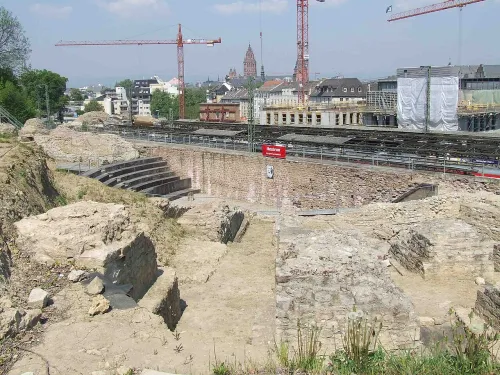
June in Mainz
High25°C / 77°F
Low15°C
Rain56mm / 9 rainy days
Sun12.0 h/day
Daylight16 h/day
Humidity63%
Crowds●●●●○Prices●●●●○
June is the start of high summer, with highs near 25°C, the longest days of the year (over 16 hours of light), and the Rhine promenade sociable until past 21:30. It peaks with the Mainzer Johannisnacht (around 19-22 June), the Gutenberg festival that is the city's signature event: five stages, an artists' market, a printer's baptism ceremony and a drone light show, drawing half a million visitors. Corpus Christi (4 June) brings a Dom procession.
The vibe June is Mainz at its liveliest and most enjoyable, before the worst of the heat. The long evenings are the payoff, with the Rhine promenade alive into the night. Time it around Johannisnacht: the festival is magical if you came for it and overwhelming with small children, so the days either side are calmer. Early June, before the rush, is ideal for couples.
Don't miss Johannisnacht transforms the Altstadt with five music and cabaret stages, aerial performers, an antiquarian book market, the Gautschen printer's baptism, a Rhine sailing regatta and a Monday drone light show around 22:30, all free to enter. Outside the festival, the long evenings on the Rhine promenade and the open wine-bar terraces are June's draw.
Crowd drivers Johannisnacht (around 19-22 June) brings half a million visitors and closes the city centre to traffic, the biggest summer crowd-driver. Corpus Christi (4 June) is a regional public holiday, and the Summer in the City concerts can spike specific dates.
Heads up Corpus Christi (4 June) is a public holiday in Rhineland-Palatinate, closing shops, with a Dom procession through the Altstadt; it is not a holiday in many other German states, which catches visitors out.
Rates climb to 90-130 euro, and the Johannisnacht weekend (around 19-22 June) pushes central hotels to 140-180 euro.
Events this month
🎉 FestivalGutenberg Festival (Johannisnacht) Mainzer Johannisnacht
Jun 19–22
a four-day weekend in late June
Mainz's signature event, a 50-plus-year-old festival honouring Johannes Gutenberg, with five music and cabaret stages, aerial performers, an artists' market, an antiquarian book market, the Gautschen printer's baptism ceremony, amusement rides, a Rhine sailing regatta and a drone light show finale on Monday around 22:30. Free entry throughout.
If you love printing history, wine and outdoor music, this is the weekend. Half a million visitors come and the city centre closes to traffic, so book accommodation at least 8 weeks ahead or stay near the station or in Wiesbaden and commute in.
🎵 MusicSummer in the City Concerts Summer in the City
Jun 1 – Aug 31 ~
individual dates across June to August
An open-air concert series at the Volkspark and the Zitadelle through the summer, with national and international acts across June to August. Crowds run 5,000 to 12,000 depending on the act, and the Zitadelle's hilltop carries sound across the Altstadt.
It adds value to a summer visit, but a stadium-level act can spike hotel rates for a specific date, so check exact dates before booking. If you want quiet evenings in the Neustadt, check the concert schedule before choosing nearby accommodation.
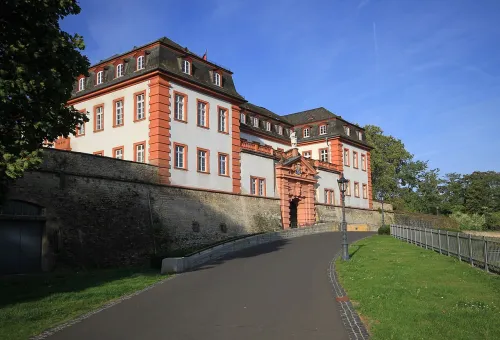
July in Mainz
High26°C / 79°F
Low16°C
Rain62mm / 10 rainy days
Sun12.1 h/day
Daylight16 h/day
Humidity62%
Crowds●●●○○Prices●●●○○
July is hot and family-focused, with the Altstadt stone streets radiating midday heat and little shade. The trick is timing: walk before 10:00 or after 18:00, and let the riverside come alive in the cooler evenings. The flat 8-kilometre Rhine path south to Nierstein through the Rheinhessen vineyards is worth the ride on a weekday morning when it belongs to cyclists, and the Taubertsbergbad outdoor pool is the answer when the Rhine itself is unswimmable.
The vibe July is hot and family-focused, with the Altstadt stone streets radiating midday heat and little shade. The trick is timing: walk before 10:00 or after 18:00, and let the riverside come alive in the cooler evenings. When the heat and the price of a private guide climb, our live in-browser AI guide is the flexible, flat-priced alternative, telling you the story of everything you pass as you walk the cooler early hours, with 100 free credits to start and then 5 euro an hour or 20 euro all-in.
Don't miss The Bierbörse (3-5 July) pours several hundred beers from 60 vendors on the Rhine waterfront, with a craft focus this year. Cycle the flat 8-kilometre Rhine path south to Nierstein through the Rheinhessen vineyards (rider-only on weekday mornings), or cool off at the Taubertsbergbad outdoor pool, as the Rhine itself is unswimmable.
Crowd drivers German and European summer holidays begin and Rhine cruises peak, lifting general demand. The Bierbörse (3-5 July) draws 30,000-plus to the riverbank, with its effect contained to that one weekend.
Rates ease to 85-125 euro; the Bierbörse weekend (3-5 July) lifts central hotels to 120-150 euro.
Events this month
🍷 Food and wineMainz Beer Exchange Mainzer Bierbörse
Jul 3–5
first weekend of July
An annual craft beer festival on the Rhine riverbank near the Kurfürstliches Schloss, with several hundred beers from around the world, 60 beer and food vendors, and more than 30,000 visitors over the weekend. Free entry.
A pleasant summer alternative to the wine festivals, set on the Rhine waterfront, with a real craft-beer focus this year. It does not significantly spike hotel rates city-wide.
🎵 MusicSummer in the City Concerts Summer in the City
Jun 1 – Aug 31 ~
individual dates across June to August
An open-air concert series at the Volkspark and the Zitadelle through the summer, with national and international acts across June to August. Crowds run 5,000 to 12,000 depending on the act, and the Zitadelle's hilltop carries sound across the Altstadt.
It adds value to a summer visit, but a stadium-level act can spike hotel rates for a specific date, so check exact dates before booking. If you want quiet evenings in the Neustadt, check the concert schedule before choosing nearby accommodation.
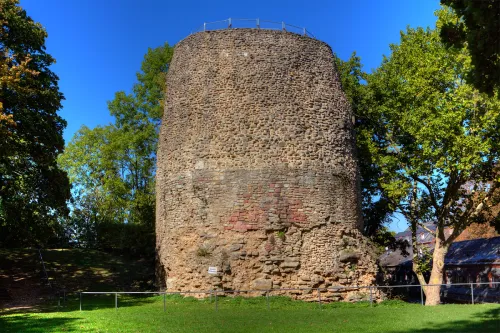
August in Mainz
High26°C / 78°F
Low16°C
Rain63mm / 10 rainy days
Sun10.9 h/day
Daylight14 h/day
Humidity65%
Crowds●●●○○Prices●●○○○
August is the budget sweet spot despite the holiday season: highs near 26°C, lower conference demand, and rates dipping to 75-110 euro, the cheapest summer month. German school holidays continue, so the city tilts toward families, and the Mainzer Weinmarkt opens its first weekend (27-30 August) in the Stadtpark, pouring Rheinhessen, Rheingau and Nahe wines with free entry. Heat days over 30°C are common.
The vibe August is the quiet bargain of high summer: warm, family-oriented and noticeably cheaper than the September wine peak. The locals are away on holiday and conference demand is low, so the city breathes. Reach the Rheinhessen wine villages free by bike, and let the evenings on the Rhine carry the day once the midday heat eases.
Don't miss The Mainzer Weinmarkt opens in the Stadtpark on the last weekend of August with free entry, regional cuisine and live music. Cycle the flat Rhine path into the Rheinhessen wine villages, free to reach, and watch the sunset from the Rhine promenade facing west toward Wiesbaden, particularly photogenic this time of year.
Crowd drivers German summer holidays continue but conference demand falls, keeping the city relatively quiet. The Weinmarkt's first weekend (27-30 August) pushes Stadtpark-area rates slightly up.
The summer budget surprise: rates dip to 75-110 euro as conference demand falls, with the Weinmarkt's first weekend (27-30 August) nudging them slightly up.
Events this month
🍷 Food and wineMainz Wine Market Mainzer Weinmarkt
Aug 27 – Sep 6
two weekends, late August and early September
The Stadtpark becomes a wine-tasting hub over two weekends (27-30 August and 3-6 September), pouring Rheinhessen, Rheingau and Nahe wines alongside regional cuisine and live music. It has an older, more local character than WeinUfer. Free entry.
The early-September weekend is the better visit: harvest-season atmosphere with the vineyards turning gold nearby. Book accommodation for 4-6 September early, as it drives the September price peak.
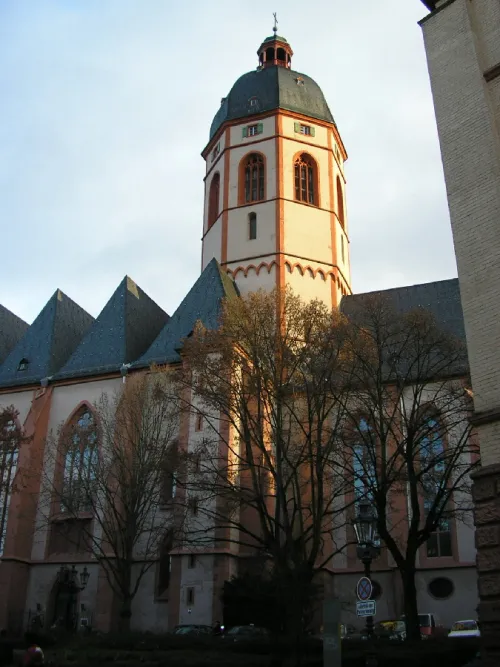
September in Mainz
High21°C / 71°F
Low12°C
Rain52mm / 8 rainy days
Sun9.3 h/day
Daylight13 h/day
Humidity71%
Crowds●●●●○Prices●●●●○
September is the other sweet spot, often the best month overall. Highs near 21°C, warm Rhine-promenade evenings, and the Rheinhessen vineyards turning amber-gold for the harvest (Lese). The Mainzer Weinmarkt's second weekend (3-6 September) brings harvest-season tasting to the Stadtpark, and the autumn Rhine cruise season peaks. Rates rise to 90-135 euro as wine tourists arrive, still about 20% below the October peak.
The vibe September feels like Mainz at its best: warm enough for late riverside dinners, alive with wine and harvest, but without high summer's heat or October's prices. The Rheinhessen vineyards are golden and active with the Lese, a 20-minute train south, and the light over the Rhine turns rich and amber. This is the month for couples and foodies alike.
Don't miss The Weinmarkt (3-6 September) pours Rheinhessen, Rheingau and Nahe wines in the Stadtpark with harvest-season atmosphere. The vineyards turn amber-gold for the Lese (mid-September to mid-October); cycle or take a regional train 8 kilometres south to Nierstein for active harvest scenery and tasting straight from the producers.
Crowd drivers The Weinmarkt's second weekend (3-6 September) drives the month's price peak, and the autumn Rhine cruise season and harvest tourism keep demand high through mid-to-late September.
Wine-tourism peak: rates rise to 90-135 euro, highest on the Weinmarkt's second weekend (3-6 September).
Events this month
🍷 Food and wineMainz Wine Market Mainzer Weinmarkt
Aug 27 – Sep 6
two weekends, late August and early September
The Stadtpark becomes a wine-tasting hub over two weekends (27-30 August and 3-6 September), pouring Rheinhessen, Rheingau and Nahe wines alongside regional cuisine and live music. It has an older, more local character than WeinUfer. Free entry.
The early-September weekend is the better visit: harvest-season atmosphere with the vineyards turning gold nearby. Book accommodation for 4-6 September early, as it drives the September price peak.
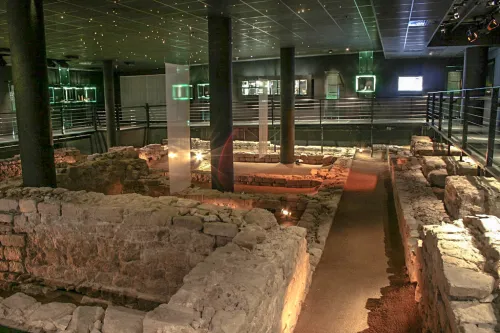
October in Mainz
High16°C / 60°F
Low8°C
Rain59mm / 12 rainy days
Sun5.8 h/day
Daylight11 h/day
Humidity82%
Crowds●●●●○Prices●●●●●
October has the year's highest average hotel rates (100-155 euro), driven by the autumn Rhine cruise peak, the Day of German Unity long weekend (3 October) and the late-October school half-term. Highs near 16°C and grey, drizzly stretches arrive, though rarely heavy rain. The reward is foliage: the Rheinhessen vineyards and the Rhine gorge (by S-Bahn to Rudesheim or Bingen) turn vivid red-gold in mid-to-late October.
The vibe October is golden-autumn Mainz, but at the year's highest prices and with the first grey, drizzly days. It is a lovely time for foliage along the Rhine and in the vineyards, and for the closing harvest atmosphere, but the value is poor compared with September. Come for the colour and the Rhine gorge day trips, not for a bargain.
Don't miss Autumn foliage peaks mid-to-late October in the Rheinhessen vineyards and the Rhine gorge, reached by S-Bahn to Rudesheim or Bingen. The Stadtpark and Volkspark trees turn from early October. The harvest (Lese) continues, so vineyard visits south of the city still catch the working amber-gold landscape.
Crowd drivers The autumn Rhine cruise season peaks, the Day of German Unity long weekend (3 October) is especially busy, and the late-October Rhineland-Palatinate school half-term adds family demand, together driving the year's highest prices.
Heads up The Day of German Unity (3 October) falls on a Saturday in 2026, closing shops as on a normal Saturday, with museums open.
The year's highest hotel prices, 100-155 euro a night, with the Day of German Unity long weekend (3 October) the busiest stretch.
November in Mainz
High9°C / 49°F
Low4°C
Rain62mm / 13 rainy days
Sun3.9 h/day
Daylight9 h/day
Humidity87%
Crowds●●○○○Prices●●●○○
November is grey and drizzly, with highs near 9°C and the city at its quietest before the festive season. The 11.11 carnival season opener fills Schillerplatz with local ceremonies, but has little overnight impact. Then the Weihnachtsstadt Mainz Christmas markets open on 26 November, bringing six markets and the first festive light into the Altstadt, and lifting rates toward month-end.
The vibe November is a month of two halves: quiet, grey and well-priced until the Christmas markets arrive, then a first burst of festive light and crowds. Early November is for the traveller who wants the city calm and cheap; the last week is for the early Christmas-market visitor, before the December weekend crush sets in.
Don't miss The 11.11 opener at Schillerplatz brings live performances and the Mainzer Carneval-Verein ceremonies. From 26 November, the six Christmas markets light up, led by the photogenic Historic Christmas Market with 100 stalls at the cathedral on Liebfrauenplatz; go on a weekday morning before the Frankfurt day-trippers arrive.
Crowd drivers The 11.11 carnival opener brings locals but no overnight demand. The Christmas markets opening on 26 November fill the final weekends and start lifting rates toward December.
Quiet early-month rates of 70-105 euro, rising to 90-130 euro once the Christmas markets open on 26 November.
Events this month
🎉 Festival11.11 Carnival Season Opener 11.11. in Mainz
Nov 11
11 November
The traditional kickoff of the Fastnacht season at Schillerplatz, with live performances through the day and the ceremonies of the Mainzer Carneval-Verein.
A burst of local atmosphere with limited tourist impact and no overnight spike. Worth catching only if you happen to be in Mainz on the date.
🎄 Christmas marketMainz Christmas Markets Weihnachtsstadt Mainz
Nov 26 – Dec 23
late November to 23 December
Six simultaneous markets, led by the Historic Christmas Market at the cathedral on Liebfrauenplatz (100 stalls), plus the Mainzer WinterZeit markets at Schillerplatz, the Hopfengarten, the station forecourt and the castle courtyard, and the Neuwintermarkt on Neubrunnenplatz. They open at 11:00 and run until 20:30 (21:00 on Friday and Saturday).
The cathedral backdrop makes this one of Germany's most photogenic Christmas markets. Frankfurt day-trippers (25 minutes by train) crowd the weekends, so go on a weekday morning for atmosphere without the crush, or at dusk when the Dom illumination begins.
December in Mainz
High6°C / 44°F
Low2°C
Rain70mm / 14 rainy days
Sun2.8 h/day
Daylight8 h/day
Humidity88%
Crowds●●●○○Prices●●●○○
December is Christmas-market Mainz, with the cathedral backdrop making it one of Germany's most photogenic. Highs near 6°C, the shortest days of the year (about 8 hours of usable light, fully dark by 16:30), and six markets running through 23 December. Peak foot traffic comes on the final weekends (18-23 December), crowded by Frankfurt, Dutch and Belgian day-trippers. After 24 December everything closes and the markets are over.
The vibe December trades January's emptiness for festive bustle under the Dom's illuminated towers: mulled wine, 100 decorated stalls and short, atmospheric dark afternoons. It is genuinely magical, but the final weekends are crowded and the most expensive of the season. Go on a weekday morning or at dusk, and book the 18-23 December stretch well ahead.
Don't miss The Historic Christmas Market at Liebfrauenplatz brings 100 decorated stalls beneath the cathedral, most photogenic at dusk (15:30-16:30) as the Dom illumination begins. The markets open at 11:00 and run until 20:30 (21:00 Friday and Saturday). The short dark afternoons, fully dark by 16:30, heighten the festive atmosphere.
Crowd drivers The Christmas markets (to 23 December) are the main draw, with the final pre-Christmas weekends (18-23 December) the busiest and most expensive, crowded by Frankfurt, Dutch and Belgian day-trippers. After 24 December the city goes dead.
Heads up Christmas Day (25 December) closes nearly everything, with Dom services only, and Boxing Day (26 December) keeps most things shut. The Christmas markets have already ended on 23 December.
Christmas-market rates of 85-130 euro, peaking at 130-170 euro on the final pre-Christmas weekends (18-23 December).
Events this month
🎄 Christmas marketMainz Christmas Markets Weihnachtsstadt Mainz
Nov 26 – Dec 23
late November to 23 December
Six simultaneous markets, led by the Historic Christmas Market at the cathedral on Liebfrauenplatz (100 stalls), plus the Mainzer WinterZeit markets at Schillerplatz, the Hopfengarten, the station forecourt and the castle courtyard, and the Neuwintermarkt on Neubrunnenplatz. They open at 11:00 and run until 20:30 (21:00 on Friday and Saturday).
The cathedral backdrop makes this one of Germany's most photogenic Christmas markets. Frankfurt day-trippers (25 minutes by train) crowd the weekends, so go on a weekday morning for atmosphere without the crush, or at dusk when the Dom illumination begins.
Frequently asked questions
What is the best time to visit Mainz?
Late May to mid-June and September are the best overall. You get comfortable 19-25°C days, wine festivals on the Rhine promenade, long evenings, and rates about 20% below the October peak. Late May brings the WeinUfer wine festival and Open Ohr over Whitsun, while September gives the Weinmarkt and golden Rheinhessen harvest light, both without the carnival or Christmas-market crowds.
What is the cheapest time to visit Mainz?
January, the non-carnival February weeks, and August are the cheapest, with 3-star central hotels at 55-110 euro a night, well below the October peak of 100-155 euro. The trade in January and February is cold, grey, short days; August is the summer budget surprise as conference demand falls. Avoid the Rosenmontag weekend in February, when rates triple to 180-250 euro.
What is the worst time to visit Mainz?
The Rosenmontag carnival weekend (around 14-16 February), unless the parade is exactly why you came. It packs 600,000 spectators into a city of 220,000, pedestrianises the whole Altstadt, and pushes hotels to 180-250 euro and booked out months ahead, with the centre inaccessible by car. October is the next to skip on value, with the year's highest average hotel prices.
When is the best time for wine in Mainz and Rheinhessen?
Mid-May for the WeinUfer festival, when 25 Rheinhessen estates line the Rhine for a 22-euro tasting walk, and early September for the Weinmarkt's second weekend, set in the Stadtpark during the harvest. The Lese (grape harvest) runs from mid-September to mid-October, when the vineyards south of Mainz turn amber-gold, a 20-minute regional train or an 8-kilometre flat bike ride to Nierstein.
Is Mainz worth visiting in December for the Christmas markets?
Yes. The Historic Christmas Market at the cathedral on Liebfrauenplatz, with 100 decorated stalls beneath the Dom, is one of Germany's most photogenic, and there are six markets in total through 23 December. Expect short 8-hour days (dark by 16:30), rates of 85-170 euro, and heavy weekend crowds from Frankfurt day-trippers 25 minutes away. Go on a weekday morning or at dusk for the calmest visit.
What is the weather like in Mainz?
Mainz sits in a warm, sheltered Rhine valley microclimate and is one of Germany's drier cities. Summer highs near 25-26°C, with increasingly common 30-35°C heat days; summer rain usually comes as short afternoon thunderstorms, not all-day drizzle. Winters are cold and grey rather than snowy, with highs near 5-6°C. October and November bring the greyest, dampest stretches.
What should I know about Mainz's museums before visiting?
Two things. The Gutenberg Museum has been at an interim location since November 2024, the Gutenberg Museum MOVED exhibition at the Naturhistorisches Museum on Reichklarastrasse, while the original Liebfrauenplatz building is demolished; do not go to the old address. And the Landesmuseum and LEIZA are both closed on Mondays, so a Monday museum day meets locked doors.
How many days do you need in Mainz?
Two days cover the essentials: the free Mainzer Dom (a weekday, not a Sunday morning when services run until 13:00), St. Stephan's Chagall windows (before 12:00 for the best blue glow, closing at 16:30), the Gutenberg interim exhibition, LEIZA and the Roman remains, and the Rhine promenade. Add a third day in autumn for a Rheinhessen vineyard trip or a Rhine gorge day out to Rudesheim or Bingen.

Any month, any day: your guide is already there
Whatever date you pick, a private human guide gets pricier and harder to book on weekends, holidays and in peak season. Our live AI guide, the one that walks with you and answers anything you ask out loud, works the opposite way.
One flat price, every day
No holiday, weekend, night or peak-season surcharge. A private guide in Mainz runs well over 100 euro for a half day, and more on holidays. Ours stays the same.
Available the moment you want it
Start at midnight or at dawn, on Christmas, in the snow, in the August heat. No sold-out high season, no booking weeks ahead.
Your pace, no meter running
Pause for a long lunch, restart after dark, repeat a stop. The tour simply waits for you.
Free to try, a fraction of the cost
Test it for free, then a transparent flat price that undercuts any private guide, in every season.
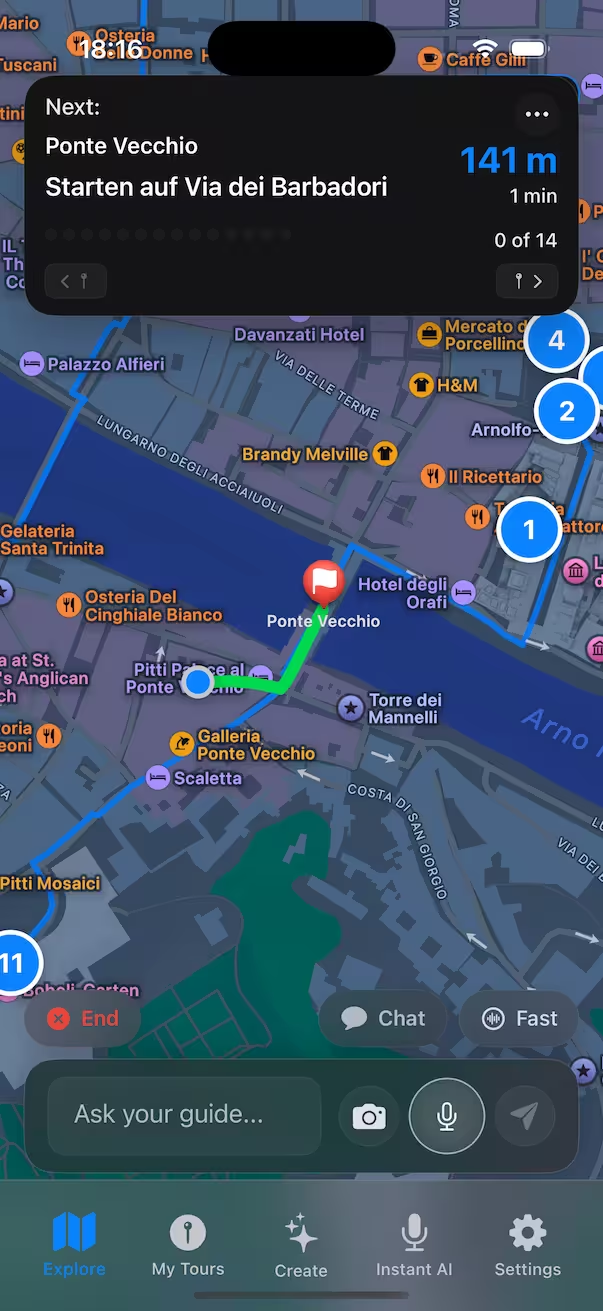
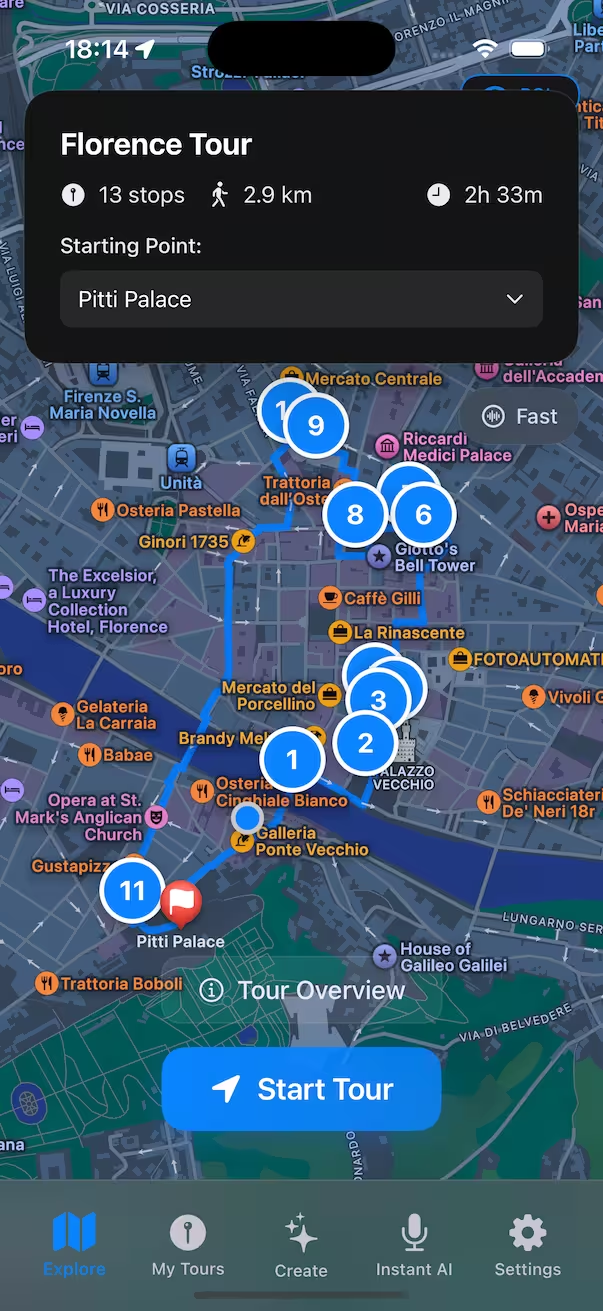
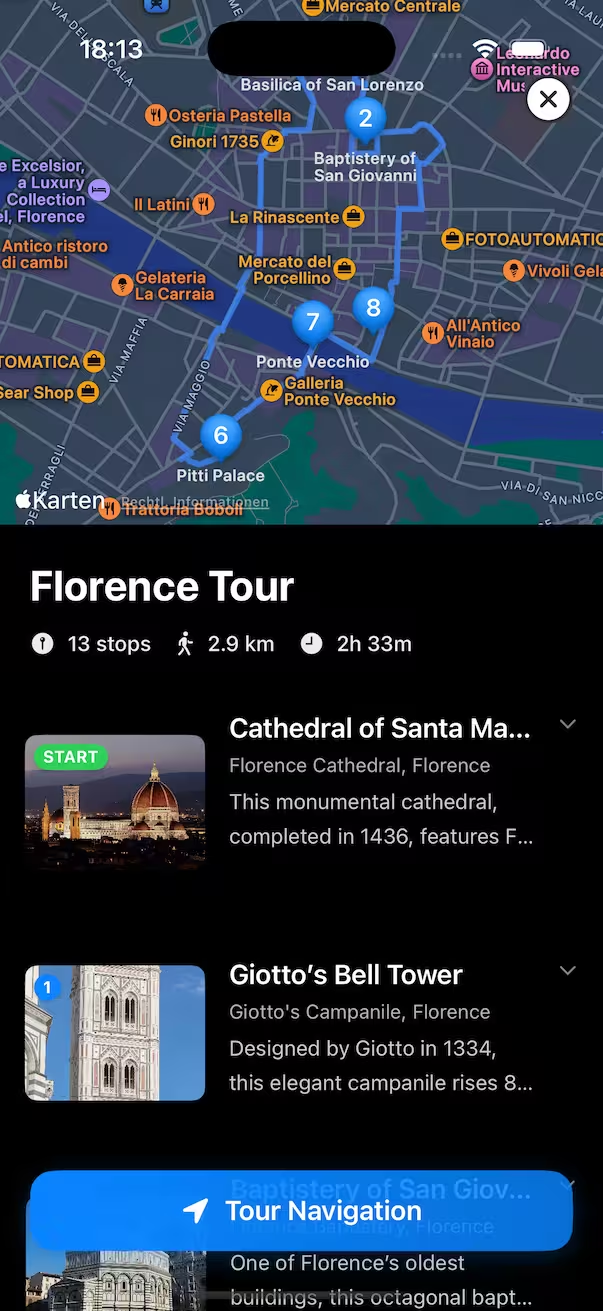
The classic Mainz tour: 10 stops, 4.8 km, about 2 h on foot
Your live AI guide and the self-guided Mainz route, together in your browser.